
The second doge, Marcellus, took over peacefully from Paulicius in 727.
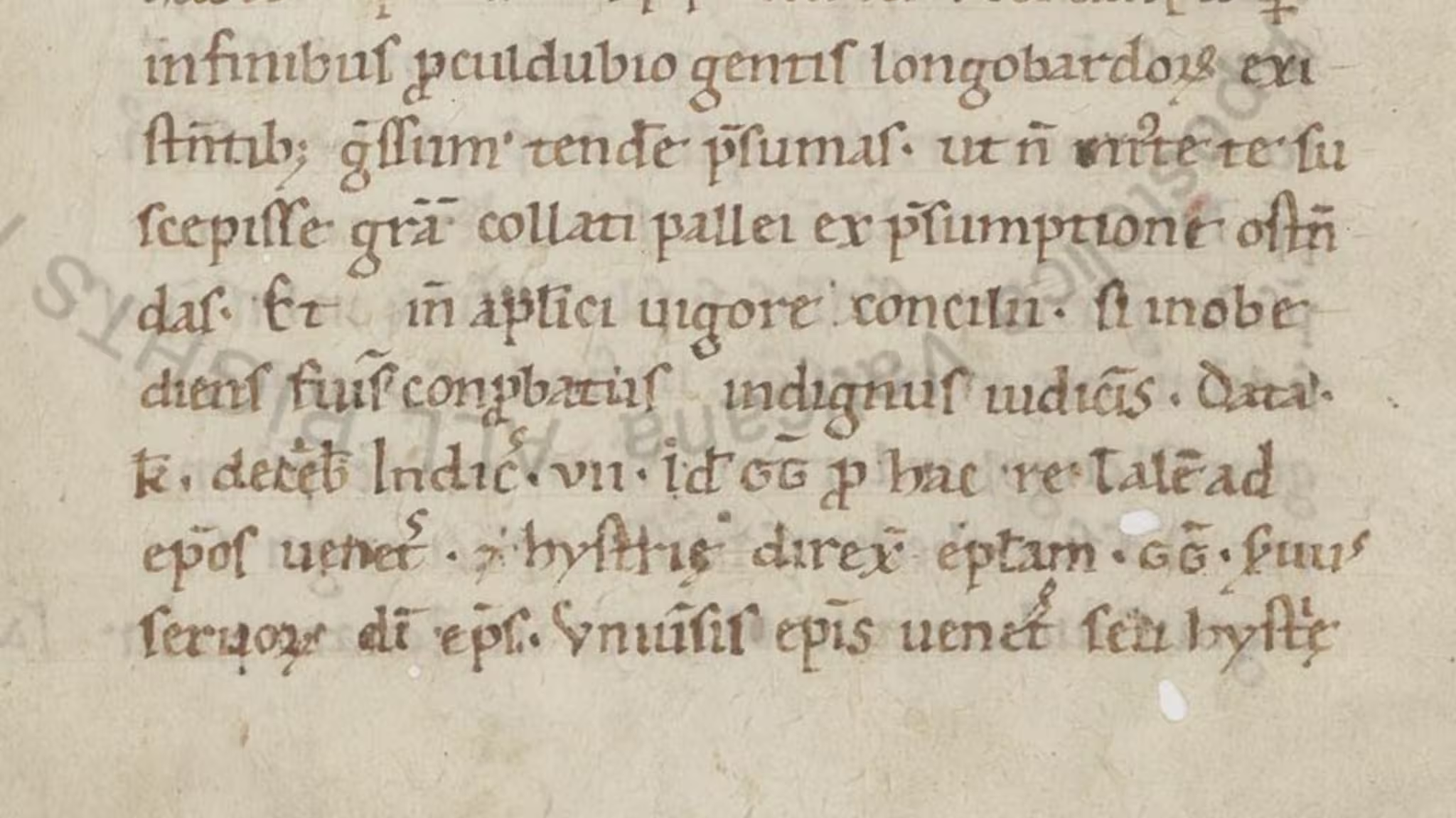
That, at least, is what John the Deacon wrote in his unnamed chronicle, but often called the Istoria Veneticorum, around the year 1000.
However, if we look at the traditional list of doges, Marcellus became doge in 717, and died in 726.
That list first appeared in a chronicle written in the 1340s, the Chronica per extensum descripta by Andrea Dandolo, who was doge at the time.
Both chronicles were written centuries after the facts, but we have practically no sources for a doge Marcellus from before John the Deacon.
Marcellus magister militum
John the Deacon didn’t quite invent the second doge of Venice, but almost.
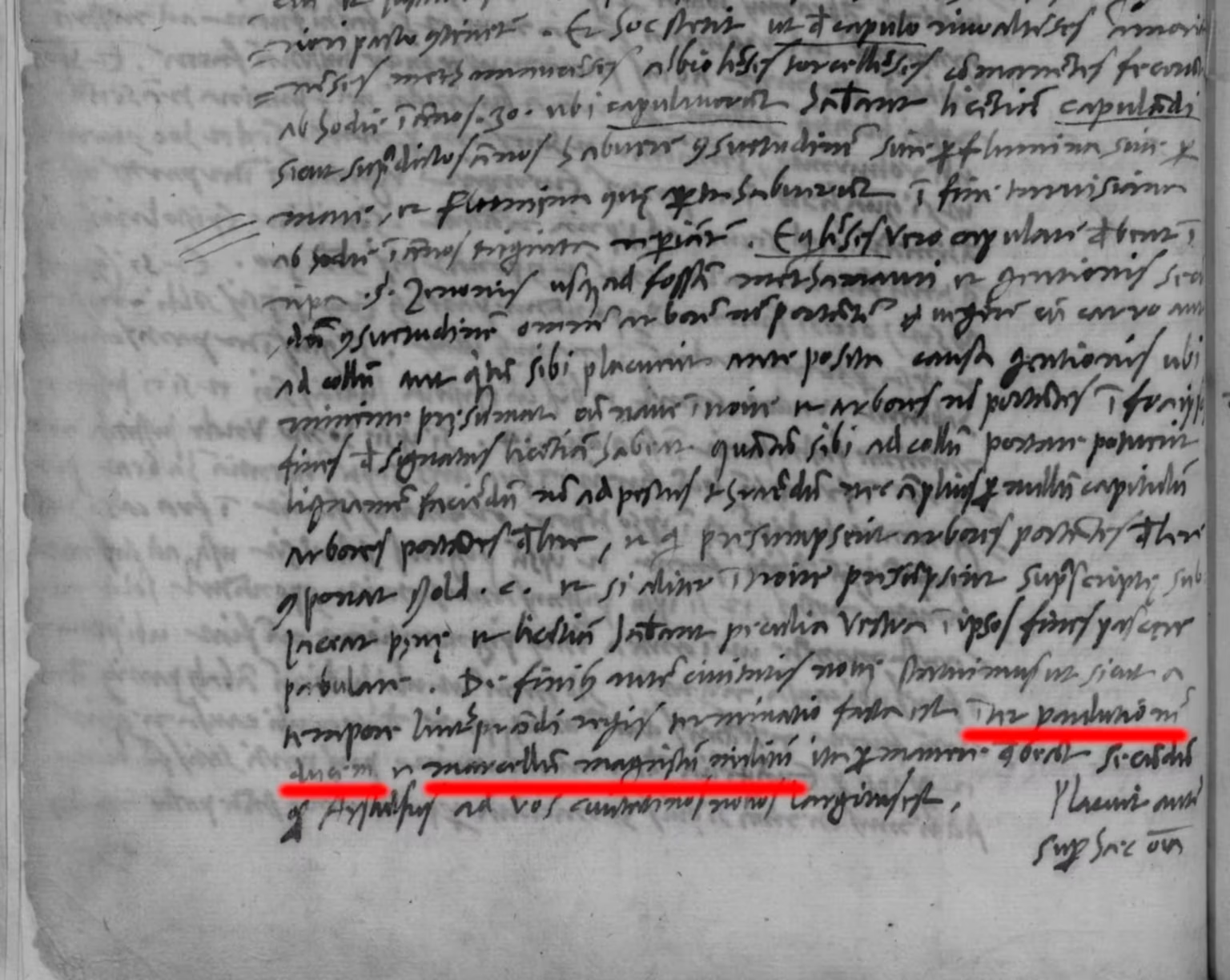
He found him in an earlier document called the Pactum Lotharii. It was a treaty from 840 between the Carolingian emperor Lothair I and the Duchy of the Venetians under doge Pietro Tradonico.
In this treaty, which survives only in two copies — both Venetian and both much later — we find:
And about the boundaries of Cittanova we decree that they must remain as they are, like in the settlement made at the time of king Liutprand between the duke Paulicius and the magister militum Marcellus, according to the concession made to you inhabitants of Cittanova by Aistulf.
This is where John the Deacon found Paulicius, and also Marcellus.
However, none of them appear as dukes of Venice.
Paulicius was most likely a Lombard duke, and Marcellus, given the title of magister militum, a Byzantine official.
This makes sense, as an agreement is supposed to have two opposing parties, but John the Deacon made both of them Venetian.
The agreement cited in the Pactum Lotharii was from 712 or 713, usually called the terminatio Luitprandina, but it is not known from any other source.
It was confirmed in 751, by the Lombard king Aistulf.
The papal letters
Unlike with Paulicius, we do have one other source, which mentions a duke Marcellus from this period.
In 723, there was a conflict between Serenus, the Patriarch of Aquileia, and Donatus, Patriarch of Grado, over which dioceses belonged to which of the two jurisdictions.
Pope Gregory II had withheld the pallium of Serenus, which amounted to a denial of Papal recognition of his appointment as patriarch. However, when king Liutprand of the Lombards intervened, Pope Gregory conceded and sent the pallium to Serenus, but accompanied by a stern letter.
At the same time, another letter was sent to Donatus, the wronged Patriarch of Grado. The address of this letter was, as quoted in the Chronica per extensum descripta by Andrea Dandolo:
Gregory the bishop, servant of the servants of God, to the most beloved brothers Donatus the patriarch, and the bishops, and to duke Marcellus and the people of Venetia and Istria.
This is considered the codex optimus for the letter.
Both letters were dated December 1st, 723, several years before John the Deacon made Marcellus doge.
That the letter from 723 gave Marcellus the title dux doesn’t preclude him being an appointed commander, rather than a chosen leader. The title dux was a Byzantine title, and there must have been numerous Byzantine duces of Venetia, whose names have been lost to time. We don’t even know all the Exarchs, and hardly any from the Pentapolis, south of Ravenna.
That Marcellus was a magister militum in one situation, and a dux in another, doesn’t necessarily mean at lot. In the later period of the Exarchate, the two titles were used almost interchangeably, and seems to have meant practically the same thing.
A forgery?
There is also the possibility that the papal letter of 723 is a Venetian fake, or a partial fake, made to prop up an origin narrative which was politically expedient, but in dire need of some documentary evidence.
Like many other ancient documents, the letter has come down to us in several versions, but not in the original. It has been quoted in its entirety in several other surviving documents, such as the later — very influential — chronicle of Andrea Dandolo from the 1340s.
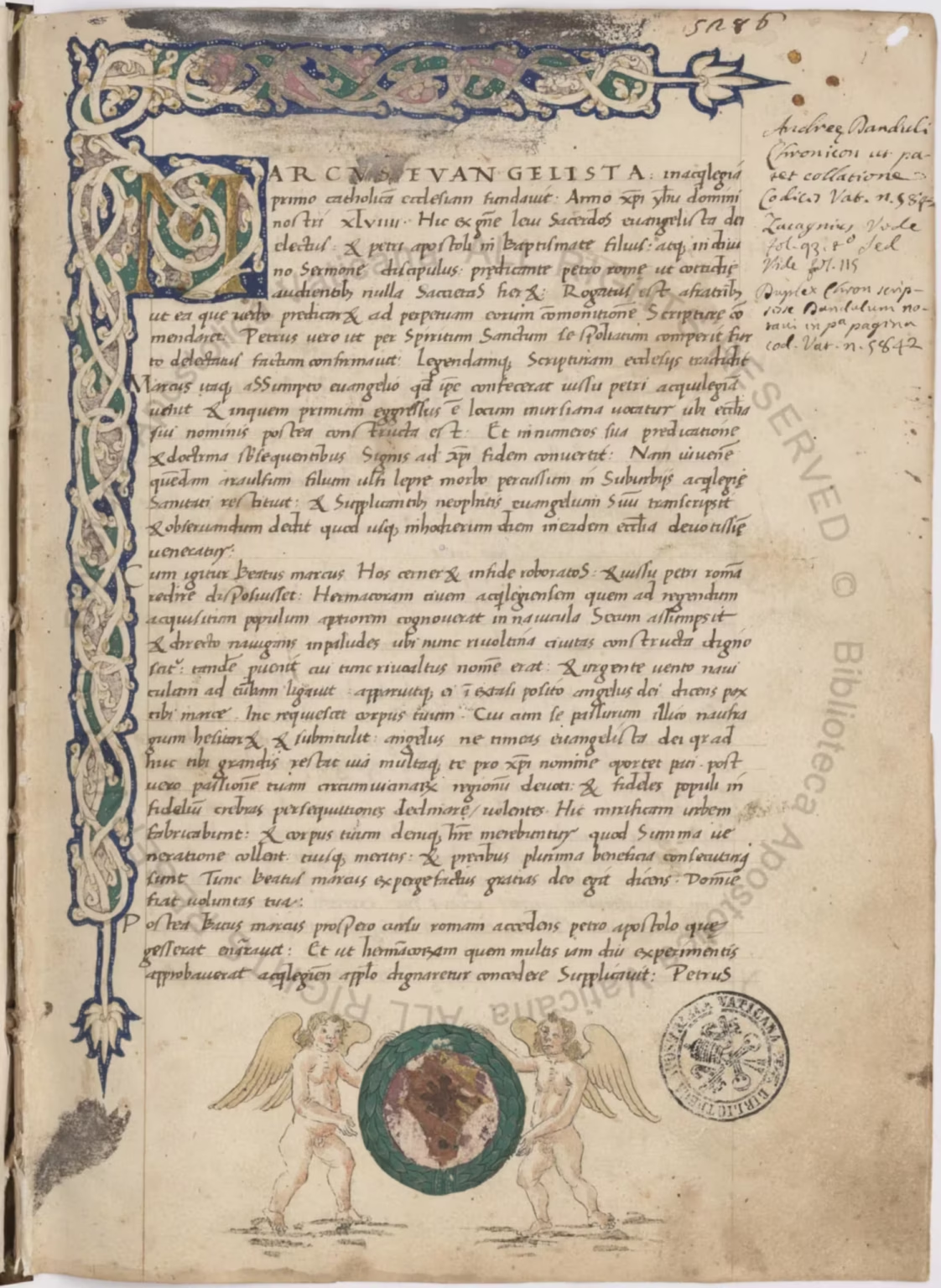
Another copy of the letter is in the Cronica de singulis patriarchis nove Aquileie — the Chronicle of the individual patriarchs of New Aquileia (Grado).
That chronicle is more or less contemporary with John the Deacon.
In the chronicle of the patriarchs of Grado, the opening of the letter is slightly different, even if the content of the letter is essentially the same. The opening is:
Gregory, servant of the servants of God, bishop to all the bishops of Venetia or Istria and to the peoples of the same.
This version doesn’t have the dux Marcellus mentioned, while the later Venetian chronicles, from the 1300s, do.
Was the reference to Marcellus added later — which would be Andrea Dandolo falsifying a source — or is the earlier quote incomplete?
We cannot know.
However, John the Deacon was quite content to quote papal letters at length, if they supported his narrative, and he doesn’t mention this letter with one word.
Did John the Deacon know about the letter?
We cannot know that either, but John the Deacon was writing in Rivoalto (Venice), while the author of the chronicle of the patriarchs was writing in Grado.
These were the two principal cities of the Duchy of the Venetians, and it is unlikely that there wasn’t regular contact between the two places. Rivoalto was the political capital of the dogado, while Grado was the religious centre. They were, between them, the two legs the dogado rested on.
The original of the letter would have been in the archives of the Patriarchate of Grado.
Is it imaginable that John the Deacon wouldn’t have consulted that archive when writing his chronicle? It was a day’s journey by boat between the two places, and John the Deacon was, as the name implies, a man of the cloth, and therefore subservient to the Patriarch of Grado. We know, from his chronicle, that he went on much longer journeys.
Byzantine or Venetian
Concluding, I find it difficult to sustain that Marcellus was a Venetian doge, and not a Byzantine official.
We find him mentioned as magister militum in 840, but in a papal letter, which predates the treaty, he is only named in the later copies, not in the earlier.
Bibliography
- Dandolo, Andrea and Ester Pastorello. Chronica per extensum descripta in Rerum Italicarum scriptores : raccolta degli storici italiani dal Cinquecento al Millecinquecento / ordinata da L. A. Muratori , 12.1. Bologna : N. Zanichelli, 1938-1958. [more] 🔗
- Iohannes : Diaconus Venetus. Chronicon Venetum omnium quae circumferuntur vetustissimum et Johanni Sagornino vulgo tributum e mss. codice Apostoli Zeno V. Cl. nunc primum cum mss. codicibus Vaticanis collatum, notisque illustratum in lucem profert H. Fr. Zanetti Al. F. Venetiis, 1765. [more] 🔗
- Iohannes : Diaconus Venetus and Luigi Andrea Berto. Istoria Veneticorum. Bologna Zanichelli, 1999. [more] 🔗
- Monticolo, Giovanni. Cronache veneziane antichissime. Roma, Forzani e C. tipografi del Senato, 1890. [more] 🔗
Leave a Reply