
The earliest source we have for life in the lagoons of Venetia, is a letter by Cassiodorus to the tribunes of the maritimes, written in late 537.
In this letter, Cassiodorus described lagoon settlements, which relied on fishing, trade and salt extraction for their survival. He also described their ability to navigate both the open sea and the internal waterways.

Venetian Stories
This material is also covered by the Venetian Stories Podcast.
In the early 500s, Cassiodorus served in various roles in the administration of the Ostrogoth kingdom. At the time of the letter, he was praetorian prefect — praefectus praetorio, often abbreviated PP or PPO — which was the highest position in the government bureaucracy in Ravenna.
The letter is part of a series of three letters. The first was to the provincial administration of Histria, specifying the taxes and tributes they were expected to pay in kind to the court in Ravenna. The second was a letter of authorisation to the official sent to Histria, and the third was for the people of the maritime area, who were ordered to handle the transportation of the goods.
The dating of the letters are around September 537, during the Gothic Wars between the Ostrogoth Kingdom and the Byzantine Empire.
All three letters are reproduced below.
The letters were originally published by Cassiodorus himself, in the Variae Epistolae from the 540s, where they have numbers 12.22, 12.23 and 12.24. The letters were probably edited somewhat before publishing.
The most recent, and only full translation, is Bjornlie, M. Shane. Variae: The Complete Translation. University of California Press, 2019.
The translations below are copyright © 2019 M. Shane Bjornlie, and reproduced here with permission.
The only translation in the public domain is Hodgkin, Thomas. The letters of Cassiodorus : being a condensed translation of the Variae Epistolae of Magnus Aurelius Cassiodorus senator. London, 1886. Hodgkin’s translations are, as the title states, condensed. They are noticeably shorter than the corresponding Latin texts, and largely paraphrases the letters.
The original Latin texts are reproduced after the translations. They are copied from Monumenta Germaniae Historica, AVCTORVM ANTIQVISSIMORVM TOMVS XII – Cassiodori Senatoris Variae, Berlin, 1894.
The footnotes are not part of prof. Bjornlie’s translation.
Variae 12.22
Praefectus Praetorio Senator1 to the Provincials of Istria.
- Public expenses, fluctuating with diverse variations throughout the year, can be held in check by this means: if the appropriateness of demands accords with the yield of each region. Certainly, collection is easy there, where profit is more bountiful. For if the indication of sterile poverty is ignored, then the province is harmed and the desired result is not obtained. Consequently, we have learned by the attestation of travelers that the province of Istria, so named with praise from three outstanding crops, rejoices in fertility this year, being laden by divine gift with wine, oil, and grain. And so, let the mentioned commodities, given in payment of taxes in the amount of tot solidi,2 be charged to you for the current first indiction;3 but the remainder we leave on behalf of the customary expenses of a loyal province.
- But since an amount greater than what we had stipulated must be obtained from you, we have also sent tot solidi from our treasury, so that the necessary goods may be productively gathered without loss to you. For often, when you are compelled to sell to strangers, you are accustomed to experience a loss, especially at a time when the foreign purchaser is suddenly absent and it is rare to receive gold when you know merchants are not on hand. But how much better it is to obey your rulers than to provide for distant people, and to pay taxes with crops, than to bear the contempt of purchasers.
- We have caused, moreover, from a love of justice, what you would want to suggest to us, since, while we are not burdened by furnishing ships, we would not adulterate the price. For your region is situated the closest to us across the gulf of the Ionian Sea, covered with olive groves, adorned with grain fields, abundant in vines, where all crops flow forth in optimum fertility as though from three teats of surpassingly rich generosity. Not without warrant is the region called the Campania of Ravenna, the storehouse of the royal city, an exceedingly pleasurable and delightful retreat.
- Being set in the north, it enjoys an admirable commingling of climate. It even has its own Baiaes of a sort—I do not claim this recklessly—where the turbulent sea enters inlets of the shore, calming it to a lovely surface with the quality of a lake. These places also furnish much fish sauce and they glory in the bounty of fish. Not one Avernus4 is located here. Conspicuous are the numerous Neptuniae, in which oysters spawn everywhere unbidden with even lax diligence. Thus, it is proven that there is neither effort in nourishing nor uncertainty in catching with these delicacies.
- You may perceive extensive residences scattered far and wide, shining like pearls, so that here it may reveal what kind of discernment was had by the ancestors of this province, which is known to be adorned with such buildings. Moreover, added to the shore is the most beautiful arrangement of islands, which are positioned with lovely utility, both warding ships from danger and enriching cultivators with great fertility. The region clearly restores the attendants of our comitatus, it adorns the imperium of Italy, it feeds leading men with delicacies and the humble with its payment of stores, and what is produced there is possessed almost entirely in the royal city. Let the loyal province offer its abundance more willingly now; let it obey fully when it is desired, since it used to produce gladly when it was called upon the least.
- But lest any uncertainty should proceed from our commands, we have sent with the present directive the most proven gentleman, Laurentius, approved by us in great toil for the republic. Thus, according to the brief attached below,5 he may unhesitatingly accomplish what he knows to be enjoined upon public expenses. Now procure what has been ordered. For you make public service loyal, when you freely undertake a command.
- But I shall publish the prices determined for you on a subsequent opportunity, when the bearer of the present letter has estimated by sent report the measure of your harvest. For nothing can be appraised for taxes justly, unless the amount of resources can be clearly investigated. It is indeed an unfair assessor who produces a judgment in ignorance and one who decrees without deliberation is shown to be aware of his own bad character.
Hodkin’s translation.
SENATOR, PRAETORIAN PRAEFECT, TO THE PROVINCIALS OF ISTRIA
- The true way to prevent the requirements of the public revenue from becoming oppressive, is to order each Province to supply those products in which it is naturally most fertile.
- Now I have learned by conversation with travellers that the Province of Istria is this year especially blessed in three of its crops-wine, oil, and corn. Therefore let her give of these products the equivalent of … solidi, which are due from you in payment of tribute for this first Indiction : while the remainder we leave to that loyal Province for her own regular expenses.
- But since we require a larger quantity of the abovementioned products, we send … solidi from our state chest for the purchase of them, that these necessaries may be collected for us with as little delay as possible. Often when you are desirous to sell you cannot find a purchaser, and suffer loss accordingly. How much better is it to obey the requirements of our Lords than to supply foreigners; and to pay your debts in the fruits of the soil, rather than to wait on the caprices of a buyer!
- We will ourselves out of our love of justice state a fact of which you might otherwise remind us, that we can afford to be liberal in price because we are not burdened by the payment of freights [on account of your nearness to the seat of government]. For what Campania is to Rome, Istria is to Ravenna—a fruitful Province abounding in corn, wine, and oil ; so to speak, the cupboard of the capital. I might carry the comparison further, and say that Istria can show her own Baiae in the lagunes with which her shores are indented, her own Averni in the pools abounding in oysters and fish.
- The palaces, strung like pearls along the shores of Istria, show how highly our ancestors appreciated its delights. The beautiful chain of islands with which it is begirt, shelter the sailor from danger and enrich the cultivator. The residence of the Court in this district delights the nobles and enriches the lower orders; and it may be said that all its products find their way to the Royal city. Now let the loyal Province, which has often tendered her services when they were less required, send forward her stores freely.
- To guard against any misunderstanding of our orders, we send Laurentius, a man of great experience, whose instructions are contained in the annexed letter.
- We will publish a tariff of moderate prices when we next address you, and when we have ascertained what is the yield of the present crops ; for we should be deciding quite at random before we have received that information.
Original Latin text.
PROVINCIALIBUS HISTRIAE SENATOR PPO.
Expensae publicae diversa temporum varietate titubantes hac ratione se poterunt continere, si proventum locorum sequatur salubritas iussionum. illic enim facilis est procuratio, ubi fuerit fructus uberior. nam si indicatur quod sterilitas ieiuna denegavit, tunc et provincia laeditur et effectus optabilis non habetur. commeantium igitur attestatione didicimus Histriam provinciam a tribus egregiis fructibus sub laude nominatam, divino munere gravidam vini. olei vel tritici, praesenti anno fecunditate gratulari. et ideo memoratae species in tot solidos datae pro tributaria functione vobis de praesenti prima indictione reputentur: reliqua vero propter sollemnes expensas relinquimus devotae provinciae.
Sed quoniam nobis in maiore summa sunt quaerenda quae diximus, tot solidos etiam de arca nostra transmisimus. ut res necessariae sine vestro dispendio uberrime debeant congregari. frequenter enim, dum extraneis urgemini vendere, soletis damna sentire, eo praesertim tempore, cum vobis peregrinus emptor ereptus est et rarum est aurum capere, quando mercatores cognoscitis non adesse. quanto vero melius est parere dominis quam praestare longinquis et debita fructibus solvere quam ementum fastidia sustinere!
Prodimus etiam amore iustitiae quod nobis suggerere poteratis, quia in pretio laedere non debemus, unde naulorum praebitionibus non gravamur. est enim proxima nobis regio supra sinum maris Ionii constituta, olivis referta, segetibus ornata, vite copiosa, ubi quasi tribus uberibus egregia ubertate largatis omnis fructus optabili fecunditate profluxit. quae non immerito dicitur Ravennae Campania, urbis regiae cella penaria, voluptuosa nimis et deliciosa digressio.
Fruitur in septentrione progressa caeli admiranda temperie. Habet et quasdam, non absurde dixerim. Baias suas, ubi undosum mare terrenas concavitates ingrediens in faciem decoram stagni aequalitate deponitur. haec loca et garismatia plura nutriunt et piscium ubertate gloriantur. Avernus ibi non unus est. numerosae conspiciuntur piscinae Neptuniae, quibus etiam cessante industria passim ostrea nascuntur iniussa. sic nec studium in nutriendis nec dubietas in capiendis probatur esse deliciis.
Praetoria longe latequc lucentia margaritarum speciem putes esse disposita, ut hinc appareat, qualia fuerint illius provinciae maiorum iudicia,quam tantis fabricis constat ornatam. additur etiam illi litori ordo pulcherrimus insularum, qui amabili utilitate dispositus et a periculis vindicat naves. et ditat magna ubertate cultores. reficit plane comitatenses excubias, Italiae ornat imperium, primates deliciis, mediocrcs victualium pascit expensis et quod illie nascitur, paene totum in urbe regia possidotur. praestet nunc copias suas sponte magis devota provincia: amplius pareat, dum speratur, quando gratissime faciebat, dum minime quaereretur.
Sed ne aliqua iussionibus nostris dubietas nasceretur, Laurentium virum experientissimum et magnis nobis in re publica laboribus comprobatum cum praesenti auctoritate direximus, ut secundum breves subter annexos incunctanter expediat quod sibi pro expensis publicis iniunctum esse cognoscit. nunc procurate quae iussa sunt. vos enim facitis devotum militem, cum libenter suscipitis iussionem.
Pretia vero vobis moderata sequenti occasione declaramus, cum nobis praesentium gerulus nativitatis modum missa relatione suggesserit, taxari enim aliquid non potest iuste, nisi copia rei evidenter potuerit indagari. inaequalis est quippe arbiter, qui sententiam mittit in cassum et mali sibi probatur conscius, qui est indeliberata dicturus.
Variae 12.23
Praefectus Praetorio Senator to Laurentius, Vir Experientissimus
- The deliberation of a magistrate ought to bring proven men to public service, so that it would be easy to satisfy what is clearly needed from the insufficiency of the time. A single person is able to extricate himself from any manner of difficulties in a period of plenty; it is a task for carefully selected public officials, when the pressure of hardship prevails. And so, we order your proven ability, being most pleasing by your devotion to our company, to hasten to the province of Istria, so that you would procure supplies of wine, oil, and grain equivalent to tot solidi in taxes; but with another tot solidi, which you will claim from our treasury, you will hasten to buy as much from merchants as from the landowners, just as the requisition prepared by the numerarii has instructed you.
- Therefore, now, raise your spirit for what must be obeyed, you who have been approved for such services by unhesitating selection. Let the example of your first responsibility admonish you, since it is exceedingly egregious for a veteran to fail in his duty, when as a recruit he was known to err under no circumstance. Such a man, however, by honesty toward us, will open himself to favors well beyond the wealth of the aforementioned commodities, so that we may trust what reports indicate concerning you, and so that we may establish as standard practice what neither harms the provincials nor is able to burden public expenses.
Hodgkin’s translation
SENATOR, PRAETORIAN PREFECT, TO LAURENTIUS, VIR EXPERIENTISSIMUS
- Anyone can discharge the duties of the Commissariat in a time of abundance. It is a mark of our high appreciation of your experience and efficiency, that we select you for this service in a time of scarcity. We therefore direct you to repair to the Province of Istria, there to collect stores of wine, oil, and corn, equivalent to … solidi, due from the Province for land-tax, and with … solidi which you have received from our Treasurer to buy these products either from the merchants or from the peasants directly, according to the information prepared for you by the Cashiers.
- Raise your spirits for this duty, and discharge it in a manner worthy of your past reputation. Make to us a faithful report of the yield of the coming harvest, under these three heads, that we may fix a tariff of prices which shall be neither burdensome to the Provincials nor injurious to the public service.
Original Latin text
LAURENTIO VIRO EXPERIENTISSIMO SENATOR PPO.
Deliberatio iudicis probatos viros debet publicis actionibus adhibere, ut facile possit impleri quod sub sterilitate temporis videtur inquiri. in abundantia rerum quaelibet se potest expedire persona: electis opus est militibus, cum fuerit necessitatis impulsus. atque ideo experientiam tuam frequentibus nobisque tali devotione gratissimam ad Histriam provinciam iubemus excurrere, ut in tot solidos vini, olei vel tritici species de tributario solido debeas procurare, in aliis vero tot solidis, quos a nostro areario percepisti, tam a negotiatoribus quam a possessoribus emere maturabis, sicut te a numerariis instruxit porrecta notitia.
Quapropter erige nunc animos ad parendum. qui tantis excubiis indiscreta sorte plaeuisti. ammoneat te prioris conversationis exemplum, quia nimis grave est emeritum delinquere. quem tironem nullatenus constat errasse. qualis autem supra dictarum specierum ubertas se optata laxaverit, veraci nobis, ut de te credimus, relatione significa, ut nos habito modo constituere debeamus quod nec provinciales laedat nec publicas gravare possit expensas.
Variae 12.24
Praefectus Praetorio Senator to the Tribuni Maritimorum6
- We previously determined in a published command that Istria should gladly direct to the court at Ravenna the commodities of wine, oil, and grain, of which it enjoys a generous abundance in the current year. But you, who have numerous ships on the border of the province, will provide them with equally pleasing dependability, so that you may strive to convey with speed what has been prepared there for delivery. Indeed, the high regard will be the same for both parties upon accomplishing this, when one sundered from the other would not permit the work to be completed. Therefore, be ready for a neighboring province, you who often cross boundless distances.
- You, who sail through your own homeland, travel, after a fashion, to your own reception. It also happens, to your advantage, that another route is available to you, one calm with perpetual safety.7 For when the sea is closed by savage winds, the way through the most pleasant river courses is opened to you. Your keels are not alarmed at rough gales; they trace the shore with great fortune, and what regularly dashes against the seas knows not how to flounder. At a distance, you would suppose the ships were carried upon meadows, when it happens their channel is not visible. Ships that are accustomed to stay afloat with rigging are drawn by cables, and by changed condition, men assist their own ships on foot; they draw the maidens of transport without toil and they use the more secure steps of sailors out of fear of the sails.
- It is a pleasure to relate how we have seen your homes situated. The Venetians,8 once greatly famed for celebrated men, border Ravenna and the Po to the south, enjoying the pleasantness of the Adriatic shores to the east, where, in alternation, the withdrawal of the tide now closes, and the returning flood now opens, access to the sea. Here, a home for you is after the fashion of aquatic birds. For you are now perceived as land-locked, and then as an islander, so that you would consider your homes to be more like the Cyclades, where you behold the appearance of places change suddenly.
- Indeed, similar to the islands, homes are seen scattered far into open waters made by nature, but which the ingenuity of men colonized. For here, the solidity of earth is accumulated by mooring pliant osiers,9 and there is no uncertainty in such a fragile rampart opposing the marine surge, when it is evident that the shallows of the coast are unable to thrust heaps of waves forward and waters not supported by the assistance of depth are carried without force.
- Accordingly, there is one source of wealth for the inhabitants, so that they may be glutted on fish alone. There, poverty dines with wealth in equality. One food nourishes all, one dwelling shelters all alike, the inhabitants know not how to envy ancestral homes and, abiding under these conditions, they avoid a vice for which the entire world appears guilty.
- On the contrary, the sum of your rivalry is in the salt works.10 Instead of plows and pruning hooks, you roll grinding stones;11 from this, all your profit is produced, when in this very industry, you possess what you do not make. In this, a kind of dietary coin is struck. Every wave is favorable to your craft. Some are able to seek gold less, there is no one who does not desire to acquire salt, and rightly, when each meal is owed to this, which makes the meal satisfying.
- Prepare with diligent care, then, the ships that you tether to your walls in the manner of animals, so that, when that most proven gentleman Laurentius, who has been sent to procure commodities, appears to advise you, you will hasten to set upon your task, to the extent that you, who are able to select an advantageous route on the basis of the quality of weather, would not delay necessary payments with difficulties.
Hodgkin’s translation
SENATOR, PRAETORIAN PREFECT, TO THE TRIBUNES OF THE MARITIME POPULATION
- We have previously given orders that Istria should send wine and oil, of which there are abundant crops his year, to the Royal residence at Ravenna. Do you, who possess numerous ships on the borders of the Province, show the same devotion in forwarding the stores which they do in supplying them.
- Be therefore active in fulfilling this commission in your own neighbourhood, you who often cross boundless distances. It may be said that [in visiting Ravenna] you are going through your own guest-chambers, you who in your voyages traverse your own home. This is also added to your other advantages, that to you another route is open, marked by perpetual safety and tranquillity. For when by raging winds the sea is closed, a way is opened to you through the most charming river scenery. Your keels fear no rough blasts; they touch the earth with the greatest pleasure, and cannot perish however frequently they may come in contact with it. Beholders from a distance, not seeing the channel of the stream, might fancy them moving through the meadows. Cables have been used to keep them at rest: now drawn by ropes they move, and by a changed order of things men help their ships with their feet. They draw their drawers without labour, and instead of the capricious favour of sails they use the more satisfactory steps of the sailor.
- It is a pleasure to recall the situation of your dwellings as I myself have seen them. Venetia the praiseworthy,12 formerly full of the dwellings of the nobility, touches on the south Ravenna and the Po, while on the east it enjoys the delightsomeness of the Ionian shore, where the alternating tide now discovers and now conceals the face of the fields by the ebb and flow of its inundation. Here after the manner of water-fowl have you fixed your home. He who was just now on the mainland finds himself on an island, so that you might fancy yourself in the Cyclades, from the sudden alterations in the appearance of the shore.
- Like them there are seen amid the wide expanse of the waters your scattered homes, not the product of Nature, but cemented by the care of man into a firm foundation. For by a twisted and knotted osier-work the earth there collected is turned into a solid mass, and you oppose without fear to the waves of the sea so fragile a bulwark, since forsooth the mass of waters is unable to sweep away the shallow shore, the deficiency in depth depriving the waves of the necessary power.
- The inhabitants have one notion of plenty, that of gorging themselves with fish. Poverty therefore may associate itself with wealth on equal terms. One kind of food refreshes all; the same sort of dwelling shelters all; no one can envy his neighbour’s home; and living in this moderate style they escape that vice [of envy] to which all the rest of the world is liable.
- Your whole attention is concentrated on your saltworks. Instead of driving the plough or wielding the sickle, you roll your cylinders. Thence arises your whole crop, when you find in them that product which you have not manufactured. There it may be said is your subsistence-money coined. Of this art of yours every wave is a bondservant. In the quest for gold a man may be lukewarm : but salt every one desires to find; and deservedly so, since to it every kind of meat owes its savour.
- Therefore let your ships, which you have tethered, like so many beasts of burden, to your walls, be repaired with diligent care : so that when the most experienced Laurentius attempts to bring you his instructions, you may hasten forth to greet him. Do not by any hindrance on your part delay the necessary purchases which he has to make; since you, on account of the character of your winds, are able to choose the shortest sea-track.
Original Latin text
TRIBUNIS MARITIMORUM SENATOR PPO.
Data pridem iussione censuimus ut Histria vini, oloi vel tritici species, quarum praesenti anno copia indulta perfruitur, ad Ravennatem feliciter dirigeret mansionom. sed vos, qui numerosa navigia in eius confinio possidetis, pari devotionis gratia providete, ut quod illa parata est tradere, vos studeatis sub celeritate portare. similis erit quippe utrisque gra ia perfectionis, quando unum ex his dissociatum impleri non permittit effectum. estote ergo promptissimi ad vicina, qui saepe spatia transmittitis infinita.
Per hospitia quodammodo vestra discurritis, qui per patriam navigatis. accedit etiam commodis vestris, quod vohis aliud iter aperitur perpetua securitate tranquillum. nam eum ventis saevientibus mare fuerit clausum, via vohis panditur per amoenissima fluviorum. carinae vestrae flatus asperos non pavescunt: terram cum summa felicitate contingunt et perire nesciunt, quae frequenter inpingunt. putantur eminus quasi per prata ferri. cum eorum eontingit alveum non videii. tractae funibus ambulant, quae stare rudentibus consuerunt et condicione mutata pedibus iuvant homines naves suas vectrices sine labore trahunt et pro pavore velorum utuntur passu prosperiore nautarum.
Iuvat referre quemadmoduni habitationes vestras sitas esse perspeximus. Venetiae praedicabiles quondam plenae nobilibus ab austro Ravennam Padumque contingunt, ab oriente incunditate Ionii litoris perfruuntur: ubi alternus aestus egrediens modo elaudit, modo aperit faciem reciproca inundatione camporum. hic vobis aquatilium avium more domus est. nam qui nunc terrestris, modo cernitur insularis, ut illie magis aestimes essc Cycladas, ubi subito locorum facies respicis immutatas.
Earum quippe similitudine per aequora longe patentia domicilia videntur sparsa, quae natura protulit, sed hominum cura fundavit. viminibus enim flexibilibus illigatis terrena illie soliditas aggregatur et marino fluctui tam fragilis munitio non dubitatur opponi. scilicet quando vadosum litus moles eicere nescit undarum et sine viribus fertur quod altitudinis auxilio non iuvatur.
Habitatoribus igitur una copia est, ut solis piscibus expleantur. paupertas ibi cum divitibus sub aequalitate convivit. unus cibus omnes reficit, habitatio similis universa concludit, nesciunt de penatibus invidere et sub hac mensura degentes evadunt vitium, cui mundum esse constat obnoxium.
In salinis autem exercendis tota contentio est: pro aratris, pro falcibus cylindros volvitis: inde vobis fructus omnis enascitur, quando in ipsis et quae non facitis possidetis. moneta illie quodammodo percutitur victualis. arti vestrae omnis fluctus addictus est. potest aurum aliquis minus quaerere nemo est qui salem non desideret invenire, merito, quando isti debet omnis cibus quod potest esse gratissimus.
Proinde naves, quas more animalium vestris parietibus illigatis. diligenti cura reficite, ut, cum vos vir experientissimus Laurentius, qui ad procurandas species directus est, commonere temptaverit, festinetis excurrere, quatenus expensas necessarias nulla difficultate tardetis, qui pro qualitate aeris compendium vobis eligere potestis itineris.
Notes
- Senator was a proper name, not his title. ↩︎
- The real amounts have probably been replaced with the generic term tot when the letters were prepared for publishing. ↩︎
- The indictions were a Roman nine-year taxation cycle, and the first indiction at the time was from September 1st, 537 to September 1st, 538. The term was used well into the Middle Ages for dates long after the original purpose had disappeared. One such example is the testament of Marco Polo. ↩︎
- This is a reference to the Lake Avernus at Pozzuoli, near Naples. ↩︎
- The following letter Variae 12.23. ↩︎
- At the time, ‘tribune’ was mostly a military title, and the presence of tribunes in the lagoon (maritime) areas indicate that the lagoons were already widely settled in the early 500s. ↩︎
- The almost continuous lagoons from Ravenna in the south to Grado in the north allowed for navigation on the internal waters all along the coastline, even when the open sea wasn’t safe. ↩︎
- The name Venetia here refers to the area, lagoon and mainland, settled by the Venetii people. There was no city called Venice at this time, but scattered settlements in the archipelago surrounding the marketplace at Rialto. Hundreds of such settlements existed along the much larger lagoon areas that what persist today. ↩︎
- The early settlers in the lagoon protected their property with wicker fences to limit the natural erosion of the marsh islands. ↩︎
- Salt extraction was a profitable business in the lagoons well into the Middle Ages. The vast shallow areas of the lagoons made the construction of salt pads easy, and salt, being the only food conservative at the time, was an important commercial commodity. ↩︎
- The slabs of salt collected from the salt pads had to ground into powdered salt for transport and sale. ↩︎
- This is an allusion to the idea that the word Venetia derived from the Greek Αἰνετοὶ, the laudable or the praiseworthy. ↩︎
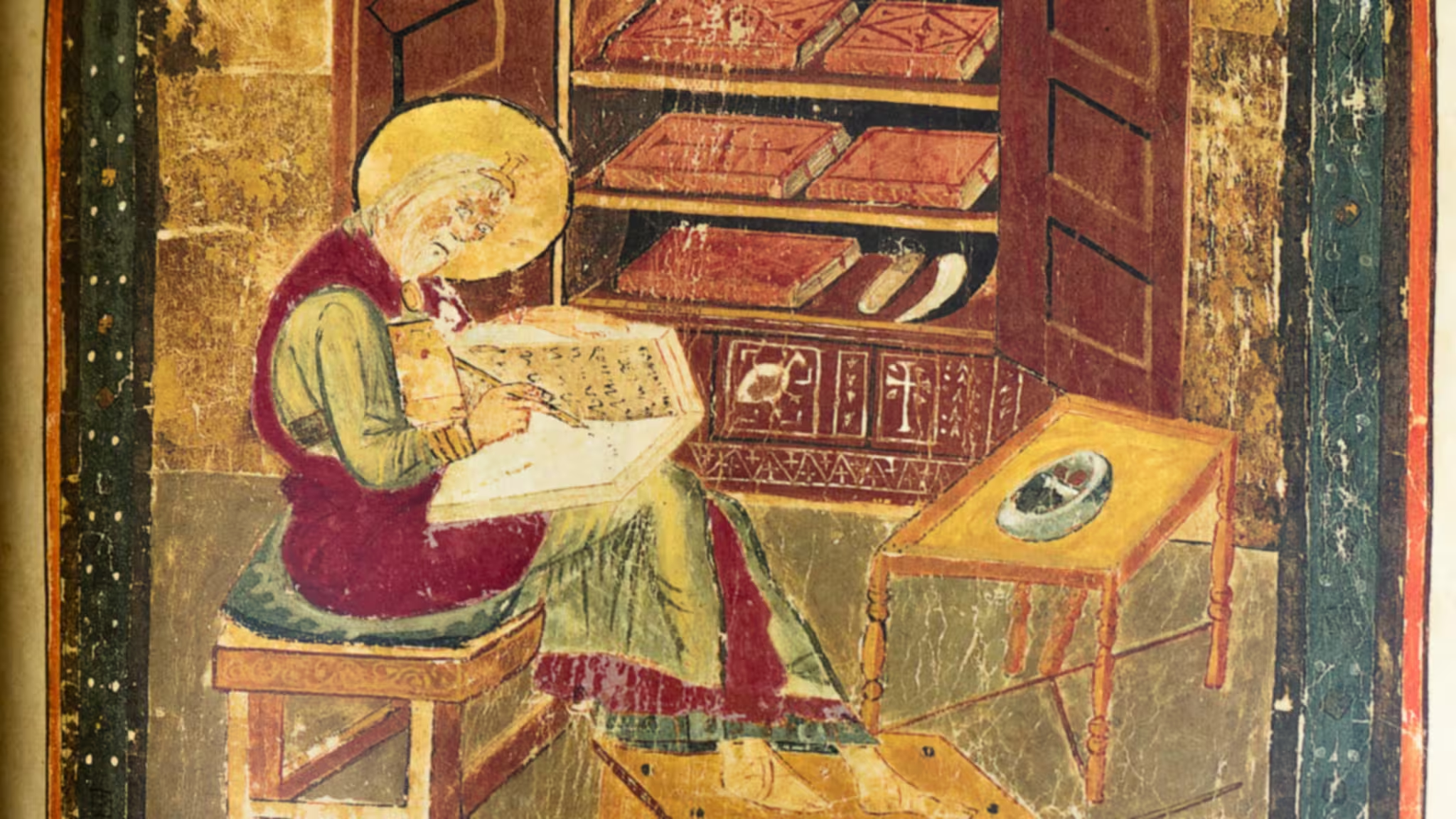
The illustration at the top of the page is from the Codex Amiatinus, an English bible from the late 600s, which is likely a copy of the lost Codex Grandior, written by or for Cassiodorus in the Vivarium monastery, which he founded after his return to Italy from Constantinople, probably in the late 550s.
Leave a Reply