In his monumental Naturalis Historia (Natural History), Pliny the Elder (Gaius Plinius Secundus, 23–79) also wrote about the Regio X Venetia et Histria — the region of Italy instituted at the time of Augustus.
Book III is mostly about geography. Chapter III.18 is about the area which today form the Veneto and Friuli regions of Italy, and chapter III.19 is mostly about Istria, which is now in Croatia, but with some references to Venetia.
Pliny mentions Venetia as a geographical term, but it is unclear if he only meant the coastal area with the lagoons, or also parts of the hinterland.
Otherwise, the Veneti are just one of the many tribes inhabiting the area, along with the Cenomani, the Carni, the Iapudes, the Rhaeti and the Euganei.
My impression is that he places the Cenomani west of the Veneti, towards modern-day Lombardy, the Carni to the north in current Friuli and Istria, the Iapudes beyond the Carni, and the Rhaeti and the Euganei on the plain north of the Po river.
This left the lagoons from Grado to Cavarzere — as the Venetian later said of the dogado — and some limited part of the mainland to the Veneti.
The translation is by Harris Rackham (1868-1944) for the Loeb Classical Library, vol. 352, first published in 1942.
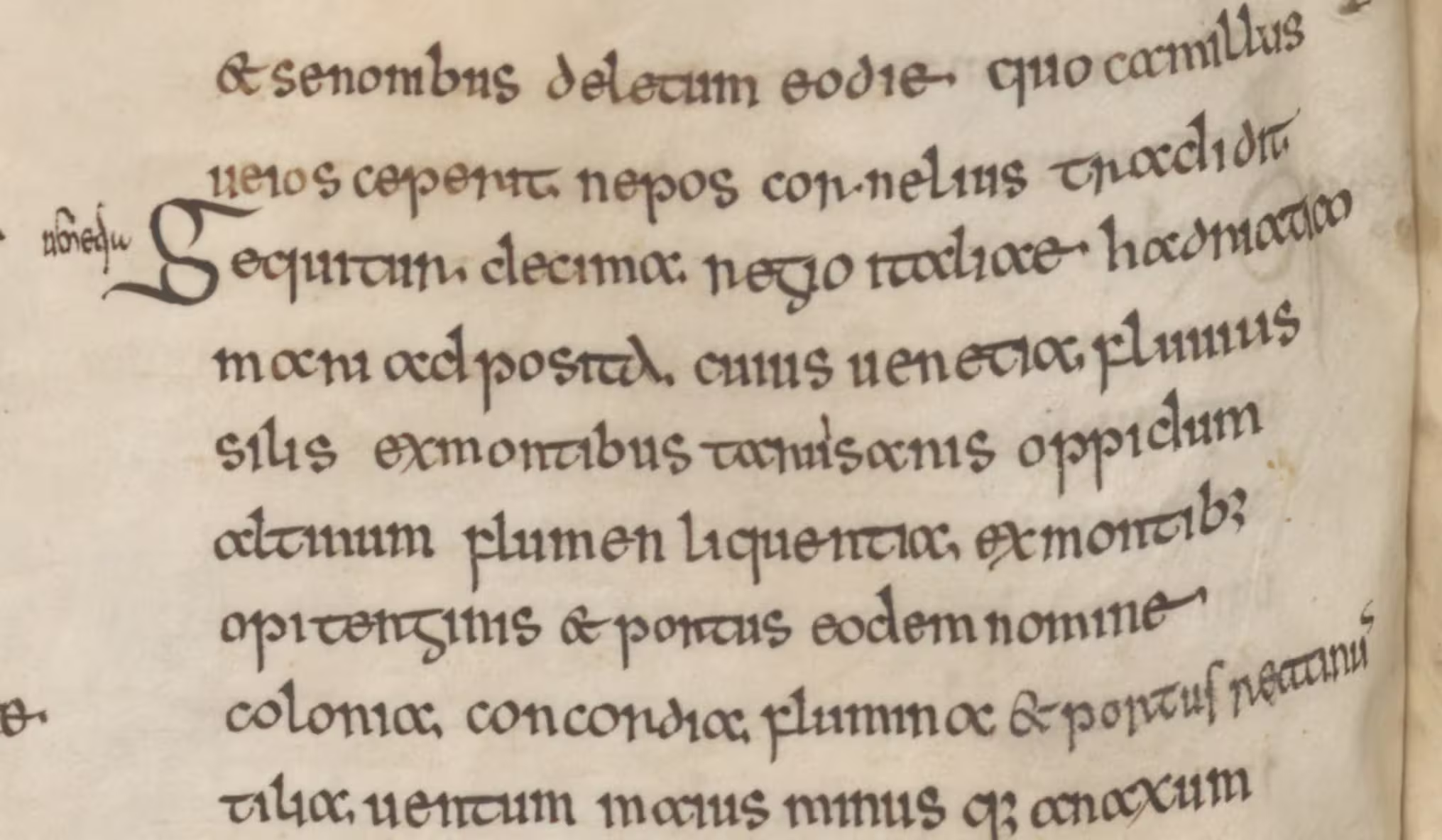
The original text is reproduced after the translation.
Pliny — Natural History
Book III, chapter XVIII
Next comes the tenth region of Italy, on the coast of the Adriatic Sea. In it are Venetia, the river Silo that rises in the mountains of Treviso, the town of Altino, the river Liquenzo rising in the mountains of Oderzo, and the port of the same name, the colony of Concordia, the river and port of llieti, the Greater and Lesser Tagliamento, the Stella, into which flows the Revonchi, the Alsa, the Natisone, with the Torre that flows past the colony of Aquileia situated 15 miles from the sea.
This is the region of the Carni, and adjoining it is that of the Lapudes, the river Timavo, Castel Duino, famous for its wine, the Gulf of Trieste, and the colony of the same name, 33 miles from Aquileia. Six miles beyond Trieste is the river Formio, 189 miles from Ravenna, the old frontier of the enlarged Italy and now the boundary of Istria.
It has been stated by many authors, even including Nepos, who lived on the banks of the Po, that Istria takes its name from the stream called Ister flowing out of the river Danube (which also has the name of Ister) into the Adriatic, opposite the mouths of the Po, and that their currents, colliding from contrary directions, turn the intervening sea into a pool of fresh water; but these statements are erroneous, for no river flows out of the Danube into the Adriatic.
I believe that they have been misled by the fact that the ship Argo came down a river into the Adriatic not far from Trieste, but it has not hitherto been decided what river this was. More careful writers say that the Argo was portaged on men’s shoulders across the Alps, but that she had come up the Ister and then the Save and then the Nauportus, a stream rising between Emona and the Alps, that has got its name from this occurrence.
Click to reveal the Latin text
Liber III.xviii
Sequitur decima regio Italiae Hadriatico mari adposita, cuius Vcnetia, fluvius Silis ex montibus Tarvisanis, oppidum Altinum, flumcn Liquentia ex montibus Opiterginis et portus eodem nomine, colonia Concordia, flumina et portus Reatinum, Tiliaventum Maius Minusque, Anaxum quo Varanus defluit, Alsa, Natiso cum Turro, praeflucente Aquileiam coloniam xv p. a mari sitam.
Carnorum haec regio iunetaque lapudum, amnis Timavos, castellum nobile vino Pueinum, Tergestinus sinus, colonia Tergeste, xxxiii ab Aquileia. ultra quam sex milia p. Formio amnis, ab Ravenna CLXXXIX, anticus auctae Italiae terminus, nunc vero Histriae ;
quam cognominatam a flumine Histro in Hadriam effluente e Danuvio amne eodemque Histro exadversum Padi fauces, contrario eorum percussu mari interiecto dulcescente, plerique dixere falso, et Nepos etiam Padi accola ; nullus enim ex Danuvio amnis in mare Hadriaticum effunditur.
deceptos credo quoniam Argo navis flumine in mare Hadriaticum descendit non procul Tergeste, nec iam constat quo flumine. umeris travectam Alpes diligentiores tradunt, subisse autem Histro, dein Savo, dein Nauporto, cui nomen ex ea causa est, inter Aemonam Alpesque exorienti.
Book III, chapter XIX (excerpt)
…
In the interior of the tenth region are the colonies of Cremona and Brescia in the territory of the Cenomani, and Este in that of the Veneti, and the towns of Asolo, Padua, Oderzo, Belluno, Vicenza and Mantua, the only remaining Tuscan town across the Po.
According to Cato, the Veneti are descended from a Trojan stock, and the Cenomani lived among the Volcae in the neighbourhood of Marseilles.
There are also the Rhaetic towns of Feltre, Trent and Berua, Verona which belongs to the Rhaeti and Euganei jointly, and Zuglio which belongs to the Carni.
…
Click to reveal the Latin text
Liber III.xix
…
In mediterraneo regionis decimae coloniae Cremona, Brixia Cenomanorum agro, Venetorum autem Ateste et oppida Acelum, Patavium, Opitergium, Belunum, Vicetia. Mantua Tuscorum trans Padum sola reliqua.
Venetos Troiana stirpe ortos auctor est Cato, Cenomanos iuxta Massiliam habitasse in Volcis.
Feltrini et Tridentini et Beruenses Raetica oppida, Raetorum et Euganeorum Verona, Iulienses Carnorum.
…
Leave a Reply