The history of how Venice came about is long and complicated.
The story started before the Romans, and proceeded with the Huns, the Ostrogoths, the Byzantines, the Lombards and the Franks, with the Venetians in-between.
The entire process, which ultimately led to a country called Venice, lasted several centuries, but it was far from a straight and smooth path.
For much of the time, the Venetians were much more of a pawn in the games of other, greater powers. However, as time passed, and the Venetians had to fend for themselves, they de facto acquired statehood, and then embraced it with pride and determination.
The main narrative
Venetia et Histria
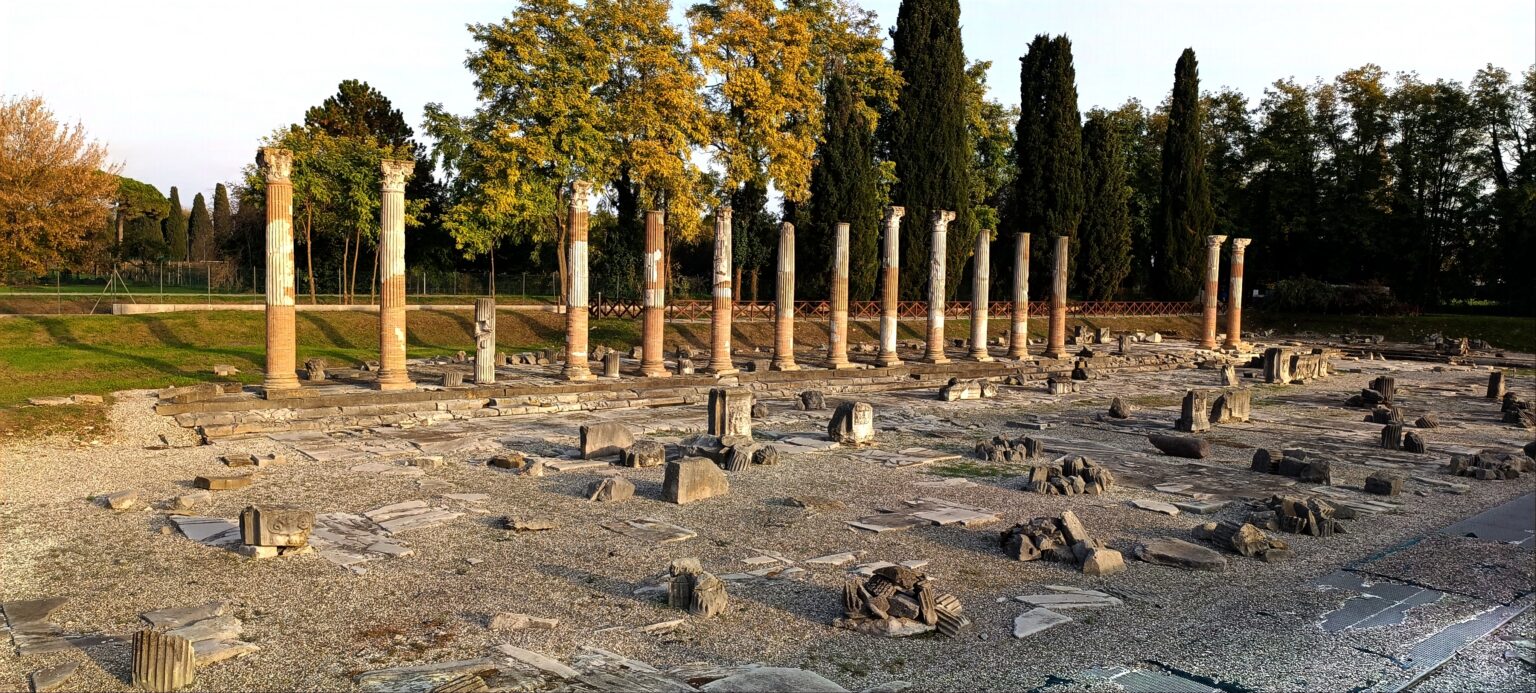
The name Venice comes from the ancient tribe of the Veneti, whose lands became a Roman province, the Regio X, which later got the name of Venetia et Histria.
That Roman, and later Byzantine, Venetia, through a series of complex and convoluted events, became Venice.
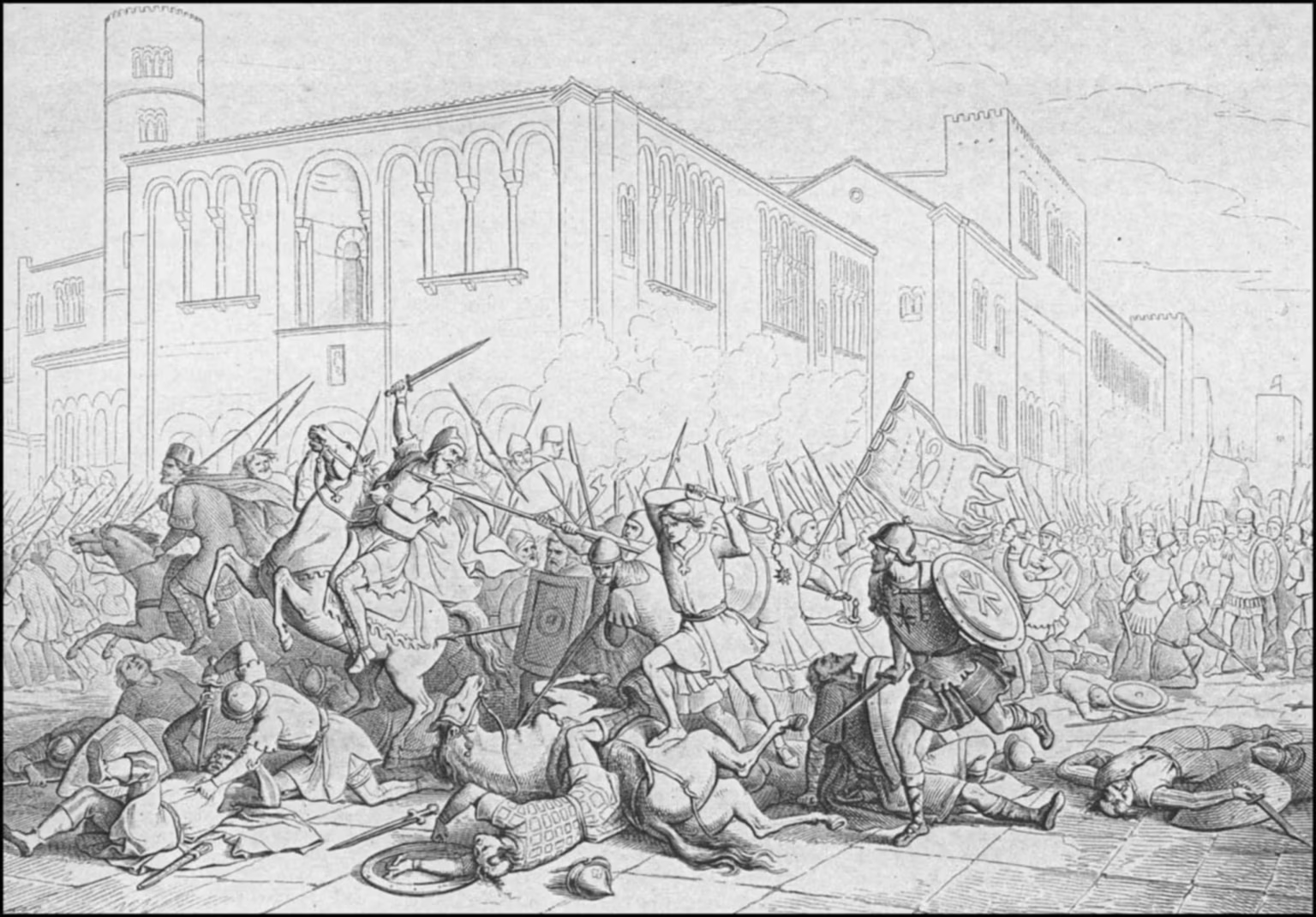
The Lombard invasion
The Lombard invasion of Byzantine Italy, and the conquests that followed, led to an increased importance of the lagoon settlements, to a slow demise of Byzantine control in north-east Italy, to the establishment of a semi-independent church in the lagoons, and ultimately to Venetian statehood.
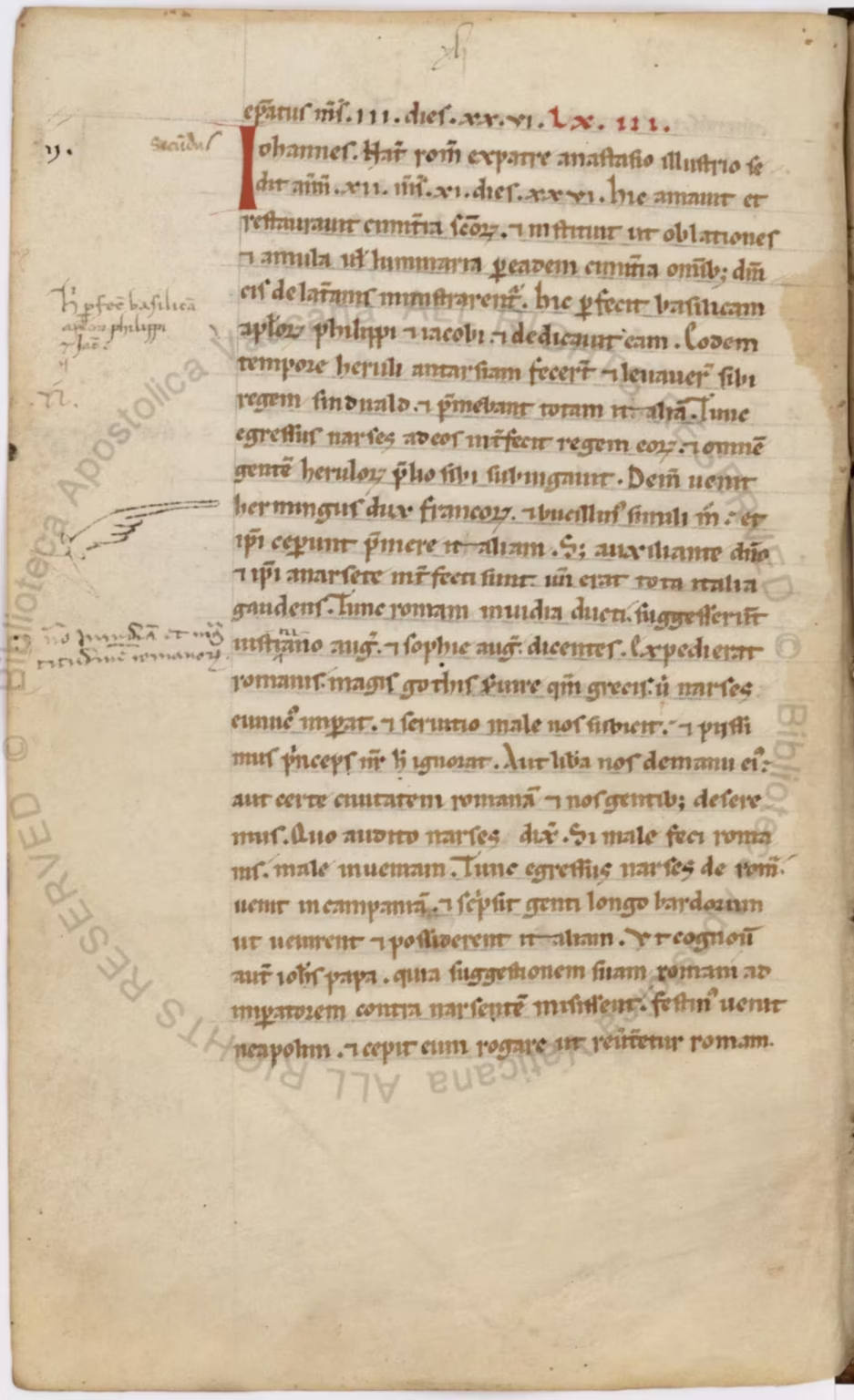
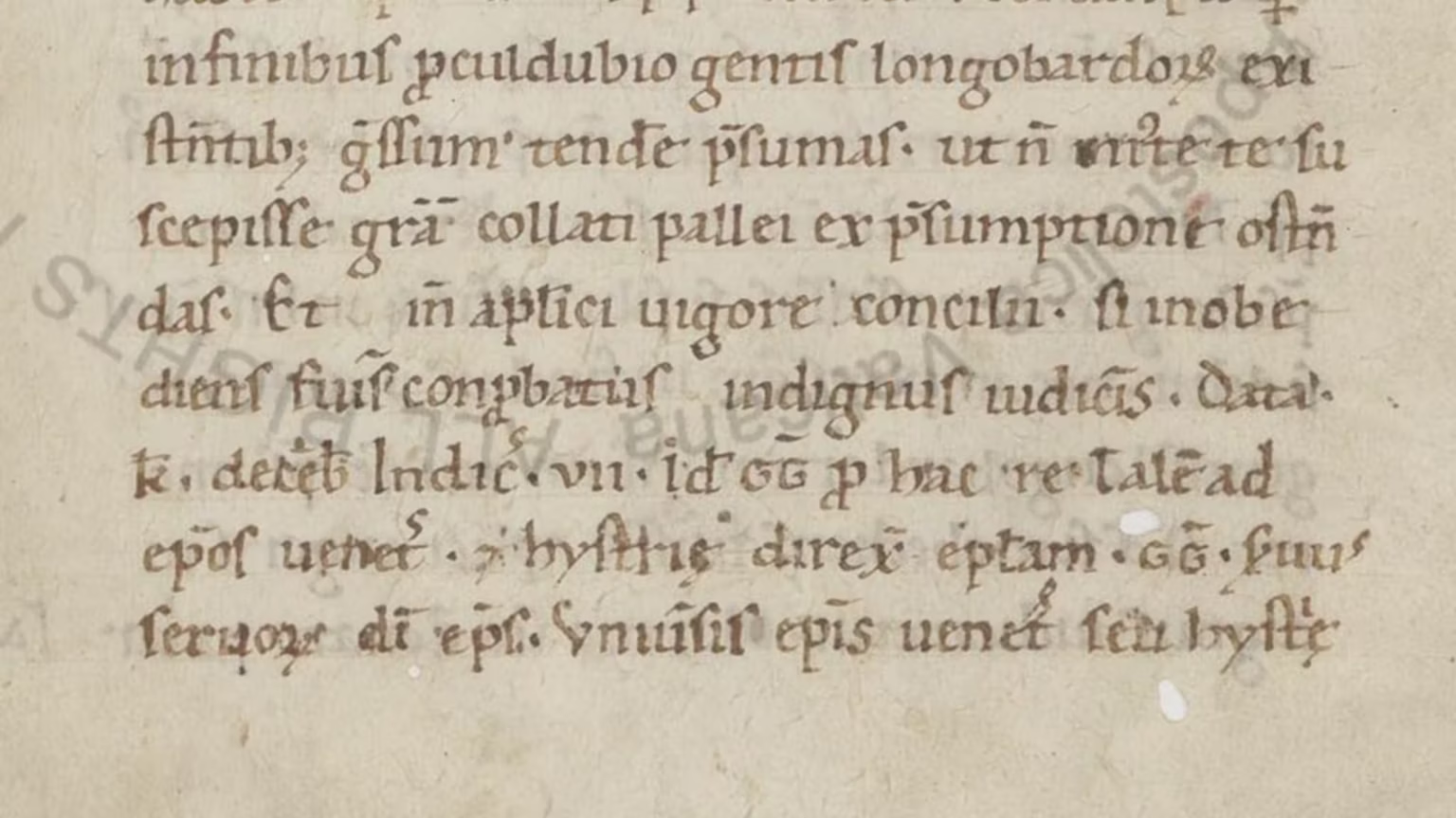
Did Narses invite the Lombards?
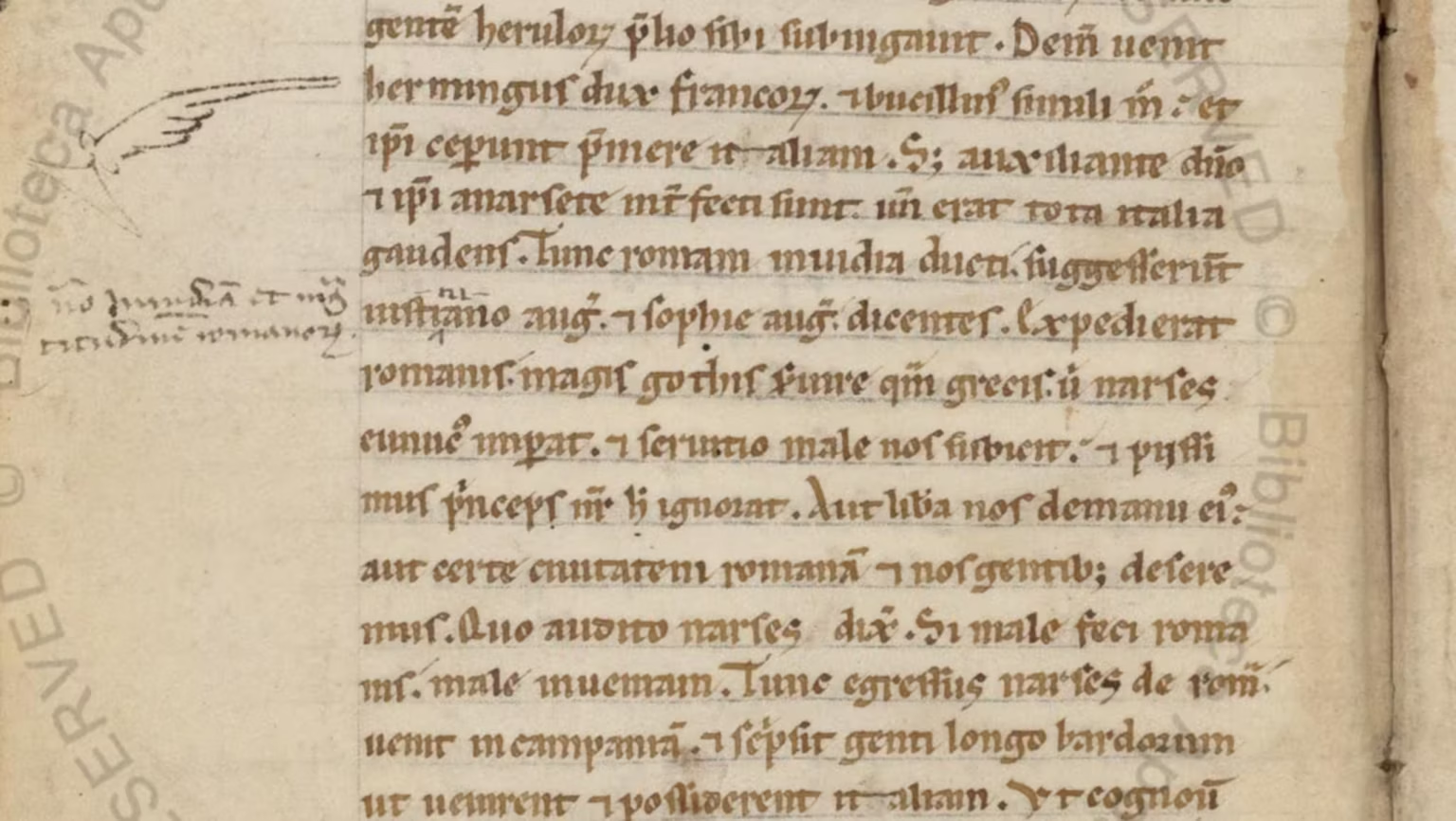
Were the Lombards under Alboin invited to invade Italy by the Byzantine general Narses, just because the empress didn’t like him?
This rather dubious story of envy and misogyny can be traced back to the Book of the Popes, in the 590s.
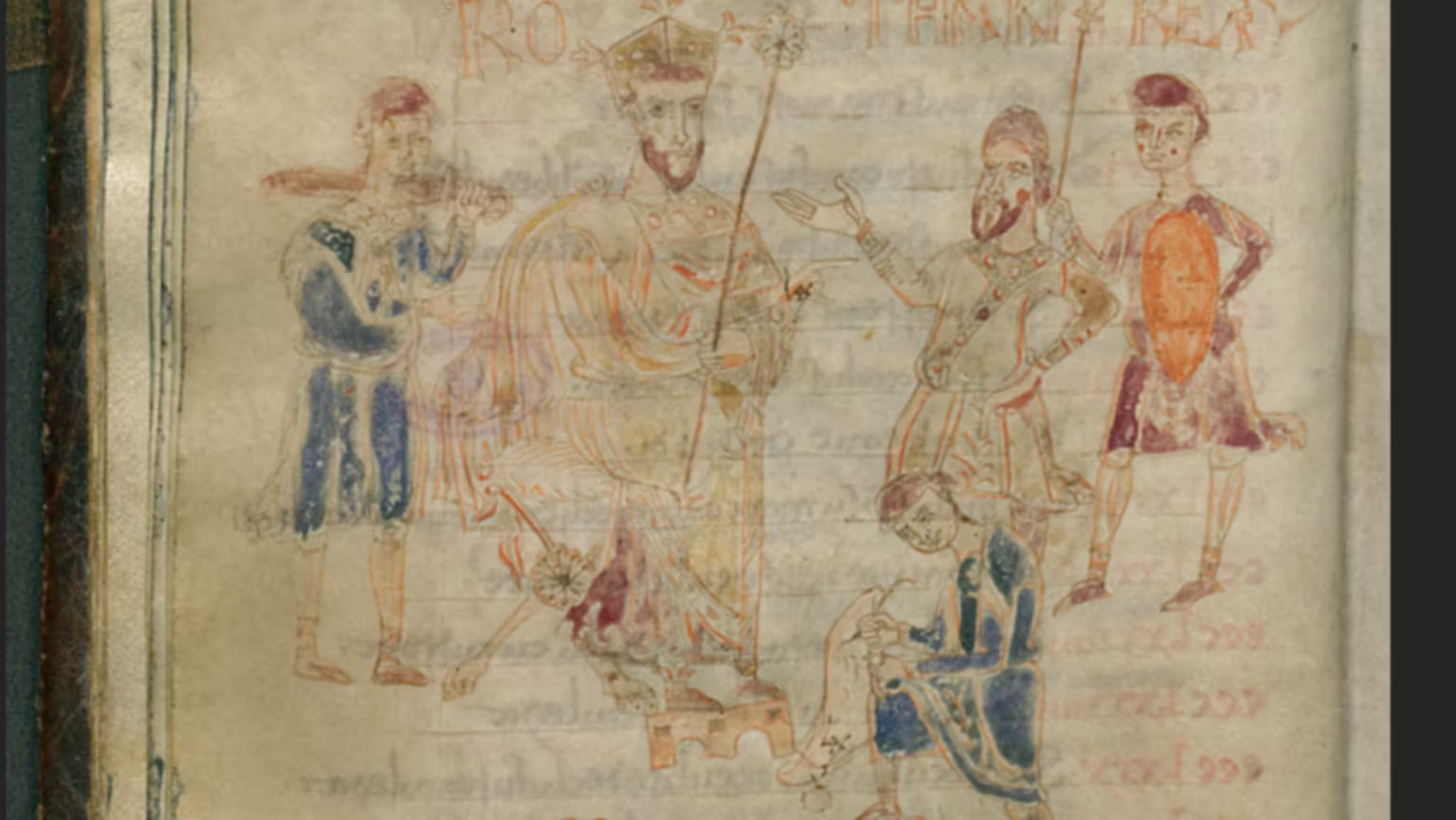
The conquest of Venetia
The invasion of the Lombards in 568 was only the start of their conquest of much of Italy. It was, however, not a centrally planned process, and it would take almost a century before Byzantine Venetia was under Lombard rule, and then some smaller bits still eluded them.

Venetian refugees
Following the invasion, and the subsequent conquest of Venetia, a part of the Venetian population of the mainland cities fled or left for the settlements in the nearby lagoons.
The lagoons were, by the late 600s, the only part of ancient Venetia, which remained under Byzantine rule.
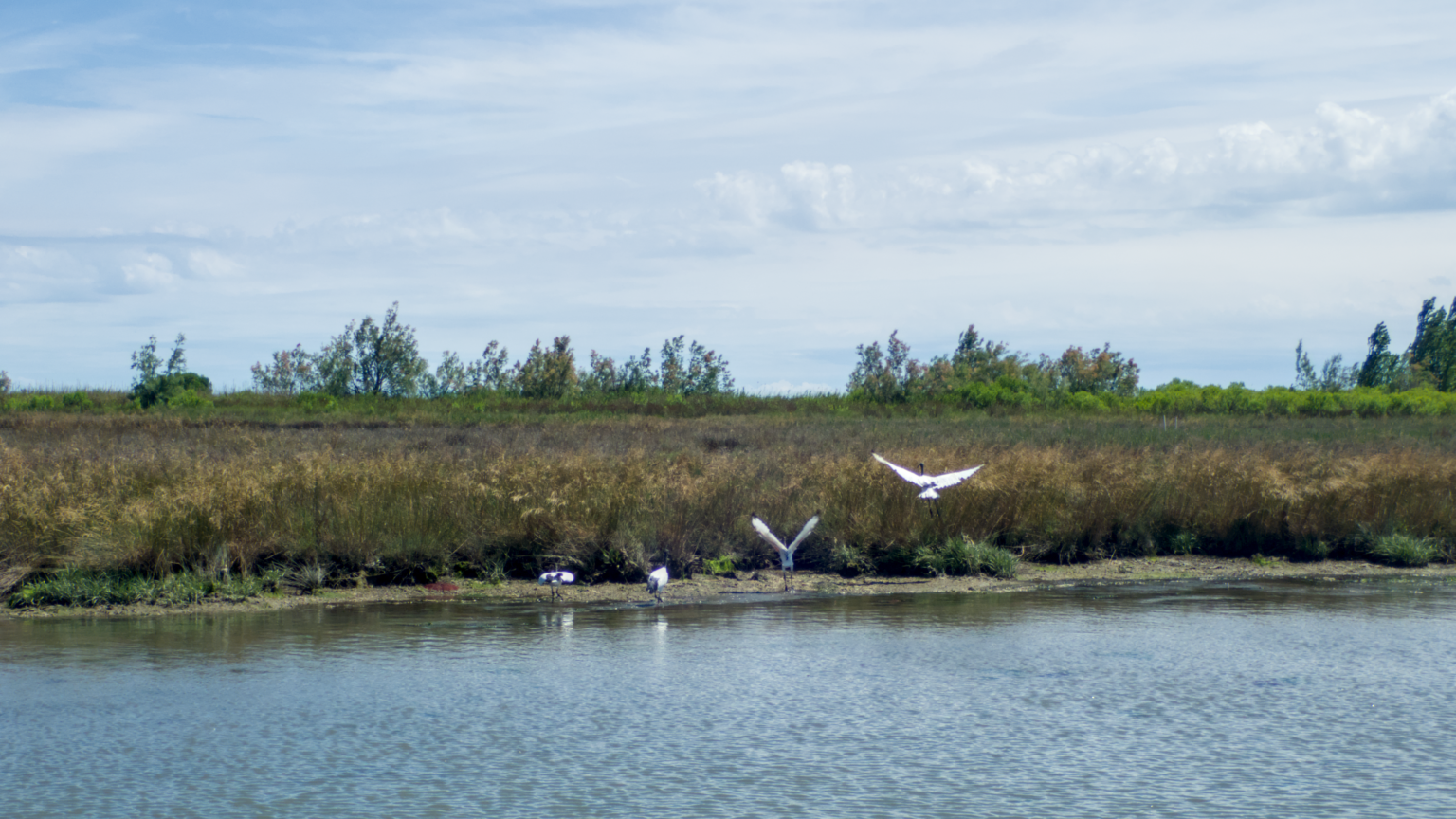
The medieval landscape
There were more lagoons on the coast of Venetia than what exists today, and even the lagoon landscapes were different. In fact, had it been left to nature, there would have been no lagoons today.
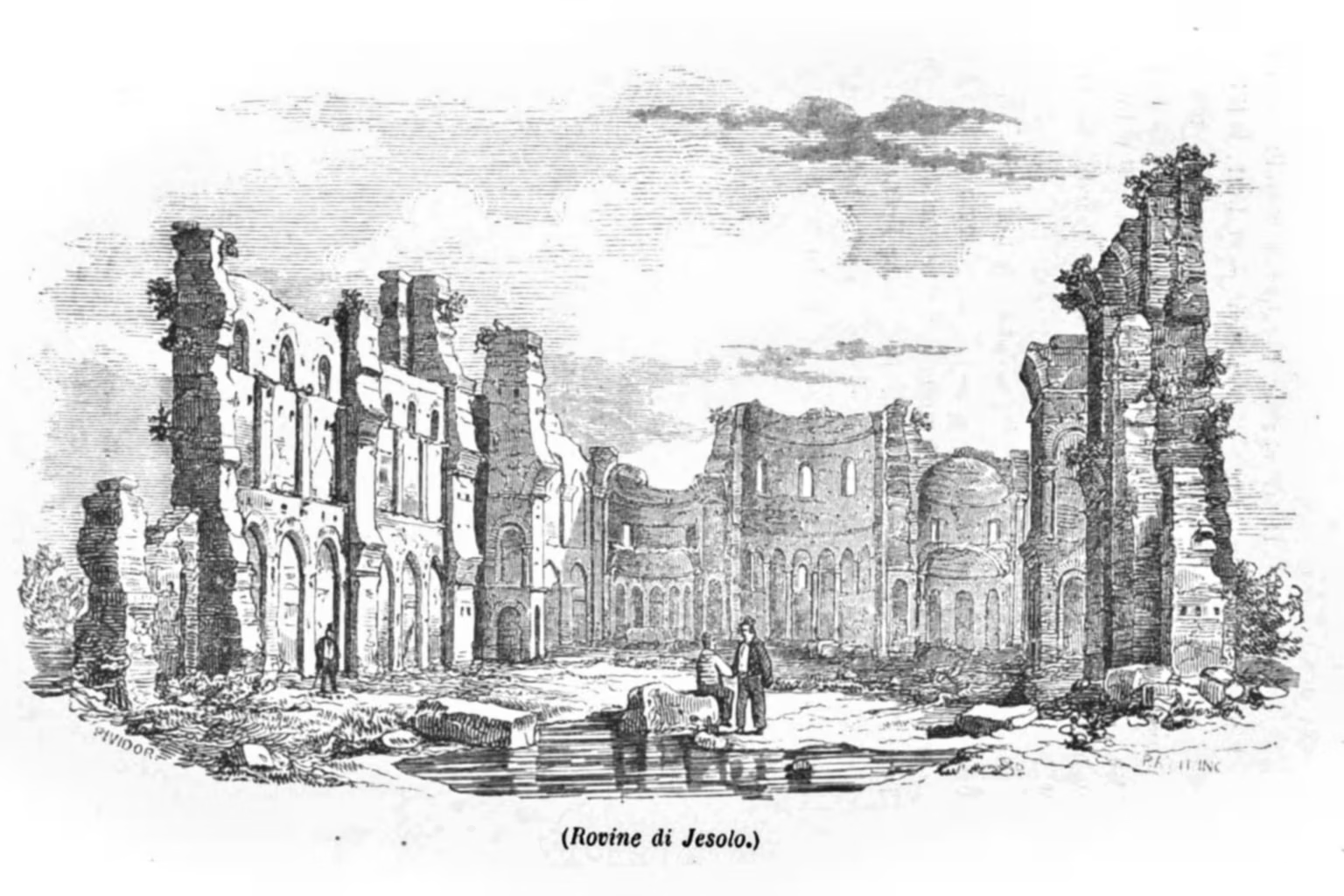
The lagoon settlements
The lagoon was settled in Antiquity, and in the 600s, there were numerous known towns, and several important cities. Venice, however, was not one of them.
The Dogado and the first doges
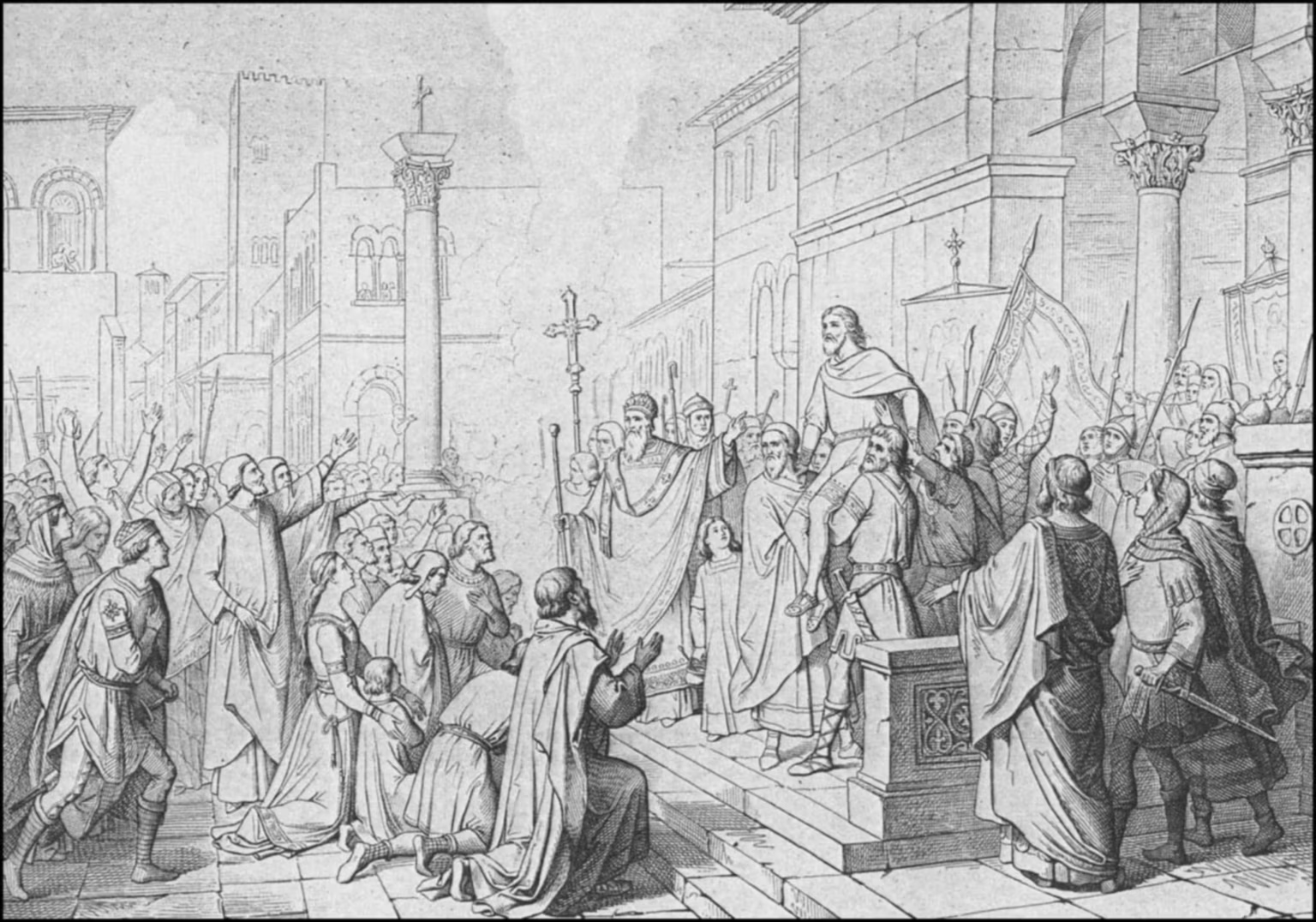
Early Venice, as a political entity, started as a duchy — what the Venetians later called the dogado.
A duchy must be in want of a duke, but the situation around the first dukes — or doges — of a more or less independent Duchy of the Venetians is very murky indeed.
We don’t even know who the first doge of Venice was, or when he was elected.
The Exarchate and the Papacy
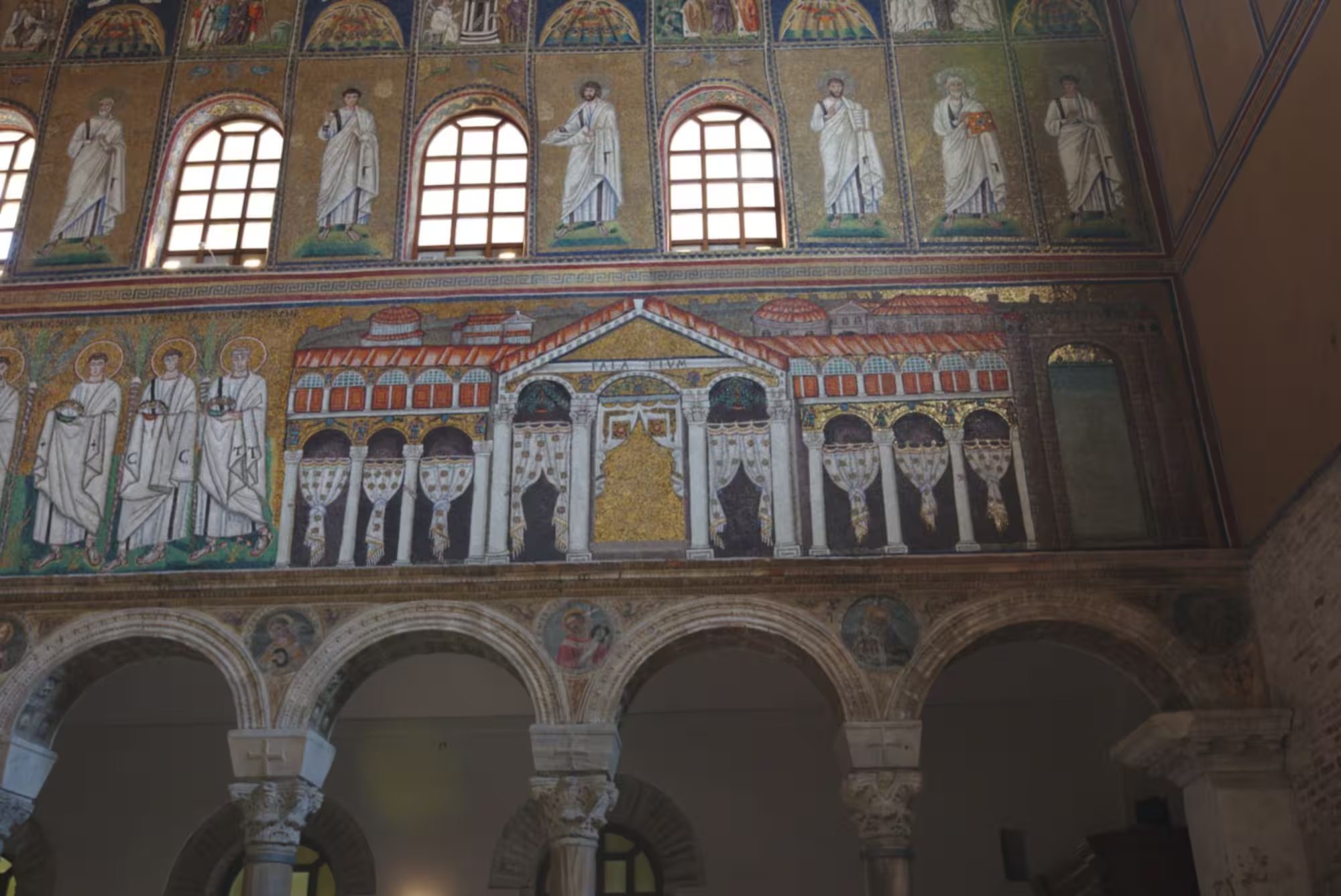
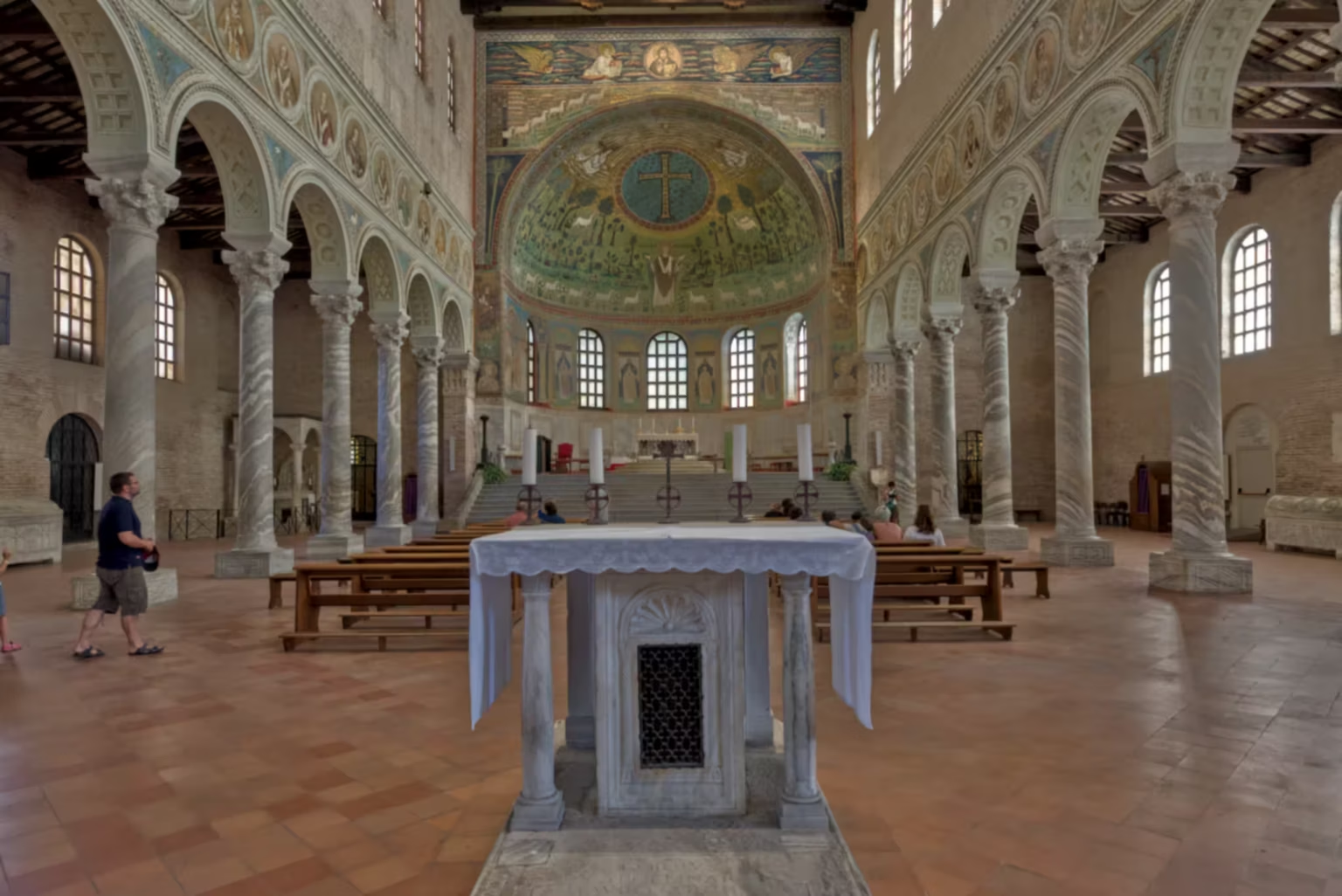
The presence of the Exarchate of Ravenna was a fixture in the world of the Venetians in the 600s and into the 700s.
Venetia was a Byzantine duchy under the Exarchate of Ravenna, which was how the Eastern Roman Empire had organised its territories in Italy.
What happened in and with the Exarchate of Ravenna often had a direct influence on the province of Venetia.
The demise of the Exarchate
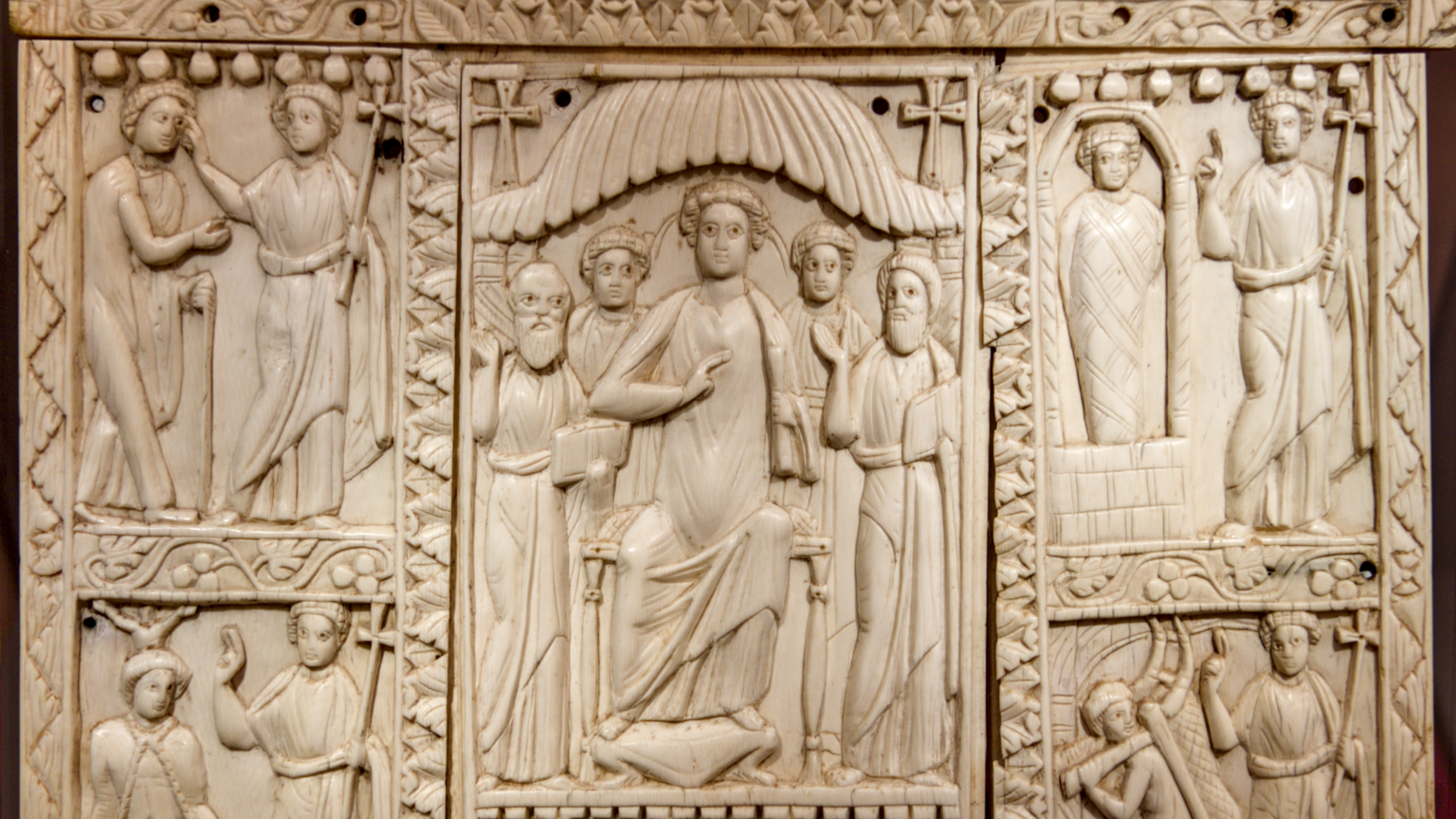
Towards the end of the 600s, the Byzantine Empire had plenty of issues on many fronts, but the Lombards in Italy wasn’t one of the worst.
In fact, things were rather quiet on the western front. From the death of king Grimuald in 671, until the reign of Liutprand, which started in 712, there were no major conflicts, even if there were regular squabbles along the various borders.
Articles in preparation:
- Too many patriarchs
- War and peace with the Franks
- Saint Mark
- A national narrative
The first doges of Venice
Paulicius — the first doge of Venice?
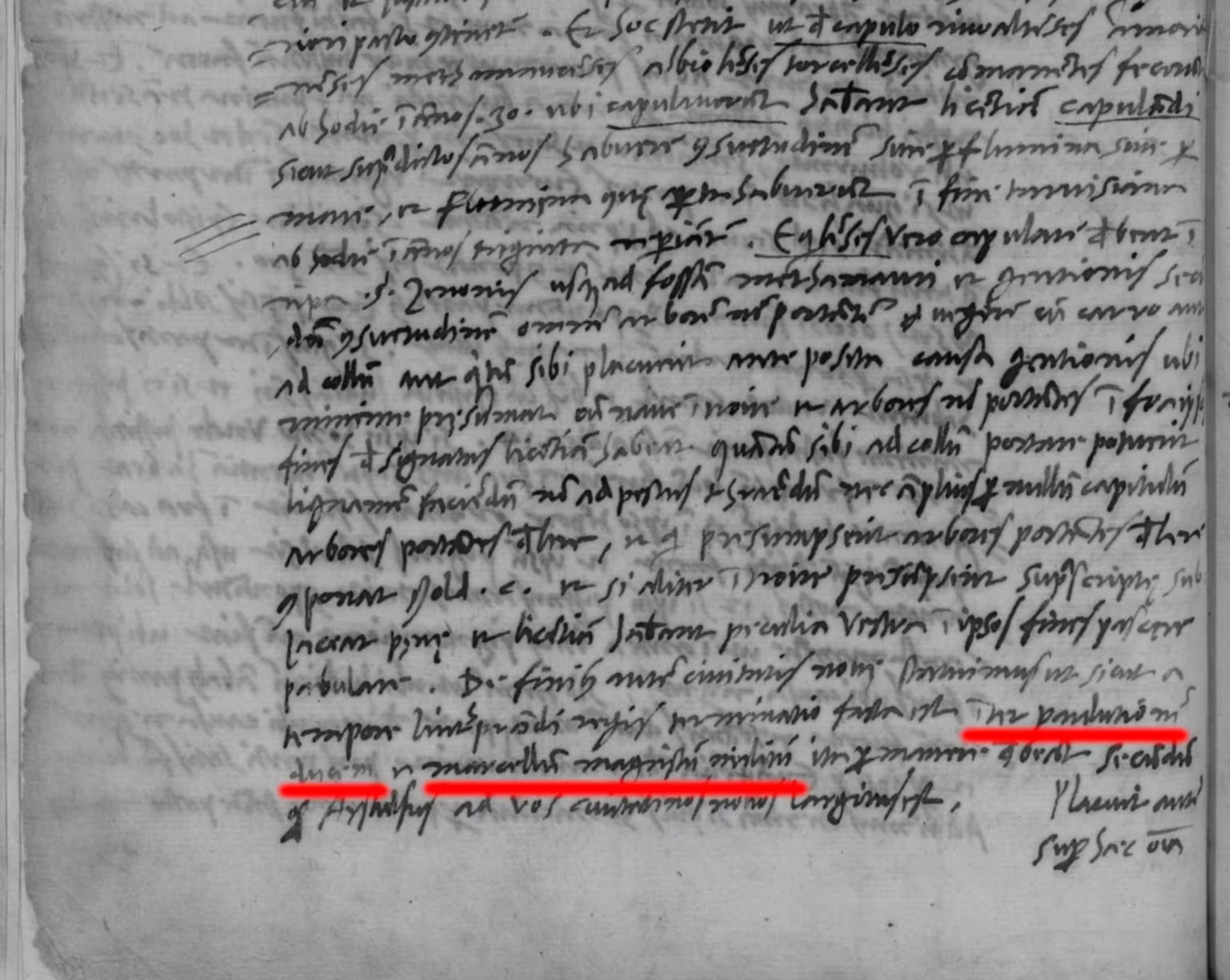
Was the first doge really the first? Did he even exist? And if he didn’t, why is he there? There are some serious questions about doge Paulicius (697·717) to be examined.
Marcellus — Byzantine or Venetian?
The second doge of Venice, Marcellus, might not have been a Venetian duke, but a Byzantine official.
It might all be based on misreadings of important documents, and maybe even falsifications of papal letters, for good order.
Ursus Hypatos — third and first doge of Venice
Ursus Hypatos — or Orso Ipato in Italian — was the third doge on the traditional list of doges of Venice, but probably the first to be chosen by the Venetians. The nominally first, Paulicius, most likely never existed, and the second, Marcellus, was probably a Byzantine appointee.
We know very little about duke Ursus.
The five magistri militum
After the first three doges of Venice, there was a kind of interregnum, which lasted five or six years.
In this period, between 737 and 742, rather than having a duke or doge chosen for life — or until he was deposed having his eyes gouged out — the Duchy of the Venetians was governed by officials called magistri militum — masters of the soldiers — which was a Byzantine military rank.
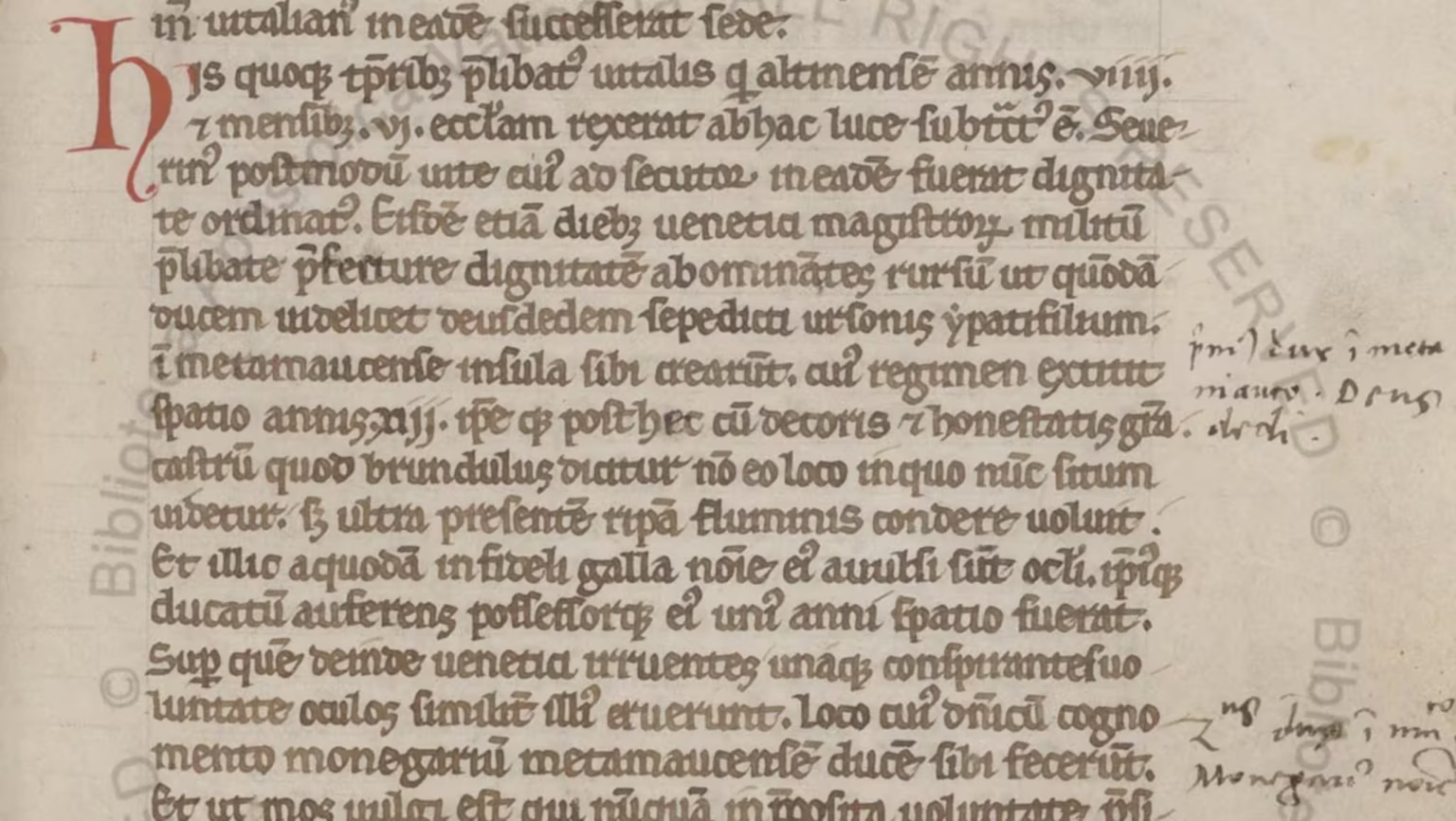
Deusdedit Hypatos
Deusdedit was the fourth doge of Venice on the traditional list, ruling from 742 to 755 in the traditional chronology.
Our knowledge of Deusdedit is based almost entirely on the Istoria Veneticorum by John the Deacon, written around the year 1000. The Chronicon Altinate and the Chronica per extensum descripta by Andrea Dandolo added a few more details.
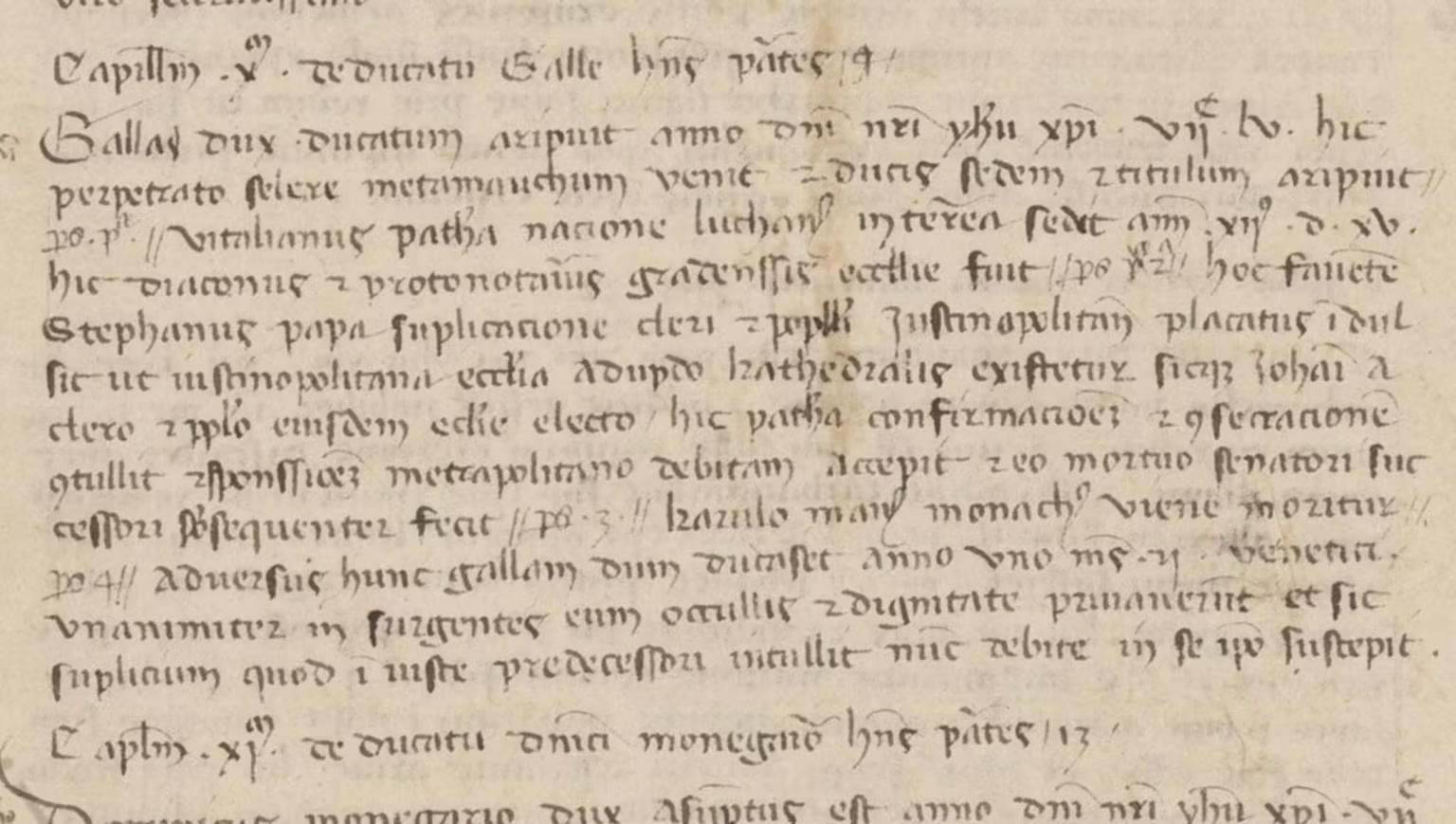
Galla — a most wicked man
Galla was the fifth doge of Venice, but according to tradition he only served one year and two months, before he was deposed, just as he had deposed the previous doge, Deusdedit Hypatos.
He ruled from 755 to 756, according to the chronology established in the 1340s by Andrea Dandolo.
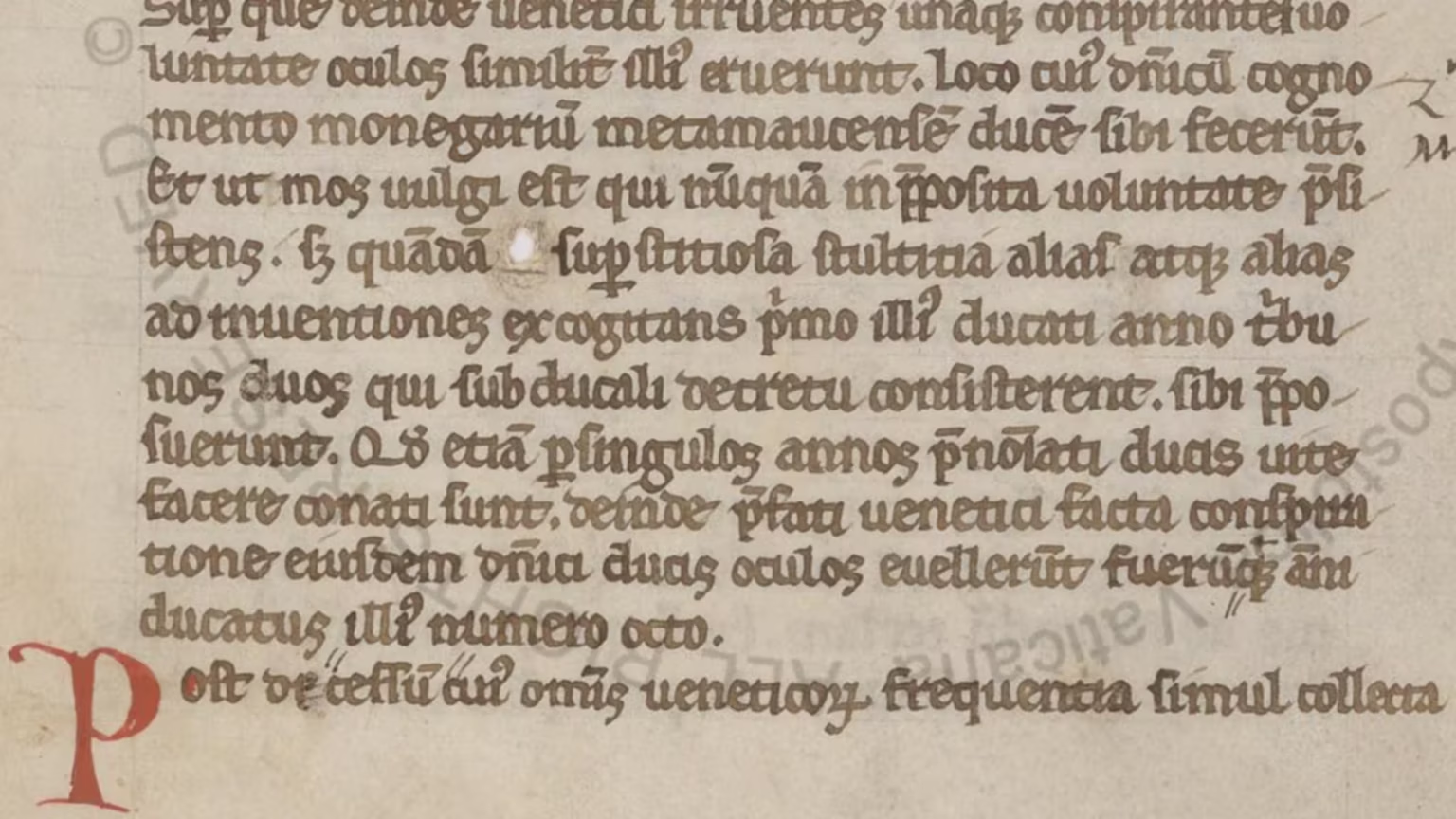
Domenicus Monegarius
Domenicus Monegarius was the sixth doge of Venice, following the deposition and blinding of duke Galla.
Ruling from 756 to 764, according to the traditional chronology, he, too, was deposed and blinded after eight years on the ducal throne.
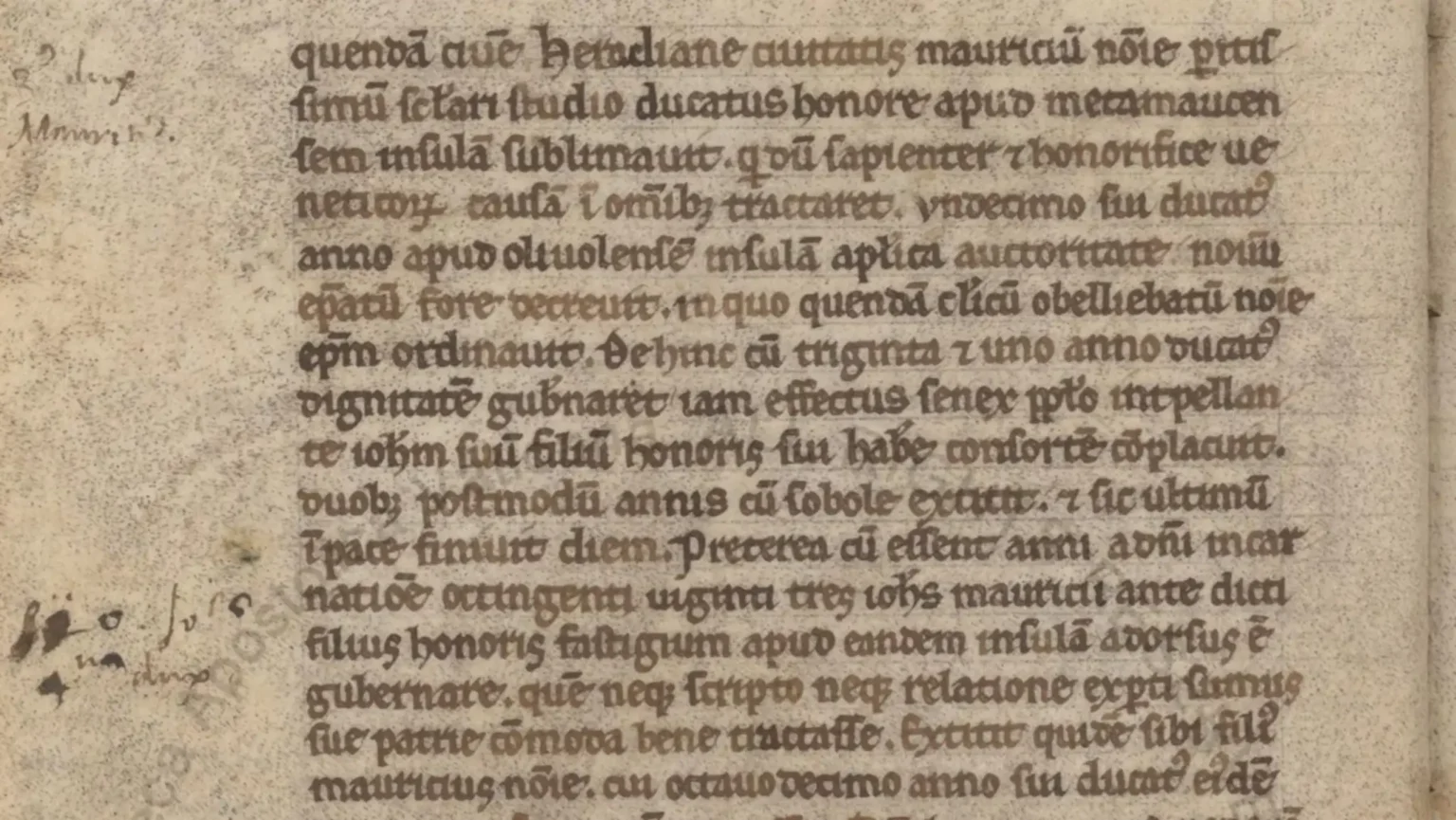
The Galbaio dynasty
Mauricius was the seventh doge, rising to power after the deposition of Domenicus Monegarius in 764.
During his reign, his son Giovanni became co-ruler, and succeeded him in 787, in what was a dynastic succession.
Giovanni likewise made his son Mauricius co-ruler, until they were deposed in 804.
The principal sources
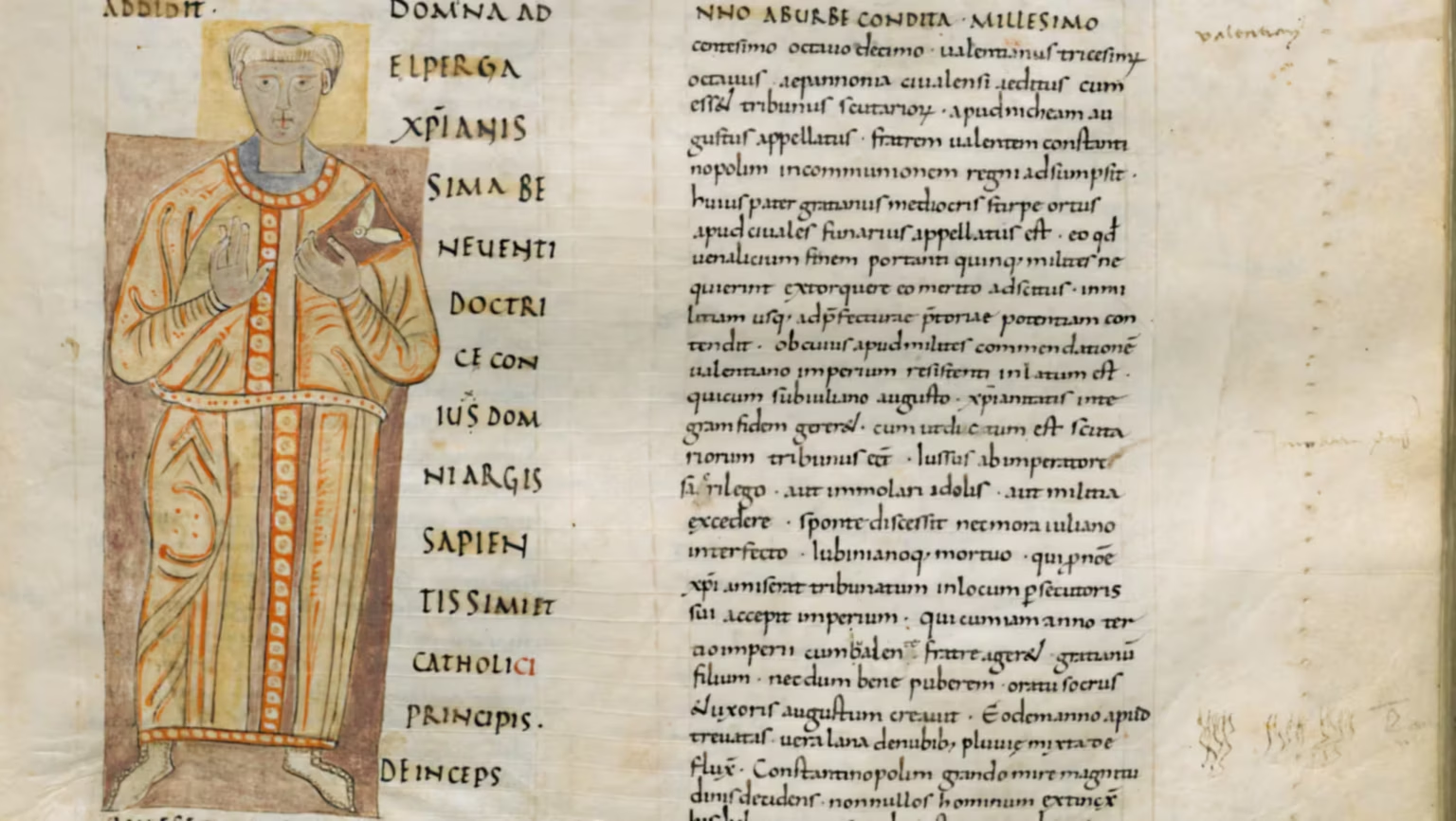
Main sources for early Venice
A summary of the main primary sources for the early history of Venice, and where to find them.
Many of them are discussed more in-depth below.
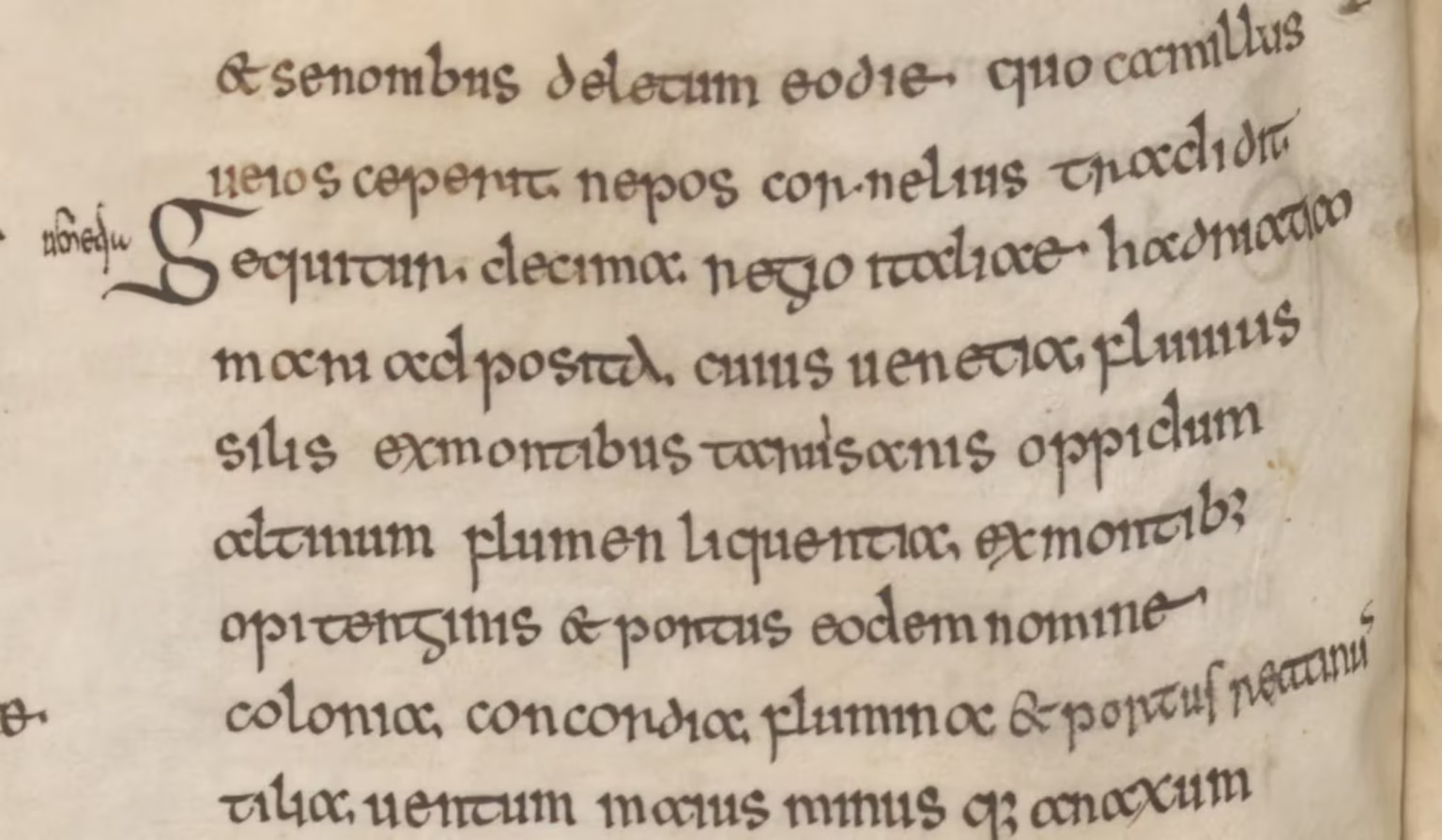
Pliny the Elder on Venetia
In his monumental Naturalis Historia (Natural History), Pliny the Elder wrote about the Regio X Venetia et Histria — the region of Italy instituted at the time of Augustus.
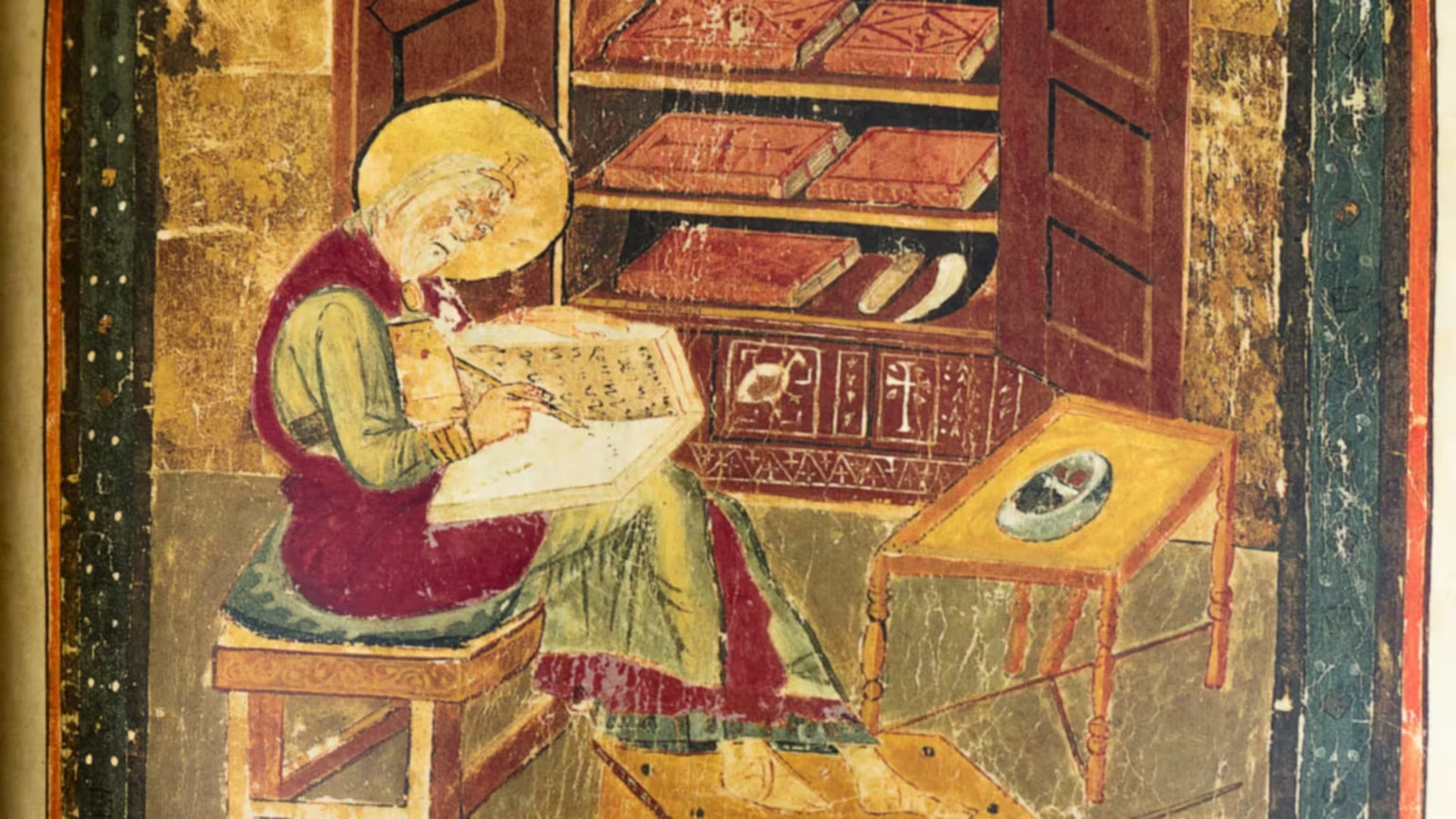
The letters of Cassiodorus
The first mention of the peoples of the lagoons of Venetia are in some letters, probably from 537, from the Praetorian Prefect of the Ostrogoth kings of Italy, to the Tribunes of the Maritimes.
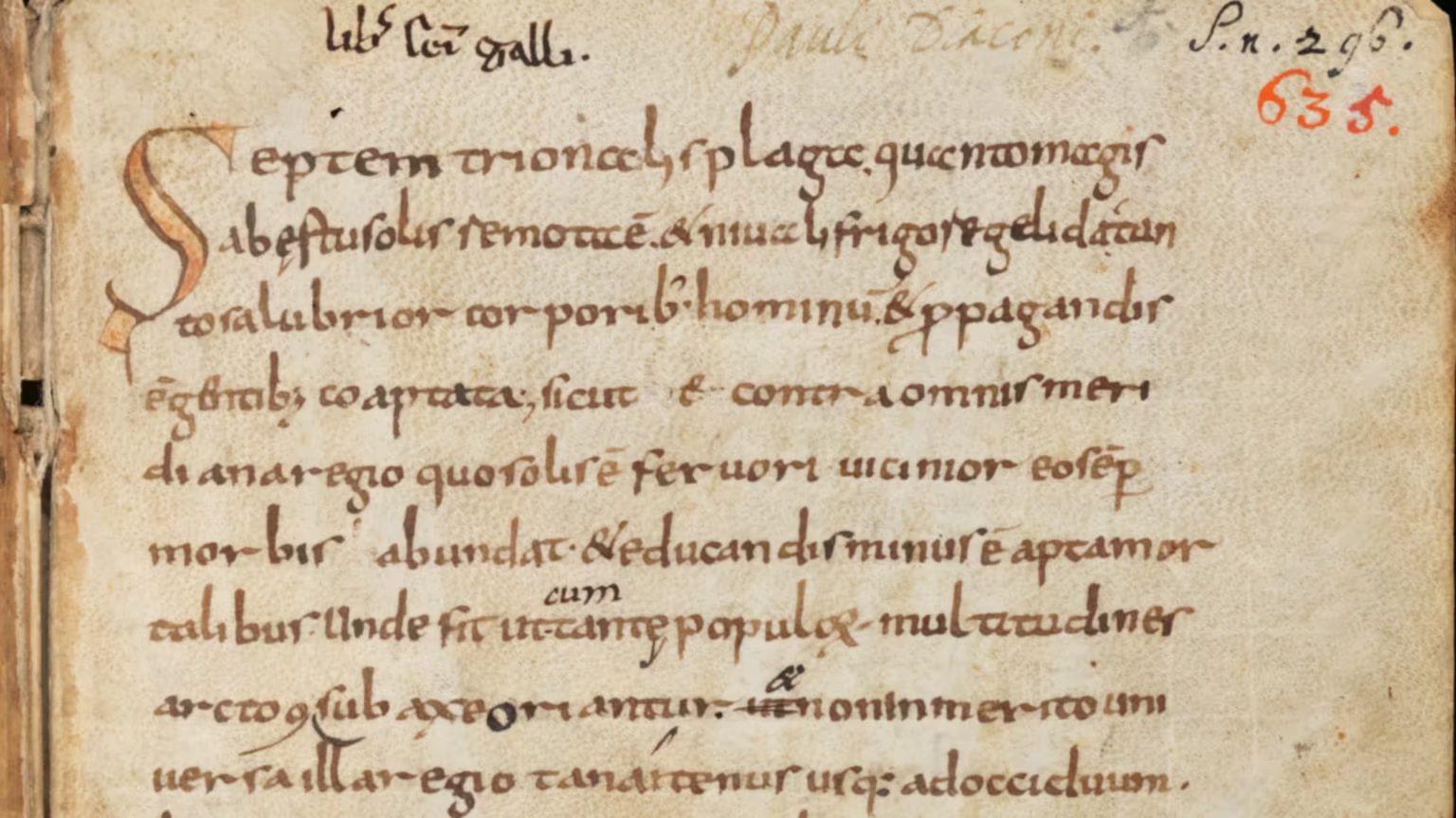
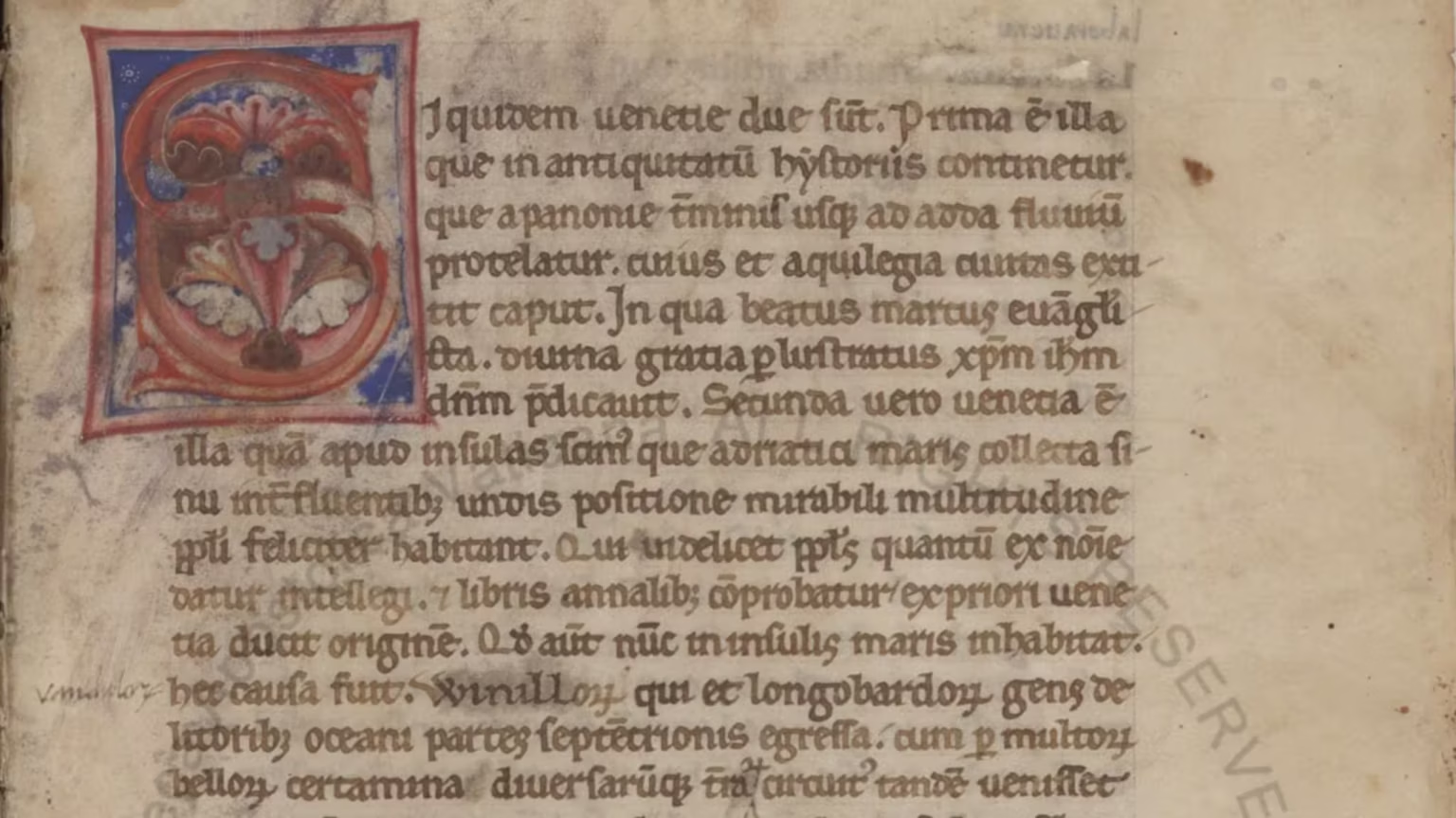
Historia Langobardorum
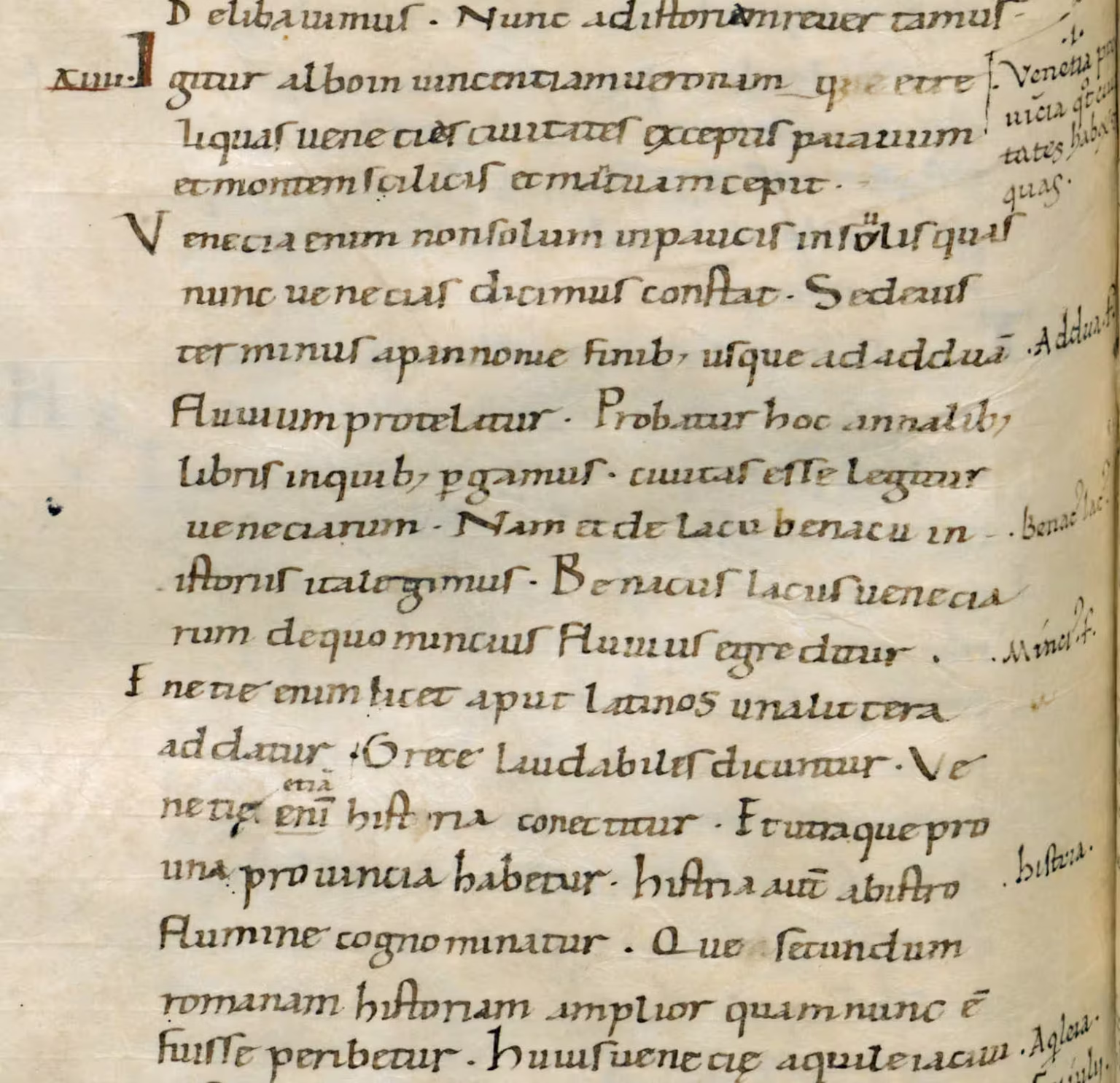
The Historia Langobardorum — The History of the Lombards — by Paul the Deacon is the oldest chronicle relevant to the history of Venice. It most likely dates to the 780s or 790s.
Pactum Lotharii (840)
The Pactum Lotharii was a treaty between the Duchy of the Venetians and the Holy Roman Empire, or parts thereof, from 840.
With the Pactum Lotharii, for the first time, the Venetians entered into an agreement with another country on their own, without the Byzantines at the table.
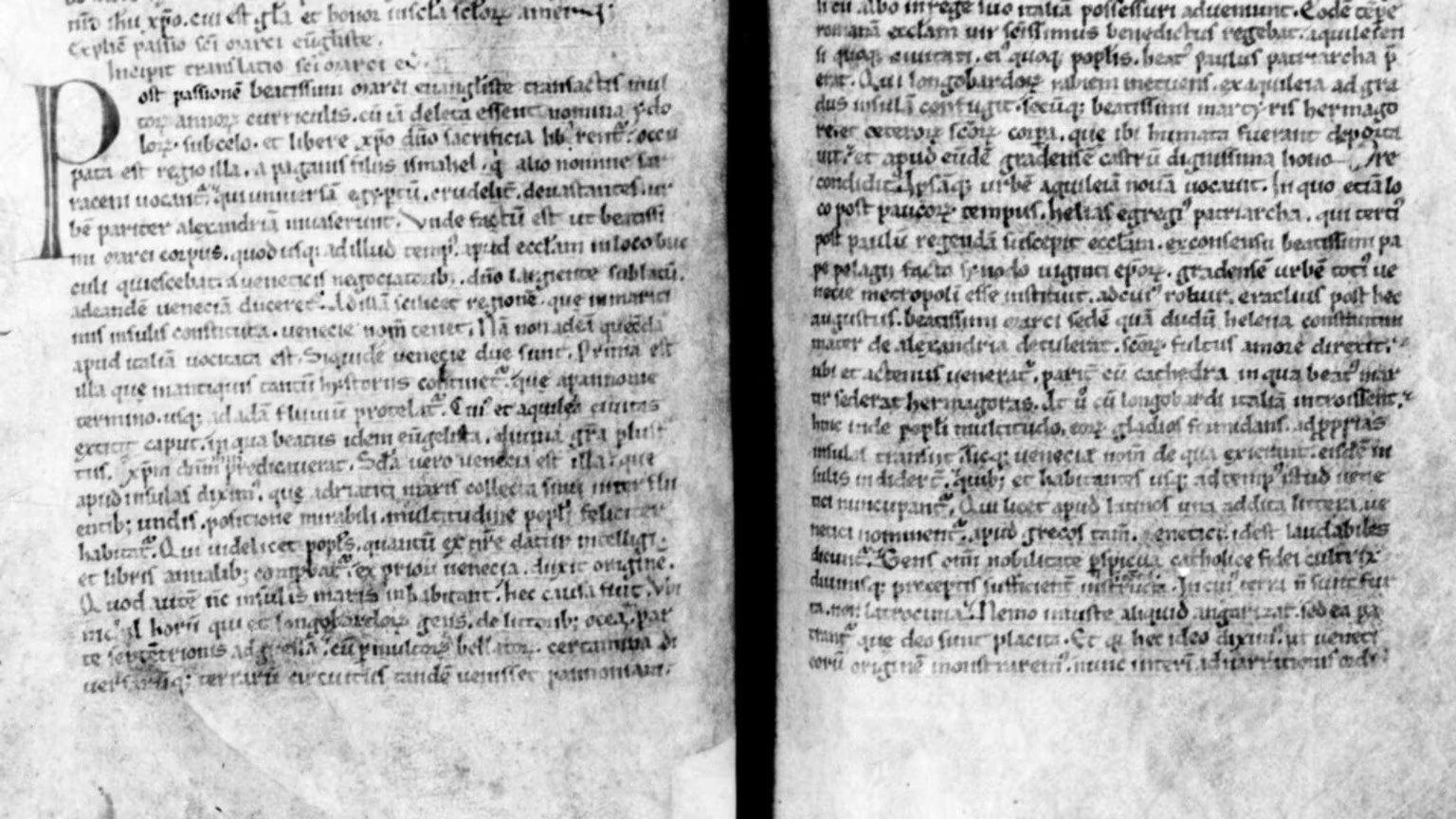
Translatio Marci Evangelistae Venetias
The Translatio Marci Evangelistae Venetias — or Translatio Sancti Marci — by an unknown author, is the earliest description of the translation (movement) of the relics of St Mark from Alexandria in Egypt to Venice in 827–828, by two Venetian merchants.
Liber Pontificalis
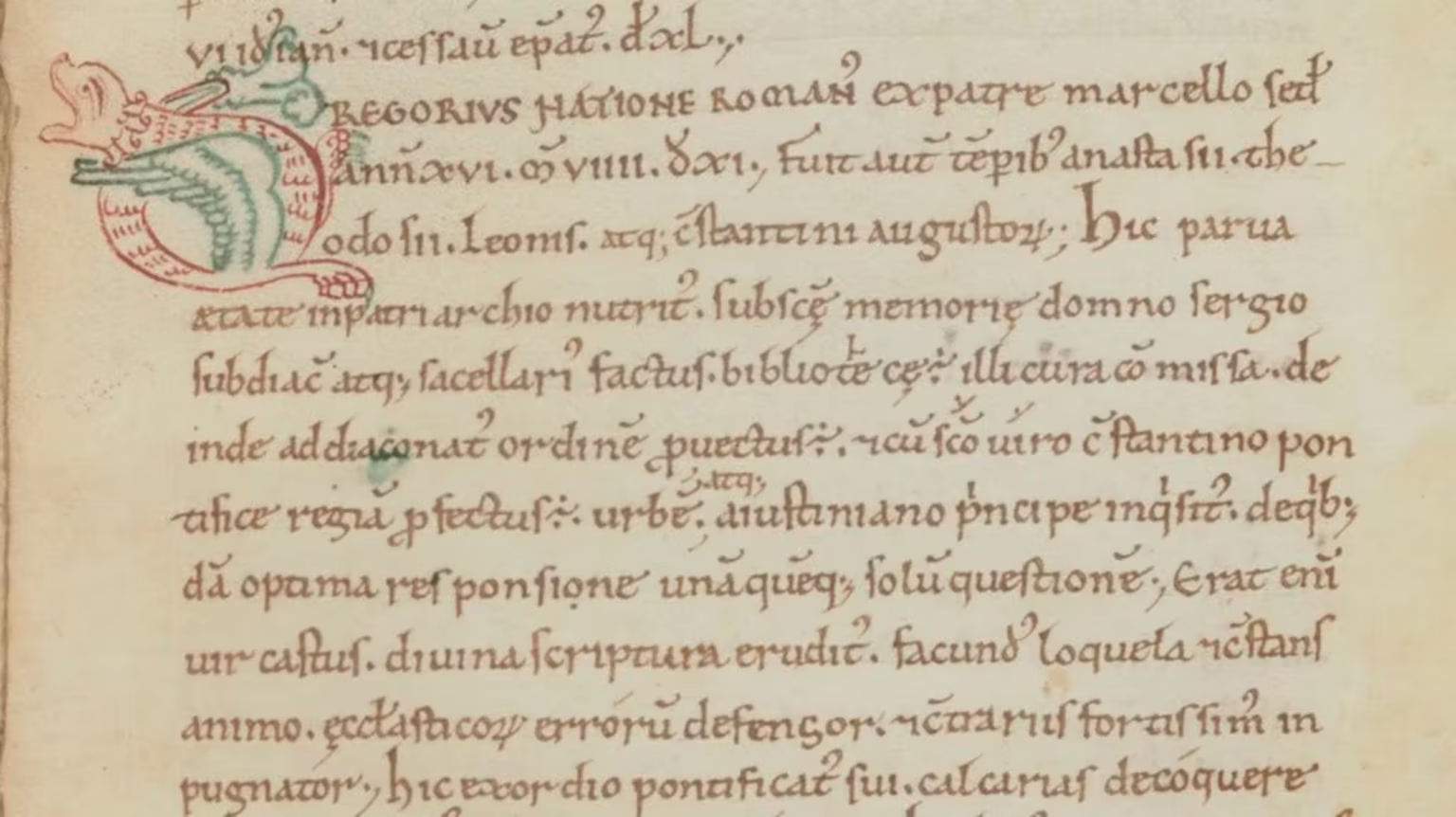
The Liber Pontificalis — the Book of the Popes — contains short biographies of the early popes of Rome. Compilation of the Liber Pontificalis started in the mid-500s.
- John III (561–574)
- Gregory II (715–731)
- Zachary (741–752)
- Adrian I (772–795)
Charters and letters
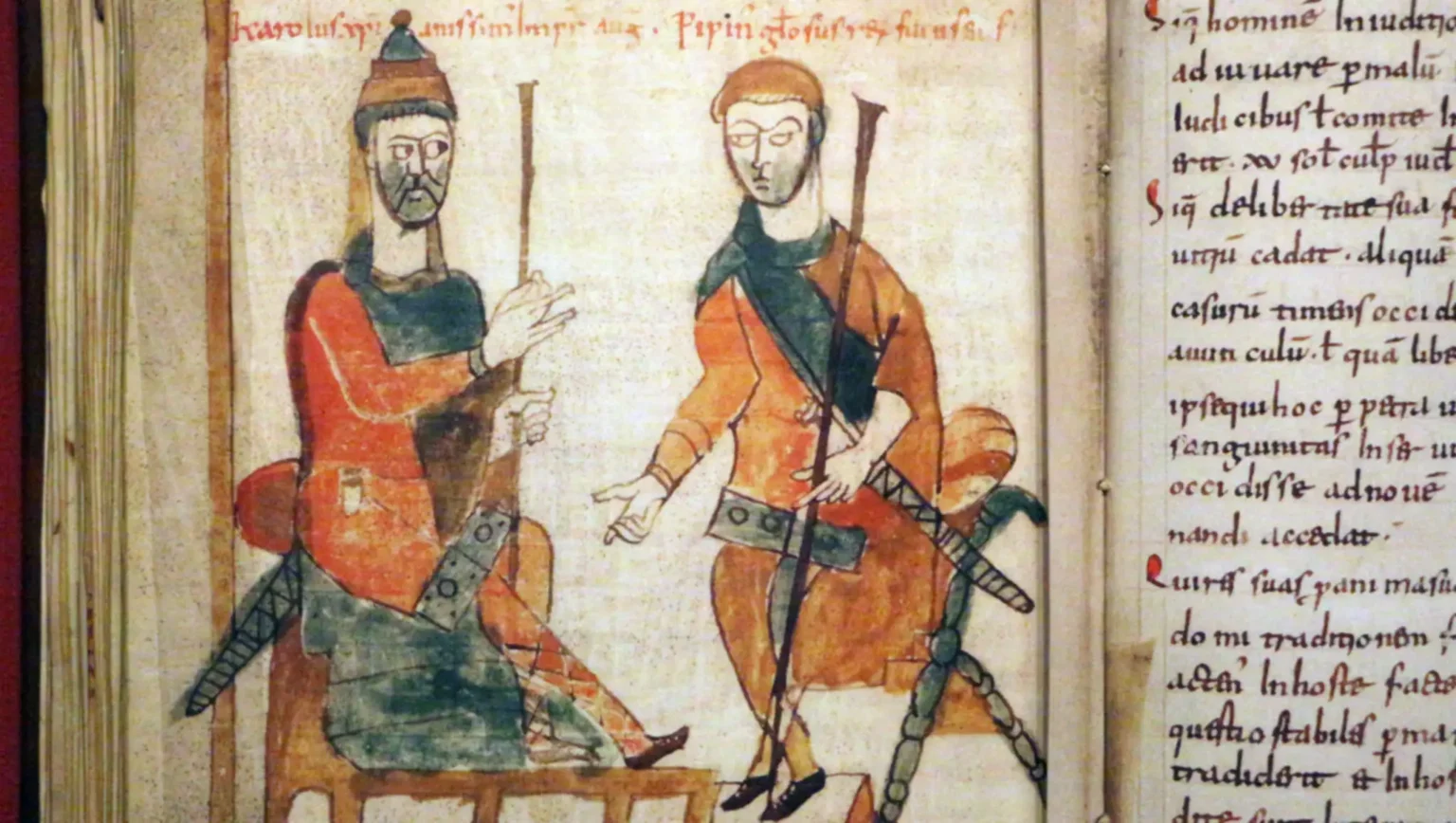
Various letters, charters and documents from the papacy, the Lombards, the Franks and the Byzantines sometimes touched on the Venetians.
De Administrando Imperio
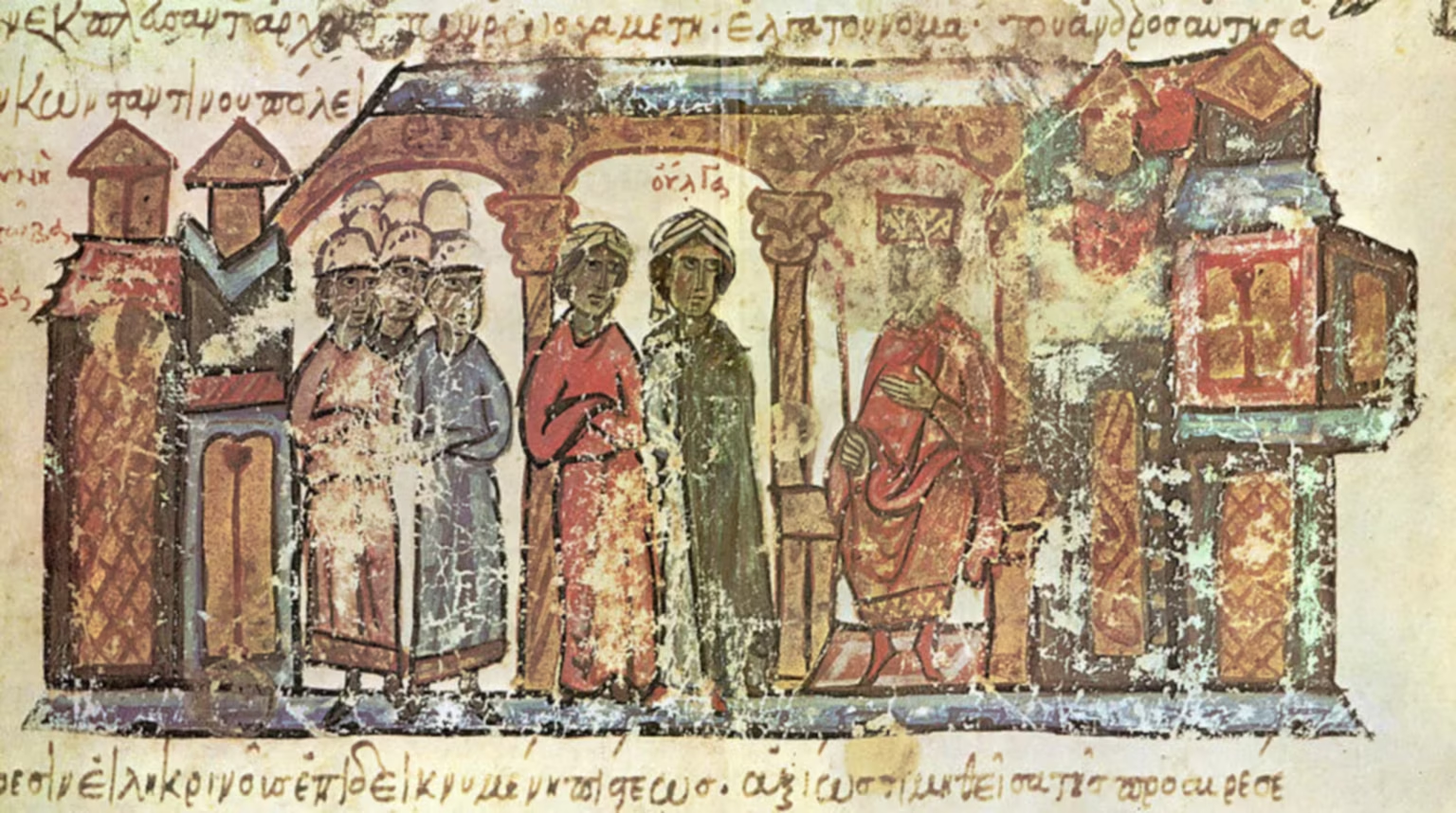
The Eastern Roman emperor Constantine VII Porphyrogenitus had a long, but very complicated reign. In the period around 950, he wrote an extensive manual on the administration of the empire for his son, Romanos II.
The Venetians are mentioned in chapter 27 (partially) and in chapter 28 (entirely).
Istoria Veneticorum
The chronicle of John the Deacon — often called the Istoria Veneticorum — is the first work of Venetian chronicle, from around 1008.
It has been hugely influential on just about every later chronicle or history book on the early centuries of Venice.
Chronicon Altinate
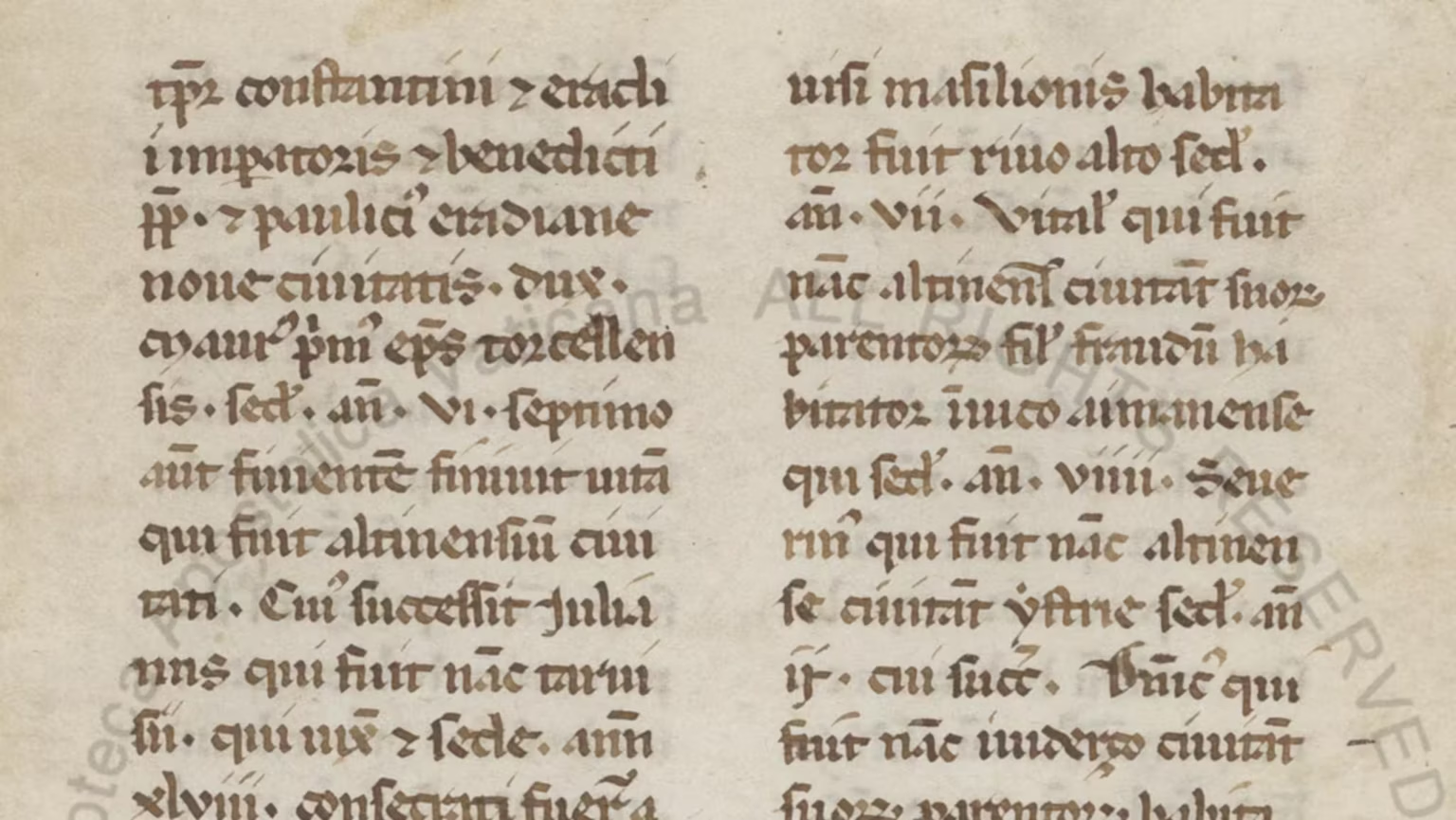
The Chronicon Altinate — the Chronicle of Altino — is not, despite the name, a chronicle, but a collection of various texts, which treats various topics.
The earliest manuscripts with the Chronicon Altinate are from the 1200s, but several of the texts are earlier.
Chronica Extensa
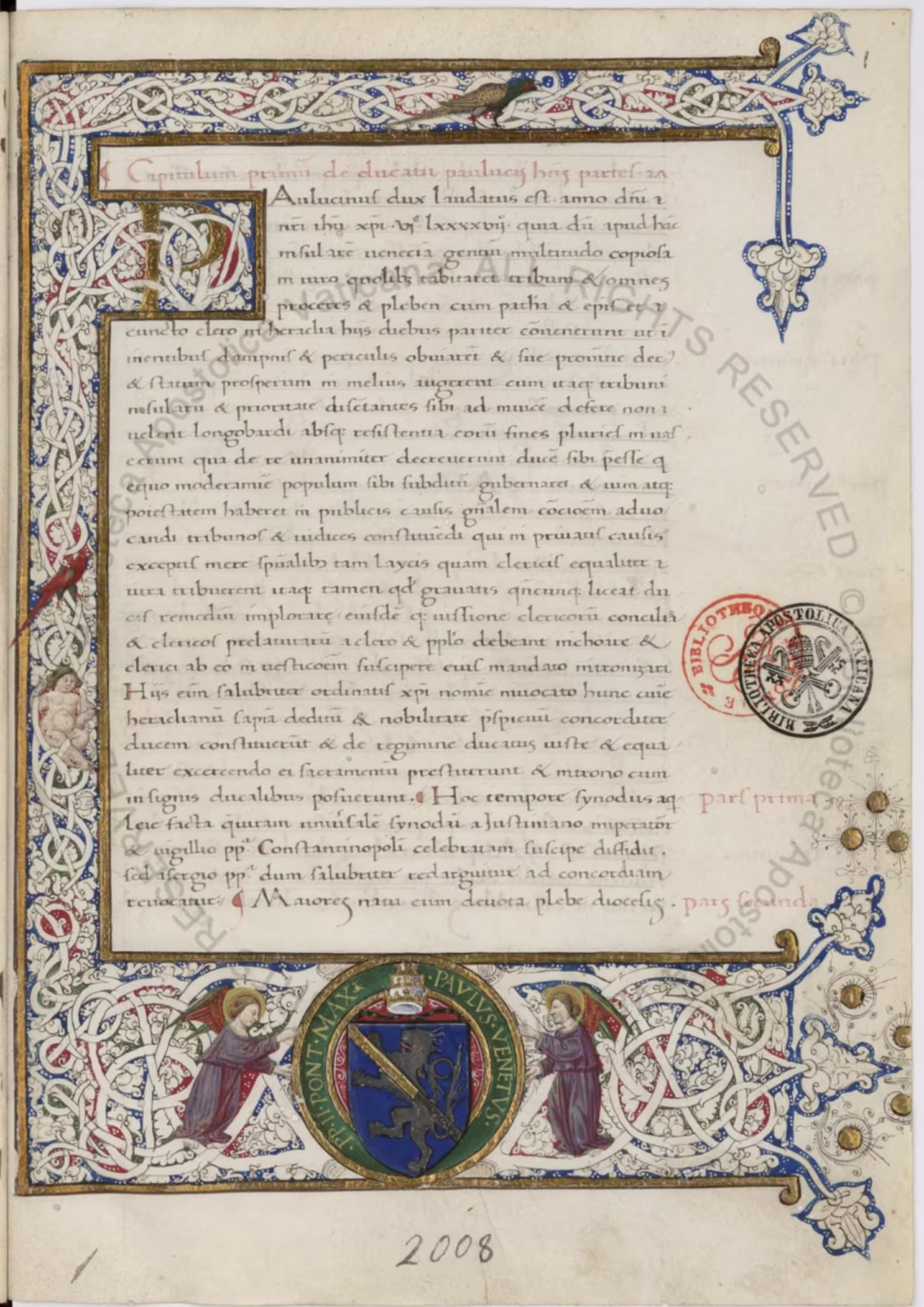
The Chronica per extensum descripta by Andrea Dandolo — doge of Venice 1343-1354 — was an influential early chronicle of the history of Venice, from the mythical foundations to the early 1300s.
A contemporary manuscript from the 1340s, written in the ducal chancery in Venice, survive, along with many copies.

Venetian Stories podcast
Much of the material above is also available on the Venetian Stories podcast.
Venetian Stories
- Episode 3 — The Roman and Byzantine period
- Episode 27 — Cassiodorus
- Episode 28 — The early sources
- Episode 29 — The Lombard Invasion
- Episode 30 — Venetia Maritima
- Episode 31 — The world of Venetia
- Episode 32 — The first doges of Venice
- Episode 33 — The Demise of the Exarchate
- Episode 34 — The Duchy of the Venetians
- Episode 35 — Patriarchs galore
Lists and chronologies
- Invasions of Italy in Late Antiquity
- Chronology of the Lombard invasion
- Kings of the Lombards
- Exarchs of Ravenna
- Doges of Venice
- Patriarchs of Grado and Venice
- Cancellieri Grando
Leave a Reply