This chapter from Istoria Veneticorum by John the Deacon is the earliest Venetian description of the main settlements in the lagoons from Grado to Cavarzere.
While it purports to describe the situations just after the Lombard invasion and conquest of Venetia, it is more likely that John the Deacon described the lagoons as they were at his time, around the year 1000.
John the Deacon limited the list to twelve localities, probably to make a parallel with the twelve apostles, but other sources, even earlier texts such as the Pactum Lotharii and the De Administrando Imperio by Constantine VII Porphyrogenitus, list many more.
All in all, our sources mention around three dozen Venetian settlement from the earliest centuries, not all of which are identifiable today.
Source: Istoria Veneticorum (c.1008) by John the Deacon, translated by René Seindal, and controlled with the Italian translation in Iohannes : Diaconus Venetus et.al. (1999).
Available translations from the Istoria Veneticorum:
- The settlements of the lagoons — chapter I.7
- The first doges — chapters II.1–2, II.10–11 and II.14.
- Hildeprand in Ravenna — chapters II.12–13.
- Doges of the 700s — chapters II.17–19, 22 and 24.
Chapter I.7
Now, indeed, it is necessary to properly express the names of the individual islands.
The first is called Grado, which possesses high walls and churches richly decorated and full of the bodies of saints, and just as Aquileia was in ancient Venice, so it is recognized that this [place] will be the head and metropolitan see of all the new Venice.
The second island is called Bibione.
The third, however, is called Caorle, to which the bishop of Concordia, arriving there with his companions, terrified by fear of the Lombards, with the authority of Pope Adeusdatus confirmed that his episcopal see would remain there in the future and decided to dwell there.
The fourth island, on which long ago a city had been built with great care by Emperor Heraclius, but worn down by age, the Venetians rebuilt it smaller. However, after the city of Opitergium1 was captured by King Rothari,2 the bishop of that city wished, by the authority of Pope Severinus, to seek refuge in this city of Heraclia and establish there his see.
The fifth island is called Equilo,3 on which, as the people living there were lacking an episcopal see, a new bishopric was established there by divine authority.
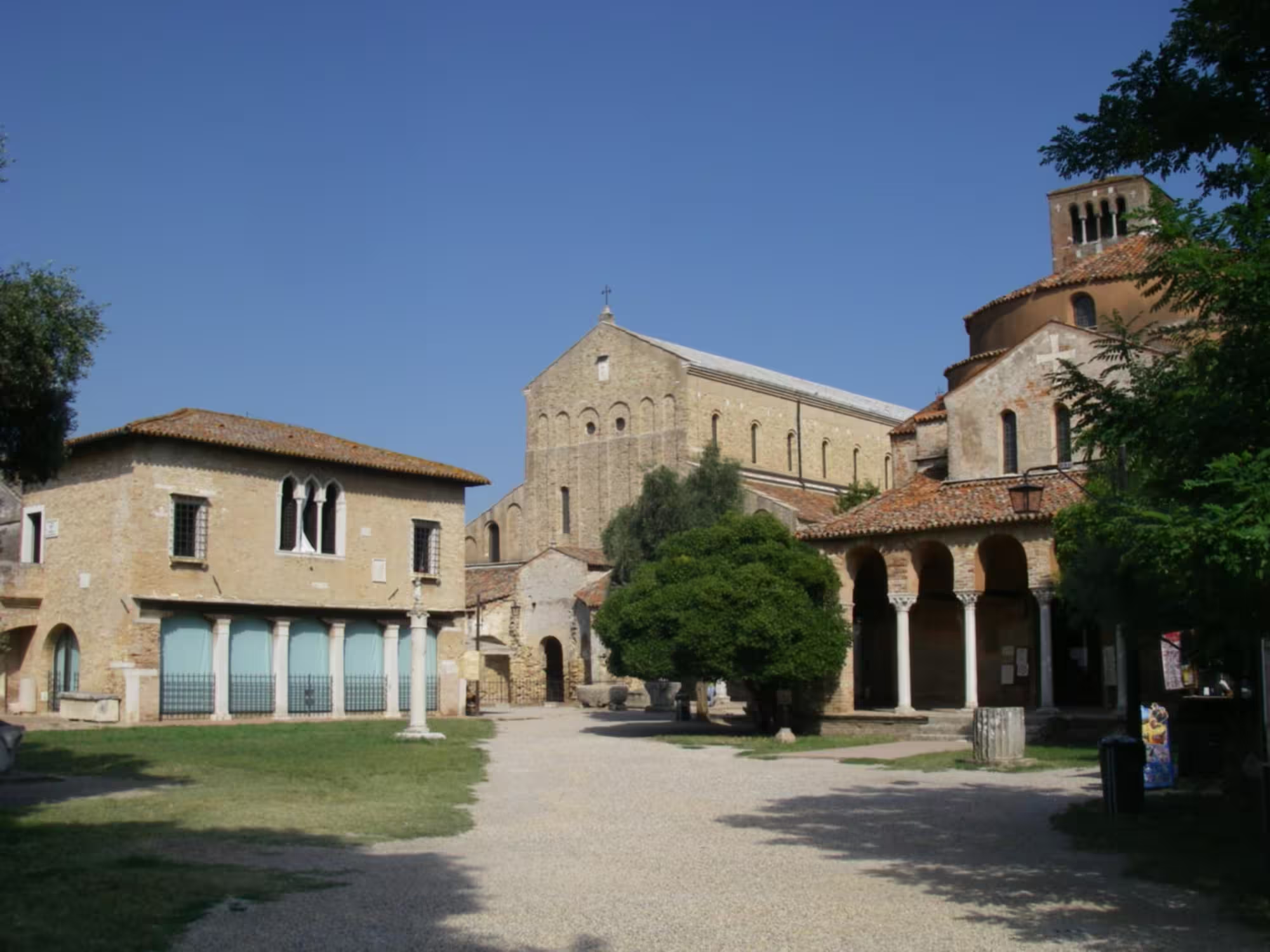
The sixth island, Torcello, remains, although it does not have walls, nevertheless, surrounded by the fortifications of the other islands, it is very secure in the midst.
The seventh island is called Murano.
The eighth island is Rivoaltus, although the last where peoples chose to live, yet it remains the richest and most elevated of all, which is shown not only by the beauty of its churches or houses, but also because it possesses the dignity of the duchy and the seat of a bishopric.
The ninth island is called Metamauco,4 while not without the fortification typical of cities, it is almost entirely surrounded by a beautiful lido, where, by apostolic authority, the people have succeeded in having an episcopal see.
The tenth island is Poveglia.
The eleventh is called Minor Chioggia, in which the monastery of Saint Michael is placed.
The twelfth island is called Larger Chioggia.
There is also at the far end of Venetia a castle, which is called Cavarzere. There are, furthermore, a great many habitable islands in the same province.
Click to reveal the Latin text
Nunc vero singularum nomina insularum necesse est convenienter exprimere.
Prima illarum Gradus dicitur, que dum constat altis menibus ecclesiarumque copiis decorata sanctorumque corporibus fulta, quemadmodum antique Venecie Aquilegia, ita et ista totius nove Venetie caput et metropolis fore dinoscitur.
Secunda namque insula Bibiones nominatur.
Tertia vero Caprulas vocitatur, ad quam Concordiensis episcopus cum suis Longobardorum timoratione territus adveniens, auctoritate Deusdedi pape episcopati sui sedem inibi in posterum manendam confirmavit et habitare disposuit.
Quarta quidem insula estat, in qua dudum ab Eraclio imperatore fuerat civitas magnopere constructa, sed vetustate consumpta, Venetici iterum illam parvam composuerunt. Postquam autem Opiterine civitas a Rothari rege capta est, episcopus illius civitatis auctoritate Severiani pape hanc Eraclianam petere ibique suam sedem confirmare voluit.
Quinta insula Equilus nuncupatur, in qua dum populi illic manentes episcopali sede carerent, auctoritate divina novus episcopatus ibi ordinatus est.
Sexta insula Torcellus subsistit, que licet urbium menibus minime clarescat, tamen aliarum insularum munitione circumscepta, in medio tutissima pollet.
Septima insula Morianas vocitatur.
Octava quidem insula Rivoaltus subsistit, ad quam ad extremum licet populi ad habitandum confluerent, tamen ditissima et sublimata omnibus manet, que non solum ecclesiarum seu domorum decoritate ostentatur, verum etiam ducatus dignitatem atque episcopati sedem habere et possidere videtur.
Nona insula Metamaucus dicitur, que non indiget aliqua urbium munitione, sed pulchro litore pene ex omni parti cingitur, ubi auctoritate apostolica episcopalem sedem populi habere consecuti sunt.
Decima vero insula Pupilia manet.
Undecima minor Clugies dicitur, in qua monasterium sancti Michaelis scitum est.
Duodecima insula Clugies maior nuncupatur. Est etiam in extremitate Venetie castrum, quod Caput argilis dicitur. Sunt etenim apud eandem provintiam quam plurime insule habitabiles.
Notes
- Modern-day Oderzo, in antiquity Opitergium, was the administrative centre of Byzantine Venetia from after the invasion of the Huns in 452, until during the Lombard conquest, around 640. ↩︎
- Rothari (c. 606–652) was duke of Brescia, and king of the Lombards from 636 to 652. He was an Arian and very active militarily against the Exarchate. ↩︎
- Jesolo (Lat. Equilus) is a beach resort north of the Venetian lagoon, in an area which was lagoon in the early Middle Ages. ↩︎
- Malamocco (or Metamauco) was capital of the Venetian proto-state for parts of the 700s, possibly located on the Lido di Venezia. ↩︎
Leave a Reply