Grado
Grado was the seat of the Patriarch of Aquileia (later Grado) from 606 until 1172 when the patriarch moved to Venice. It was also traditionally the northernmost point of the Dogado.
-
The “Galbaio” dynasty
Mauricius and Giovanni Galbaio were the seventh and eighth doges of Venice. Together, they ruled the duchy for almost four decades.
-
Doges of the 700s — Chronica per extensum descripta
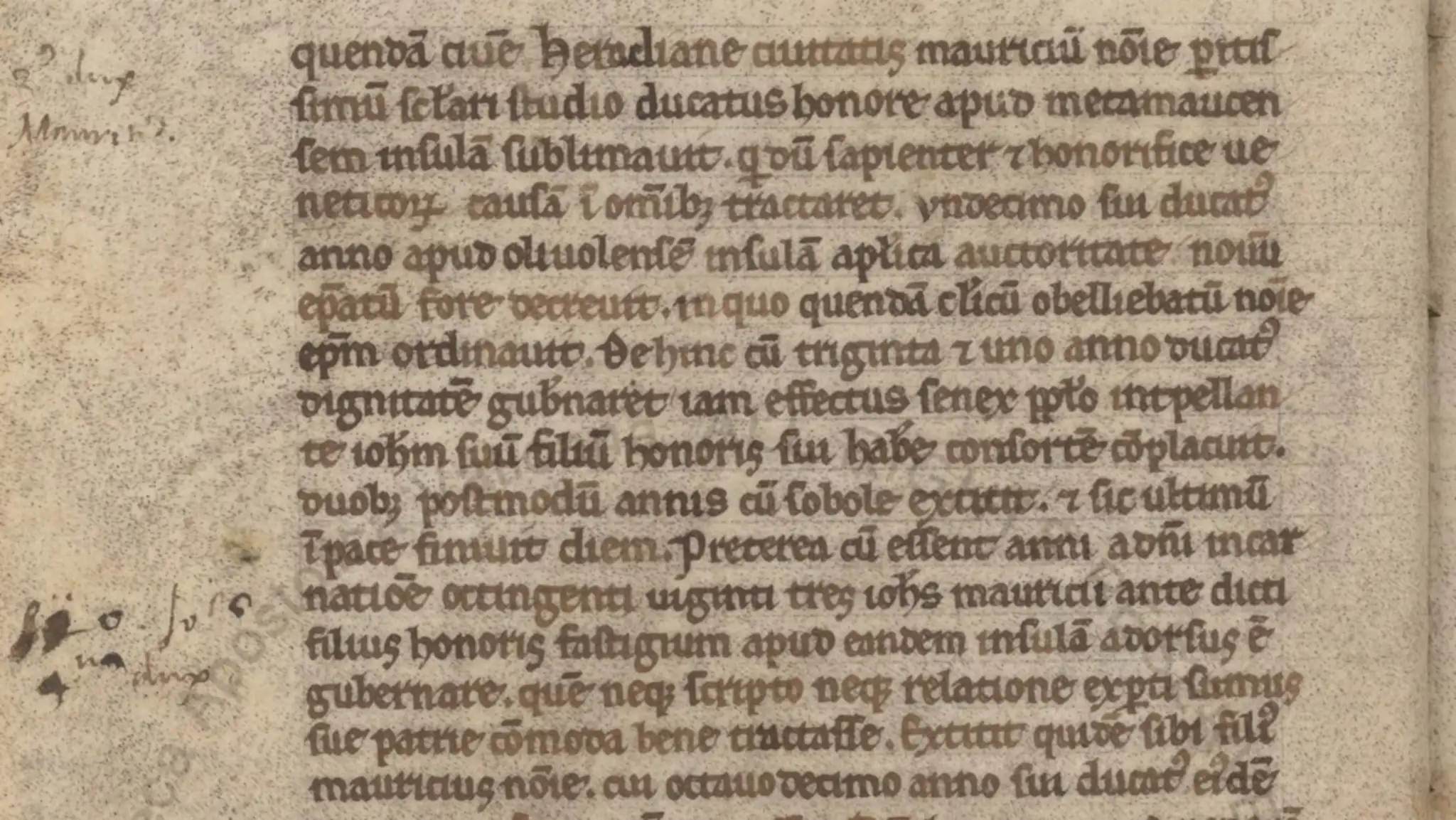
The doges Deusdedit (742-755), Galla (755–756), Domenico Monegario (756–764), Maurizio Galbaio (764–787) and his son Giovanni (787–804), from the “Chronica per extensum descripta” (1340s) by Andrea Dandolo.
-
Hildeprand in Ravenna — Chronica per extensum descripta
The Lombard attack on Ravenna, and the Venetian intervention to restore the Exarchate, excerpt from the “Chronica per extensum descripta” (1340s) by Andrea Dandolo.
-
Hildeprand in Ravenna — John the Deacon
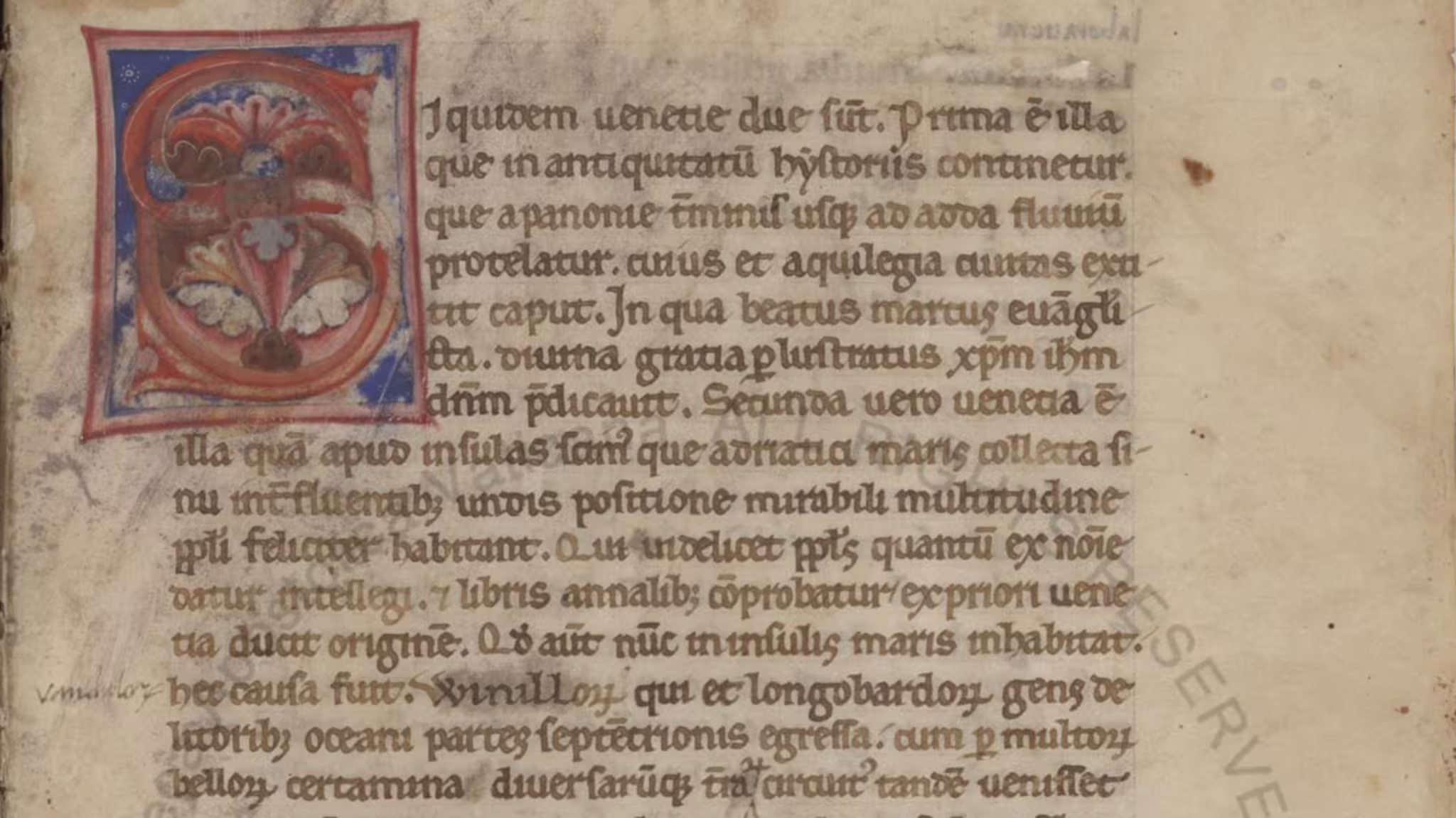
The Lombard conquest of Ravenna and how the Venetians saved the Exarchate (730s or 740s), excerpt from the “Istoria Veneticorum” by John the Deacon.
-
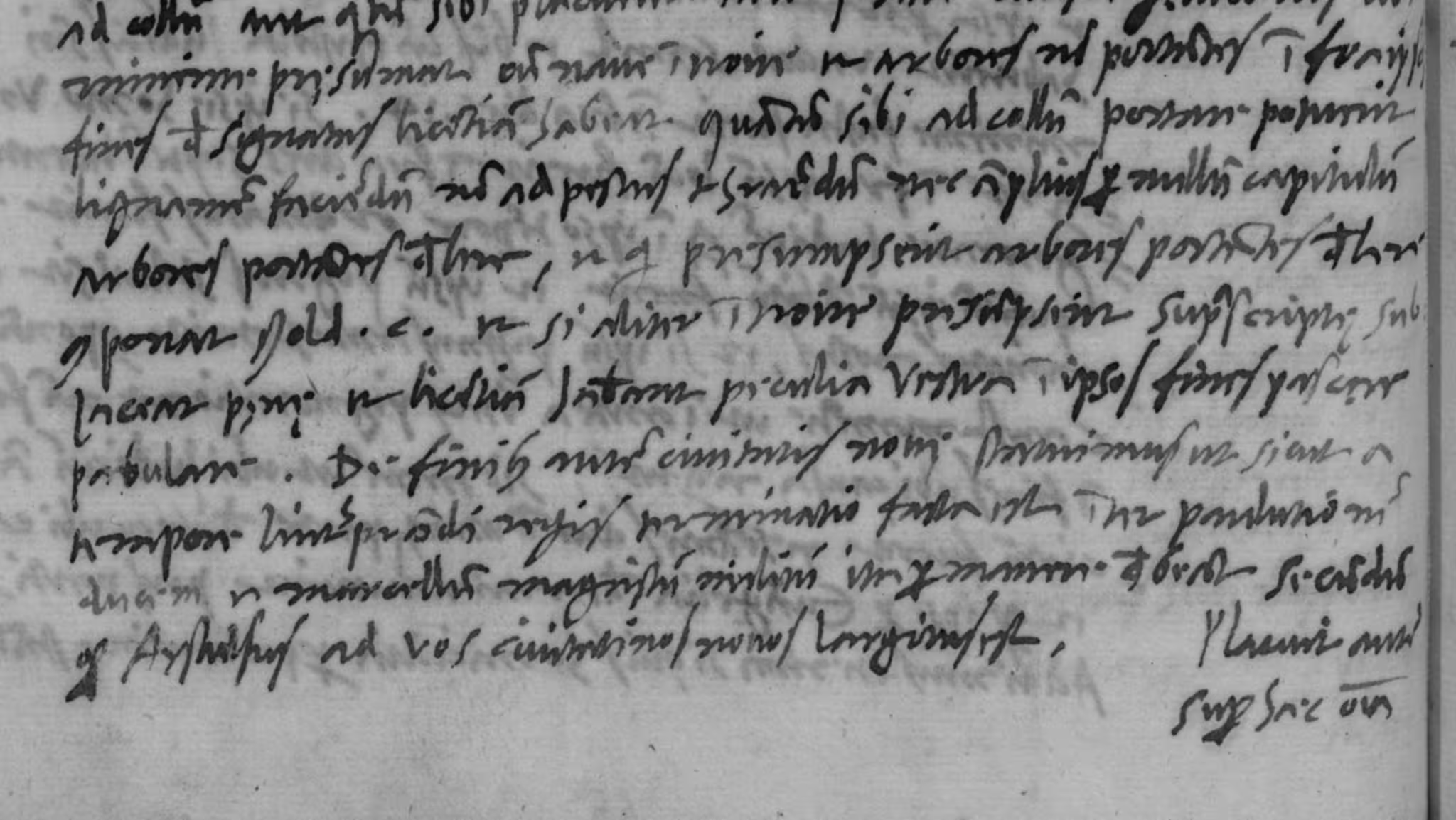
Pactum Lotharii (840)
The Pactum Lotharii was a treaty between the Duchy of the Venetians and the Holy Roman Empire, or parts thereof, from 840.
-
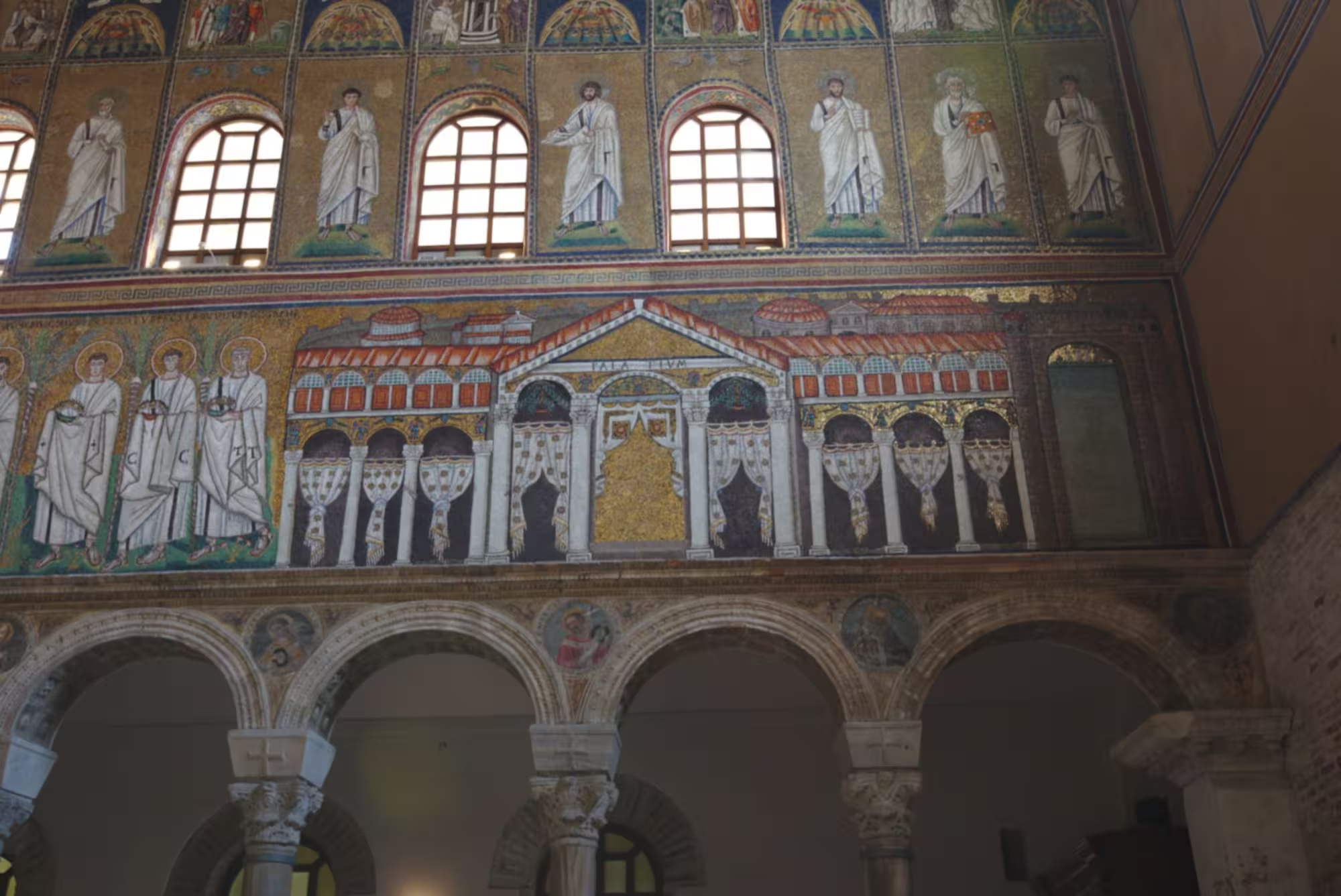
Hildeprand in Ravenna — Paul the Deacon
In the 730s or early 740s, Hildeprand, nephew of king Liutprand, and Peredeo, duke of Vicenza, managed to take Ravenna, the capital of the Exarchate of Ravenna.
-
John VI — Liber pontificalis ecclesiae Ravennatis
The eventful reign of John VI, bishop of Ravenna (726–744), from the “Liber pontificalis ecclesiae Ravennatis”.
-
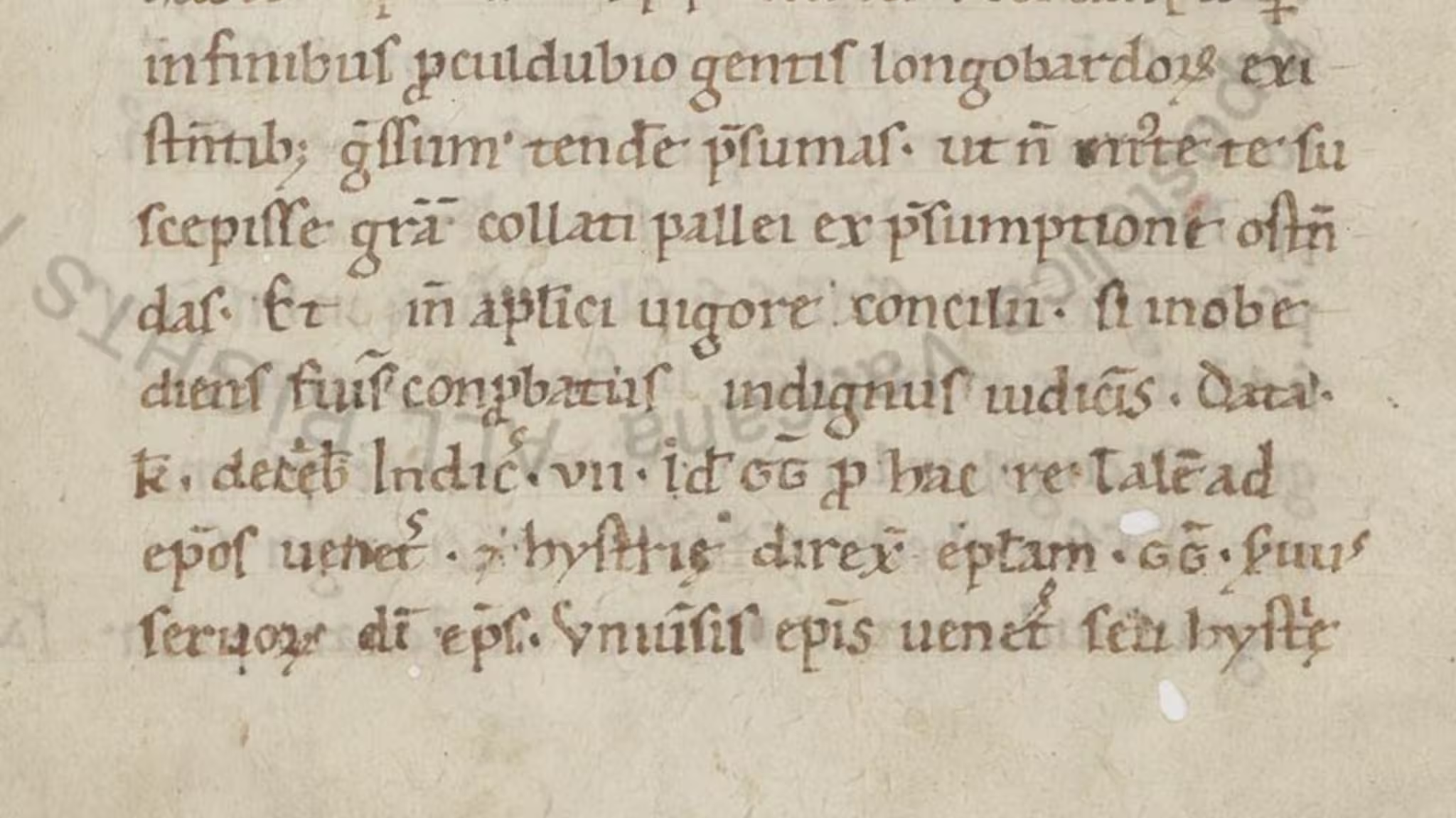
Marcellus — Byzantine or Venetian?
The second doge of Venice, Marcellus, might not have been a Venetian duke, but a Byzantine official.
-
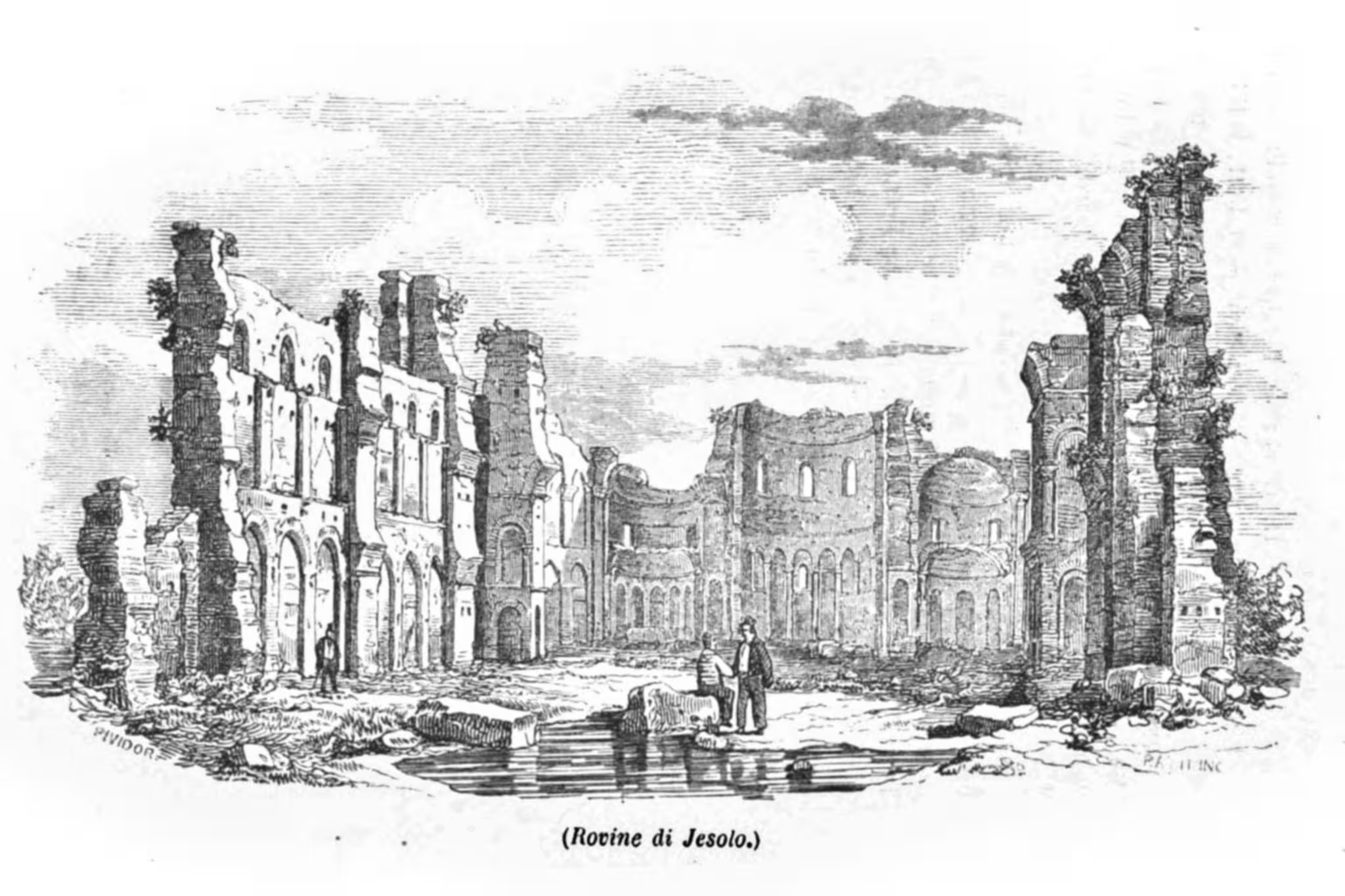
Lagoon settlements in the early Middle Ages
The lagoon was settled in Antiquity, and in the 600s, there were numerous known towns, and several important cities. Venice, however, was not one of them.
-
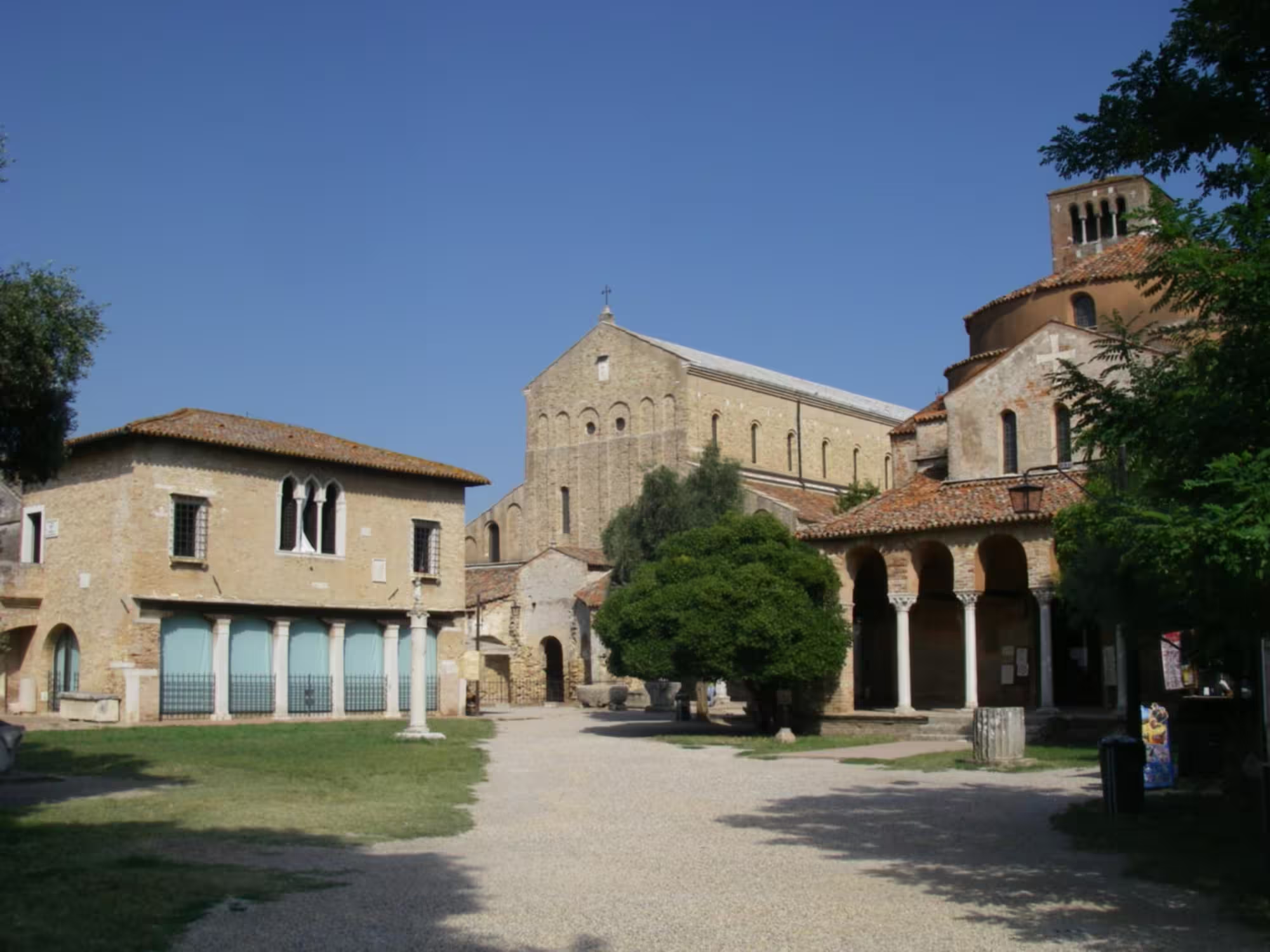
The settlements of the lagoons — John the Deacon
The list of lagoon settlements before the year 1000, from the “Istoria Veneticorum” by John the Deacon.