The official list of the doges of Venice originates mostly from the Chronica per extensum descripta, written by the doge Andrea Dandolo in the 1340s.
The rank and authority of its author made the Chronica extensa — and the list of doges therein — the accepted truth for many centuries, in practice until the early 1900s.
The earliest source we have for the first doges of Venice is three hundred years earlier: the Istoria Veneticorum by John the Deacon. However, his account is deeply problematic because his chronology simply doesn’t add up.
Andrea Dandolo tried to correct the numbers. In particular, he changed the reign of the first (probably mythical) doge Paulucius. According to John the Deacon, his reign started in 713–715 and lasted twenty years, but Dandolo made it the other way around, and had it start in 697 and finish in 717.
The excerpts below — taken from book VII of the Chronica extensa — cover the first three doges, and the five magistri militum of the mid-700s.
This account should be compared with the same topic and period of the Istoria Veneticorumi.
Source: Chronica per extensum descripta (1340s), also called the Chronicon Venetum, by Andrea Dandolo, translated by René Seindal.
Available translations from the Chronica Extensa:
- The first doges — VII.1–8 (excerpts)
- Hildeprand in Ravenna — VII.3, paragraphs 2–5.
- Doges of the 700s — VII.9–13.
Excerpts from the Chronica per extensum descripta, book VII, chapters 1–8.
VII.1.1
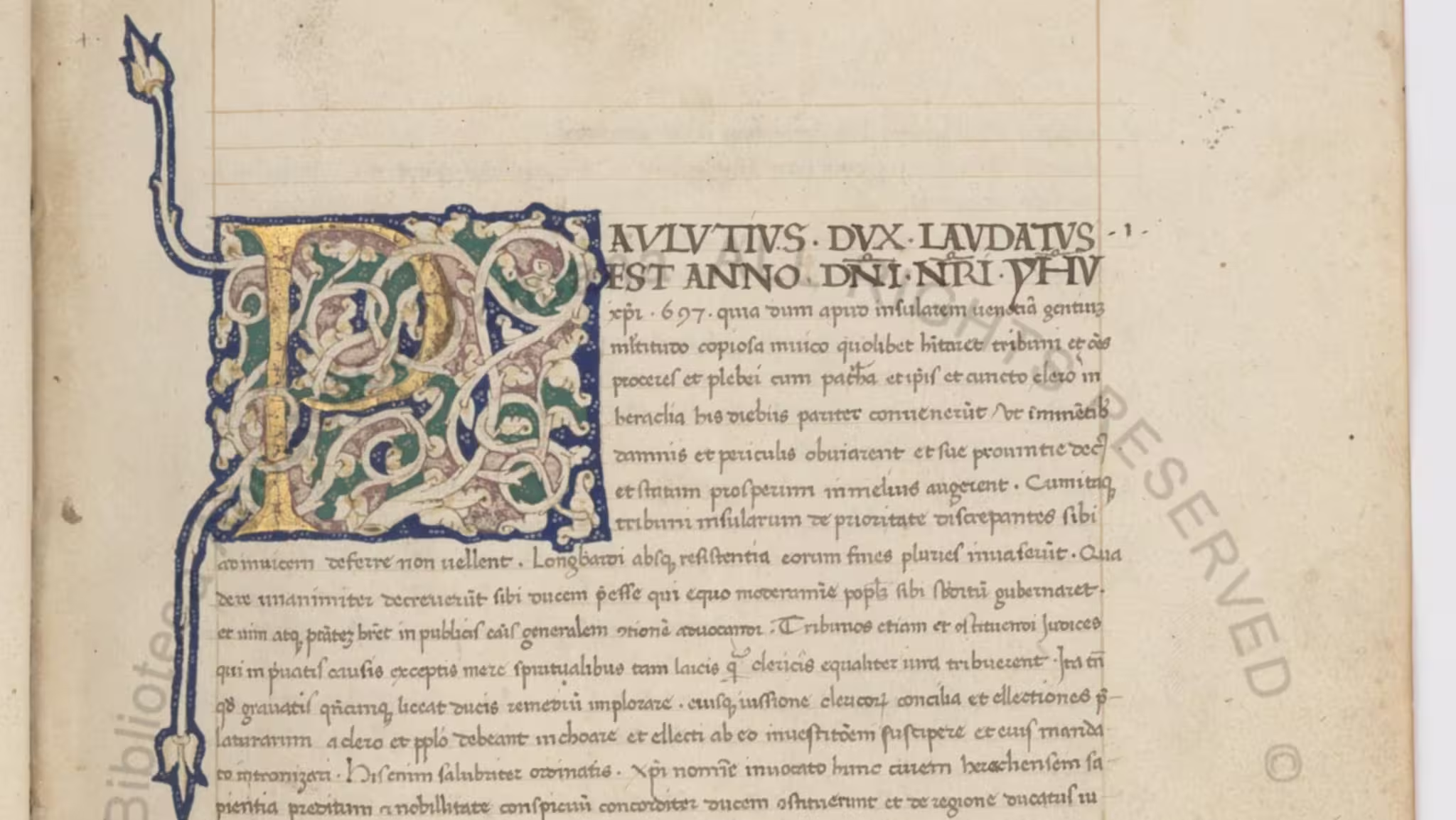
The duke Paulucius1 was praised in the year of our Lord, 697. Because while on this Venetian island a large multitude of peoples lived on every alleyway, the tribunes and all the nobles and plebeians, together with the patriarch and bishops and the entire clergy, convened in Heraclea in these days, to confront the imminent dangers and perils and to augment the honour and prosperous condition of their province for the better.
Therefore, since the tribunes of islands, disputing about precedence, did not want to yield to one another, the Lombards invaded their territories several times without resistance, for which reason they unanimously decided to appoint a duke over themselves, who, with just moderation, would govern the people under his authority and have the power and authority in public matters to summon a general assembly, appoint tribunes and judges, who in private matters, except purely spiritual ones, would equally grant rights to both laypersons and clerics; provided however that the aggrieved may at any time seek the remedy of the duke, and by his judgment councils and elections of prelatures should be initiated by the clergy and the people, and those elected should receive investiture from him and be enthroned by his command.
With these matters wisely arranged, invoking the name of Christ, they unanimously appointed duke this citizen of Heraclea, devoted to wisdom and distinguished by nobility, and he swore an oath to administer the governance of the duchy justly and fairly, and he was placed on the throne with the ducal insignia.
Click to reveal the Latin text
Paulucius dux laudatus est anno Domini nostri Jesu Christi vic lxxxxvii. Quia dum apud hanc insularem Veneciam gencium multitudo copiosa in vico quolibet habitaret, tribuni et omnes proceres et plebeij, cum patriarcha et episcopis et cuncto clero, in Heraclia, hiis diebus, pariter convenerunt, ut iminentibus dampnis et periculis obviarent et sue provincia decus et statum prosperum in melius augerent.
Cum itaque tribuni insularum de prioritate discertantes sibi ad invicem deferre non vellent, Longobardi absque resistencia eorum tìnes pluries invaserunt, qua de re unanimiter decreverunt ducem sibi preesse, qui, equo moderamine, populum sibi subdictum gubernaret et vim atque potestatem haberet in publicis causis generalem concionem advocandi, tribunos ecciam et iudices constituendi, qui in privatis causis, exceptis mere spiritualibus, tam laicis quam clericis equaliter iura tribuerent; ita tamen quod gravatis quandocunque liceat ducis remedium implorare, eiusque iusione clericorum concilia et electiones prelaturarum a clero et populo debeant inchoare, et electi ab eo investicionem suscipere, et eius mandato inthronizari.
Hiis enim salubriter ordinatis, Christi nomine invocato, hunc civem heraclianum, sapientia deditum, et nobilitate perspicuiim, concorditer ducem constituerunt, et de regimine ducatus iuste et equaliter exercendo ei sacramentum prestiterunt, et in throno cum insignis ducalibus posuerunt.
VII.1.27
And so the duke Paulucius, having happily held the duchy for twenty years, six months, and eight days, died and was buried in Heraclea.
Click to reveal the Latin text
Paulucius itaque dux, dum ducatum annis xx, mensibus vi, diebus viii feliciter tenuisset, in Heraclia mortuus et sepultus est.
VII.2.1
Marcellus2 was approved as duke in the year of our Lord Jesus Christ, 717. Since the fellow citizens of Venice, found the ducal government successful based on experience, they gathered in Heraclea and appointed this man a very useful duke.
Click to reveal the Latin text
Marcelus dux aprobatus est anno Domini nostri lesu Christi vii xvii. Nam conprovinciales Venecie, cernentes ducale regimen, experimento, suo statui fructuosum, in Heraclia convenerunt et hunc virum satis utilem ducem constituerunt.
VII.2.24
At the same time, Duke Marcellus, having finished his rule after nine years and twenty-one days, passed away and rests buried in Heraclea.
Click to reveal the Latin text
Eodem tempore, Marcelus dux, finitis in ducatu suo annis ix, diebus xxi, vite cessit, et in Heraclia humatus requiescit.
VII.3.1
Duke Ursus3 was confirmed in the year of our Lord Jesus Christ, 726. Here, the Heraclean nobleman, having been appointed duke in Heraclea, greatly enhanced the glory of the nation through illustrious deeds, yet he faced a perilous end, as the subsequent accounts will show.
Click to reveal the Latin text
Ursus dux confirmatus est anno Domini nostri lesu Christi vii xxvi ‘. Hic, nobilis Heraclianus incola, in Heraclia dux concorditer factus, decus patrie inclitis actibus plurimum auxit, pernitiosum tamen habuit exictura, ut sub sequencia gesta indicabunt.
VII.3.13
This Duke Ursus, after having held the duchy for eleven years and five months, was treacherously killed amid civil wars that had arisen among the Venetians.
Click to reveal the Latin text
Hic Ursus dux, postquam tenuerat ducatum annis xi mensibus v, inter Venetos civilibus bellis exortis, nequiter occissus est.
VII.4.1–2
Dominicus Leo4 began to preside as master of the soldiers5 in the year of our Lord Jesus Christ, 737.
Because the Venetians, upon the death of their leader, were discordant in the promotion of a new duke, they decided to have for themselves a ruler for one year, whom they called master of the soldiers; this dignity, according to the usage of the Greeks, was greater than the tribunate and held authority over them and the entire populace.
…
Now he presided over the government of Venice for one year.
Click to reveal the Latin text
Dominicus Leo magister militum presidere cepit anno Domini nostri lesu Christi viic xxx vii.
Quia Veneti, occisso eorum duce, in novi ducis promocione discordes, annualem rectorem sibi preesse statuerunt, quem magistrum militum appelaverunt; que quidem dignitas, secundum Grecorum ussum, tribunatu maior, super eos et cunctum populum potestatem optinet.
…
Prefuit autem hic anno uno regimini Venecie.
VII.5 (excerpts)
Felix Cornicula6 began to govern as master of the soldiers in the year of our Lord Jesus Christ, 738. This humble and peaceful man restored discordant Venetians to harmony, and he caused Deusdedit, the son of the slain duke, whom the killers had exiled, to return to his homeland.
…
Felix ruled Venice for one year.
Click to reveal the Latin text
Felix Cornicula magister militum gubernare cepit anno Domini nostri lesu Christi vii xxxviii. Hic vir humilis et pacificus Venetos dìscordes ad concordiam revocavit; et Deusdedit, occissi ducis filium, quem occissores exulaverant, repatriare fecit.
…
Hic Felix uno anno rexit Venetiam.
VII.6 (excerpts)
Deusdedit,7 master of the soldiers, began to rule in the year of our Lord Jesus Christ, 739. Here, the son of the slain leader, recalled from exile, was honoured with the military command by the Venetians, to somewhat exact satisfaction for his injustices.
Certainly, Deusdedit held the throne for one year; and in some records, it is found that he held the throne for two years; namely, that after completing the first year, he was again approved for the second.
Click to reveal the Latin text
Deusdedit magister militum regere cepit anno Domini nostri lesu Christi vii xxxix. Hic, occissi ducis fìlius ab exilio revocatus, magisterii militaris honore decoratus est a Venetis, sue iniurie avidis aliqualiter satisfacionem impendere.
…
Sane hic Deusdedit solium uno anno tenuit; et in aliquibus codicibus invenitur, quod solium tenuerit duobus annis; videlicet quod, conplecto primo anno, pro secundo denuo fuerit aprobatus.
VII.7 (excerpts)
Iubianus Hypatus8 took office as master of the soldiers in the year of our Lord Jesus Christ, 740. He, hypatus9 by imperial generosity, that is, having already become an imperial consul, a noble and virtuous man, deserved to obtain this honour.
…
For one year, Iubianus also presided over this throne.
Click to reveal the Latin text
Iubianus Ypatus magister militum preesse cepit anno Domini nostri lesu Christi viic xl. Hic, ex munificencia imperiali ypatus, idest consul imperialis, iam factus, vir nobilis et virtute perspicuus, hunc honorem optinere promeruit.
…
Uno quoque anno lubianus huic prefuit solio.
VII.8 (excerpts)
Johannes Fabricius served as master of the soldiers in the year of our Lord Jesus Christ 741.
…
Here Johannes, not yet having completed the year honourably, was deposed by the Venetians, and deprived of his sight.
Click to reveal the Latin text
Iohanes Fabriciacus magister militum prefuit anno Domini nostri Iesu Christi viic xli.
…
Hic Iohanes, nondum sui honoris complecto anno, a Veneticis depositus, et occulis privatus est.
Notes
- Paulicius (also Paoluccio Anafesto or Paulicio) was the first doge of Venice, nominally from 697 to 717, but the years are uncertain, as is his real identity. See also: Paulicius — the first doge of Venice?.[ ↩︎
- Marcellus (†726), also Marcello Tegalliano, was, according to tradition, the 2nd doge of Venice from 717 to his death in 726, but very little is known about him. ↩︎
- Ursus Hypatos (†737) (also Orso Ipato) was the 3rd doge of Venice, and probably the first to be chosen by the Venetians. He was killed in an internal struggle in 737. ↩︎
- Leone (or Leo) was the first magister militum (master of the soldiers), serving one year in 737. Otherwise, nothing is known about him. ↩︎
- Magister militum (master of soldiers) was a Roman and Byzantine title for a provincial or local military commander, who often had civil duties too. ↩︎
- Felice Carnicola (or Felix) was the second magister militum (master of the soldiers), serving one year in 738. Otherwise, nothing is known about him. ↩︎
- Deusdedit Hypatos (†755) (also Deusdatus, Diodato, or Teodato Ipato) was the 4th doge of Venice, from 742 to 755, and son of Ursus Hypatos. He also served at the third magister militum in 739. ↩︎
- Giuliano (or Iubianus) was the fourth magister militum (master of the soldiers), serving one year in 740. Otherwise, nothing is known about him. ↩︎
- Hypatos (also: Latinised as hypatus or ypatus, or Italian ipato) was a Byzantine court title, meaning consul, derived from the late Roman honorary consulship. ↩︎
- Zachary (741–752)
Liber pontificalis ecclesiae Ravennatis
- John VI (726–744)
Leave a Reply