The short reign of the dukes Obelerius and Beatus (804–810) was decisive for the future of Venice.
The importance of the period was less due to the decisions made by the dukes, than to what happened between the Byzantine Empire in the east, and the nascent Carolingian empire in the west.
Due to the tension between the two empires, Venetia was likewise divided in factions supporting either side. The wider conflict therefore had a local side, within Venetian society.
The dukes Obelerius and Beatus, two brothers from Metamauco, succeeded the dukes Mauricius and Giovanni, from Heraclia, and were in turn succeeded by three dukes from the Partecipazio dynasty, also from Heraclia.
Obelerius and Beatus led the pro-Frankish faction within the dogado, while the dukes from Heraclia were oriented towards Constantinople. The changes in leadership therefore also represented a change in political orientation in the wider imperial conflict.
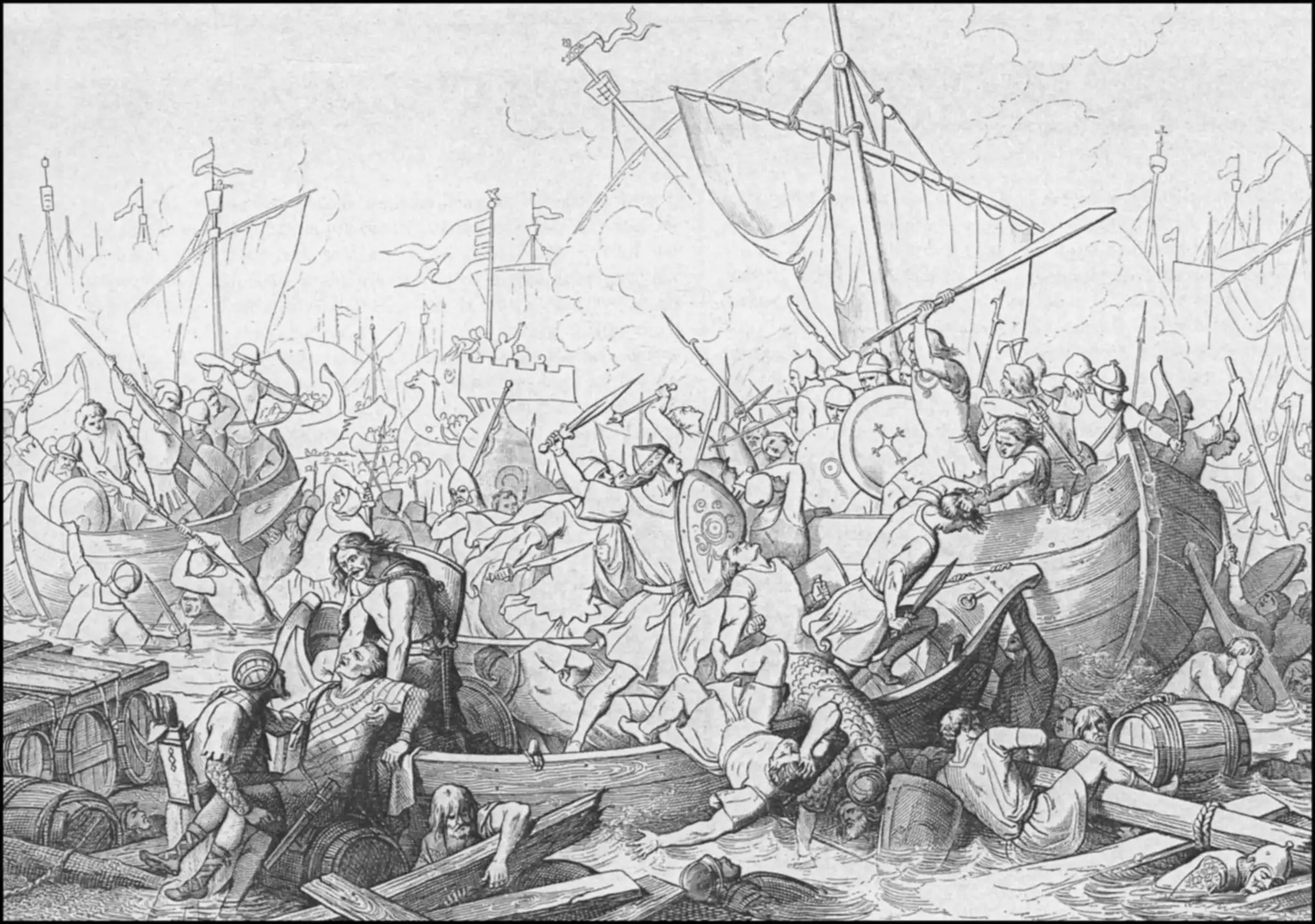
Venetia was part of the territories the two empires were disputing, and there was, over a few years, both a Byzantine and a Frankish military presence in the lagoons, including some level of fighting, involving the Venetians.
The Byzantine-Frankish conflict was resolved with a peace treaty, which confirmed Venetia as Byzantine, and the eastern-ness of Venetia would never again be contested. The Venetians were not party to the negotiations.
The settlement of the external conflict also settled the internal conflict, between the pro-Frankish faction — represented by Obelerius, Beatus and the patriarch Fortunatus — and the pro-Byzantine faction — represented by the former dukes Mauricius and Giovanni, and the succeeding dukes Agnello, Giustinian and Giovanni of the Partecipazio dynasty.
During the conflict, the Venetian cities of Heraclia, Equilo and Metamauco were destroyed. Most of the wealthy residents of those cities moved to Rivoalto, which after the conflict appeared as the undisputed centre of the Duchy of the Venetians.
This period therefore also represents the start of the Venice we know today.
Sources
The Annales Regni Francorum — the Annals of the Kingdom of the Franks — was written at the Carolingian court, covered the period from 741 to 829, and for the duration of the Byzantine-Frankish conflict, Obelerius and Beatus are mentioned several times.
The first Venetian source is the Istoria Veneticorum by John the Deacon, written around the year 1000. John the Deacon appeared to have read the Annales, but his usage of the text is very selective. He omitted the wider conflict, and focused on the Frankish attack on Venetia which he presented as unprovoked and breaking a treaty. The Venetians won the war singlehandedly, despite the presence of a Byzantine navy and peace envoys.
Next, the Chronicon Altinate mentioned Obelerius and Beatus in several contexts. However, as is often the case, the Altinate contains information which we do not have from any other sources, while also presenting some deeply incoherent and implausible narratives.
Finally, the Chronica per extensum descripta by Andrea Dandolo, written in the 1340s, presented a narrative based primarily on the Istoria Veneticorum with some parts from the Chronicon Altinate. This remained the dominant narrative well into the 1800s.
The likely narrative
Combining what appears plausible and coherent from the various sources, we can reconstruct a likely narrative for the reign of Obelerius and Beatus.
Obelerius and Beatus were two brothers from Metamauco. They came from an influential family, and another brother, Obeliebatus, was the first bishop of Olivolo before they became dukes.
They were part of the pro-Frankish faction in Venetian society, and following the murder of patriarch Giovanni of Grado, Obelerius fled to Treviso with many others of the same political orientation.
When the new patriarch Fortunatus travelled to Bavaria to meet Charlemagne, the group descended on Venetia, and deposed the two dukes responsible for the murder of patriarch Giovanni.
Obelerius was appointed duke, and immediately made his brother Beatus co-ruler.
In an act of revenge against the supporters of the deposed dukes, the city of Heraclia was destroyed.
Obelerius and Beatus travelled with representatives of Dalmatia to the Frankish court to swear fealty to Charlemagne, thus bringing Venetia into the Frankish orbit.
Byzantium reacted by sending a navy under the patrician Nicetas to the upper Adriatic. Obelerius and Beatus promptly changed sides, accepted Byzantine titles and therefore Byzantine lordship over Venetia, and supplied hostages as proof of good faith.
Pepin, king of Italy and son of Charlemagne, consequently attacked to restore the two provinces to the Carolingian Empire. He took Venetia, and forced the two dukes to switch sides once again.
Continuing by sea, Pepin met a second Byzantine navy in Dalmatia, and retreated. Shortly afterwards, he was in Milan, fatally sick.
The Byzantine navy continued to Venetia, where the two dukes were deposed and replaced by Agnello Partecipazio from the pro-Byzantine faction.
The Byzantine fleet, returning towards Constantinople, took Obelerius along, and left Beatus in Zara in Dalmatia.
Twenty years later, Obelerius returned to Venetia. He still had supporters around Metamauco, and tried to mount an insurrection against the dukes of the Partecipazio dynasty, but was captured and executed.
Sources
Below are summaries of the main primary sources for the dukes Obelerius and Beatus, and links to any available translations.
The complete sources are too voluminous to include here.
Annales Regni Francorum
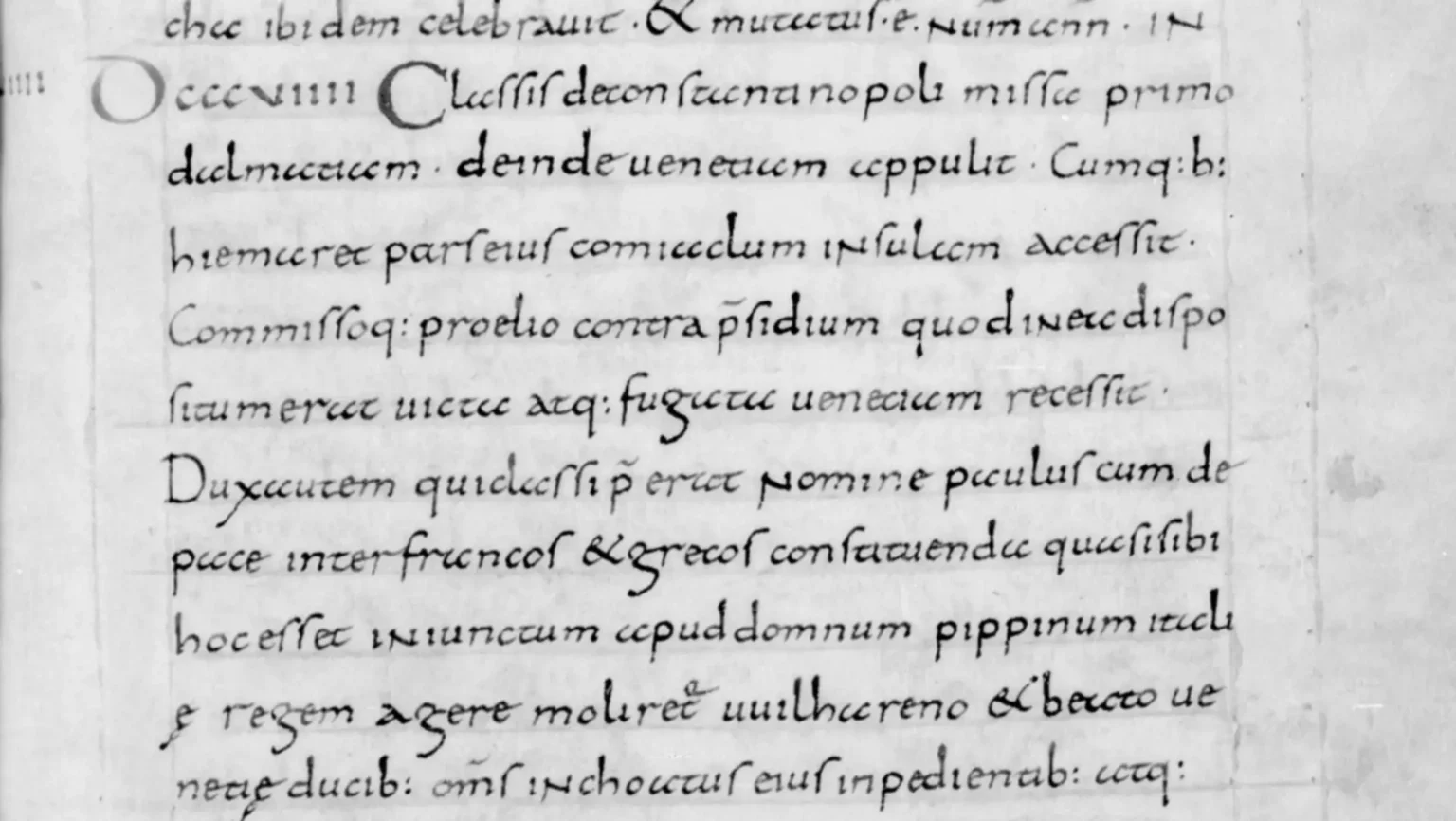
The Annales Regni Francorum mentioned the dukes Obelerius and Beatus for the years 806 and 809–811, exclusively in the context of the Byzantine-Frankish conflict of the period.
The name of Obelerius was variously misspelled as Willerius, Wilharenus or Willeri.
The Annales consistently blamed the Venetian dukes for war in Venetia.
The main narrative is that the dukes travelled to the court of Charlemagne to swear fealty to Charlemagne, bringing rich gifts, only to break their oaths when a Byzantine navy appeared twice in Venetia.
Still then, they weren’t loyal to Constantinople, as they prevented the Byzantine commander from negotiating a peace treaty with the Franks.
Enraged by the treachery, king Pepin attacked and subdued Venetia, then continued with a navy to Dalmatia, where, confronted with a Byzantine navy, he retreated.
The Franks and the Byzantines then negotiated a peace treaty, and duke Obelerius was exiled to Constantinople.
After this, Venetia was hardly mentioned again in the Annales.
John the Deacon
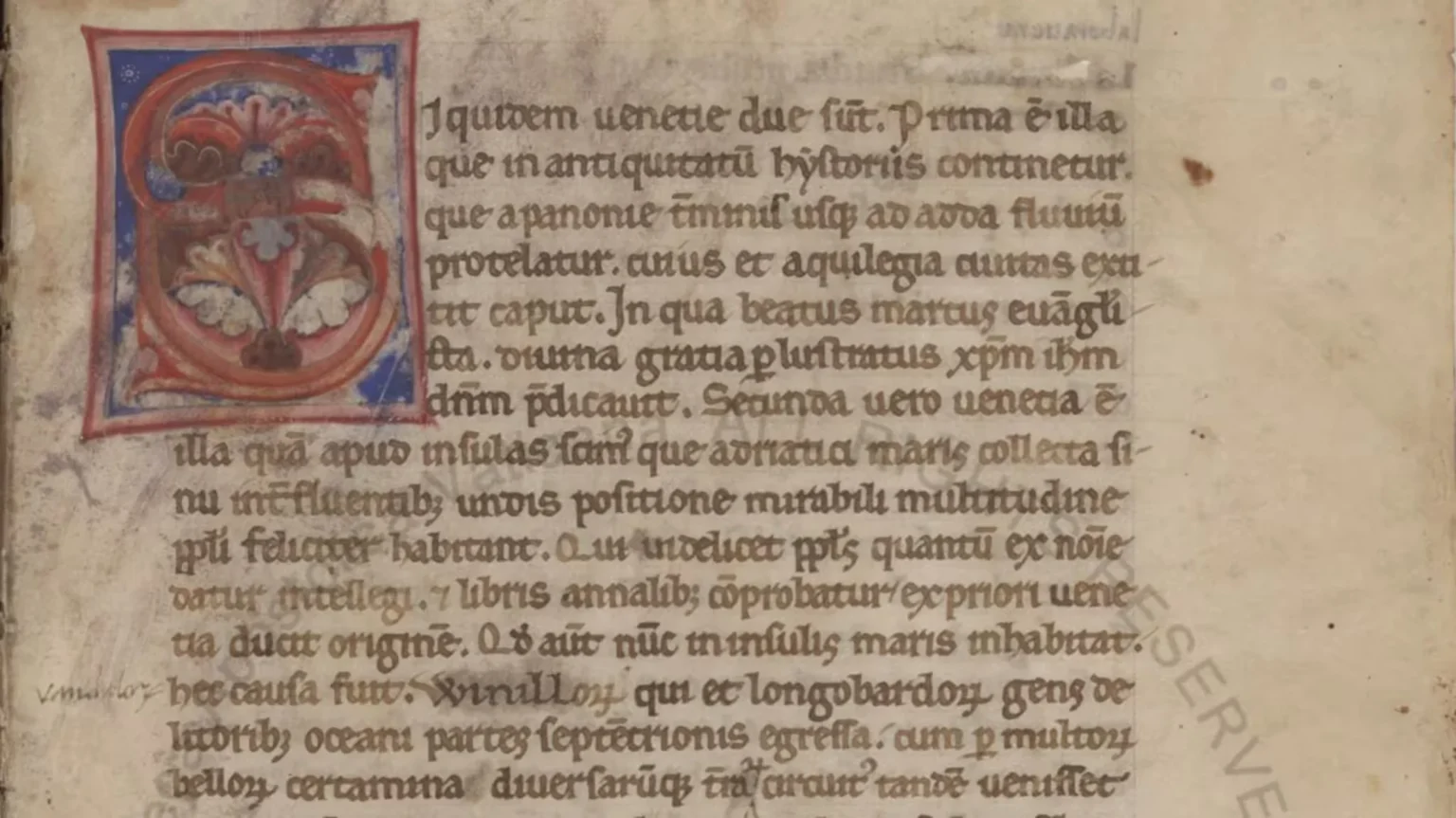
The narrative of John the Deacon in the Istoria Veneticorum is partially based on the Annales, but also include local Venetian material which we don’t know from any earlier sources.
Obelerius and Beatus were two brothers from Metamauco, and among the leaders of the pro-Frankish faction in Venetian society in the late 700s and early 800s.
After the murder of patriarch Giovanni in 802, at the hands of the pro-Byzantine dukes Giovanni and Mauricius, Obelerius and other like-minded Venetians conspired with the new patriarch Fortunatus to overthrow the dukes and the pro-Byzantine faction in Venetian politics.
They succeeded in 804. Giovanni and Mauricius fled Venetia, and Obelerius was appointed duke of the Venetians. He soon made his brother Beatus co-ruler, and they ruled jointly until their later removal.
Their reign was dominated by internal strife in Venetia, and by the conflict between the Byzantine and the Carolingian empires over control of the upper Adriatic, including Venetia.
The city of Heraclia was destroyed during an internal conflict, and most of the leading families from there moved to Rivoalto, modern-day Venice.
Even though Obelerius and Beatus belonged to the pro-Frankish side in Venetian politics, when the patrician Nicetas appeared in the upper Adriatic with a Byzantine navy, they swore allegiance to Constantinople.
Obelerius received the title of spatharios, which ranked higher than the title of hypatos, which was normally awarded to dukes of the Venetians. Beatus travelled to Constantinople with the returning navy. He later came back, with the title of hypatos.
Pepin, the Carolingian king of Italy and son of Charlemagne, broke a treaty which the Venetians had with the Franks, and attacked Venetia from the sea-side. He was defeated by the Venetians in a bold attack. Pepin died the following year.
A Byzantine envoy, which is also named in the Annales, arrived in Venetia. The two dukes were removed, and the new duke Agnellus set up court in Rivoalto, making it the capital of Venetia.
This is one of the very rare occasions when John the Deacon admits to foreign influence on internal matters in Venetia.
Obelerius was exiled to Constantinople, but returned to Venetia almost two decades later. He still had followers in Metamauco, and started a rebellion, but was defeated and executed.
Chronicon Altinate
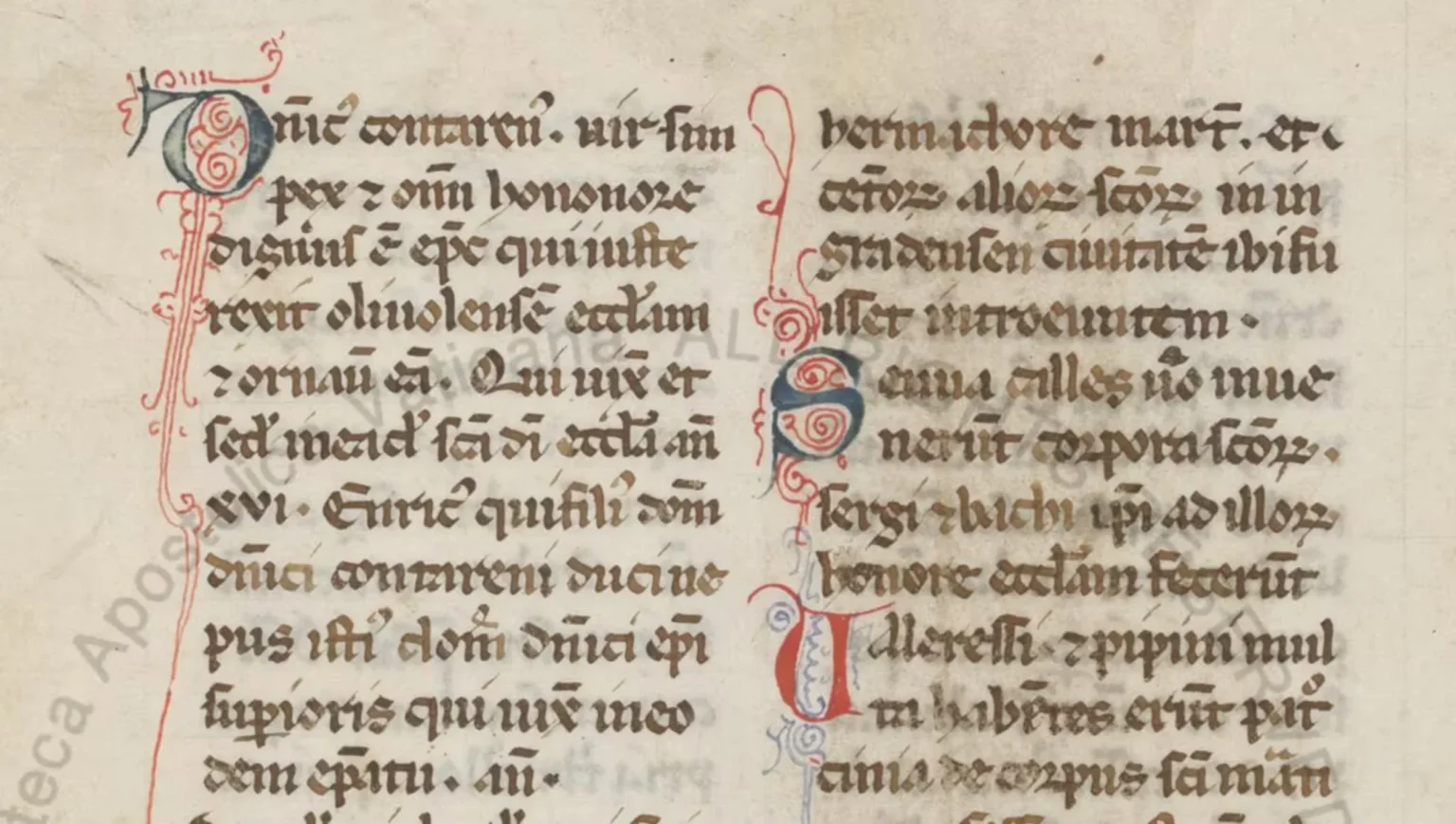
The Chronicon Altinate contains several stories, which include the two dukes.
Often, the narratives of the Altinate are a hodgepodge of various events from different periods, maybe based on a long oral tradition before being written down.
The estates of the patriarchate
One of the stories of the Chronicon Altinate — part of book III — appears to be about control of the estates of the Patriarchate of Grado in the parts of the lagoons north of the river Piave. Much of the land in the northern parts of the duchy were traditionally under the patriarchate.
After the murder of the patriarch Giovanni in 802 and the flight of his successor Fortunatus, some families of Heraclia had taken possession of many of these estates. Their arch-competitors from Equilo incited the people of the settlement of Fine to rebel, and much blood was shed in the ensuring fights.
Some of the survivors called on the new dukes Obelerius and Beatus, and on their bother, the deacon Obeliebatus, to adjudicate the dispute. The dukes gathered the tribunes and nobility from the entire duchy, and the assembly decided that the former estates of the patriarchate would be directly under the duchy.
The war with the Franks
The narrative of the war with the Franks — the bulk of book VIII of the chronicle — has events out of chronological order and spurious appearances of persons from other periods.
In this tale, the war was fought by Charlemagne, who was defeated by the stratagems of a shrewd old lady, who convinced him to construct a long pontoon bridge across the lagoon. When his knights tried to cross it a moonless night, the bridge collapsed, leading to disaster.
The leader of the Venetian forces was Beatus.
Charlemagne was taken to pray at the tomb of St Mark — whose relics arrived in Venice fifteen years after the death of the emperor — after which the Venetians transported him to Ferrara.
Here, Obelerius appeared with a Lombard fleet, believing Charlemagne had subdued the Venetians. Captured by the victorious Venetians, he is blinded, mutilated and finally killed.
It is a fanciful and fascinating tale, but with such inconsistencies that it is of little use as a historical source to the events of the war.
Andrea Dandolo
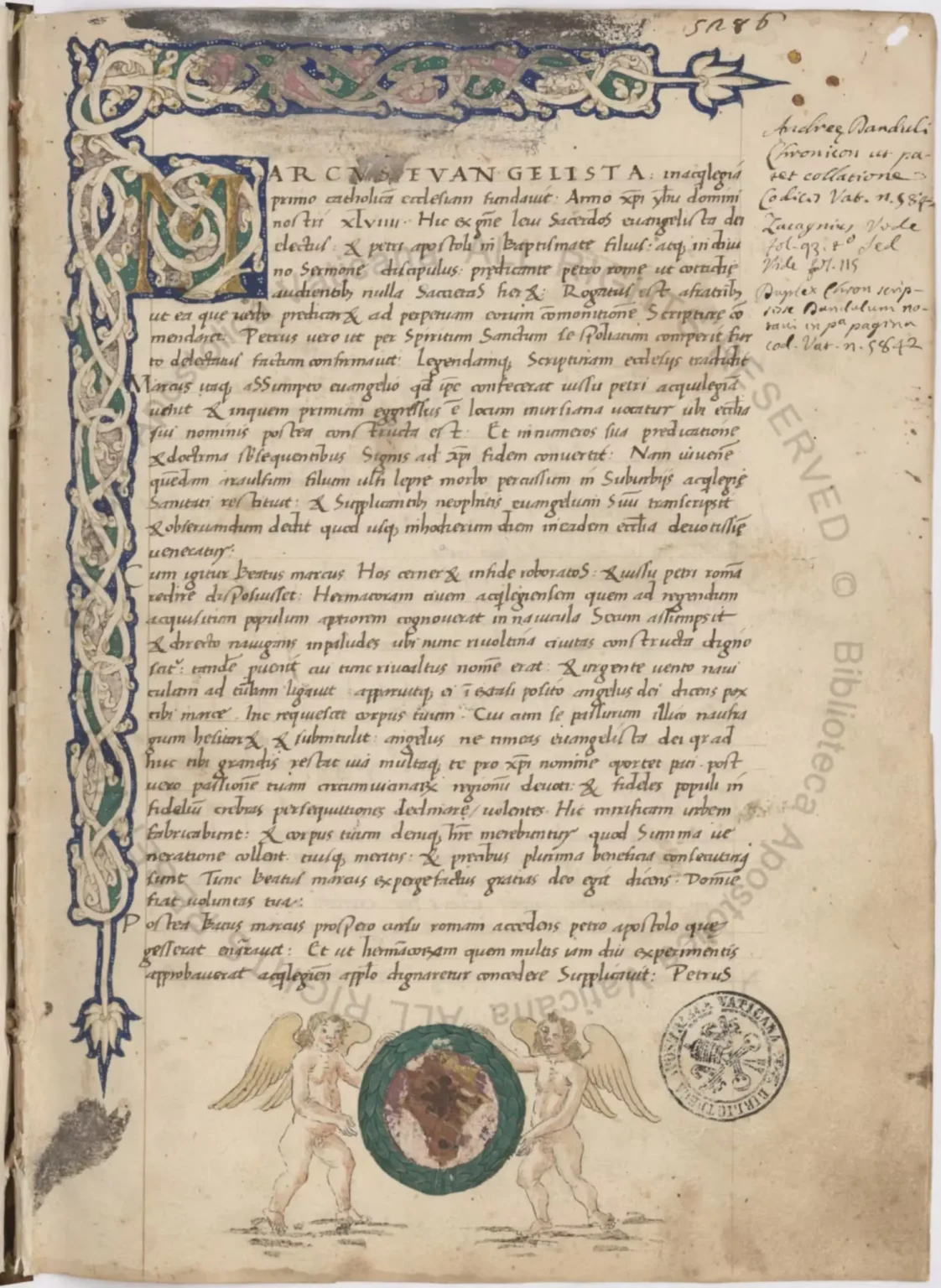
The narrative of Andrea Dandolo in the Chronica per extensum descripta was largely based on the Istoria Veneticorum and the Chronicon Altinate.
Obelerius was elected duke in Treviso by the pro-Frankish faction, after the murder of the patriarch of Grado and the flight of his successor, Fortunatus.
Once established in Metamauco, his city of origin, he appointed his brother Beatus co-ruler.
Christopher, the bishop of Olivolo, who had been close to the defeated dukes, fled the duchy.
The patriarch Fortunatus went to Salz in Bavaria where he incited Charlemagne against the Venetians, and obtained protection of the properties of the Patriarchate of Grado in Frankish lands.
The list of territories, in which the emperor granted the patriarchate protection, did not include Venetia, which Andrea Dandolo took as a sign that Charlemagne did not have jurisdiction over the duchy.
The city of Heraclia was destroyed, both by the Venetians themselves, and by the Franks under Pepin, son of Charlemagne, incited by Fortunatus, thereby breaking a treaty.
Numerous wealthy families therefore moved from Heraclia and from Equilo to Rivoalto, and Dandolo provided two long lists of names.
The patriarch Fortunatus returned to Italy, in company with bishop Christopher, who appeared to have switched side. They were not, however, allowed to enter the duchy, and therefore remained in Altino on the mainland.
Fortunatus did somehow capture the deacon Giovanni, who had usurped the bishopric of Olivolo, but he later fled his captors, and turned the dukes against the patriarch.
After a while, an accord was reached, and Fortunatus returned to Grado, Christopher to Olivolo, and Giovanni went home.
Then, a Byzantine navy commanded by the patrician Nicetas arrived in the Golf of Venice. Fortunatus consequently fled to Francia again, and Giovanni the deacon became patriarch.
Nicetas granted Obelerius the title of spatharios, and took Beatus with him to Constantinople. Beatus later returned, having received the title of hypatos.
After the Byzantine navy had left, Pepin, on the orders of Charlemagne, attacked Venetia from the side of the sea. The residents of numerous settlements had to flee. After a hard fight, the Franks entered the lagoon at Albiola, near Metamauco.
The Venetians, however, didn’t surrender, so Pepin prepared for a siege, to starve the Venetians into submission. They reacted by pelting the Franks with bread using catapults, to show that they had plenty to eat.
The Venetians had established their headquarters at Rivoalto, abandoning Metamauco.
On the suggestion of an old woman, Pepin tried to construct a pontoon bridge across to Rivoalto, on shallow waters during low tide.
However, as the Frankish knights were crossing the bridge, the Venetians attacked it with the rising tide, destroyed it, causing many knights to drown, and were victorious.
Pepin sacked the parts of Venetia he held, and retreated.
He then acknowledged that Venetia should be Byzantine. Pepin later died in Milan, and Byzantine envoys sent to formalise a peace treaty, returned home empty-handed.
A Byzantine envoy to the Venetians supported the pro-Byzantine faction, which deposed Obelerius and Beatus. They were exiled to Constantinople and Zara in Dalmatia.
Dandolo noted that other sources (probably the Chronicon Altinate) recounted that Obelerius had a Frankish wife, and that he had tried to hand the duchy to Charlemagne, but failed to do so, which led to his downfall. Dandolo neither supported nor rejected this claim, but simply noted its existence.
As the ducal palace in Metamauco had been destroyed, the seat of the duchy moved to Rivoalto. Dandolo clearly saw this as a pivotal moment, as he explicitly ended book VII of his chronicle there.
Almost two decades later, Obelerius returned to Venetia from his exile in Constantinople, and gathered a group of supporters in an attempt at returning to power. The doge Giovanni Partecipazio defeated him, had him decapitated, and his head displayed in Metamauco and on the border with the Holy Roman Empire on the mainland.
Bibliography
- Cessi, Roberto. Origo civitatum Italie seu Venetiarum : (Chronicon Altinate et Chronicon Gradense) in Fonti per la storia d'Italia / pubblicate dall'Istituto storico italiano ; 73. Roma : Tipografia del Senato, 1933. [more]
- Dandolo, Andrea and Ester Pastorello. Chronica per extensum descripta in Rerum Italicarum scriptores : raccolta degli storici italiani dal Cinquecento al Millecinquecento / ordinata da L. A. Muratori , 12.1. Bologna : N. Zanichelli, 1938-1958. [more] 🔗
- Iohannes : Diaconus Venetus. Chronicon Venetum omnium quae circumferuntur vetustissimum et Johanni Sagornino vulgo tributum e mss. codice Apostoli Zeno V. Cl. nunc primum cum mss. codicibus Vaticanis collatum, notisque illustratum in lucem profert H. Fr. Zanetti Al. F. Venetiis, 1765. [more] 🔗
- Iohannes : Diaconus Venetus and Luigi Andrea Berto. Istoria Veneticorum. Bologna Zanichelli, 1999. [more] 🔗
- Monticolo, Giovanni. Cronache veneziane antichissime. Roma, Forzani e C. tipografi del Senato, 1890. [more] 🔗
- Pertz, Georg Heinrich, Friedrich Kurze and Einhardus. Annales regni Francorum inde ab A. 741. usque ad A. 829 ; qui dicuntur Annales Laurissenses Maiores et Einhardi in Monumenta Germaniae historica. Hannoverae : impensis Bibliopolii Hahniani, 1895. [more]
- Rossi, Antonio, Giovanni Galvani, Martino : da Canale and Emmanuele Antonio Cicogna. La Cronaca veneta detta Altinate di autore anonimo, in latino, preceduta da un commentario del prof. Antonio Rossi e La cronaca dei Veneziani del maestro Martino da Canale, nell'antico francese, colla corrispondente versione italiana del conte Giovanni Galvani e con annotazioni di Emmanuele Cicogna … [et al.]. Firenze : Gio. Pietro Vieusseux, 1845. [more] 🔗
Leave a Reply