The reign of the dukes Obelerio and Beatus (804–811) was a decisive period in Venetian history, The events, which unfolded in those years, would have consequences and repercussions for centuries to come.
The main event was the short war between Venetia and the Franks, probably in 809.
The account of the war in the Chronicon Altinate — probably from the 1100s or early 1200s — is very fanciful, and completely ahistorical. Worst of all, the chronology is completely, utterly wrong.
Consequently, as a historical source to the actual events the Chronicon Altinate must be discarded. There is little, if anything, useful for understanding better what happened in those years.
It is, however, very interesting and highly relevant as a source to how the Venetian mythologised and incorporated the history of the war into their later national narrative.
Sanitised parts of this version of the story of war with the Franks made its way into the Les estoires de Venise by Martino da Canal (1270s), and into the Chronica per extensum descripta by Andrea Dandolo (1340s), and many later writers.
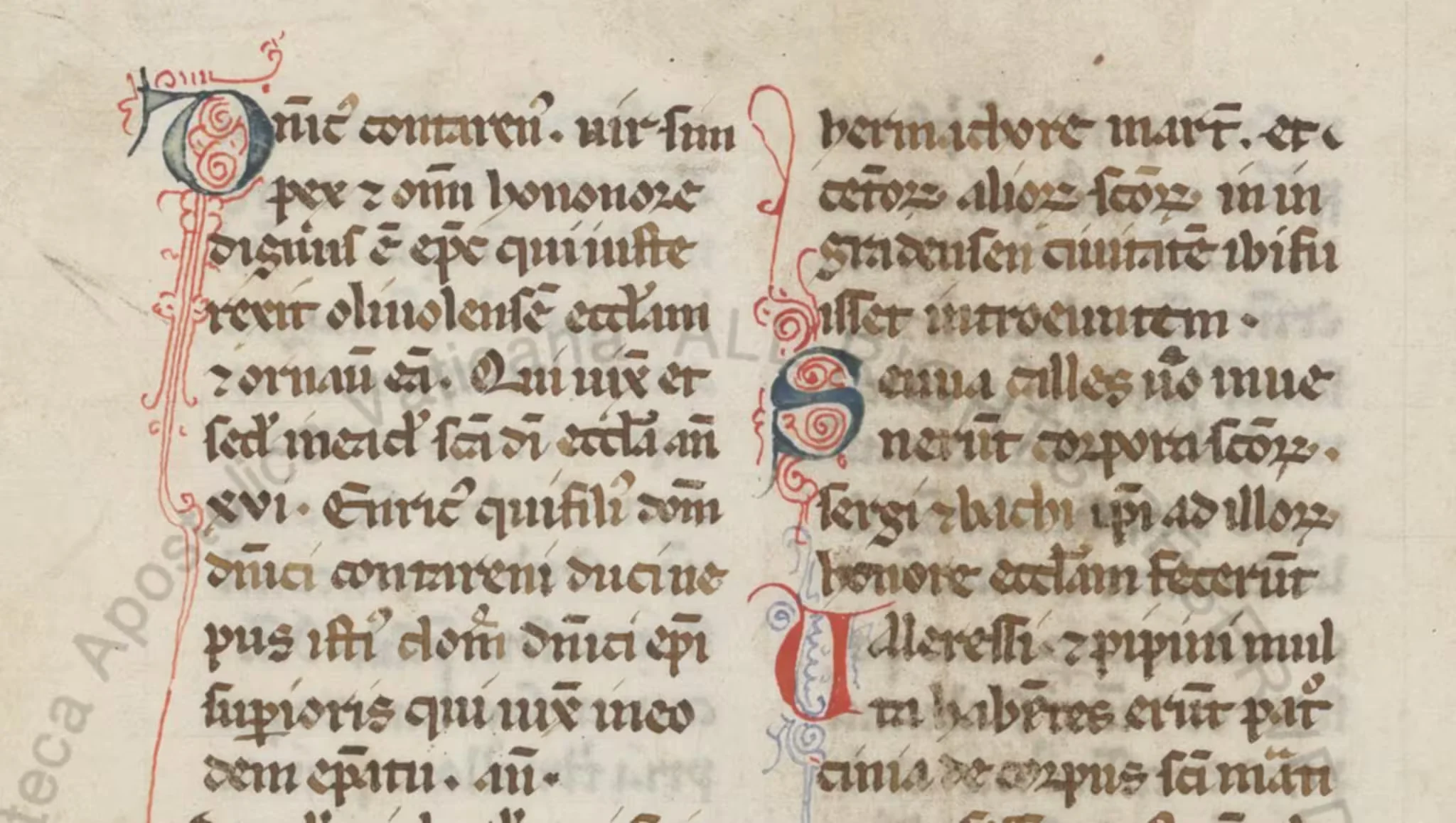
The war is the main theme of Liber VIII of the Chronicon Altinate, of which a tentative translation of almost the entire book appears below. A tentative translation because the original Latin is not exactly clear, which has even earned it the characterisation of “illegible”.
The narrative
The Venetians had an agreement with Charlemagne which protected the properties and trade of the Venetians in the Frankish domains, in return for an annual tribute.
Despite this accord, Charlemagne wanted to subdue the Venetians and bring them under his control.
Upon hearing that the Frankish troops were approaching by sea, most of the people of Metamauco (the capital of the duchy) fled towards Rivoalto. Only an old woman stayed behind.
Charlemagne was met with disdain by the people of the lido of Metamauco.
The Venetians sailed around, throwing bread and fish in the sea, to show the Franks that they had plenty of food to withstand a siege.
Realising that he couldn’t starve the Venetians into submission, Charlemagne sought help, and met the old woman, who promised him a hundred poor Venetian men who would help him if rewarded.
She went by boat to Rivoalto, where the Venetians supplied her with a hundred men. They all returned to Charlemagne, declared their loyalty, and suggested they’d build a pontoon bridge from the Lido to the Olivolo island, so the knights and footmen of Charlemagne’s army could cross safely.
They build the bridge, and convinced Charlemagne to have the army cross on a moonless night, at low tide. The old woman, on a swift boat along the bridge, urged the soldiers on in the dark. As the tide rose, the bridge was torn apart, and most of the knights and soldiers perished in the water, while the Venetians looked on from their ships.
The emperor realised that he had lost.
The Venetian ships approached the shore where Charlemagne observed the carnage, mounted on his horse.
Even in defeat, the emperor was the higher authority. He asked for the duke of the Venetians, and duke Beatus came forth.
Charlemagne asked to be taken to pray at the tomb of St Mark, and that he would make no further attempts at conquering Venetia, which has such a powerful protector.
Finally, he tossed his sceptre in the sea, as a symbolic pledge that he would not try to rule the Venetians in the future.
He was taken to Rivoalto, to the tomb of St Mark, to the Doge’s palace, and around the entire duchy by the Venetians.
The Venetians then brought him to Ferrara, in Frankish territory.
As the Venetians were about to return, duke Obelerius returned from Francia on Lombard ships. Believing that Charlemagne had conquered Venetia, he declared his allegiance to the emperor.
When he embarked on the Venetian ships, his brother Beatus pleaded the Venetians for mercy for his brother, but they burned the Lombard ships, returned the wife of Obelerius, a daughter of Charlemagne, to her father, and Obelerius was blinded, castrated and then killed as a traitor to Venetia.
The problems
This is a very problematic narrative.
Firstly, the chronology is impossible. The war was in 809, and Charlemagne was not in Italy. The war was fought by his son Pepin, appointed king of Italy by his father. Charlemagne died in 814, and the relics of St Mark only arrived in Rivoalto fifteen years after his death. Furthermore, Obelerius was still around two decades later, when he was executed under duke Giovanni Partecipazio.
Following the account of the war with the Franks in 809, the Chronicon Altinate proceeded with the story of the murder of patriarch Giovanni, which happened in 802 under the dukes Giovanni and Mauricius II, the predecessors of Obelerius and Beatus, as if it had happened after the war.
Secondly, the narrative goes counter to all the earlier sources at our disposal. The Frankish Annals from the early 800s, the account of Constantine VII Porphyrogenitus from c.950, and the Istoria Veneticorum by John the Deacon, from around 1008, all have very different narratives from the one proposed by the Chronicon Altinate, despite their disagreement on the causes and the outcome of the war.
For example, the story of the old woman, who is essentially the hero of this narrative — and yet unnamed — is nowhere to be found in any of the earlier sources. She only appeared with the Chronicon Altinate, written some four centuries after the events. Her role in the story gives the narrative an air of a folktale about mythological events from a distant past.
Thirdly, the Chronicon Altinate entirely ignored the part the Byzantines played in the conflict, which none of the other sources managed to write out of the history. Constantinople is hardly mentioned in this narrative, and not at all for the parts of the war itself.
The Venetians took on a major empire, all alone, and prevailed spectacularly.
Fourthly, it is from the Chronicon Altinate, which in itself is a problematic source. We don’t know anything about authors, their background or context for the writings, and we only have some very approximate dates for the texts, which is 1100s or early 1200s.
Stylistically, it appears much more like a working draft, than a finished text meant for further copying and distribution.
Source: Chronicon Altinate, also called the Origo civitatum Italie seu Venetiarum, translated by René Seindal. The original is from Cessi (1933).
Available translations from the Chronicon Altinate:
- The first doges — liber I (excerpts).
- The death of Paulicius — liber III (excerpt).
- The war with the Franks — liber VIII (excerpts)
Liber VIII (excerpts)
Duke Arnulf fathered Angisus; Duke Angisus fathered Duke Pepin; Duke Pepin fathered Duke Charles. He was born in a chariot and begotten in a chariot. Charles fathered Pepin, who was the first anointed as king. He is descended from Armenian and Greek ancestry. King Pepin1 fathered Emperor Charlemagne.2 Charles fathered Emperor Louis.3
He established that the Roman and Constantinopolitan empire should receive their coronation from the Roman apostolic seat, and it was customary for the emperors of Constantinople to come to the city of Milan and sit there in their third or fifth year.
They were, however, subjected to the authority of the emperor of Constantinople to judge all the cities of Italy; similarly, they were also subjected to the power of the kings of France, but by a treaty, they retained the imperial consular honour, which included being patrician and prefect of the Romans.
However, the Venetian duke revealed that he and all the senior Venetians, whose lands extended throughout Italy across castles and cities, which rightfully were theirs, had pledged themselves along with all the elder Venetians, whose estates were involved, to defend Charlemagne, king of the Franks and Gauls and of Italy, by an established agreement, so that the revenue for tribute in every year would continue to be paid to these elders, to whom it properly belonged and would be retained by them.
It was so confirmed by the duke and established and praised by all the people of Venetia that it would have had to be paid in fifty Venetian pounds as tribute to all kings.
By this agreement, Emperor Charles confirmed that all trade and business between the regions of Italy and Venetia should proceed according to customary order.
Two monasteries, which were established and built by the ancient Venetians themselves, one in Brondolo4 and the church in honour of the Archangel Michael, and the other in honour of the Holy Trinity, to which the monastery was dedicated; the other monastery, which is dedicated to Sant’Ilario,5 is situated on the mainland.
Of Altino6 and the old city of Aquileia,7 which was destroyed by pagans, together with all its appurtenances, the lands as well as other parts of Istria, and also the cities of Dalmatia, from the old Venetian seat up to the borders of Pannonia, which according to ancient Venetian custom must be retained as proper property.
Charlemagne the emperor took all of this under his protection.
But he wanted to come here to the new Venetia: in every way, everyone blocked him.
When he heard that they were upset by his coming, he immediately moved along with all his people so that they seized all parts of Venetia and the people.
Having seen and heard such things, all the people of Metamauco,8 leaving all their vacant homes with all their belongings, came to Rivoalto9 to be safe.
It had already been heard from him that he controlled the island of Metamauco because of armed Lombard ships.
In Metamauco no men and women remained except for a single elderly woman, who was a distinguished matron: she was to counsel the men, a remarkable act of wisdom to be heard, since they were for the honour and safety of all Venetians.
For she had presented her plan to everyone so clearly and brilliantly.
For that is what she did.
When she and the others with her had been transformed, and Emperor Charles had arrived, the boys, adolescents, young men, and even the grey-haired elders — upon seeing them — began to spit, show contempt, and mock them as they approached the Emperor.
One had to be pushed by the other to proceed.
While some were already in the residences of Metamauco and the others in tents along the entire lido of Metamauco, and staying on the Mercedes lido throughout the year, they sat down, seized the moment, and arrived on well-equipped Venetian ships.
As they sailed around throwing loaves of bread and portions of fish into the sea, they were thrown about violently, the waves of the sea beating against their chests.
The men were astonished.
They were saying that they had been given enough for days.
At this time, when all the unyielding men were standing here, the emperor made those elderly women come before him.
The emperor asked them for counsel, so that perhaps through them some insight might be gained, as to “how can it be done, how I can find it.”
A distinguished and mature woman of wisdom, who was learned in reason and had the best judgment, said to the emperor: “We, being advanced in years, are unable to resist and are impoverished, kept from our sons and daughters and relatives, to whom everything belonging to us and our property pertains, we were stripped of everything and expelled, and there is no one to help us, and the Venetian people have shown no mercy against God and our neighbours.”
The elderly woman and the others with her were prostrating before the emperor and at his feet, imploring him for mercy on her affairs, and they said to him:
“If I can find a ship and having two men carry me, I will make it possible to come to you with confidence with a hundred or more stronger men, who have fallen into poverty. If you return their gift on your part through a single uninterrupted night, at dawn with the whole country lights up, and restored from sleep in the morning, I will make you find everything needed for the people to remain united as one. With much timber and Venetian ships, which the Venetians will operate, you will find a solid wooden road along the length of canals and shores with enough width for the men and knights to pass.”
Emperor Charles was fooled; the elderly advisor, and others with her, were greatly honoured by the emperor for their services, but she received more than a hundredfold.
As the old woman had spoken, she acted accordingly.
When it was late in the evening, she came herself with a hundred young men to the emperor, They received much money from him.
As he said through advice, and the Venetians perished from it, so the younger men were promised by the emperor to be honoured with courage and stability, with genuine loyalty.
What was said through advice happened, and Venetians perished from the old woman; thus the younger men promised the emperor to honour him with true loyalty and stability, not feigned.
The woman gave her hand that her word was true.
The young men pledged themselves to him by oath.
Throughout the night they began to equip a large fleet, moving large barrels along the length of the canals, securing them with long enough planks to reach the bishopric of Olivolo,10 sufficiently that a bridge was in place.
Other men came from the Mercedes lido11 to Metamauco, joining the Venetians.
When the people were gathered, the old woman received the day’s blessings from God, inspired by the wisdom of goodness, through whom Venetia was saved by God’s grace.
Hastily, she herself brought the young men rowing firmly with the ship and secretly brought other women, hidden on the ship, to safety in Rivoalto.
She herself, with haste and on a swift little ship with about twenty-five men, went to the emperor before dawn, and told him to gather all the knights and men, undivided and publicly.
Unknown people, unaware of what had been done by the emperor’s order, with equipped knights and the common folk involved, began to come together as if they had been caught in their sleep, just as the emperor was advised by the old woman about it.
The moon was very dark, and nothing could be seen.
As the knights and men stood high on the bridge over the canal, and soon began to advance, the small boats and vessels stretched beneath the timber along the length of the docks and across the width of the canals, rolling around and moving the timber, breaking the legs of the horses, and the men were not visible, but the crowd was wandering in the darkness, for the light of God was not in them. The old woman with a small and fast boat hurried alongside them, as if she could see, navigating from a distance toward them, urging them not to stop, so that no one would remain.
They fell one on top of each other, and lay beneath the wood; what remained, no one heard a voice, but they remained suffocated.
At the break of dawn in the first hour, Emperor Charles and the few who remained with him saw that all the knights and their entire company had been submerged in the water: they saw ropes tided up, small vessels were drifting around, and the canals were filled with debris and the bodies of the dead along the lido.
Venetian ships, which had been spotted and reported throughout the night by all the men, both the larger and smaller vessels in the lagoon and outside, were well-equipped and came boldly with great daring, knowing what had been done.
The terror of pain that the emperor saw before his eyes was evident, while the fear, upon seeing the ships approaching, was of not knowing what to do.
As they approached him, they were spread along the length of the lido, with no men leaving the fleet.
The emperor asked if the duke was on any of the ships.
Duke Beatus,12 brother of Obelerius,13 was present; it was evident to all that the emperor was the one in charge.
The most noble men who were here, the Venetians, with duke Beatus, his brother, were silent, maybe they could have found him.
The emperor, however, was sitting on a large black-and-white horse, and those few, who had stayed with him, similarly were standing on the lido, well armed.
With great humility, the emperor asked duke Beatus and the entire people of Venetia to devote themselves to him: “come venerate the tomb of the blessed evangelist Mark, which was recently brought from Alexandria to your place. But here I want to confess what I promised to all of you: I always promise to be your helper, protector, supporter, and defender in your Italian endeavours.”
“For I truly know,” said the emperor, “that I have seen entire regions saved through it, just as through the body of Saint Mark the Evangelist, which you have, it was truly revealed to me, and through the woman, whom the evangelist always intercedes to the Lord for the region of Venetia. Whence your people will be saved from the clamour of your own body.”
When Duke Beatus heard this and the ordinary Venetians, who disembarked their ships onto the land, all were singing.
The duke threw himself down before the feet of Emperor Charlemagne, pleading with him to come.
The emperor held a large sceptre in his hand, and with the other hand stretched out to everyone, he gave a gesture of peace.
What he said with words, so it should be demonstrated with the right hand through the pledge of truth.
Then he said that he would return to the region of France, and he immediately promised to send his son Louis to be elevated to King of Italy so that he would be the defender of all the people and the region of Venetia.
The emperor dismounted the horse on which he was seated.
The duke was entreated to receive him and to rise, and the other knights who were on the ground there all departed; they were received by him as a gift.
The emperor was entreated to similarly rise and follow that call, and the emperor, having ascended with the smallest effort, was moved to act as one.
When he approached the open sea, with great strength in his arms and courage in his heart, he raised his trophy, and with great force, it was thrown into the sea and so said in front of everyone:
When he approached the open sea, with great valour in arms and heart like an emperor, holding his trophy aloft, he tossed it with great strength in the open sea and thus spoke before everyone:
“That which I, nor you, nor any worldly men, have ever, when I cast the Tyrian trophy into this sea so that it may never be visible, so in the world may no one be like it, so that the kingdom of Venetia may appear harmed; that if it comes without any terror and in the indignation of God, may lightning strike and descend upon them, as it descended upon me and all mine; which God and the most blessed evangelist Mark revealed to me by revelation, that it is harmful to you and to Venetia, yet through his intercession may God be their defender.”
They returned and brought all the ships up to the palace of the duke.
The old woman, who before had always given advice to everyone, gave her counsel on this herself.
He sailed through all parts of Venetia by ship, providing food for all the people,
He occupied the entire channel and the entire hall of the palace courtyard, which was a marvellous sight to the emperor himself.
The letter sent to Longinus, the Greek emperor,14 was well received, and this emperor was welcomed even more by the clergy and the people.
He earnestly prayed in tears to the holy body, and having obtained everything from the monastery, he left all that he had here in Venetia; he did not wish to indulge in feasting, but he immediately appealed to the duke and all the people to return.
He was transported with great difficulty all the way to Ferrara with fully armed ships.
Just as the ships were about to return, it was said that Obelerius, the duke of Metamauco, and his wife had come with Father Fortunatus,15 the spiritual priest of the emperor.
She was the emperor’s own daughter, and she was held by the Venetians until he arrived.
Obelerius was confident that Venetia had been seized and declared his loyalty to the emperor.
When he approached the Venetian ships, the duke Beatus, his brother, fell down, implored for the mercy of the men [for his brother].
He came with the Lombard ships.
He was questioned by the Venetians as to why he had come from Francia; he said: “I will not return again.”
They burned the ships, on which he came; his wife, the emperor’s daughter, they took her away and she was returned to her father.
Obelerius, the most infamous traitor and deceiver, who betrayed Venetia to foreign powers, was caught while being carried by Venetian ships and was immediately killed.
Then they tore out his heart, his eyes streamed [with blood], and his genitals were cut off, and they hung him at Saint Martin de Strata.16
…omissis…
Click to reveal the Latin text
Arnulfus dux genuit Angisum ; Angisus dux genuit Pipinum ducem ; Pipinus dux genuit Karolum ducem. Iste in curro natus est et in curro genitus fuit. Karolus genuit Pipinum , qui primus fuit unctus in regem. Iste de Armenorum et Grecorum gignetitia oriundus est. Pipinus rex genuit Karolum Magnum imperatorem. Karolus genuit Ludoytum imperatorem.
Iste constituit Romanum et Constantinopolitanum imperium de Romana apostolica sede coronarci recipere, et consuetudo erat Constantinopolitanis imperatoribus in Mediolanensem civitatem venire et ibi sedere in tercium aut quintum euntem annum.
Subdite autem fuerunt in dominacionem iudicandi tote civitates Italie Constantinopolitani imperatoris; item similiter subiugavit in Francorum regum potestate, per pactum autem firmamenti retinnens illis honore consuli imperiali, que sunt patricium et prefectum Romanorum.
Predia autem Veneti dux et ad omnes antiquiores Veneticorum, que ad illorum per totam Italiani per Castros et civitates pertinenciis erat, que ad ilio iuste pertinebat, patuavit se dux cum omnes antiquiores illis Veneticis, cuius predia pertinebat, pro defensione ad iste Karolum Magnum, Francorum et Gallie rex et Italie per pactum precepti firmatura, ut censum pro pensionis in omnique anno precessum est ad ipsis antiquiores, cuius pertinendum est et ad illis esset retentum.
Tam autem a duce confirmatum et ad omni populo Venecie constabilitum et conlaudatum est, ut in quinquaginta de numorum Veneticorum libris pro tributu omnique regorum persolvendum fuisset.
Per hoc pacti preceptum Karolus iste imperator confirmavit inter Italie et Venecie regiones omnia per ordinem consuetudinis marchedare et negocium habere.
Monasteria duo, que ad ipsis antiquiores Veneticis constabilitos et edificatos fuerunt, unum in Brendolis ecclesiaque ad honorem archangeli Michaelis et altera ad honorem Sancte Trinitatis, cuius monasterium deditum est; alter vero monasterium, que ad honorem sancti Ilarii terre firmamenti situili est;
Altinensis et vetere Aquilegensis civitatis, que a paganis destructa fuit, cum omnibus his pertinentiis predia immo et Istroa alia pars, tam autem Dalmatie civitates, ab sede autem comprehense antique Venecie usque Panonie fines terminande, que a Veneticorum per antiquam consuetudinem iusticie retinendum est prediis;
Totum autem hoc omnia apprehendit Karolus Magnus imperator in sua defensione.
Set inquisivit hic nove Venecie venire: omnimodis constristant ei
omnes.Cum audisset, quod contristassent ei venire, comotus est statim cum universis illius populist, ut totas Venecie pars apprehenderunt eum euntem populum.
Quod vidit et talia audivit, Matamaucensium omnes, relictis vacuas omnibus illorum mansiones cum omnia supralectilem ipsorum in Rivoalto venerunt, ut securi essent persistentes.
Quia iam ab eo auditum est possessor esse in Matamauco insula, usque dum ornassent Longobardos naves.
In Matamauco nullum virorum et mulierum remansit nisi una inter multas senices mulier, que erat matrona illustris: qui virorum ab ipsa prebendum fuerunt, mira res consilii esset ad audiendum, quod fuerunt ad omnium Veneticorum honorem et salvationem.
Sic enim omnibus ab ea senice illustre prebentem fuerunt consilium.
Ita enim fecit.
despecta iam ipsam et ceteras cum ea, cum factas essent transforme, cum venisset Karolus imperator, et universi pueri et adolescentes et
iuveniores et canores senices cum illas erunt videntes, expuentes et despicientes et eludentes erant, cum ante eum venerant valde.Una ab altera eregendum erat eundi.
Cum iam in Matamaucensium mansiones ceteri et aliis ceterorum in tendis illorum per totum littorem Matamaucensem, et aliis Mercedis litus per annum medium morantes erunt, [et] considentes aprehenderunt, navibus ornate venerunt Veneticorum.
Cum circumdassent per girum ab integrorum panibus et cluces maris
decodte eiecientes, eas valde iactabantur, Veneticorum fluctuum
percuciebant pectora illorumValde erant populi mirantes.
Dicebant enim illis ut satis dedissent sufficienter per dies.
iam tempore cum omnibus incressibiles hic erant stantes, imperator senices illas mulieres ante se venire fecit.
Interrogavit imperator eas per consilium, ut forsitan per illas invisio aliquod esset, « ut efficietur, quomodo invenire possim ».
Illustrem et matura sapientie mulier, que docta erat per rationem et optimum in se habentem consilium, dixit autem illa imperatori: « Nos cum veterate annorum vetustatis habentes sumus tempore, erigere nos non possumus et in paupertate sumus detentas a filiis et filie et parentibus, que sunt pertinentibus, de omnibus per singule nobis et de bonis est nostre pertinentie ab omnibus illis refertas et eiectas sumus et non sunt ad subveniendum et impendendum nulla in nos habentes misericordiam proterva autem Venetica gentes contra Deum et proximum essent ».
Prosternentes erant senices mulier et cetere cum ea ante conspectum et pedes imperatoris, inquisientes ei misericordia de bonis illius, et dicebant ad illum :
« si navigium invenire possum et despectis duo viri me deportassem, in centum et amplius fortiores viri, qui in paupertate eventi sunt, hic ad vos cum fiducia venire faciam. Si refertis illorum munus ex vestra parte per unam integrarci noctem, mane diluculo lucescente totam patriam et a sompno, quod mane reficiet, vos omnibus invenire faciam, unde autem populi insimul ad unum sit permanentes. Multiplicata ligna, Veneticorum navigium , quod Venetici sunt operaturi, stradam firmiterque ligneam per longitudo canalium et rivorum in firmamentum per satis latitudo invenies; populi et equites ituri peragendum sit iter ».
Credulus factus Karolus imperator; vetusta autem consiliatrix et alie cum ea ab imperatore multum recepta sunt munus propter ea, sed amplius centuplum accepta est illa.
Cum iam vetusta mulier dixit, ita autem fecit.
Cum esset sero facta, venit ipsa cum centum iuvenior viri ad imperatorem; multa autem pecunia recepti sunt ab eo.
Quod dixit per consilium, et perierunt Venetici ab ea senicem, ita iuniores viri ad imperatorem promissi sunt ornari cum ventate et stabilitate fìdem non fictam.
Mulier dedit manu cum verbo veritatis.
Iuveniores viri per sacramentum ad eum confirmaverunt.
Per integram noctem ceperunt ornari sarcina maiorem navigium, in vasculos butis maioribus per longitudinem canalibus exiens erant, firmantibus usque Olivolensem episcopatum lignis longissimis satis multitudo supra, ut pons positus erat.
Ceteri populi a Veneticis illis transversi Mercedis litus a Matamauco venerunt.
Cum in unum iam congregati populi erunt, inveterata mulier dierum Dei gratiarum accipiens, sapientie bonitatis accensa, unde Venecia Dei bonitate salva facta est per eam.
Festinanter ipsa cum navigio iuveniores viri firmiter navigantes tulerunt et adduxerunt alie mulieres, absconsa navi occulte, illas pro securitate in Rivoalto.
Ipsa cum festinacione et festinosa navicula circiter cum viginti quinque virorum ad imperatorem, antequam esset lucescente diluculo, ut universi ad unum equites et populi non divisi, sed ad vulgo omnibus venisset, dixit.
Incogniti populi et nescientes de hoc, quod factum erat ad iussio imperatoris, ornatis equitibus et populi prelapsis, ad unum vulgo venire ceperunt, ut in grabatis illorum fuisset a sompno apprehensi, sicut mox imperator ab inveterata mulier de ea prebuit consilium.
Luna obscura nimium, nichil erant videntes.
Cum equites et populi supra pons canalis altitudinis positum, moxque ad unum venire ceperunt, buticelas et butes vasculosque subtus ligna per longitudo extense sarcia navigium erant et per latitudo canalium, cum volventes erant per girum et cum se comovebant ligna, equitibus cruris frangebant et quod non luce populi videntes esset, sed cum obscuritate tenebris a vulgo perambulabant, quia lux Dei non erat in eis, mulier vetusta cum parva et festinosa navicula festinanter iuxta illis, tamquam ipsa erat videntes, ut ambulasset in aliquod, a longe ad ipsis navigabat, confortantem, ne pergere venisset et nullus remansisset.
Quod veniebant unum supra unum, atque em ergebant subtus lignis; quod permanebat, neminem vox audiebat, sed suffocati enim permanebant.
Lucescente diluculo mane prima hora dici, vidit Karolus imperator et pauci, qui cum eo erant remansitos, omnes equites et toti ipsius demersi ad unum inveniebant in aqua : videntes erant funes imposite, et vasculos butis volvebant per girum et ligna totum canalium repletum et mortuorum corpora circa litus.
Naves Veneticorum, quod per totam noctem per contractas cognitum et nunciatum erat omnem populum, cum maiorem et minorem navigium foras et intus, cum ostiliter bene ornate erant, audacter autem cum magna audacia erant venientes, scientem quod factum erat.
Terror doloris quod imperator invadendum ante suum conspectum videntem erat, pavor autem, cum illas videbant venire naves, nescientem erat quod faceret.
Cum adpropinquassent ad illum, circumdantes erant per longitudinem litus, nullorum hominum foras de navigio exientes.
Interrogavit imperator, si dux in aliqua navi fuisset.
Presente factus est Beatus dux, frater Obellierii; manifestus est omnibus imperator, quod ipse fuit consilium prestolator.
Nobiliores viri, qui hic erant, Venetici, cum Beatus dux, frater
eius, taciturnitas habuit, forsitan ilium invenire potuissent.Imperator autem in magnum equum sturnicum et piperinum supra sedentem erat, et aliquanti, qui remansi erant cum eo similiter, in litus equites multitudo soli erant stantes ornati.
Cum magna autem humilitate inquisitus est imperator ad Beatum ducent et ad omnem Venecie populum et devote eis: et venire venerari ad tumulum corporis beati evangeliste Marci, qui proximum de Alexandria apud vos deductum est. Sed hic confiteri volo, quod vobis omnibus promisi: adiutor, protector, auxiliator et defensor vestre Italiis prediis semper me esse promitto.
« Quia vere cognosco», dixit imperator, « quod vidi civitatum regionem per ea salvata est, ita per beati Marci evangeliste corpus, quod apud vos habetis, quod vere mihi revelatum est, et per femina, quod ipse evangelista semper ad Dominum intercessor pro Venecie regione esset persistentem. Unde vos populi a suo corpore clamoris salvi eritis » .
Cum hoc audisset Beatus dux et mediocres Venetici, que per illorum navigium erant in terra, omnibus psallentem erant.
Proiecit se dux et omnibus ante pedes Karolum Magnum imperatorem, deprecantes eumt, ut veniret.
Imperator in manu spleutrum magnum tenebat, et manu tenente ad dextera ad omnes ille dedit pacis osculum.
Quod verbis dixit, ita dextera manu per promissionem veritatis esset ostendendum.
Cum ille dixit, quod iturus fuisset in Franciam regionem, statim transmittere pro- misit Lodoicum filium suum in Italia regem elevare, ut ipse esset defensor omnis gentis et regionis Venecie.
Sopra equum, quod ipse imperator sedebat, descendit.
Deprecatus est dux, ut eum reciperet et supra ascenderet, et alios equites, que ibi erant in terra, omnes exierunt; ab eo pro dono recepti sunt.
Deprecatus est imperator, ut similiter ascendisset et eum sequentem percussionis illius fuisset, et imperator quod in parvo minimo ascendit, commoti ad unum erant egendi.
Cum propinquasset mare pelaginosum, cum magna in brachiis imperatori virtute et cordis erat, extenso tropheo eius, cum fortitudo magna in pelagi mare iactatus est et ita coram omnibus dixit:
«quod nunquam ego, nec vos, nec ullorum mundanis hominibus, cum proiectus sum tropheum tyri lancee in isto pelagi mare, ut nunquam sit apparibilis, ita in mundo nullus sicut est, ut appareat Venecie regnum noceri ; quod si veniat sine ullo terrore et in ipsius Dei indignatione, sic fulgur ei veniat et descendat super eis, sicut descendit super me et super omnibus meis; quod Deus et beatissimi evangeliste Marci corpus mihi per revelatione ostendit, quod vobis et Venecie est nocentem, per eius autem intercessionem Deus illis defensor sit » .
Reversi sunt et venerunt cum omnem navigium usque ad palatium ducis.
Vetusta autem mulier, quod supra hiis adhuc prebuerunt omnes ab ea consilium, de hoc ipsa consilium dedit.
Totum per pars Venecie navigium venire cum omnem victum populum fecit,
Replevit totum canalem et totam curiam aule palatii, ut mira res esset ipsi imperatori.
Quod receptum est Longinum, Grecie imperatoris missum, amplius iste imperator a clero et populo receptus est.
Devote preces cum lacrimis sancto corpori deprecatus est, et per cenobii adeptus omnia, quod habuit, hie in Venecia relinquit; comestia facere noluit, sed statim deprecatus est dux et omnem populum ad revertendum.
Transpositum est cum grave autem doloris usque Ferrarie comitatum cum omnibus ornamentis navigiorum.
Cum iam volebat revertere naves, ecce dictum est, ut venisset Obelerius Matamaucensem ducem et uxor eius cum Fortunatum presbiterum spiritali patre imperatori.
Ipsa filia erat imperatori; usque dum venit, retentus est a Veneticis imperator,
Confisus est Obelerius dux, ut esset apprehensa Venecia et ad imperatoris fidelitate missa.
Cum appropinquasset iuxta Veneticorum naves, prostratus est Beatus dux, frater eius, misericordiam populum deprecantem.
Cum naves Lonbardas ille erat venientem.
Interrogatus est a Veneticis, quare venisset ipse de Francia; dixit: « amplius ne reverteris ».
Naves, quod veniebant, comburerunt; uxor eius, filia imperatori, ipse eam abstulit et cum patre redacta est.
Apprehensus Obelerius impiissimus deceptor et traditor, dispersorem Venecie patriis regnum, cum per navibus a Veneticis traxentes erant illum, statim interfectus est.
Deinde cor eius abstraxerunt, et oculi fluxerunt, et virilia eius succiderunt, et suspenderunt eum apud Sanctum Martinum de Strata.
…omissis…
Notes
- Pepin the Short (c. 714–768) was King of the Franks from 751 until his death in 768. He was the father and predecessor of Charlemagne. ↩︎
- Charlemagne (748–814) was King of the Franks from 768, King of the Lombards from 774, and Roman Emperor (de facto, of the Carolingian Empire) from 800. ↩︎
- Louis the Pious[}() (778–840) was the oldest son of [Charlemagne, his co-ruler from 813, and successor as King of the Franks from 814 until his death in 840. ↩︎
- Brondolo was an ancient settlement in the lagoon, at the estuary of the Adige river. It is now a suburb of Chioggia. ↩︎
- The Monastery of Sant’Ilario on the Venetian mainland, near Malcontenta, was founded in 819 by the doges Agnello and Giustiniano Partecipazio, and was a prominent place for much of the Middle Ages. It was abandoned in the early 1200s. ↩︎
- Altino was an important city on the edge of the Venetian lagoon in Roman times, but was abandoned for Torcello in the 640s. ↩︎
- Aquileia was the Roman capital of the Regio X Venetia et Histria, but declined in importance after the sack of Attila the Hun in 452. ↩︎
- Malamocco (or Metamauco) was capital of the Venetian proto-state for parts of the 700s, possibly located on the Lido di Venezia. ↩︎
- Rivoalto (Rialto) was in the Middle Ages the common name for the area we now call Venice, which then meant the Duchy of the Venetians. ↩︎
- The Olivolo island was one of the most ancient settlements, which became Venice, and the seat of the Bishops of Venice since 774. ↩︎
- The island of Sant’Erasmo in the Venetian lagoon is mostly agricultural. It was originally a lido, facing the sea, with the name Lio Marcense or Litus Mercedis. ↩︎
- Beatus, also Beato, later given the surname Antenoreo, was the brother of Obelerio, and co-ruler for most of his reign. ↩︎
- Obelerio was doge of Venice from 804, after the fall of the Galbaio, until 811, following the war with the Franks in 809. ↩︎
- There was no such Byzantine emperor at this time. There was a praetorian prefect named Longinus, who governed Italy for the Byzantine Empire in the late 500s. ↩︎
- Fortunatus II was patriarch of Grado 802–820. Of the pro-Frankish faction in Venetian politics, he spent much of his reign in exile. ↩︎
- San Martinus de Strata (Ital.: San Martino in Strata) was a monastery on the Venetian mainland, on the ancient border of the Duchy of the Venetians, near the modern village of Campalto, between Mestre and Altino. ↩︎
Bibliography
- Cessi, Roberto. Origo civitatum Italie seu Venetiarum : (Chronicon Altinate et Chronicon Gradense) in Fonti per la storia d'Italia / pubblicate dall'Istituto storico italiano ; 73. Roma : Tipografia del Senato, 1933. [more]
- Rossi, Antonio, Giovanni Galvani, Martino : da Canale and Emmanuele Antonio Cicogna. La Cronaca veneta detta Altinate di autore anonimo, in latino, preceduta da un commentario del prof. Antonio Rossi e La cronaca dei Veneziani del maestro Martino da Canale, nell'antico francese, colla corrispondente versione italiana del conte Giovanni Galvani e con annotazioni di Emmanuele Cicogna … [et al.]. Firenze : Gio. Pietro Vieusseux, 1845. [more] 🔗
Leave a Reply