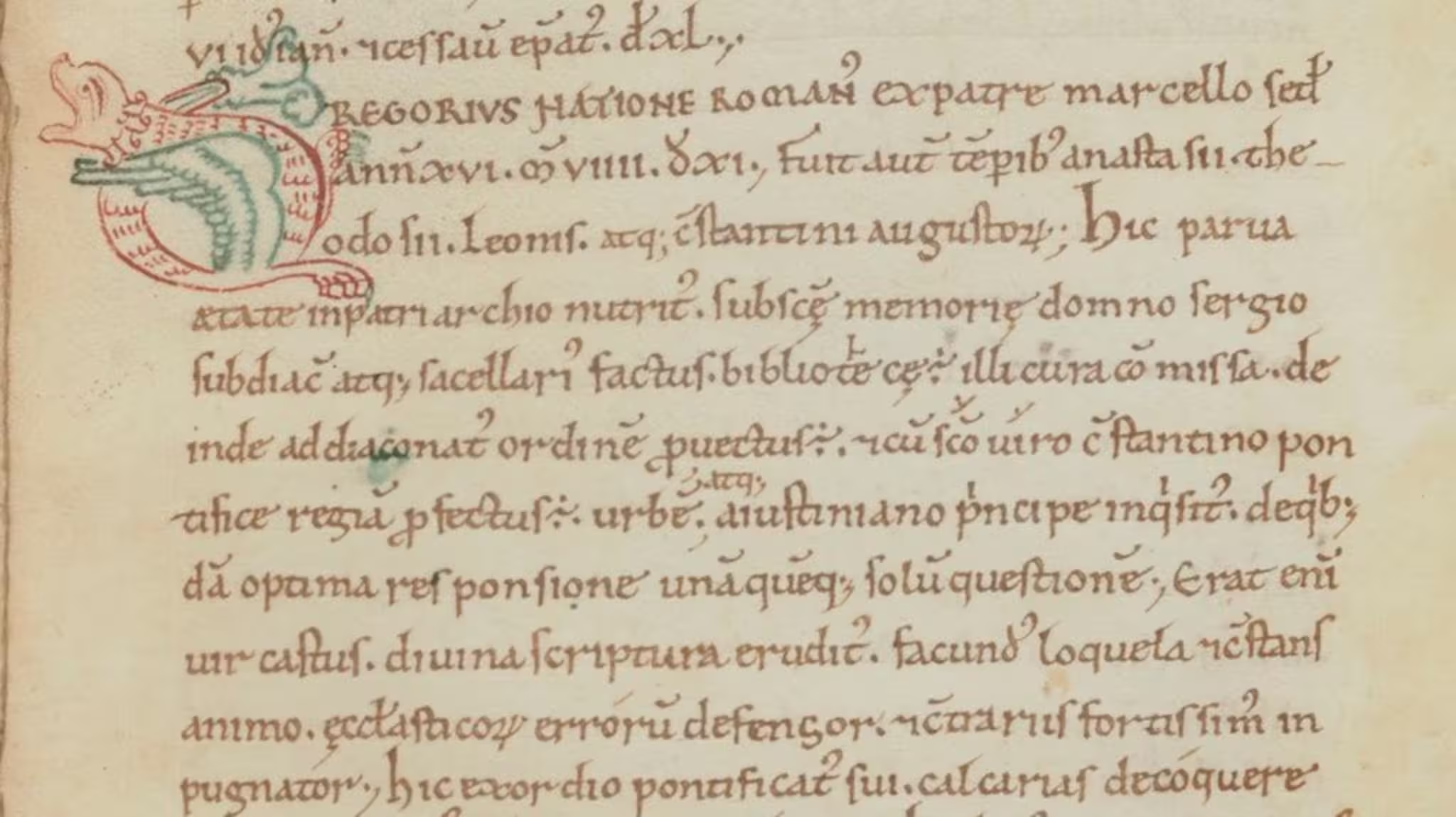
The Liber Pontificalis — the Book of the Popes — contains short biographies of the early popes of Rome.
The entry for Gregory II (Gregorius), pontiff from 715 to 731, recounts in great detail — and without any pretence of impartiality — the conflicts between the Eastern Roman Empire and the Papacy, with repeated attempts at the life of the pope.
With the 726 edict from emperor Leo III the Isaurian on iconoclasm, the conflict turned to open rebellion and war between, on one side, the pope and the citizens of Byzantine Italy, including the Venetians, and on the other side the empire.
Iconoclasm was a religious-cultural conflict within Byzantine society, over whether it was proper and acceptable to worship images of religious figures. The dispute lasted for much of the 700s and 800s.
The refusal of pope Gregory II to follow the iconoclast edict of Leo III was an important stepping stone on the path of the Papacy towards independence of Byzantium, and towards the creation of a Papal State.
The edict, and the local reaction to it, was also part of the path of Venice towards statehood, as it likely led to the appointment of Ursus Hypatos (Orso Ipato) as the first locally chosen Duke of the Venetians.
Below are several excerpts of the entry, from Duchesne (1886), p. 396–414, of the parts related to the conflict with the empire, the iconoclast edict and the Italian reaction to it.
GREGORY, a Roman by birth, from his father Marcellus, reigned 15 years, 8 months, and 24 days. Who, having been nurtured from a young age in the patriarchate, was made subdeacon, then advanced to the order of deacon, and with the holy man Constantine, the pope, went to the royal city.1 For he was a chaste man, learned in divine Scripture, fruitful in speech and steadfast in spirit, a defender of ecclesiastical matters and a most valiant opponent of adversaries.
Click to reveal the Latin text
GREGORIUS, natione Romanus, ex patre Marcello, sedit ann. XV mens. VIII dies XXIIII. Qui a parva etate in patriarchio nutritus, subdiaconus factus, deinde diaconatus ordinem provectus est et cum viro sancto Constantino pontifice regiam profectus est urbem. Erat enim vir castus, divine Scripture eruditus, fecundus loquella et constans animo, ecclesiasticarum rerum defensor et contrariis fortissimus inpugnator.
… omissis …
At that time,2 the castle of Narni3 was overrun by the Lombards. Indeed, the King of the Lombards Liutprand,4 advancing to Ravenna5 with a general movement, besieged it for days and, after taking the fortress of Classe,6 carried off many captives and took countless riches.
Click to reveal the Latin text
Eo tempore castrum est Narniae a Langobardis pervasum. Rex vero Langobardorum Liutprandus generali motione Ravenna progressus est atque illam obsedit per dies et castrum pervadens Classis, captos abstulit plures et opes tulit innumeras.
After some time, duke Basilius,7 Jordan the cartulary,8 and John the subdeacon surnamed Lurion convened a plot to kill the pontiff, and Marinus, the imperial spatharius,9 who held the Duchy of Rome, sent from the royal city with the emperor’s order, gave them his consent. But they could not find the opportunity. By the judgment of God, their plot was dissolved, and thus they left Rome. Afterwards, Paulus the Patrician10 was sent as exarch to Italy; he again plotted to carry out the crime. When their plan was discovered by the Romans, they killed Jordan and John Lurion; as for Basilius, having become a monk, he ended his life in some remote place.
Click to reveal the Latin text
Post aliquod Basilius dux, Iordannes chartularius et Iohannis subdiaconus cognomento Lurion consilium inierunt ut pontificem interficerent; quibus assensum Marinus imperialis spatarius, qui Romanum ducatum tenebat, a regia missus urbe, imperatore mandante hoc, praebuit. Sed tempus invenire non potuerunt. Qui Dei iudicio dissolutus contractus est et sic a Roma recessit. Postmodum Paulus patricius et exarchus missus in Italia; qui denuo ut scelus perficerent, meditabant. Quorum consilium Romanis patefactum, Iordannem interfecerunt et Iohannem Lurionem; Basilius vero, monachus factus, in loco quodam retrusus vitam finivit.
In those days, by order of the emperors, the patrician Paulus, who had been exarch, tried to kill the same pontiff because he hindered the imposition of taxes in the province and stripped churches of their resources, as had been done in other places, and to appoint another in his place.
Click to reveal the Latin text
Illis diebus imperatorum iussione Paulus patricius qui exarchus fuerat eundem pontificem conabatur interficere, eo quod censum in provincia ponere praepediebat et suis opibus ecclesias denudare, sicut in ceteris actum est locis, atque alium in eius ordinare locum.
After this, another spatharius was sent with orders to remove the pope from his seat; again, the patrician Paulus, to carry out such a crime, sent those he could seduce from Ravenna with his companion and some from the fortresses. But with the Romans stirred and the Lombards, of the duchy of Spoleto,11 from all sides defending the pope at the Ponte Salario,12 and with Lombard dukes surrounding the Roman borders from all sides, this was prevented.
Click to reveal the Latin text
Post hunc spatharius cum iussionibus missus est alter, ut pontifex a sua sede amoveretur; denuo Paulus patricius ad perficiendum tale scelus, quos seducere potuit ex Ravenna cum suo comite atque ex castris aliquos misit. Sed motis Romanis atque undique Langobardis pro defensione pontificis, in ponte Salario Spolitini, atque hinc inde duces Langobardorum circumdantes Romanorum fines, hoc praepedierunt.
Thus, after the orders had been sent, the emperor13 decreed that no image of any saint, martyr, or angel should be kept: for he declared all of them cursed.
And if the pope complied, he would have the emperor’s favour; if he obstructed even this, he would fall from his position.
Therefore, despising the profane command of the ruler, the man14 armed himself against the emperor as if against an enemy, rejecting his heresy, and writing everywhere to warn Christians that it had arisen and been fulfilled.
Therefore, all the armies of the Pentapolis15 and of the Venetians moved, and resisted the command of the emperor, never agreeing to the death of the same pontiff, but rather engaging bravely for his greater defence, so that they subjected Paul the exarch, or whoever had directed him, and their accomplices to anathema; rejecting the order of the exarch, they all chose dukes16 for themselves throughout Italy;17 and thus they all sought the pontiff’s and their own immunity.
But when the emperor’s wickedness was known, all of Italy planned to choose an emperor for themselves and take Constantinople; but the pope restrained such a plan, hoping for the conversion of the emperor.
Click to reveal the Latin text
Iussionibus itaque postmodum missis decreverat imperator ut nulla imago cuiuslibet sancti aut martyris aut angeli haberetur: maledicta enim omnia asserebat.
Et si adquiesceret pontifex, gratiam imperatoris haberet; si et hoc fieri praepediret, a suo gradu decederet.
Despiciens ergo vir profanam principis iussionem, iam contra imperatorem quasi contra hostem se armavit, rennuens heresem eius, scribens ubique caveri se christianos quod orta fuisset impletas.
Igitur permoti omnes Pentapolenses atque Venetiarum exercita contra imperatoris iussionem restiterunt, numquam se in eiusdem pontificis condescendere necem, sed pro eius magis defensione viriliter decertarent, ita ut anathemate Paulum exarchum vel qui cum direxerat eiusque consentaneos summitterent; spernentes ordinationem exarchi, sibi omnes ubique in Italia duces elegerunt; atque sic de pontificis deque sua inmunitate cuncti studebant.
Cognita vero imperatoris nequitia, omnis Italia consilium iniit ut sibi eligerent imperatorem et ducerent Constantinopolim; sed conpescuit tale consilium pontifex, sperans conversionem principis.
In those days duke Exilaratus,18 deceived by diabolical instigation, held the parts of Campania with his son Hadrian, enticing the people to obey the emperor and kill the pontiff. Then all the Romans followed him, captured him, and killed him along with his son, saying that they had written against the pontiff and the emperor. After this, they also deprived Peter of the duchy.19
Click to reveal the Latin text
Ipsis diebus Exilaratus dux, deceptus diabolica instigatione, cum filio suo Hadriano, Campanie partes tenuit, seducens populum ut oboedirent imperatori et occiderent pontificem. Tunc Romani omnes eum secuti conprehenderunt et cum suo filio interfecerunt, dicentes quod contra pontificem imperatori scripsissent. Orbaverunt post hunc et Petrum ducem.
Therefore, due to a dispute in the territories of Ravenna, some siding with the emperor’s corruption, others with the pontiff and the faithful, a conflict arose among them, resulting in the killing of the patrician Paulus.
As for the Lombards, they occupied the castles of Emilia, Ferronianus,20 Montebello,21 and Verabulum22 along with their towns Buxo23 and Persiceta,24 and Pentapolis,25 also the city of Osimo,26 surrendered.
Click to reveal the Latin text
»» Igitur dissensione missa in partibus Ravennae, alii consentientes pravitati imperatoris, alii cum pontifice et fidelibus tenentes, inter eos contentione mota, Paulum patricium occiderunt.
Langobardis vero Emilie castra, Ferronianus, Montebelli, Verabulum cum suis oppidibus Buxo et Persiceda, Pentapolim quoque Auximana civitas se tradiderunt.
After a while the emperor sent Eutychius,27 a patrician eunuch who had long been exarch, to Naples to accomplish what the exarch Paulus, the spatharii, and the other evil counsellors had been unable to do. But even so, by God’s will, the miserable deceit did not remain hidden, but the worst plan became clear to all because they were attempting to violate the churches of Christ and to destroy and plunder the possessions of everyone.
Click to reveal the Latin text
Post aliquod vero Eutychium patricium eunuchum, qui dudum exarchus fuerat, Neapolim imperator misit, ut illud quod exarchus Paulus, spatharii quoque et ceteri malorum consiliatores, facere nequiverunt perficeret ille. Sed nec sic, iubente Deo, latuit miserabilis dolus, sed claruit cunctis pessimum consilium quia Christi violare conabantur ecclesias et perdere cunctos atque diripere omnium bona.
And when he sent his own man to Rome with his writings, which contained instructions to kill the pontiff along with the nobles of Rome, the most cruel madness being recognized, the patricians immediately wanted to kill him, if not for the excessive defence of the pontiff preventing it.
However, they anathematized the same Eutichius the exarch, binding themselves, both the great and the lesser, with an oath that they would never allow the zealous pontiff of the Christian faith and defender of the churches to be harmed or removed, but that all were ready to die for his safety.
Click to reveal the Latin text
Cumque mitteret hominem proprium Romam cum scriptis suis in quibus continebatur ut pontifex occideretur cum optimatibus Romae, agnita crudelissima insania, protinus ipsum patricii missum occidere voluerunt, nisi defensio pontificis nimia praepediret.
Verum eundem anathematixaverunt Eutichium exarchum, sese magni cum minoribus constringentes sacramento nunquam pontificem christianae fidei zelotem et ecclesiarum defensorem permittere noceri aut amoveri, sed mori essent pro illius salute omnes parati.
Then the patrician advised the leaders of the Lombards and the king, promising many gifts here and there through their envoys so that they would desist from harming the pope. Observing the detestable deceit of the man through his rescripts, the Romans and Lombards, as if bound together by a chain of brotherly faith, united, all desiring to endure a glorious death in defence of the pope, and not allowing him to suffer inconvenience for the true faith and the salvation of Christians in conflict.
Click to reveal the Latin text
Munera tunc hinc inde ducibus Langobardorum et regi pollicentes plurima ut a iuvamine desisterent pontificis per suos legatos patricius ille suadebat. Qui rescriptis detestandam viri dolositatem dispicientes, una se quasi fratres fidei catena constrinxerunt Romani atque Langobardi, desiderantes cuncti mortem pro defensione pontificis sustinere gloriosam, nonque illum passuri pertulere molestiam pro fide vera et christianorum certantem salutem.
… omissis …
At that time, the fortress of Sutri28 was treacherously seized by the Lombards and remained in their possession for 140 days. However, through the continuous writings and admonitions of the pope sent to the king, and despite numerous gifts offered, at least stripped of all their resources, the Lombard king, submitting beforehand the donation to the most blessed apostles Peter and Paul, restored and granted it.
Click to reveal the Latin text
Eo tempore dolo a Langobardis pervasum est Sutriense castellum quod per CXL diebus ab eisdem Langobardis possessum est. Sed pontificis continuis scriptis atque commonitionibus apud regem missis, quamvis multis datis muneribus, saltim omnibus suis nudatum opibus, donationem beatissimis apostolis Petrum et Paulo antefatus emittens Langobardorum rex, restituit atque donavit.
… omissis …
For soon after a few days, the wickedness of the emperor,29 for which he persecuted the pope, became clear, to the extent that he compelled all the inhabitants of Constantinople, both by force and by flattery, and removed wherever they were held, the images of both the Saviour and His holy mother or all the saints, and in the middle of the city, which is cruel to say, he burned them.
Click to reveal the Latin text
Nam post paucos dies claruit malitia imperatoris pro qua persequobatur pontificem, ita ut conpelleret omnes Constantinopolim habitantes, tam virtute quamque blandimentis, et deponeret ubicumque haberentur imagines tam Salvatoris quamque eius sanctae genetricis vel omnium sanctorum, eas in medio civitatis, quod dicere crudele est, incenderet.
And because many from the same city’s population sought to prevent such a crime, some suffered beheading, others lost parts of their bodies as punishment.
Click to reveal the Latin text
Et quia plerique ex eiusdem civitatis populo tale scelus fieri praepediebant, aliquanti capite truncati, alii partem corporis, poenam pertulerunt.
At the same time, the patriarch Germanus30 was expelled from his own see by the malice of the emperor, and he appointed the priest Anastasius31 as his accomplice in his place. When the synodal letter found him consenting to such an error, he did not treat the man as a brother or a priest, but in written reminders he ordered that unless he were convinced of the Catholic faith, he should also be deprived of priestly office. Advising the emperor as well to avoid such a detestable misfortune, he communicated this in writing
Click to reveal the Latin text
Eodem tempore Germanus patriarcha a propria expulsus est sede imperatoris nequitia, sibique conplicem Anastasium presbiterum in eius loco constituit. Qui missa synodica dum talis erroris eum consentientem apostolicuss repperiret vir, non censuit fratrem aut consacerdotem, sed scriptis commonitoriis, nisi ad catholicam convinceret fidem, etiam extorrem a sacerdotali officio esse mandavit. Imperatori quoque suadens salutaria ut a tali exsecrabili miseria declinaret scriptis commonuit.
… omissis …
Notes
- Constantinople, the capital of the empire and where the emperor resided, was the royal city. ↩︎
- Probably around 725. ↩︎
- Narni is a city in Umbria. ↩︎
- Liutprand (c.680–744) was king of the Lombards from 712 to 744. During his reign, he fought wars with Byzantine over Ravenna, and donated lands at Sutri to the Pope, leading to the creation of the Papal State. ↩︎
- Ravenna was the capital of the Western Roman Empire in the 400s, of the Ostrogoth Kingdom in the early 500s, and seat of the Exarchate of Ravenna until 751. ↩︎
- Classe (Latin: Classis) was a harbour city near Ravenna, and an important naval base in Antiquity. ↩︎
- Which Byzantine duchy Basileus ruled, is unclear. ↩︎
- A chartularius was a Byzantine court official, mostly charged with administrative and fiscal duties. ↩︎
- A spatharios was originally a member of the imperial bodyguard, but at this time mostly an honourary title. ↩︎
- Paulus was the exarch of Ravenna from 723 until 726 or 727, when he was killed during the riots against iconoclasm. ↩︎
- The Duchy of Spoleto was a Lombard duchy in central Italy, established following the Lombard invasion in 568. Formally a part of the Kingdom of the Lombards, but often more autonomous as it was semi-detached from the northern parts of the kingdom. ↩︎
- The Ponte Salario was a bridge on the Roman Via Salario over the river Anio, just north of Rome. ↩︎
- Leo III the Isaurian (c. 685–741) was Byzantine emperor from 717. He is associated with the start of iconoclasm in 726. ↩︎
- Pope Gregory II. ↩︎
- The Duchy of the Pentapolis was a Byzantine province, under the Exarchate of Ravenna, located south of Ravenna. The five cities were Rimini, Pesaro, Fano, Senigaglia and Ancona. ↩︎
- The original has duces, which can mean dukes or, more generically, leaders. ↩︎
- This has been connected to the appointment of Ursus Hypatos as Doge of the Venetians. ↩︎
- This duke Exilaratus doesn’t appear on the list of known dukes of Byzantine Naples, so he might have been a usurper. ↩︎
- Very little is known about this duke Peter of the Byzantine duchy of Rome. ↩︎
- Pavullo nel Frignano is the likely location of the Roman and Byzantine Castrum Feronianum. ↩︎
- Monteveglio was the site of the Byzantine fortress of Mons Bellius or Montebello. ↩︎
- Pieve di San Vitale in Emilia-Romagna is the likely location of the Byzantine fortress Castrum Verabulum. ↩︎
- Busseto in Emilia-Romagna is the likely location for the Byzantine fortress of Buxus. ↩︎
- San Giovanni in Persiceto in Emilia-Romagna was the centre of the Lombard Duchy of Persiceta from 728. ↩︎
- [instution pentapolis]. ↩︎
- Osimo)() is a hill-top town in the Marche region, once a part of the Byzantine [Pentapolis. ↩︎
- Eutychius (†751) was the last Byzantine exarch of Ravenna from 726 or 727 until his death. He was killed during the Lombard conquest of Ravenna in 751, which ended the Exarchate of Ravenna. ↩︎
- Sutri is a town in Lazio, known for the Donation of Sutri, by Liutprand, king of the Lombards, to pope Gregory II in 728. ↩︎
- Leo III the Isaurian (c. 685–741) was Byzantine emperor from 717. He is associated with the start of iconoclasm in 726. ↩︎
- Germanus I of Constantinople (c.634–740) was Patriarch of Constantinople from 715 to 730, when he resigned over the issue of iconoclasm. ↩︎
- Anastasius (†754) was Patriarch of Constantinople from 730 to his death in 754. He was a major figure in the First Iconoclasm. ↩︎

Leave a Reply