Venice and the Venetian duke Mauricius are mentioned in the passing in the Liber Pontificalis for Adrian I, related to an episode taking place in 772.
Following the demise of the Exarchate of Ravenna in 750–752, at the hands of the Lombard king Aistulf, the Frankish king Pepin the Short intervened, defeated Aistulf twice, and in 756 he handed the territories of the Exarchate over to the papacy, in what is called the Donation of Pepin.
Following the defeats, Aistulf was deposed and succeeded by Desiderius as King of the Lombards.
In Rome, there was a strong pro-Frankish faction, but there were also important members of the papal court who favoured closer relations to the Lombards.
Pepin the Short died in 768, and was succeeded by his son Charles, later called Charlemagne, as king of the Franks.
King Desiderius started raiding the lands of the former Exarchate, with an intent of re-taking them from the Papacy
Pope Adrian I was elected in 772, and had to confront this threat immediately.
He therefore sent an envoy to the Lombard court in Pavia. The messenger was Paul Afiarta, a vocal supporter of the pro-Lombard faction in Rome, and the suspect in a murder case. He was sent in part to remove him from Rome, where a trial against him was under preparation.
Before Paul Afiarta arrived in Pavia, Desiderius had started a military campaign against the lands of the Exarchate, and taken several cities and fortresses, threatening Ravenna itself.
The archbishop of Ravenna, Leo I, pleaded Rome for help. Adrian I ordered Leo I to have Paul Afiarta arrested, and exiled to Constantinople, and send an official to Ravenna see to it.
Paul Afiarta was arrested in Ravenna, but Leo I — fiercely anti-Lombard but not necessarily pro-Frankish for that — didn’t exile him to Constantinople as requested.
His excuse was that the only way to send him to Constantinople was through Venetia, but the Venetians couldn’t be trusted to actually do it. The son of duke Mauricius was a prisoner with the Lombards, and Mauricius would likely use Paul Afiarta as ransom to liberate his son.
Leo I therefore had Paul Afiarta executed, against the instructions of the pope.
Later in the account, the Papacy listed all the territories of the former Exarchate, which they claimed, and the province of Venetia was included.
No Venetian sources mention a son of duke Mauricius in captivity with the Lombards. The only known son was Giovanni, co-ruler and successor on the ducal throne.
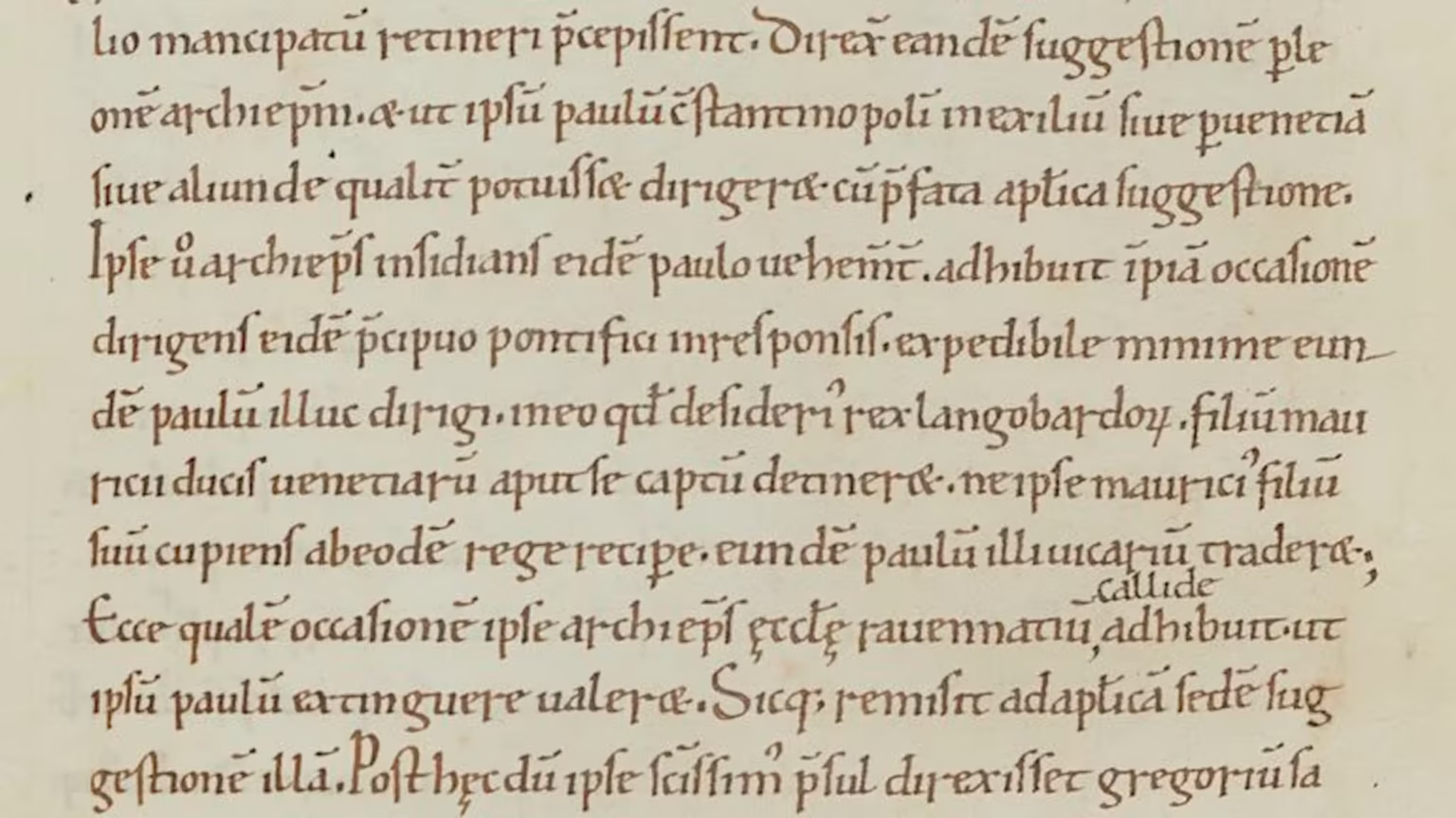
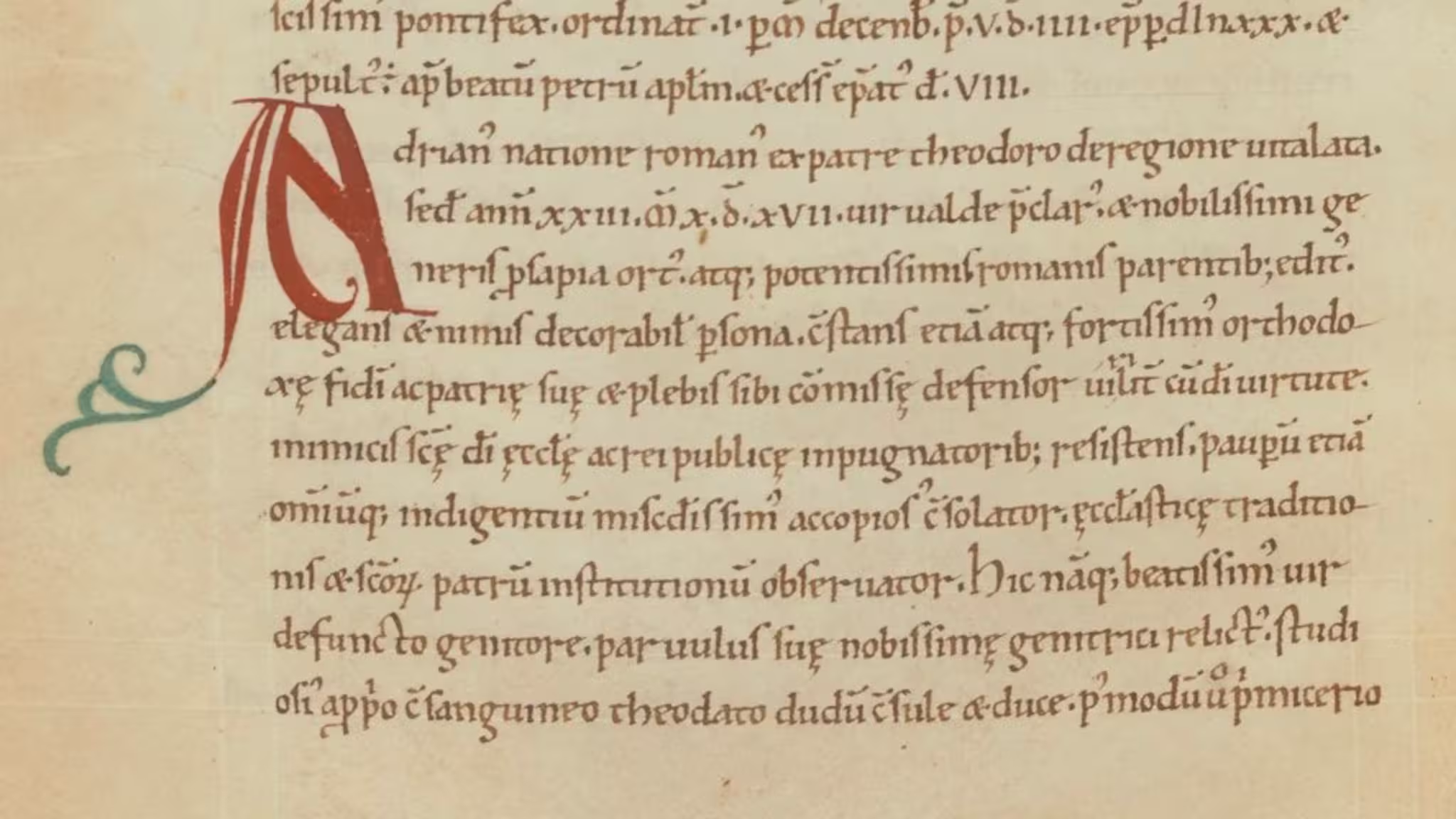
Below are excerpts of the entry of Pope Adrian I in the Liber Pontificalis, from Duchesne (1886), vol. 1, p. 490–491 and 498, with the parts related to Venice.
Liber Pontificalis (excerpts)
… omissis …
His Holiness forwarded the same suggestion three times to Archbishop Leo so that he should send Paul to Constantinople in exile, either through Venice or elsewhere, in accordance with the aforementioned apostolic suggestion.
But the archbishop himself, vehemently plotting against the same Paul, took advantage of the impious opportunity, directing in his replies to the same supreme pontiff that it was not at all expedient to send the Paul there; in that Desiderius, king of the Lombards, was keeping the son of Mauricius, duke of the Venetians, captured, lest Mauricius himself, desiring to free his son from the king, should hand over Paul to him as ransom.
Click to reveal the Latin text
Direxitque eandem suggestionem eius ter beatitudo Leoni archiepiscopo ut ipsum Paulum Constantinopolim in exilio, sive per Venetias, sive per aliunde, qualiter potuisset, dirigeret cum praefata apostolica suggestione.
Ipse vero arphiepiscopus, insidians vehementer eidem Paulo, adhibuit impiam occasionem, dirigens eidem praecipuo pontifici in responsis expedibile minime esse eundem Paulum illuc dirigi; in eo quod Desiderius Langobardorum rex filium Mauricii ducis Venetiarum apud se captum detineret, ne ipse Mauricius filium suum cupiens ab eodem rege recipere, eundem Paulum illi vicaneum traderet.
… omissis …
And when he had made the promise which Francia had made to him in a place called Quierzy,1 he and his judges were pleased with everything that was attached there.
And of his own free will, with a good and willing mind, the aforementioned most excellent and truly Christian Charles, king of the Franks, ordered another promise of donation to be inscribed in the likeness of the former, through Etherius, his most religious and prudent chaplain and notary; where he granted the same cities and territories to blessed Peter and promised to give them to the aforementioned pontiff along the designated boundary, as is shown to be contained in the same donation, that is: from Lunis with the island of Corsica, then in Suriano, then in Mount Bardone, that is, in Verceto, then in Parma, then in Reggio; and from there in Mantua and Monselice, together with the entire exarchate of Ravenna, as it was anciently, and the provinces of the Venetians and Istria; and also the entire duchy of Spoleto or Benevento.
And, when the same donation was made and with his own hand, the most Christian king of the Franks himself, confirming it, caused all the bishops, abbots, dukes and even the scribes to be enrolled in it; which, first placing on the altar of blessed Peter and afterwards inside in his holy confession, both the king of the Franks himself and his judges, promised to blessed Peter and his vicar, the most holy Pope Adrian, under a terrible oath that they would preserve all that is contained in the same donation.
Click to reveal the Latin text
Cumque ipsam promissionem, quae Francia in loco qui vocatur Carisiaco facta est, sibi relegi fecisset, conplacuerunt illi et eius iudicibus omnia quae ibidem erant adnexa.
Et propria voluntate, bono ac libenti animo, aliam donationis promissionem ad instar anterioris ipse antedictus praecellentissimus et revera christianissimus Carulus Francorum rex adscribi iussit per Etherium, religiosum ac prudentissimum capellanum et notarium suum; ubi concessit easdem civitates et territoria beato Petro easque praefato pontifici contradi spopondit per designatum confinium, sicut in eadem donationem continere monstratur, id est: a Lunis cum insula Corsica, deinde in Suriano, deinde in monte Bardone, id est in Verceto, deinde in Parma, deinde in Regio; et exinde in Mantua atque Monte Silicis, simulque et universum exarchatum Ravennantium, sicut antiquitus erat, atque provincias Venetiarum et Istria; necnon et cunctum ducatum Spolitinum seu Beneventanum.
Factaque eadem donatione et propria sua manu eam ipse christianissimus Francorum rex eam conroborans, universos episcopos, abbates, duces etiam et grafiones in ea adscribi fecit; quam prius super altare beati Petri et postmodum intus in sancta eius confessione ponentes, tam ipse Francorum rex quamque eius iudices, beato Petro et eius vicario sanctisimo Adriano papae sub terribile sacramento sese omnia conservaturos qui in eadem donatione continentur promittentes tradiderunt.
… omissis …
Notes
- The Donation of Pepin was made in the French city of Quierzy. The Latin name of the city is Carisium, and the donation is also called the Promissio Carisiaca. ↩︎
Leave a Reply