The Liber Pontificalis — the Book of the Popes — contains short biographies of the early popes of Rome. Compilation of the Liber Pontificalis started in the mid-500s.
The entry for John (Iohannes, Giovanni) III, who was pontiff from 561 to his death in 574, is the earliest known source for the story that the Byzantine general Narses invited the Lombards to invade and take possession of Italy, due to a spat with the emperor Justin II and empress Sophia.
The text is dated to the 580s or 590s, so shortly after the events. Yet, other contemporary sources, such as Gregory of Tours, don’t mention the conflict between the Romans, Narses and the emperor.
The original text is available after the translation.
Many medieval manuscripts reproduce all or parts of the Liber Pontificalis.
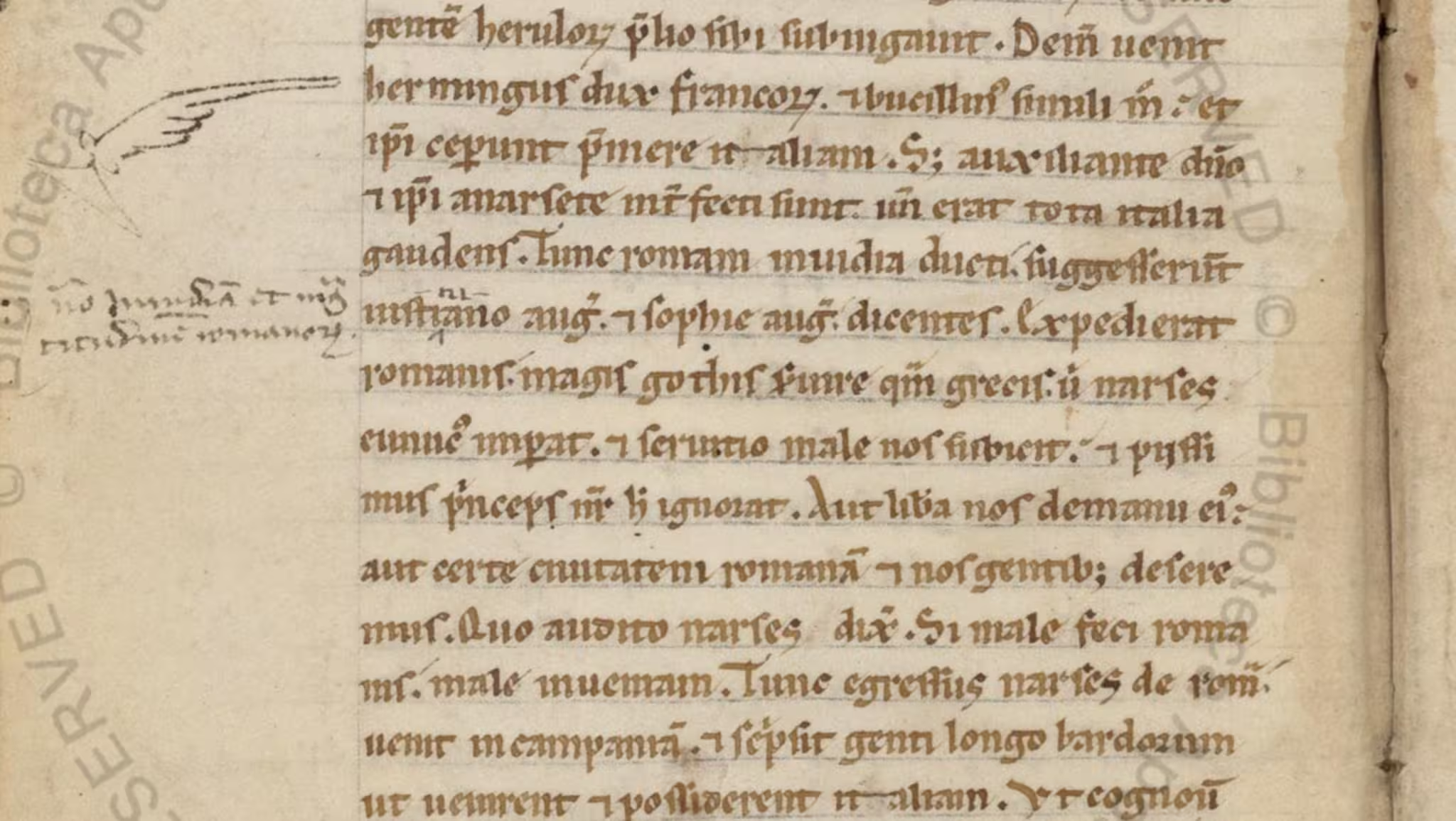
The image above is from MS Vat. lat. 3762 (Vatican Libraries), from the 1100s, which can be viewed online. The entry appears on folia 42v and 43r, which are also reproduced below.
LXIII. John III (561-574)
John, by nationality a Roman, son of the illustrious Anastasius, occupied the see 12 years, 11 months and 26 days. He loved and restored the cemeteries of the holy martyrs.1 He ordered that consecrated bread and flagons of wine should be supplied and lights should be lit in those cemeteries on every Lord’s day by the priests of the Lateran. He finished the church of the apostles Philip and James and dedicated it.
At that time the Heruli revolted and chose for their king Sinduald and oppressed all Italy. And Narses went out against him and slew the king and subdued the whole tribe of the Heruli.2
Then came Ammingus, leader of the Franks, and Buccillinus; they also in like manner wasted Italy. But with the help of the Lord they too were destroyed by Narses. And all Italy was joyful.
Then the Romans, inspired by malice, sent an accusation to Justinian and Sophia, saying: “It were better for the Romans to serve the Goths than the Greeks, for Narses, the eunuch, governs us and reduces us to slavery; and our most devout prince is ignorant of it. Either free us from his hand or we and the city of Rome will serve the Gentiles.” When Narses heard this he said: “If I have done evil to the Romans may evil fall on me!” Then Narses departed from Rome and went to Campania and wrote to the tribe of the Lombards that they might come and possess Italy. But when Pope John learned that the Romans had sent an accusation against Narses to the emperor he went hastily to Naples. And Pope John began to entreat Narses to return to Rome. Then Narses said: “Tell me, most holy Father, what evil have I done to the Romans? I shall go back to the feet of him that sent me and all Italy shall know how I have toiled for her with all my strength.” Pope John answered and said: “I myself shall go to him sooner than you shall leave this land.” And Narses returned to Rome with the most holy pope John.
Then the most holy pope withdrew to the cemetery of Saints Tiburtius and Valerian and abode there a long time, so that he even consecrated bishops there. But Narses entered Rome and after a long time he died. And his body was laid in a leaden coffin and was carried with all his riches to Constantinople. Then Pope John Likewise died and was buried in the basilica of blessed Peter, the apostle, July 13.
And the bishopric was empty 10 months and 3 days on the 13th day of July.
Click to see the original Latin text
IOHANNES, natione Romanus, ex patre Anastasio inlustrio, sedit ann. XII mens. XI dies XXVI. Hic amavit et restauravit cymiteria sanctorum martyrum. Hic instituit ut oblationem et amula vel luminaria in easdem cymiteria per omnes dominicas de Lateranis ministraretur. Hic perfecit ecclesiam apostolorum Philippi et Iacobi et dedicavit eam.
Eodem tempore Eruli intarsia fecerunt et levaverunt sibi regem Sindual et premebant cunctam Italiam. Qui egressus Narsis ad eum interfectus est rex et omnem gentem Erulorum sibi subiugavit. Deinde venit Amingus dux Francorum et Buccillinus; simili modo et ipsi premebant Italiam. Sed auxiliante Domino et ipsi Narsete interfecti sunt. Erat enim tota Italia gaudens.
Tunc Romani invidia ducti suggesserunt Iustiniano et Sophiae quia «expedierat Romanis Gothis servire quam Grecis, ubi Narsis eunuchus imperat et servitio nos subiecit; et piisimus princeps noster haec ignorat. Aut libera nos de manu eius, aut certe civitate Romana et nos gentibus deservimus». Quo audito Narsis dixit: «Si male feci Romanis, male inveniam». Tunc egressus Narsis de Roma venit Campania et scripsit genti Langobardorum ut venirent et possiderent Italiam. Ut cognovit Iohannis papa quia suggestionem suam ad imperatorem contra Narsetem misissent, festinus venit Neapolim, coepit eum Iohannis papa rogare ut reverteretur Romam. Tunc Narsis dixit: «Dic, sanctissime papa, quid male feci Romanis? Vadam ad pedes eius qui me misit et cognoscat omnis Italia quomodo totis viribus laboravi pro eam». Respondit Iohannis papa, dicens: «Citius ego vadam quam tu de hac terra egressus fueriseam». Reversus Narsis cum sanctissimo
Iohanne papa.Tunc sanctissimus papa retenuit se in cymiterio sanctorum Tiburtii et Valeriani et habitavit ibi multum temporis ut etiam episcopos ibidem consecraret. Narsis vero ingressus Romam post multum temporis mortuus est. Cuius corpus positus est in lucello plumbeo, reductus est cum omnes divitias eius Constantinopolim.
Eodem tempore Iohannis papa et ipse mortuus est, et sepultus in basilica beati Petri apostoli. Hic fecit ordinationes II per mens. decemb., presbiteros XXXVIII, diaconos XIII, episcopos per diversa loca LXI. Et cessavit episcopatus mens. X dies III.
Sub die XIII mens. iulii.
Notes
- The cemeteries outside the walls of Rome had been abandoned and ravaged during the decades of the Gothic Wars. ↩︎
- “Narses had also a struggle with Sinduald, king of the Brenti, a surviving descendant of the stock of the Heroli whom Odoacar, when he formerly came into Italy, had brought with him. Upon this man, who at first adhered to him faithfully, Narses conferred many benefits, but defeated him in war, captured him and hung him from a lofty beam, when at last he insolently rebelled and sought to obtain the sovereignty.” — Paul the Deacon, Historia Langobardorum, II.3. ↩︎
Leave a Reply