Over the years, I have written quite a bit about the plague and how the Republic of Venice tried to manage it.
This is a complete list of all the plague related articles, podcast episodes, newsletters, chronologies, and sources, both in the original and translated.
Narrative
I’ve told the story of the plague in Venice in five Venetian Stories podcast episodes. There are full transcripts on the podcast website for those who’d rather read than listen.
- Episode 17 — Venice and the plague – part 1
The plague arrived in Venice in 1348, but what is the plague, and how did our ancestors understand it? - Episode 18 — Venice and the plague – part 2
Without a cure for the plague, the only way forward was prevention, and during the 1400s, Venice figured out how to govern the plague. - Episode 19 — Venice and the plague – part 3
During the 1400s, Venice had created defences against the recurring outbreaks of the plague, and they kept Venice mostly safe for the following centuries. Mostly safe. - Episode 20 — Venice and the plague – part 4
The plague slowly diminished during the 1700s, even if it didn’t disappear, and Venice reorganised the Lazzaretti. - Episode 21 — The Plague Doctor
The well-known image of the plague doctor with the beaked mask doesn’t really have a lot of support in our sources. Did he even exist? - A Chronology of the Black Plague in Venice
The black plague ravaged Venice for centuries, from the mid-1300s to the late 1700s. This is a chronology of some of the most important events.
The plague in general
- The Black Plague
Europe witnessed repeated outbreaks of the black plague – or the bubonic plague – from the 14th until the 17th century. - Bad air will get you sick
Bad air was believed to be a major cause of sickness in the past, based on Aristotle’s idea of miasma as the cause of disease. - Why did it take so long?
It took the Venetians almost a century to do something efficient about the black plague – but we haven’t fared much better with climate change.
The Justinian plague (541-700s)
- The Justinian plague — Paul the Deacon
An excerpt from the Historia Langobardorum about the plague in Italy in the 500s.
The 1575–1577 epidemic
- Latest news from Venice, 1576
An eyewitness account of the plague in 1575–1577. - The start of the plague in 1575 — Cornelio Morello (1584)
Translation of a document from 1584 recounting the start of the plague of 1575. - Lazzaretto Nuovo — Venetia Descritta (1581)
Description of the Lazzaretto Nuovo and eyewitness account from 1576 by Francesco Sansovino. - Festa del Redentore
The Festa del Redentore has been celebrated in Venice since 1577, to mark the end of the disastrous plague epidemic of 1575-77.
The 1630–1631 epidemic
- Francesco Pona — The Plague in Verona, 1630
A doctor’s eyewitness account of the plague epidemic in Verona in 1630, which killed some 60% of the population of the city. - Festa della Salute
The Festa della Salute each year on November 21st is an important holiday in Venice. The event celebrates the end of the plague in 1631.
The 1793 episode
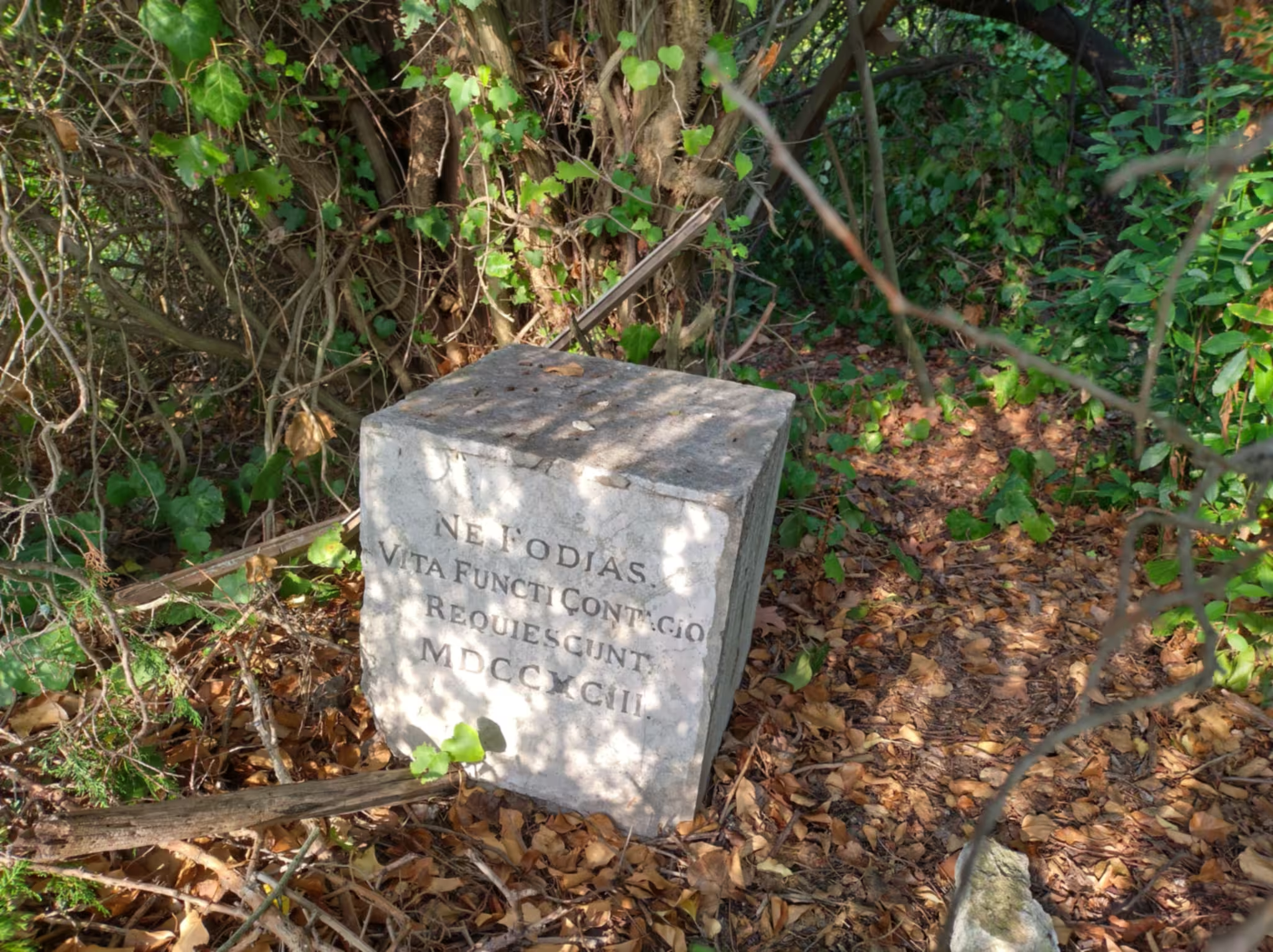
- Ne Fodias – Do not disturb!
In 1793, a ship from Nauplia in Greece brought cheese and the black plague to Venice. Twelve persons died. - The Plague Stone of Poveglia
The island of Poveglia in the Venetian lagoon is one of the most haunted in the world. This has been well-known since the early 2000s.
Cures and remedies
- Venice treacle
Venice treacle, or theriac, was an ancient wonder medicine, an antidote for most poisons and a cure for most ailments, including the plague. - A Theriac recipe (1734)
A 1700s recipe for the miracle medicine Theriac, with most of the ingredients identified. - A Theriac advertisement (1688)
An advertisement flyer for Theriac from the Speziariai del Paradiso, from 1688 (and 1697), printed in Venice, but in English. An annotated transcript. - The preparation of Theriac — two prints (1600s)
Two prints, from the 1600s, depicting the production in public of the wonder-medicine theriac, at the Testa d’Oro apothecary at Rialto. - Teriaca — Theriac — Lessico Veneto
“Teriaca” (Theriac) from the Lessico Veneto (1851) by Fabio Mutinelli.
The Plague Doctor
- The plague doctor
The plague doctor with the beaked mask might not have much to do with Venice — that figure is more likely to be French. - Episode 21 — The Plague Doctor
The well-known image of the plague doctor with the beaked mask doesn’t really have a lot of support in our sources. Did he even exist? - 404 Doctor Not Found
The iconic cloaked and beaked plague doctor is often associated with Venice, but there is no documentation that the figure ever existed in Venice. - Protomedico — Chief Physician — Grevembroch 2-160
“Protomedico” (Chief Physician) from the Gli abiti de veneziani (1754) by Giovanni Grevembroch. - Medico Industrioso — Industrious Doctor — Grevembroch 2–161
“Medico Industrioso” (Industrious Doctor) from the Gli abiti de veneziani (1754) by Giovanni Grevembroch.
The Venetian Lazzaretti
- The Venetian Lazzaretti
The lazzaretti in Venice were the Venetian republic’s response to the emergency of the plague, and an efficient response too. - Quarantine – forty days of isolation
Quarantine is derived from the Venetian (and Italian) word for forty because the quarantine period on the Lazzaretto Nuovo ended up around forty days. - Capitoli Da osservarsi nelli Lazaretti — 1674
Full transcription of the Venetian text from the publication “Capitoli Da osservarsi nelli Lazaretti”, from 1674.
Lazzaretto Vecchio
- Lazzaretto Vecchio
Lazzaretto Vecchio was the first stable hospital and quarantine station for the bubonic plague in the world, founded in 1423 by the Republic of Venice. - A Chronology of Lazzaretto Vecchio
Lazzaretto Vecchio was the first stable hospital and quarantine station for the bubonic plague in the world, founded in 1423 by the Republic of Venice. - Lazzaretto Vecchio — Venetia Descritta (1581)
Description of the Lazzaretto Vecchio by Francesco Sansovino. - Open day at the Lazzaretto Vecchio
The Lazzaretto Vecchio was open for visits this weekend. Openings are occasional and this was only occasion to see the island this year. - Six hundred years of Lazzaretto Vecchio
On this day, six hundred years ago, the Senate of the Republic of Venice decided to create the first ever permanent plague hospital, the Lazzaretto Vecchio
Lazzaretto Nuovo
- Lazzaretto Nuovo – the first quarantine station
The quarantine station on Lazzaretto Nuovo was for three centuries one of the main Venetian defences against the black plague. - A Chronology of the Lazzaretto Nuovo
A chronology of the Lazzaretto Nuovo, the first permanent quarantine station for the bubonic plague in the world, founded in 1468 by the Republic of Venice. - Antonio Moro and the Somachio
Antonio Moro came to Venice in January 1593 to work at the Lazzaretto Nuovo, where he left us a very interesting message on the wall. - Lazzaretto Nuovo — Venetia Descritta (1581)
Description of the Lazzaretto Nuovo and eyewitness account from 1576 by Francesco Sansovino.
Lazzaretto Nuovissimo — Poveglia
- Poveglia – more than ghost stories
The island of Poveglia is now famous for ghost stories made up by American television. However, there’s a lot more to say about the island than fictitious stories of ghosts and crazy doctors. - Ne Fodias – Do not disturb!
In 1793 a ship from Nauplia in Greece brought cheese and the black plague to Venice. Twelve persons died. - The Plague Stone of Poveglia
The island of Poveglia in the Venetian lagoon is one of the most haunted in the world. This has been well-known since the early 2000s.
Translated sources
- The Justinian plague
An excerpt from the Historia Langobardorum about the plague in Italy in the 500s. - Latest news from Venice, 1576
An eyewitness account of the plague in 1575–1577. - The start of the plague in 1575 — Cornelio Morello (1584)
Translation of a document from 1584 recounting the start of the plague of 1575. - Antonio Moro and the Somachio
Antonio Moro came to Venice in January 1593 to work at the Lazzaretto Nuovo, where he left us a very interesting message on the wall. - A Theriac recipe (1734)
A 1700s recipe for the miracle medicine Theriac, with most of the ingredients identified. - Protomedico — Chief Physician — Grevembroch 2-160
“Protomedico” (Chief Physician) from the Gli abiti de veneziani (1754) by Giovanni Grevembroch. - Medico Industrioso — Industrious Doctor — Grevembroch 2–161
“Medico Industrioso” (Industrious Doctor) from the Gli abiti de veneziani (1754) by Giovanni Grevembroch. - Facchini — Labourers — Grevembroch 3-120
“Facchini” (Labourers) from the Gli abiti de veneziani (1754) by Giovanni Grevembroch. - Fabricatore di Teriaca — Maker of Theriac — Grevembroch 3-127
“Fabricatore di Teriaca” (Maker of Theriac) from the Gli abiti de veneziani (1754) by Giovanni Grevembroch. - Custodia gelosa — Zealous custodian — Grevembroch 4–43
“Custodia gelosa” (Zealous custodian) from the Gli abiti de veneziani (1754) by Giovanni Grevembroch.
Sources in the original
- Lazzaretto Nuovo — Venetia Descritta (1581)
Description of the Lazzaretto Nuovo and eyewitness account from 1576 by Francesco Sansovino. - Lazzaretto Vecchio — Venetia Descritta (1581)
Description of the Lazzaretto Vecchio by Francesco Sansovino. - Francesco Pona — The Plague in Verona, 1630
A doctor’s eyewitness account of the plague epidemic in Verona in 1630, which killed some 60% of the population of the city. - Capitoli Da osservarsi nelli Lazaretti — 1674
Full transcription of the Venetian text from the publication “Capitoli Da osservarsi nelli Lazaretti”, from 1674.
Chronologies
- A Chronology of the Black Plague in Venice
The black plague ravaged Venice for centuries, from the mid-1300s to the late 1700s. This is a chronology of some of the most important events. - A Chronology of Lazzaretto Vecchio
Lazzaretto Vecchio was the first stable hospital and quarantine station for the bubonic plague in the world, founded in 1423 by the Republic of Venice. - A Chronology of the Lazzaretto Nuovo
A chronology of the Lazzaretto Nuovo, the first permanent quarantine station for the bubonic plague in the world, founded in 1468 by the Republic of Venice.
Leave a Reply