
Over the years, I’ve fallen into various rabbit holes, which usually leads to a series of articles, and often also to one or more episodes on the Venetian Stories podcast.
Each of the articles below link to all the articles in the series, with all links repeated at the end of each article.
Early Venice
The history of how Venice came about is long and complicated.
The story started before the Romans, and proceeded with the Huns, the Ostrogoths, the Byzantines, the Lombards and the Franks, with the Venetians in-between.
The entire process, which ultimately led to a country called Venice, lasted several centuries, but it was far from a straight and smooth path.
For much of the time, the Venetians were much more of a pawn in the games of other, greater powers. However, as time passed, and the Venetians had to fend for themselves, they de facto acquired statehood, and then embraced it with pride and determination.
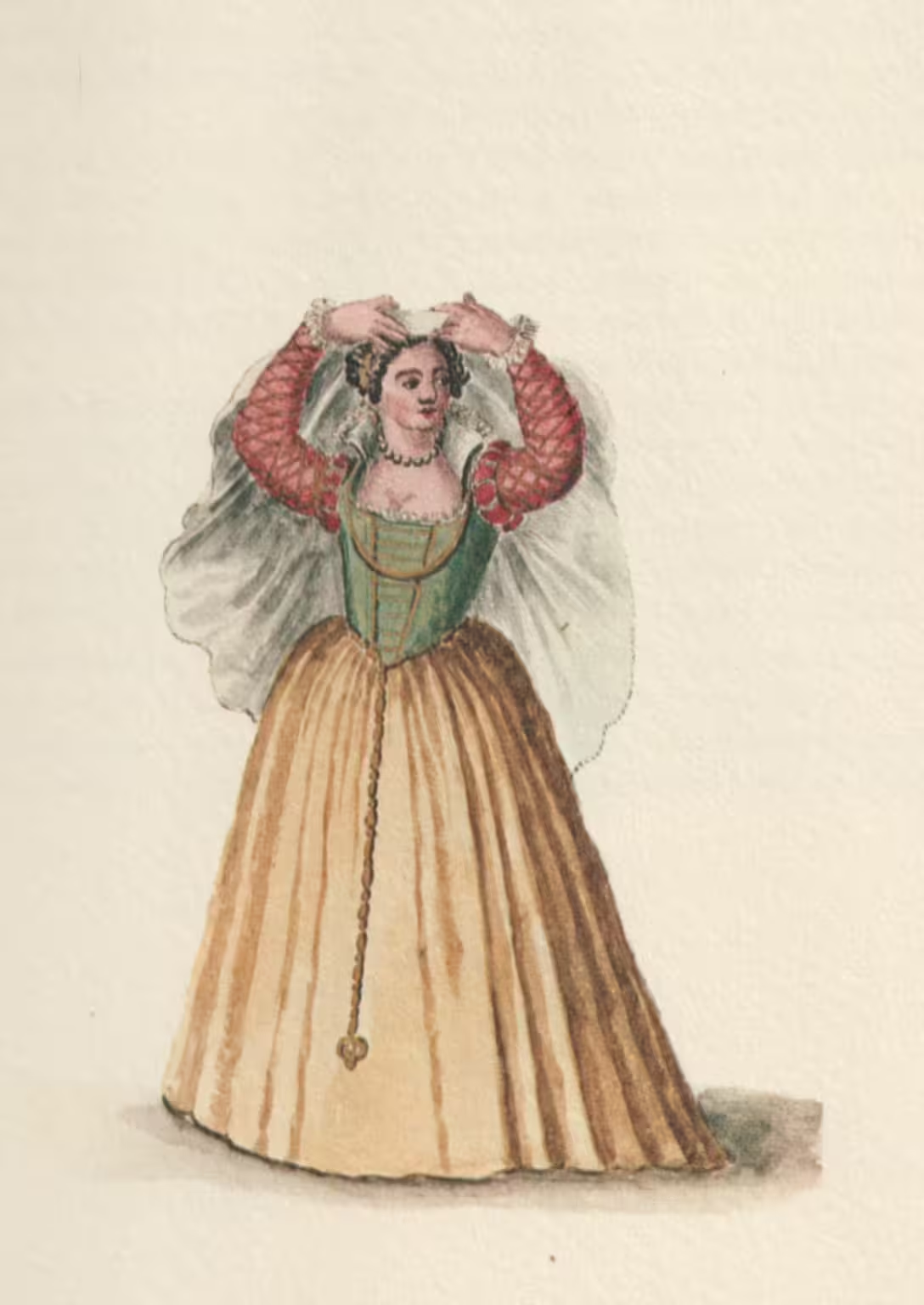
Prostitution in Venice
The Venetian state had an ambiguous relationship with prostitution.
Prostitution was considered a necessary evil, where more harm would come from a ban than from a de facto acceptance. The greater evil was sodomy — homosexuality — which in religious terms was a mortal sin, and in Venice also a capital crime.
At least this was the general line of reasoning. However, even if a large part of the Venetian ruling elite thought prostitution morally wrong and sinful, they also profited from it, both in terms of enjoying it openly and by profiting economically.
The response of the Venetian state to the question of prostitution was therefore quite ambiguous. The authorities simultaneously banned, regulated, encouraged and organised prostitution.
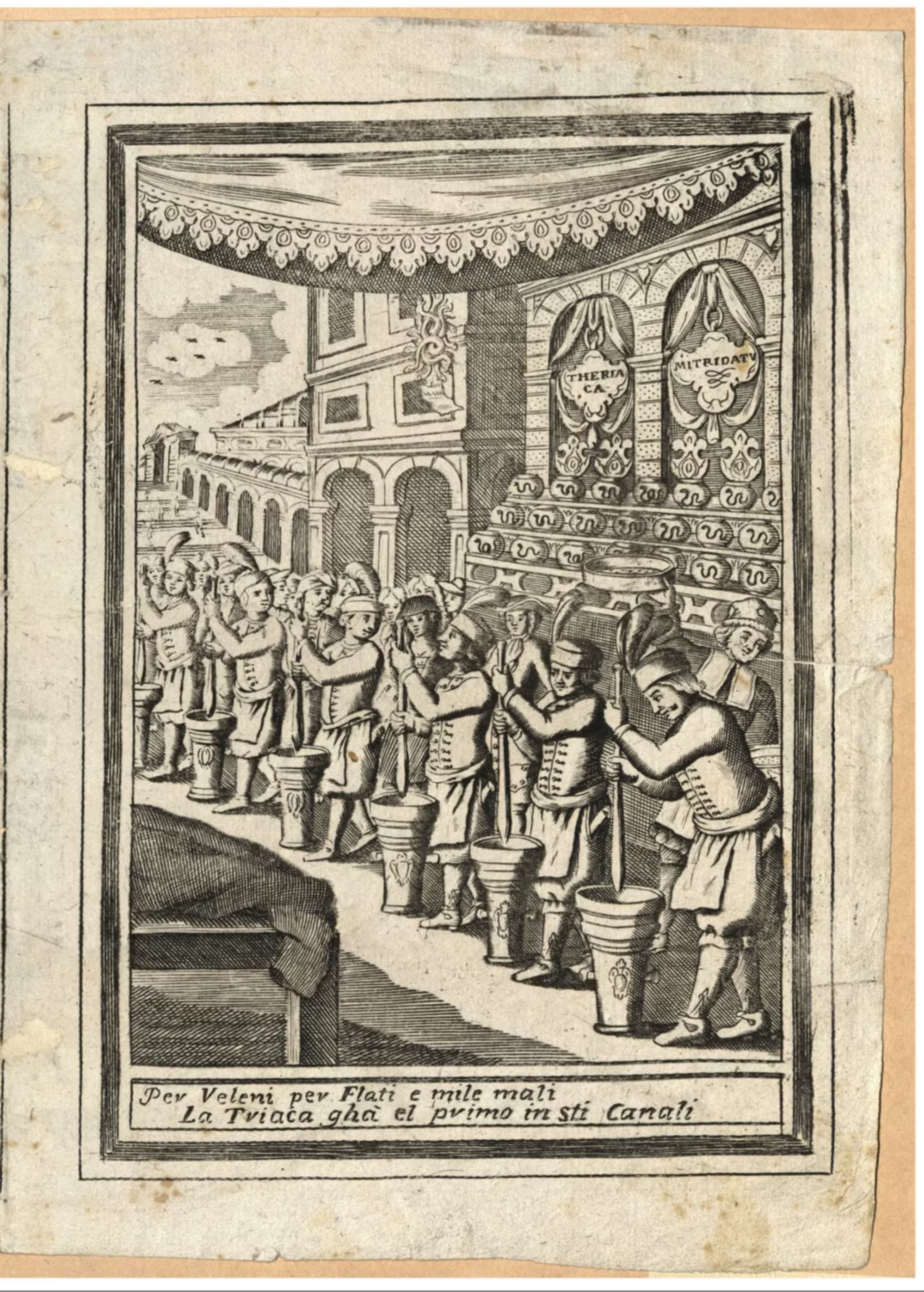
Venice treacle
When the English gentleman John Evelyn left Venice in 1646, after almost a year in Venice and Padua, he had more stuff than when he had arrived. From his diary for late March 1646:
Having packed up my purchases of books, pictures, casts, treacle, &c., (the making and extraordinary ceremony whereof I had been curious to observe, for it is extremely pompous and worth seeing) I departed from Venice …
Venice was in practice the printing house of Europe, so obviously Evelyn had acquired books for his library back home. In Venice, Evelyn found a wider and more international selection of books than was ever available in London at the time.
Likewise, Venice was a centre for the arts, so paintings and casts also made it into Evelyn’s luggage.
The treacle, however, was something quite different.
Also, a podcast episode.
The Venetian Lazzaretti
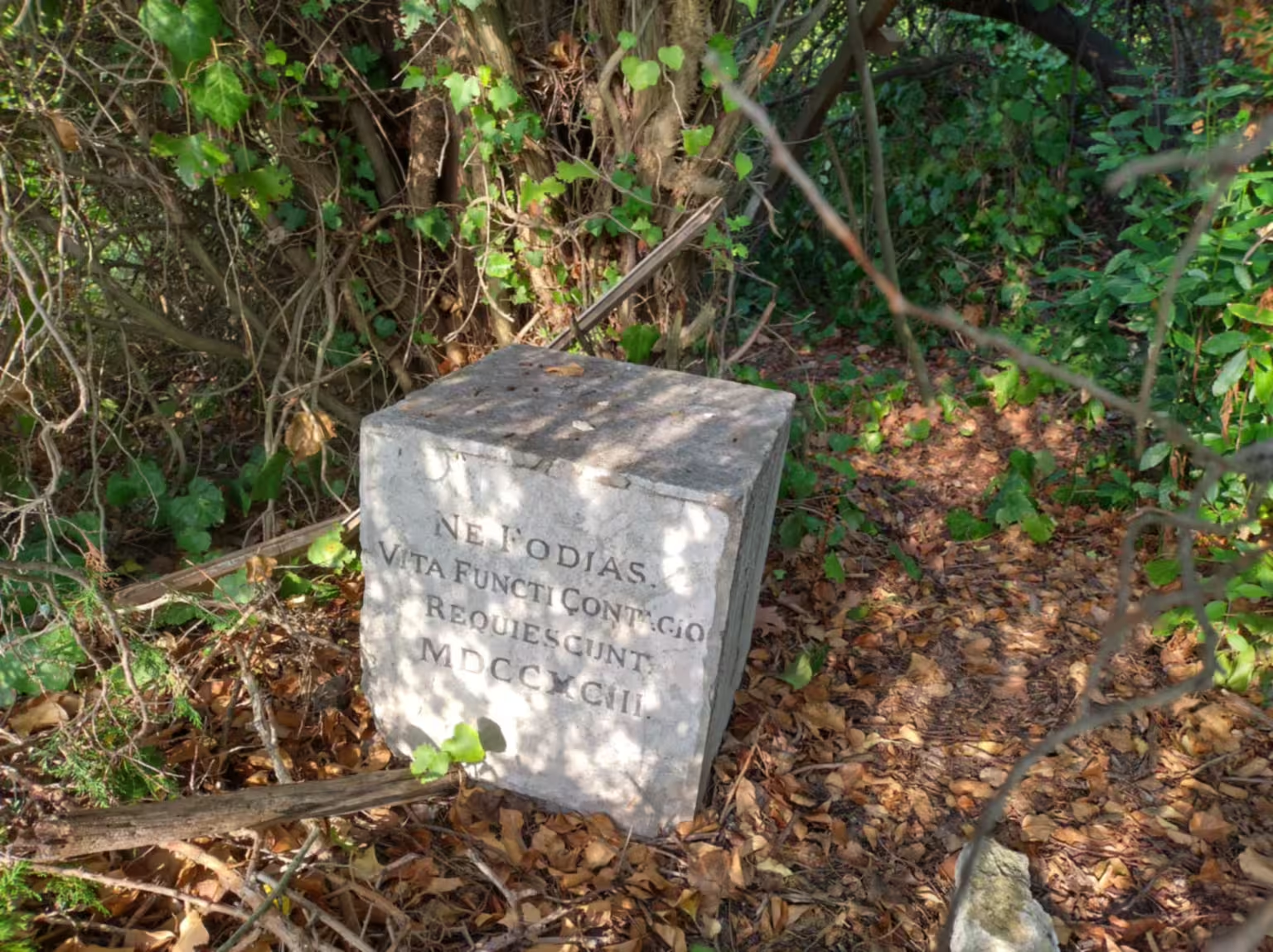
The lazzaretti were a central part of the Venetian republic’s response to the emergency of the bubonic plague, which devastated Venice and much of Europe in the late 1300s and early 1400s.
Venice was the first European state to take an organised, proactive stance against the threat of the black plague. From the early 1400s, they systematically isolated the sick, and later also people and merchandise that had been in contact with the sick.
It is no coincidence that two Venetian words related to the plague have made it into common usage over the world as a result of this: lazaret and quarantine.
Street workers by Gaetano Zompini
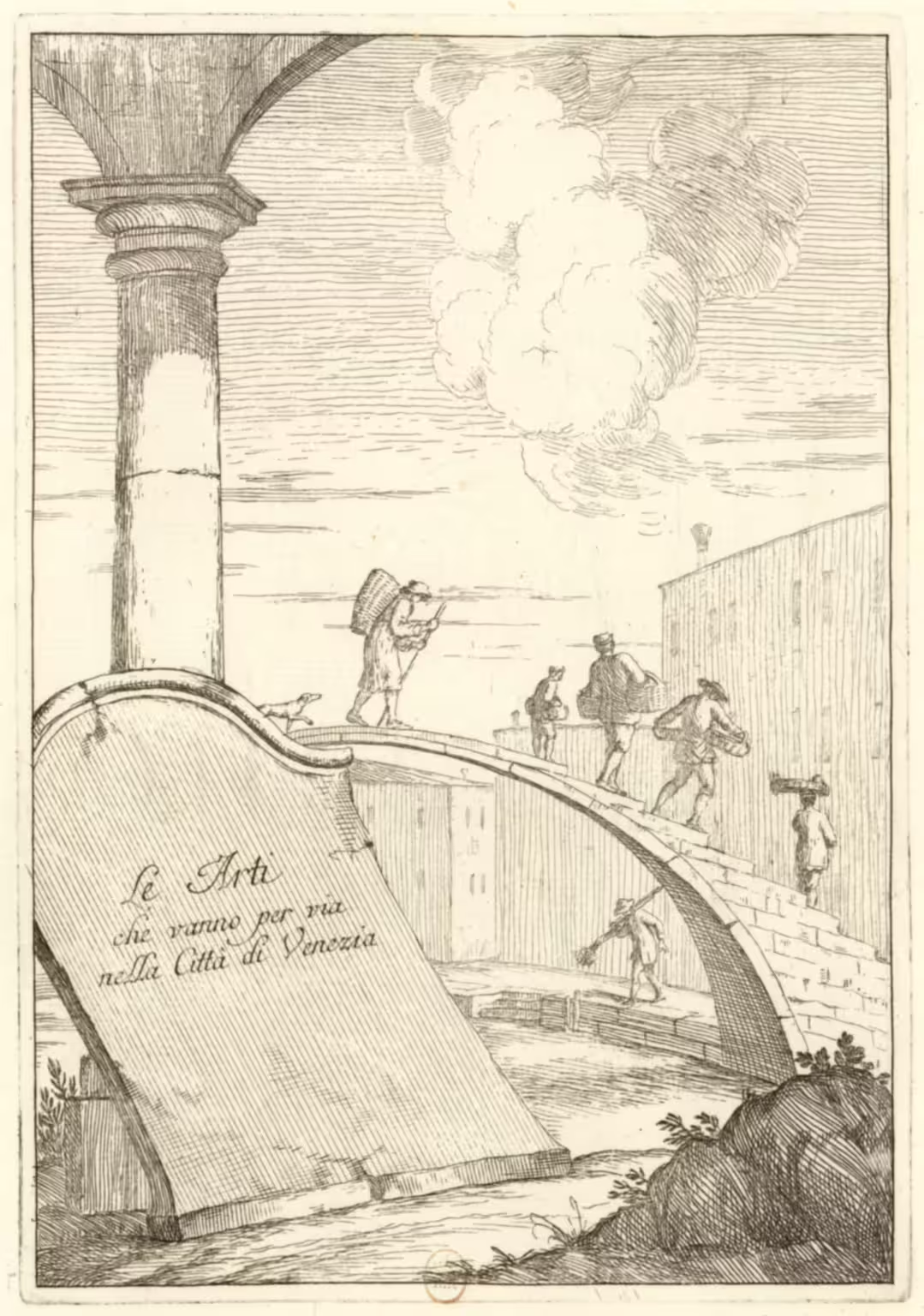
Gaetano Zompini (1700–1778) was a well-known painter and engraver in Venice in the 1700s. His works appear in many churches and museums, not just in Venice, but around Italy and Europe.
Today, however, he is better known for the Le Arti che vanno per via nella Città di Venezia — The trades on the streets of the city of Venice — first published in 1753, and later reprinted and republished in several editions.
The book contains a series of sixty engravings, made in the 1740s and 1750s, which show the craftsmen, workers and street vendors habitually seen in the campi and calli of Venice.
The Republic of Venice
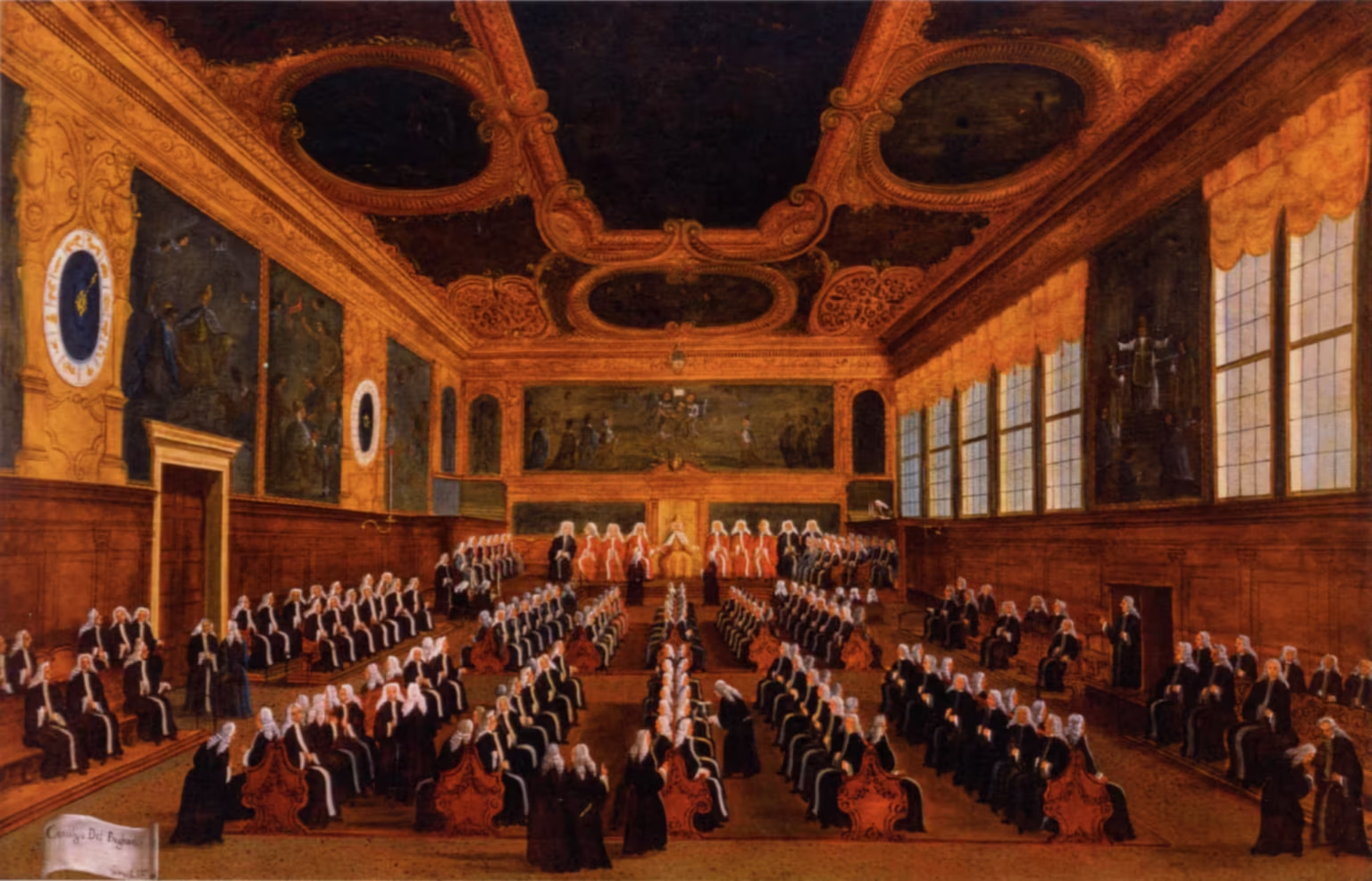
The Republic of Venice never had an actual formal constitution, much less a written constitution.
Neither did the Republic of Venice have any kind of foundational event. There was no special assembly, no vote, no declaration of independence. The early Venetians, while formally accepting Byzantine suzerainty, de facto started acting independently.
The Venetian state — and therefore also its offices and institutions — was changing continuously as conditions inside and outside of it changed, until it gradually found its form in the 1300s and 1400s.
Only one office — that of the Doge — existed from the earliest times, when it was a Byzantine title, until the end of the Republic in 1797. However, even that office went from having almost dictatorial powers over the state in the first centuries, to being a mere figurehead at the end.
Strada Nova – from the Station to Rialto
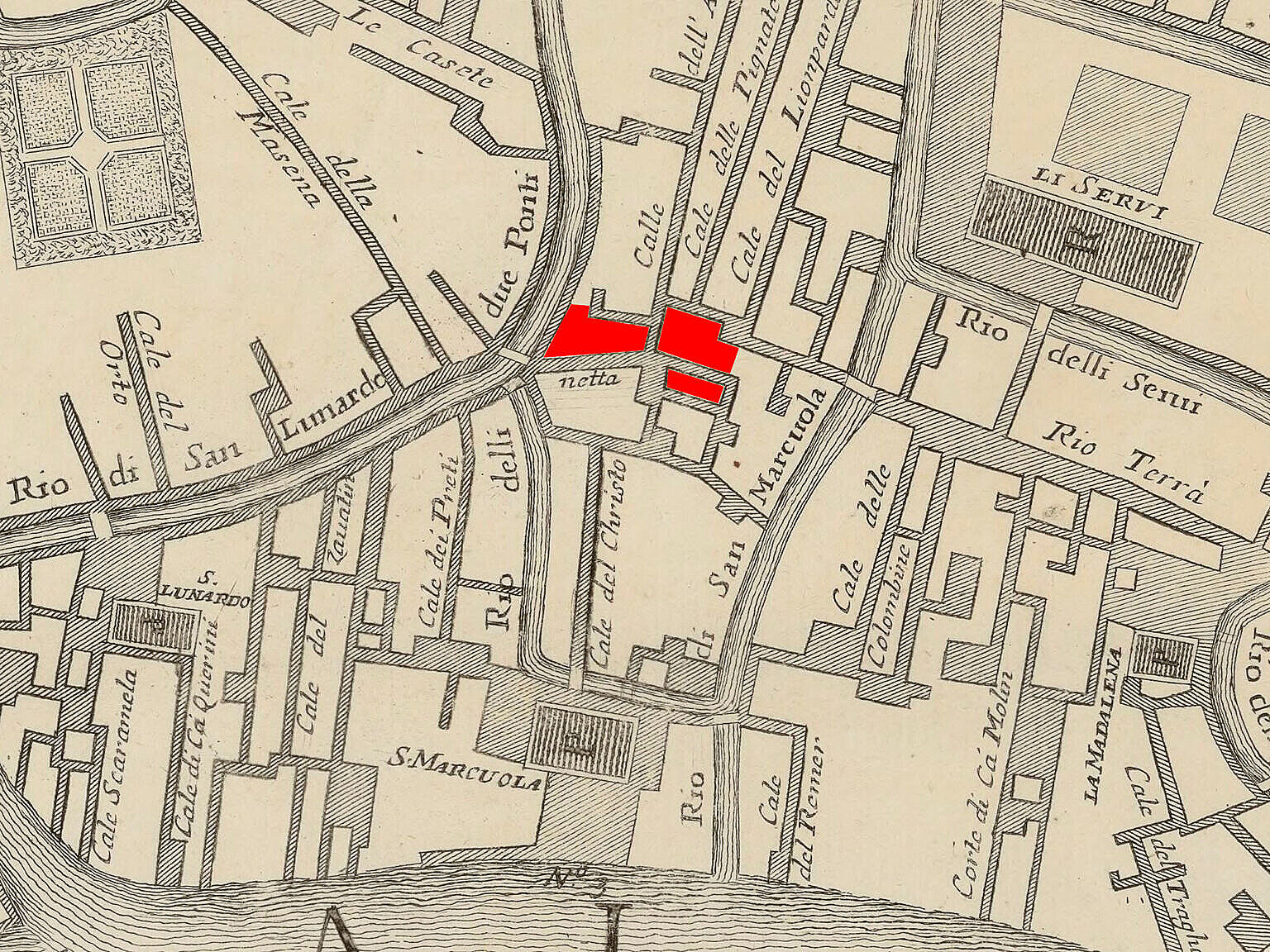
Most people arrive in Venice at Piazzale Rome or to the railroad station. From there, they walk down a series of roads towards the Rialto Bridge. These roads are collectively called Strada Nova, even though only a part of it formally carries that name.
However, the Strada Nova, the new road, prowled by tens of millions of tourists each year, didn’t always exist.
The name is already a bit of a give-away. The word strada is Italian, not Venetian, and nova (nuova in Italian) means new.