Italy
-
The “Galbaio” dynasty
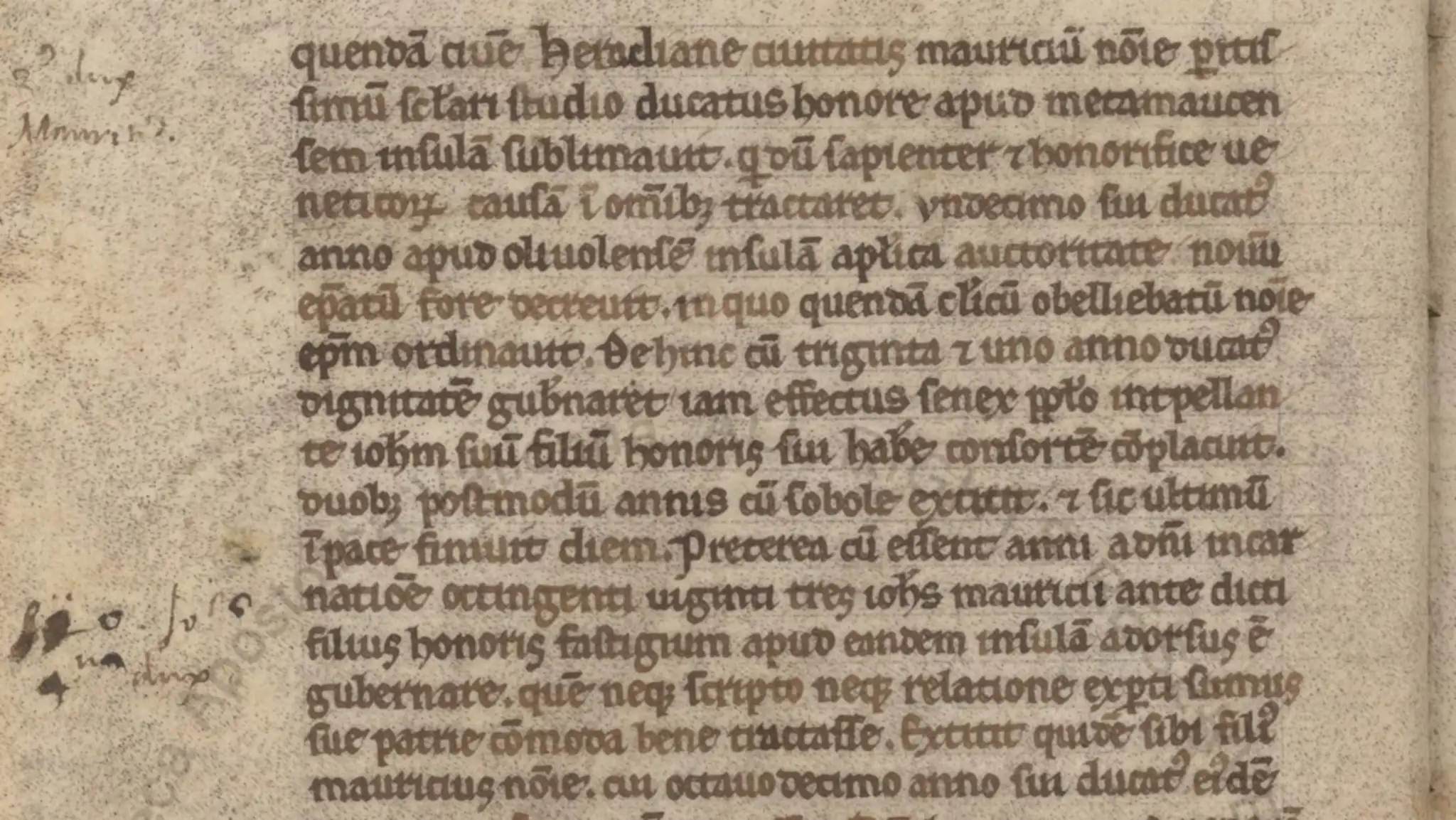
Mauricius and Giovanni Galbaio were the seventh and eighth doges of Venice. Together, they ruled the duchy for almost four decades.
-
Adrian I — Liber Pontificalis
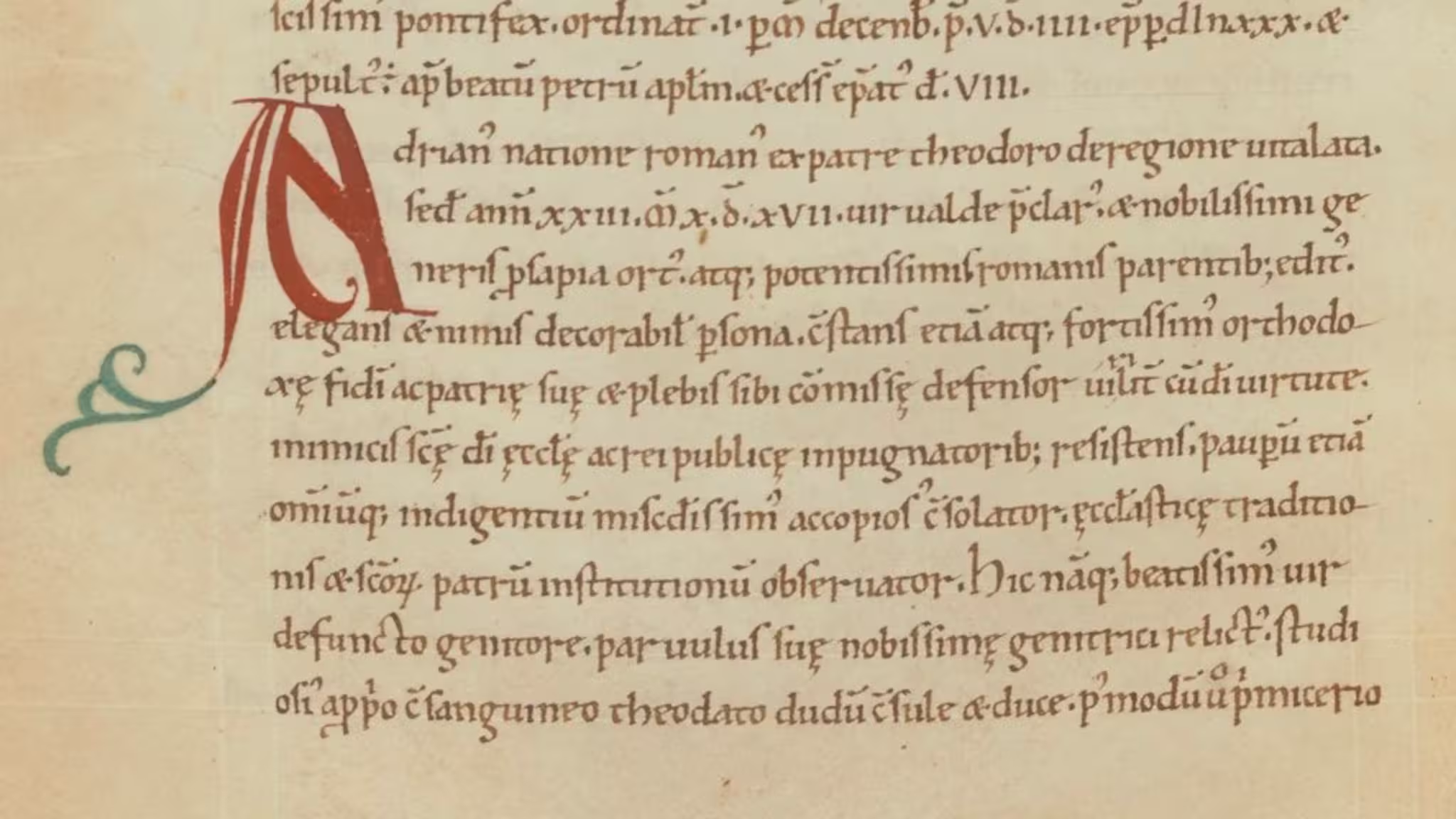
An excerpt of the “Liber Pontificalis” for Pope Adrian I related to Venice and doge Mauricius
-
Doges of the 700s — John the Deacon
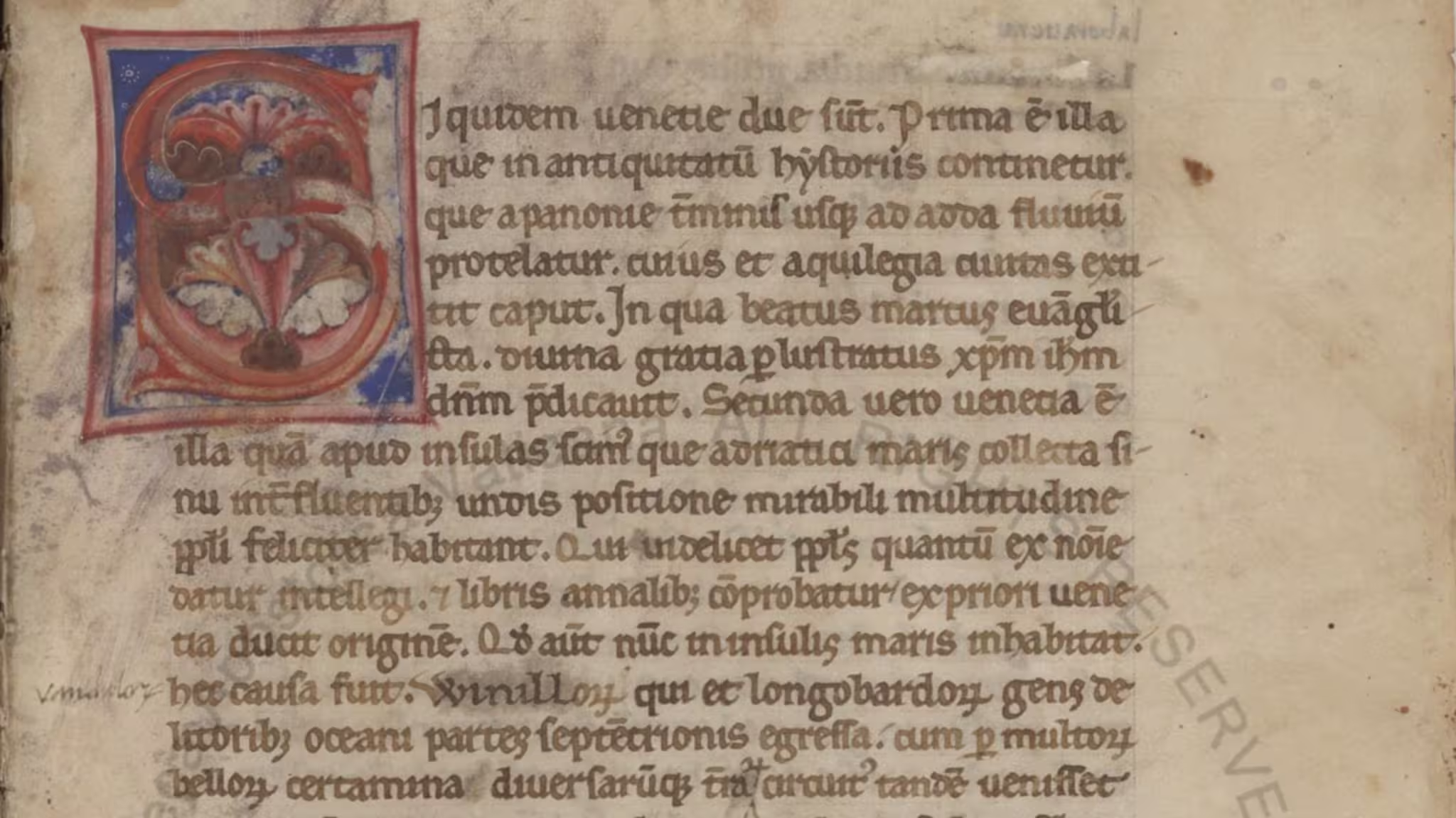
The doges Deusdedit (742-755), Galla (755–756), Domenico Monegario (756–764), Maurizio Galbaio (764–787) and his son Giovanni (787–804), from the “Istoria Veneticorum” by John the Deacon.
-
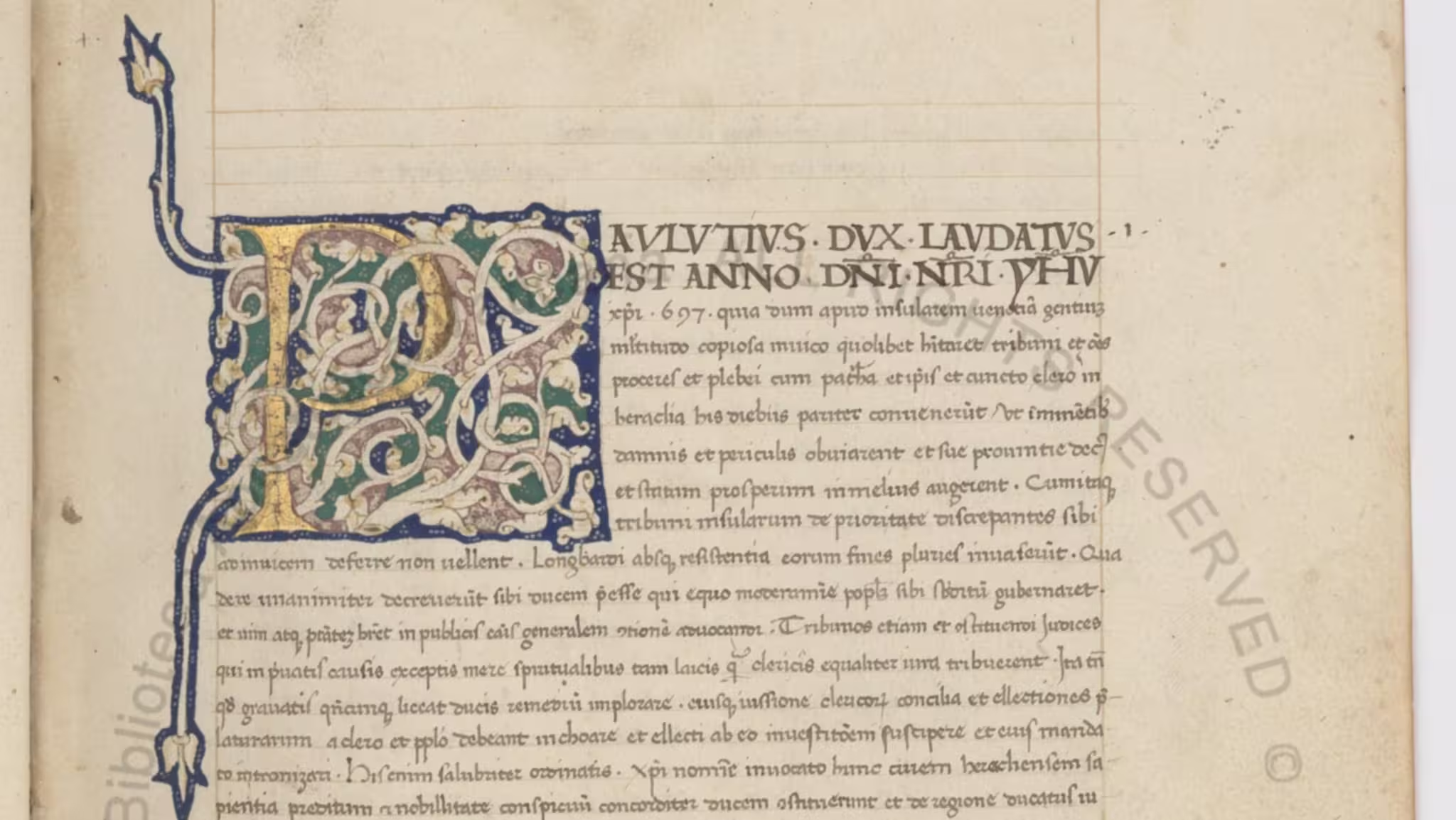
Hildeprand in Ravenna — Chronica per extensum descripta
The Lombard attack on Ravenna, and the Venetian intervention to restore the Exarchate, excerpt from the “Chronica per extensum descripta” (1340s) by Andrea Dandolo.
-
Hildeprand in Ravenna — John the Deacon
The Lombard conquest of Ravenna and how the Venetians saved the Exarchate (730s or 740s), excerpt from the “Istoria Veneticorum” by John the Deacon.
-
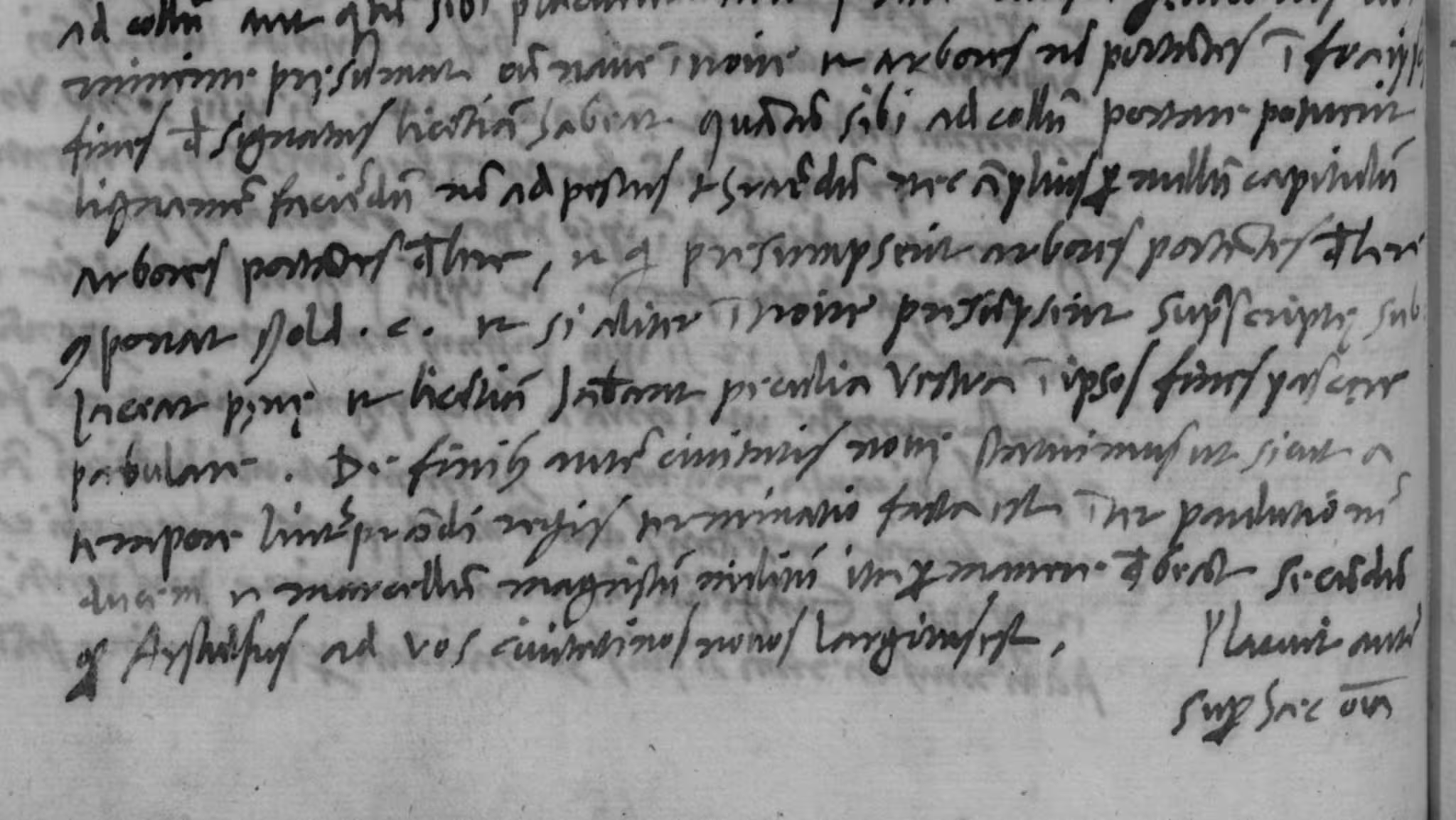
Pactum Lotharii (840)
The Pactum Lotharii was a treaty between the Duchy of the Venetians and the Holy Roman Empire, or parts thereof, from 840.
-
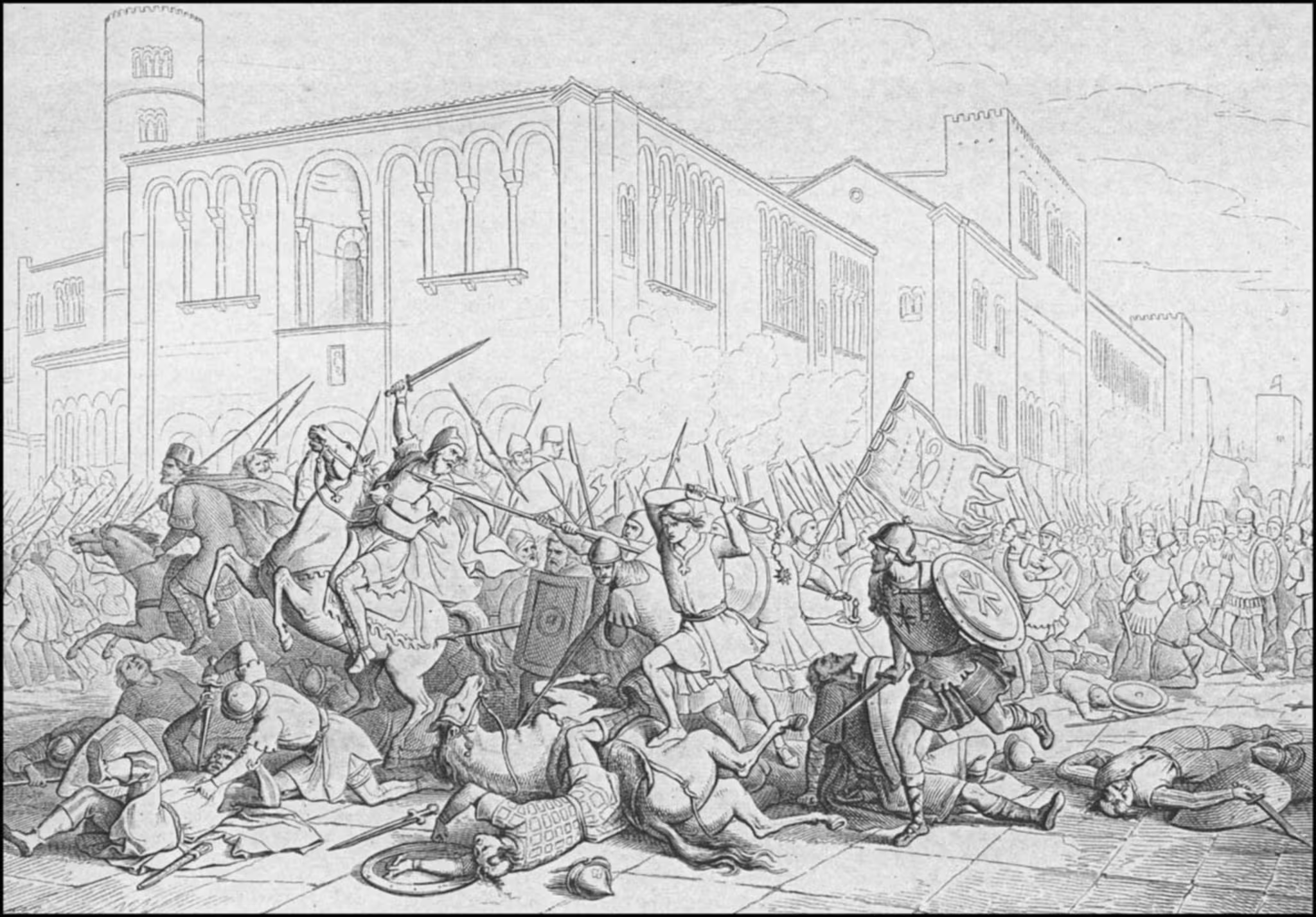
Ursus Hypatos — third and first doge of Venice
Ursus Hypatos was the third doge of Venice, likely the first chosen locally, but we have almost no sources for him.
-
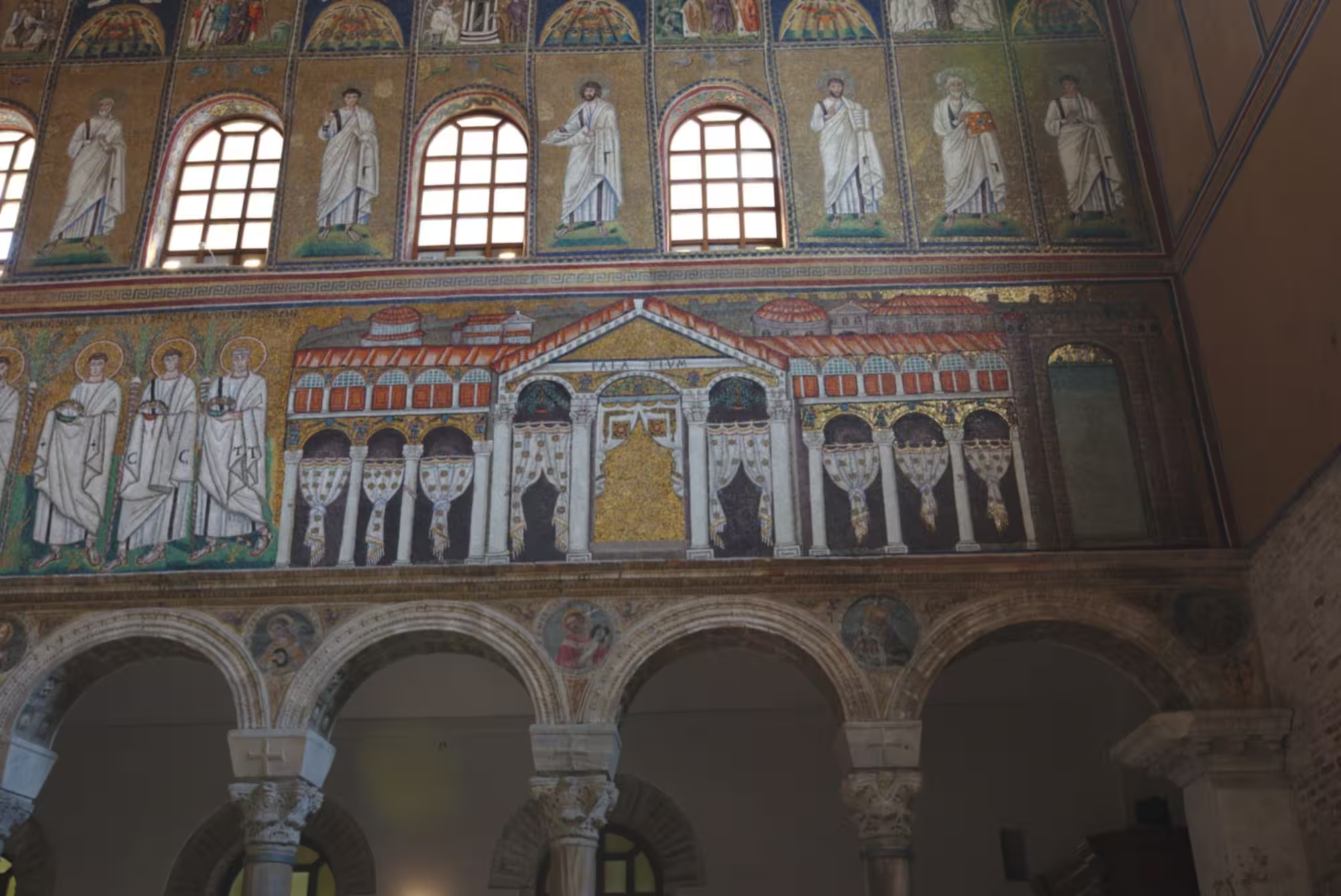
Hildeprand in Ravenna — Paul the Deacon
In the 730s or early 740s, Hildeprand, nephew of king Liutprand, and Peredeo, duke of Vicenza, managed to take Ravenna, the capital of the Exarchate of Ravenna.
-
The demise of the Exarchate
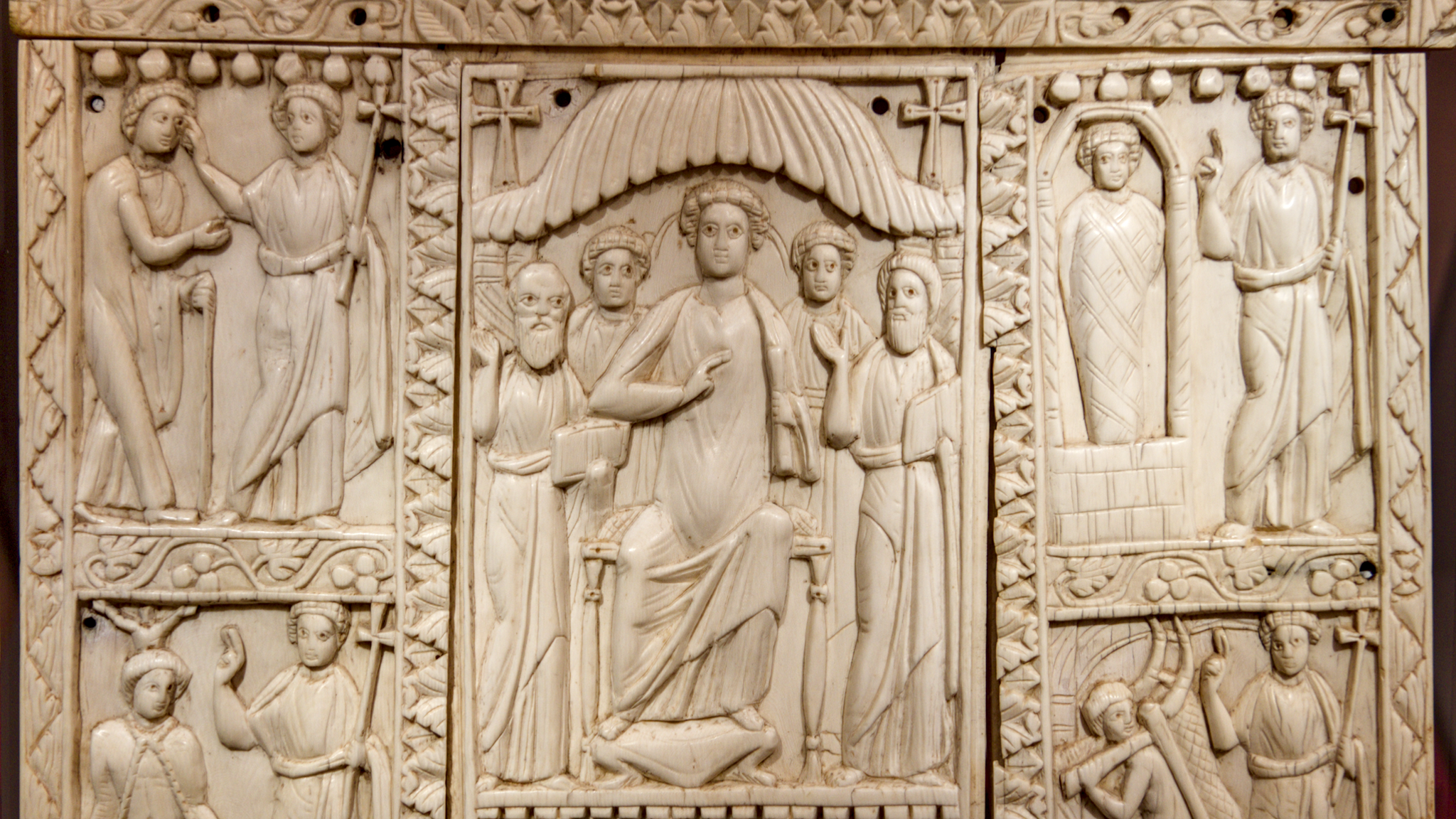
The events around the demise of the Exarchate of Ravenna only involved the Venetians marginally. It is nevertheless important to the history of Venice.
-
The Exarchate and the Papacy
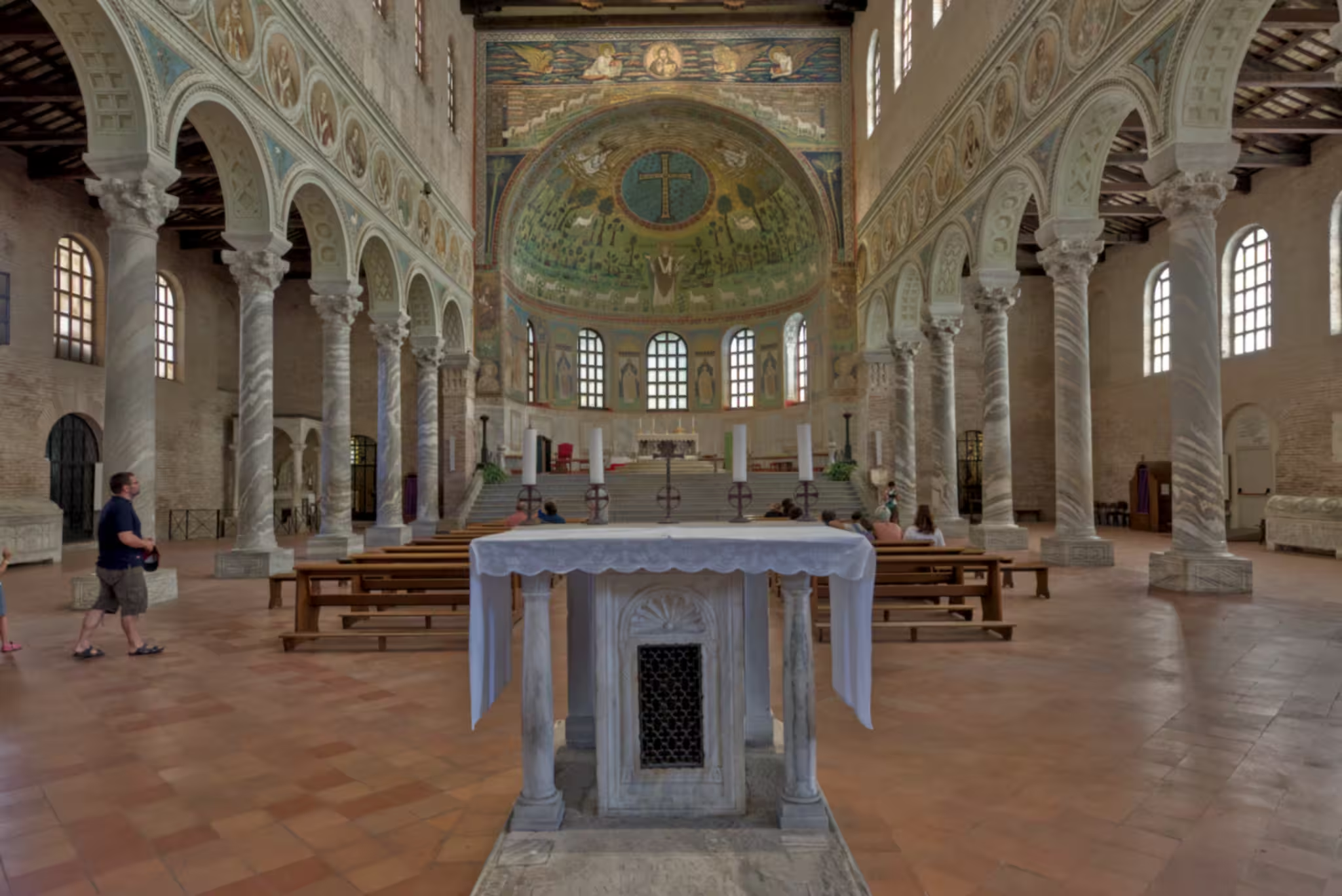
Venetia existed within the Exarchate of Ravenna, as part of the Byzantine Empire, and what happened in the Exarchate mattered to Venetia.