Alboin was the king of the Lombards, who led them into Italy in 568.
A few years earlier, when the Lombards were still living in Pannonia, he had led them in war against the Gepids, and he had killed their king, Cunimond, in battle.
Alboin had for some time desired Rosamund, daughter of king Cunimond. After the war, she was taken prisoner — with a great many other Gepid men and women — and Alboin took her for his wife.
It didn’t end well.
These excerpts from books I and II of the Historia Langobardorum by Paul the Deacon tells one version of the story, which was probably common fare in the late Lombard kingdom in the 700s.
Note that there’s an interval of four or five years between the first chapter, where the two meet, and the last two, where their story ends.
Source: Historia Langobardorum (780s–790s) by Paul the Deacon, here in the translation by William Dudley Foulke from 1906.
Available translations from the Historia Langobardorum:
- The Justinian plague — II.4, IV.4 and IV.14.
- The invasion of Venetia — II.5–12 and II.14.
- The conquest of Venetia — IV.20, IV.23, IV.25, IV.28, IV.38, IV.45 and V.28
- Alboin and Rosamund — I.29, II.28 and II.29.
- Iconoclasm — VI.49.
- Hildeprand in Ravenna — VI.54.
Chapter I.27
Now Audoin, king of the Langobards, of whom we have spoken, had to wife Rodelinda, who bore him Alboin, a man fitted for wars and energetic in all things.
Then Audoin died, and afterwards Alboin, the tenth king, entered upon the government of his country according to the wishes of all, and since he had everywhere a name very illustrious and distinguished for power, Chlothar, the king of the Franks, joined to him in marriage his daughter Chlotsuinda.
From her he begot one daughter only, Alpsuinda by name.
Meanwhile Turisind, king of the Gepidae, died, and Cunimund succeeded him in the sovereignty. And he, desiring to avenge the old injuries of the Gepidae, broke his treaty with the Langobards and chose war rather than peace.
But Alboin entered into a perpetual treaty with the Avars, who were first called Huns, and afterwards Avars, from the name of their own king.
Then he set out for the war prepared by the Gepidae.
When the latter were hastening against him in a different direction, the Avars, as they had agreed with Alboin, invaded their country.
A sad messenger coming to Cunimund, announced to him that the Avars had entered his territories. Although cast down in spirit, and put into sore straits on both sides, still he urged his people to fight first with the Langobards, and that, if they should be able to overcome these, they should then drive the army of the Huns from their country.
Therefore battle is joined and they fight with all their might.
The Langobards become the victors, raging against the Gepidae in such wrath that they reduce them to utter destruction, and out of an abundant multitude scarcely the messenger survives.
In this battle Alboin killed Cunimund, and made out of his head, which he carried off, a drinking goblet. This kind of a goblet is called among them “scala,” but in the Latin language “patera.”
And he led away as a captive, Cunimund’s daughter, Rosamund by name, together with a great multitude of both sexes and every age, and because Chlotsuinda had died he married her, to his own injury, as afterwards appeared.
Then the Langobards secured such great booty that they now attained the most ample riches, but the race of the Gepidae were so diminished that from that time on they had no king. But all who were able to survive the war were either subjected to the Langobards or groan even up to the present time in bondage to a grievous mastery, since the Huns possess their country.
But the name of Alboin was spread abroad far and wide, so illustrious, that even up to this time his noble bearing and glory, the good fortune of his wars and his courage are celebrated, not only among the Bavarians and the Saxons, but also among other men of the same tongue in their songs. It is also related by many up to the present time that a special kind of arms was made under him.
Chapter II.28
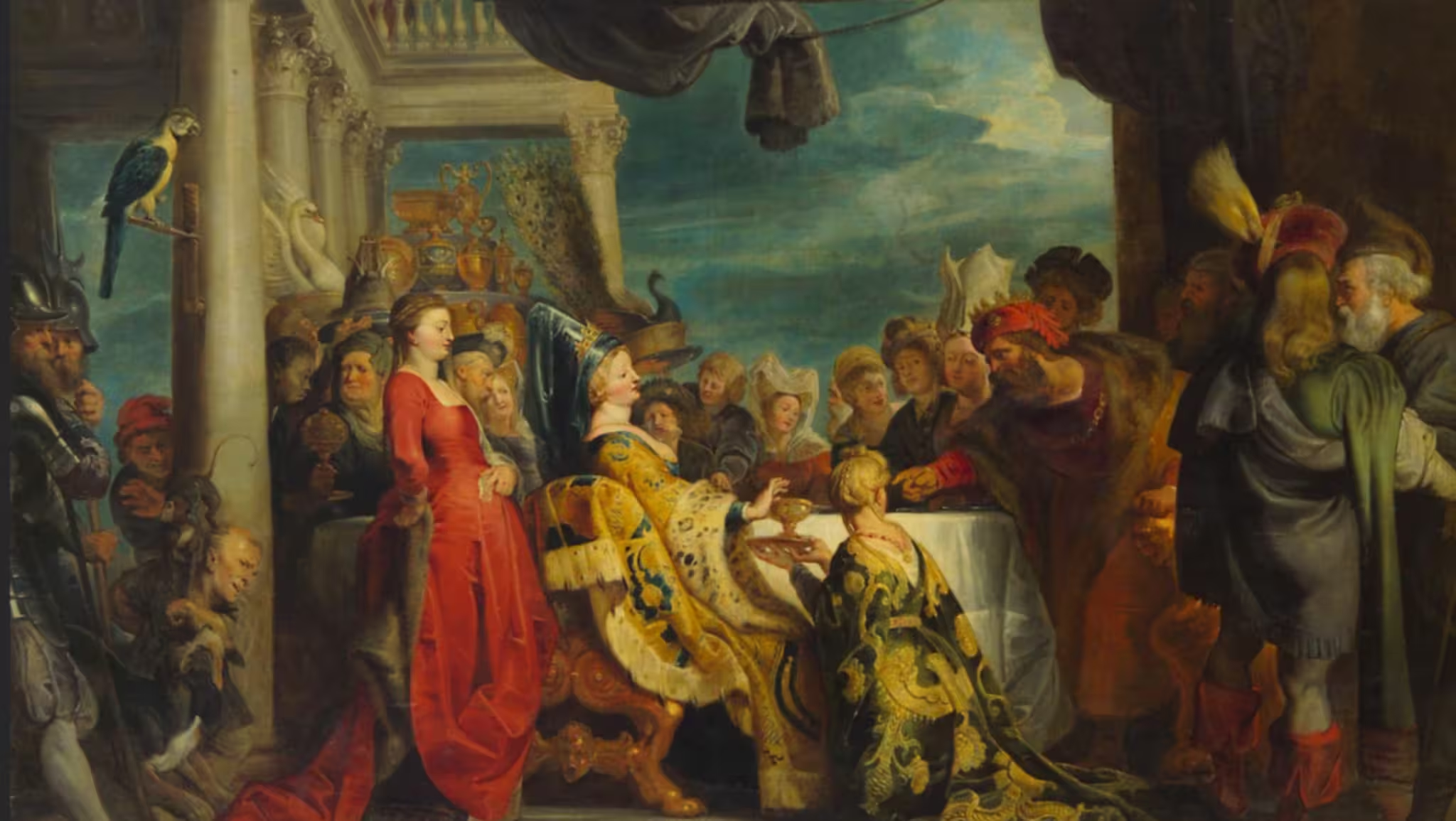
After this king had ruled in Italy three years and six months, he was slain by the treachery of his wife, and the cause of his murder was this: While he sat in merriment at a banquet at Verona longer than was proper, with the cup which he had made of the head of his father-in-law, king Cunimund, he ordered it to be given to the queen to drink wine, and he invited her to drink merrily with her father.
Lest this should seem impossible to any one, I speak the truth in Christ. I saw king Ratchis holding this cup in his hand on a certain festal day to show it to his guests.
Then Rosemund, when she heard the thing, conceived in her heart deep anguish she could not restrain, and straightway she burned to revenge the death of her father by the murder of her husband, and presently she formed a plan with Helmechis who was the king’s squire (scilpor) — that is, his armor-bearer — and his foster brother, to kill the king, and he persuaded the queen that she ought to admit to this plot Peredeo, who was a very strong man.
As Peredeo would not give his consent to the queen when she advised so great a crime, she put herself at night in the bed of her dressing-maid with whom Peredeo was accustomed to have intercourse, and then Peredeo, coming in ignorance, lay with the queen.
And when the wicked act was already accomplished and she asked him whom he thought her to be, and he named the name of his mistress that he thought she was, the queen added: “It is in no way as you think, but I am Rosemund,” she says, “and surely now you have perpetrated such a deed, Peredeo, that either you must kill Alboin or he will slay you with his sword.”
Then he learned the evil thing he had done, and he who had been unwilling of his own accord, assented, when forced in such a way, to the murder of the king.
Then Rosemund, while Alboin had given himself up to a noon-day sleep, ordered that there should be a great silence in the palace, and taking away all other arms, she bound his sword tightly to the head of the bed so it could not be taken away or unsheathed, and according to the advice of Peredeo, she, more cruel than any beast, let in Helmechis the murderer.
Alboin suddenly aroused from sleep perceived the evil which threatened and reached his hand quickly for his sword, which, being tightly tied, he could not draw, yet he seized a foot-stool and defended himself with it for some time.
But unfortunately alas ! this most warlike and very brave man being helpless against his enemy, was slain as if he were one of no account, and he who was most famous in war through the overthrow of so many enemies, perished by the scheme of one little woman.
His body was buried with the great grief and lamentations of the Langobards under the steps of a certain flight of stairs which was next to the palace.
He was tall in stature and well fitted in his whole body for waging wars.
In our own days Giselpert, who had been duke of Verona, opened his grave and took away his sword and any other of his ornaments found there. And for this reason he boasted with his accustomed vanity among ignorant men that he had seen Alboin.
Chapter II.29
Helmechis then, upon the death of Alboin, attempted to usurp his kingdom, but he could not at all do this, because the Langobards, grieving greatly for the king’s death, strove to make way with him.
And straightway Rosemund sent word to Longinus, prefect of Ravenna, that he should quickly send a ship to fetch them.
Longinus, delighted by such a message, speedily sent a ship in which Helmechis with Rosemund his wife embarked, fleeing at night. They took with them Albsuinda, the daughter of the king, and all the treasure of the Langobards, and came swiftly to Ravenna.
Then the prefect Longinus began to urge Rosemund to kill Helmechis and to join him in wedlock.
As she was ready for every kind of wickedness and as she desired to become mistress of the people of Ravenna, she gave her consent to the accomplishment of this great crime, and while Helmechis was bathing himself, she offered him, as he came out of the bath, a cup of poison which she said was for his health.
But when he felt that he had drunk the cup of death, he compelled Rosemund, having drawn his sword upon her, to drink what was left, and thus these most wicked murderers perished at one moment by the judgment of God Almighty.
Click to reveal the original Latin text.
Liber I – xxvii
Igitur Audoin, de quo praemiseramus, Langobardorum rex, Rodelindam in matrimonio habuit; quae ei Alboin, virum bellis aptum et per omnia strenuum, peperit.
Mortuus itaque est Audoin, ac deinde regum iam decimus Alboin ad regendam patriam cunctorum votis accessit. Qui cum famosissimum et viribus clarum ubique nomen haberet, Chlotharius rex Francorum Chlotsuindam ei suam filiam in matrimonium sociavit.
De qua unam tantum filiam Alpsuindam nomine genuit.
Obiit interea Turisindus rex Gepidorum; cui successit Cunimundus in regno. Qui vindicare veteres Gepidorum iniurias cupiens, inrupto cum Langobardis foedere, bellum potius quam pacem elegit.
Alboin vero cum Avaribus, qui primum Hunni, postea de regis proprii nomine Avares appellati sunt, foedus perpetuum iniit.
Dehinc ad praeparatum a Gepidis bellum profectus est.
Qui cum adversus eum e diverso properarent, Avares, ut cum Alboin statuerant, eorum patriam invaserunt.
Tristis ad Cunimundum nuntius veniens, invasisse Avares eius terminos edicit. Qui prostratus animo et utrimque in angustiis positus, hortatur tamen suos primum cum Langobardis confligere; quos si superare valerent, demum Hunnorum exercitum e patria pellerent.
Committitur ergo proelium, pugnatum est totis viribus.
Langobardi victores effecti sunt, tanta in Gepidos ira saevientes, ut eos ad internicionem usque delerent atque ex copiosa multitudine vix nuntius superesset.
In eo proelio Alboin Cunimundum occidit, caputque illius sublatum, ad bibendum ex eo poculum fecit. Quod genus poculi apud eos «scala» dicitur, lingua vero Latina patera vocitatur.
Cuius filiam nomine Rosimundam cum magna simul multitudine diversi sexus et aetatis duxit captivam; quam, quia Chlotsuinda obierat, in suam, ut post patuit, perniciem, duxit uxorem.
Tunc Langobardi tantam adepti sunt praedam, ut iam ad amplissimas pervenirent divitias. Gepidorum vero ita genus est deminutum, ut ex illo iam tempore ultra non habuerint regem; sed universi qui superesse bello poterant aut Langobardis subiecti sunt, aut usque hodie Hunnis eorum patriam possidentibus duro imperio subiecti gemunt.
Alboin vero ita praeclarum longe lateque nomen percrebuit, ut hactenus etiam tam apud Baioariorum gentem quamque et Saxonum, sed et alios eiusdem linguae homines eius liberalitas et gloria bellorumque felicitas et virtus in eorum carminibus celebretur. Arma quoque praecipua sub eo fabricata fuisse, a multis hucusque narratur.
Liber II – xxviii
Qui rex postquam in Italia tres annos et sex menses regnavit, insidiis suae coniugis interemptus est. Causa autem interfectionis eius fuit. Cum in convivio ultra quam oportuerat apud Veronam laetus resideret, [cum] poculo quod de capite Cunimundi regis sui soceri fecerat reginae ad bibendum vinum dari praecepit atque eam ut cum patre suo laetanter biberet invitavit.
Hoc ne cui videatur impossibile, veritatem in Christo loquor; ego hoc poculum vidi in quodam die festo Ratchis principem ut illud convivis suis ostentaret manu tenentem.
Igitur Rosemunda ubi rem animadvertit, altum concipiens in corde dolorem, quem conpescere non valens, mox in mariti necem patris funus vindicatura exarsit, consiliumque mox cum Helmichis, qui regis scilpor, hoc est armiger, et conlactaneus erat, ut regem interficeret iniit. Qui reginae persuasit, ut ipsa Peredeo, qui erat vir fortissimus, in hoc consilium adsciret.
Peredeo cum reginae suadenti tanti nefas consensum adhibere nollet, illa se noctu in lectulo suae vestiariae, cum qua Peredeo stupri consuetudinem habebat, supposuit; ubi Peredeo rem nescius veniens, cum regina concubuit.
Cumque illa patrato iam scelere ab eo quaereret, quam se esse extimaret, et ipse nomen suae amicae, quam esse putabat, nominasset, regina subiunxit: «Nequaquam ut putas, sed ego Rosemunda sum» inquit. «Certe nunc talem rem, Peredeo, perpetratam habes, ut aut tu Alboin interficies, aut ipse te suo gladio extinguet».
Tunc ille intellexit malum quod fecit, et qui sponde noluerat, tali modo in regis necem coactus adsensit.
Tunc Rosemunda, dum se Alboin in meridie sopori dedisset, magnum in palatio silentium fieri praecipiens, omnia alia arma subtrahens, spatam illius ad lectuli caput, ne tolli aut evaginari possit, fortiter conligavit, et, iuxta consilium Helmichis, Peredeo interfectorem omni bestia crudaior introduxit.
Alboin subito de sopore experrectus, malum quod imminebat intellegens, manum citius ad spatam porrexit; quam strictius religatam abstrahere non valens, adprehenso tamen scabello subpedaneo, se cum eo per aliquod spatium defendit.
Sed heu! pro dolor! vir bellicosissimus et summae audaciae nihil contra hostem praevalens, quasi unus de inertibus interfectus est, uniusque mulierculae consilio periit, qui per tot hostium strages bello famosissimus extitit.
Cuius corpus cum maximo Langobardorum fletu et lamentis sub cuiusdam scalae ascensu, quae palatio erat contigua, sepultum est.
Fuit autem statura procerus et ad bella peragenda toto corpore coaptatus.
Huius tumulum nostris in diebus Giselpert, qui dux Veronensium fuerat, aperiens, spatam eius et si quid in ornatu ipsius inventum fuerat abstulit. Qui se ob hanc causam vanitate solita apud indoctos homines Alboin vidisse iactabat.
Liber II – xxix
Igitur Helmichis, extincto Alboin, regnum eius invadere conatus est. Sed minime potuit, quia Langobardi, nimium de morte illius dolentes, eum moliebantur extinguere.
Statimque Rosemunda Longino praefecto Ravennae mandavit, ut citius navem dirigeret, quae eos suscipere possit.
Longinus tali nuntio laetus effectus, festinanter navem direxit, in quam Helmichis cum Rosemunda, sua iam coniuge, noctu fugientes ingressi sunt. Auferentesque secum Albsuindam regis filiam, et omnem Langobardorum thesaurum, velocius Ravennam pervenerunt.
Tunc Longinus praefectus suadere coepit Rosemundae, ut Helmichis interficeret et eius se nuptiis copularet.
Illa ut erat ad omnem nequitiam facilis, dum optat Ravennatium domina fieri, ad tantum perpetrandum facinus adsensum dedit; atque dum Helmichis se in balneo ablueret, egredienti ei de lavacro veneni poculum, quod salutis esse adseverabat, propinavit.
Ille ubi sensit se mortis poculum bibisse, Rosemundam, evaginato super eam gladio, quod reliquum erat bibere coegit. Sicque Dei omnipotentis iudicio interfectores iniquissimi uno momento perierunt.
Leave a Reply