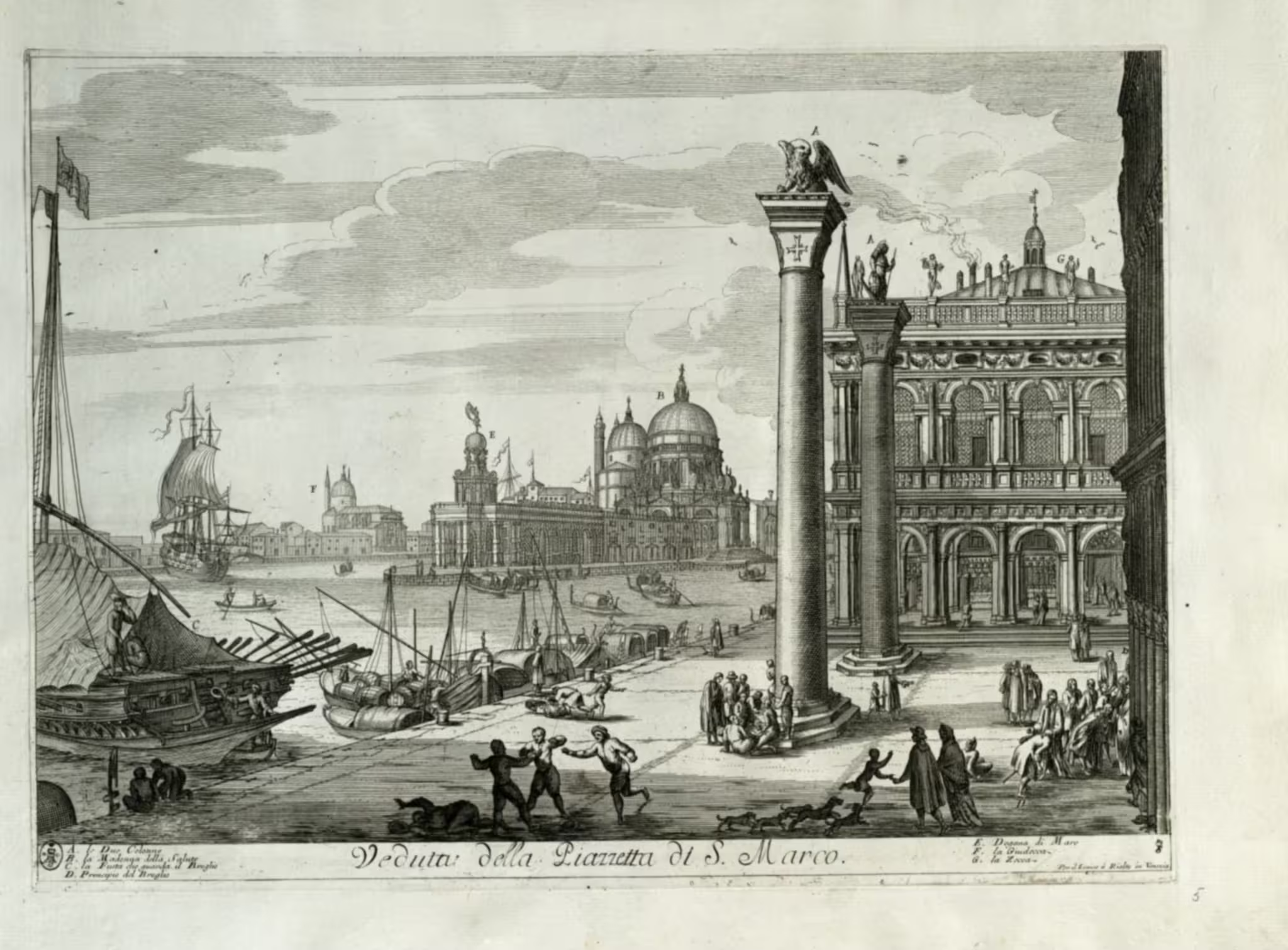
The Piazzetta is the part of the Piazza San Marco closest to the lagoon, around the two columns.
Commonly seen there, in the early 1700s, were a prison ship, a street brawl and noblemen in the broglio, engaging in the less noble side of Venetian politics.
Source: Il Gran teatro di Venezia, a collection of sixty vedute of Venice, often with an entertaining or polemic side, published by Domenico Lovisa, c. 1715, in Venice.
Veduta della Piazzetta di S. Marco
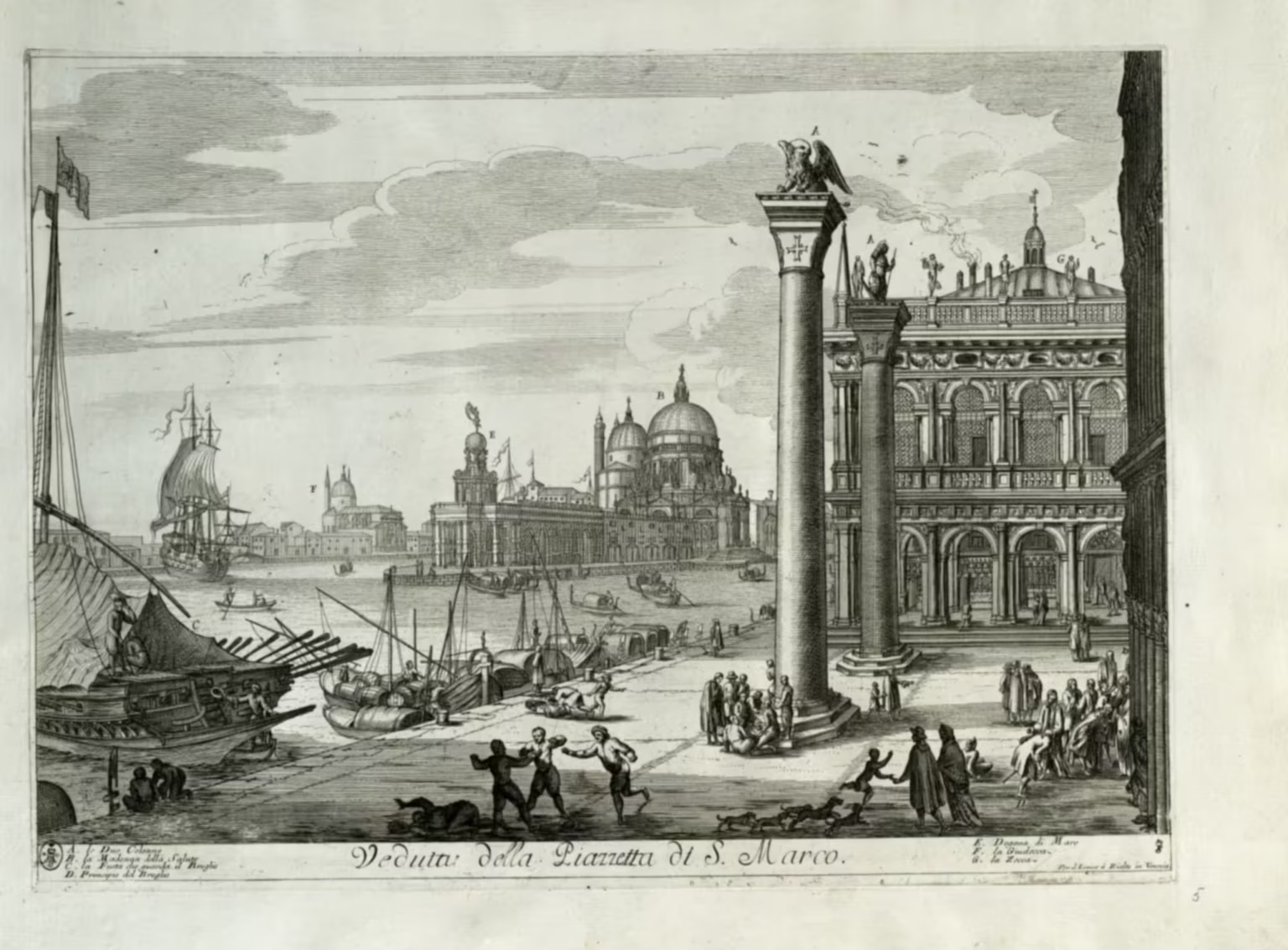
Legend
- le Due Colonne — the two columns.
- la Madonna della Salute.
- la Fusta che guarda il Broglio — the prison ship guarding the broglio.
- Principio del Broglio — the start of the broglio.
- Dogana di Mare — the customs house.
- la Giudecca.
- la Zecca — the Venetian mint.
Location
The location is the Molo in front of the Palazzo Ducale, and the start of the Piazza San Marco around the two columns.
Events or actions
There’s quite a bit going on in this print.
To the left is the fusta, which was a war galley — a rowed warship. The fusta served two functions.
Firstly, it was a holding space for persons, who had been sentenced to forced labour in the Venetian navy, until they could be moved to the Arsenale. Most courtrooms were in the Palazzo Ducale, so it made sense having the ship nearby.
Secondly, the fusta served to keep the square safe. It was part of the everyday measures to keep the republic safe. In fact, the guns on the galley are pointing directly towards the square.
In the centre, three men are engaged in a fist fight. One is already lying on the ground. A fourth person come running, either to stop the fight, or to participate.
Under the column of St. Mark, three or four persons are gambling, a game of dice, by the looks of it. Several others are looking on.
A child is running away from, or playing with, a pack of five dogs.
Near the column, a Turk is trying to fend off a child begging.
A well-dress couple of citizens are out for a walk, while a beggar or drunkard is sitting on the ground behind them. Their focus seems to be on the fist-fight.
Finally, to the right, at the start of the portico under the Palazzo Ducale, there’s a group of noblemen.
In the 1700s, this was the start of the broglio, which extended under the length of the portico.
The broglio was where members of the nobility met, usually before the afternoon meetings in the Maggior Consiglio, to discuss matters informally, and to solicit support for appointments for magistracies.
The act of supplication was associated with a specific gesture, called calar stola.

The formal dress of the aristocracy included a stola — a band of fabric, usually the same as the dress, draped over their left shoulder. A nobleman, when asking a favour of another nobleman, moved the stola from his shoulder to his forearm, as a symbolic act of submission.
There are three couples of noblemen in this print, where one of them has the stola calata — the lowered stole. In two cases, the posture is clearly submissive, bowing and kissing the hand, while the third couple are just standing and talking. The stola on the forearm is the only indicator of the unequal relationship between the two.
The Venetian nobility was legally egalitarian, but in practise, some were more equal than others.
Related articles
- Il Gran teatro di Venezia — Domenico Lovisa
- La Piazza di S. Marco — Il Gran Teatro di Venezia — plate 1
- The Venetian Nobility
- Vesta da zentilomo — Dizionario
Bibliography
- Lovisa, Domenico. Il Gran teatro di Venezia ovvero descrizzione esatta di cento delle più insigni prospettive, e di altretante celebri pitture della medesima città, il tutto disegnato, e intagliato eccelentemente da periti artefici, con la narrazione della fondazione delle chiese, monasteri, spedali, isolette, e altri luoghi sì pubblici, come privati. Venezia per Domenico Lovisa sotto i portici a Rialto, 1715. [more] 🔗
Leave a Reply