
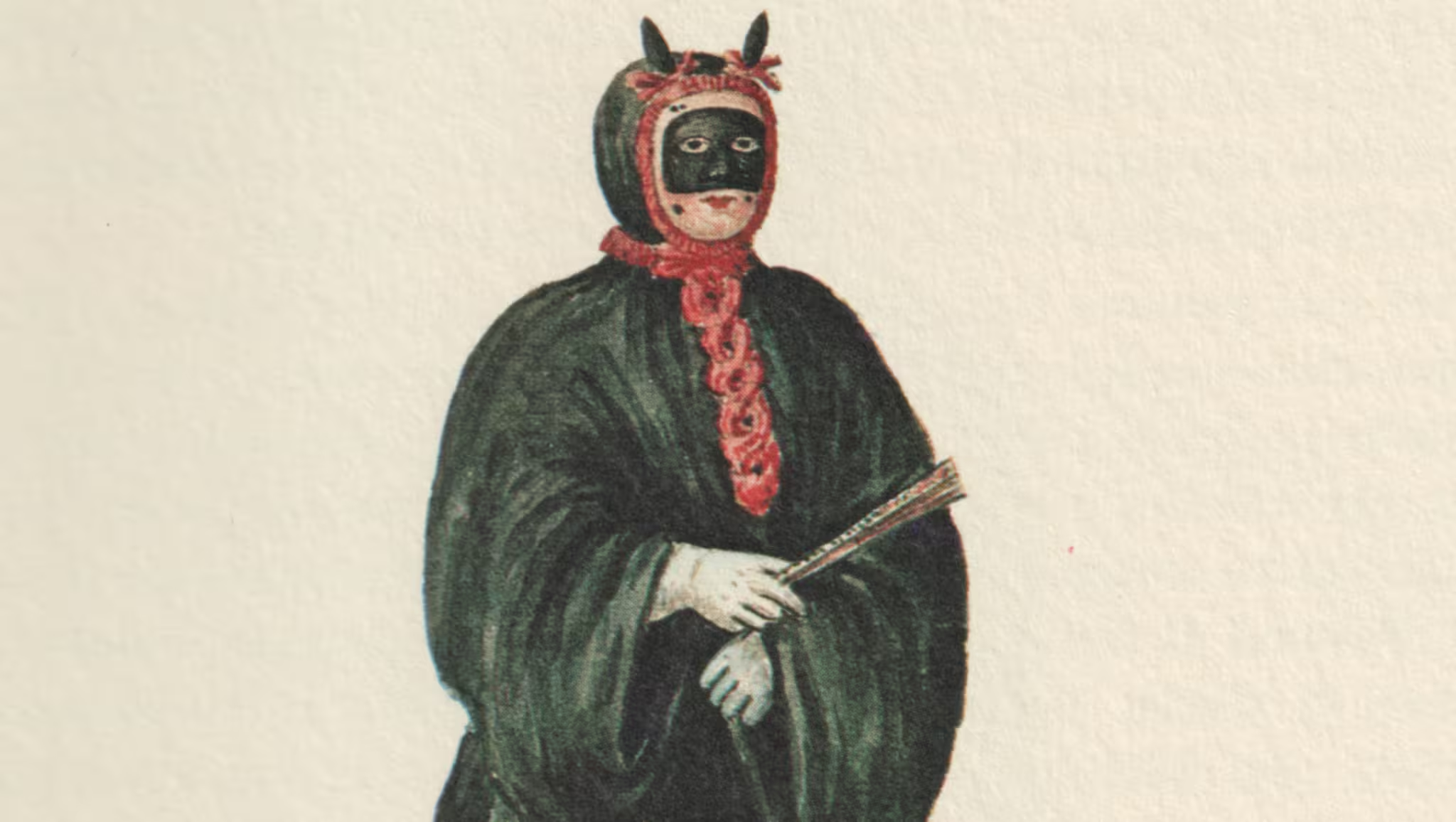
This painting depicts a Venetian woman dressed for carnival as a little devil.
She’s wearing a long black silk robe, somewhat similar to the vesta, and has used her veil or shawl, the cendalo, with some ribbons, as a black hood with horns. Her face is covered with a black mask, not dissimilar to the moretta.
The good Grevembroch definitely didn’t approve of such licentious behaviour in young women, but did recover his good sense of humour in the rather malicious dedication.
Source: Gli abiti de veneziani di quasi ogni età con diligenza raccolti e dipinti nel secolo XVIII, by Giovanni Grevembroch (1731–1807), which in four volumes contains over six hundred watercolours of how Venetians dressed in the 1700s.
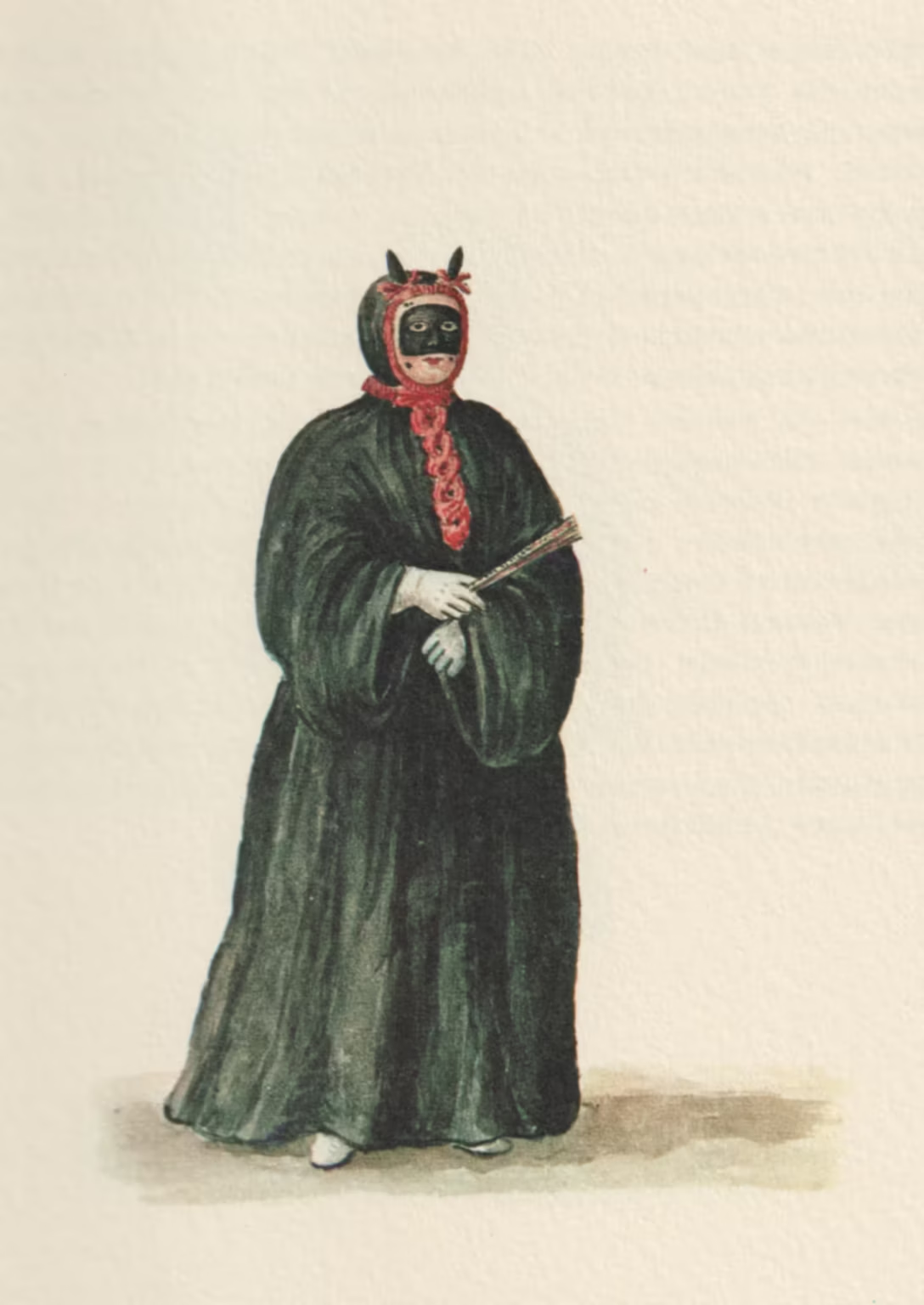
Mask
It hasn’t been long since extravagant ideas of masquerading arose, as if the good taste of choosing an outfit of satisfaction, commendable by all, had been lost.
Thus, in this era, we would see many young women with the Cendale,1 draped over the shoulders like a Tabarro,2 but with the ends wrapped around the arms, then tied at the neck, and over the head like horns, using some ribbons of bright colour.
They also wore black silk robes, so much so that the common people called them Goblin Spirits; even more so because they never spoke a word, but with certain shrieks made others understand their intentions, with more effort of breath than if they had spoken efficiently without stopping from morning to evening.
It was the whim of various unspecified Ladies to introduce such trivial things, which nonetheless carried a non-negligible meaning in relation to the corruption of the Age, and it was deemed advisable to decree a prohibition, so that one day or another, these ladies would not be tempted to appear with some symbol far more indecent, or openly suggestive.
This lady dressed as a little devil, if she were Miss Bianca Olmo, we would dare to ask her to lift her veil and say to her: Who could gaze upon you and not love your beautiful rays?3
Translator’s notes
- Cendalo (also zendalo; English: cendal) was a light fine cloth of raw silk or cotton, typically decorated with stripes. ↩︎
- The Tabarro (also: tabaro) was a loose cloak or cape, often made from lush materials for use in winter, fastened at the front. ↩︎
- This is an untranslatable pun. The original Venetian rai is the plural of ragio, which in Venetian can be both raggio (Italian), which means rays, or raglio (Italian), which is the sound of an ass (the animal, equus africanus asinus). ↩︎
Original text
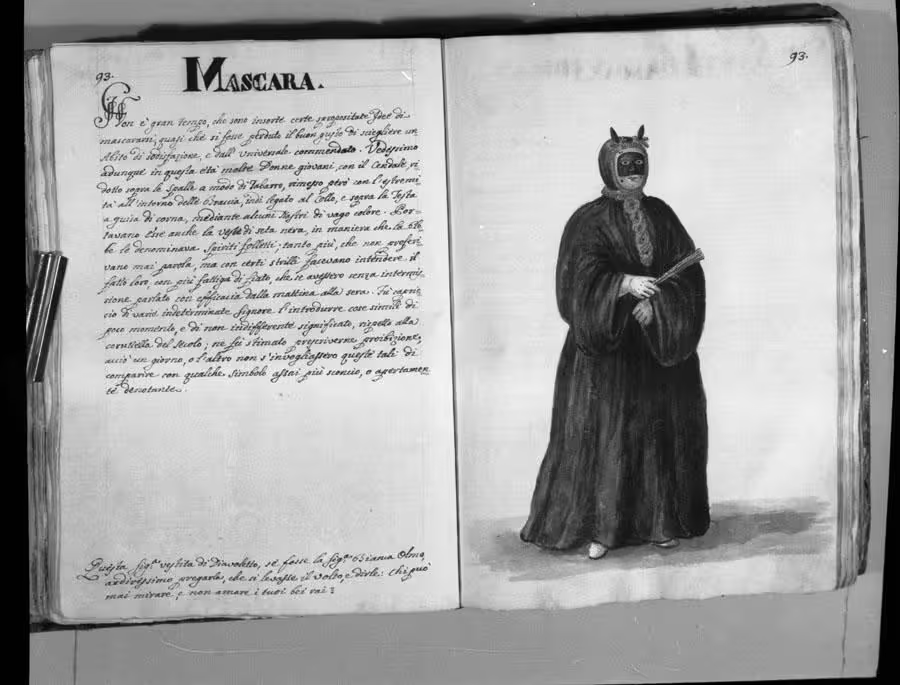
Mascara
Non è gran tempo, che sono insorte spropositate Idee di mascararsi, quasi che si fosse perduto il buon gusto di sciegliere un Abito di sodisfazione, dall’Universale commendato.
Vedessimo adunque in questa età molte Donne giovani, con il Cendale, ridotto sopra le Spalle a modo di Tabarro, rimesso però con l’estremità all’intorno delle Braccia, indi legato al Collo, e sopra la Testa a guisa di corna, mediante alcuni Nastri di vago colore.
Portavano Esse anche la veste di seta nera, in maniera che la Plebe le denominava Spiriti folletti; tanto più, che non proferivano mai parola, ma con certi strilli facevano intendere il fatto loro, con più fattiga di fiato, che se avessero senza intermissione parlato con efficacia dalla mattina alla sera.
Fù capriccio di varie indeterminate Signore l’introdurre cose simili di poco momento, e di non indifferente significato, rispetto alla coruttella del Secolo; ne fù stimato prescriverne proibizione, acciò un giorno, o l’altro non s’invogliassero queste tali di comparire con qualche Simbolo assai più sconcio, o apertamente denotante.
Questa Sig.a vestita di Diavoletto, se fosse la Sig.a Bianca Olmo, ardiressimo pregarla, che si levasse il Volto, e dirle: Chi può mai mirare, e non amare i tuoi bei rai?
Grevembroch (1981), vol. 3, p. 93.
Related articles
Venetian Stories
Related sources
Related images
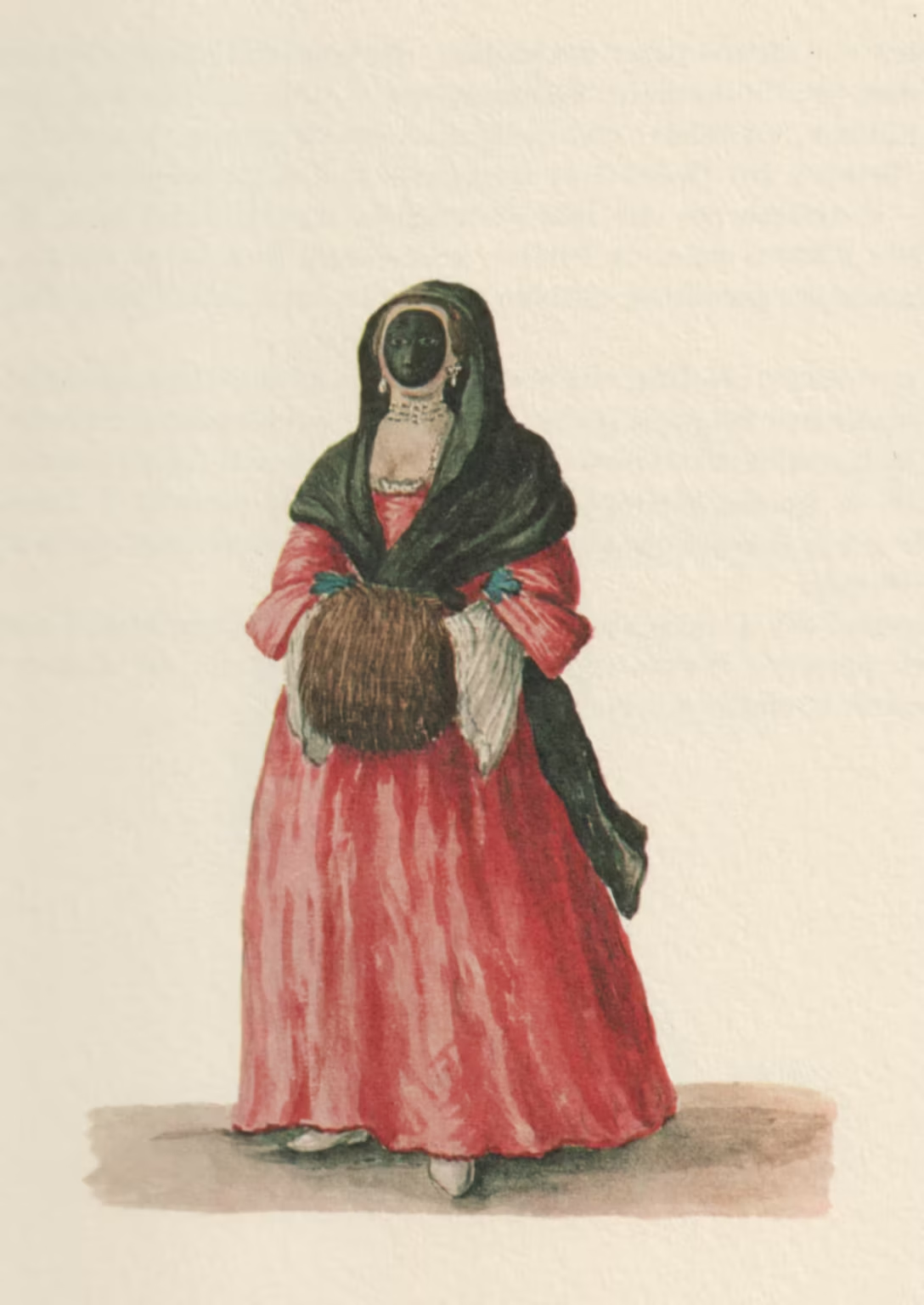
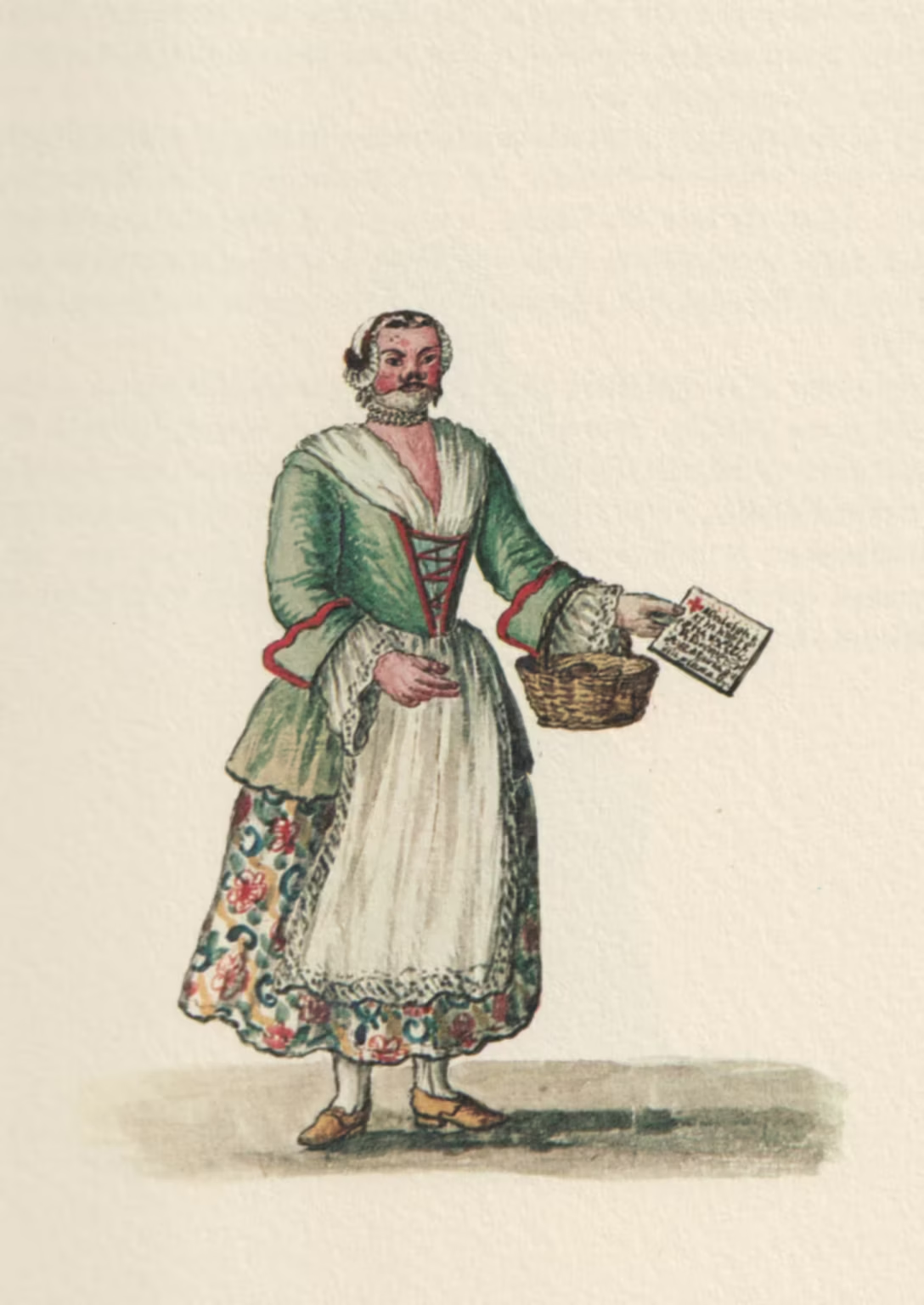

- Nobile in Maschera — Nobleman in Mask — Grevembroch 1-90
- Mascare — Masks — Grevembroch 3-92
- Povero in Mascara — Beggar in mask — Grevembroch 3-80
Bibliography
- Grevembroch, Giovanni. Gli abiti de veneziani di quasi ogni eta con diligenza raccolti e dipinti nel secolo XVIII, orig. c. 1754. Venezia, Filippi Editore, 1981. [more]
Leave a Reply