
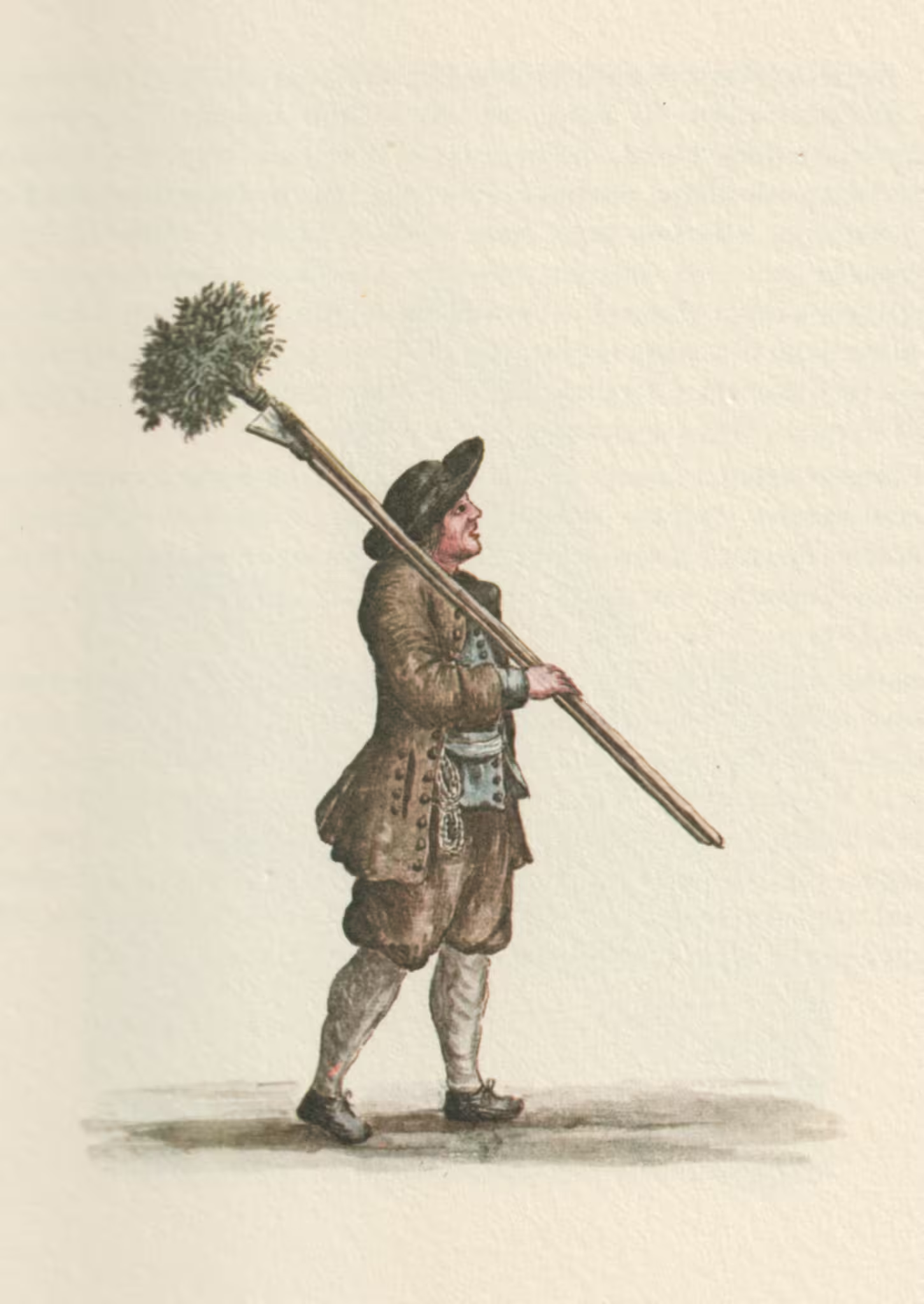
This painting depicts a 1700s chimney sweep of Swiss origin.
Workers from the Swiss canton of Uri and/or Ticino came to Venice to work as chimney sweepers, and became sufficiently established to form a formal guild, that is, a legal entity representing themselves and their interests.
The chimney sweepers were regulated by the Magistrato alla Sanità.
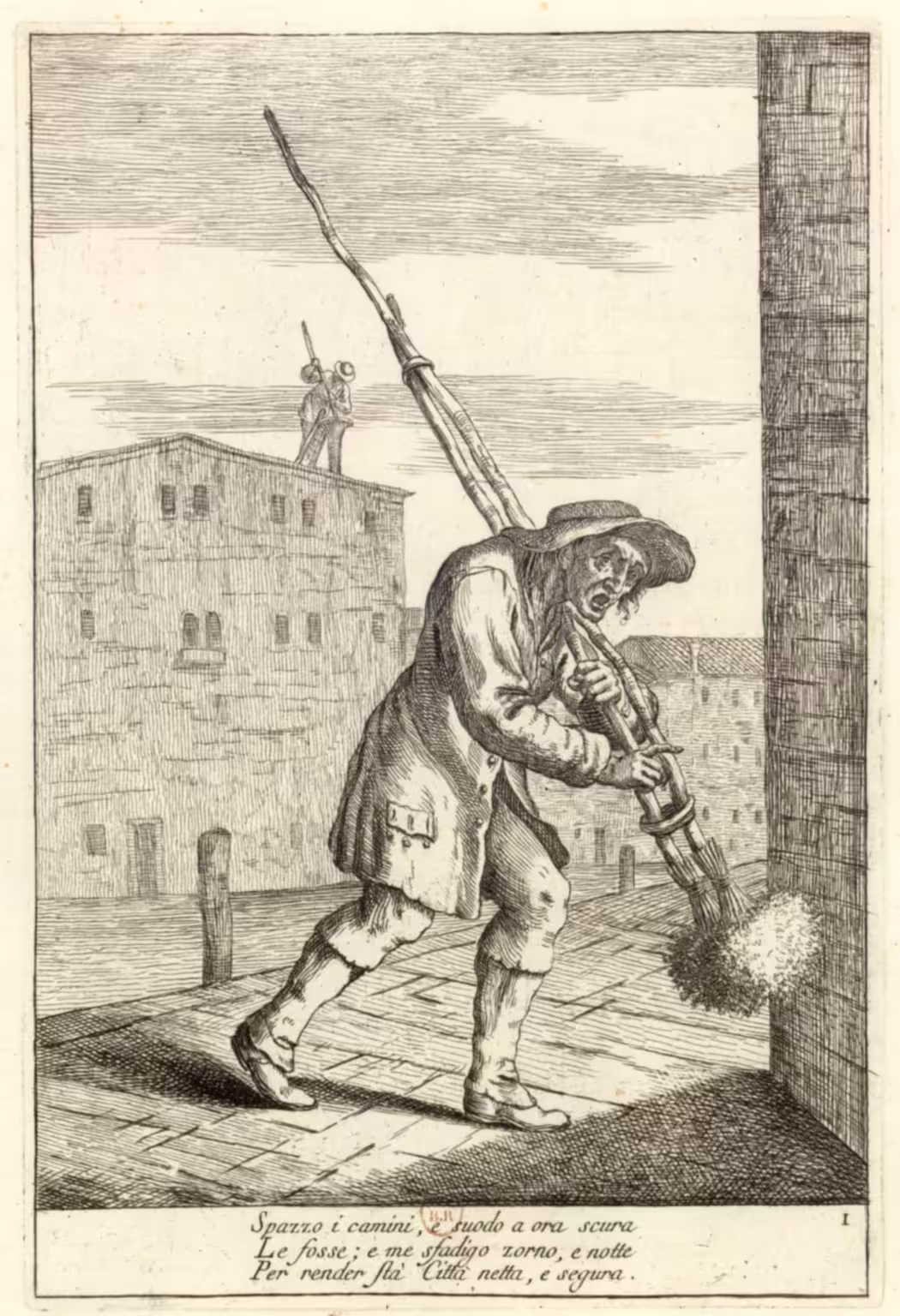
Another contemporary image of a chimney sweeps is Scoa Camin by Gaetano Zompini.
Source: Gli abiti de veneziani di quasi ogni età con diligenza raccolti e dipinti nel secolo XVIII, by Giovanni Grevembroch (1731–1807), which in four volumes contains over six hundred watercolours of how Venetians dressed in the 1700s.
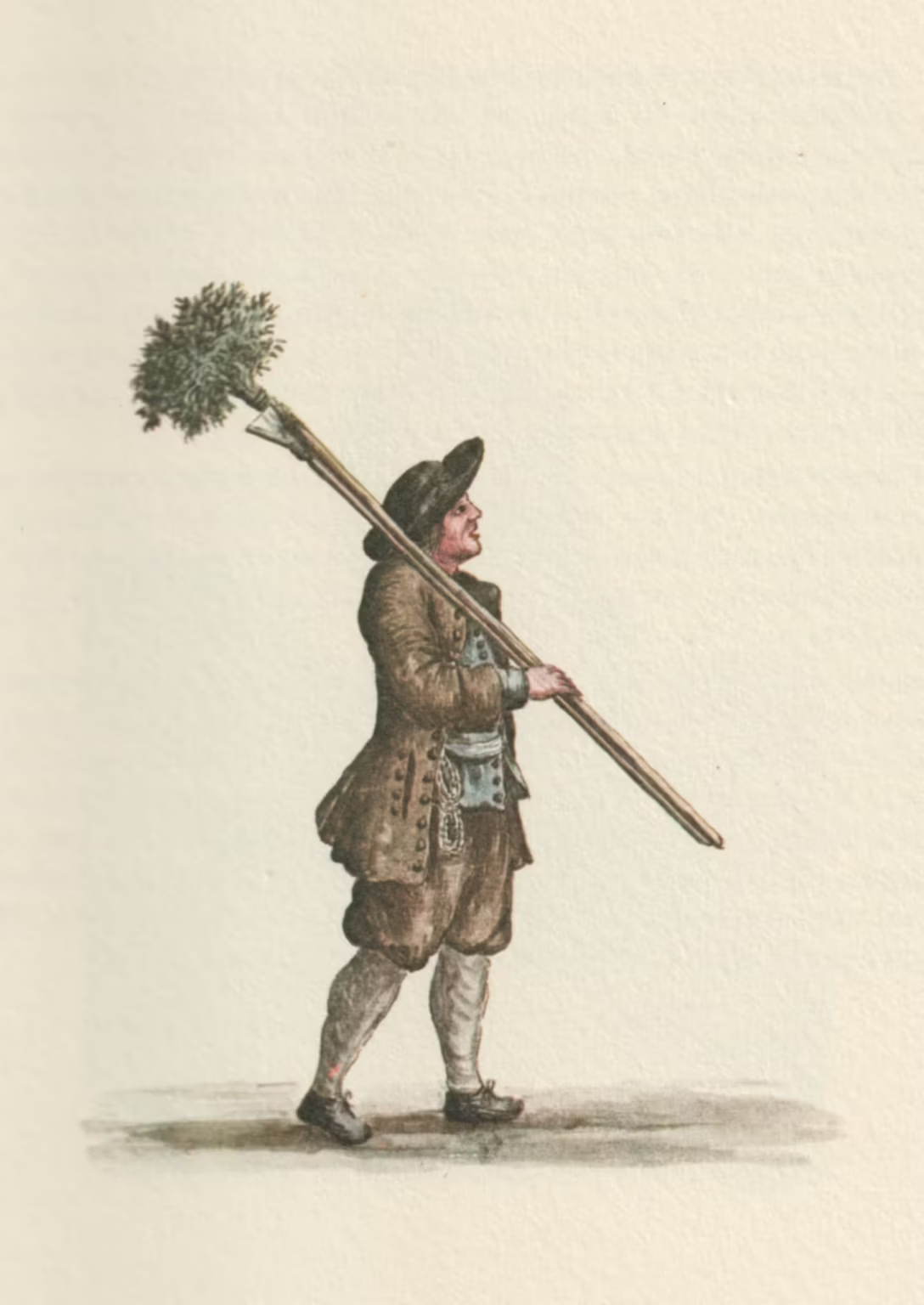
Swiss Industry
The air in Venice is healthy, due to the number of kitchens, which constantly burn in the houses.1 Even in the palaces, almost all the rooms had sumptuous fireplaces, certainly with the thoughtful planning of the ancestors because when they got out of bed, they longed for the fire to be ready, which not only provides great benefit by drying the moisture absorbed during the night’s sleep, but also warms the rooms and purges the bad vapours.
To protect the buildings from the relentless flames, were sometimes assigned certain men, called Sweepers, who came from the mainland, but when they failed to carry out the work, the robust Swiss, whose Craft it is, were reinstated, particularly those native to the Canton of Urania2 and the Parish of Chilonico3 (a village of the Aventine4). This important profession, therefore, they do here by special privilege; especially since, during the time of the Plague,5 they undertook the duty of entering the Lazaretti. Their number is about fifty, and they live in the district of S. Luca, electing among themselves, by majority vote, a Leader on the first day of the New Year.
All of them remember the misfortune that occurred to one of their peers not far from their residence, namely Giacomo, son of the late Antonio Polastro, aged 40, who around noon on the first day of August 1733, busy on the roof of a house fulfilling his duty in the district of S. Matteo, fell from the height to the ground and immediately died.
But first, a certain Michiele, his peer from 1620, on May 25, under a fallen wall during a fire at the Guild of the Wool Workers,6 was miserably killed.7
The guild of these people, based on the Deliberations of the Health Magistrate8 of 1690, 1692, 1721, and 1755, established itself in possession of their sordid Art whenever it was threatened by certain counterfeits.
Giuseppe Orsi, among faithful companions of these People, who elected him and confirmed him as Head of his Trade in Venice, expects from us this certainly deserved reward.
Translator’s notes
- Smoke was perceived as cleansing the air of malignant odours, which caused disease. See: Bad air will get you sick. ↩︎
- The Canton of Uri in Switzerland. ↩︎
- The town of Chironico, now in the Canton Ticino, so probably speaking an Italian language, which would ease their integration in Venice. ↩︎
- The Swiss district of Leventina. ↩︎
- See The plague in Venice. ↩︎
- The Scuola dei Laneri in Salizada San Pantaleon (Santa Croce). ↩︎
- Tassini (1863), entry Marcello, places the fire on May 26th. At least one other person, the patrician Nicolò Malipiero, also died under the collapsed wall. See also List of fires in Venice. ↩︎
- The Magistrato alla Sanità (Magistracy of Health) had broad powers over everything public health related, which besides the lazzaretti, also included inns, prostitutes, pharmacies, doctors, rubbish collection, water supply etc. . ↩︎
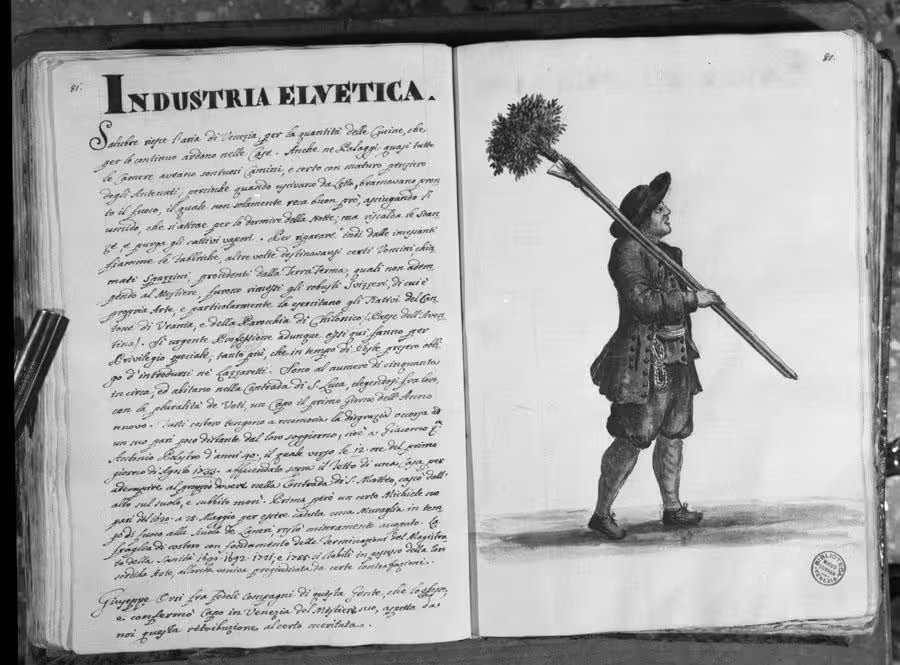
Original text
Industria Elvetica
Salubre riesce l’aria di Venezia, per la quantità delle Cucine, che per lo continuo ardono nelle Case. Anche ne Palaggi quasi tutte le Camere aveano sontuosi Camini, e certo con maturo pensiero degli Antenati, percioche quando uscivano da Letto, bramavano pronto il fuoco, il quale non solamente reca buon prò, asciugando l’umido, che si attrae per lo dormire della Notte; ma riscalda le stanze, e purga gli cattivi vapori.
Per riparare indi dalle incessanti fiamme le Fabbriche, altre volte destinavansi certi Uomini, chiamati Spazzini, procedenti dalla Terra Ferma, quali non adempendo al Mestiere, furono rimessi gli robusti Svizzeri, di cui è propria Arte, e particolarmente la esercitano gli Nativi del Cantone di Urania, e della Parocchia di Chilonico (Paese dell’Aventina). Sì urgente Professione adunque Essi qui fanno per Privilegio speciale; tanto più, che in tempo di Peste presero obligo d’introdursi ne’ Lazzaretti. Sono al numero di cinquanta in circa, ed abitano nella Contrada di S. Luca, elegendosi fra loro, con la pluralità de Voti, un Capo il primo Giorno dell’Anno nuovo.
Tutti costoro tengono a memoria la disgrazia occorsa ad un suo pari poco distante dal loro soggiorno, cioè a Giacomo q.m Antonio Polastro d’anni 40, il quale verso le 12 ore del primo giorno di Agosto 1733 affacendato sopra il Tetto di una Casa per adempire al proprio dovere nella Contrada di S. Matteo, cascò dall’alto sul suolo, e subbito morì.
Prima però un certo Michiele suo pari del 1620 a 25 Maggio per essere caduta una Muraglia in tempo di fuoco alla Scuola de Laneri, restò miseramente accopato.
La fraglia di costoro con fondamento delle Terminazioni del Magistrato della Sanità 1690 1692 1721, e 1755 si stabilì in possesso della loro sordida Arte, allorche veniva pregiudicata da certe contrafazioni.
Giuseppe Orsi fra fedeli compagni di questa Gente, che lo elesse, e confermò Capo in Venezia del Mestiere suo, aspetta da noi questa retribuzione al certo meritata.
Grevembroch (1981), vol. 4, p. 81.
Related articles
- Gli abiti de veneziani — by Giovanni Grevembroch
- Le Arti che vanno per via (1753) — Gaetano Zompini
- Curiosità Veneziane by Giuseppe Tassini
- List of fires in Venice
- The Venetian Lazzaretti
- Sewage in Venice
Venetian Stories
Related images
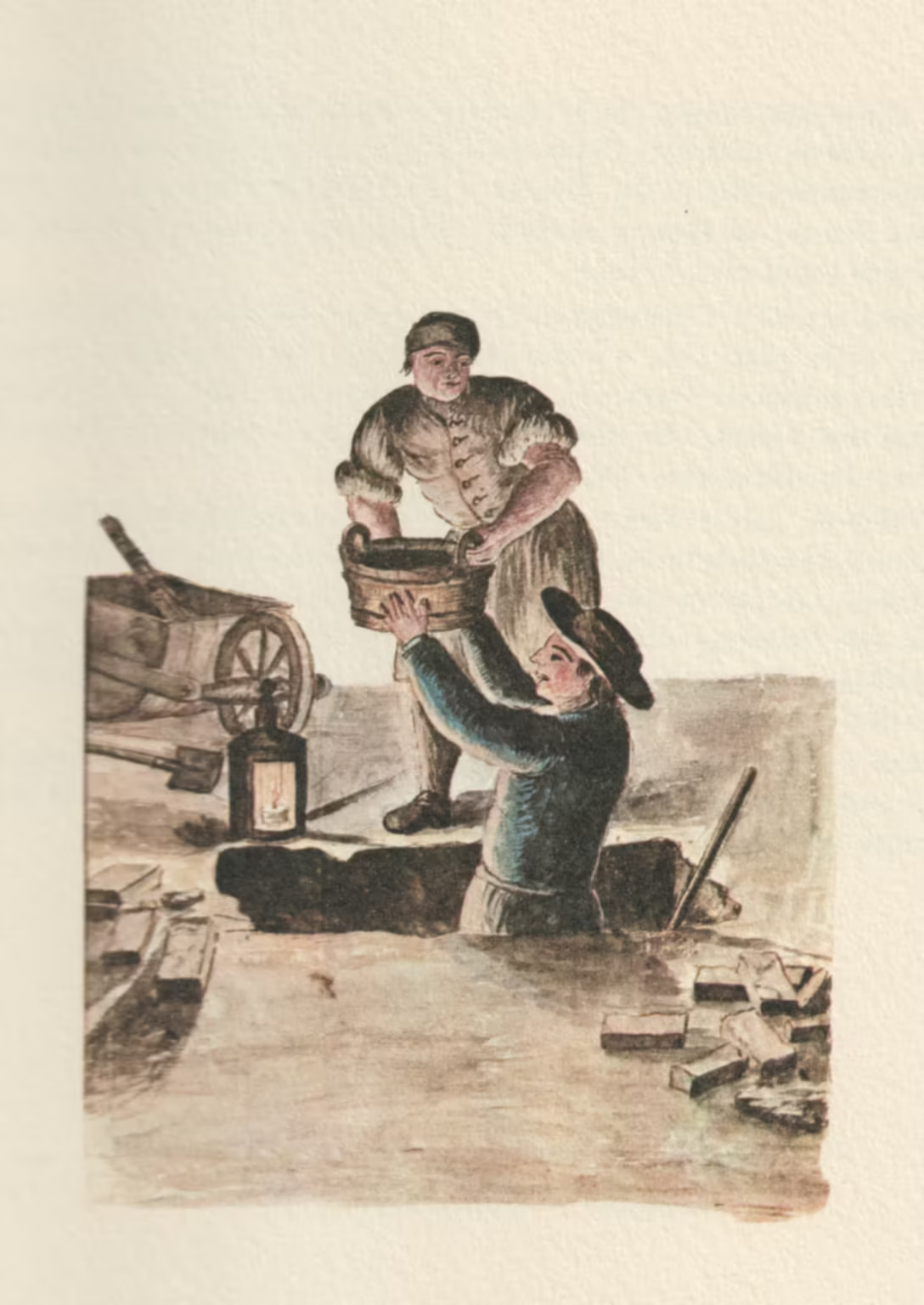
- Fetore Allontanato — Odour Removed — Grevembroch 4-82
- Scoa Camin — chimney sweep — Zompini — Arti #1
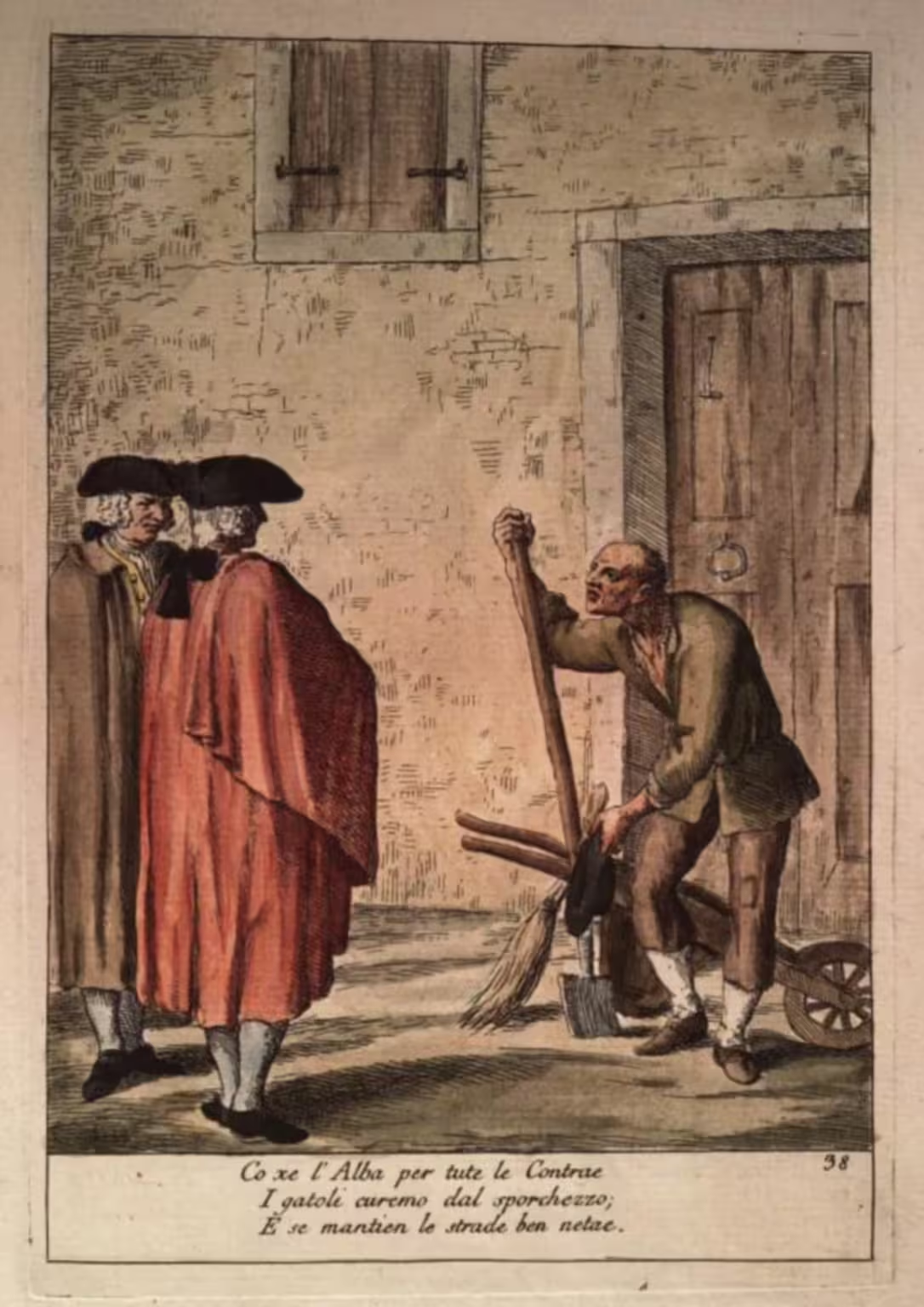
- Cura gattoli — drain cleaner — Zompini — Arti #38
- Scuazzero — Rubbish collector — Grevembroch 3-129
Leave a Reply