The miracle medicine Theriac was a major export article for Venice for several centuries, but what was it supposedly good for?
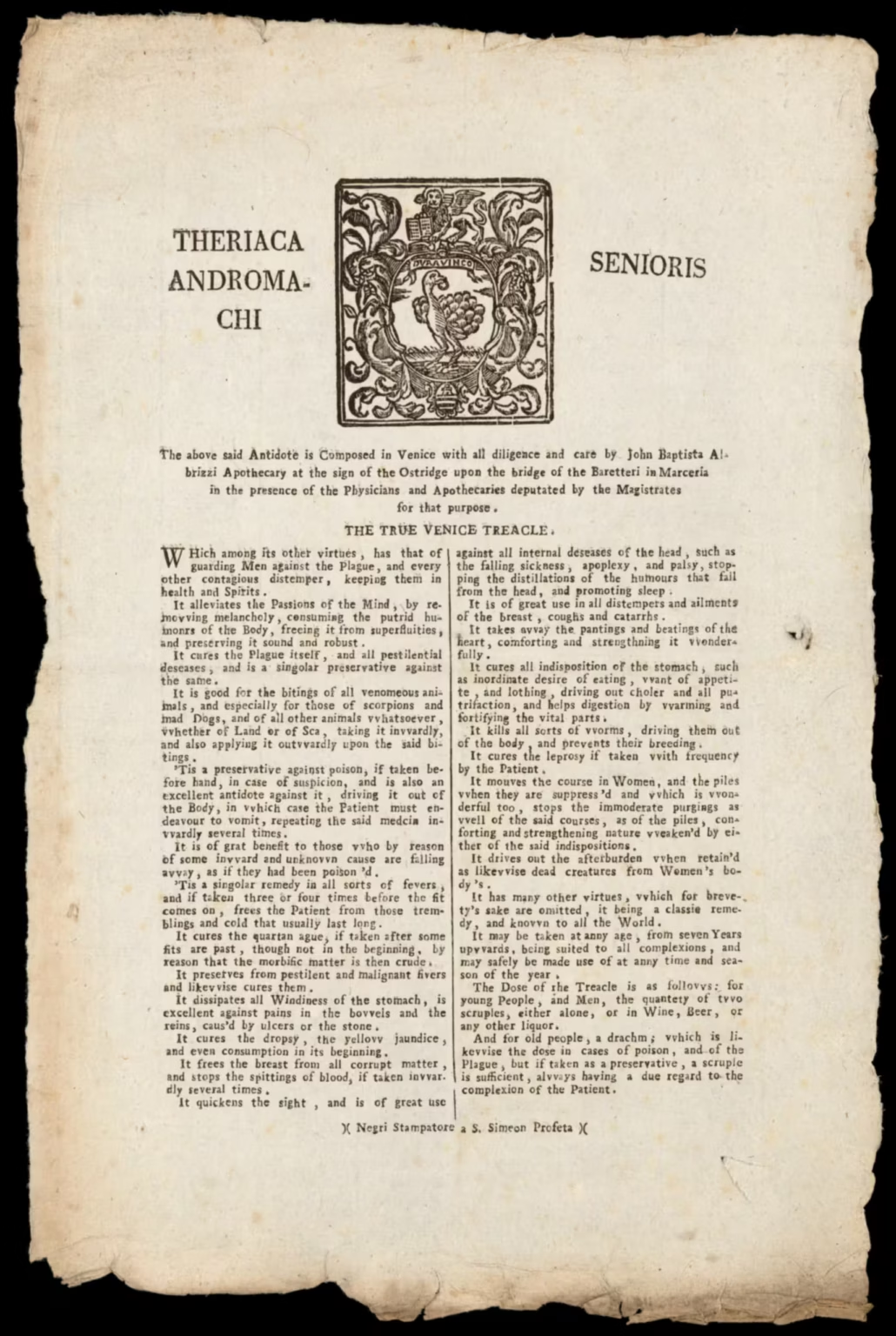
Luckily for us, several Venetian apothecaries made sales material in other languages, and some of it has made it all the way to us.
This is the English text for such a promotional flyer from a Venetian pharmacy, the Speziaria al Paradiso on the Riva del Vin close to the Rialto bridge, printed in Venice in 1688.
The flyer is bilingual English-Venetian, so clearly intended for foreigners, and Englishmen in particular.
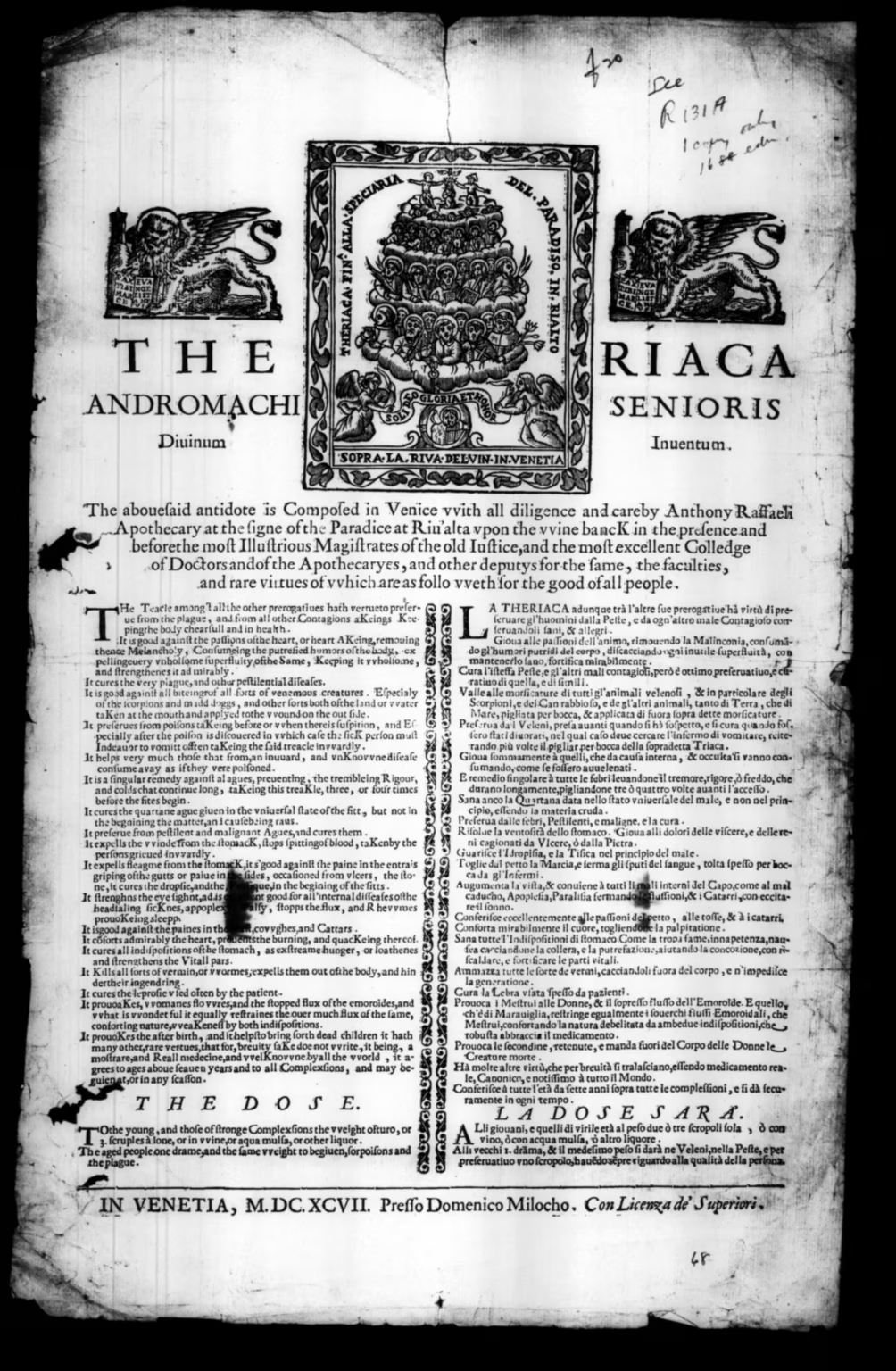
The digitized original is available from the Internet Archive, but I believe this specific flyer is in the Wellcome Collection.
There’s another version from 1697, with precisely the same wording, so there have probably been many others.
The printer has had some issues with a language, which he most likely didn’t understand, and some letters, which weren’t normally used in Venetian, notably k and w.
All the k’s appear majuscule, and w is consistently typeset as ‘vv’. There are also problems of spacing, word separation, and spelling.
The numerous issues of grammar and vocabulary are more likely the fault of the unknown translator.
In any case, I have corrected the typographic errors, but not the translation issues.
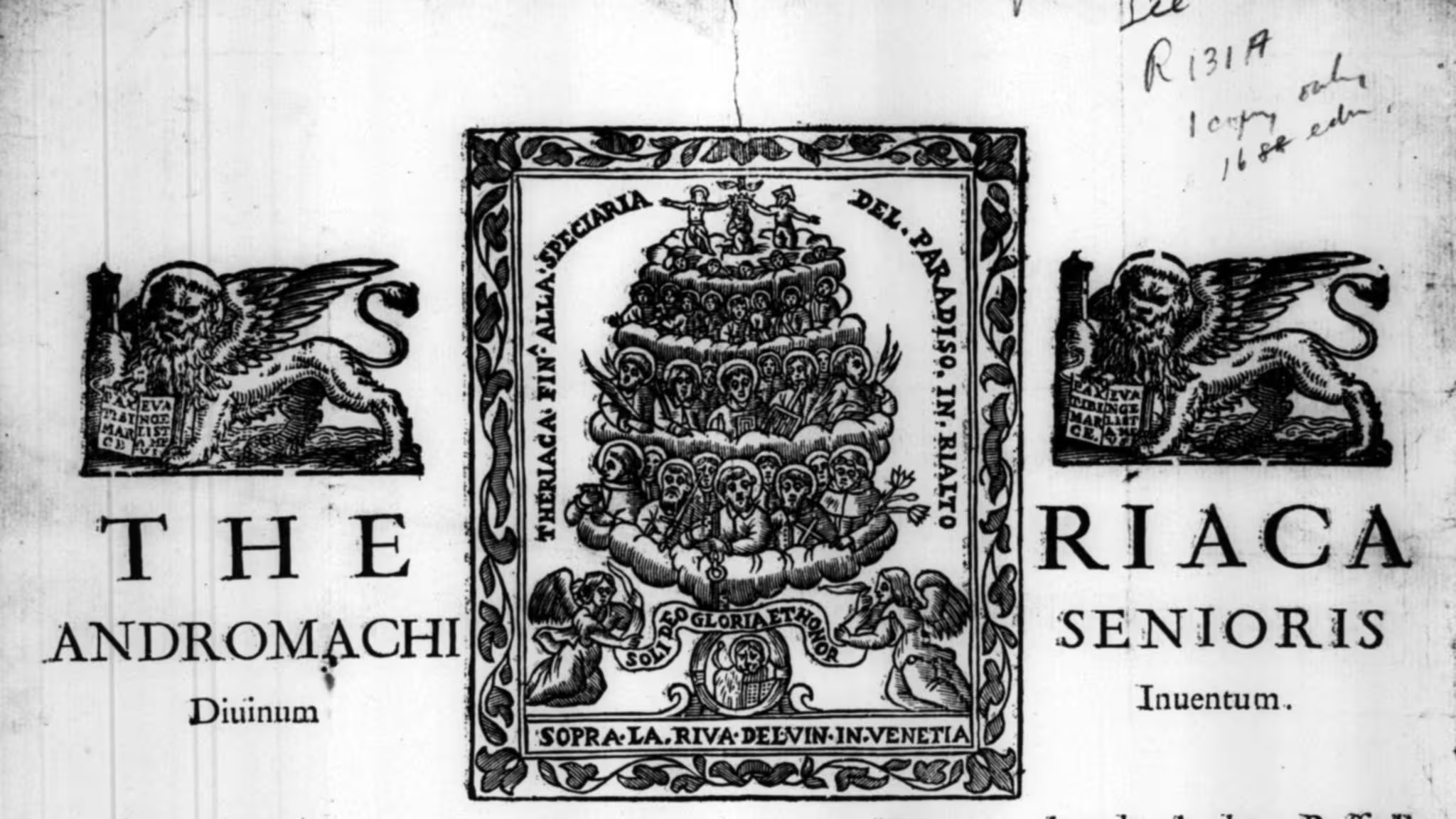
The title
The main title is in Latin:
Theriaca
Andromachi senioris
divinum inventum
“Theriac of Andromachus the Elder,1 by divine creation.”
It sets the tone, that Theriac is ancient, and divinely inspired.
It is not a normal medicine.
The sign
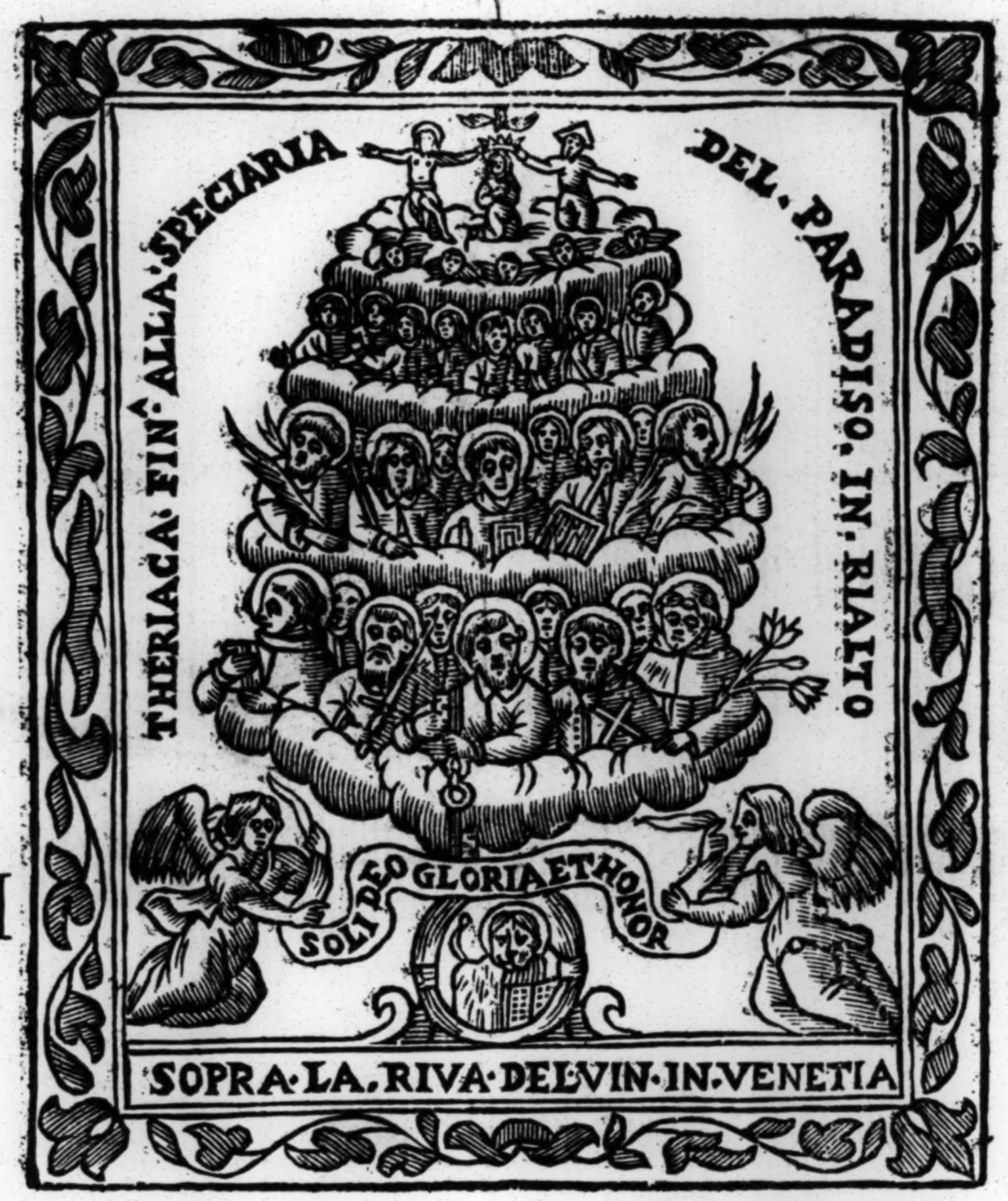
The central part of the sign — which looks a like a cake — is a depiction of paradise. It is a stack of clouds, populated with saints below, angels in the middle, and at the top, the Redeemer crowned by two putties.
Underneath the image of paradise, on a ribbon held by two angels, is a motto in Latin:
Soli Deo Gloria et Honor
“For God’s glory and honour alone.”
The text around the edge is:
Theriaca fina alla speciaria del Paradiso in Rialto sopra la Riva del Vin in Venetia.
Which translates as: “Fine Theriac at the apothecary of the Paradise at Rialto, on the Riva del Vin, in Venice.”
It is, for all intents and purposes, the address. With this instruction, anybody who knew Venice, could find the shop.
The introduction
The first paragraph is in English only.
The above-said antidote is composed in Venice with all diligence and care by Francis Raffaeli Apothecary at the sign of the Paradise at Rialto upon the wine bank2 in the presence and before the most Illustrious Magistrates of the Old Justice,3 and the most Excellent College of Doctors, and of the Apothecaries,4 and other deputies for the same, the faculties, and rare virtues of which are as follows for the good of all people.
Panegyric to Theriac
The rest of the text is bilingual, with the English translation on the left, and the Venetian original on the right.
The two texts are not entirely the same, but mostly so.
The Treacle amongst all the other prerogatives has virtuous preserve from the plague,5 and from any other Contagious Sickness; Keeping the body cheerful and in health.
It is good against the passions of the heart, or heart aching, removing thence Melancholy, Consuming the putrefied humours6 of the body expelling every unwholesome superfluity of the Same, Keeping it wholesome, and strengthens it admirably.
It cures the very plague, and other pestilential deceases.
It is good again all bitings of all sorts of venomous creatures.7 Especially of the scorpions and mad dogs, and other sorts both of the land and water, taken, at the mouth and applied to the wound on the outside.
It preserves from poisons, taken before or when there is suspicion, and Especially after the poison is discovered, in which case the sick person must Endeavour to vomit often taking the said treacle inwardly.8
It helps very much those that from an inward, and unknown disease, consume away as if they are poisoned.9
It is singular remedy against all aches, preventing, the trembling Rigour, and colds that continue long, taking this treacle, three, or four times before the fits begin.
It cures the quartan ache10 given in the universal state of the fit, but not in the beginning the matter, and cause being raw.11
It preserves from pestilent and malignant aches, and cures them.
It expels the wind from the stomach, stops spitting of blood taken by the persons grieved inwardly.
It expels phlegm from the stomach,12 it is good against the pain in the entrails, griping of the guts, pain in the reines,13 occasioned from ulcers, the stone, it cures the Dropsy, and the Prissique,14 in the beginning of the fits.
It strengthens the eye sight, and is excellent good for all internal diseases of the head, falling sickness, apoplexy, Palsy, stops the flux, and Rheumes provoking sleep.
It is good against the pains in the brest, coughs, and Catarrhs.
It comforts admirably the heart, prevents the burning, and quacking thereof.15
It cures all indispositions of the stomach, as extreme hunger, or loathness and strengthens the Vital parts.
It Kills all sorts of vermin, or worms; expels them our of the body, and hinders their ingendring.16
It cures the leprosy used often by the patient.
It provokes womes flowers,17 and the stopped flux of the haemorrhoids, and what is wonderful it equally restrains the over much flux of the same, comforting nature, weakened by both indispositions.
It provokes the afterbirth, and it helps to bring forth dead children, it has many other, rare virtues, that for, brevity sake do not write, it being, a most rare, and Real medicine, and well-known by all the world, it agrees to all ages above seven years, and to all Complexions, and may be given at, or in any season.
THE DOSE
To the young, and those of strong Complexions the weight of two, or 3, scruples18 alone, or in wine, or aqua mulsa,19 or other liquor.
The aged people one dram,20 and the same weight to be given, for poisons and the plague.
Notes
- Andromachus the Elder was the physician of Roman emperor Nero during his reign in the first century, and supposedly the inventor of Theriac. ↩︎
- The “wine bank” here is a rather direct translation of the name of the street, the Riva del Vin. ↩︎
- The Provveditori alla Giustizia Vecchia oversaw the work of artisans in Venice, and controlled weights, measures, prices and the quality of goods.. Amongst these responsibilities were also the control of the production of Theriac, until 1780, when it passed to the Magistracy alla Sanità. ↩︎
- The “College of Doctors and Apothecaries” — the Collegio de’ Medici e de’ Speziali — was the industry association, like a guild, which also controlled and guaranteed the quality of the product in the common interest of its members. ↩︎
- The plague was one of the greatest fears of the time, so no wonder it is mentioned first. ↩︎
- See Bad air will get you sick for an explation of humours. ↩︎
- The origin of Theriac was as an antidote to poisons. ↩︎
- Any ailment, which didn’t have evident external effects on the body, was considered caused by poisoning. Consequently, the doctors of the past considered many conditions, which we wouldn’t consider cases of poisoning, as such. ↩︎
- Perhaps this is about depression, psychological trauma of some kind, or autism, but all considered a kind of poisoning. ↩︎
- The quartan ache, or fever, is a fever which occurs every four days, in particular a certain kind of malaria. ↩︎
- The ‘matter’ begin ‘raw’ much be understood in terms of humours and miasma. See Bad air will get you sick. ↩︎
- Phlegm is one of the four humours. See Bad air will get you sick. ↩︎
- The kidneys. ↩︎
- Tuberculosis. ↩︎
- The Venetian text says ‘palpitations’, so more inept translation. ↩︎
- The ‘ingendring’ from the original means generation, rather than reproduction, which is evident from the Venetian text. It was a common belief that some animals were generated spontaneously if the external conditions were right. They didn’t reproduce, they just appeared. ↩︎
- The ‘womes flowers’ is either a very inept or a very prudish translation from the Venetian, which clearly states, “the menstruation of women”. Whether the intention was to say ‘women’ or ‘womb’ is not entirely clear. ↩︎
- A scruple is an apothecary’s measure, of approximately 1 gram. ↩︎
- Aqua mulsa means honey-water. ↩︎
- A dram or dracma is three scruples, or about 3 grams. ↩︎
Related articles
Venetian Stories
Related sources
- A Theriac recipe (1734)
- The preparation of Theriac — two prints (1600s)
- Teriaca — Theriac — Lessico Veneto
- Facchini — Labourers — Grevembroch 3-120
- Fabricatore di Teriaca — Maker of Theriac — Grevembroch 3-127
Related images


Leave a Reply