When the English gentleman John Evelyn left Venice in 1646, after almost a year in Venice and Padua, he had more stuff than when he had arrived. From his diary for late March 1646:
Having packed up my purchases of books, pictures, casts, treacle, &c., (the making and extraordinary ceremony whereof I had been curious to observe, for it is extremely pompous and worth seeing) I departed from Venice …
Venice was in practice the printing house of Europe, so obviously Evelyn had acquired books for his library back home. In Venice, Evelyn found a wider and more international selection of books than was ever available in London at the time.
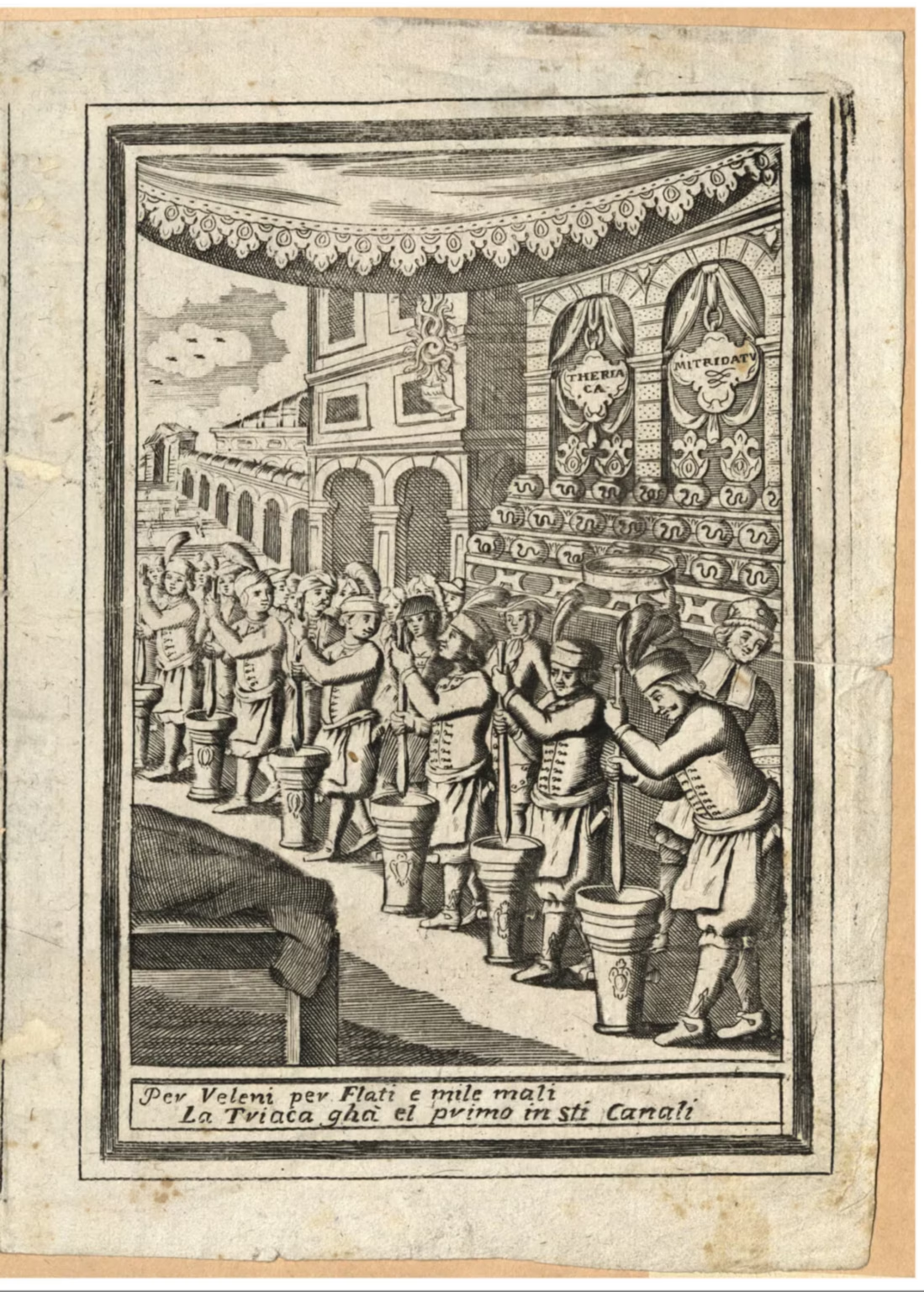
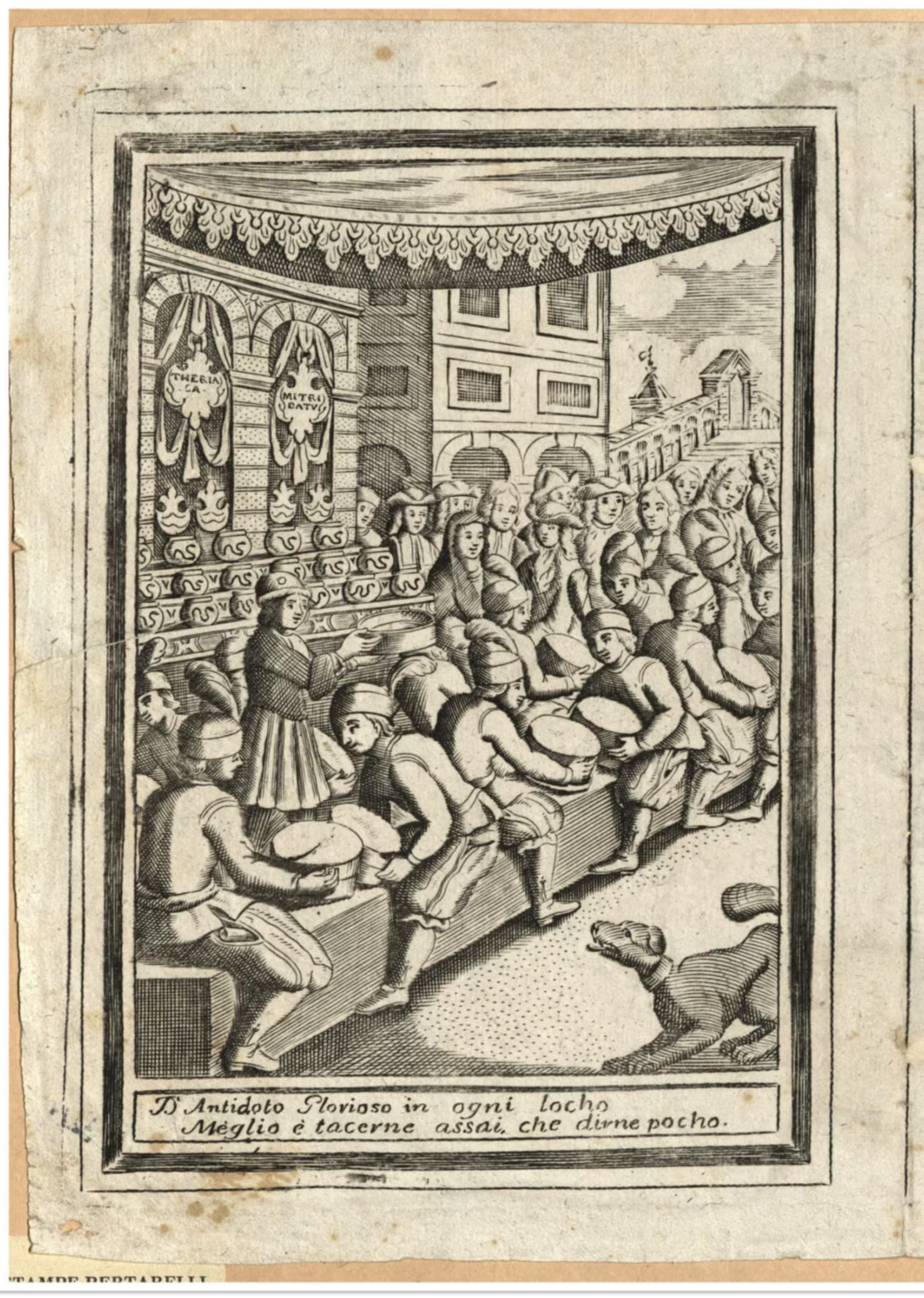
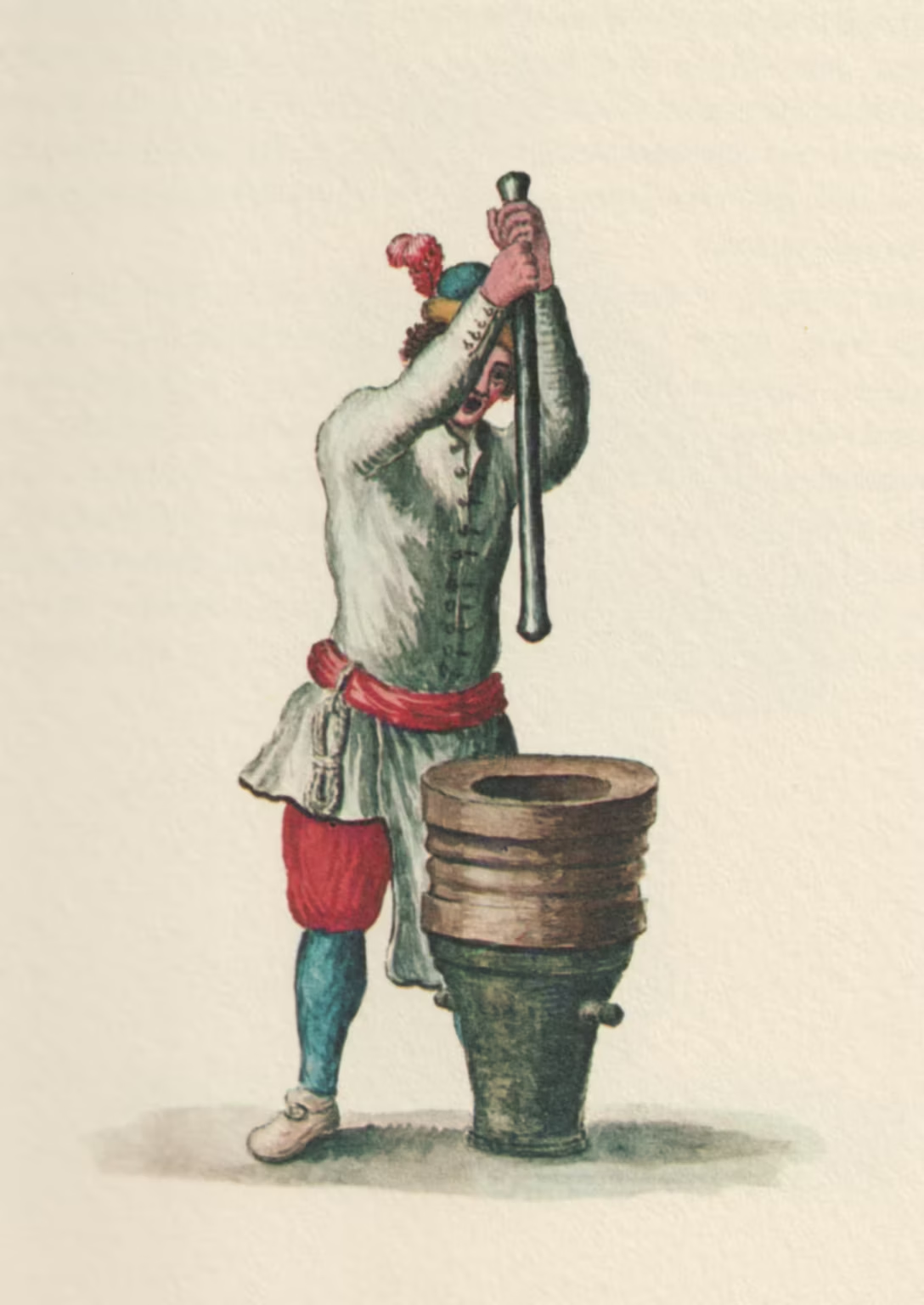
Workers pounding the ingredients for theriac in large mortars, at the Farmicia alla Testa d’Oro.
Likewise, Venice was a centre for the arts, so paintings and casts also made it into Evelyn’s luggage.
The treacle, however, was something quite different.
It was the world-famous theriac, or Venice treacle, a wonder medicine for almost every ailment known to man, made with much ceremony, as Evelyn notes, after an ancient and extremely complex recipe, under the strict control of the Venetian Magistrato alla Sanità.
Venetian theriac was generally recognised as the best in the world, sought after both in Western Europe and in the Levant.
For John Evelyn, it would have been almost inconceivable returning from Venice without some of that miracle medicine.
An ancient remedy
Theriac was an imperial remedy, in the sense that it contained such exotic ingredients, that only a rich nation with an almost global trade network could obtain and afford the raw materials needed.
Ingredients which originate in Africa, India, China and Asia, appear in the recipe.
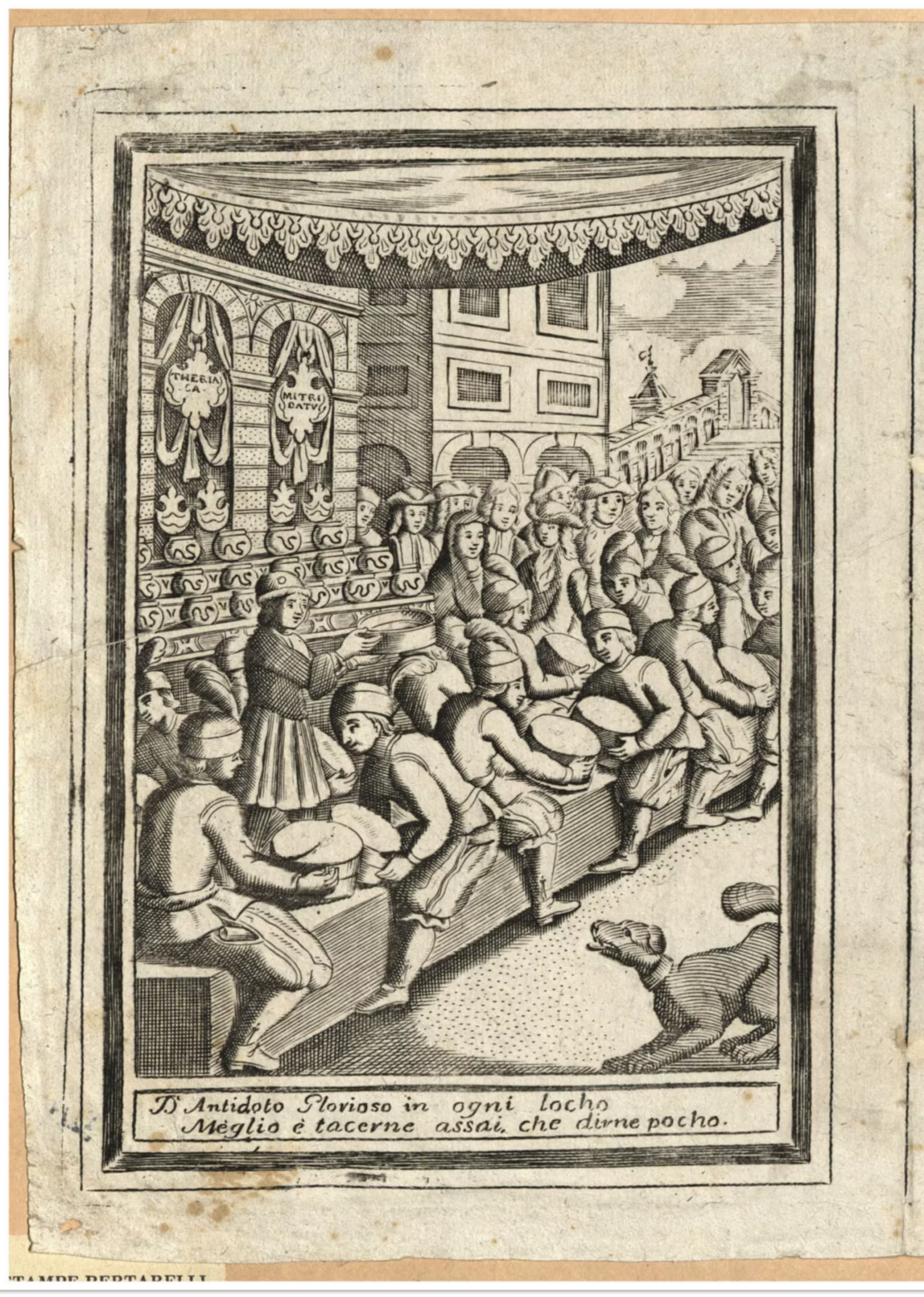
A worker sifting the ground ingredients of theriac.
The earliest origins of theriac are in the ancient Kingdom of Pontus in Anatolia, under the king Mithridates VI (120–63 BCE). Being afraid of poisoning, he had all the known antidotes combined to make a universal antidote, called mithridatium. It contained dozens of ingredients, including opium, castoreum, myrrh, saffron, ginger and cinnamon.
When Pompey the Great defeated him, the secret recipe fell into the hands of the Romans, where it circulated in the following centuries.
Andromachus the Elder, physician to emperor Nero, elaborated the recipe further, adding ingredients such as viper’s flesh, which became a central element of theriac.
The Greek and Roman physician Galen of Pergamon (129–c.216) wrote an entire treatise on theriac. His writings and teachings survived in the Byzantine Empire and throughout the Arab world, whence doctors and scholars from Western Europe learned about them.
The writings and the ideas of Galen, largely based on the ideas of Hippocrates on humours, were extremely influential in European medicine, up to the 1700s and later. This way, both the recipe for theriac and the belief in its efficacy made it way to Europe.
A Venetian monopoly
In medieval Italy, many cities started producing and selling theriac, or variations thereof, which made it slightly more accessible, but it was still a luxury medicine for the few.
Among the early producers of theriac, Venice soon stood out.
The Byzantine origins of Venice, and the close commercial and cultural connections to the Muslim Levant, meant that Venice had early and preferential access to both the knowledge of theriac, and to the ingredients, many of which were sourced in the east.
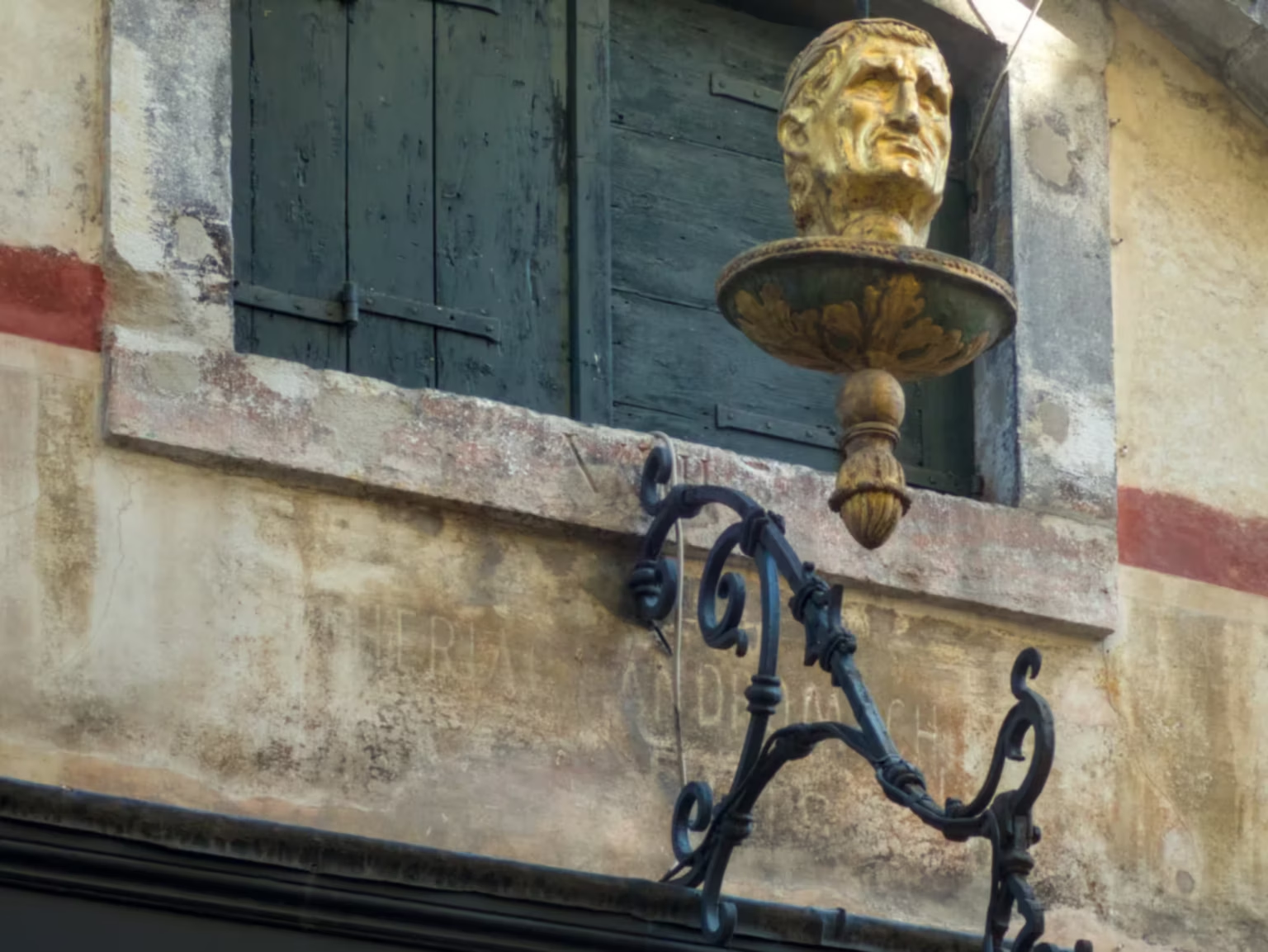
The sign of the Farmacia alla Testa d’Oro at the Rialto, with remains of the words “Theriaca Andromachi“.
The Venetian spezieri or speziali — early pharmacists — had a formal organisation with the physicians, the Arti dei Medici e degli Speziali, with a statute from 1258.
Later they formed their own Collegio degli speziali, which had strict rules, not only about education and membership, but also about the production of important medicines.
They developed a supposedly more correct recipe for theriac, which they kept secret for foreigners.
Consequently, Venetian theriac came to dominate the markets, both in Western Europe and in the Levant. The market dominance of Venice was such, that in England, theriac was simply known as Venice treacle, which is what John Evelyn referred to in the initial quote.
Since theriac contains honey, the word ‘treacle’ later became associated with dark syrup, which is the modern meaning, but the origin of the word is from theriac.
What is Theriac
The recipe for theriac is found in many ancient pharmacopoeiae. However, the complexity of the recipe, the cost and difficulty of procuring the ingredients, the mythological aura surrounding the compound, and state regulation of its production, meant that only a few spezieri or apothecaries would ever dare to make it.
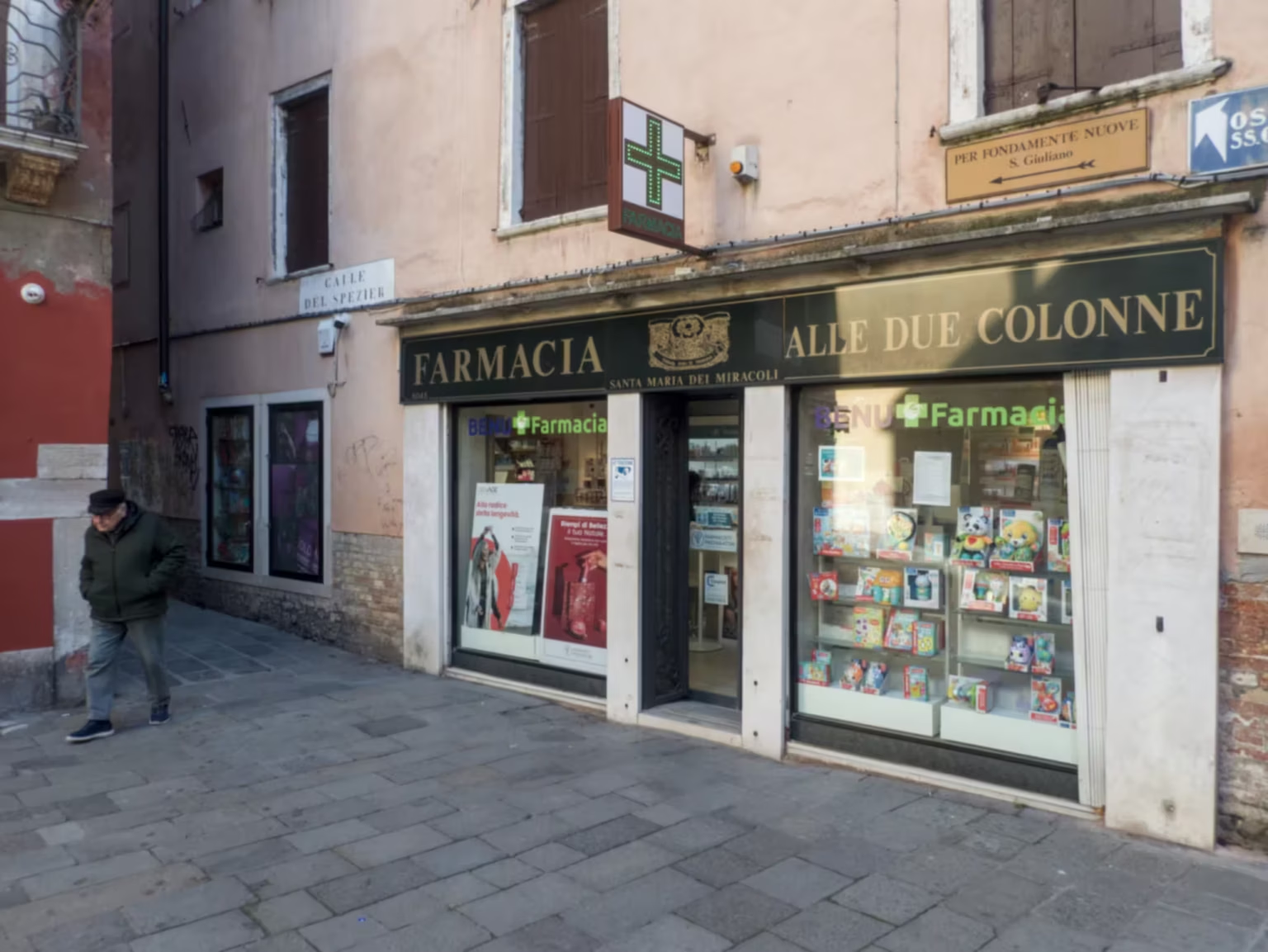
The Farmacia alle Due Colonne made theriac, which still appears in their logo.
The ingredients came from all over the known world, and many would be prohibitively expensive for most people, and for most pharmacists.
Most of the ingredients were readily available in the wider Mediterranean area in Antiquity, but in the recipe, there’s also nutmeg from Indonesia, opium from Egypt, castoreum from Pontus in Anatolia, galbanum from Persia, along with a multitude of extracts from plants and animals, seeds, flowers, leaves, oils and minerals, like iron sulphate and asphalt.
Some of the main ingredients were themselves compounds made of many ingredients, which usually don’t appear separately in recipes for theriac. These ingredients were pellets made of spices, herbs and viper flesh.
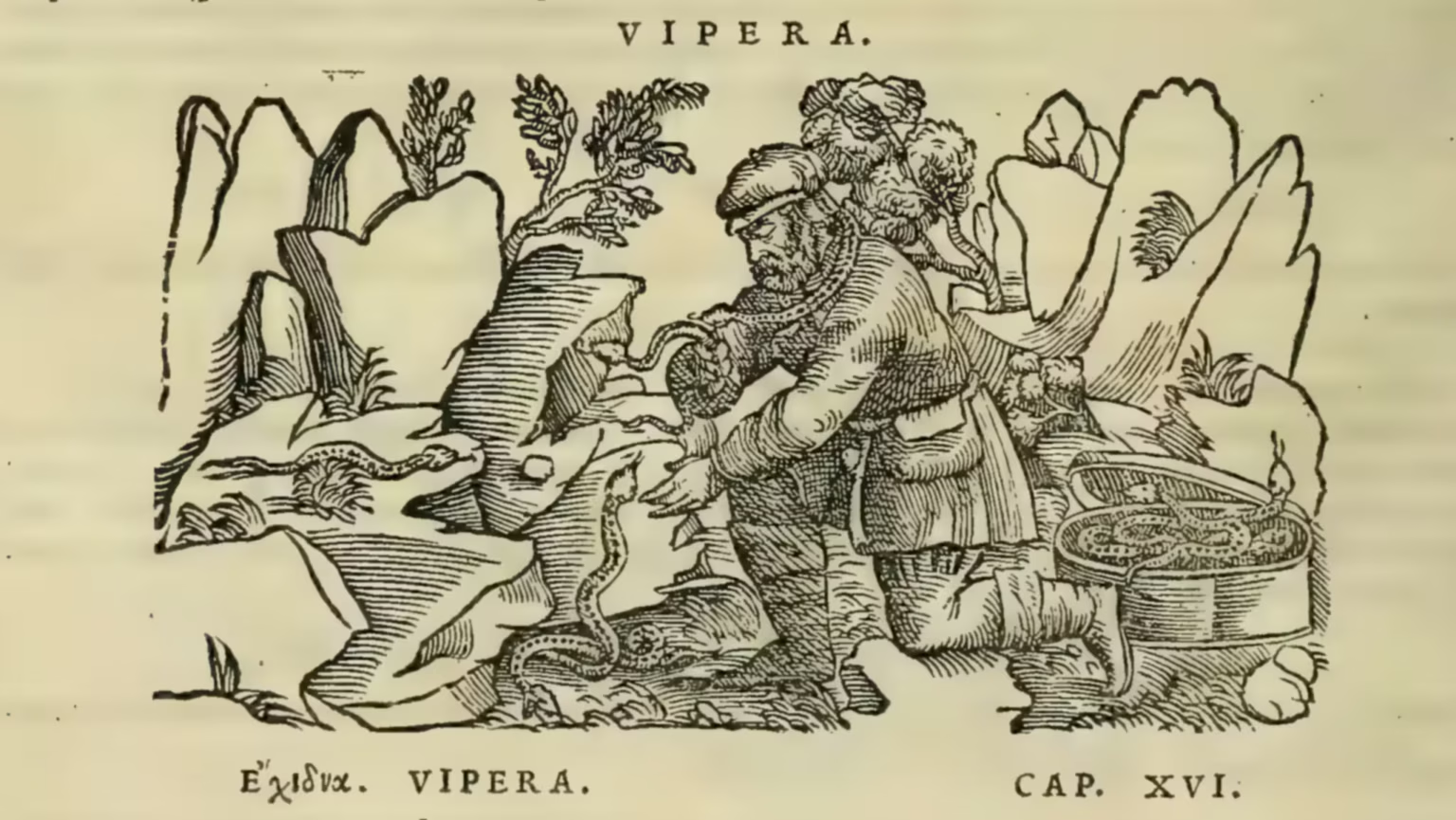
In fact, viper flesh was one of the defining ingredients of theriac but dried, ground and aged, in the form of pellets, called trocisci di vipera. It was common belief that the flesh of vipers contained an antidote to their own poison, and even poisons in general.
The recipe is very complex. The list of ingredients in theriac varies among recipes, but there are usually around sixty different substances, divided into six or more classes, according to the quantity needed, and the order of preparation.
Catching vipers in the mountains for the production of theriac.
The ingredients were ground to a fine powder, mixed with resins and gums, heated, and finally dissolved in honey and wine, to make a comestible substance with a consistency like treacle.
Afterwards, theriac had to season for at least six months in sealed containers of tin or glazed earthenware, shaken occasionally for the first eight days. According to Galen, it was best after six years, and still usable after forty years.
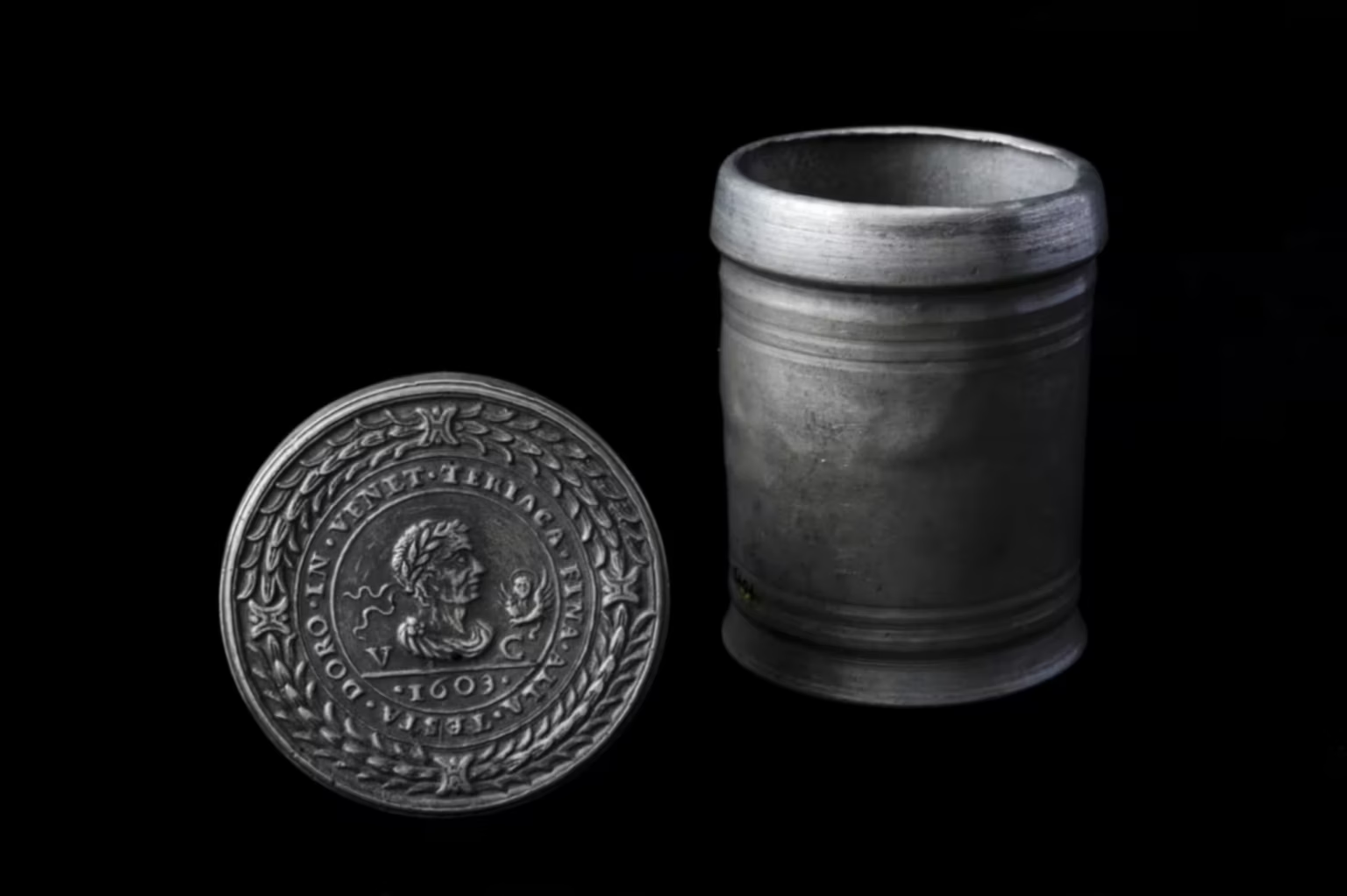
It was sold in small tin containers, sealed with the symbol of the pharmacy.
In terms of flavour and smell, theriac must have been very intense, and it was consumed a few scruples at a time.
A remedy for everything
Theriac was believed to be a remedy for almost everything, and it was marketed as such.
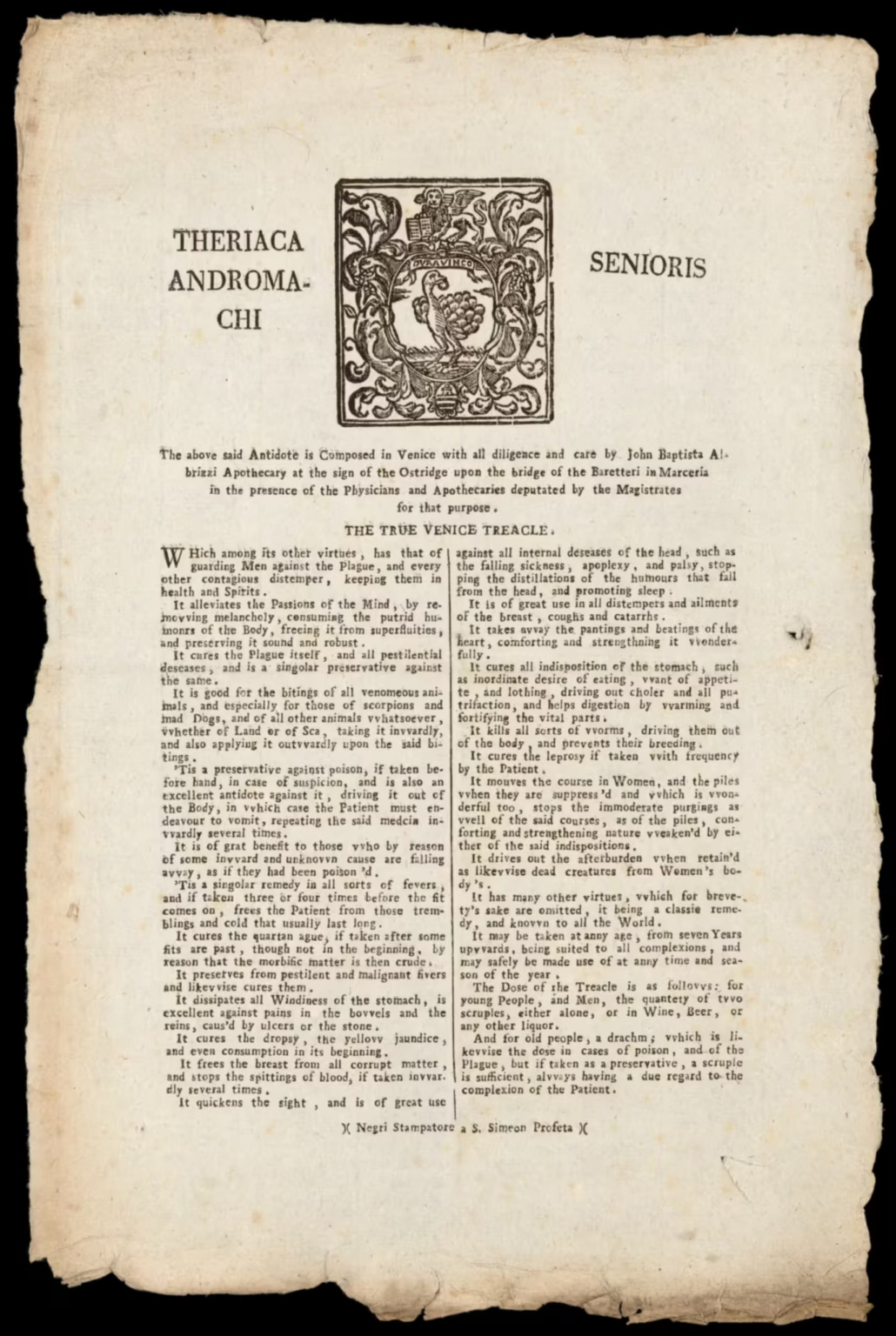
Since England was an important export market for Venetian theriac, quite a few Venetian pharmacies had publicity leaflets printed in English (even if the Venetian printing houses often had problems with the letters w and k, and English orthography in general).
Here’s the complete transcription of one such flyer, errors and all, from the Pharmacy of the Ostrich (Struzzo):1
THERIACA ANDROMACHI SENIORIS
The above said Antidote is Composed in Venice with all diligence and care by John Baptista Albrizzi Apothecary at the sign of the Ostridge upon the bridge of the Baretteri in Marceria in the presence of the Physicians and Apothecaries deputated by the Magistrates for that purpose.
THE TRUE VENICE TREACLE
WHich among its other virtues, has that of guarding Men against the Plague, and every other contagious distemper, keeping them in health and Spirits.
It alleviates the Passions of the Mind, by removving melancholy, consuming the putrid humonrs of the Body, freeing it from superfluities, and preserving it sound and robust.
It cures the Plague itself, and all pestilential deseases, and is a singolar preservative against the same.
It is good for the bitings of all venomeous animals, and especially for those of scorpions and mad Dogs, and of ail other animals vvhatsoever, vvhether of Land or of Sea, taking it invvardly, and also applying it outvvardly upon the said bitings.
‘Tis a preservative against poison, if taken before hand, in case of suspicion, and is also an excellent antidote against it, driving it out of the Body, in vvhich case the Patient must endeavour to vomit, repeating the said medcin invvardly several times.
It is of grat benefit to those vvho by reason of some invvard and unknovvn cause are falling avvay, as if they had been poison’d.
‘Tis a singolar remedy in all sorts of fevers, and if taken three or four times before the fit comes on, frees the Patient from those tremblings and cold that usually last long.
It cures the quartan ague, if taken after some fits are past, though not in the beginning, by reason that the morbific matter is then crude.
It preserves from pestilent and malignant fivers and likevvise cures them.
It dissipates all Windiness of the stomach, is excellent against pains in the bovvels and the reins, caus’d by ulcers or the stone.
It cures the dropsy, the yellovv jaundice, and even consumption in its beginning.
It frees the breast from all corrupt matter, and stops the spittings of blood, if taken invvardly several times.
It quickens the sight, and is of great use against all internal deseases of the head, such as the falling sickness, apoplexy, and palsy, stopping the distillations of the humours that fall from the head, and promoting sleep.
It is of great use in all distempers and ailments of the breast, coughs and catarrhs.
It takes avvay the pantings and beatings of the heart, comforting and strengthning it vvonders fully
It cures all indisposition of the stomach, such as inordinate desire of eating, vvant of appetite, and lothing, driving out choler and all putrification, and helps digestion by vvarming and fortifying the vital parts.
It kills all sorts of vvorms, driving them out of the body, and prevents their breeding.
It cures the leprosy if taken vvith frequency by the Patient.
It mouves the course in Women, and the piles vvhen they aré suppress’d and vvhich is vvonderful too, stops the immoderate purgings as vvell of the said courses, as of the piles, conforting and strengthening nature vveaken’d by either of the said indispositions.
It drives out the afterburden vvhen retain’d as likevvise dead creatures from Women’s body’s.
It has many other virtues, vvhich for brevety’s sake are omitted, it being a classic remedy, and knovvn to all the World.
It may be taken at anny age, from seven Years upvvards, being suited to all complexions, and may safely be made use of at anny time and season of the year.
The Dose of rhe Treacle is as follovvs: for young People, and Men, the quantety of tvvo scruples, either alone, of in Wine, Beer, or any other liquor.
And for old people, a drachm; vvhich is likevvise the dose in cases of poison, and of the Plague, but if taken as a preservative, a scruple is sufficient, alvvays haying a due regard to the complexion of the Patient.
)( Negri Stampatore a S. Simeon Profeta )(
In short, there’s little a bit of theriac couldn’t cure or alleviate.
State regulation
In Antiquity, theriac wasn’t for everybody. It was a medicine for kings and emperors. That was, in fact, how it started.
The necessary ingredients were so specialised, and from such diverse origins, that only the wealthiest — and the commercially best connected — societies could produce it.
Venice, in the Middle Ages, was in such a position. It was rich, and at the centre of European trade. The pharmacists of Venice had access to the ingredient, they could afford them, and they also had access to the knowledge to produce theriac.
It became a major business, and an important part of the economy of the Republic of Venice.
Naturally, in such a lucrative trade, there was always somebody, who’d try to swap expensive ingredients for something cheaper, or skip parts of the production cycle. That would, however, undermine the Venetian ‘brand’.
For the Republic of Venice, the economic importance of the production of theriac was such that the republic regulated production and sale of theriac zealously.
As in antiquity, theriac was a matter for the state.
Initially, the regulation was handled by the Giustizia Vecchia, which regulated and controlled craftsmen and artisans.
Later, that authority passed to the Magistrato alla Sanità, which also had a major role in the prevention of plague, for which theriac was a remedy, and the responsibility for the safety of foodstuffs.
The magistrates and the protomedico (chief physician) therefore regulated and controlled, not only who could produce theriac, but also how they produced it.
The trade became licensed and controlled, and restricted to a few authorised pharmacies, which had to follow stringent procedures in the production of theriac. Such pharmacies were known as triacanti in Venice.
Pomp and circumstance
These restrictions and controls led to what John Evelyn noted in his diary:
… the making and extraordinary ceremony whereof I had been curious to observe, for it is extremely pompous and worth seeing …
The making of theriac was a show and a spectacle because of the rules imposed on the spezieri and pharmacists by the magistrates.
Workers sifting the ground ingredients for theriac
The complexity of acquiring and producing the ingredients, some of which had their own production cycles and lead times, was such that batches were made only once or twice a year.
The authorities, to avoid cheating on the quality of the ingredients, imposed on the pharmacies to display all the ingredients out in the open, in front of the pharmacy, for three days, and to do the actual production there too.
The economic importance of the trade meant transparency was essential to maintain the public’s trust in the product.
Theriac was therefore produced in the streets, in front of the pharmacy, or nearby, where there was sufficient space.
Everything was overseen by the College of Doctors, under the supervision of the protomedico, the official physician of the Magistrato alla Sanità.
As these events naturally drew crowds of onlookers, the pharmacies put on even more of a show, to promote their wares.
First, all the ingredients were put on display outside the shop.
Then workers, seasonal labourers hired for three days a year, dressed in bright colours, with feathers in their hats, ground up the seeds and spices in huge mortars, while they sang more or less lewd work-songs.
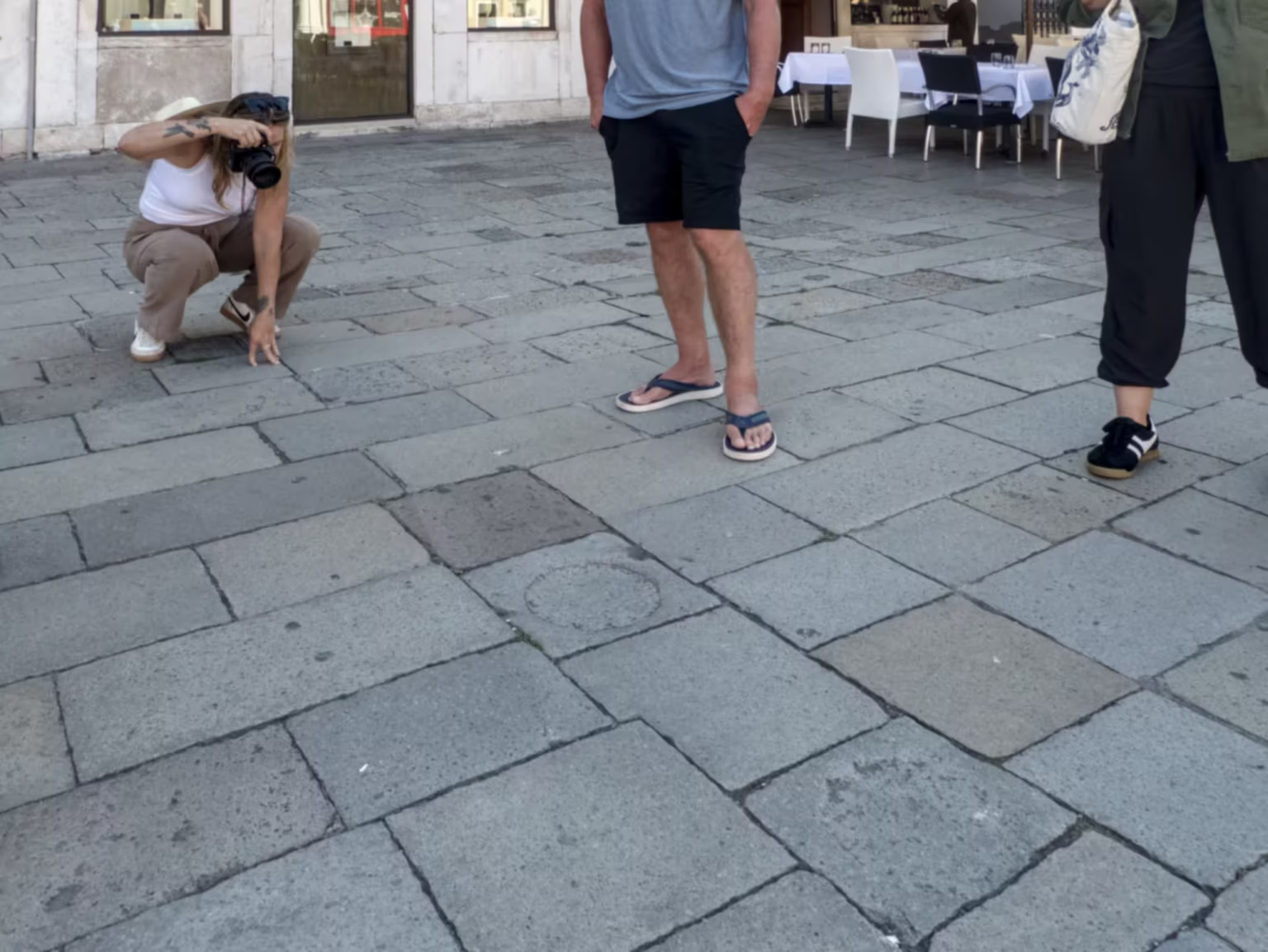
Marks in the pavement in Campo Santo Stefano, where the large mortars stood for making theriac.
Finally, the pharmacists combined the ingredients, and put the theriac in storage jars, which were officially and ceremoniously sealed under the watchful eyes of the authorities.
The compound needed to ferment and age for at least six months, with the occasional shake of the jars in the first eight days.
Theriac was normally made in large batches, so it required numerous workers, especially to work the large mortars, which have left marks in the pavement, still visible today in some places.
This was the extremely pompous ceremony mentioned by John Evelyn.
Did it work?
Not really.
Theriac does contain some small amount of opium, so it might have offered some relief of pain and helped against diarrhoea, but besides that, it is unlikely to have done much good.
A pewter jar with the symbol of the Farmacia alla Testa d’Oro, which produced theriac from 1603.
The main effect was probably the placebo effect.
Neither did it do much harm. Even though the recipe contains some odd things, and a few which are toxic to humans, the quantity and concentration of them are too low at the specified doses to cause any harm.
If it did little good, was it snake oil, sold by charlatans?
Also, no!
Everybody believed it to work, including the pharmacists who produce it. That belief was based on empirical evidence, ancient traditions, religion and plain superstition.
It was, in a way, the best they could do within their cultural and scientific boundaries.
Notes
This particular flyer is not dated, but there are many similar from the late 1600s and early 1700s. ↩︎
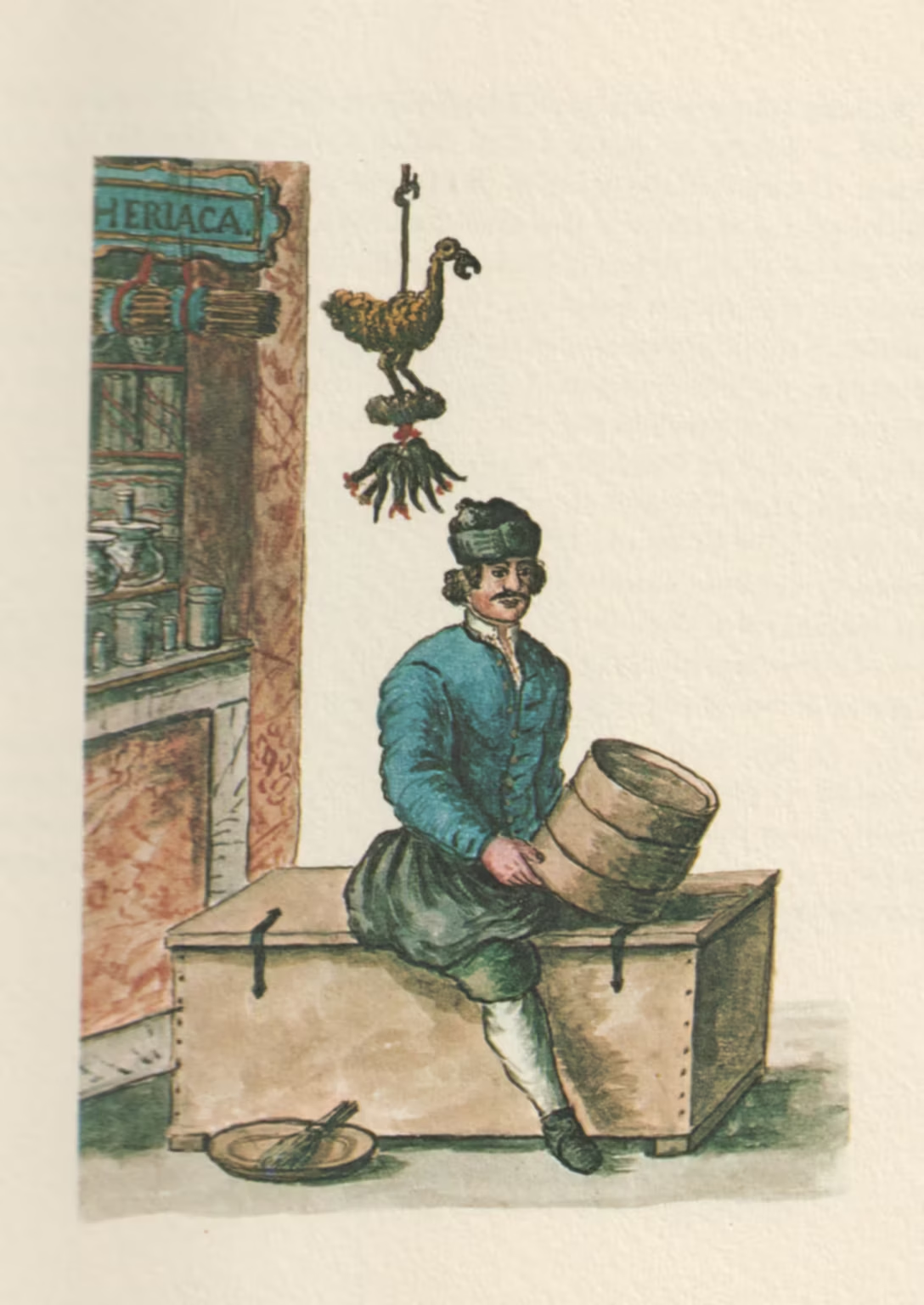
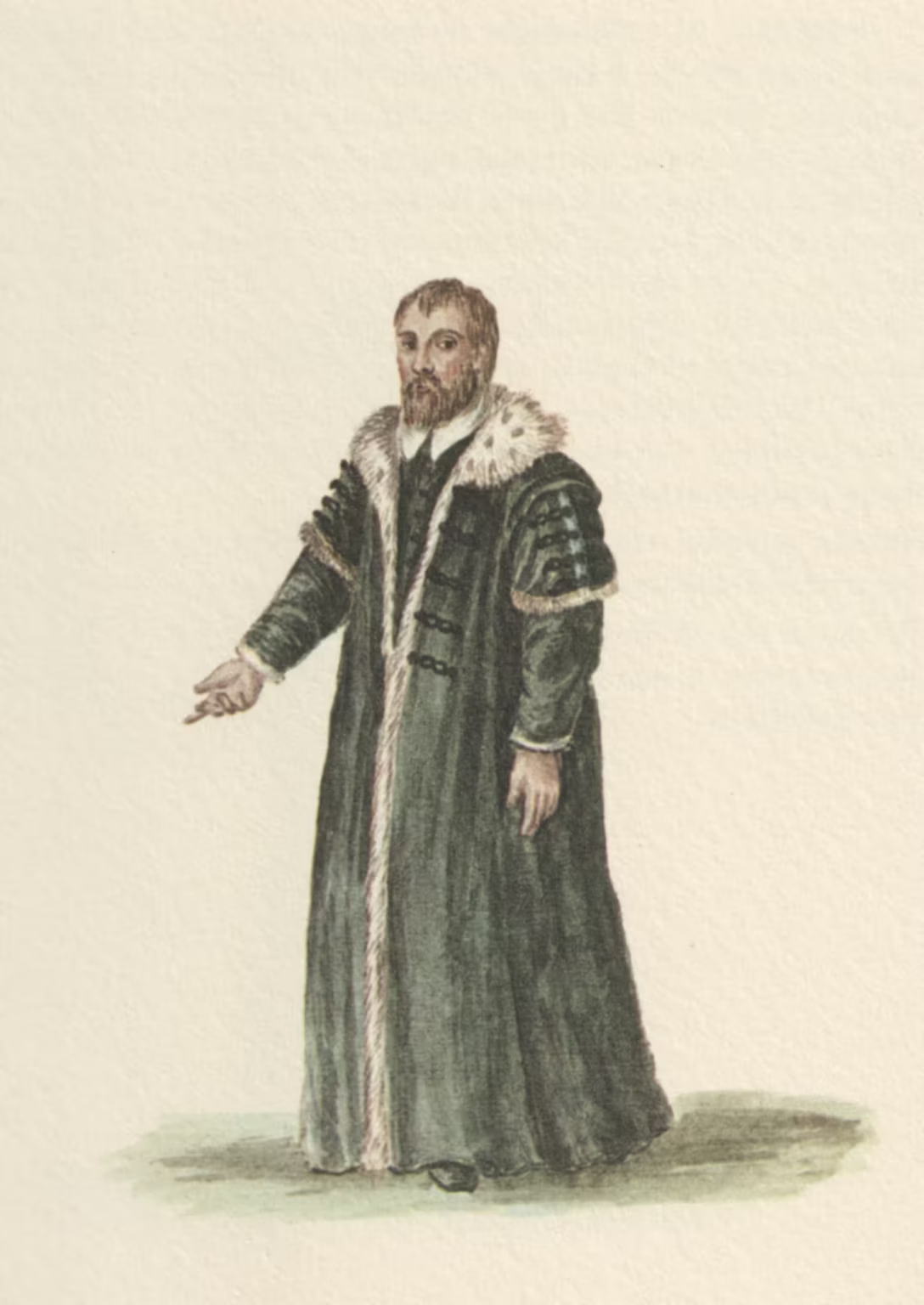
Workers sifting the ground ingredients for theriacWorkers pounding the ingredients for theriac in large mortarsGrevembroch 3-127 – Fabbricatore di TeriacaGrevembroch 3-120 – Facchino
Ahnfelt, Nils-Otto, Hjalmar Fors and Karin Wendin. Making and taking theriac: an experimental and sensory approach to the history of medicine in BJHS Themes (2022), 7, 39–62. 2022. [more] 🔗
Capello, Giovanni Battista. Lessico farmaceutico-chimico contenente li rimedj piu usati d'oggidi. Di Gio. Battista Capello, Speziale all’ Insegna de’ tre Monti in Campo Sant'Apollinare. In Venezia per Domenico Lovisa, 1734. [more] 🔗
Evelyn, John. Diary and correspondence, vol. 1. London : Henry Colburn, Great Marlborough Street, 1850. [more] 🔗
Fabbri, Christiane Nockels. Treating Medieval Plague: TheWonderful Virtues of Theriac in Early Science and Medicine 12 (2007) 247-283. 2007. 🔗
Raj, Danuta, Katarzyna Pękacka-Falkowska, Maciej Włodarczyk and Jakub Węglorz. The real Theriac – panacea, poisonous drug or quackery? in J Ethnopharmacol. 2021 Dec 5. 2021. [more] 🔗
Leave a Reply