
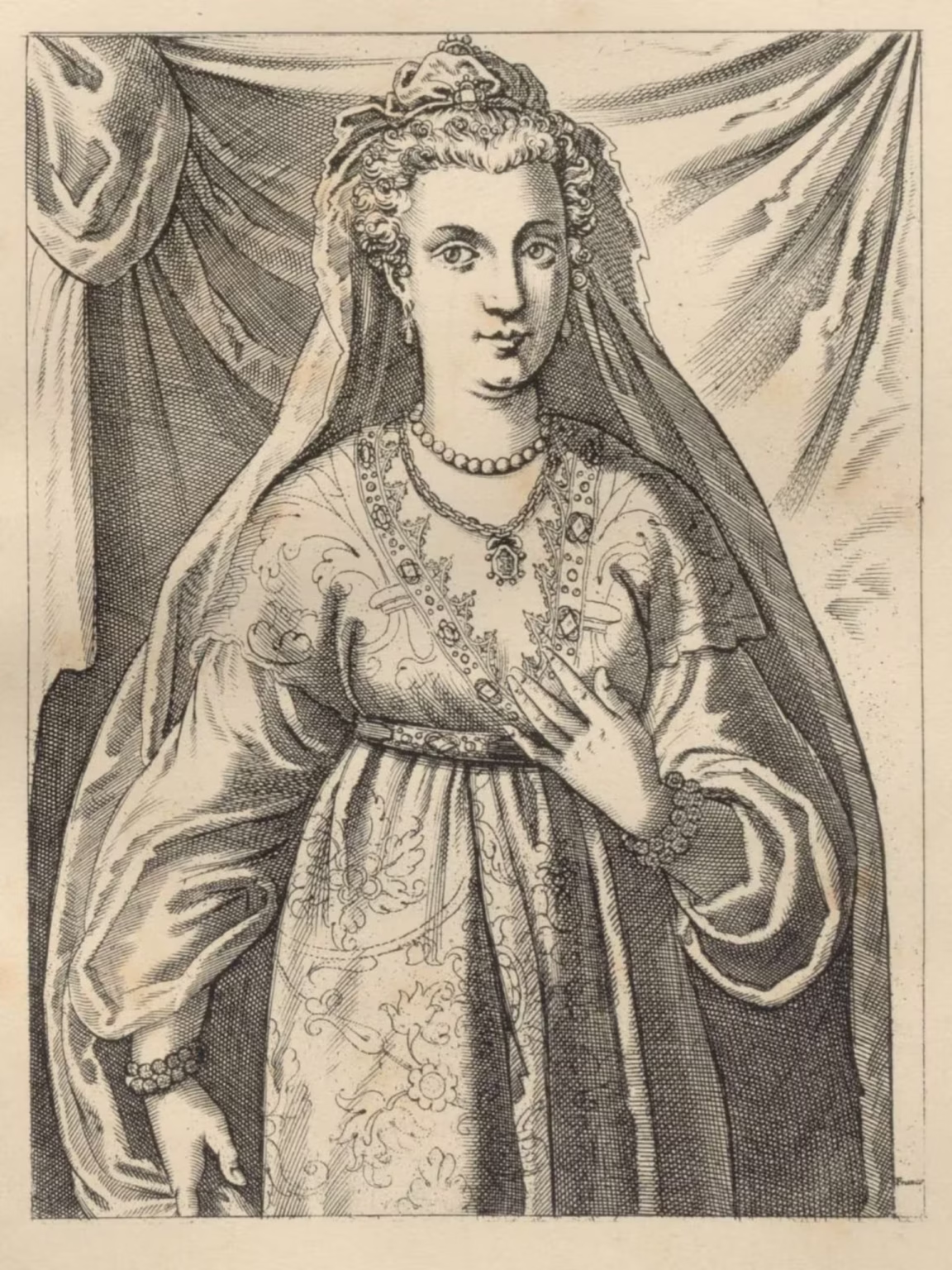
This print depicts a Venetian courtesan dressed for the winter.
Her hair is set in the characteristic Venetian fashion of a crescent moon, her dress of fine brocade has a wide ruff, and she wears a pearl necklace. She has a pair of gloves in her hand.
Compared to the print of a famous courtesan, the outfit is slight less ostentatious.
Source: Habiti delle Donne Venetiane, published by Giacomo Franco, c. 1610, in Venice.
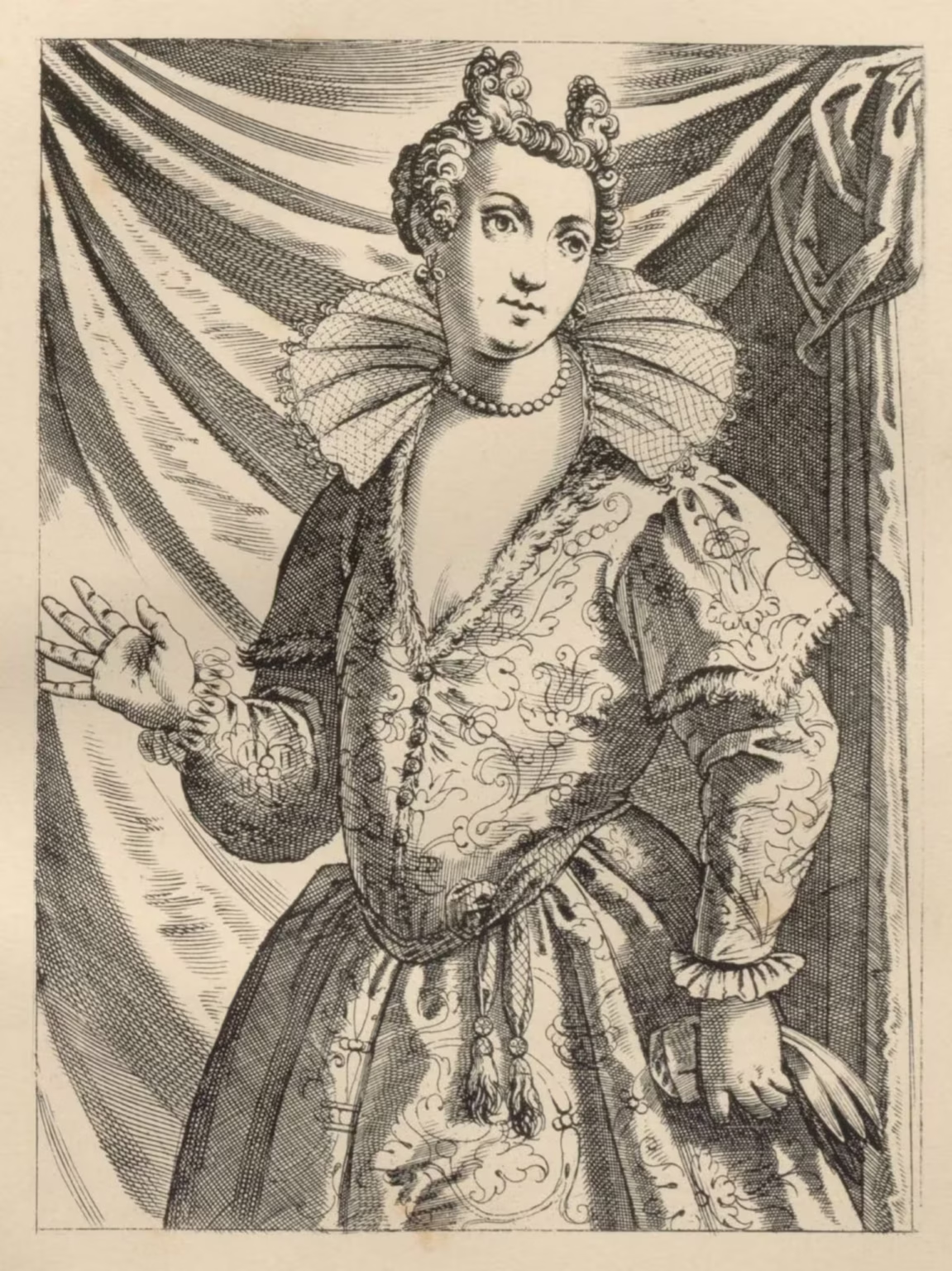
Courtesan dressed for winter
There is no shortage of various smooth fabrics, nor of habits with many ornaments for the prostitutes and dishonourable ladies of this city, who according to the seasons are accustomed to wearing different outfits.
This is a wealthy courtesan, dressed for winter with a garment lined with beautiful furs of great value; thus adorned and charming, she spreads the nets of lust to catch the unsuspecting young men, who hastily fall into the treacherous snares of love.
Original texts
Cortegiana vestita da inverno
Di diverse sorti lisci non mancano, ne habiti di molti ornamenti alle Meretrici, e Signore dishoneste di questa città, lequali secondo le stagioni sogliono portar diversi vestimenti.
Questa è una Cortegiana ricca, vestita da verno con veste fodrata di bellissime pelli di gran valore; laquale cosi ornata, e vaga tende le reti della lascivia per prender gl’incauti giovani, che precipitosamente cadono nelli insidiosi lacci d’amore.
Text from the 1878 edition
A courtisan in winter costume
This class of women naturally fail not to exhibit rich clothing for each season of the year. In this picture one sees a wealthy courtisan in a handsome winter suit lined with costly furs, such as is worn in the streets and squares.
Related articles
- Prostitution in Venice
- A catalogue of Venetian prostitutes
- Chastity hair, with horns
- Habiti d’huomeni et donne venetiane — Giacomo Franco
- Habiti delle Donne Venetiane (c.1610) — Giacomo Franco
Venetian Stories
Related sources
- Catalogue of all the principal and most honoured Courtesans of Venice (translated)
- Catalogo di tutte le principal et più honorate Cortigiane di Venetia (original)
- Meretrici — Lessico Veneto
- Carampane — Dizionario
- Carampane — Lessico Veneto
- Carampane — Curiosità Veneziane
Related images
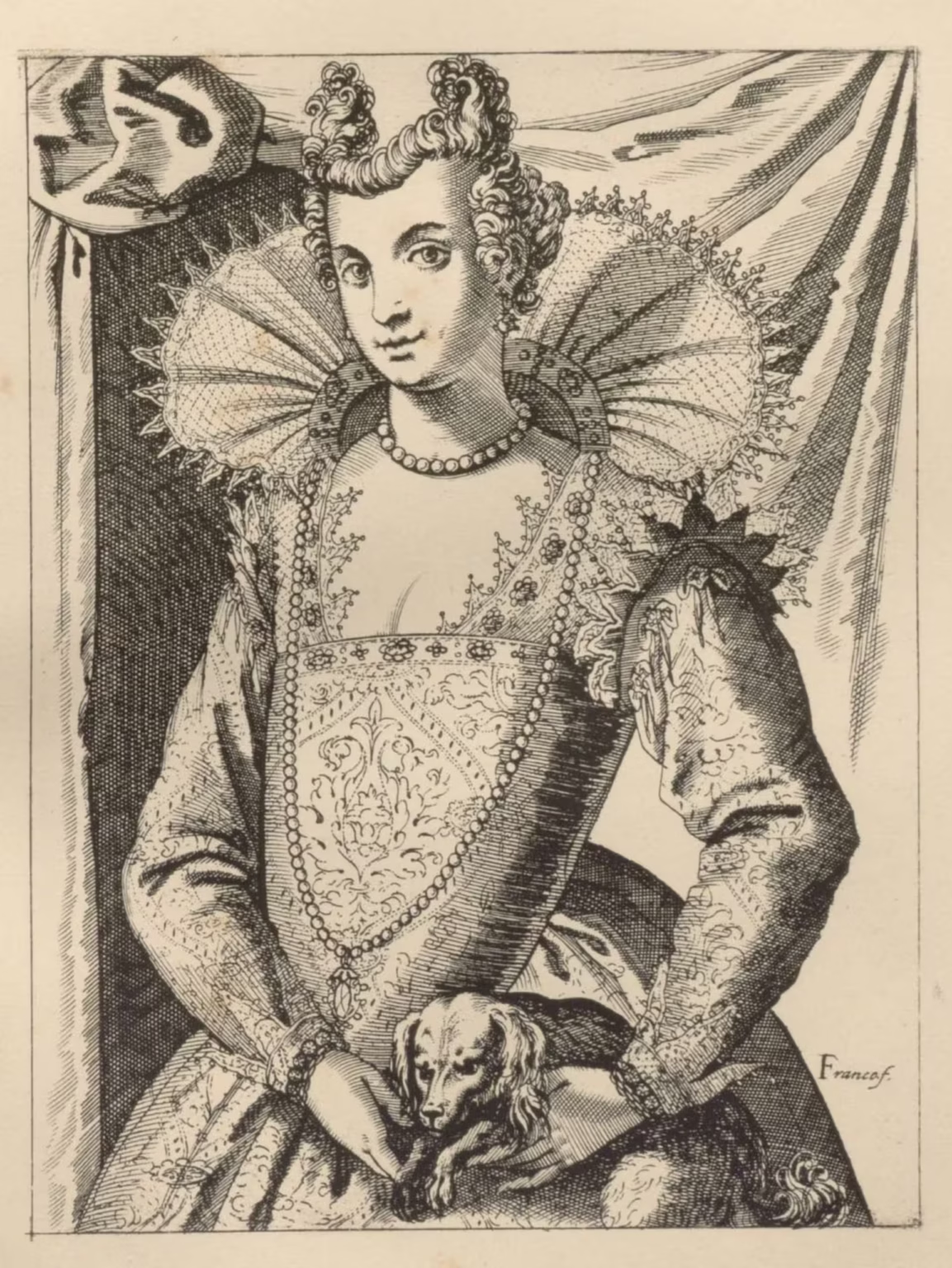
- Cortegiana famosa — Famous courtesan — Habiti delle Donne Venetiane — 10
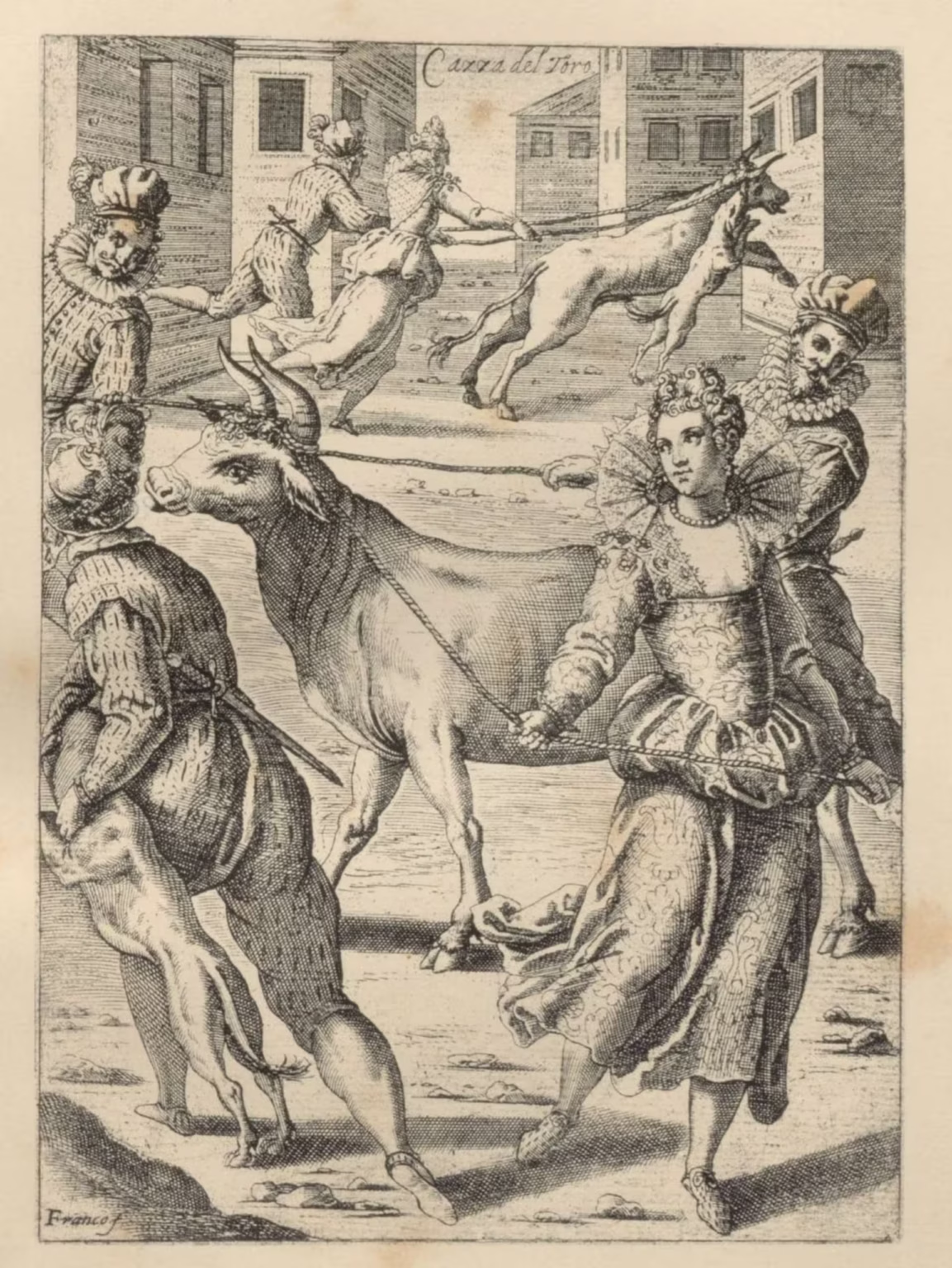
- La cazza del toro — Running with bulls — Habiti delle Donne Venetiane — 12
- Cortegiana vestita a la foresta — Courtesan dressed as a foreigner — Habiti delle Donne Venetiane — 13
- Meretrice — Prostitute — Grevembroch 3–158
- Prostitute al Bordello — Prostitutes in the Brothel — Grevembroch 3–160
- Cortegiana by Rosalba Carriera
- Una che si concia con due specchi — A woman dressing her hair with two mirrors — Habiti delle Donne Venetiane — 8
- Diana acconcia alla venetiana — Diana with Venetian hairstyle — Habiti delle Donne Venetiane — 18
Leave a Reply