
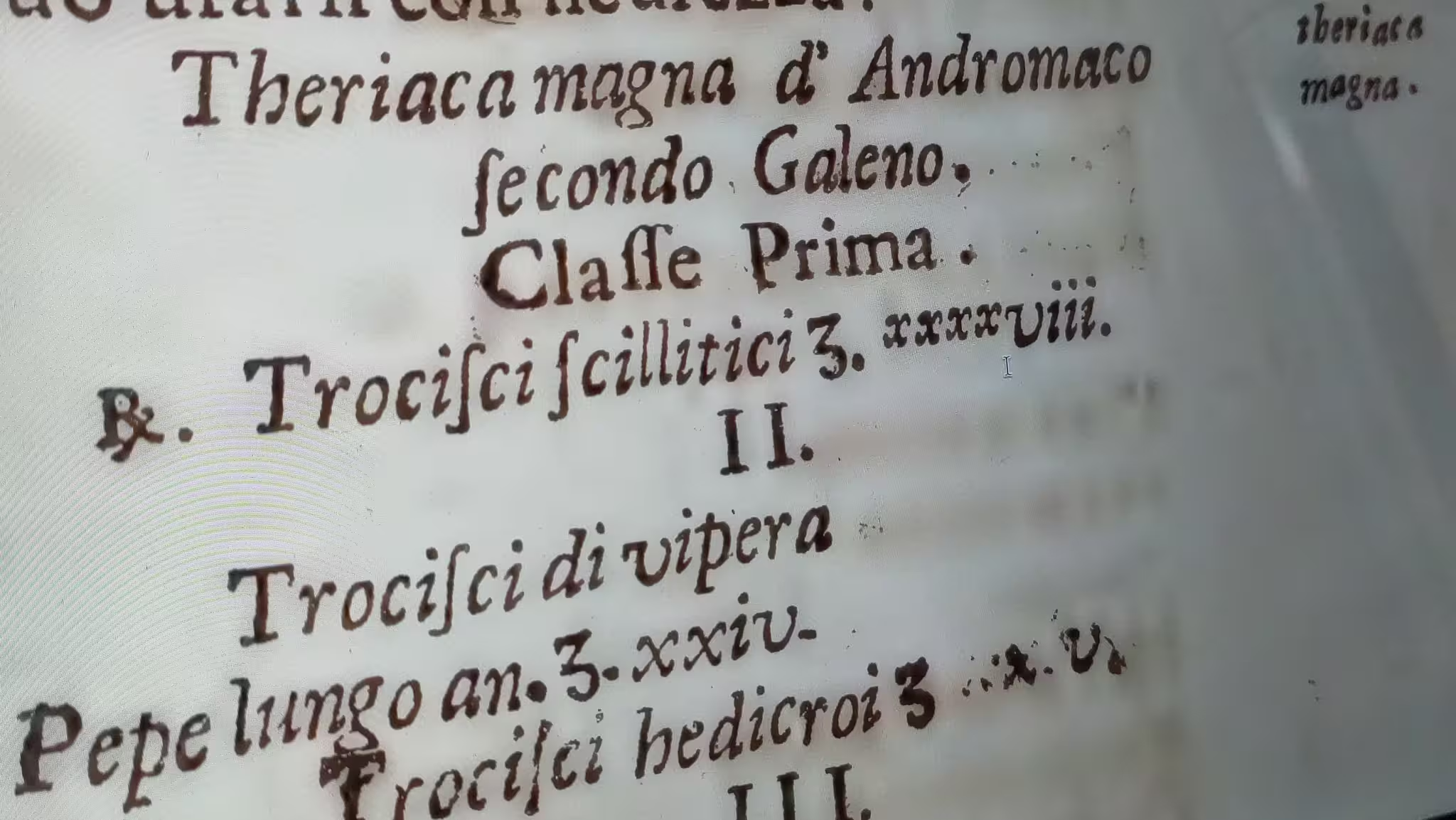
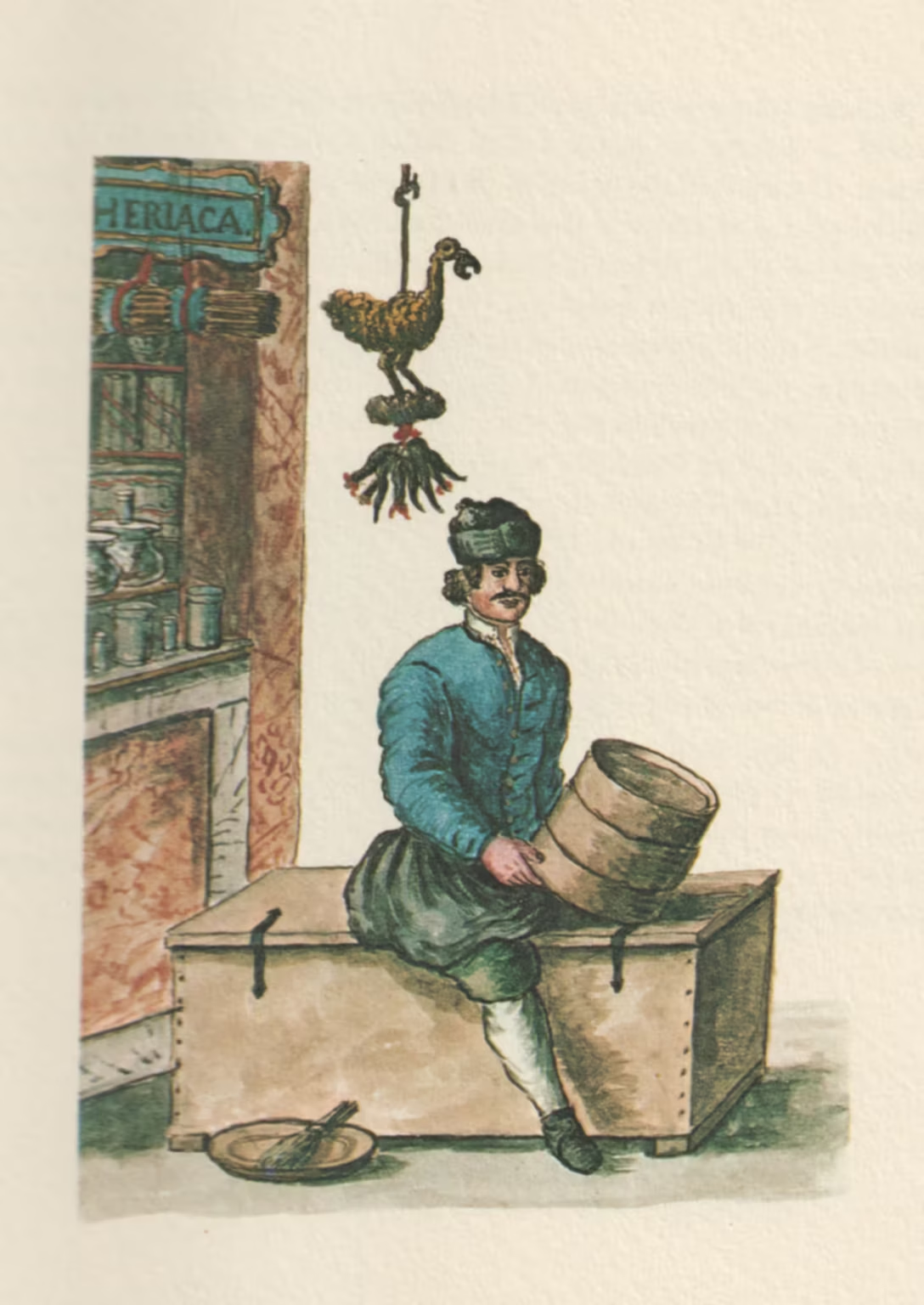
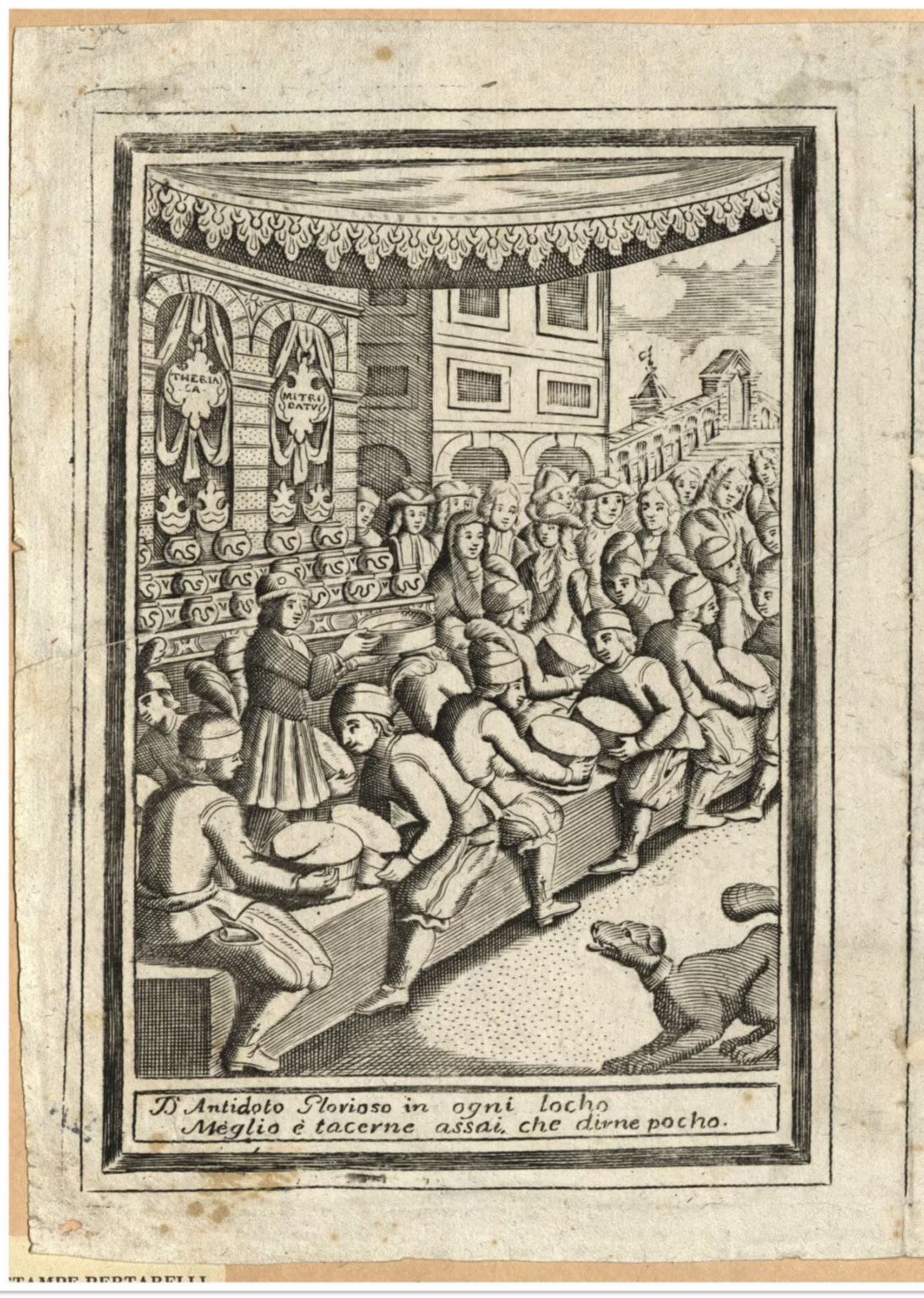
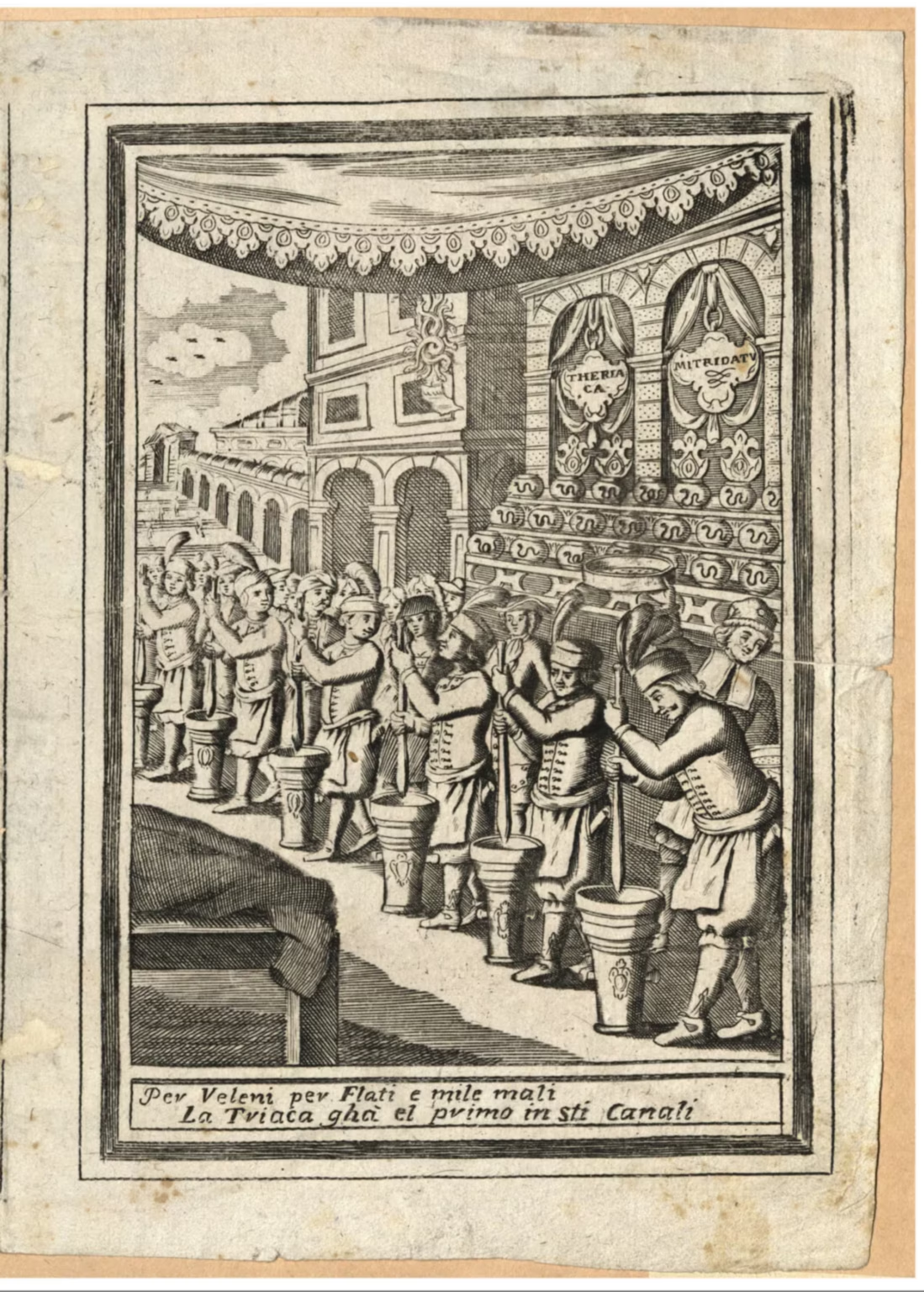
Teriaca (also triaca; English: theriac or treacle) was a kind of wonder medicine and general antidote, of which Venice was the main producer in Europe.
The recipe reproduced below is from the Lessico farmaceutico-chimico contenente li rimedj piu usati d’oggidi, 2nd revised edition of 1734, by Giovanni Battista Capello, spezier in Venice. The first edition was published in 1728, with permission of the superiori of 1727.
Theriac was a Venetian trade secret until 1669, when the French pharmacist Moyse Charas (1619–1698) published the recipe. Before that date, Capello would never have got permission from the superiors to publish the recipe.
Giovanni Battista Capello
Giovanni Battista Capello was born near Salò on the Lake Garda, between 1690 and 1700. He and his brother Arcadio both studied to be spezieri, the pharmacists of the time. From around 1725 Capello held shop “under the sign of the three mounts” in the Campo Sant’Aponal.
Just a few years later, he had earned sufficient reputation to publish the first version of his Pharmaceutical–Chemical Lexicon in 1728. It was an instant bestseller, and was revised and reprinted repeatedly throughout the 1700s, also in other Italian states, such as the Kingdom of Naples.
Capello was elected priore of the Corporation of the Pharmacists several times, and oversaw the official entry exams to become a pharmacist in Venice.
He died on February 13th, 1764.
Theriaca magna
The recipe for theriaca magna appears on pages 299–303 in the 2nd edition of the Lessico farmaceutico-chimico from 1734.
The ingredients are divided into seven classes. The ingredients in the first six classes have the same quantity, while quantities vary in the last class.1
The main measure used is a dracma (dram, symbol Ʒ) which is just over 3g. Eight drachme made an uncia (ounce, c. 25g, symbol ℥), and twelve ounces a (medicinal) libra (pound, c. 301g). A scrupolo was one-third of a dracma (scruple, c. 1g, symbol ℈). The ana- in anadracme in the recipe means ‘at least’.
Trocisci are dried pellets of some substance. The recipe contains three types of trocisci, which had to be prepared separately in advance. The recipes for these are reproduced after the main recipe.
Many of the ingredients are not in commonly used today. I have linked to Wikipedia, where the substance was identifiable and with a relevant article.
Theriaca magna by Andromachus, according to Galen
CLASS I
- Trocisci scillitici — pellets of sea squill or sea onion, Drimia maritima.
dracme XXXXVIII
CLASS II
- Trocisci di vipera — pellets of viper flesh, viper broth and breadcrumbs.
- Pepe lungo — long pepper, Piper longum.
- Trocisci hedicroi — Hedychroum, pellets of a compound of various herbs, spices, seeds and resins.
anadracme XXIV
CLASS III
- Foglie di rose rosse — petals of red roses.
- Iride illirica — Dalmatian iris, Iris pallida.
- Semi di napi — rape seeds, Brassica napus.
- Scordeo cretico — water germander, Teucrium scordium from Crete.
- Canella elletta — electuary of cinnamon, probably a mixture of honey and ground cinnamon, Cinnamomum verum.
- Agarico bianchissimo — very white Agarikon funghi, Laricifomes officinalis.
anadracme XII
CLASS IV
- Mirra trogloditica — myrrh from caves, Commiphora myrrha.
- Costo odorato — Indian costus, Dolomiaea costus.
- Croco ottimo — the best saffron crocus, Crocus sativus.
- Cassia lignea — Chinese cinnamon, Cinnamomum cassia, from China or Southeast Asia.
- Nardo indico — spikenard, or Nardostachys, from India.
- Squinanto — Cymbopogon schoenanthus.
- Incenso — incense.
- Pepe nero — black pepper, Piper nigrum.
- Dittamo cretico — Cretan dittany, Origanum dictamnus.
- Marubio cretico — Marrubium from Crete.
- Rapontico ottimo — the best Rhapontic rhubarb, Rheum rhaponticum.
- Steccade — Spanish lavender, Lavandula stoechas.
- Semi di petrosello Maced. — parsley seeds, Petroselinum crispum, from Macedonia.
- Calaminta montana — lesser calamint, Clinopodium nepeta, from the mountains.
- Zenzero ottimo — best quality ginger, Zingiber officinale
- Radice di pentafilo — root of creeping cinquefoil, Potentilla reptans.
anadracme VI
CLASS V
- Polio montano — felty germander, Teucrium polium, from the mountains.
- Iva artetica — ground pine or yellow bugle, Ajuga chamaepitys.
- Amomo — stone parsley, Sison amomum.
- Meo athamantico — Meum athamanticum.
- Nardo celtico — Valeriana celtica.
- Fù pontico — golden spikenard, Valeriana phu, from Pontus in Anatolia.
- Camedri cretico — wall germander, Teucrium chamaedrys, from Crete.
- Foglio indo — “Indian leaf”, malabathrum, probably Cinnamomum malabatrum, or wild cinnamon.
- Radice di genziana — gentian root, from Gentiana lutea.
- Semi d’aniso — aniseed, seeds of Pimpinella anisum.
- Frutti di balsamo — uncertain, perhaps fruits of tropical species of the genus Impatiens.
- Semi di finocchio cretico — seeds of common fennel, Foeniculum vulgare, from Crete.
- Cardamomo indico — cardamom from India.
- Sesseli di Marsiglia — Seseli tortuosum of the genus Seseli.
- Semi di thlaspi — seeds of pennycress, Thlaspi.
- Cime d’hiperico — extremities of St. John’s wort, Hypericum perforatum.
- Gomma rabica — Gum arabic.
- Ammi cretico — either Ammi majus or Visnaga daucoides, which also went under the name ammi, from Crete.
anadracme IV
CLASS VI
- Castoreo pontico — Castoreum (from beavers) from Pontus in Anatolia.
- Aristologia lunga — pipewine, Aristolochia longa.
- Semi di dauco — likely seeds of Athamanta cretensis, also called dauco cretico.
- Opoponago — Opopanax chironium, probably a resin gum extracted from the stems.
- Centaurea minore — Centaurium erythraea (feverfoullie) or possibly Rhaponticoides centaurium.
anadracme Il
CLASS VII
- Oppio Tebaico, dracme XXIV — opium from Thebes in Egypt.
- Suchio di liquirizia cond. — condensed juice of liquorice.
- Opobalsamo, overo Oglio di noce moscata — oil of nutmeg, Myristica fragrans.
anadracme XII
- Therebinto di Cipro — resin from the tree Pistacia terebinthus.
- Storace calamita — resin from Styrax officinalis, known since antiquity.
- Calcitide — or chalciditis, an iron based sourced from the run-off water of mines, likely iron vitriol, also used to make iron gall ink.
- Succhio d’hipocistide — juice of Cytinus hypocistis.
- Terra Lemnia — earth from the Greek island of Lemnos, which since antiquity was believed to be an antidote to many poisons, and to heal wounds. Also known as terra sigillata.
- Succhio d’acacia — Acacia juice.
dracme VI
- Serapino — Sagapenum, a resin gum of Ferula persica or Ferula szowitziana.
- Bitume giudaico — Bitumen of Judea, which is naturally occurring asphalt in the Dead Sea.
anadracme IV
- Galbano puro — Galbanum, a resin gum made from Ferula gummosa, from Persia.
anadracme II
- Miele spumato — skimmed honey.
- Malvagìa di Candia an.q.b. — Malvasia was a wine, which was very popular in Venice, from Crete.
as much as needed
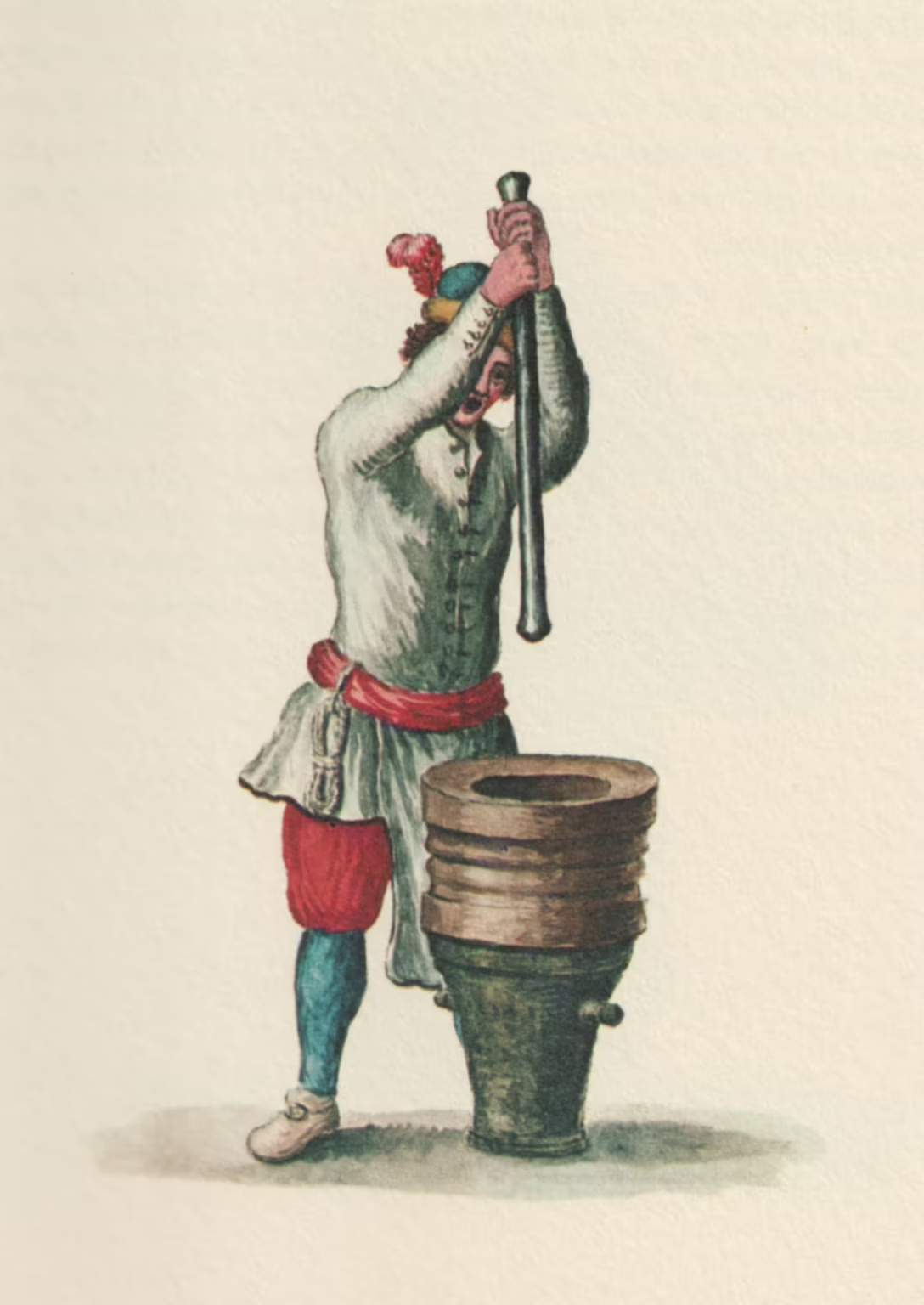
All the things of the first six classes are crushed a little, first crushing the hard ones, and adding the more humid and oily ones to the dry ones: thus coarsely crushed, all are mixed together in a large copper basin, stirring them diligently: then they are crushed, passing them through a fine silk sieve: at the same time dissolve the opium, the liquorice juice, the hypocystis, the acacia in the wine and once strained they thicken to the shape of apples: Likewise, the serapino and the galbanum are infused for a night in a sufficient quantity of wine, and once well dissolved, they are strained, reducing them to the form of honey: the Lemnian earth, the Jewish bitumen, and the chalciditis, are ground separately on porphyry2 with a sufficient quantity of wine, then mixed together in the form of syrup: and finally, dissolve the storax with the opobalsamo and terebinth over a very low heat, straining them through a sieve of horse mane hair if by chance they are not pure. Once everything has been prepared according to the most solid laws of the art, make the composition. Having skimmed the honey, and taken a pound for three ounces of spices, put it back in a very large tinned copper cauldron over a low heat, stirring constantly with a wooden spatula, and sprinkle the powders in. After a little while, the thickened juices are added, followed by the hot gums. Once the mixture has been well stirred, add the storax, melted over a very low heat, and finally the ground ingredients on the porphyry, stirring diligently for three hours at a time.
The Theriaca should be placed in tin or varnished earthenware vases, shaking it occasionally for eight continuous days.
It should be kept tightly closed for the next six months and should not be used beforehand without the doctor’s specific orders, which must be observed in all opiate compositions.
Dose from one to three scruples.
Theriaca is suitable where there is a need to warm and moderate the irregularities of the spirit: from these two properties, the Physician must know how many ailments it can be useful for.
Capello (1734), p. 299–303.
Compound ingredients
Sea onion pellets
Trociſci di ſquilla
- Pulp of cooked squill (sea squill or sea onion), 3 parts.
- Flour of white seeds of bitter vetch (Vicia ervilia), 2 parts.
To be ground diligently in a mortar of stone, and one makes thin pellets with the hand covered in oil of nutmeg.
N.I. The squill is cooked in the oven wrapped in common dough, or clay. When the dough is cooked, the squill is removed, and stripped of the outer leaves, ground in the mortar, and passed through a sieve of horse mane hair.
They can serve those afflicted by viscous humours of the stomach; but presently they have no other use than in the Theriaca magna.
Capello (1734), p. 328–329.
Viper pellets
Trociſci di Vipera
- Viper flesh, 4 parts.
- Breadcrumbs, 1 part.
- Viper broth, as needed.
One makes thin pellets to be coated with opobalsamo, or in its place, with oil of nutmeg.
Dose from one dram to two.
N.I. The vipers to be purged of the head, tail, skin and interiors, and diligently washed.
N.II. The cleaned vipers must be cooked in water with a bit of dill, and salt, until the flesh separates from the bones.
They serve against venomous bites of animals, for all defects of the skin, and against pestilential and malignant fevers.
Capello (1734), p. 330.
Hedychroum pellets
This is a complex recipe, and many of the ingredients are repeats from the main recipe of Theriaca magna.
Trociſci Hedicroi
- Aspalato — an unknown species of fragrant Indian wood.
- Radice d’assaro — root of hazelwort, Asarum europaeum.
- Maro cretico — cat thyme, Teucrium marum.
- Amaraco an.Ʒ, ii. — marjoram, Origanum majorana.
Gionco odorato — galingale, Cyperus longus.- Calamo aromatico — muskrat root, Acorus calamus.
- Phù di Ponto — golden spikenard, Valeriana phu, from Pontus in Anatolia.
- Costo dolce — Indian costus, Dolomiaea costus.
- Silobalsamo — balsam wood, Commiphora gileadensis.
- Opobalsamo — sap of balsam, Commiphora gileadensis.
- Canella an.Ʒ ii. — cinnamon, Cinnamomum verum.
- Foglio indo — “Indian leaf”, malabathrum, probably Cinnamomum malabatrum, or wild cinnamon.
- Mirra — myrrh, Commiphora myrrha.
- Nardo indico — spikenard, or Nardostachys, from India.
- Cassia lignea — Chinese cinnamon, Cinnamomum cassia, from China or Southeast Asia.
- Zaffarano an.Ʒ. vi. — saffron crocus, Crocus sativu.
- Amomo Ʒ. xii. — stone parsley, Sison amomum.
- Mastici Ʒ. i. — mastic, a resin from Pistacia lentiscus.
- Vin Falerno q.b. — Falernian wine, as much as needed.
Grind every ingredient slowly, except the mastic, which one must only pulverise, to be mixed with the wine.
Galen says that these pellets, dissolved in Falernian wine, healed a rich man, burdened by a dangerous ozaena.
With us, they don’t have other use than in the Theriaca magna.
Capello (1734), p. 327.
Notes
- Mutinelli reproduces a slightly different list of ingredients for teriaca in his Lessico Veneto. See Teriaca — Theriac — Lessico Veneto, but there are many variations. ↩︎
- Porphyry is a kind of granite, which is very dense and smooth, so ingredients could be ground very fine. ↩︎
Related articles
Venetian Stories
Related sources
Related images
- Fabricatore di Teriaca — Maker of Theriac — Grevembroch 3-127
- Facchini — Labourers — Grevembroch 3-120
- The preparation of Theriac — two prints (1600s)
Bibliography
- Ahnfelt, Nils-Otto, Hjalmar Fors and Karin Wendin. Making and taking theriac: an experimental and sensory approach to the history of medicine in BJHS Themes (2022), 7, 39–62. 2022. [more] 🔗
- Baldini, Ugo. CAPELLO, Giovanni Battista in Dizionario Biografico degli Italiani – Volume 18. Treccani, 1975. 🔗
- Capello, Giovanni Battista. Lessico farmaceutico-chimico contenente li rimedj piu usati d'oggidi. Di Gio. Battista Capello, Speziale all’ Insegna de’ tre Monti in Campo Sant'Apollinare. In Venezia per Domenico Lovisa, 1734. [more] 🔗
- Raj, Danuta, Katarzyna Pękacka-Falkowska, Maciej Włodarczyk and Jakub Węglorz. The real Theriac – panacea, poisonous drug or quackery? in J Ethnopharmacol. 2021 Dec 5. 2021. [more] 🔗
Leave a Reply