Gentlemen’s Dress
Giuseppe Boerio (1754-1832) published his Dizionario del Dialetto Veneziano (Dictionary of the Venetian Dialect) in 1829 (2nd ed. 1856, 3rd ed. 1867). It is an invaluable tool for anybody who reads texts from the time of the Republic of Venice.
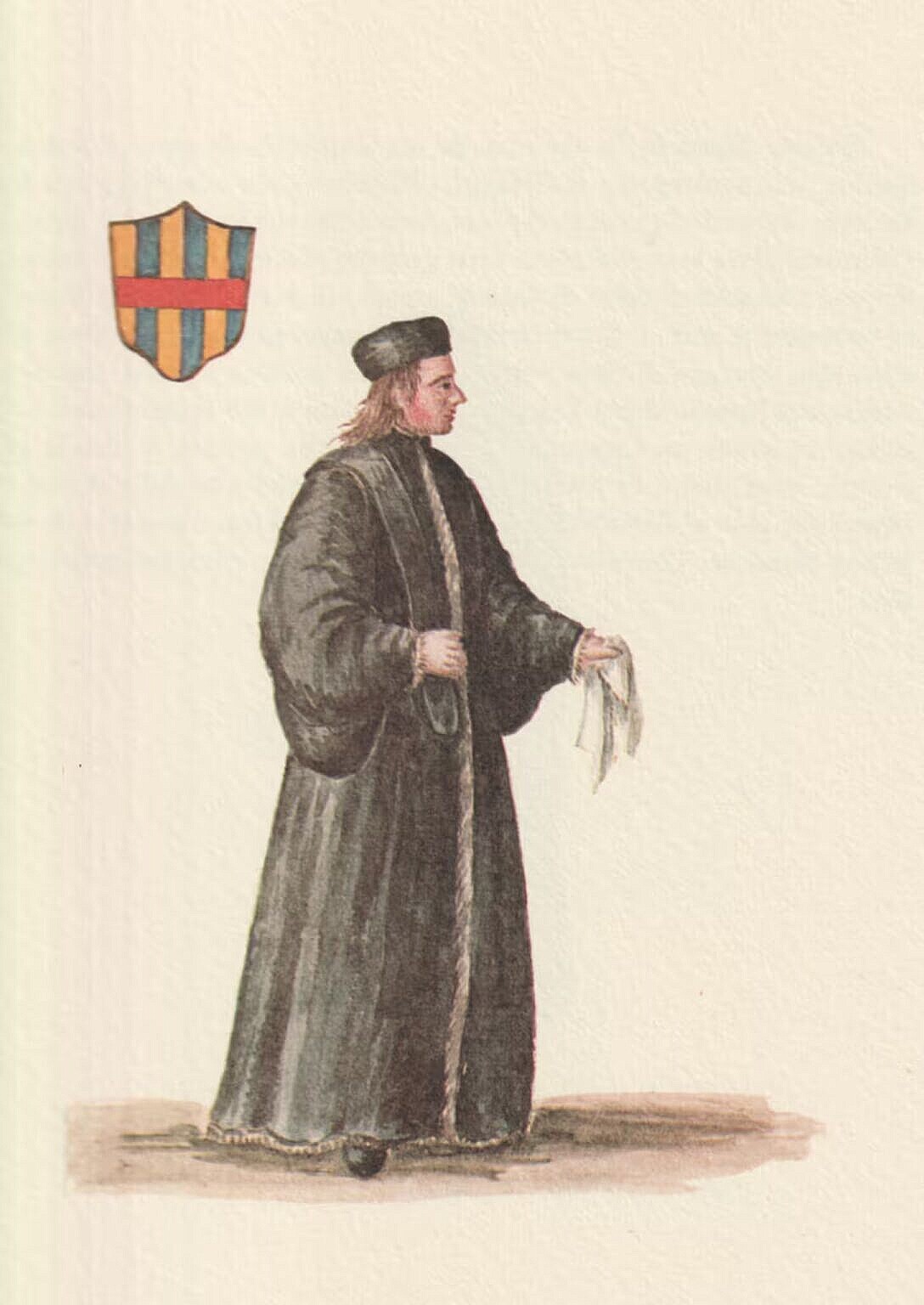
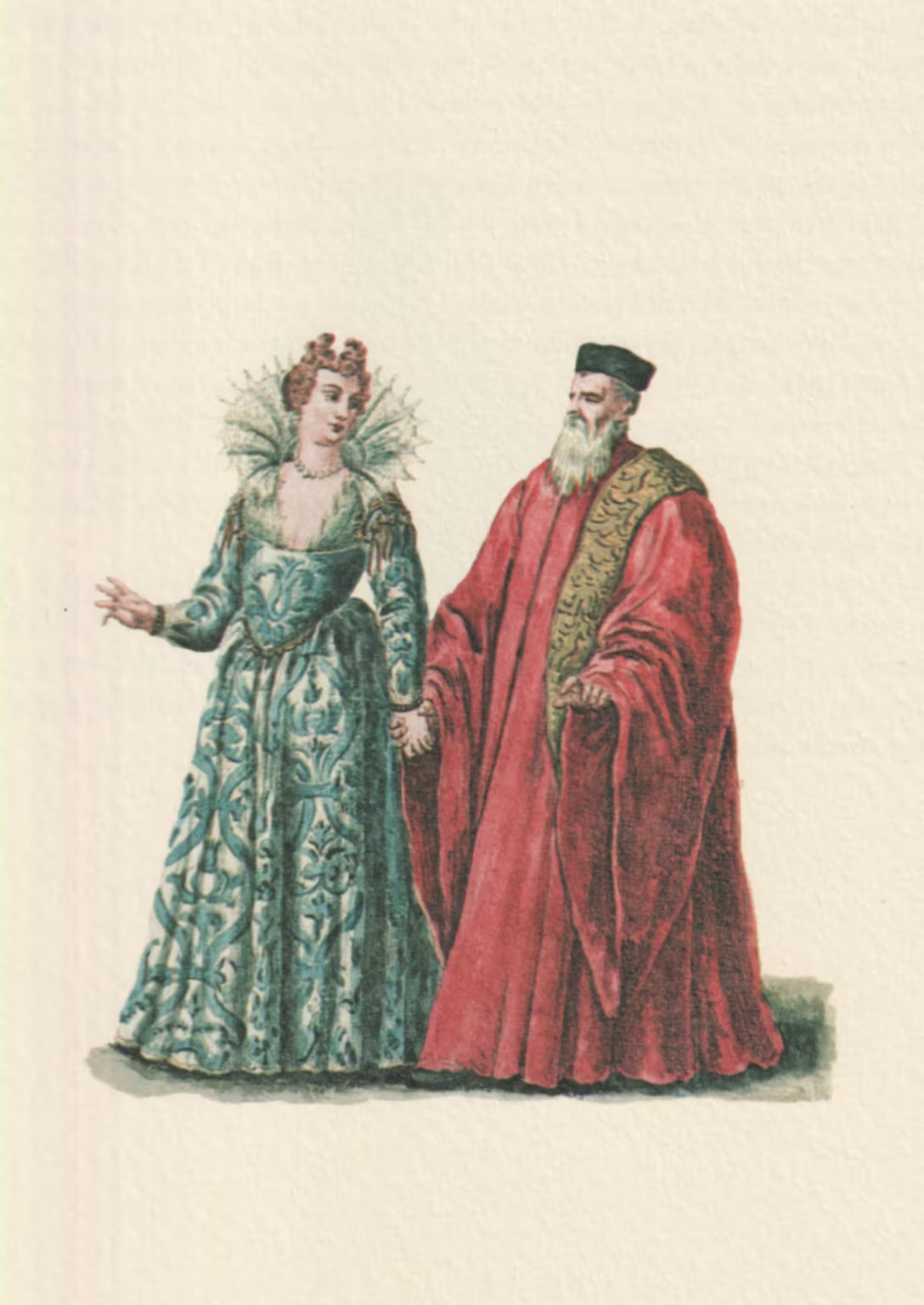
VESTA DA ZENTILOMO; s.f. Vesta patrizia, This was the name given at the time of the Venetian Republic to that toga of black cloth in the Greek fashion, with which the Venetian Patricians and also the Citizens exercising certain public functions, such as Secretaries, Fiscal Lawyers, Notaries of Magistrates, Lawyers and the like were to be covered when they attended to their Magistracies and offices. It had very wide sleeves and in the cold season it was worn over the usual dress. In the times of the summer, it was worn loose at the front, but in winter, it was fastened at the waist, that is, it was edged with broad strips of skins called Fende, with a belt surrounded by the loins. This was the national dress of the Venetians, which was used, for many centuries, even by vulgar people, even boatmen and fishermen, as we gather especially from the Poem on the war between the Castellani and the Nicolotti which took place in the year 1521 and from many other documents. Calmo said in a letter, praising the customs of Venice in comparison with those of Rome, And we wisely wear the long robes, which are the plate of the legs and the cuirass of the waist. These are its accessory parts that we have seen in our day.
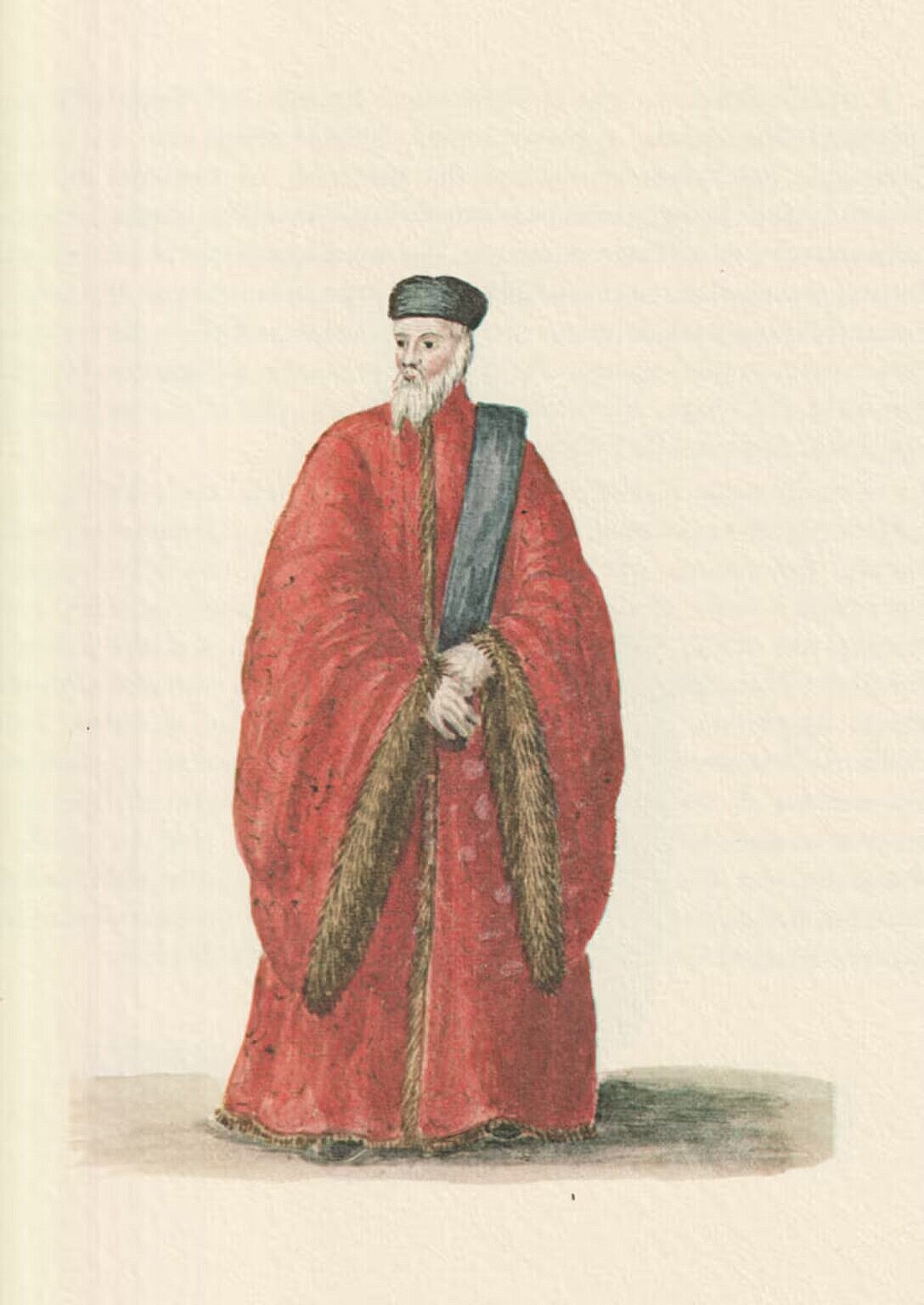
Stola de la vesta, Stole was a Piece or Strip of the same black cloth two arms long that was worn mostly hung with a buttonhole on the left shoulder and with half to the front and half to the back of the person. This stole was then kept folded and hanging in the hand when the patrician or citizen asked for employment or other favor from the government or the magistrates; and it was called Stola calata; and hence calare stola in the sense of Asking or Applying. V. Brogiar.1 Such a stole was used in ancient times for the custom of wrapping up and sheltering one’s head from the harshness of the season, as the Turks do with a piece of cloth of that size. The heads of the Council of Ten2 and the Avogadori del Comun3 wore the red stole.
Ropiglia, was called a kind of Cintino or Skirt of black silk, which in summer times the Patricians wore, fastened to the loins under the toga, that is, when it was untied in front; which skirt covered up to below the knees. This Ropiglia was before our years worn and kept, for ordinary custom, by the patricians alone in the summer after dinner with a black undercoat, but without a toga, for the distinction of the patriciate.
Centura de la vesta, Belt or Girdle, A kind of black belt or band, adorned with silver buckles, which was fastened to the loins above the toga, and kept it closed and fastened at the waist in winter times. The Cavalieri della stola d’oro4 wore it with gold buckles for the distinction of their rank.
Bareta de la vesta, Cap. It was of black-dyed wool, covered with silk, very comfortable and long: with it the patricians in ancient times and before the fashion of wigs, covered themselves, superimposing the stole on it in case of rain, as the Turks also do today; then the wigs were introduced, in our days, the Cap is worn in the hand for accessory and finish of the public dress. When the Doge was absent from the College, the senior Councillor who sat immediately to the right of the throne, covered himself with the cap instead of the corno and thus performed the functions of the Doge, but without occupying his place.
Fende de la vesta, were called the two fronts or parts of the dress, which joined at the front in winter times and formed the Fenditura or the Sparato, which fronts were provided or edged with strips of fur five fingers wide across; and they were properly called Fende the same furs.
Vesta segnada, Veste segnata was that of purple or red colour, worn by some patricians constituted in dignity or in some distinguished magistracy, such as the Procurators of St. Mark and the Knights of the golden stole elected for life, as well as the Councillors, the Sages, the Censors and the Lawyers of the Municipality; and finally the Grand Chancellor — Esser vesta segnada, said fig. Have the red belt, Have a mark of distinction that gives respect.
Meter vesta, To put on the robe or toga, To enter the forum.
Vesta ducal, V. Ducal.
Translator’s notes
- The Broglio or brolo was an area in Piazza San Marco, where the Venetian nobility met before the sessions of the Maggior Consiglio, to discuss matters more informally. ↩︎
- The Consiglio di Dieci (Council of Ten) oversaw state security and sat a court for the prosecution of crimes against the state and in cases against patricians.. ↩︎
- The Avogadori de Comùn served as public prosecutors, and as guarantors of the legality of the political and administrative procedures of the Republic of Venice. ↩︎
- A patrician, who was a Cavaliere di San Marco was styled Cavaliere della stola d’oro, and wore a golden stola. ↩︎
Italian original
VESTA DA ZENTILOMO; s.f. Vesta patrizia, Così chiamavasi ai tempi della Repubblica Veneta quella Toga di panno nero all’uso greco, di cui andavano ricoperti i Patrizii Veneti ed anche i Cittadini esercenti alcune pubbliche funzioni, come Segretarii, Avvocati fiscali, Notai de’ Magistrati, Avvocati e simili quando attendevano alle loro Magistrature ed uffizii. Essa aveva maniche larghissime e nella stagione fredda vestivasi sopra l’abito d’uso. Ne’ tempi di state portavasi sciorinata al davanti, ma nell’inverno serrata alla vita, fornita cioè bordata di strisce larghe di pelli dette FENDE, con una cintura attorniata ai lombi. Questo era l’abito nazionale de’ Veneziani, che fu usato, per molti secoli, anche dalle persone volgari, sino dai barcaiuoli e da’ pescatori, come raccogliesi specialmente dal Poemetto sul la guerra tra i Castellani e i Nicolotti avvenuta l’anno 1521 e da tanti altri documenti. Disse il Calmo in una lettera, lodando gli usi di Venezia in confronto di quelli di Roma,
E nu saviamente portemo le veste longhe, che xe targa de le gambe e corazzina de la vita. Ecco le sue parti accessorie che abbiam veduto a’ nostri giorni.
Stola de la vesta, Stola era un Pezzo o Striscia dello stesso panno nero lunga due braccia che portavasi per lo più appiccata con asolo sull’omero sinistro e riferiva mezzo al davanti e mezzo al di dietro della persona. Questa Stola tenevasi poi affaldata e pendolone in mano quando il Patrizio o il Cittadino chiedeva impiego o altro favore al Governo o alle Magistratu re; e dicevasi Stola calata; e quindi Calare stola in signif. di Chiedere o Far le pratiche. V.Brogiar. Sì fatta Stola serviva proprio ne’ tempi antichi all’ uso d’imbacuccarsi e ripararsi il capo dalla rigidezza della stagione, come fanno tuttavia i Turchi con un pezzo di panno di quella taglia. I capi del Consiglio de’ Dieci e gli Avvogadori del Comune portavano la stola rossa.
Ropiglia, chiamavasi una specie di Cintino o Gonnellino di seta nera, che nei tempi estivi portavano i Patrizii, affibbiato ai lombi sotto la toga, quando cioè essa era sciorinata davanti; il qual gonnellino copriva sin sotto le ginocchia. Questa Ropiglia era prima de’ nostri anni portata e tenuta, per abito di costume ordinario, dai soli patrizii nell’estate il dopo pranzo col sott’abito nero, ma senza toga, per distinzione del patriziato.
Centura de la vesta, Cintura o Cinto, Specie di cintura o fascia nera, ornata di borchie d’argento, che stava affibbiata ai lombi sopra la toga, e la teneva chiusa e serrata alla vita ne’ tempi d’inverno. I Cavalieri della stola d’oro la portavano colle borchie d’oro per distinzione del loro grado.
Bareta de la vesta, Berretta. Era di lana tinta in nero, soppannata di seta, assai comoda e lunga: con essa i Patrizii nei tempi antichi e prima della moda delle parrucche, coprivansi, soprapponendovi nel caso di pioggia la stola, come fanno presentemente anche i Turchi; introdotte poi le parrucche, la Berretta a’ nostri giorni portavasi in mano per corredo e finimento dell’abito pubblico. Quando nel Collegio mancava il Doge, il Consigliere anziano che sedeva immediatamente alla destra del trono, coprivasi della berretta in vece di corno e faceva così le funzioni del Doge, ma senza occuparne il posto.
Fende de la vesta, chiamavansi le due mostre o parti della vesta, che si riunivano sul davanti ne’ tempi d inverno e formavano la Fenditura o sia lo Sparato, le quali mostre erano fornite o bordate di strisce di pelli larghe cinque dita trasversi all’incirca; e dicevasi propriamente FENDE alle stesse pelli.
Vesta segnada, Veste segnata era quella di color paonazzo o rosso, che portavano alcuni patrizii costituiti in dignità o in qualche magistratura distinta, come i Procuratori di S. Marco e i Cavalieri della stola d’oro eletti a vita, non che i Consiglieri, i Savii, i Censori e gli Avvogadori del Comune; e finalmente il Gran-cancelliere — ESSER VESTA SEGNADA, detto fig. Avere il cintolin rosso, Avere una marca di distinzione che fa rispettare.
Meter vesta, Porsi indosso la vesta o toga, Entrar nel foro.
Vesta ducal, V.Ducal.
Related articles
Related sources
Related images
Leave a Reply