Teriaca (also triaca; English: theriac or treacle) was a kind of wonder medicine and general antidote, of which Venice was the main producer in Europe.
The origins of Theriac goes back to Roman times, with Andromachus, the physician of Nero, and before him, to Mithridates of Pontus, in Asia Minor.
The recipe was very complex, consisting of around sixty ingredients.
The Lessico Veneto (Venetian Vocabulary) by Fabio Mutinelli was published in 1851. It is an invaluable tool for anybody who reads texts from the time of the Republic of Venice.
Fabio Mutinelli (1797-1876) was director of the I. R. Archivio Generale di Venezia (1847-1861), and a prolific writer on the history of Venice.
THERIAC. This famous compound preparation, from the Greek Andromachus,1 which, in the empiricism of past centuries, was revered as having a singular virtue, was predominantly prepared by the Venetians, who had learned the method from the Greeks and the Arabs.
The drugs, which only the Venetians received in their original form,2 the carefully established rules by the government to be observed in the preservation of the original, and very peculiar, recipe of the compound, the selection and identification of the aromatics and other substances, the precision and uniformity of the handling, and finally the public oversight by the Magistrate of Health3 to ensure that all the aforementioned rules were exactly followed, contributed to establishing, among other nations, a superior excellence for this native manufacture, applied everywhere in medical practices.
So much so that the peoples of the Orient themselves, who had long been the sole guardians and manipulators of the secret of Andromachus, no longer trusted any other theriac except the Venetian one, which for centuries had been almost exclusively dispensed by the pharmacy under the sign of the Golden Head near the Rialto Bridge.
Translator’s notes
- Andromachus the Elder was the physician of Roman emperor Nero during his reign in the first century, and supposedly the inventor of Theriac. ↩︎
- The role of Venice as a trading hub, especially between the Levant and Western Europe, meant that Venice had preferential access to many of hte ingredients of theriac. ↩︎
- The Magistrato alla Sanità (Magistracy of Health) had broad powers over everything public health related, which besides the lazzaretti, also included inns, prostitutes, pharmacies, doctors, rubbish collection, water supply etc. . ↩︎
Original text
TERIACA. Questo celebre lattovario, del greco Andromaco, il quale, nell’empirismo dei passati secoli, fu venerato siccome avente una singolare virtù, veniva per eccellenza preparato da’ Veneziani, che appreso ne avean il modo dai Greci e dagli Arabi.
Le droghe poi, che i soli Veneziani ricevevano ingenue, le regole avvedutamente stabilite dal governo da osservarsi nella conservazione della qui appresso originale, e molto bizzarra, ricetta della composta, la scelta e il riconoscimento degli aromati e delle altre sostanze, la esattezza e la uniformità della manipolazione, e finalmente il pubblico intervento del Magistrato di Sanità affinchè fossero esattamente adempite tutte le regole anzidette, contribuirono a stabilire presso le altre nazioni una superiore eccellenza a questa patria manifattura, applicata ovunque in que’ di agli usi della medicina.
Di guisa che gli stessi popoli di Oriente, che erano stati già i soli custodi e i soli manipolatori del segreto di Andromaco non prestarono più fede ad altra teriaca fuorchè alla Veneziana, di cui, da secoli, pressochè unica dispensatrice fu la farmacia alla insegna della Testa d’oro presso il ponte di Rialto.
Theriaca Magna Andromaci Senioris , ex Gal,
Prima Classis.
Trochiscorum Stilliticorum
II.
Trochiscorum de viperis
Trochiscorum Hedycrh
Piperis longi
Opii ThebaiciIII.
Foliorum rosarum rubrarum
Rad. Iridis Illiricae
Succi Glycyrhizae concreti
Seminis Budian, agrestis
Scordii Cretici
Liquoris Balsami
Cinamomi tenuis
Agarici albissimiIV.
Mirrhae Troglodyticae
Costi odorati
Croci optimi
Cassiae ligneae
Nardi Indicae
Iunci Arabici
Thuris masculi
Piperis nigri
Dictamni Cretici
Marrubii Cretici
Rhapontici optimi
Staechadis Comarum
Sem. Petroselini Maced.
Calaminthae montanae
Lacr. Terebinth. Cypr.
Zingiberis optimi
Radicum quinquefoliiV.
Polii montani Cretae
Chamaepityos.
Styracis calamitae purissimae
Amomi racemosi
Meii Athamantici
Nardi Celticae
Rubricae Lemniae
Phu Pontici
Chamaedryos Cretici
Folii malabathri
Chalcitidis semiassatae
Radicis Gentianae
Sem. Anisorum
Balsami fructus.
Succi Hypocistidis
Gumm. Arab. vermicularis
Seminis foeniculi Cretici
Cardamomi Indici
Seselios Massiliensium
Lacrymae nigrae spinae
Seminis Thlaspios
Summitatum Hyperici
Sagapeni lacrymae
Ammios CreticiVI.
Castorei Pontici
Aristolochiae longae
Seminis Dauci
Bituminis Judaici
Opoponacis lacrym.
Centaurae min, comarum
Galbani puri
Mellis despumati
Vini malvatici quantum satis est ad dissolv, concreta
Misce secundum artem, fiat antidotum
Related articles
Venetian Stories
Sources
- A Theriac recipe (1734)
- A Theriac advertisement (1688)
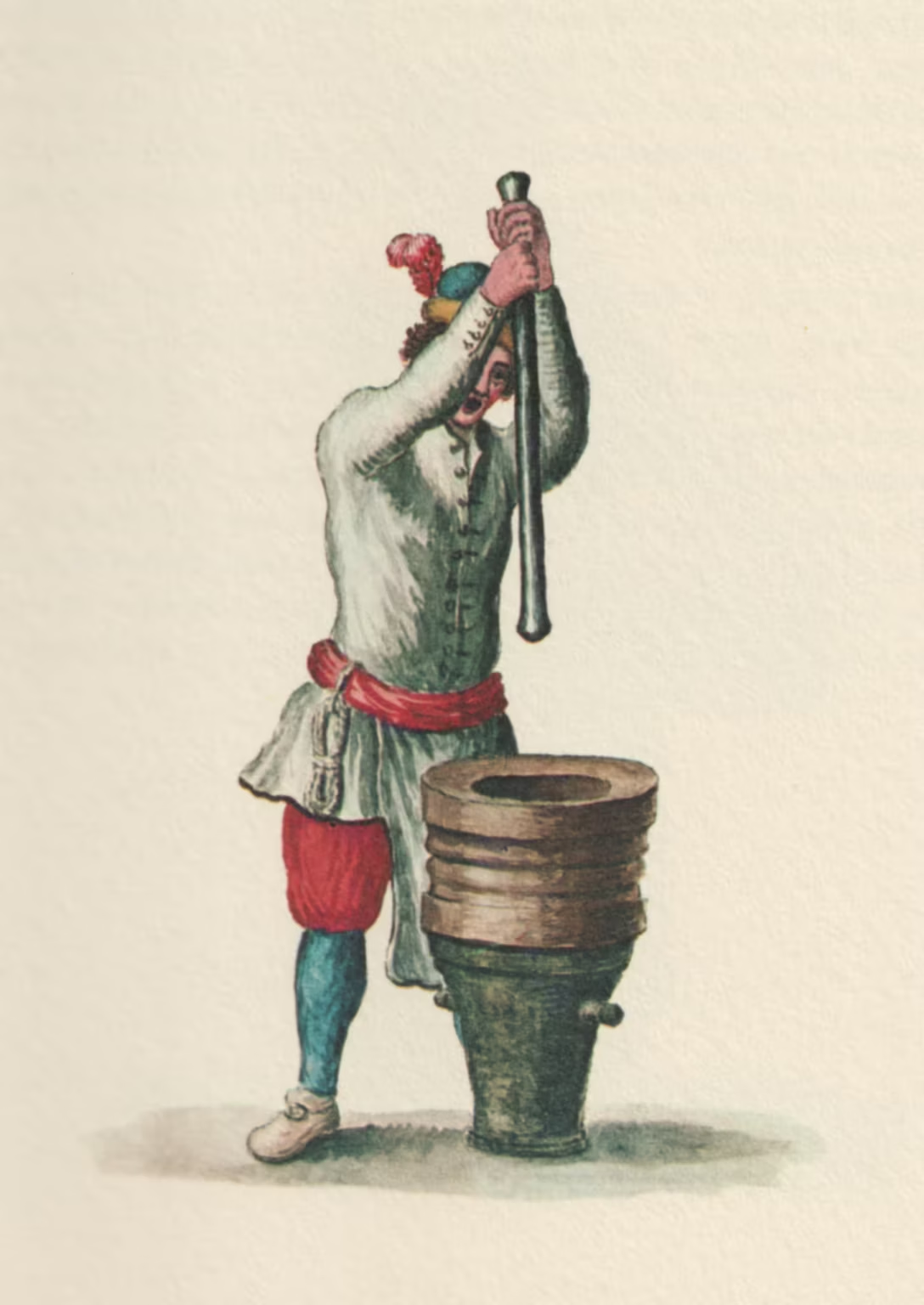
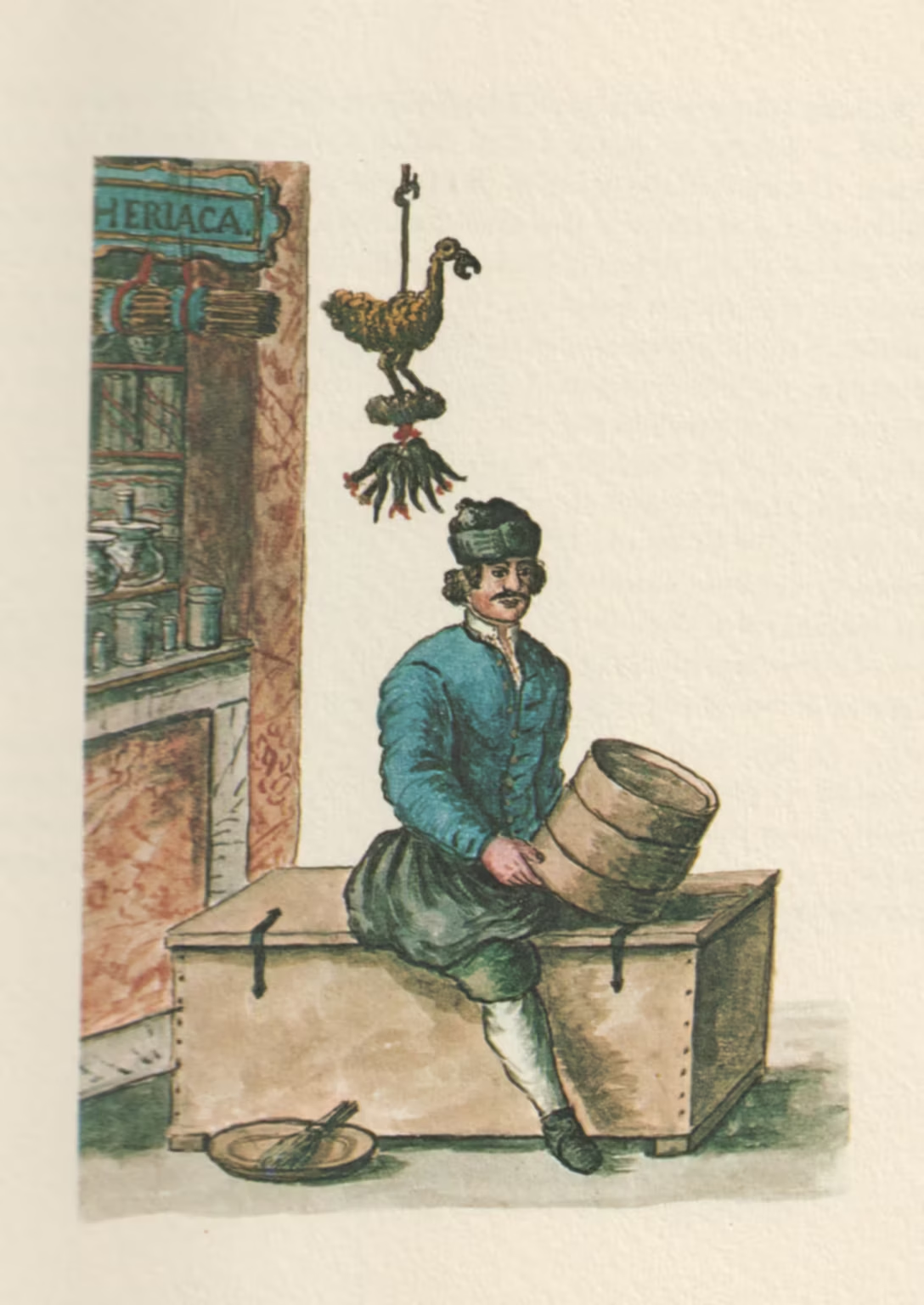
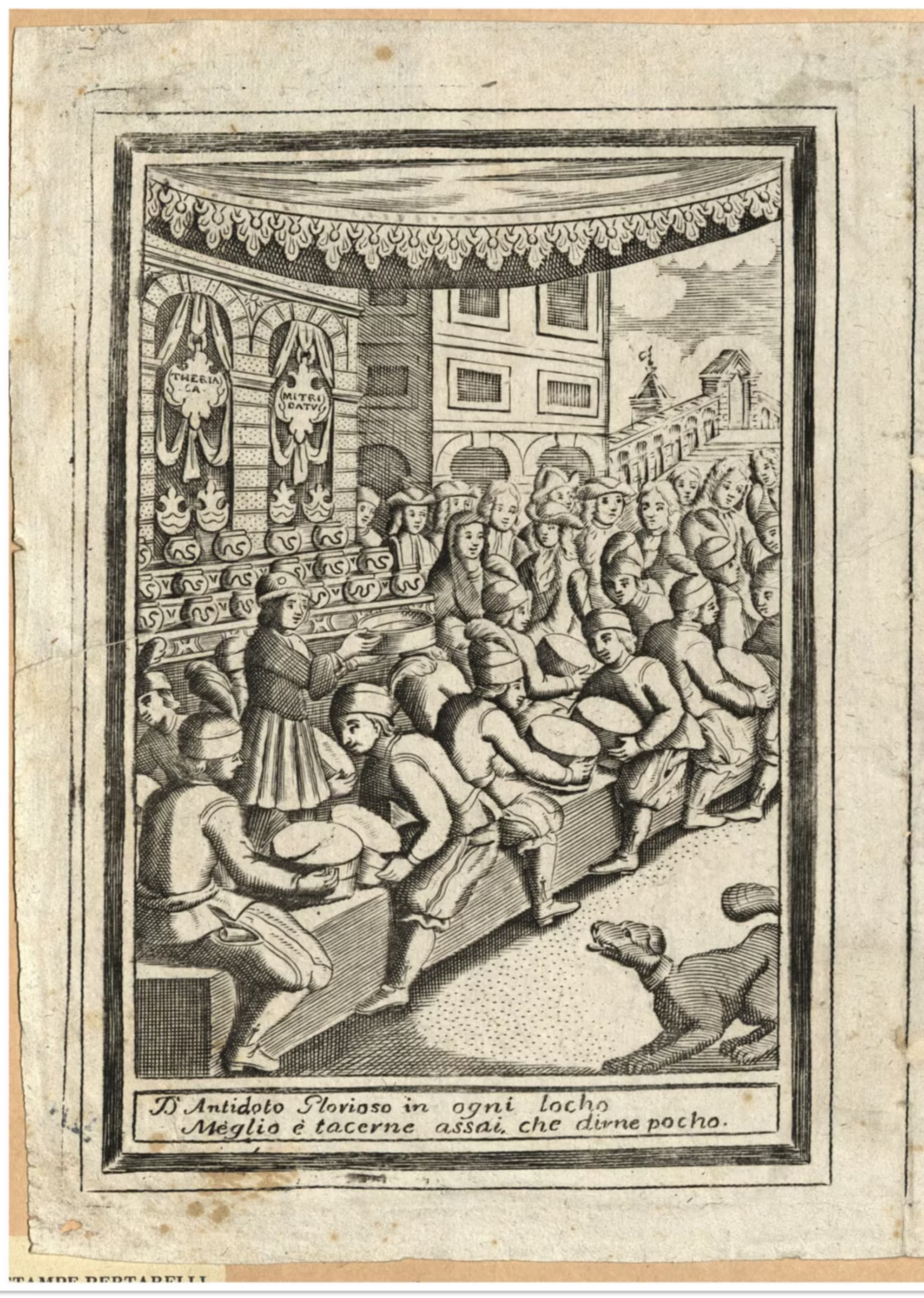
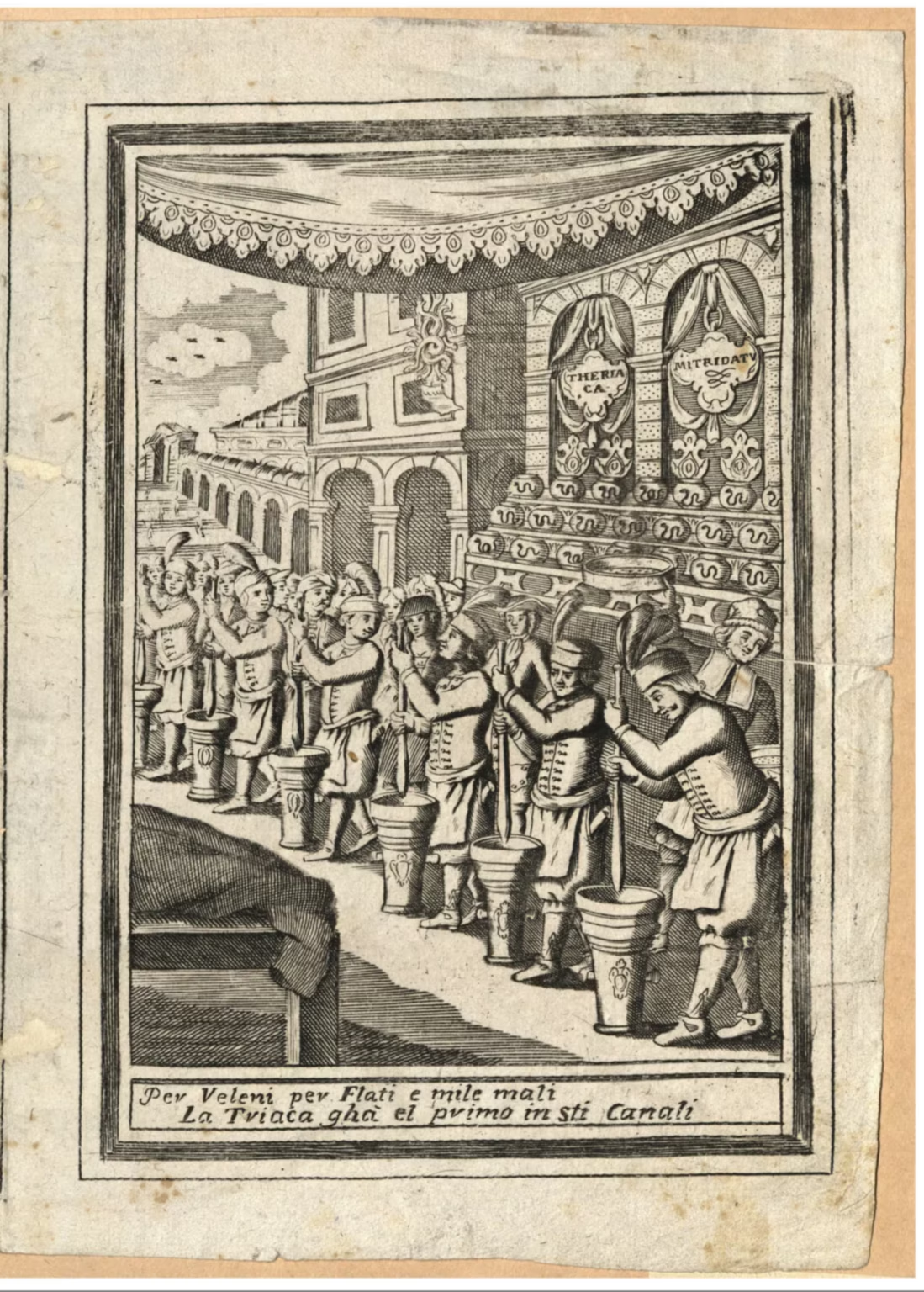
- The preparation of Theriac — two prints (1600s)
Related images
Leave a Reply