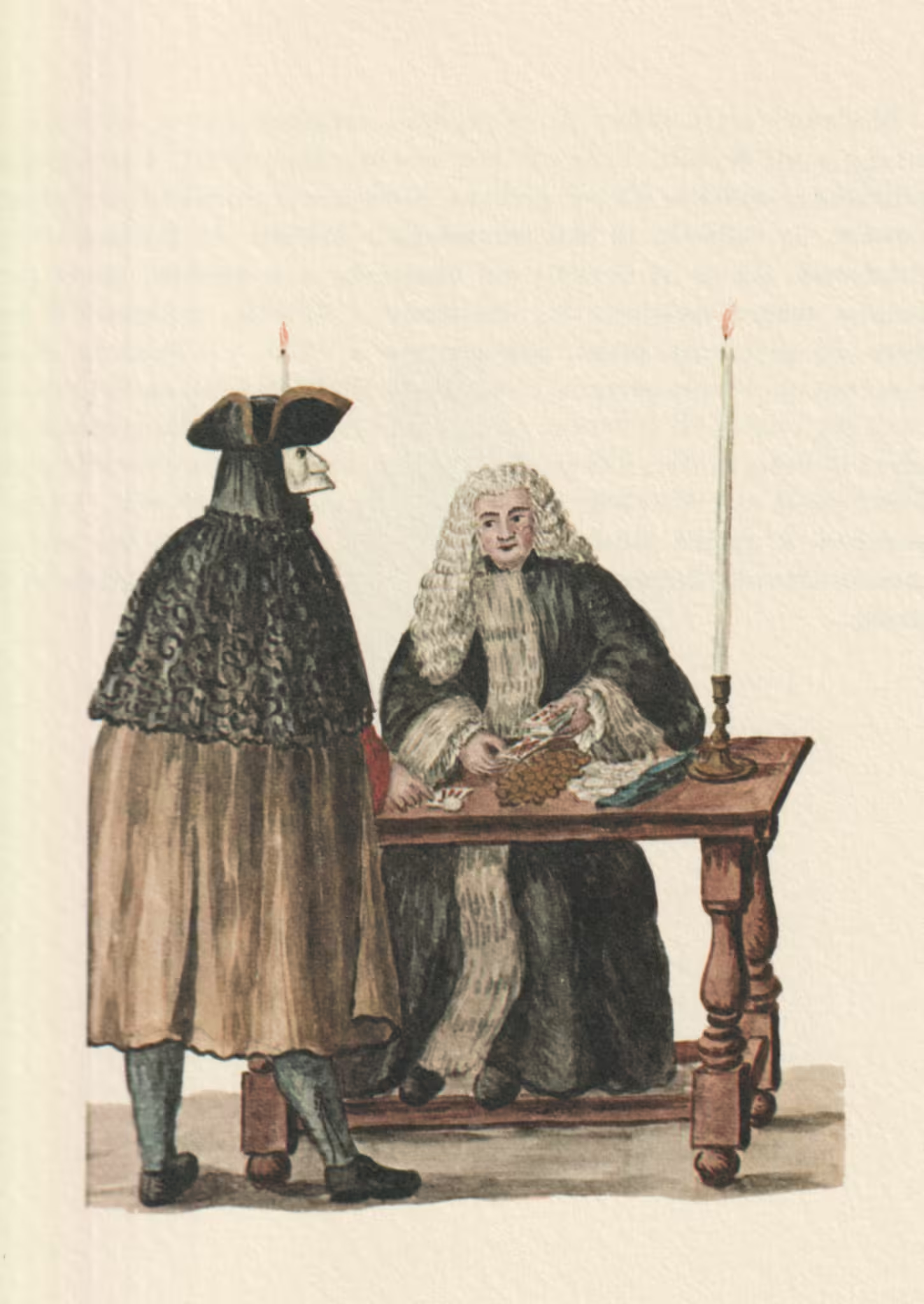
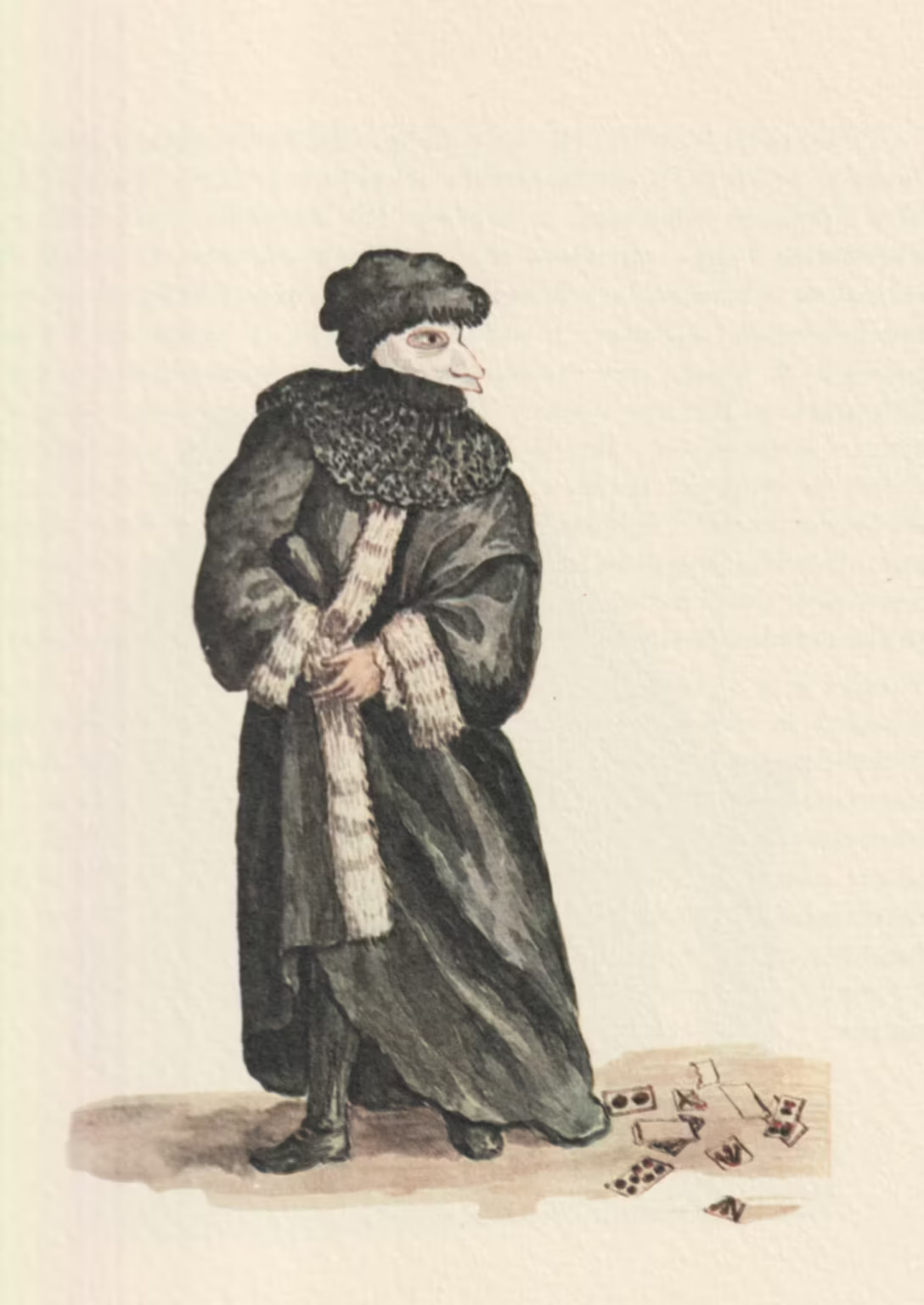
This painting depicts a Venetian nobleman checking in to the Ridotto, the official gambling house of the city, where only noblemen and foreigners could play, and everybody was masked.
He is wearing the bauta costume for anonymity.
Source: Gli abiti de veneziani di quasi ogni età con diligenza raccolti e dipinti nel secolo XVIII, by Giovanni Grevembroch (1731–1807), which in four volumes contains over six hundred watercolours of how Venetians dressed in the 1700s.
Nobleman at the Ridotto
The idleness of the Nobility, which in the early part of the last century flourished in Venice, gave rise to the pastime of playing cards, which, little by little, became lax and harmful to families, and was then prohibited by very strict laws. At that time, it was necessary to close the places of dangerous gatherings and the Ridotti.1 Despite all this, in the following age, since the deeply rooted habit could not be restrained, the public tolerated that of S. Moisè, on the condition that certain rules, declared in the Decree of December 3, 1704, in addition to repeated and increasingly salutary prescriptions, were observed.
Due to the most grave corruption in this matter, arising from pernicious seeds, and from the allure of the Mask, not to mention that of Profit, the Most Serene Government decided to take new wise precautions, to prevent greater abuses, which had, unfortunately, been experienced as harmful, especially since, with the aforementioned Decree being appealed with and abrogated,2 Public tranquillity was forced to cease the execution of orders, which were certainly beneficial.
Today, the detestable Game has been introduced in such a way that it not only lures the unsuspecting Youth throughout the Carnival period to that House, where entry is freely allowed; in all Seasons, the Enticed can be seen with Cards in hand, perhaps thinking there is no greater amusement than this unworthy Recreation.
In our days we would know Luigi son of Giovanni Quirini, a Nobleman of most poor Patrimony, aided by Fortune to win the sum of two hundred thousand ducats;3 but when Luck, which had long been so favourable, became tired, he had to die in 1709 much more miserably than he was born.
To His Excellency Mr. Antonio Marcello, son of Andrea, a nobleman of splendid temperament and fond of all civil society, we courageously present ourselves with this remonstrance.
Translator’s notes
- The Ridotto was a palace on the Grand Canal near San Moisè where the nobility met for gambling. More generally, the word means a meeting or a meeting place. ↩︎
- The legal term intromissione was when a superior magistracy or state office took over a procedure from a lower instance, because of procedural issues. ↩︎
- This is a sum, which could buy several palaces on the Grand Canal, and twice the amount the case fatte per soldo paid to enter the Maggior Consiglio. For more about money and coinage, see Venetian coinage. ↩︎
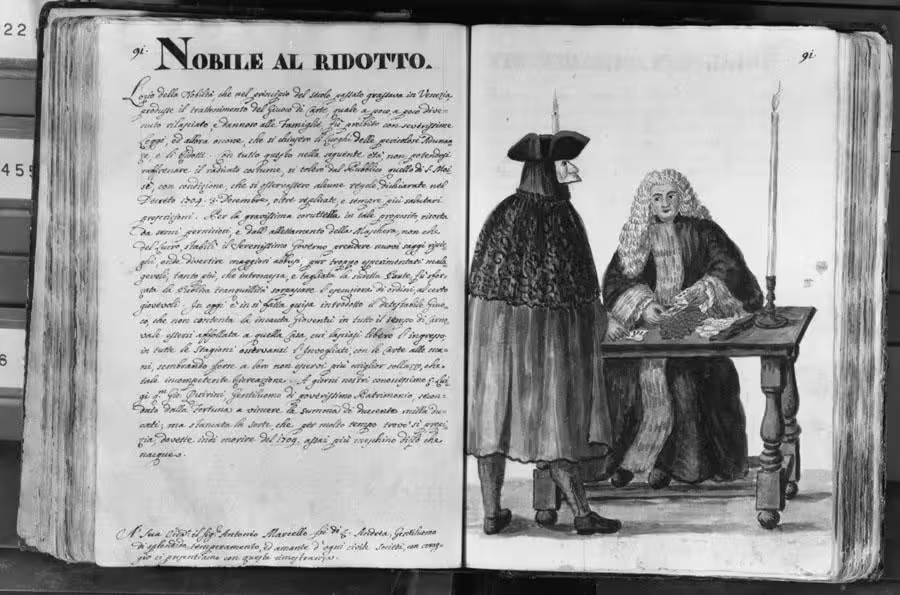
Original text
Nobile al Ridotto
L’ozio della Nobiltà, che nel principio del Secolo passato grassava in Venezia, produsse il trattenimento del giuoco di Carte, quale a poco, a poco divenuto rilasciato, e dannoso alle Famiglie, fù proibito con severissime Leggi, ed allora occorse, che si chiusero li Luoghi delle pericolose Adunanze, e li Ridotti. Con tutto questo nella seguente età, non potendosi raffrenare il radicato costume, si tolerò dal Pubblico quello di S. Moisè, con condizione, che si osservassero alcune regole, dichiarate nel Decreto 1704. 3. Decembre, oltre replicate, e sempre più salutari prescrizioni.
Per la gravissima coruttella in tale proposito, risorta da semi perniciosi, e dall’allettamento della Maschera, non che del Lucro, stabilì il Serenissimo Governo prendere nuovi saggi ripieghi, onde divertire maggiori abbusi, pur troppo esperimentati malagevoli, tanto più, che intromessa, e tagliata la sudetta Parte, fù sforzata la Publica tranquillità sorpassare l’esecuzione di ordini, al certo giovevoli.
In oggi è in sì fatta guisa introdotto il detestabile Giuoco, che non contenta la incauta Gioventù in tutto il tempo di Carnovale essersi affollata a quella Casa, cui lasciasi libero l’ingresso; in tutte le Stagioni osservansi l’Invogliati, con le Carte alle mani, sembrando forse a loro non esservi più miglior sollazzo, che tale incompetente Ricreazione.
A giorni nostri conoscessimo Luigi q.m Gio. Quirini, Gentiluomo di poverissimo Patrimonio, secondato dalla Fortuna a vincere la summa di duecento milla ducati; ma stancata la Sorte, che per molto tempo trovò sì propizia, dovette indi morire del 1709 assai più meschino diglo che nacque.
A Sua Ecc.a il Sig.e Antonio Marcello fù di Andrea, Gentiluomo di spendido temperamento, ed amante d’ogni civile Società, con coraggio ci presentiamo con questa rimostranza.
Grevembroch (1981), vol. 1, p. 91.
Related articles
Venetian Stories
Related sources
Related images
- Nobile in Maschera — Nobleman in Mask — Grevembroch 1-90
- Mascare — Masks — Grevembroch 3-92
- Povero in Mascara — Beggar in mask — Grevembroch 3-80
Bibliography
- Grevembroch, Giovanni. Gli abiti de veneziani di quasi ogni eta con diligenza raccolti e dipinti nel secolo XVIII, orig. c. 1754. Venezia, Filippi Editore, 1981. [more]
Leave a Reply