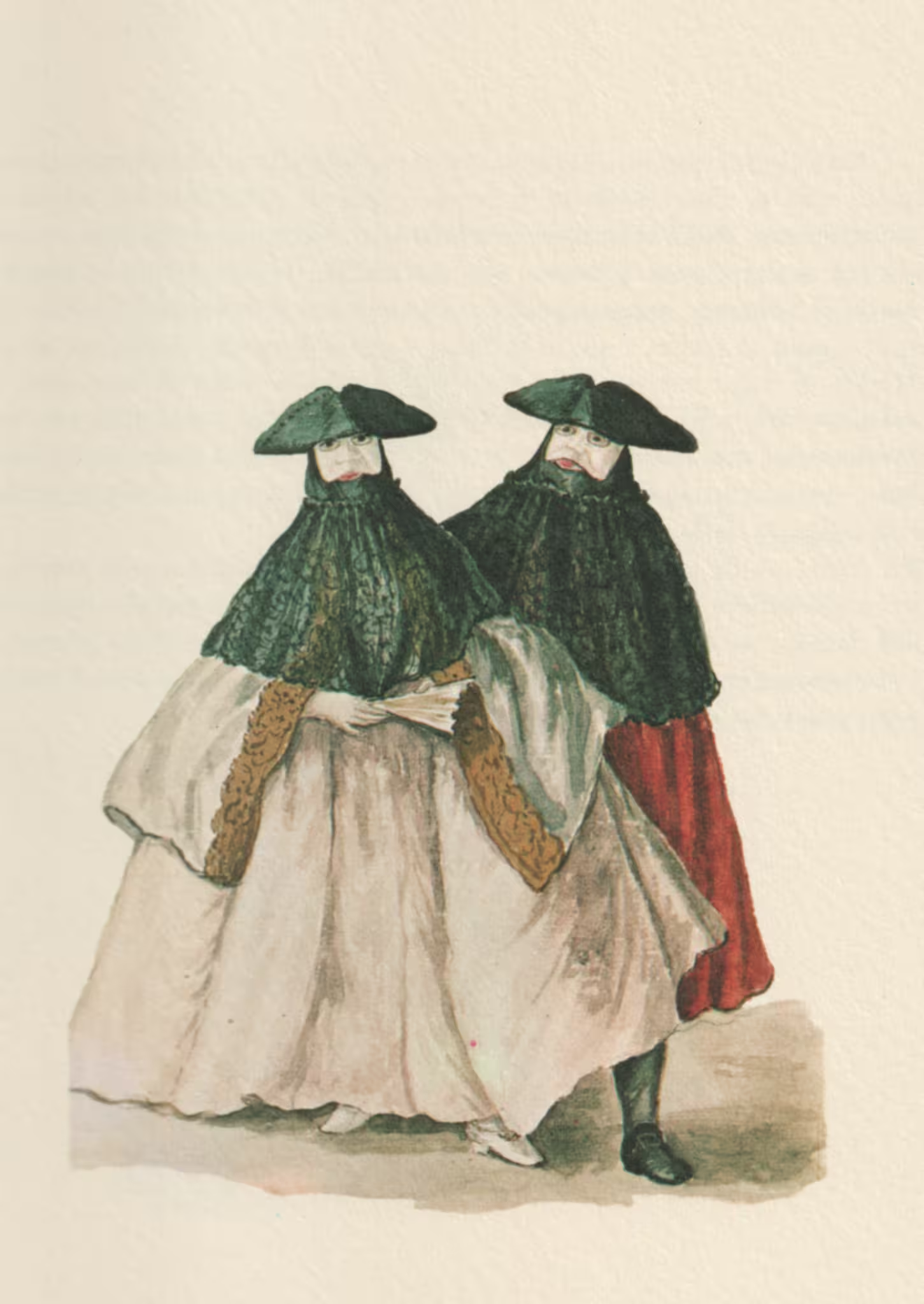
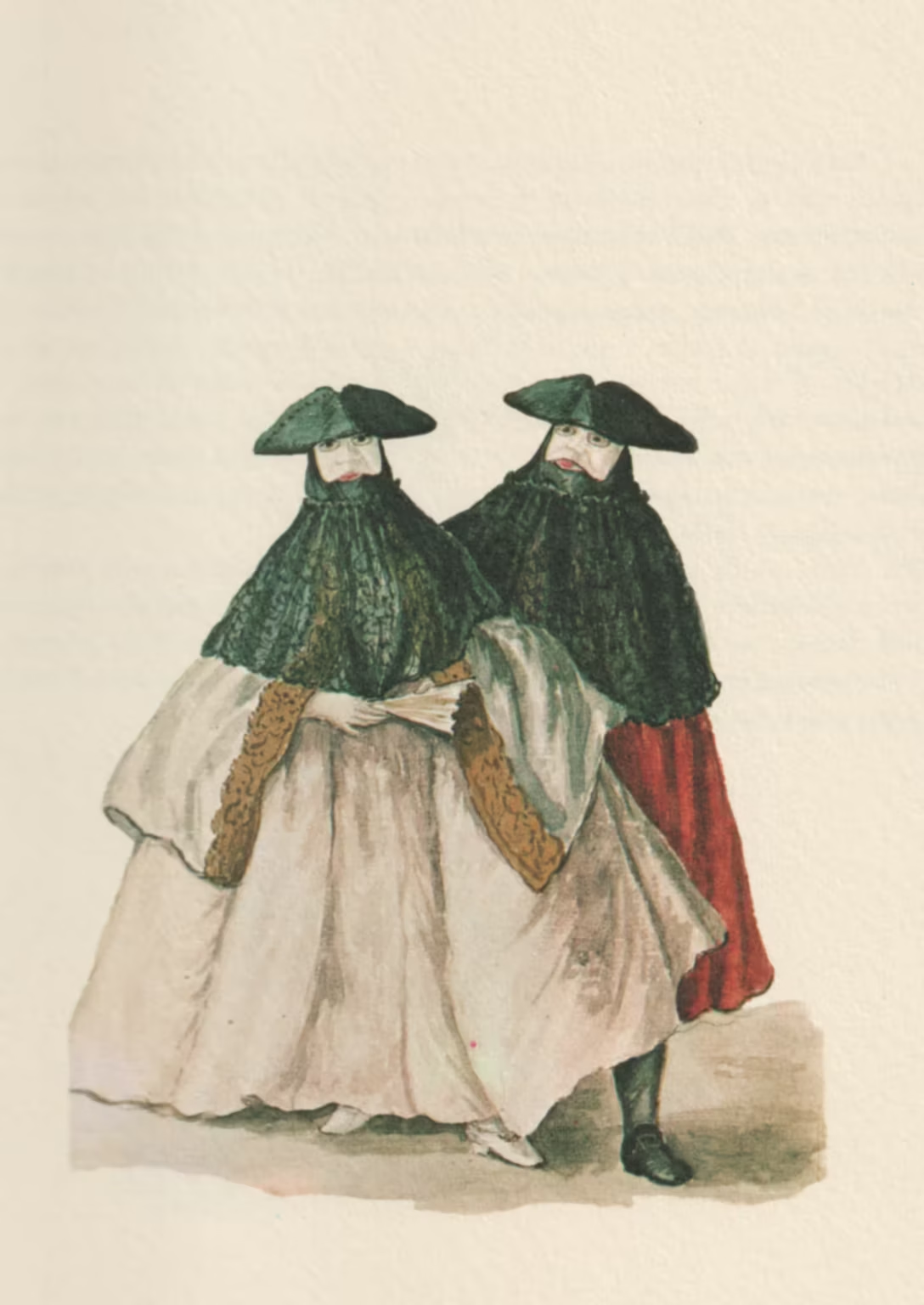
This painting depicts a couple dressed in the Venetian bauta costume, used during the carnival, and also at many other occasions.
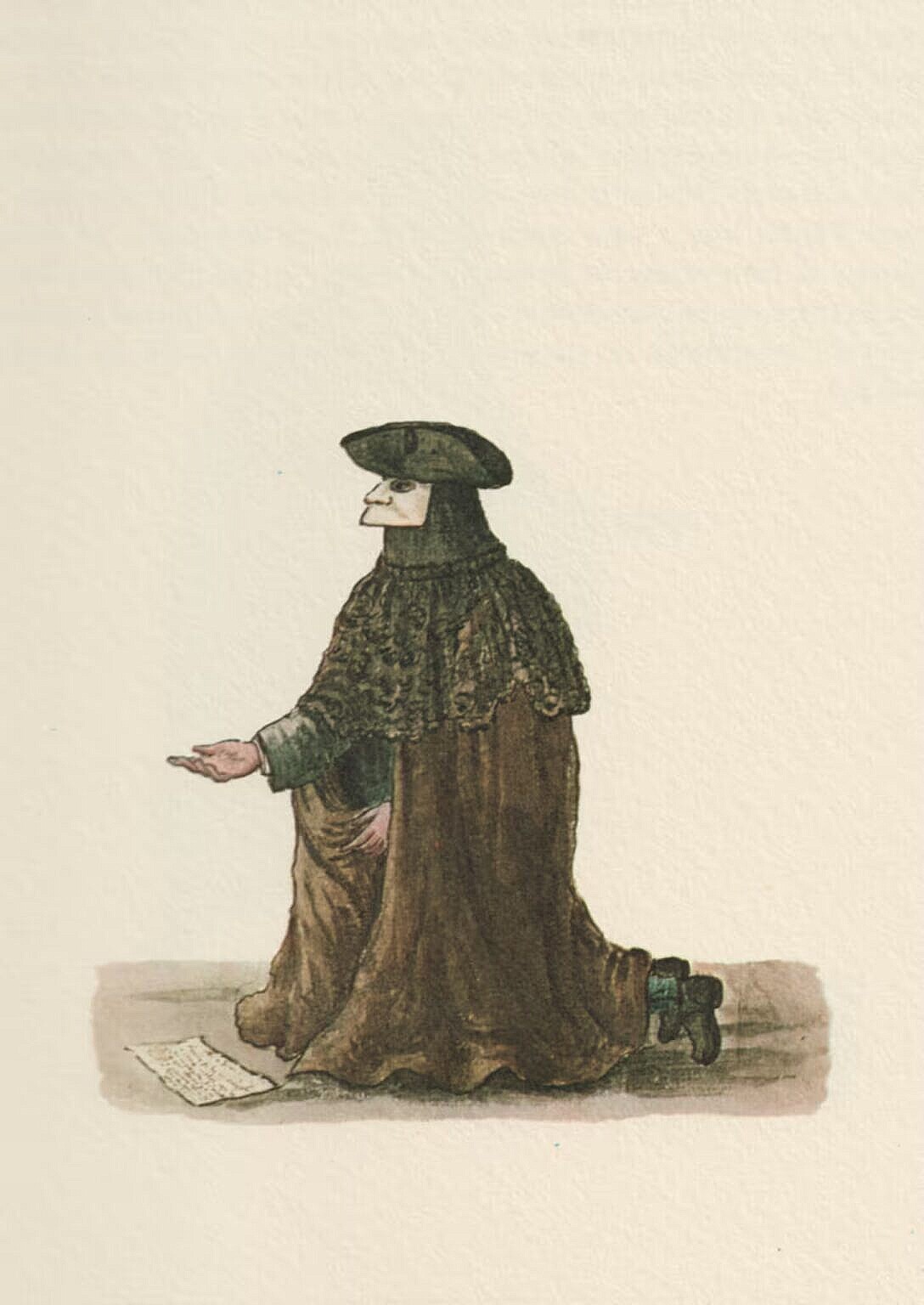
The bauta was a masquerade costume, consisting of a white mask with a beak like protrusion, a tricorne hat, a hood, a short mantel and long cloak.
Source: Gli abiti de veneziani di quasi ogni età con diligenza raccolti e dipinti nel secolo XVIII, by Giovanni Grevembroch (1731–1807), which in four volumes contains over six hundred watercolours of how Venetians dressed in the 1700s.
Masks
The use of the Tabarri,1 favoured by women to hide the not-so-luxurious outfits, and the fashion of the Bavute,2 admired by the older women to cover imperfections, reached their greatest popularity in our miserable age during Carnival, which is why the Squares, Theatres, and the Ridotti3 have become in this century gathering places for people unknown to everyone.
From this pernicious abuse arose harmful and far-reaching effects, with Foreigners,4 Clergy, Prostitutes,5 Thieves, and Jews taking advantage of the convenient attire; so much so that there is no situation in which even a wise and honourable Father can recognize his wayward and reckless Daughter.
Masks were at times tolerated by the Superiors, to teach with a veiled face the precepts of civil life under the guise of Fables, and during the Public Balls in the last three days of Carnival with bizarre and different figures, which could be distinguished, although scarcely recognized for the richness or inventiveness of their Costume, with amusement, no less by the People than by the first Senators of our City.
The noblest Masques presented themselves to the Prince in the Ducal Palace, where some poetic Composition was performed. It was then that, due to the fame of the Festivities, foreigners came to see them. Today this custom is no longer found, but through the Tabarri and the Bavute, the Companies are divided anonymously, with detestable inner fault; hence it is that the method of corrupting Youth, enticing the Reasonable, favouring Gambling, filling Taverns, turning night into day, and transforming the Sun into the Moon is increasingly refined.
To Her Excellency Mrs. Pisana Zustinian Grimani, Mistress and Protector of the two famous Theatres of St. John Chrysostom and St. Samuel, we request permission to introduce into them a virtuous foreign singer.
Translator’s notes
- The Tabarro (also: tabaro) was a loose cloak or cape, often made from lush materials for use in winter, fastened at the front. ↩︎
- The bauta was a masquerade costume, consisting of a white mask with a beak like protrusion, a tricorne hat, a hood, a short mantel and long cloak. ↩︎
- The Ridotto was a palace on the Grand Canal near San Moisè where the nobility met for gambling. More generally, the word means a meeting or a meeting place. ↩︎
- See Citizen of the Republic of Venice. ↩︎
- See Prostitution in Venice and A catalogue of Venetian prostitutes. ↩︎
Original text
Mascare
L’uso de Tabarri, blandito dalle Donne, per nascondere li non sontuosi arnesi; e la moda delle Bavute, vagheggiata dalle Vecchie, per coprire i difetti, ebbero il loro maggior fervore nella nostra miserabile età ne’ tempi di Carnovale, per la qual cosa la Piazza; li Teatri, e li Ridotti sono divenuti in questo Secolo Ricettacoli di Persone all’Universale incognite.
Da tale pernizioso abuso sortirono effetti malagevoli, e troppo rilasciati, valendosi del commodo Abito Forastieri, Regolari, Meretrici, Ladroni, ed Ebrei; in modo che non vi è più caso, che ne pure un Padre saggio, ed onorato possa conoscere la discola ed incauta Figlia.
Le Maschere altre volte erano tolerate da Maggiori, onde insegnare a faccia velata i precetti della vita civile sotto specie di Favole, e per le Publiche Feste di ballo nelli tre soli ultimi giorni carnevaleschi con bizarre, e differenti figure, che distinguevansi, se bene sconosciute per la ricchezza, o invenzione della Livrea, con solazzo, non meno del Popolo, che de primarij Senatori della nostra Città.
Le Mascare più nobili presentavansi al Principe nel Ducale Palazzo, in cui si recitava qualche poetica Composizione. Allora fù che per la fama degli Apparati concorrevano l’Estere Genti per vederli. In oggi non si trova questo costume, ma mediante li Tabarri, e le Bavute si dividono ignote le Compagnie, con detestabile intrinsichezza; quindi è, che si affina sempre più il modo di precipitare la Gioventù, invogliare gli Assennati, avvalorare il Giuoco, riempire le Taverne, convertire la notte in giorno; e trasformare il Sole in Luna.
A Sua Ecc.a la Sig.a Pisana Zustinian Grimani, Padrona, e Protettrice degli due famosi Teatri di S. Gio. Grisostomo, e S. Samuele, dimandiamo permissione di poter introdurre in quelli una virtuosa Cantatrice Forastiera.
Grevembroch (1981), vol. 3, p. 92.
Related articles
Venetian Stories
Related sources
Related images
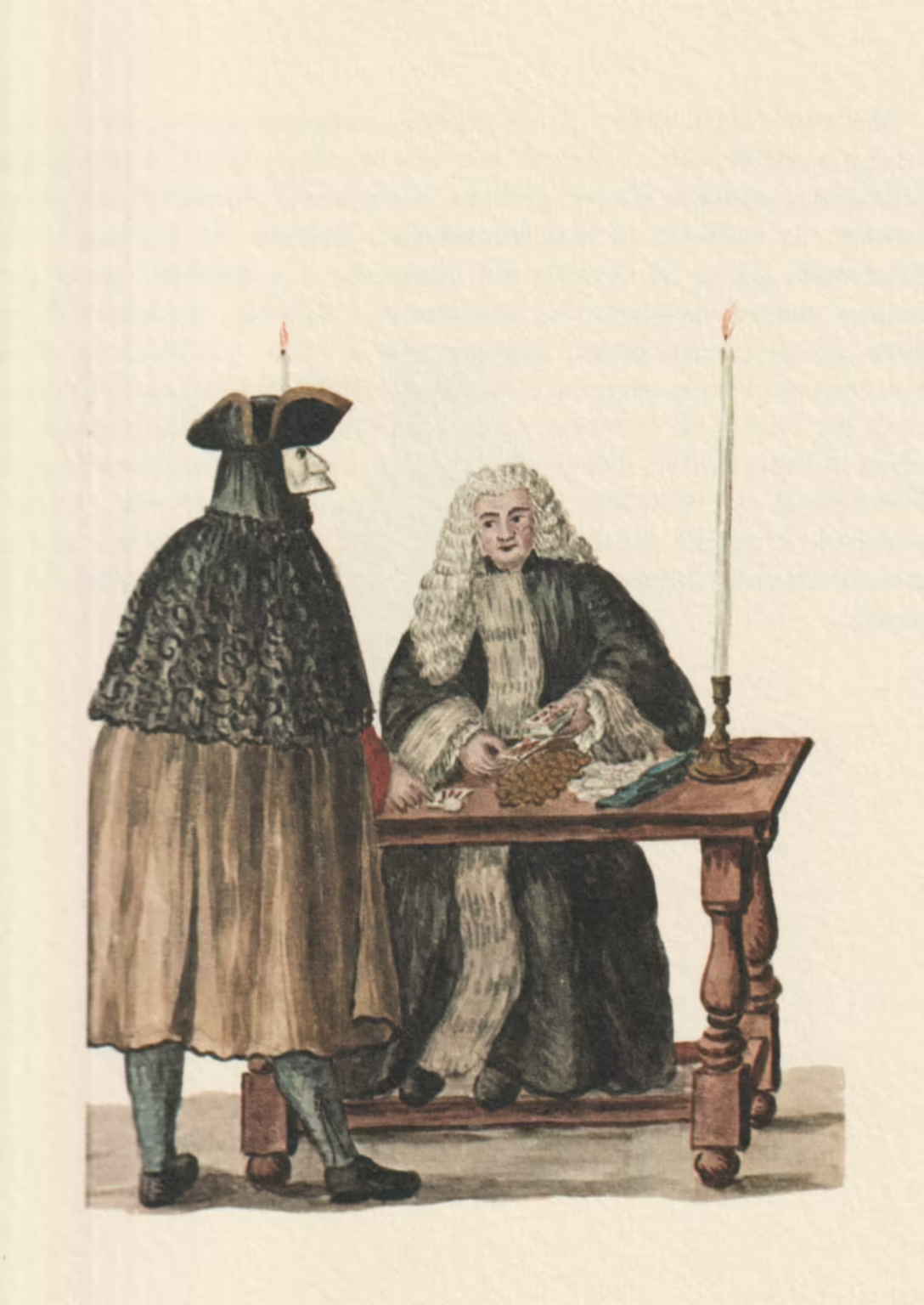
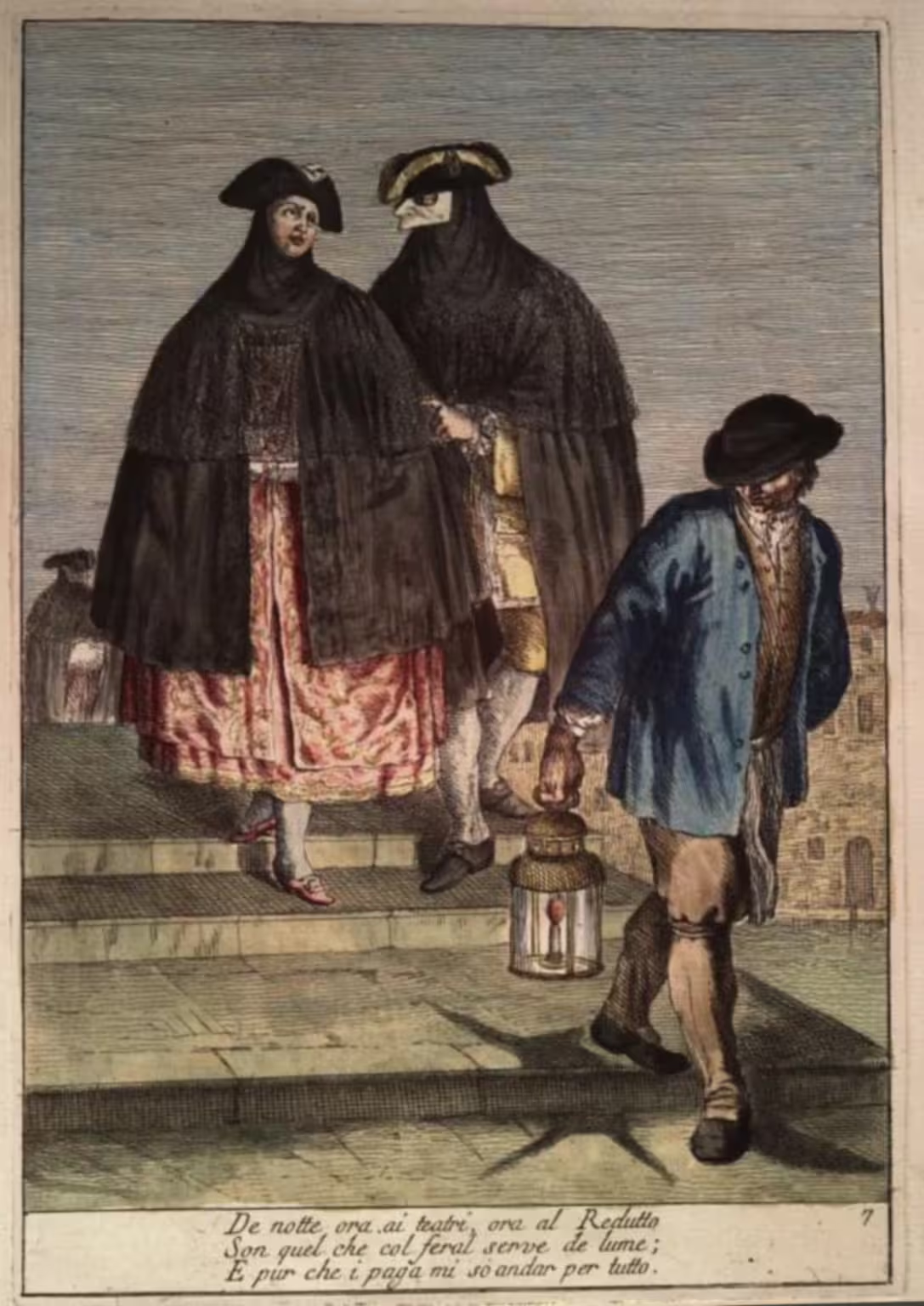
- Nobile al Ridotto — Nobleman at the Ridotto — Grevembroch 1-91
- Codega — lantern bearer — Zompini — Arti #7
- Povero in Mascara — Beggar in mask — Grevembroch 3-80
- Mascara — Mask — Grevembroch 3-90
- Mascara — Mask — Grevembroch 3-93
- Nobile in Maschera — Nobleman in Mask — Grevembroch 1-90
Bibliography
- Grevembroch, Giovanni. Gli abiti de veneziani di quasi ogni eta con diligenza raccolti e dipinti nel secolo XVIII, orig. c. 1754. Venezia, Filippi Editore, 1981. [more]
Leave a Reply