
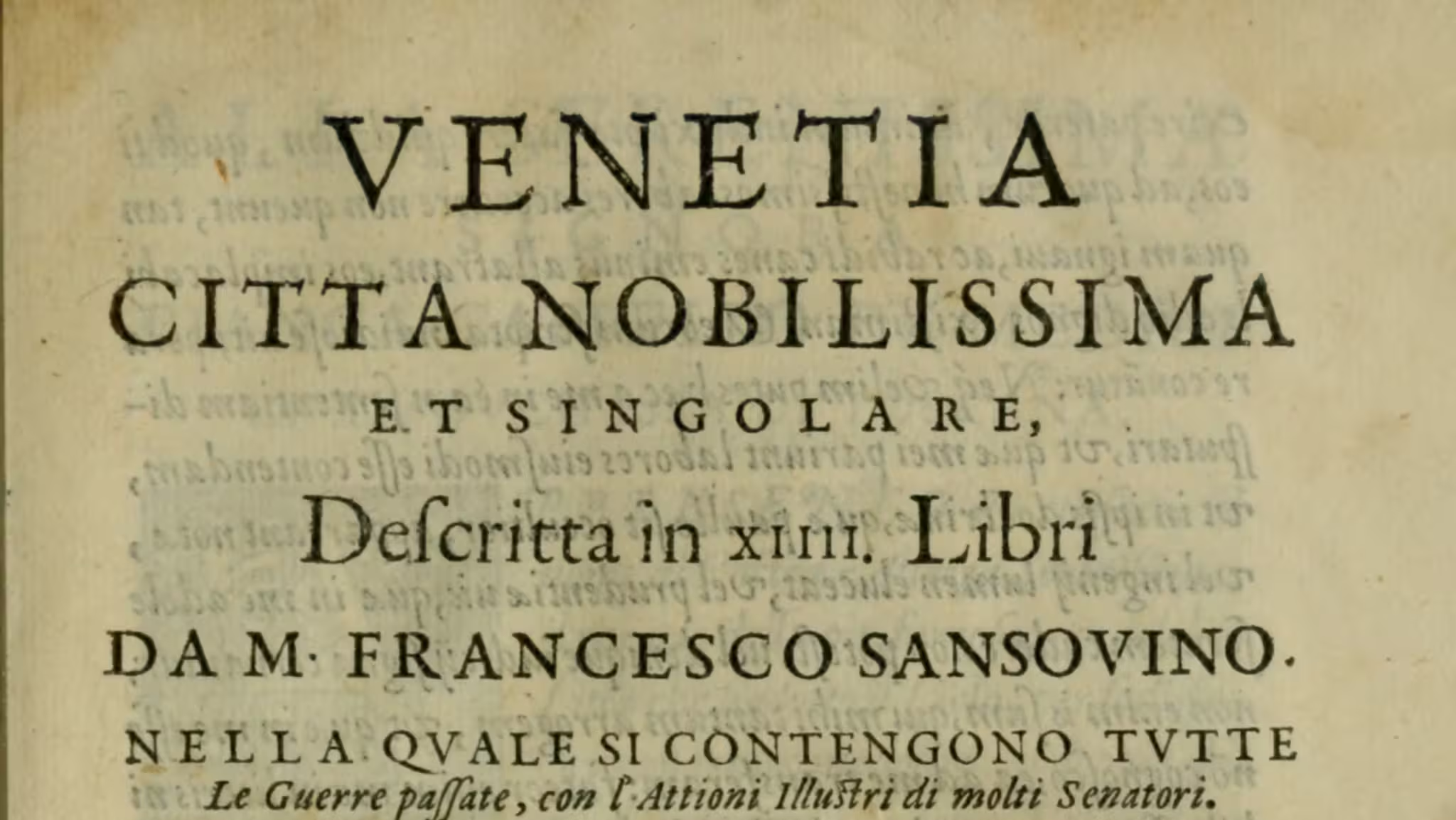
Lazzaretto Nuovo was the primary Venetian quarantine station for the plague. It is situated on an island in the northern lagoon.
This description of the island of Lazzaretto Nuovo, which Francesco Sansovino offers, is marked by his personal experience of having quarantined there with his household during the plague epidemic of 1575–77. His daughter Aurora died of the disease, while his wife survived the infection.
Source: Venetia citta nobilissima et singolare published in 1581 by Francesco Sansovino (1520–1583).
Lazzaretto Nuovo
On the other side of the land, opposite the Old one, in the year 1468, another lazzaretto called New because it was built after the Old one, with one hundred rooms and an enclosed vineyard,1 which from afar looks like a castle, given its extensive perimeter.
A Prior resides there, with the same orders as the Old one: but only the healthy go there, who, having been in contact with the sick and fearing some contagion, retreat to this place and undergo a quarantine of 22 days.
This thing, which I learned through experience to my very great sorrow with the death of Aurora, my eleven-year-old daughter, and the suffering of Benedetta Misocca, my wife, during the time of the plague, in the year 1576.2
I like to recount the order that was maintained during that ordeal, as an example to the foreign Princes, so that they may openly understand the singular charity of our fathers and Lords toward the people in their urgent needs, and so that they may learn to imitate them with deeds truly worthy of them, and to make it a perpetual memory to the glory of this, without any doubt, Christian and pious city.
There were therefore about 8 to 10 thousand people in 3 thousand or more boats.
To all of these, mostly poor (because there were also several nobles and citizens who lived at their own expense) and deprived of their infected belongings, left in Venice, expenses were covered by the public for 22 days.
The number of so many ships, both small and large (for there were some hulls, which are bodies of galleys without their rigging) placed around the Lazzaretto, gave the appearance of a fleet besieging a coastal city.
A flag could be seen above, beyond which it was not permitted to pass, and nearby was the gallows for the punishment of those who had not obeyed the orders of their superiors.3
In the morning, at the appointed hour, the visitors would appear, who would go from boat to boat, to see if anyone was sick, and finding any, they would send them to the Old Lazzaretto.4 Not long after, other boats would arrive loaded with bread, cooked meat, fish, and wine, and they would distribute to each person the said provisions at the rate of 14 soldi5 a day per mouth, with such order and with such absolute silence.
At dusk, one could hear a marvellous harmony of various voices of those who, at the sound of the Ave Maria, praised God, some singing litanies and others, psalms. At night, not a single word was heard, all was silent; so much so that one would have said that there was not a single living person, let alone eight or ten thousand people.
But it was not the day that at least 50 boats were not towed, full of people who came to make the quarantine; all of which were accepted and greeted with happy applause, and with the joy of each one, protesting to those who came that they were of good cheer because there, they were not working, and they were in the land of Cockaigne.6
Then with prayers that came from the depths of the heart, they turned to Heaven, and with hands joined, prayed for the perpetual preservation of this Republic.
It was also a marvellous sight to see the number of boats going to visit their friends and relatives with various refreshments.
And the houses made of planks by the republic along the edges of the Lido above the shore gave considerable marvel to those who looked at them; because from a distance, they appeared to have the form of a new city, and moreover they were of pleasing and delightful appearance, if the minds, too terrified by such misfortune, had not been oppressed and overwhelmed by extreme compassion and sorrow.
Translator’s notes
- The island of Lazzaretto Nuovo was, before it became lazzaretto, a walled wineyard. ↩︎
- This is one of very few personal notes in the entire work. ↩︎
- The Magistrato alla Sanità was authorised to use capital punishment. The Magistrato alla Sanità (Magistracy of Health) had broad powers over everything public health related, which besides the lazzaretti, also included inns, prostitutes, pharmacies, doctors, rubbish collection, water supply etc. ↩︎
- See Lazzaretto Vecchio — Venetia Descritta (1581). ↩︎
- A soldo was a common Venetian copper coin, worth 12 denari or 1/20th of a lira. The word was also used generically for money. ↩︎
- The Cuccagna — Land of Cockaigne — was an imaginary place, where everything was plentiful, and nobody had to work. A land of plenty and of leisure. ↩︎
Original text
Lazaretto Nuouo
DAll’altra parte della terra all’opposito del Vecchio, l’anno 1468. un’altro Lazaretto chiamato Nuovo per esser posteriore in fabrica al Vecchio, con cento camere, & con una vigna serrata, il quale dalla lontana ha sembianza di castello, come amplo di circuito. Vi habita un Priore con gli ordini medesimi del Vecchio: ma vi vanno solamente i sani, che essendosi mescolati con gli infermi, dubitando di qualche cõtagio, si ritirano a questo luogo, & vi fanno la contumacia di 22 giorni.
La qual cosa havendo io conosciuta per prova cõ mio graviss. danno per la morte di Aurora mia figliuola d’età di undici anni, & per lo disturbo di Benedetta Misocca mia consorte, allora che fu la peste, l’anno 1576.
mi piace di raccontar l’ordine che si mantenne in quel travaglio, a essempio de i Principi esterni, accioche apertamēte comprendino, qual sia la singolar carità de i nostri padri & Signori verso il popolo ne suoi bisogni urgenti, & accioche imparino ad imitarli con opera veramente degna di loro, & da farne memoria perpetua a gloria di questa, senz’alcun dubbio, christiana & pietosa città.
Erano adunque da 8. in 10. mila persone in 3.mila ò più barche.
A tutti questi per la maggior parte poveri (percioche vi erano anco diversi nobili & cittadini, che vivevano a spese proprie) & spogliati de loro beni infetti, lasciati a Venetia, si dava la spesa dal publico p. 22. giorni.
Il numero di tanti legni cosi piccioli come grossi (percioche vi erano alcuni arsili, che sono corpi di galee disforniti) posti in torno a Lazaretto haveva sembianza d’armata ch’assediasse una città di mare.
Si vedeva in alto una bandiera, oltre alla quale non era lecito di passare, & poco presso era la forca per castigo di coloro che non havessero obedito a comandameti de superiori.
La mattina a hora competente comparivano i visitatori, i quali andando a barca per barca, intendevano se vi era alcuno ammalato: & trovandone gli mandavano a Lazaretto Vecchio. Non molto dopo sopravenivano altre barche cariche di pane, di carne cotta, di pesce & di vino, & dispensavano ad ogn’uno la detta roba a ragione di 14.soldi il giorno per bocca, con tant’ordine, & con tanto silētio che nulla piu.
Sul far della sera si sentiva una harmonia mirabile di diverse voci di coloro ch’al suono dell’ave Maria lodavano Dio, cantando chi letanie & chi salmi. In tēpo di notte nõ si sentiva pure una parola, pur un zitto; di modo che haveste detto, che nõ vi fosse uno huomo vivo nõ che otto ò dieci mila persone.
Ma non era però giorno, che non fossero rimorchiate 50.barche almeno piene di gẽte che venivano a far la contumacia; le quali tutte erano accettate & salutate con lieto applauso, & con allegrezza di ogn’uno, protestando a vegnenti che stessero di buono animo, ᵱche non vi si lavorava, & erano nel paese di Cucagna.
Indi cõ preghi che uscivano dal profondo del cuore, si voltavano al Cielo, & a man giūte pregavano per lo perpetuo mantenimento di questa Rep.
Era anco mirabil cosa a vedere il numero delle barche che andavano a visitar le loro brigate con diversi rinfrescamenti.
Et non picciola maraviglia davano a riguardanti, le case di tavole fatte dal publico intorno a i margini del Lido sopra la marina per cõmodo della gente: percioche dalla lunga pareva la forma di una nuova città: & per altro di grato & giocondo aspetto, quando gli animi troppo atterriti da tanto male, non fossero stati oppressi & occupati da estrema compassione & dolore.
Sansovino (1581), p. 84b.
Related articles
- The Venetian Lazzaretti
- Lazzaretto Vecchio
- Lazzaretto Nuovo – the first quarantine station
- Poveglia – more than ghost stories
- Quarantine – forty days of isolation
- The word Lazzaretto
- Festa del Redentore
Venetian Stories
- Episode 17 — Venice and the plague – part 1
- Episode 18 — Venice and the plague – part 2
- Episode 19 — Venice and the plague – part 3
- Episode 20 — Venice and the plague – part 4
- Episode 21 — The Plague Doctor
- 404 Doctor Not Found
- The Plague Stone of Poveglia
- Lazzaretto Vecchio – six centuries
- Remembering the plague
Related sources
- The Justinian plague — Historia Langobardorum
- The start of the plague in 1575 — Cornelio Morello (1584)
- Francesco Sansovino — Venetia Descritta (1581)
- The plague in Verona, 1630 — Francesco Pona
- Capitoli Da osservarsi nelli Lazaretti — 1674
- Provveditori e Sopraprovveditori alla Sanità — ASV Indice
- Provveditori sopra la Sanità — Lessico Veneto
- Sanità — Dizionario
E-book
- Latest news from Venice, 1576 — an eyewitness account of the plague in 1575–1577 (e-book, PDF, online).
Related images
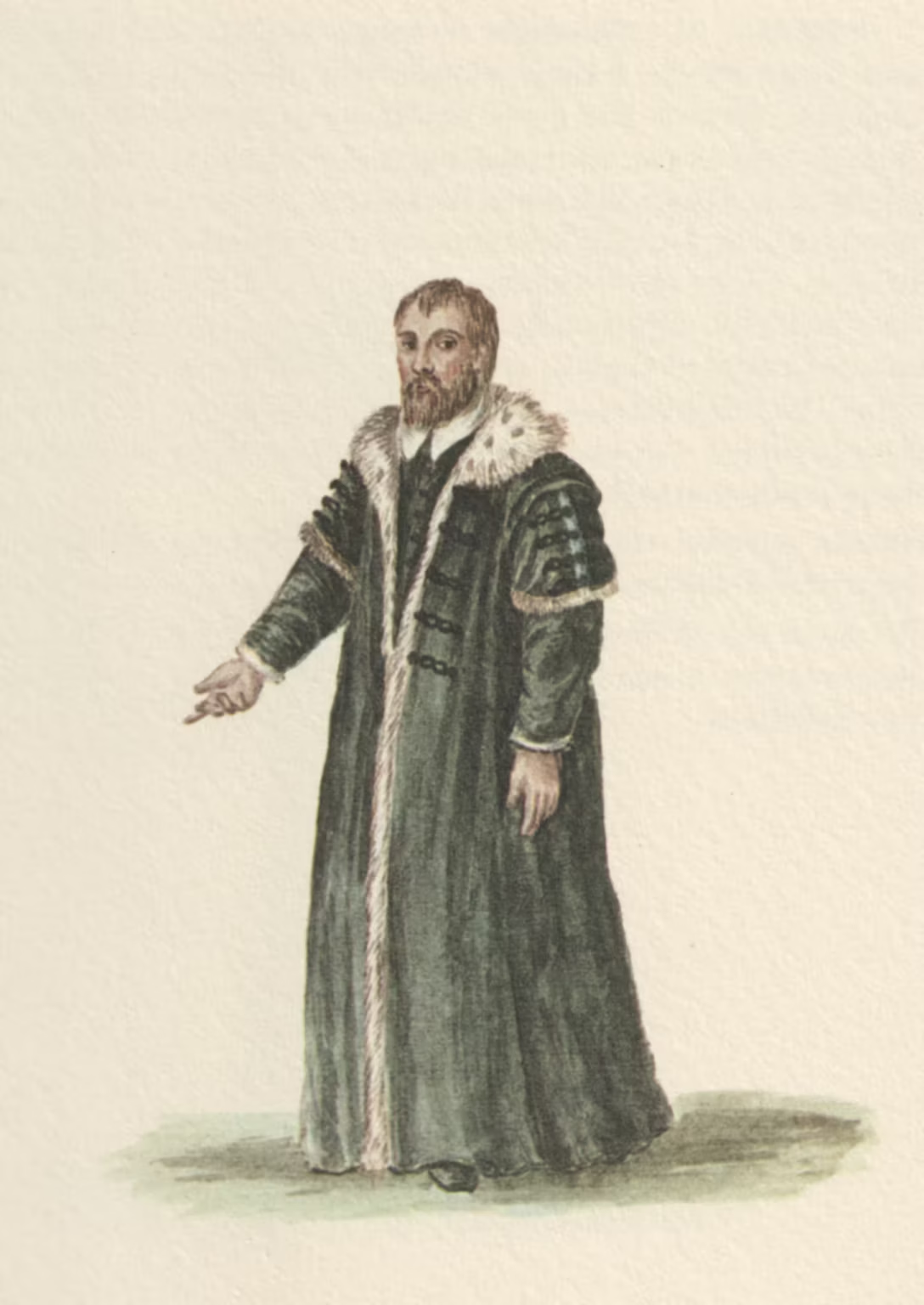

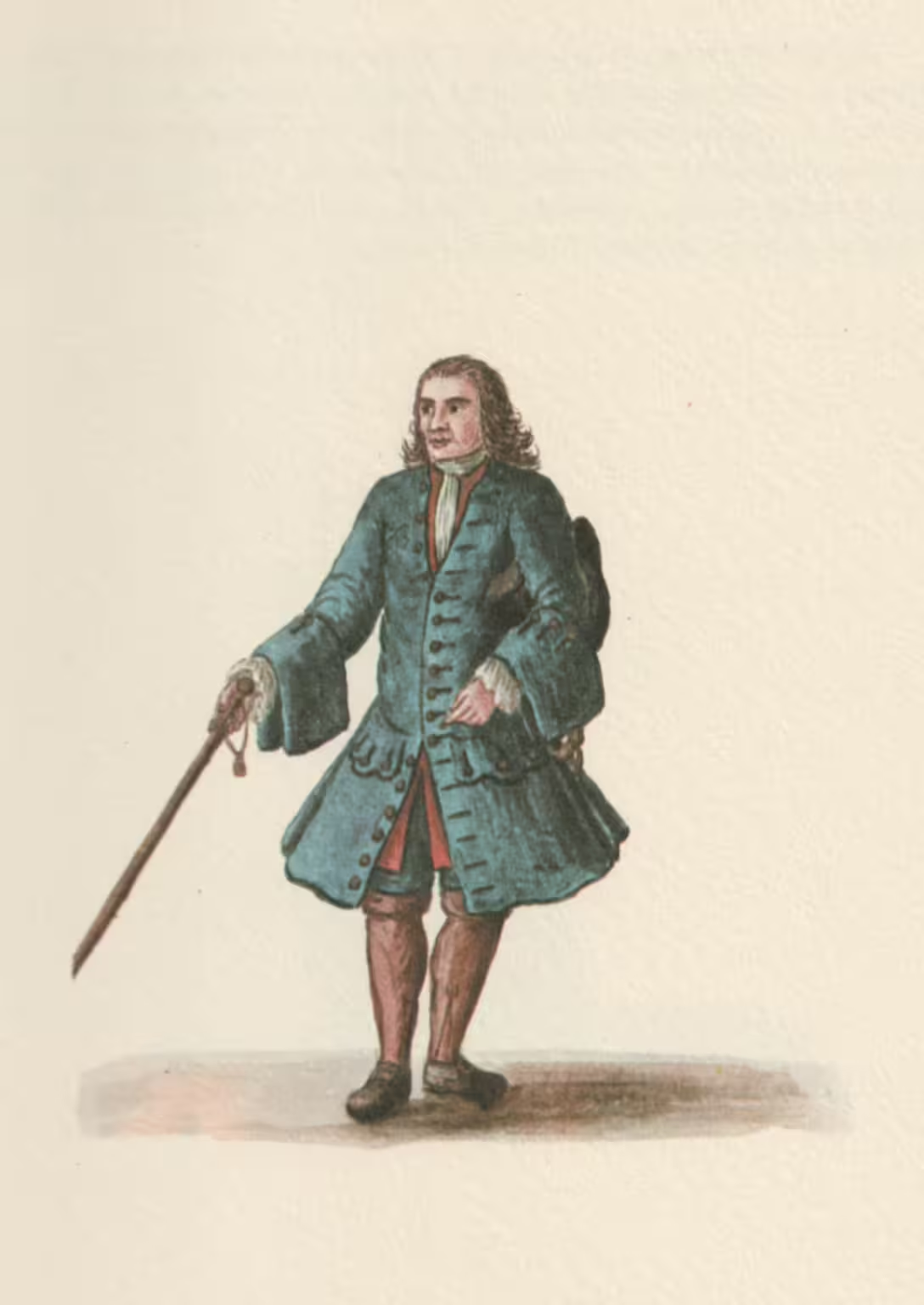
- Protomedico — Chief Physician — Grevembroch 2-160
- Medico Industrioso — Industrious Doctor — Grevembroch 2–161
- Custodia gelosa — Zealous custodian — Grevembroch 4–43
Leave a Reply