
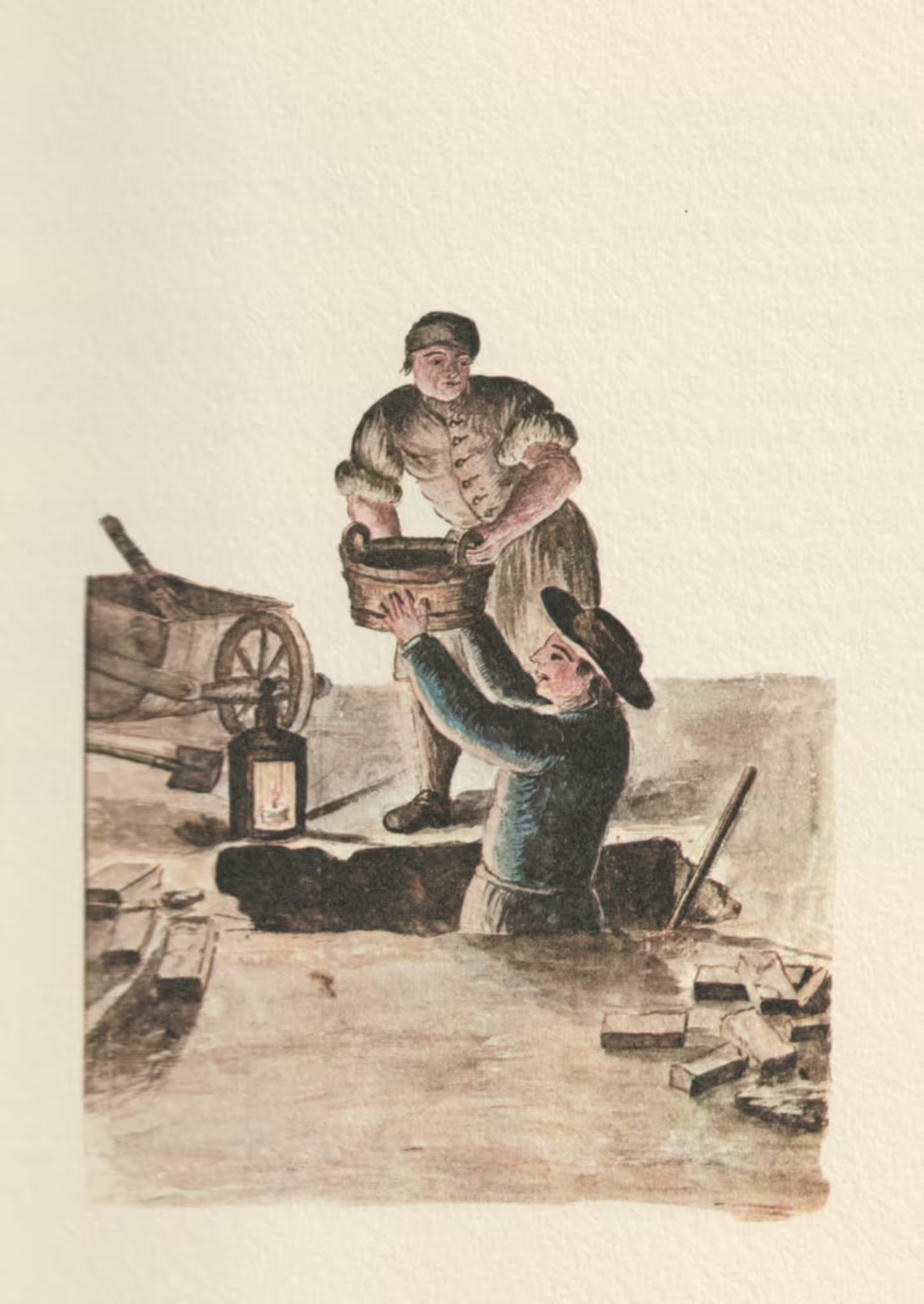
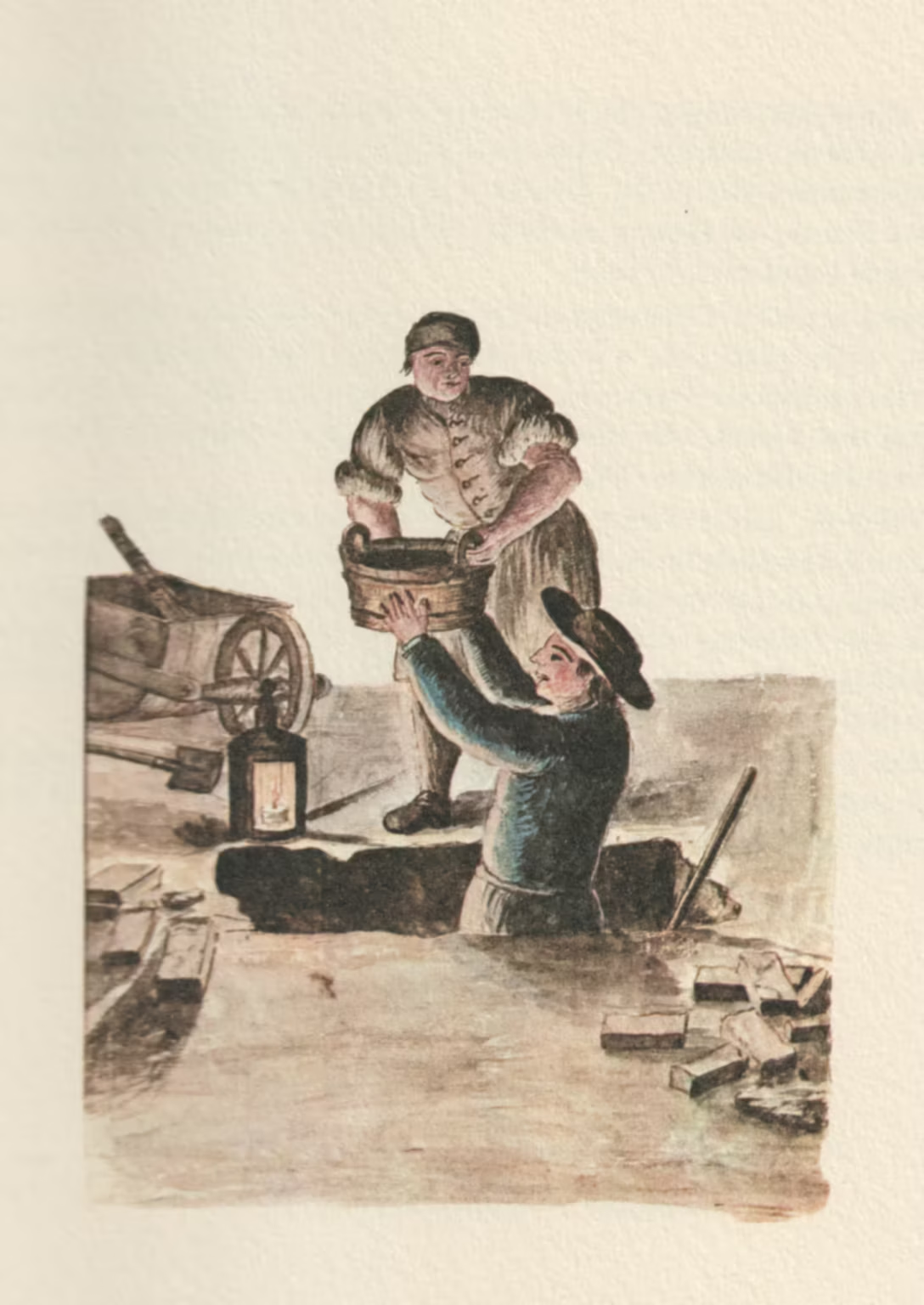
This painting depicts two workers emptying a cesspit or a burial at night.
Keeping the city clean was necessary for reason of public health, and such work was therefore regulated by the Magistrato alla Sanità, which also handled all the precautions around the plague.
The title refers to the association, which people of the time made between foul smells and disease.
Source: Gli abiti de veneziani di quasi ogni età con diligenza raccolti e dipinti nel secolo XVIII, by Giovanni Grevembroch (1731–1807), which in four volumes contains over six hundred watercolours of how Venetians dressed in the 1700s.
Odour Removed
So that the obedience to the ancient Laws regarding the undertaking of excavations of pits, and other similar urgencies, would not be forgotten, the most important Magistrate of Health1 also recently decided to restore the enforcement of this matter through Proclamations, which correspond to the prescribed Rules, especially in the years 1686, April 6, and 1688, April 23.
Regarding all this, the difficulties of the Interested Parties, the negligence of the Workers, and the greed of the Ministers2 are prevented. Once such measures are established, the emptying, both of sewage channels and of Cemeteries and Burials of the Deceased at night,3 and mostly in Winter, are carried out in good order, without harm or great expense.
The blockages that arose for mixed household contributions have been addressed, excluding the delay in work, which is carried out employing chimney sweeps and bargemen, who remove all filth from the aforementioned deposits, and if it consists of dry bones, on the Island of St. Ariano,4 located in the Diocese of Torcello.
There still exists a strict prohibition against throwing rubbish into the canals of the Lagoon, under threat of penalties from the offenders, also enforced by the respectable Magistrate of Waters.5 This, therefore, is the method used in Venice to prevent harmful infections. Those exhalations and faeces, stirred by their effluvium, over time cause infection in the lungs and blood, and injure the eyes like the sharpest darts; hence, the practitioners of such filthy trade carry out their work equipped with some protective measures to counter nausea and weakness, especially using garlic.6
As the Head of this Craft, Antonio Pedretti from Lugano shall dutifully be the first to receive this sincere remonstrance.
Translator’s notes
- The Magistrato alla Sanità (Magistracy of Health) had broad powers over everything public health related, which besides the lazzaretti, also included inns, prostitutes, pharmacies, doctors, rubbish collection, water supply etc. . ↩︎
- A ministro was a subordinates of a magistrato, usually an original citizen. A magistrato was a nobleman appointed to an official role in the Republic of Venice. Magistrates could be appointed by the Maggior Consiglio, by the Senate, by the Council of Ten, and by many others higher bodies of the republic. ↩︎
- There were cemeteries in Venice until 1838, when the modern cemetery on the island of San Michele was opened. ↩︎
- The island of Sant’Ariano in the northern lagoon is where, since 1565, the ossuary for the cemeteries in Venice were. ↩︎
- The Magistrato alle Acque regulated use of water resources in and around the lagoon.. ↩︎
- For the association between smells and disease, see Bad air will get you sick. ↩︎
Original text
Fetore Allontanato
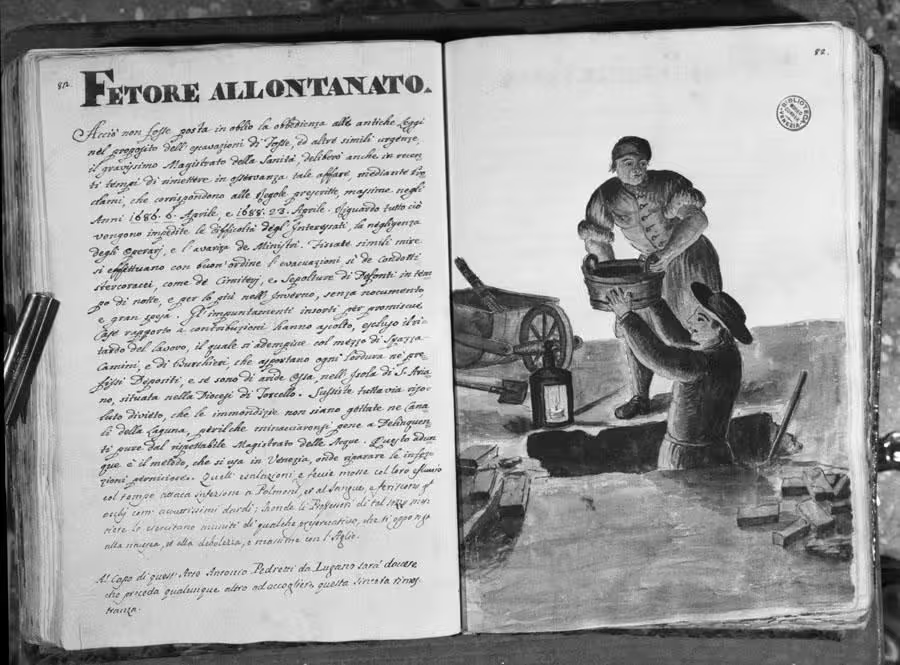
Acciò non fosse in oblio la obbedienza alle antiche Leggi nel proposito dell’escavazioni di Fosse, ed altre simili urgenze, il gravissimo Magistrato della Sanità, deliberò anche in recenti tempi di rimettere in osservanza tale affare, mediante Proclami, che corrispondono alle Regole prescritte, massime negli Anni 1686. 6 Aprile, e 1688. 23 Aprile.
Riguardo tutto ciò vengono impedite le difficoltà degl’Interessati, la negligenza degli Operarj, e l’avarizia de Ministri. Fissate simili mire si effettuano con buon’ordine l’evacuazioni, sì de condotti stercoracei, come de Cimiterj, e Sepolture di Defonti in tempo di notte, e per lo più nell’Inverno, senza nocumento, e gran spesa.
Gl’impuntamenti insorti per promiscue Case rapporto a contribuzioni hanno ascolto, escluso il ritardo del lavoro, il quale si adempisce col mezzo di Spazza-Camini, e di Burchieri, che asportano ogni lordura ne’ prefissi Depositi, e se sono di aride Ossa, nell’Isola di S. Ariano, situata nella Diocesi di Torcello.
Sussiste tuttavia risoluto divieto, che le immodizie non siano gettate ne Canali della Laguna, perilche minacciaronsi pene a Delinquenti pure dal rispettabile Magistrato delle Acque. Questo adunque è il metodo, che si usa in Venezia, onde ripare le infezzioni perniciose. Quell’esalazioni, e feccie mosse col loro efluvio col tempo attaca infezione a Polmoni, et al Sangue, e feriscono gl’occhj com’accuttissimi dardi; laonde li Professori di tal sozzo mestiere lo esercitano muniti di qualche preservativo, che si opponga alla nausea, et alla debolezza, e massime con l’Aglio.
Al Capo di quest’Arte Antonio Pedretti da Lugano sarà dovere che preceda qualunque altro ad accogliere questa sincera rimostranza.
Grevembroch (1981), vol. 4, p. 82.
Related articles
- Gli abiti de veneziani — by Giovanni Grevembroch
- Le Arti che vanno per via (1753) — Gaetano Zompini
- Sewage in Venice
Venetian Stories
Related images
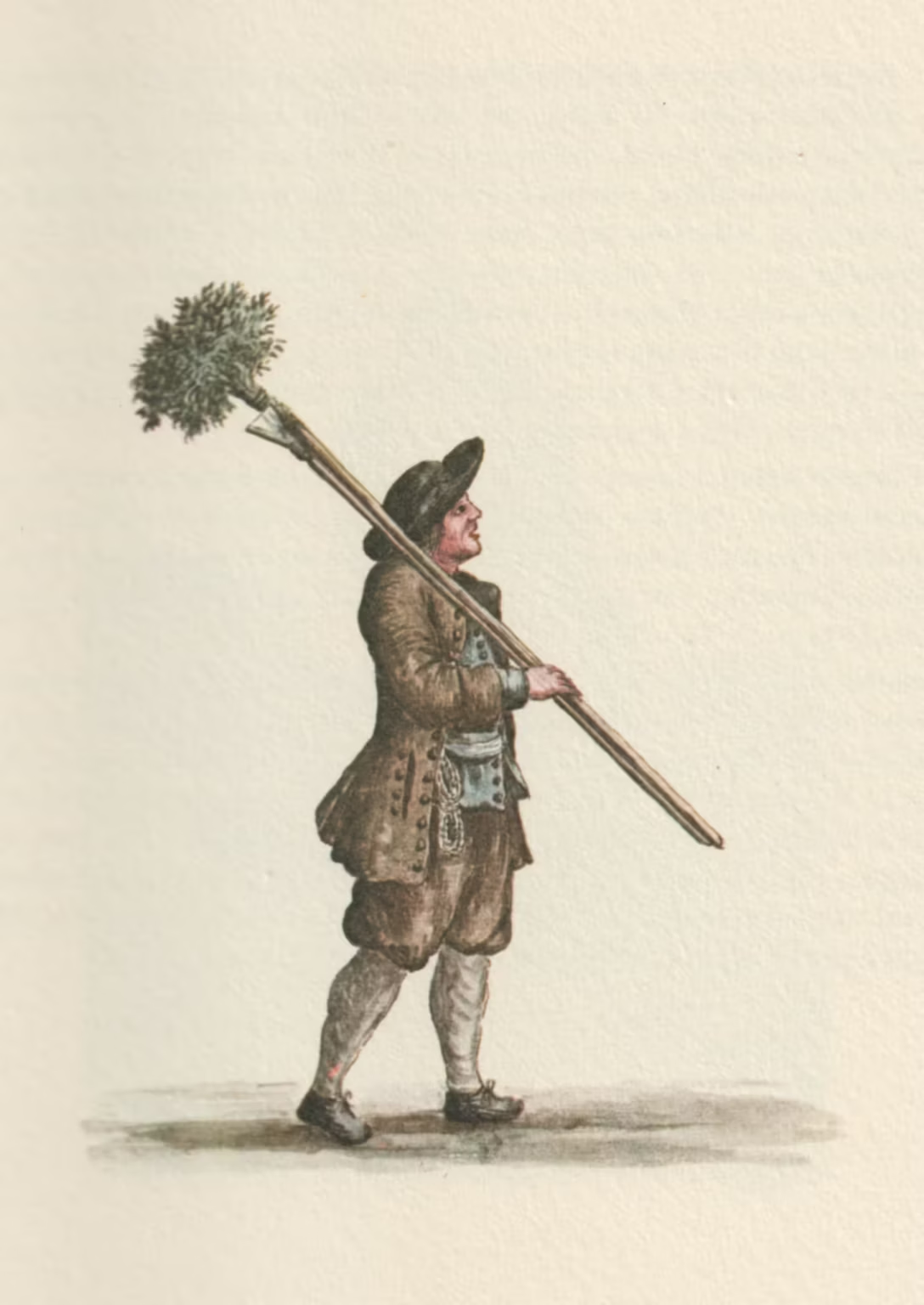
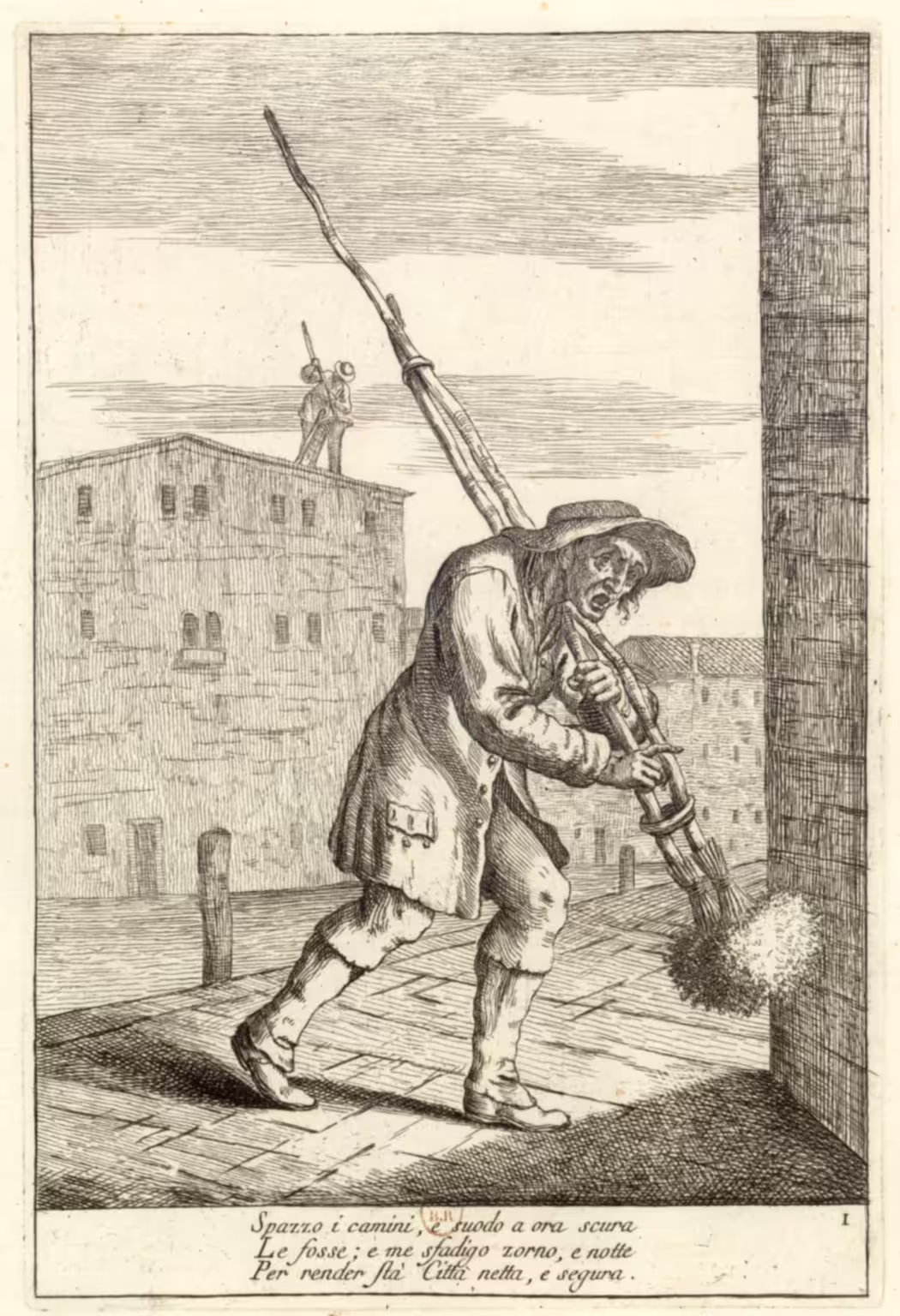
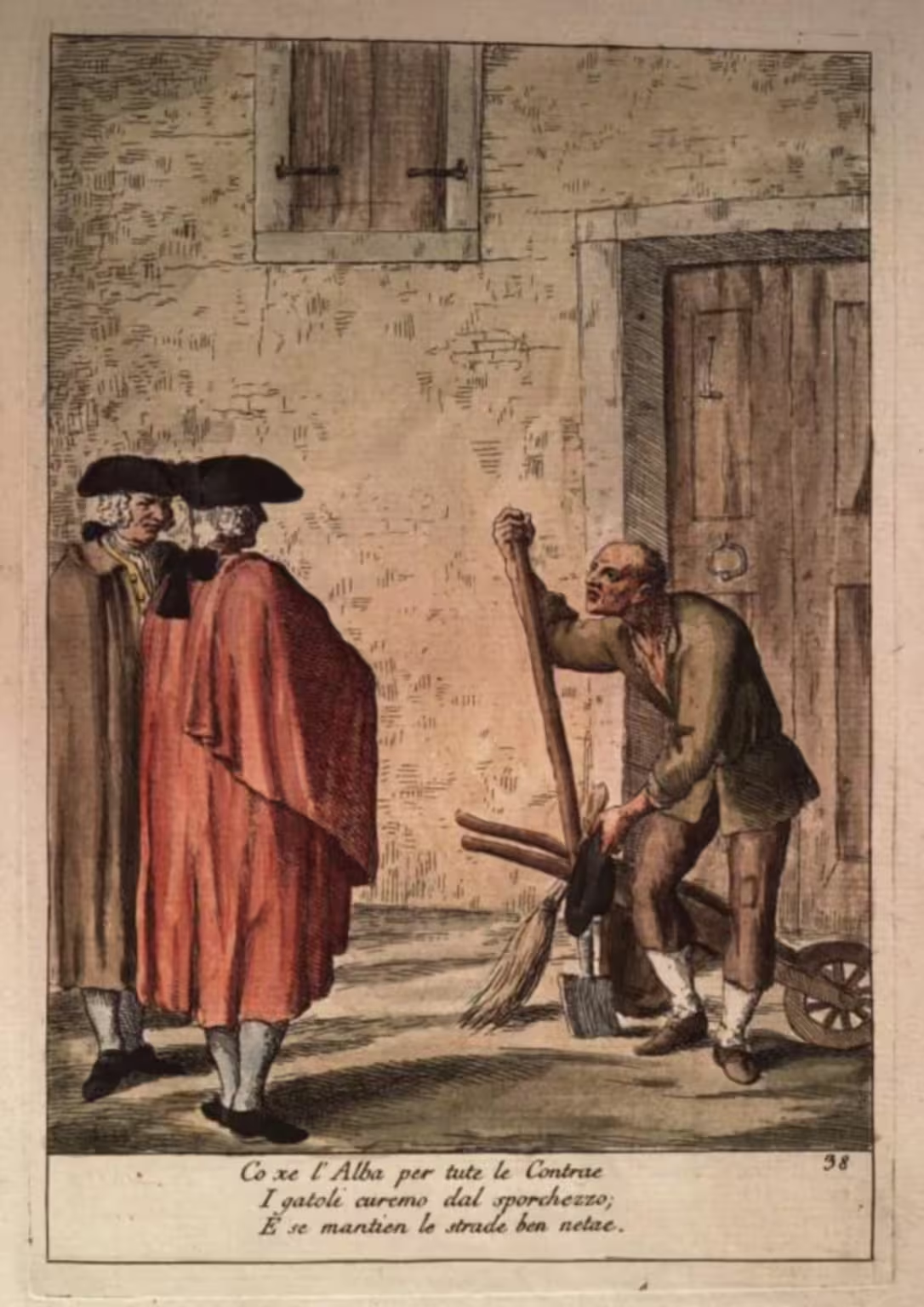
- Industria Elvetica — Swiss Industry — Grevembroch 4-81
- Scoa Camin — chimney sweep — Zompini — Arti #1
- Cura gattoli — drain cleaner — Zompini — Arti #38
- Scuazzero — Rubbish collector — Grevembroch 3-129
Bibliography
- Grevembroch, Giovanni. Gli abiti de veneziani di quasi ogni eta con diligenza raccolti e dipinti nel secolo XVIII, orig. c. 1754. Venezia, Filippi Editore, 1981. [more]
Leave a Reply