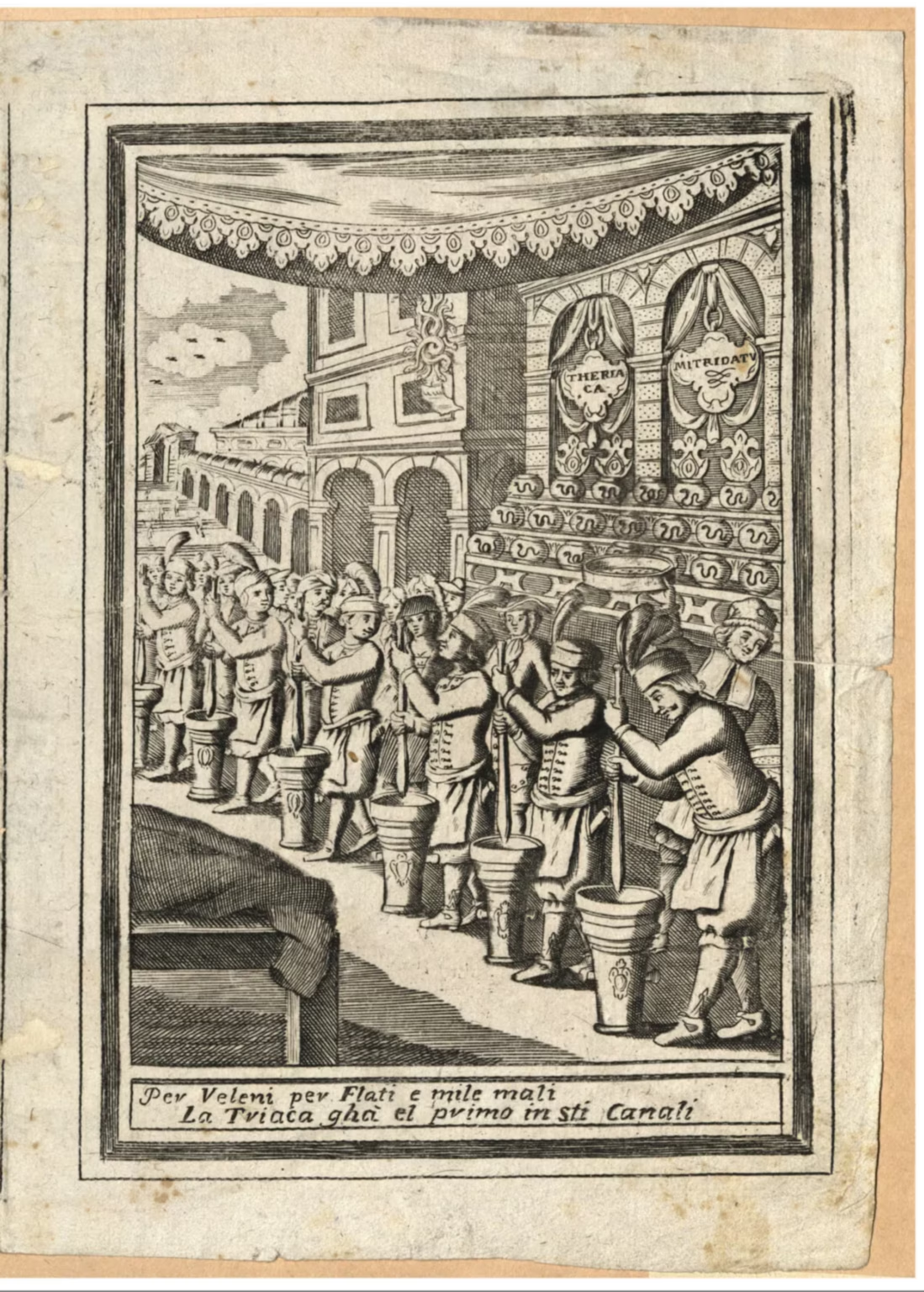
Theriac was considered a kind of wonder medicine, and an antidote for most poisons. It required over sixty ingredients, and it was one of the prime products of the many pharmacies in Venice in the 1600s and 1700s.
Due to issues with fraud — and the importance of the industry to the Venetian economy — the Magistrato alla Sanità obliged the spezier1 and the pharmacists to display the ingredients for theriac in the street in front of the shop for several days each year.
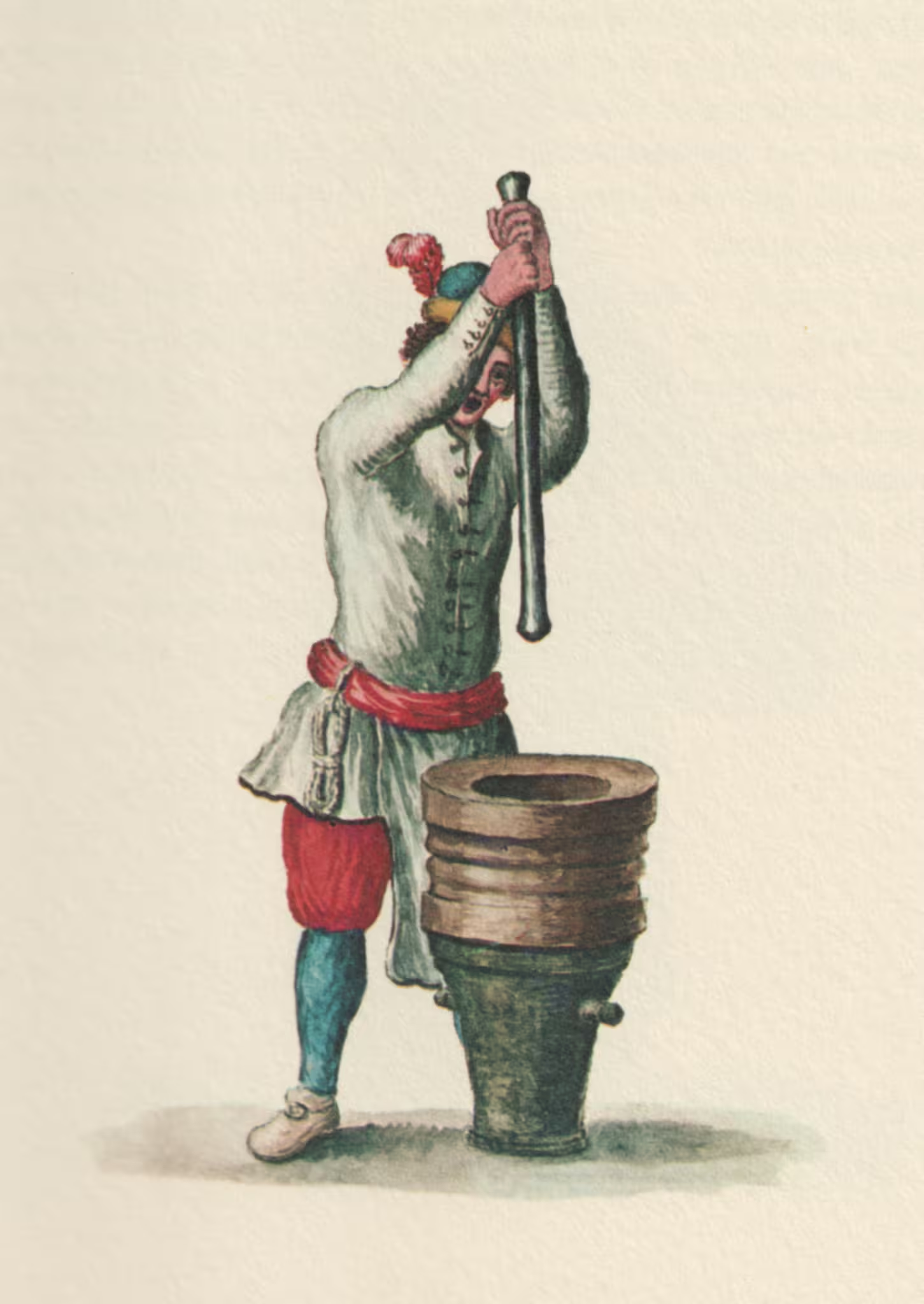
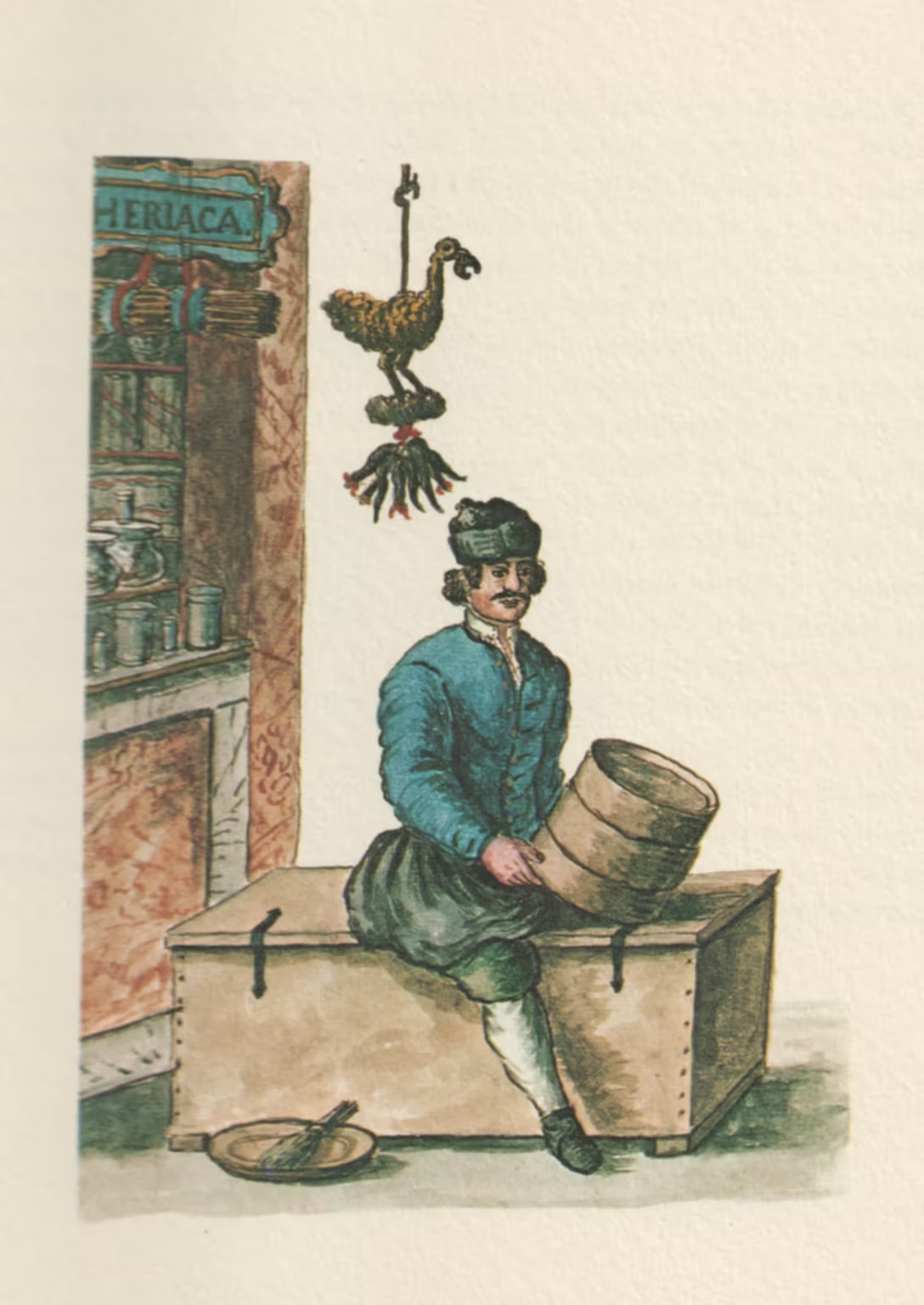
Day labourers were hired to grind the ingredients into a fine powder, working in the open in front of the pharmacy.
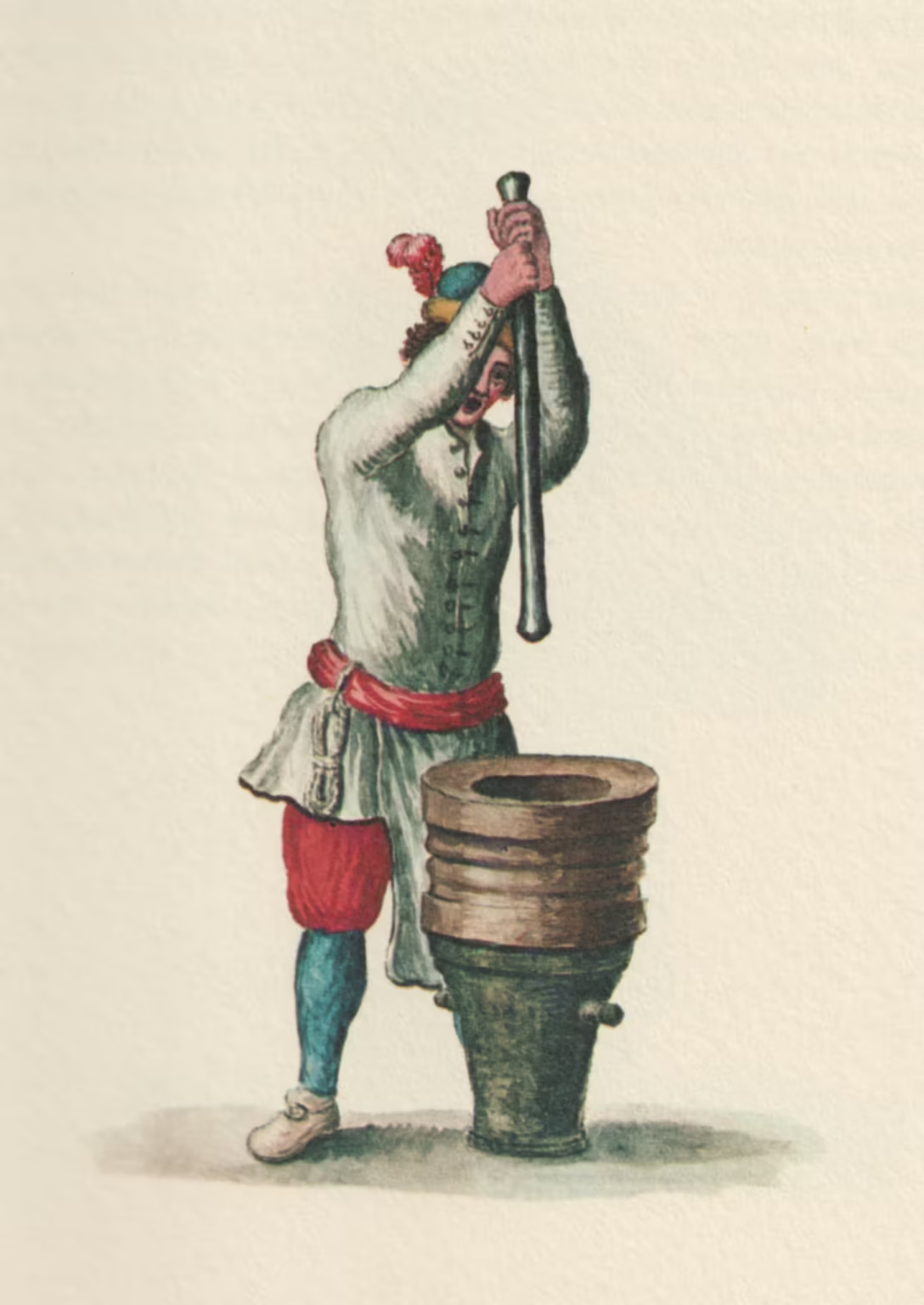
This watercolour depicts such a worker, pounding the ingredients of theriac in a giant mortar.
Source: Gli abiti de veneziani di quasi ogni età con diligenza raccolti e dipinti nel secolo XVIII, by Giovanni Grevembroch (1731–1807), which in four volumes contains over six hundred watercolours of how Venetians dressed in the 1700s.
Labourers
The Theriaca of Andromachus the Elder,2 taken from Galen,3 which has been manufactured for many years in Venice, acquired its beginnings of fame in the 17th century, through the work of Orazio Guargante da Sonzino, Doctor and Philosopher here, who had to describe it at the request of Monsignor Lodovico Taverna, Apostolic Nuncio to the Most Serene Republic, to whom its use was so profitable.
It is a universally held opinion that no better is made than that produced in this Dominant city, where, with noble displays and the intervention of Experts and Magistrates, it is composed, and among the Apothecaries, the one of the Ostrich on the Beretteri Bridge gained great renown, through the attention of Mr. Giorgio Melichio. The Sign of the Bell was also esteemed in this regard, due to the diligent care and skill of Lazaro Canale, and subsequently, his Disciples and Descendants always used the method they had learned.
For such a healthy composition, which boasts the first place among the Antidotes, no other Art is more appropriate than that of robust Porters, Men coming from Friuli, Bergamo, and Brescia, most faithful Subjects of the Most Serene Government, and accepted, so as to meet the needs of their poverty, assisted, with the useful work, to which they are accustomed; they don’t have other tax than that of paying twenty-four soldi every month to the House of the Arsenal, or that two days a month, in which they work for free; over one hundred and seventy, their set daily rate, and the same amount to the Treasury of the Office of Salt.
Therefore, for three days at certain times of the year, a group of labourers fervently crushing the precious Drugs with blows of very heavy Pestles, against the resistance of the Bronze Mortars,4 can be seen cheerfully lightening their fatigue, and singing in thanks of the corresponding pay.
For Poisons, for Farts, and thousand evils,
La Teriaca has the primacy in these Canals.
Here is the Outfit used by them, which, if they change in the future, will serve as an example, according to the idea we wish to present.
To Mr. Domenico Rota, of brilliant, though decrepit age, formerly Collector of the Duty of the Labourers at the Arsenale, we expose the strength of a Man, not unknown to Him.
Translator’s notes
- A spezier (or speziale) was a merchant of herbs and spices for medicinal purposes, or a pharmacist. ↩︎
- Andromachus the Elder was the physician of Roman emperor Nero during his reign in the first century, and supposedly the inventor of Theriac. ↩︎
- Galen of Pergamon was a Greek and Roman physician in the second century, and one of the great authority figures of European medicine. ↩︎
- One such mortar is on display in the Palazzo Mocenigo museum in Venice. ↩︎
Original text
Facchini
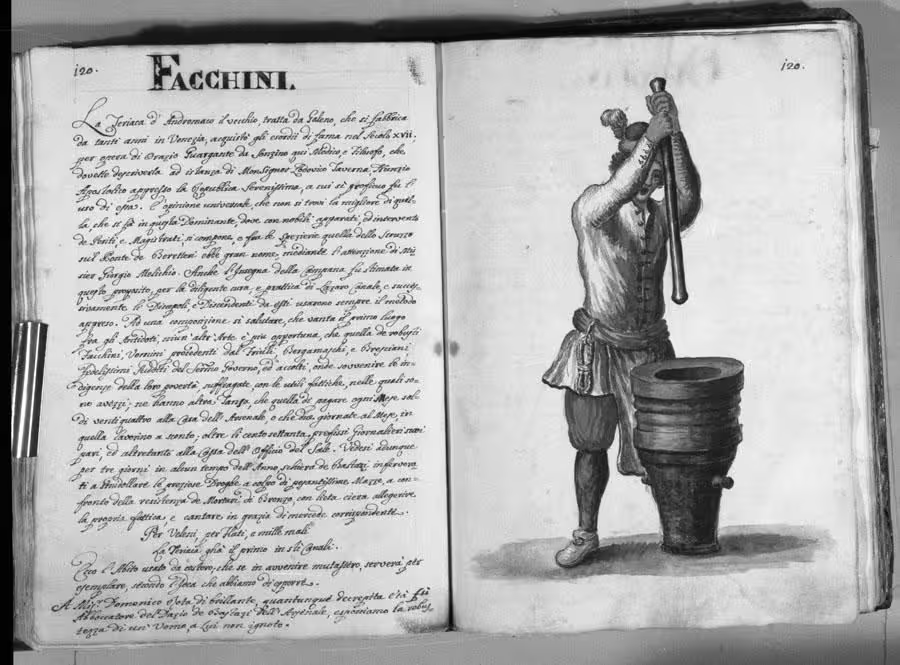
La Teriaca d’Andromaco il vecchio, tratta da Galeno, che si fabbrica da tanti anni in Venezia, acquistò gli esordii di fama nel Secolo XVII, per opera di Orazio Guargante da Sonzino, qui Medico, e Filosofo, che dovette descriverla ad istanza di MonSignor Lodovico Taverna, Nunzio Apostolico appresso la Republica Serenissima, a cui sì proficuo fu l’uso di essa.
È opinione universale, che non si trovi la migliore di quella, che si fà in questa Dominante, dove con nobili apparati, ed intervento de Periti, e Magistrati, si compone, e fra le Spezierie quella dello Struzzo sul Ponte de Beretteri ebbe gran nome, mediante l’attenzione di Missier Giorgio Melichio. Anche l’Insegna della Campana fu stimata in questo proposito, per la diligente cura, e prattica di Lazaro Canale, e successivamente li Discepoli, e Discendenti da essi usarono sempre il metodo appreso.
Ad una composizione sì salutare, che vanta il primo luogo fra gli Antidoti, niun’altr’Arte è più opportuna, che quella de robusti Facchini, Uomini procedenti dal Friuli, Bergamaschi, e Bresciani, fedelissimi Sudditi del Ser.mo Governo, ed accolti, onde sovvenire le indigenze della loro povertà, suffragate, con le utili fattiche, nelle quali sono avezzi; ne hanno altra Tansa, che quella di pagare ogni Mese soldi ventiquattro alla Casa dell’Arsenale, o che due giornate al Mese, in quella lavorino a sconto; oltre li centosettanta, prefissi Giornalieri suoi pari, ed altretanto alla Cassa dell’Officio del Sale.
Vedesi adunque per tre giorni in alcun tempo dell’Anno, schiera de Bastazi infervorati a smidollare le preziose Droghe a colpo di pesantissime Mazze, a confronto della resistenza de Mortari di Bronzo, con lieta ciera allegerire la propria fattica, e cantare in grazia di mercede corrispondente.
Per Veleni, per Flati, e mille mali
La Teriaca ghà il primo in stì Canali.Ecco l’Abito usato da costoro, che se in avvenire mutassero, serverà per esemplare, secondo l’Idea che abbiamo di esporre.
A Mis.r Domenico Rota, di brillante, quantunque decrepita Età fà Abboccatore del Dazio de Bastazi dell’Arsenale, esponiamo la robustezza di un’Uomo, a Lui non ignoto.
Grevembroch (1981), vol. 3, p. 120.
Related articles
Venetian Stories
Related sources
- A Theriac recipe (1734)
- A Theriac advertisement (1688)
- The preparation of Theriac — two prints (1600s)
- Teriaca — Theriac — Lessico Veneto
Related images
- The preparation of Theriac — two prints (1600s)
- Fabricatore di Teriaca — Maker of Theriac — Grevembroch 3-127
- Protomedico — Chief Physician — Grevembroch 2-160
Bibliography
- Grevembroch, Giovanni. Gli abiti de veneziani di quasi ogni eta con diligenza raccolti e dipinti nel secolo XVIII, orig. c. 1754. Venezia, Filippi Editore, 1981. [more]
Leave a Reply