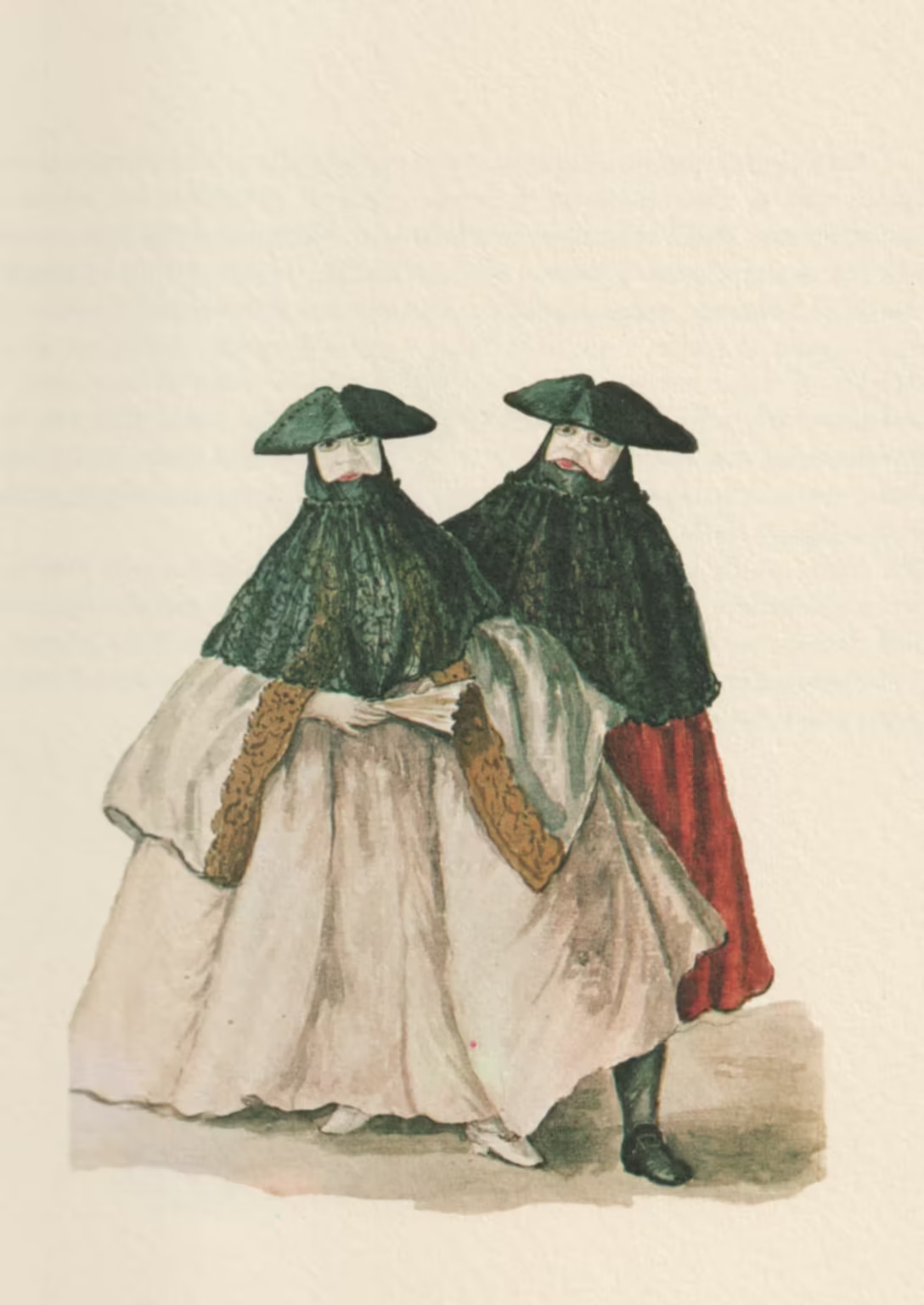
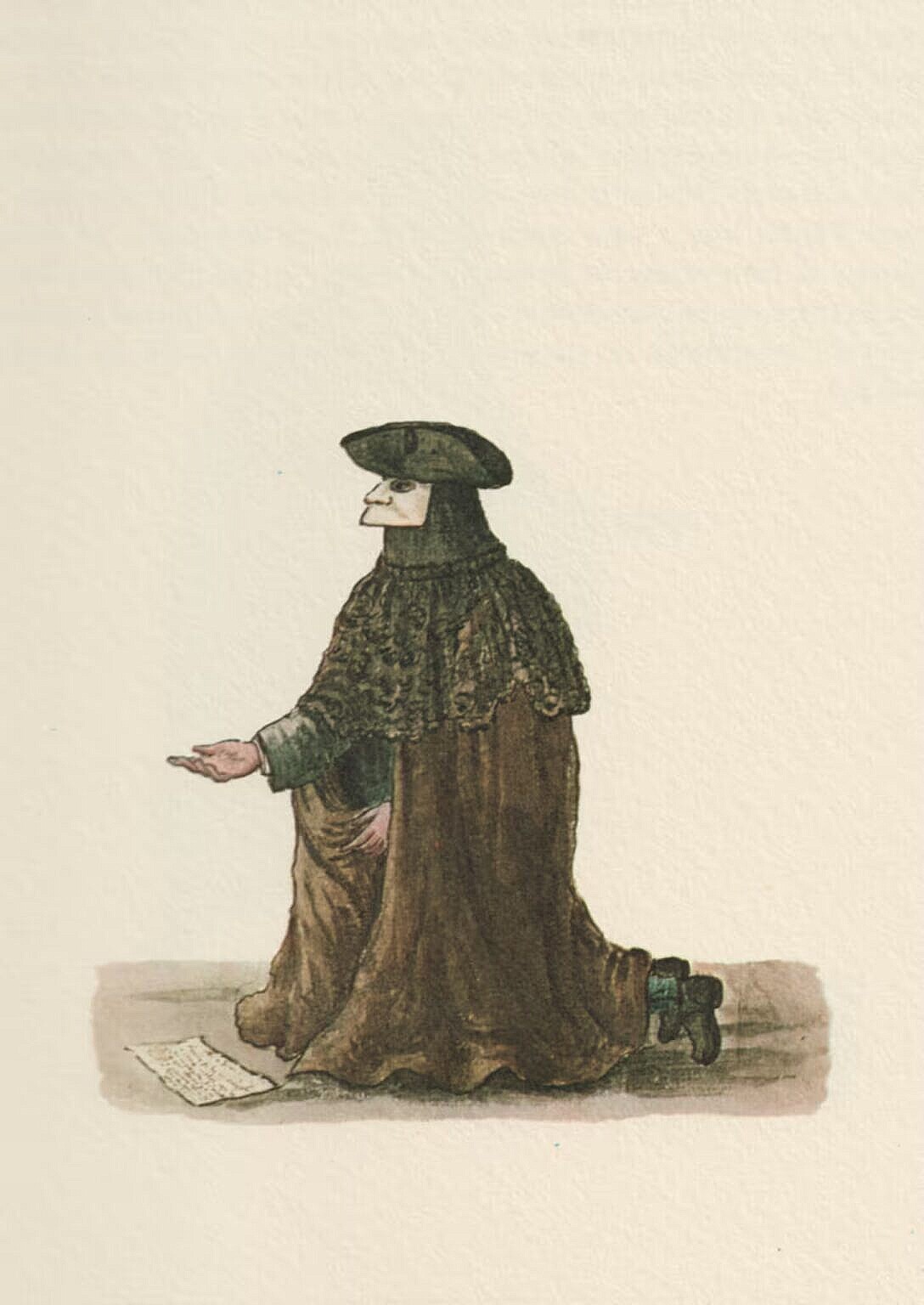
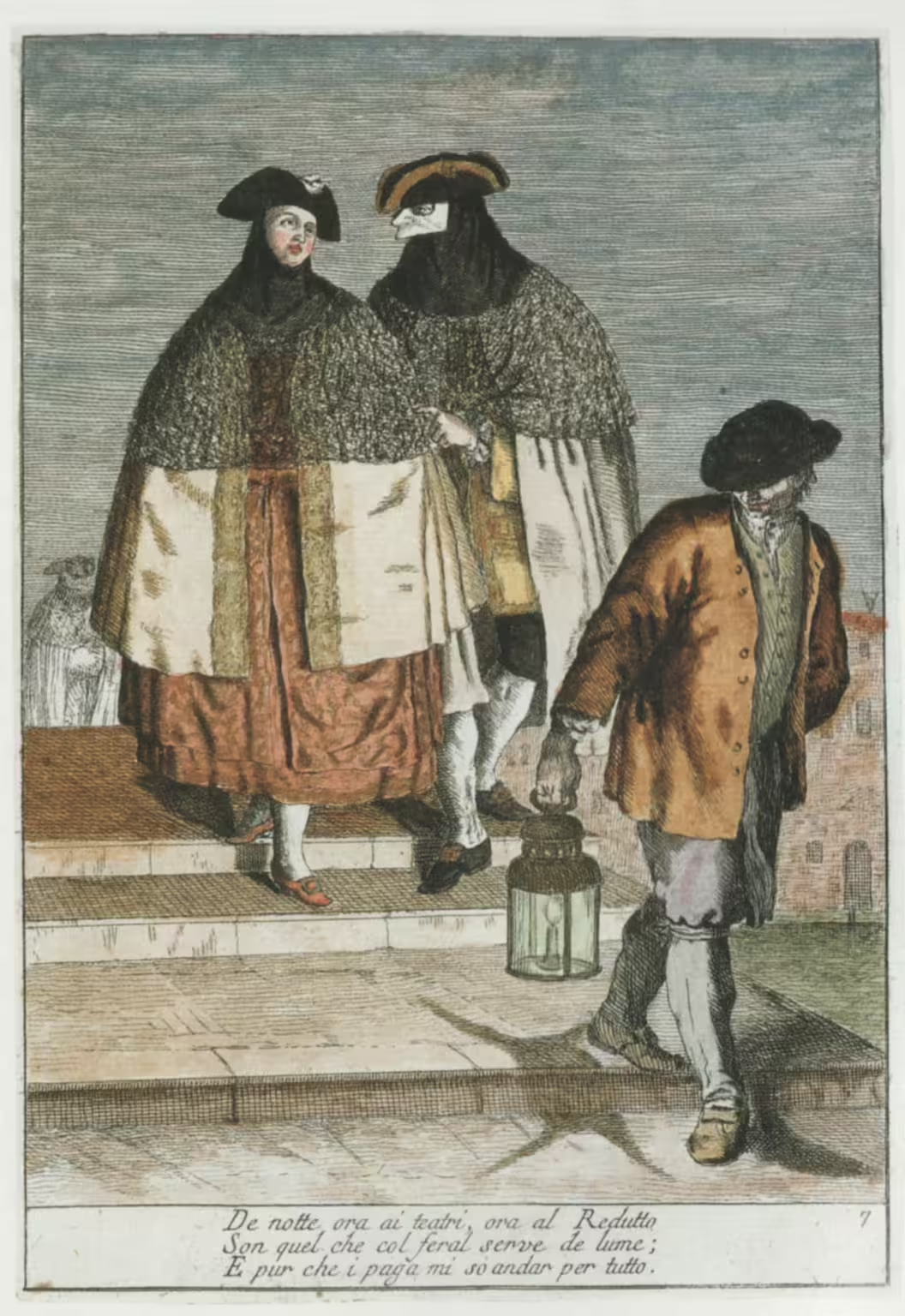
The bauta was a masquerade costume, consisting of a white mask with a beak like protrusion, a tricorne hat, a hood, a short mantel and long cloak.
It was much used during the Venetian carnival, and also at other times, as a means of obtaining privacy and anonymity.
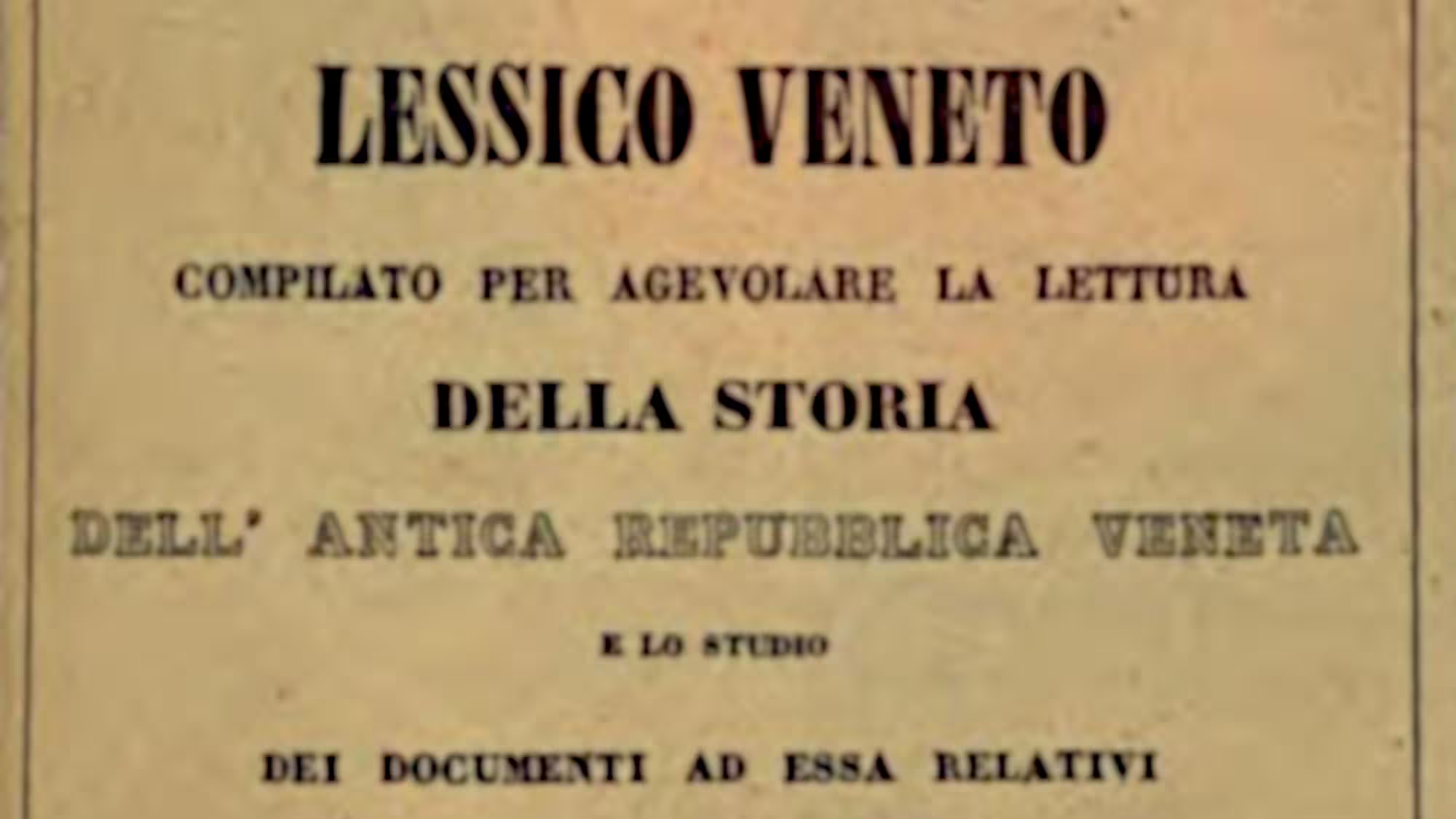
The Lessico Veneto (Venetian Vocabulary) by Fabio Mutinelli was published in 1851. It is an invaluable tool for anybody who reads texts from the time of the Republic of Venice.
Fabio Mutinelli (1797-1876) was director of the I. R. Archivio Generale di Venezia (1847-1861), and a prolific writer on the history of Venice.
BAUTA. It was a mask costume, consisting of a black silk cloak and a small cape, or rochet,1 of black silk lace, which, starting from the head, over which the tricorn hat was placed, fell over the shoulders, covering half of the body; this small cape was precisely the Bauta, and the whole outfit was called Maschera di tabarro2 and bauta. A false face mask was also used, black, or shiny from polish and whiteness.
Since nobles could not appear in public, as we have seen, without their official attire, the Bauta was chosen, perhaps in the seventeenth century, as an alternative outfit, so that they, without imposing on others and entirely free on their part, could comfortably attend theatres, carnival shows, national celebrations, and those held on the occasion of the election of the Doge and the Procurators.
Now in the evening, even women, who in the morning had worn the Cendaleto,3 would use the Bauta, and it happened that men and women assumed under that strange disguise the same appearance, so that both the highest nobility and the humblest commoners, as well as the most distinguished informers, found themselves alike.
The Bauta was allowed from the first Sunday of October until Advent, throughout the carnival, and on every occasion of all these said festivities, but there is absolutely no record regarding the time of its origin, which, however, forming part of said Bauta the cloak and the tricorn hat, cannot be very remote.
Translator’s notes
- The rocchetto (rochet in English) is a short, elbow length cape, in common use in Venice, but today only used by clergy. ↩︎
- The Tabarro (also: tabaro) was a loose cloak or cape, often made from lush materials for use in winter, fastened at the front. ↩︎
- Cendalo (also zendalo; English: cendal) was a light fine cloth of raw silk or cotton, typically decorated with stripes. ↩︎
Original text
BAUTA. Era vesta da maschera, e si componeva di un ferraiolo nero di seta, e di un mantellino, o roccetto di pizzo serico, parimente nero, che partendo dal capo, sopra il quale si poneva il tricuspide cappello, scendeva sulle spalle, coprendo la metà della persona; questo mantellino era giustamente la Bauta, chiamandosi l’insieme dell’abbigliamento Maschera di tabarro e bauta. Usavasi pure una faccia finta, nera, o rilucente per nitore e bianchezza.
Non potendo i nobili uscire in pubblico, siccome abbiamo veduto, senza la lor veste di officio, fu scelta, forse nel secolo decimosettimo, la Bauta come abito di ripiego, affinchè essi senza imporre altrui, e liberi affatto per parte loro, avessero potuto agiatamente intervenire ai teatri, agli spettacoli del carnovale, alle patrie feste ed a quelle che si facevano nell’occasione dell’elezione del doge e dei Procuratori.
Or nella sera, usando la Bauta anche le donne, che il mattino avean portato il Cendaleto, avveniva che uomini e femmine prendessero sotto quello strano travestimento una medesima forma, ugualmente per ciò trovandovisi e la più grande nobiltà, e la plebe più vile, e i delatori più insigni.
La Bauta era permessa dalla prima domenica di ottobre fino all’ Avvento, per tutto il carnoval , e in ogni occasione di tutte le dette feste; ma assolutamente manca ogni memoria circa il tempo dell’ origine sua, che però, formando parte di detta Bauta il tabarro e il tricuspide cappello, non dev’essere di molto rimota.
Related articles
Venetian Stories
Related sources
Related images
Leave a Reply