
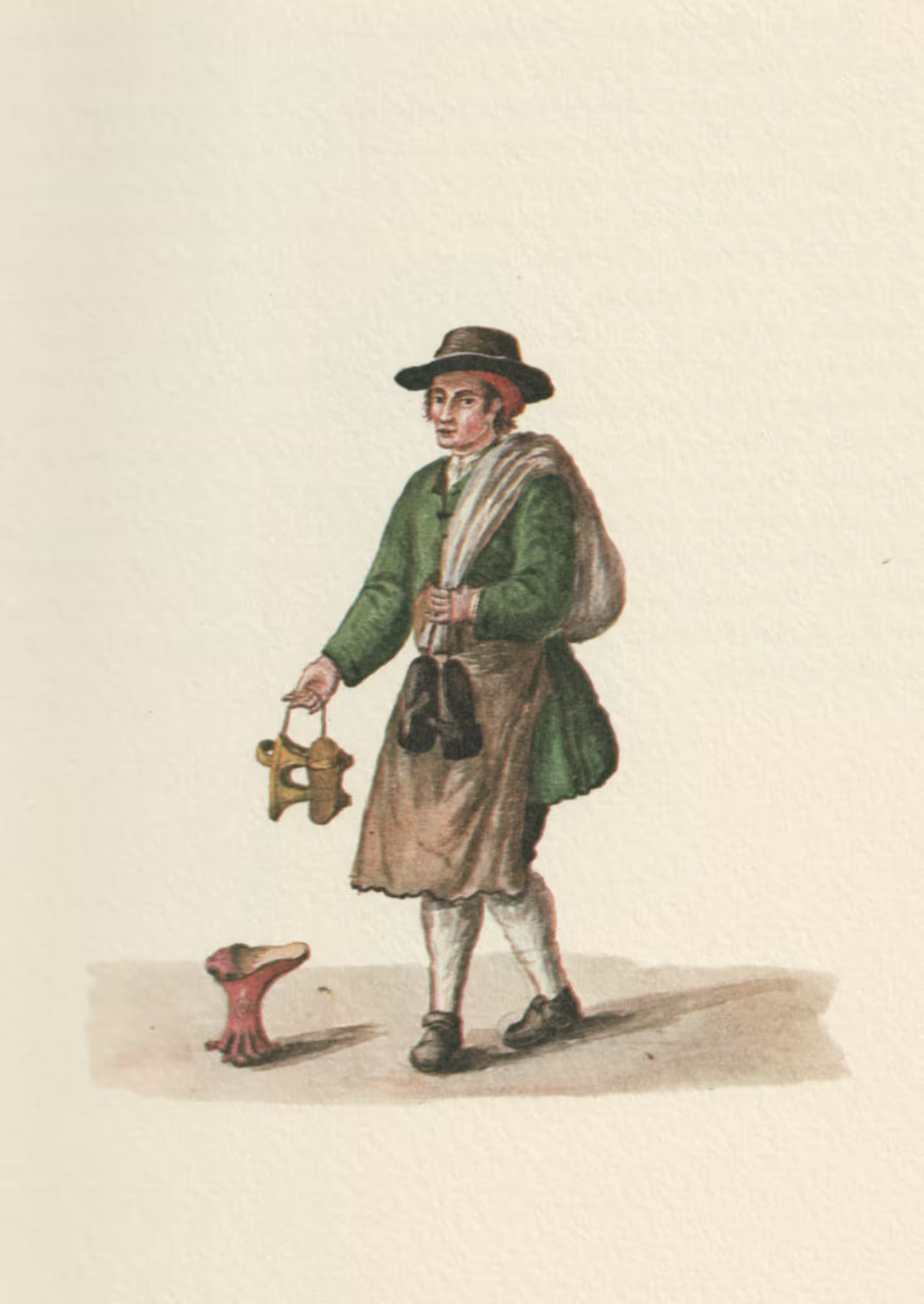
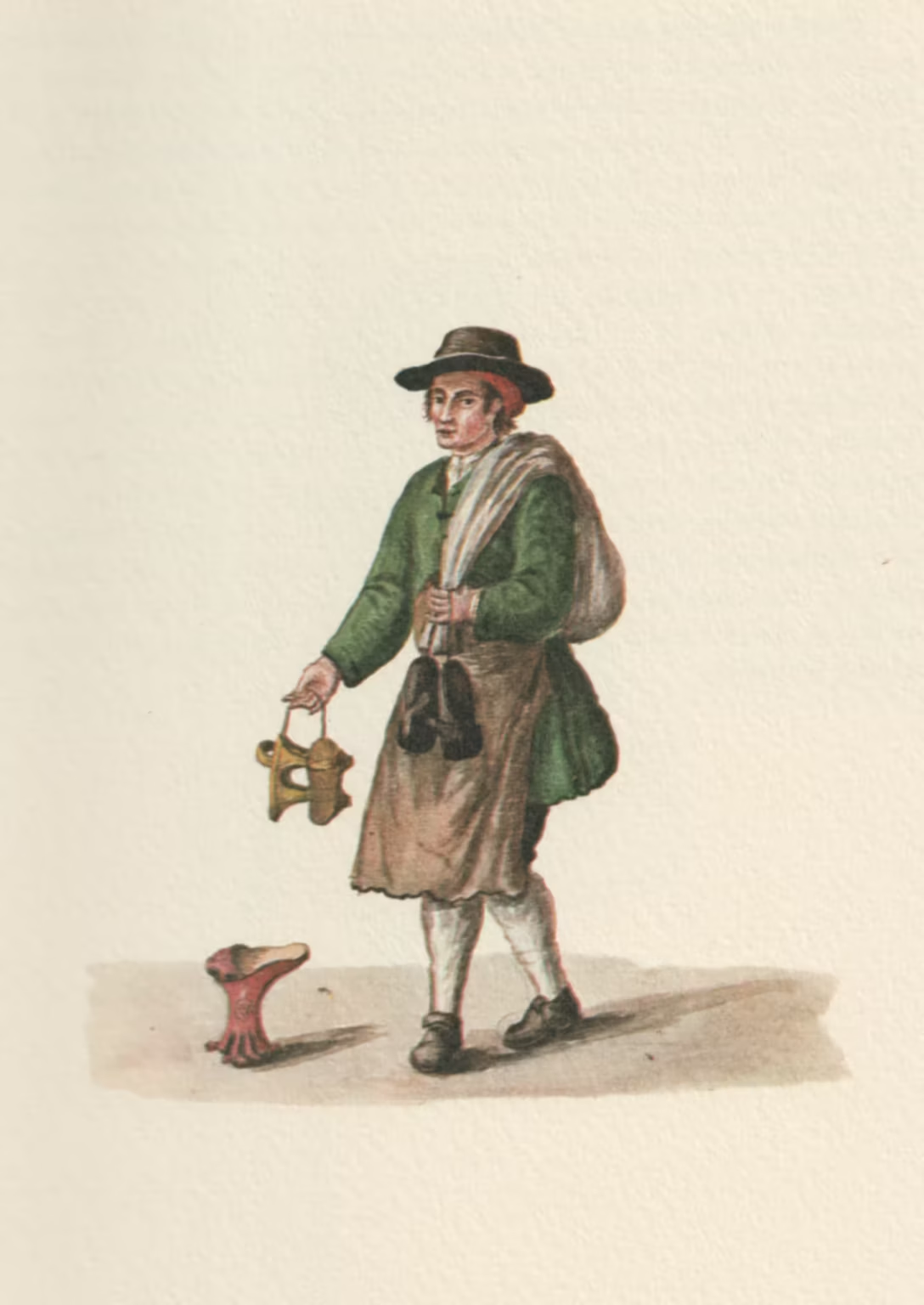
This painting depicts a shoemaker specialised in calcagnette and zoccoli.
There were calegheri, calzolari or scarpéri (shoemakers), zavatteri (makers of slippers), zoccolai (makers of clogs and calcagnette), pianellai (makers of pianelle, tall sandals), and scarperut (who repaired old shoes for resale).
All these categories of shoemakers were organised in a single guild, under the Scuola dei Calegheri in the Campo San Tomà.
Source: Gli abiti de veneziani di quasi ogni età con diligenza raccolti e dipinti nel secolo XVIII, by Giovanni Grevembroch (1731–1807), which in four volumes contains over six hundred watercolours of how Venetians dressed in the 1700s.
Quadruple Craft
We must also be pleased with a Shoemaker who, having understood that above all other Arts he had set himself the task of writing and painting, protested that he would suffer an insult if something was not said on his behalf.
There is no certain difference between his peers, the Cobblers, the Makers of slippers, and the Shoemakers because they are all subject to a single Gastaldo,1 to the public Finances,2 and to the protection of St. Anianus, whose School3 and Altar are in the Parish of St. Thomas.
The first ones show up where they are called, and these are the old ones, or those unfit for service in the Shops;
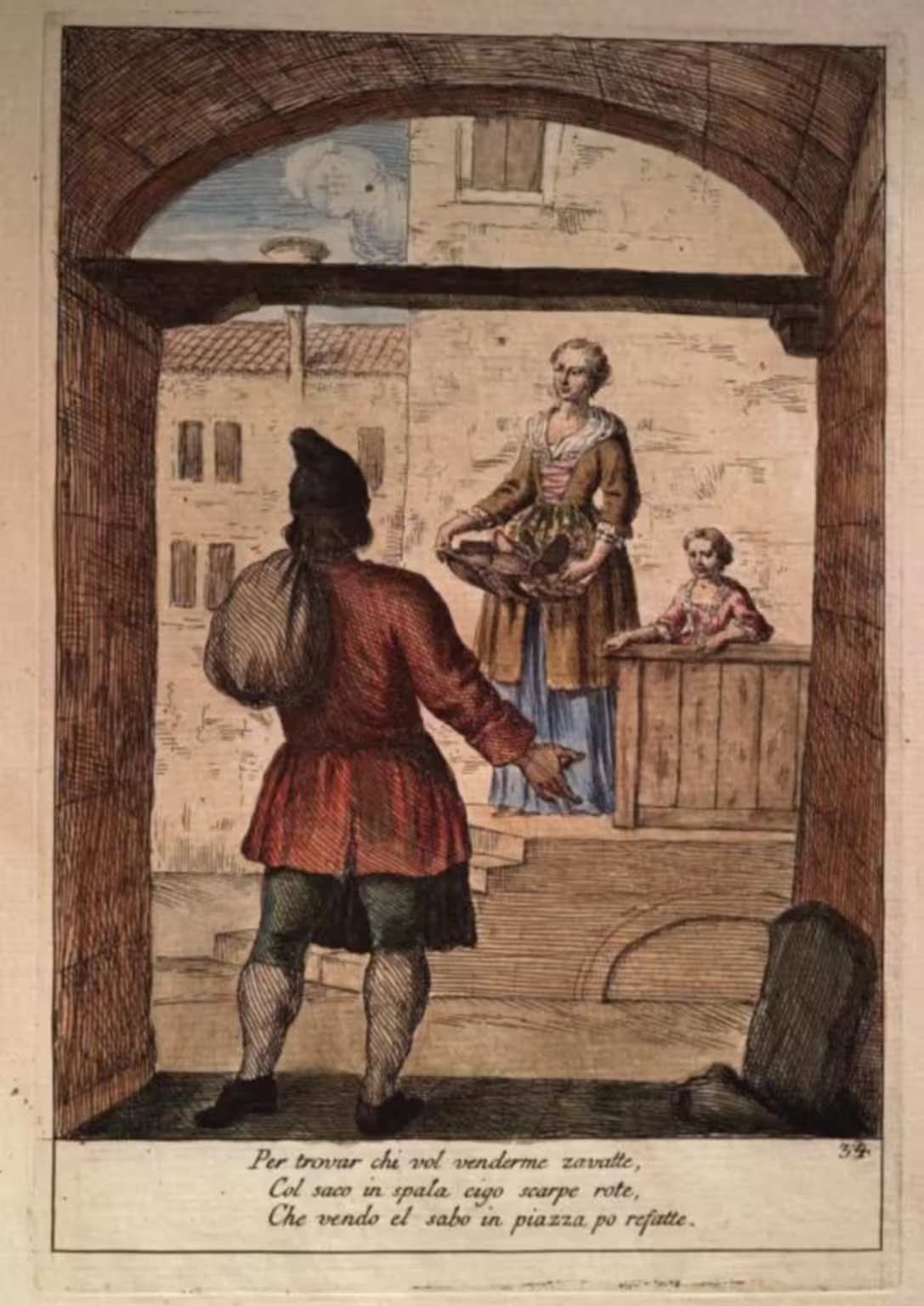
The second ones collect discarded things for a small sum of money, in order to repair them and profitably resell them;4
The third ones, in one way or another, either at home or elsewhere, get to work, unlike the shoemakers, whose only concern is to fashion new and beautiful shoes.
It was permitted for both the Shoemakers and the Makers of Slippers, being Headmasters and supported by Insignia in their own places,5 to sell in the Campo di S. Giovanni in Bragola, as a marketplace, which then in 1292 was moved to San Polo on Wednesdays, and on Saturdays to Piazza di San Marco. The sale of similar goods was also permitted on Saturdays behind the Rialto, towards the Fishmarket, in accordance with the Law of 1334. 22 Augusti. Calegarij non possint vendere in Rivo alto.6
If in Nuremberg there was a shoemaker who published three volumes of his poetry in his native tongue, and if among the rare ancient Roman inscriptions the following stands out, why may it not happen one day that some Venetian shoemaker becomes a philosopher and makes himself worthy of a glorious epigraph?
C. ATILIVS. C.F.
IVSTVS.
SVTOR CALIGARIVS
SIBI ET
CORNELIAE EXORAT
VXORI PI.7
Translator’s notes
Paragraph breaks added for better readability.
- The gastaldo was the elected leader of a guild of artisans or merchants, often called a scuola or confraternità (brotherhood). ↩︎
- The Provveditori alla Giustizia Vecchia oversaw the work of artisans in Venice, and controlled weights, measures, prices and the quality of goods.. ↩︎
- A Venetian scuola could be a charity, a lay religious organisation or a guild. The scuole grandi were major charities recognised by the republic. ↩︎
- See Scarperut, reseller of used footwear by Gaetano Zompini. ↩︎
- This means having a proper shop or workshop, with a sign hanging outisde. ↩︎
- More or less: Cobblers cannot sell at the Rialto. ↩︎
- Roughly, Caius Atilius, son of Caius, Just, maker of shoes, made this [tomb] for himself and for Cornelia, his beloved and dutiful wife. ↩︎
- San Aniano d’Alessandria (English: St. Anianus), a cobbler, was an early convert, a trusted companion of St. Mark, and the second patriarch of Alexandria in Egypt. In Venice, he was the patron saint of cobblers, shoemakers and similar. ↩︎
Original text
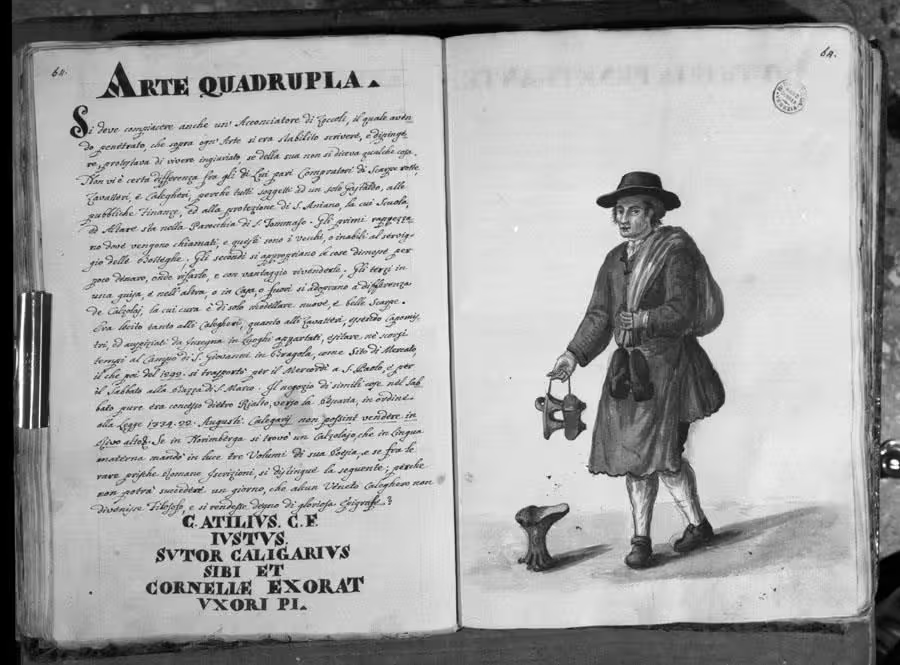
Arte Quadrupla
Si deve compiacere anche un’Acconciatore di Zoccoli, il quale avendo penetrato, che sopra ogn’Arte si era stabilito scrivere, e dipingere, protestava di vivere ingiuriato, se dalla sua non si diceva qualche cosa.
Non vi è certa differenza fra gli di Lui pari Compratori di Scarpe rotte, Zavatteri, e Calegheri, perche tutti soggetti ad uno solo Gastaldo, alle pubbliche Finanze, ed alla protezione di S. Aniano,8 la cui Scuola, ed Altare sta nella Parocchia di S. Tommaso.
Gli primi rappezzano dove vengono chiamati, e questi sono i vecchi, o inabili al serviggio delle Botteghe;
Gli secondi si appropriano le cose dimesse per poco denaro, onde rifarle, e con vantaggio rivenderle;
Gli terzi in una guisa, e nell’altra, o in Casa, o fuori si adropano a differenza de Calzolaj, la cui cura è di solo modellare nuove, e belle Scarpe.
Era lecito tanto alli Calegheri, quanto alli Zavatteri, essendo Capomistri, ed auspiziati da Insegna in Luoghi appartati, esitare ne’ scorsi tempi al Campo di S. Giovanni in Bragola, come Sito di Mercato, il che poi del 1292 si trasportò per il Mercordì a S. Paolo, e per il Sabbato alla Piazza di S. Marco. Il negozio di simili cose nel Sabbato pure era concesso dietro Rialto, verso la Pescaria, in ordine alla Legge 1334. 22 Augusti. Calegarij non possint vendere in Rivo alto.
Se in Norimberga si trovò un Calzolaio, che in Lingua materna mandò in luce tre Volumi di sua Poesia, e se fra le rare prische Romane Iscrizioni, si distingue la seguente; perche non potrà succedere un giorno, che alcun Veneto Caleghero, non divenisse Filosofo, e si rendesse degno di gloriosa Epigrafe?
C. ATILIVS. C.F.
Grevembroch (1981), vol. 4, p. 64.
IVSTVS.
SVTOR CALIGARIVS
SIBI ET
CORNELIAE EXORAT
VXORI PI.
Related articles
Related sources
- Abito — Lessico Veneto
- Callegheri for more about the guild of shoemakers.
Related images
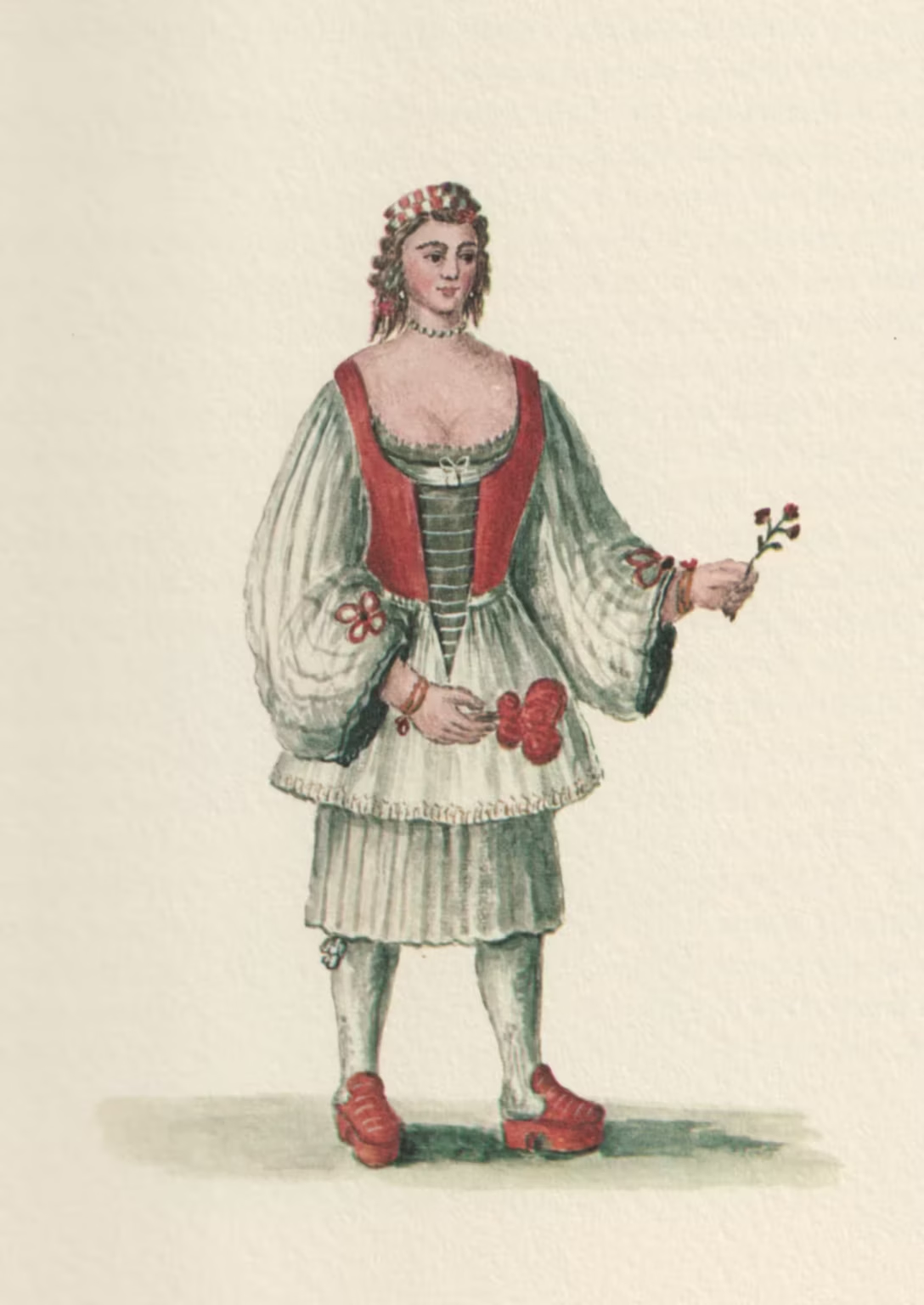
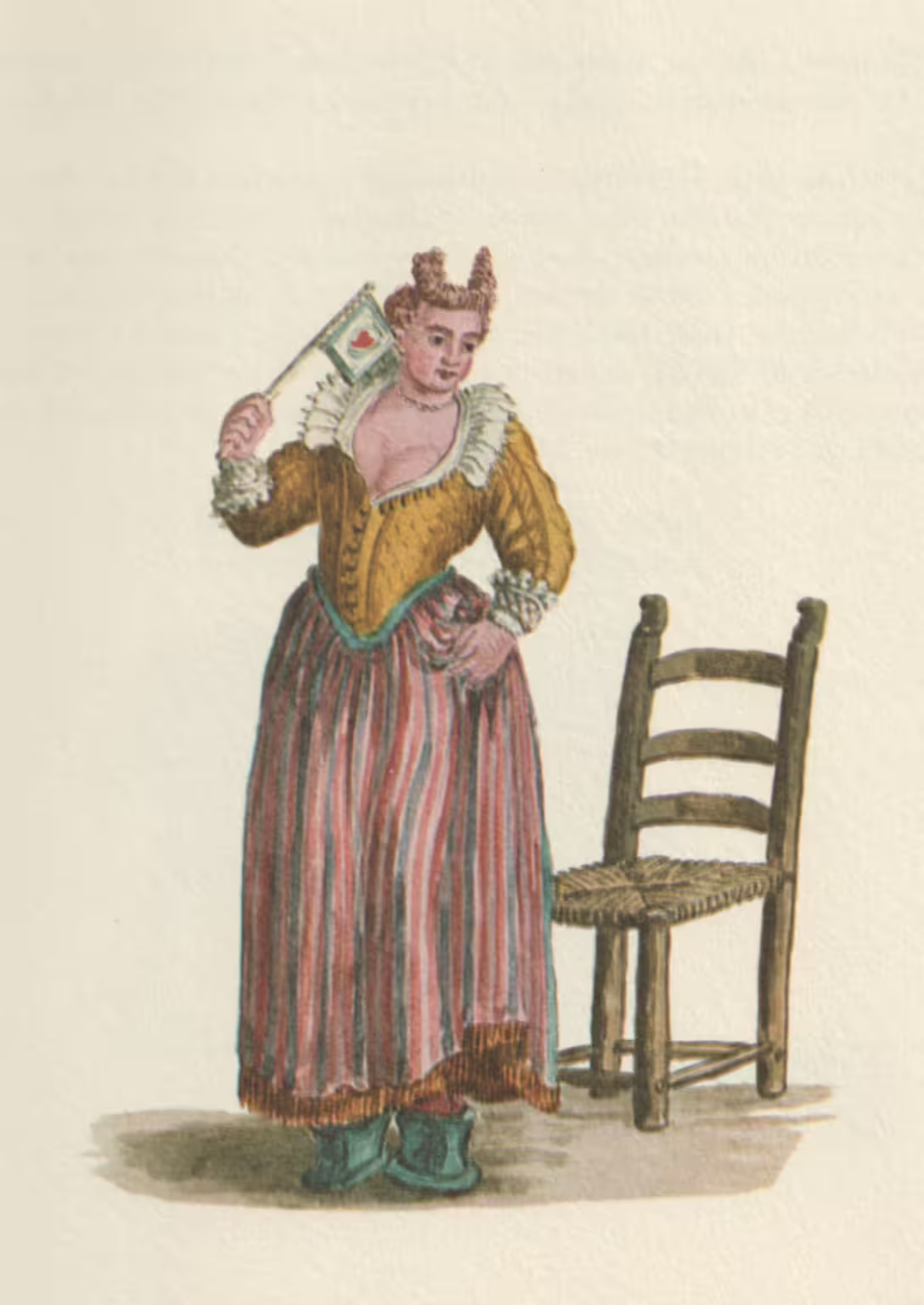
- Altra Donzella — Another young woman — Grevembroch 3-113
- Prostitute al Bordello — Prostitutes in the Brothel — Grevembroch 3–160
- Scarperut — reseller of used footwear — Zompini — Arti #34
Bibliography
- Boerio, Giuseppe. Dizionario del dialetto veneziano. Venezia : coi tipi di Andrea Santini e figlio, 1829. [more] 🔗
- Grevembroch, Giovanni. Gli abiti de veneziani di quasi ogni eta con diligenza raccolti e dipinti nel secolo XVIII, orig. c. 1754. Venezia, Filippi Editore, 1981. [more]
- Tassini, Giuseppe. Curiosità Veneziane ovvero Origini delle denominazioni stradali di Venezia. 1863. [more] 🔗
Leave a Reply