
One of the most common questions I get on my walking tours, is about sewage. Where does it go? Are the canals open sewers? What about Katharine Hepburn and her eye infection?
Contrary to much popular belief, Venice does have a sewage system, but it wasn’t like modern systems in cities built on land.
Taking a dump
So what happens in Venice, when someone goes to the loo to have a dump?
It mostly depends on the building.
The way of managing sewage has changed over time, and most houses in Venice are centuries old. They were not built to accommodate modern amenities.
All one has to do in Venice, is to look upwards, and observe the bundles of wires of all kinds attached to the walls. Telephone lines, optical fibres, electricity mains and what not. Steel tubes, about an inch in diameter, are gas tubes for cooking and heating, with the mains running in the drainage passages under the pavement of the alleyways.
All these things are on the outside because the building has no space inside for them, unlike most modern buildings.
Ancient plumbing
The grand palaces, which line the canals of Venice, was where the wealthy lived.
In such buildings, there were, usually in the kitchen area, a brick box with a lid, which was called the necessario — the necessity. This was where people from the building could empty their chamber pot, or simply relieve themselves.
It was also called a comodo because a beloved child has many names.
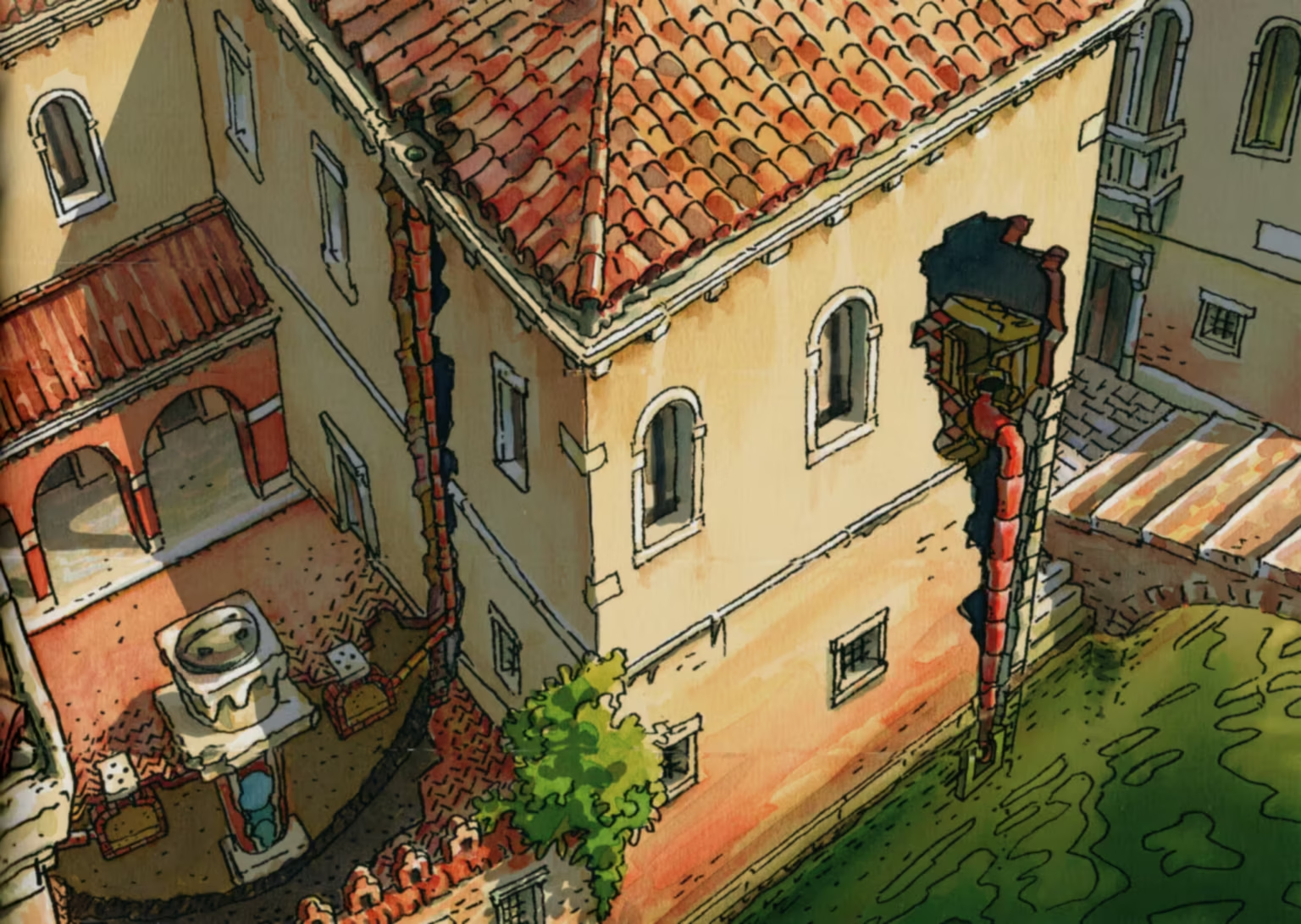
Wastewater from the household, and ashes from the fireplaces, could go down the same way.
There were, generally, no bathrooms in the modern sense of the word, also because there was no running water. Water had to be fetched from the cistern below the courtyard, and carried up in buckets by servants.
Below the necessario a vertical tube, made of pairs of roof tiles, built into the outer wall of the palace, led downwards. Such a passage was a gatolo, which basically means a drainage tube or channel.
Similar, but separate, drainage tubes were also used to channel rainwater from the roof into the cisterns under the courtyard. They were called gatoli too, and so are the drainage channels under the pavement of the alleyways. They’re all drainage tubes.
Underneath the building, inside the foundations, there was a cesspit, called the condoto, where everything from the necessario ended.
Venetian houses are famous for resting on wooden pilings, but those posts are three, four, five meters underground. On top of them, there’s a zatterone — literally a large raft — of thick planks, which form a level base on which the foundation of the building rests.
The brickwork of the buildings therefore extend three, four, five meters underground, and in that space, between the brick foundations, is the cesspit for the sewage.
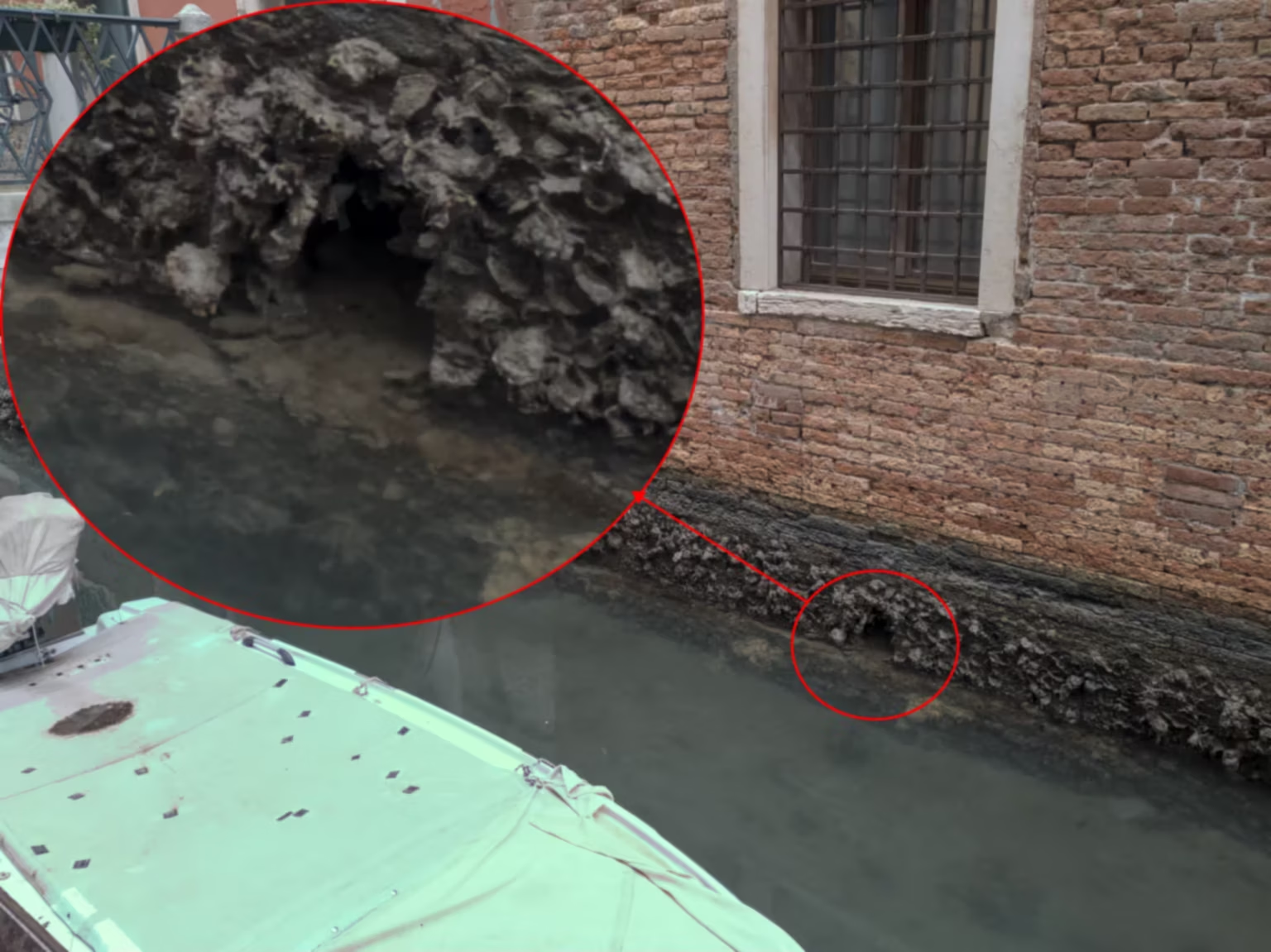
The underground condoto could be connected to a nearby waterway through a passage in the foundation, so excess contents could dissolve and flow out, making the system almost maintenance free.
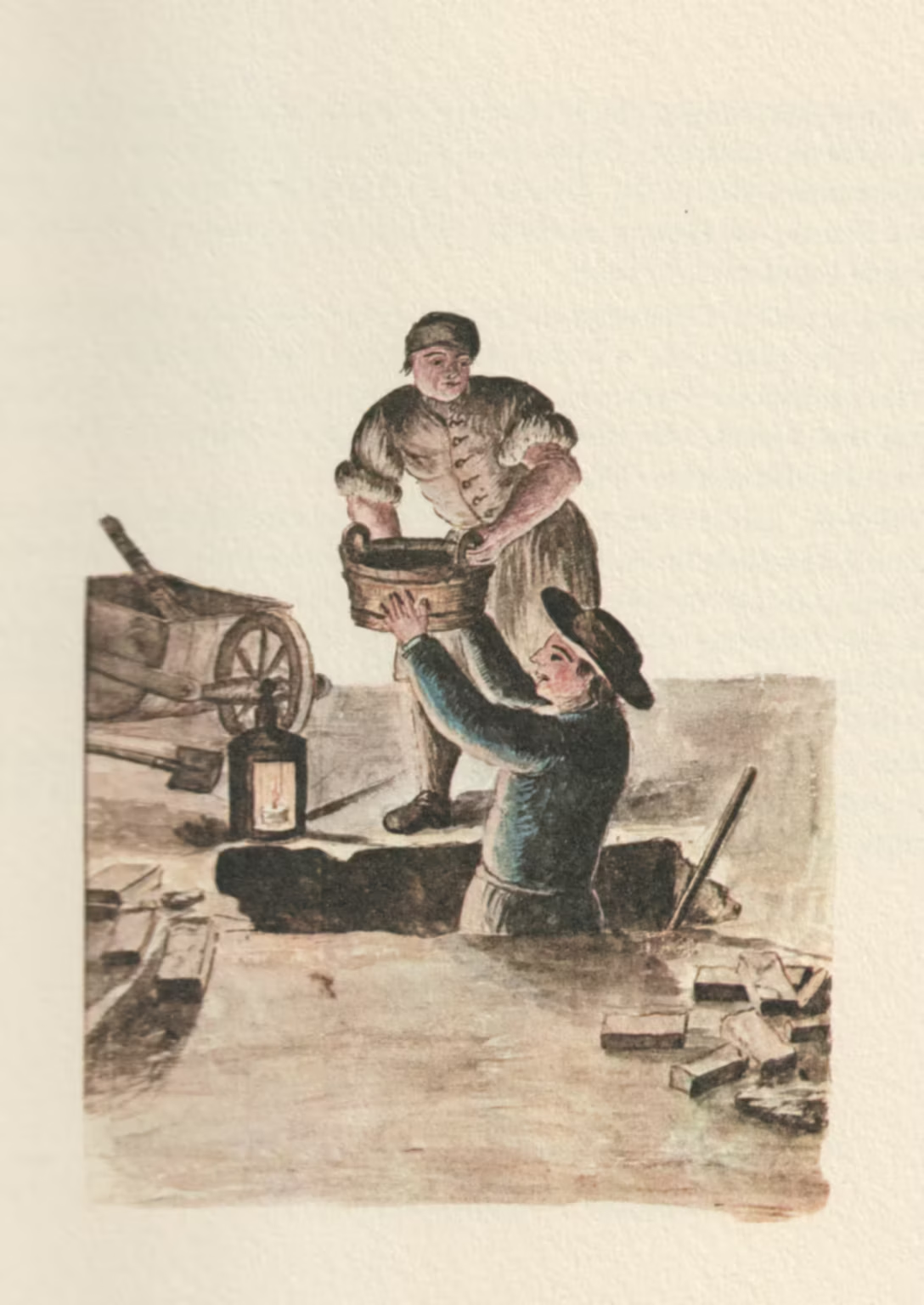
If the passage clogged, or if the condoto ran too full for some other reason, it was necessary to pump out the contents, using long tubes, or buckets and wheelbarrows.
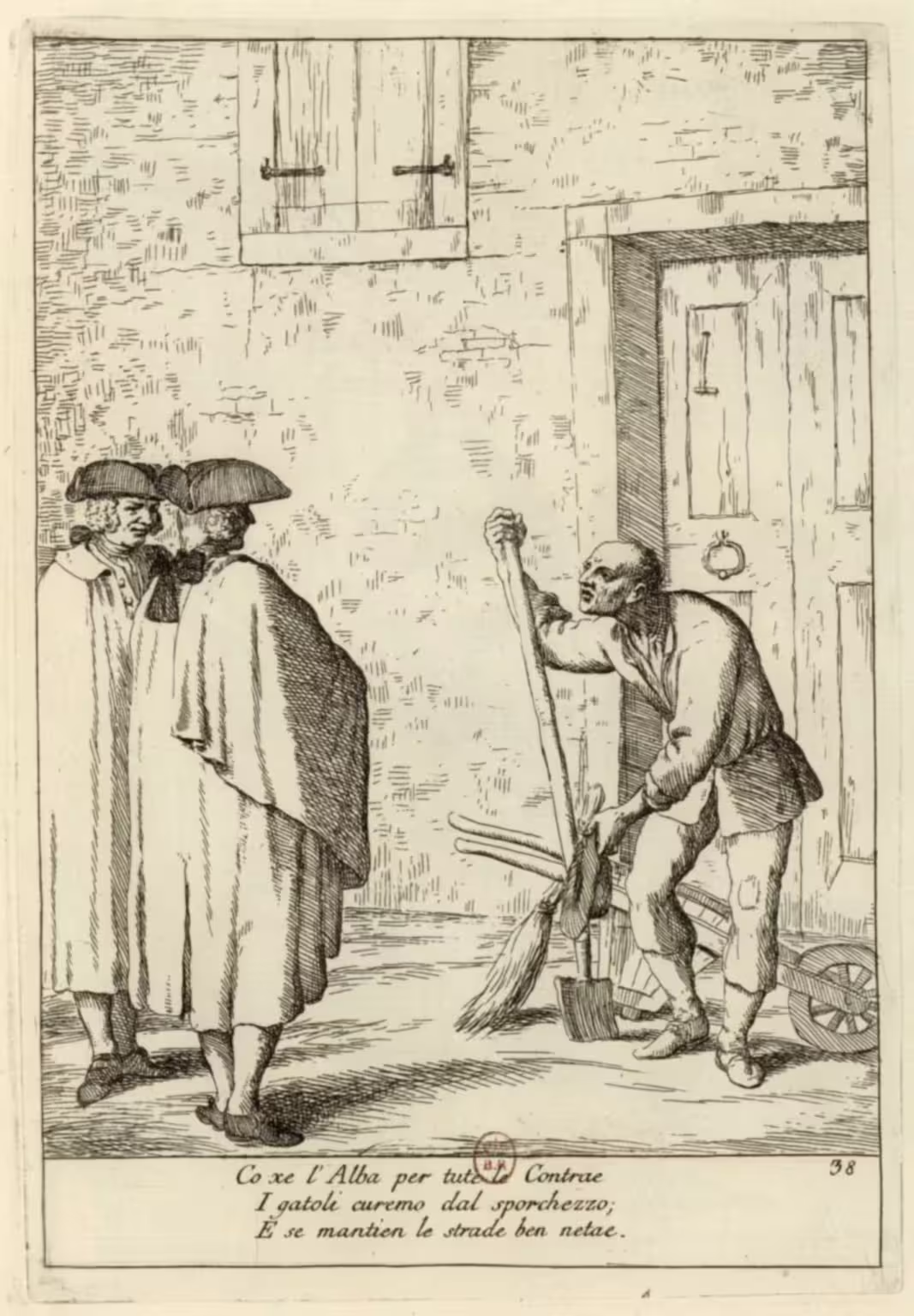
In the past, before modern machinery, this was dirty, manual work. Cleaners of cesspits and gatoli, who often also worked as chimney sweepers, rubbish collectors and grave diggers, were among the lowliest in Venice.
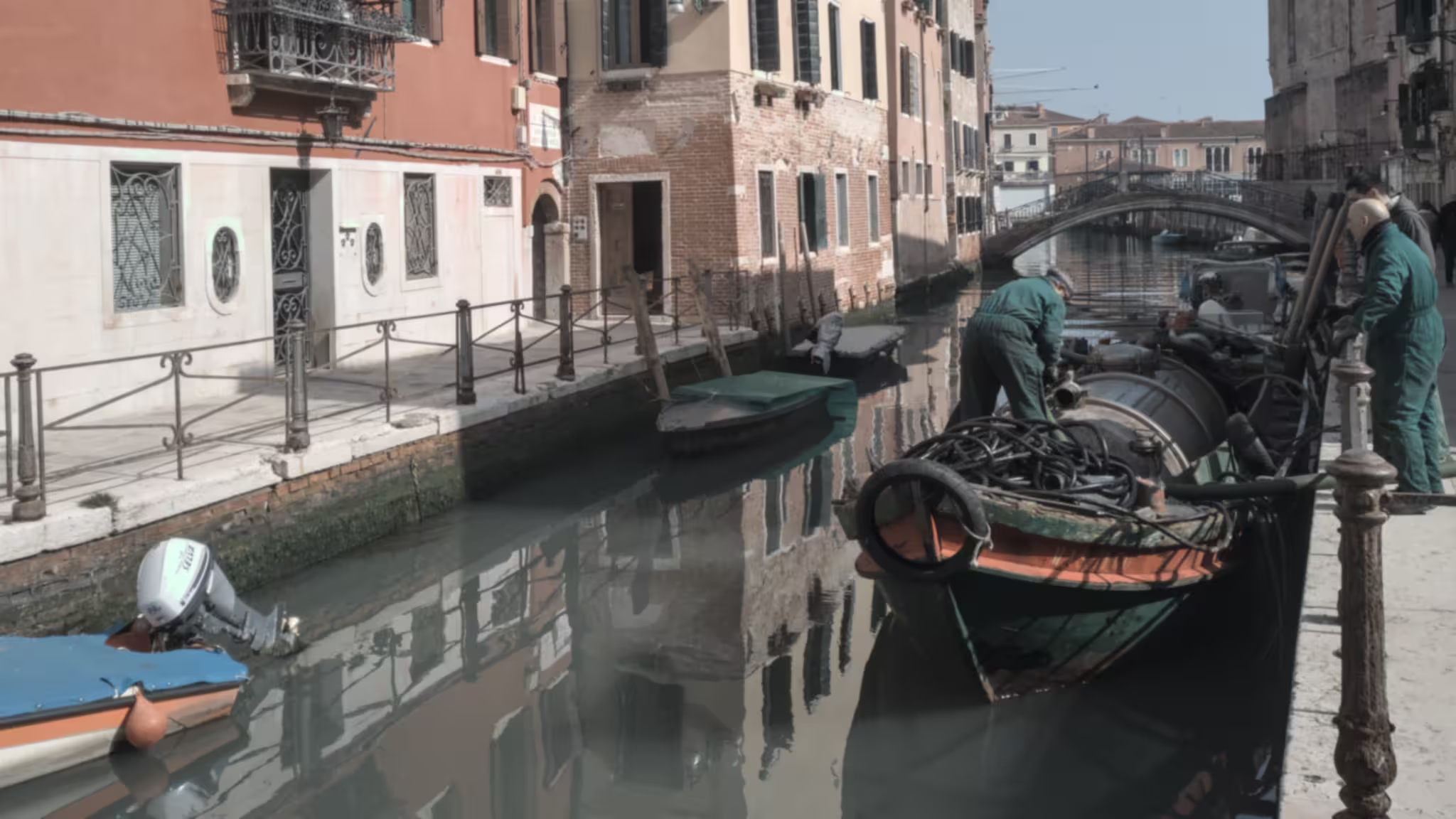
Today, it is handled by large boats with tanks, tubes and pumps, but it is still dirty and partially manual work.
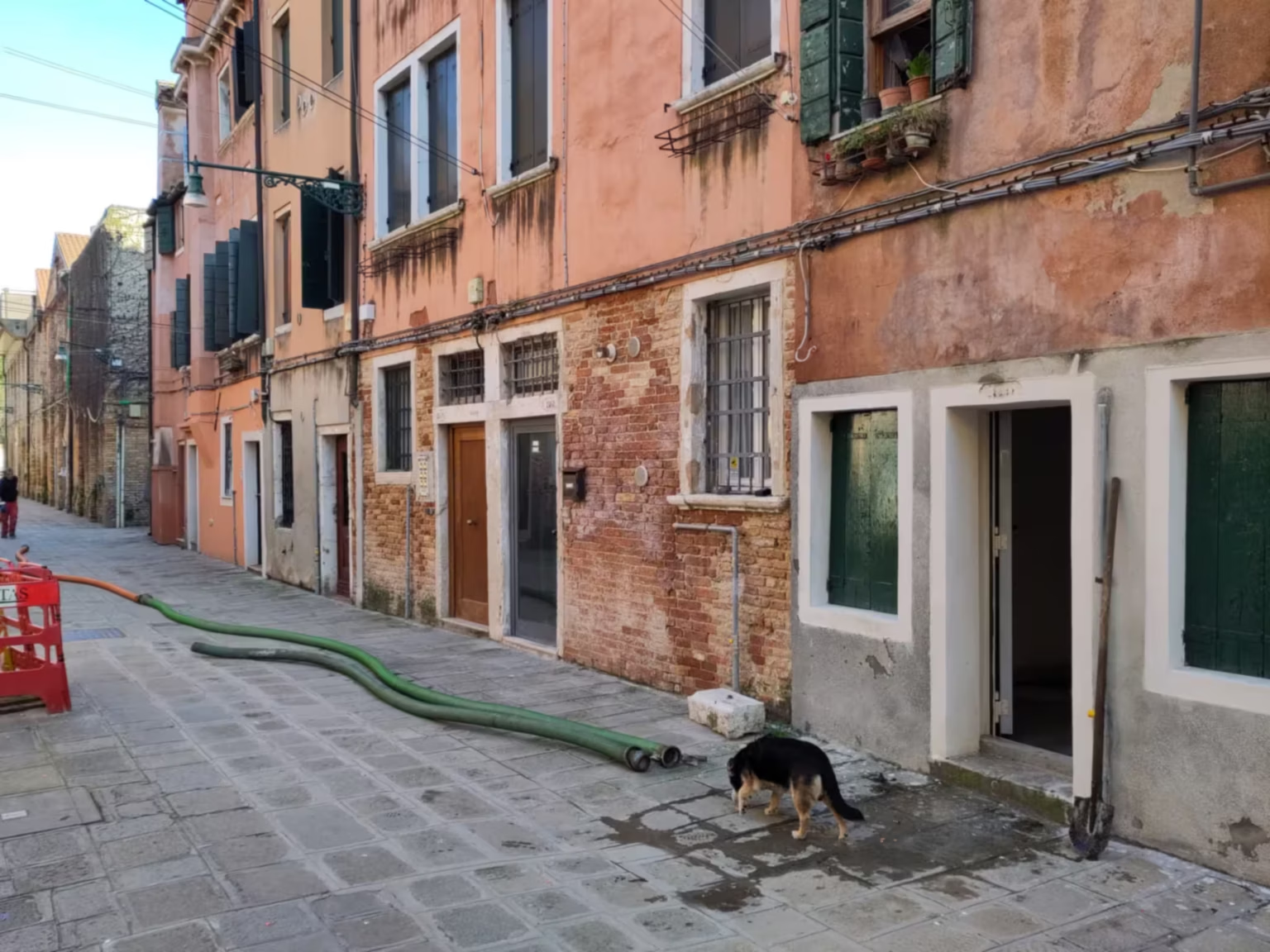
Poor people, who lived in those two, three or four storey rental blocks, which are all over Venice, either had an outhouse in the courtyard, or used a chamber pot, which was then emptied into the nearest canal in the morning.
Some buildings were fitted with a condoto later, as it doesn’t have to be done when the house is constructed. By breaking up the floor at the ground level, a condoto can be constructed underneath an existing building.
Today, septic tanks or chemical tanks are often places in the same space.
Canals and the tide
Venice has a substantial tide.
The tidal excursion can be up to one metre and twenty — four feet — which is much more than the Mediterranean has on average.
The tide rises for six hours, and falls for six hours. That is a part of life in Venice, and it is a common saying, with the meaning that things move on in the predestine cycle.
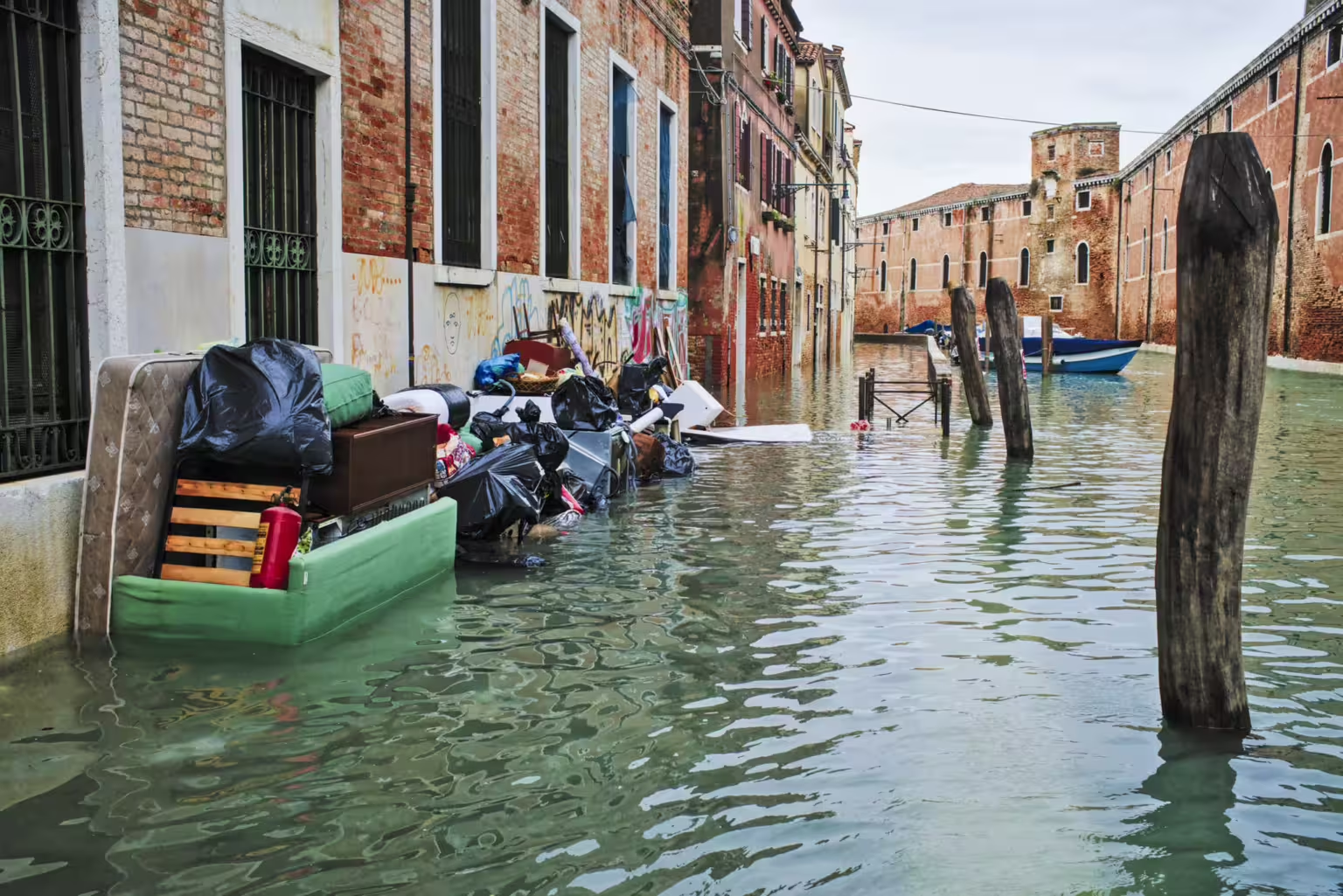
The entire city of Venice literally flushed using the tidal flow in the canals. What went into the canals, was taken away by the tide, into the much larger lagoon and then the sea.
The ancient Venetians knew this very well, and the republic had a specific magistracy in charge of everything related to the waters of the lagoon. This was the Magistrato alle Acque — the Magistracy of the Waters.
Nobody was allowed to dig or dredge in the lagoon without permit, and office engineers kept check that the tidal flows in the city didn’t diminish. They literally paid people to sit in boats around the lagoon, to register the tidal flows, to ensure the city was flushed efficiently.
The tide was necessary for public health. Stagnant waters became smelly, and hence pestilential.
What past Venetians knew and understood, the people who govern us today have utterly forgotten, or, more likely, refuse to consider.
A huge canal in the southern lagoon, dug in the 1960s to give modern ships access to the commercial harbour on the mainland at Marghera, has completely messed up the tidal water exchange in the south-western part of Venice. It has also destroyed much of the lagoon south of Venice.
The MOSE project — which does protect Venice from extremely high tides — also limits and modifies the tidal currents, which nobody, not even with modern science, fully understands.
Shared infrastructure
In the 1800s, under Austrian and Italian rule, Venice changed a lot.
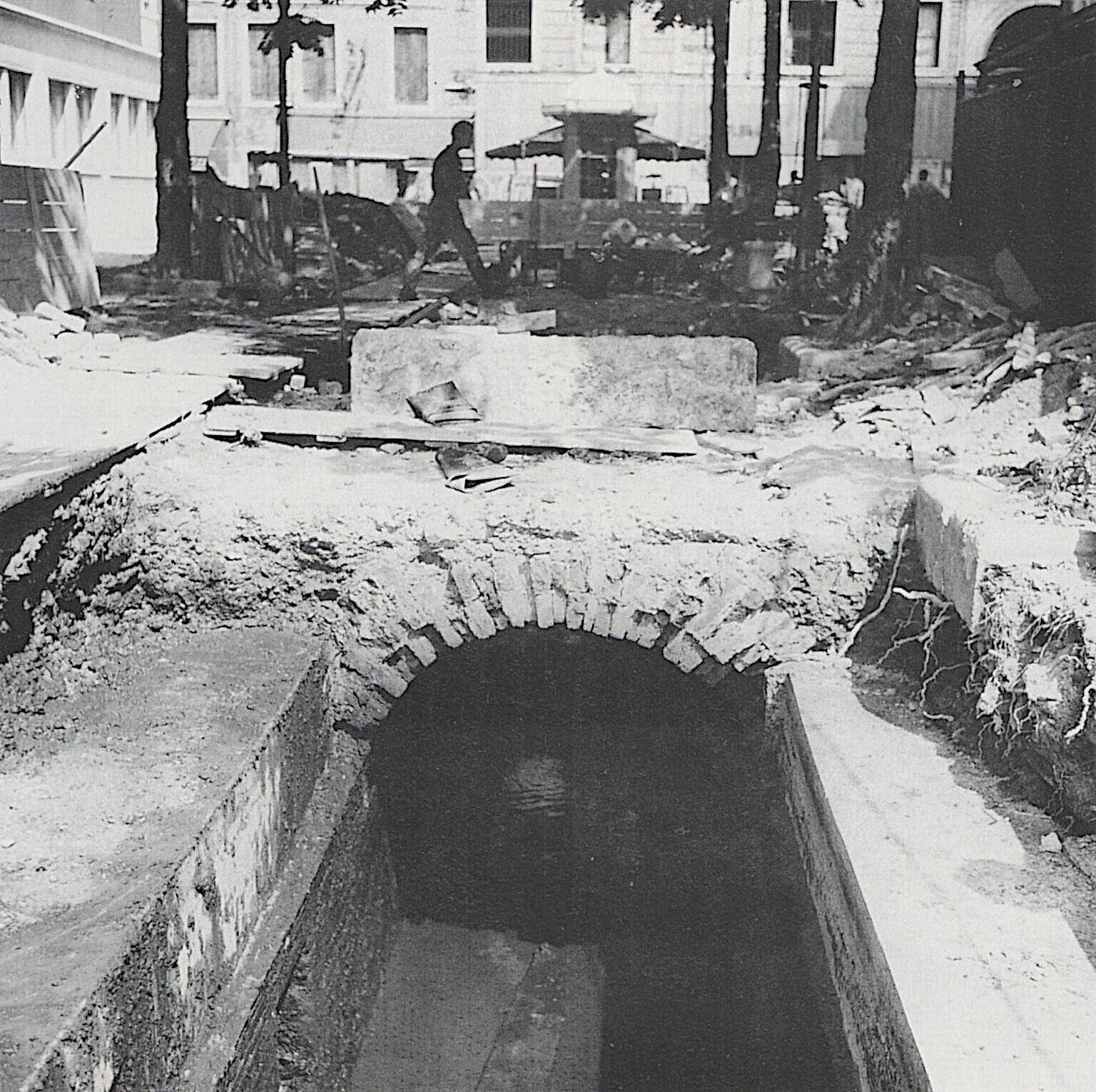
Something like a quarter — and maybe more — of the canals were filled in.
The new authorities learned — sometimes the hard way — that they need to leave a sufficient passage under the new road, so the houses, which used to face a canal, can still discharge their excess sewage from the condoti underneath.
Such passages — which are now known as the condotto comunale — have been fitted under more and more alleyways. They’re fairly easy to spot because of the large, square manholes at regular distances.
These shared sewage tubes still discharge into the nearby canals.
Black and grey water
In the 1880s, an aqueduct brought fresh water from the Dolomites to Venice, and the rainwater cisterns fell into disuse.
Indoor plumbing, running water and flushing toilets then arrived throughout the 1900s.
Water mains and drains have been fitted as possible in the centuries old houses.
Now, there already were passages, in the gatoli used for sewage and roof drains, but otherwise tubing had to be improvised somehow. Sometimes, such drains are visible on the outside, in the courtyards of the buildings, and sometimes they reuse the ancient gatoli inside the walls.
However, the old cesspits under the buildings weren’t sufficient for modern water use. With our lifestyle, we discharge far too much water for the old system to keep up.
Many houses therefore have separate drains for black and grey water.
Black water is from the toilets, so real sewage with the substantial health concerns that entails.
Grey water is from kitchen sinks, showers, dishwashers and washing machines.
Often, the grey water is discharged directly into the canals, sometimes by attaching to the modern roof drains on the outside of the building.
It is therefore not uncommon, if one moves around Venice by boat, to find the canal full of foam or smelling strongly of perfume. All it takes, is somebody putting three times the recommended dose of detergent into a half-empty washing machine.
Today
Modern mass tourism — with the hundreds of thousands of visitors Venice can have on any single day of the year — puts quite a load on such an ancient system.
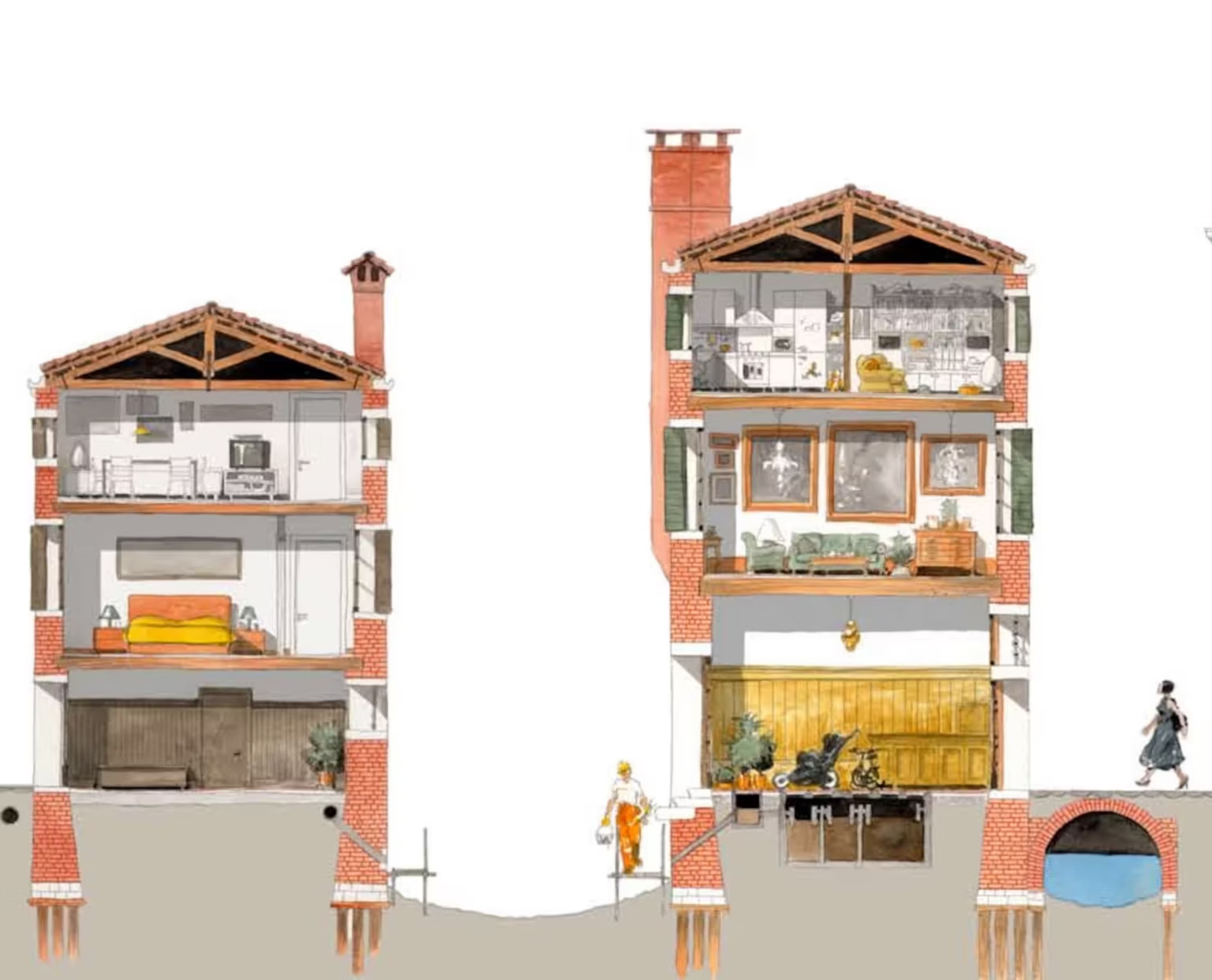
In the 1970s, the Municipality of Venice deliberated that anybody asking for a building permit for just about anything, would be required to modernise the sewage situation of the building.
Such a modernisation implies a modern septic tank, or a chemical tank, neither of which can overflow into the canals. If they run full, they will have to be expunged by one of the many commercial companies providing such services.
This regime has been in place for over half a century, which means that any bar, restaurant, hotel, legal bed-and-breakfast or legal tourist rental will have proper sewage handling, and so will any shop or workplace which has undergone maintenance in the last fifty years.
Summertime
During the filming of the film Summertime in 1951, Katharine Hepburn had to fall into the Rio Santa Barnaba. They did the scene four times, but the water in Venice isn’t really for swimming, not even today.
Hepburn allegedly got a chronic eye infection, which followed her for the rest of her life.
It is an often repeated story, which, of course, is no guarantee for truthfulness.
For normal mortals, swimming in the canals is strictly forbidden.
Related articles
External
- Insula (the public company doing maintenance of city infrastructure).
- Insula publications (where one of the illustrations comes from).
Venetian Stories
Related images

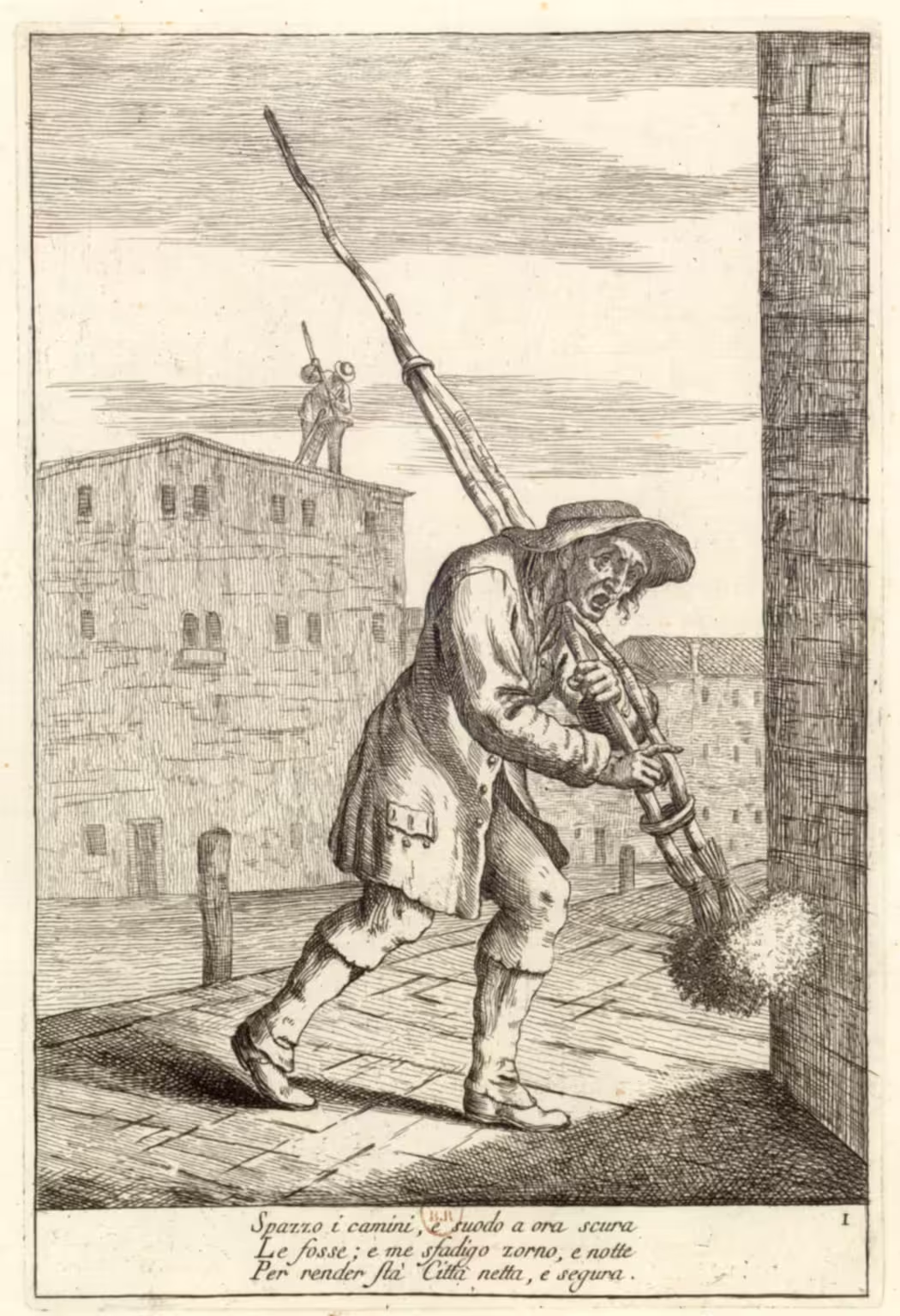

- Scoazer — rubbish collector — Zompini — Arti #4
- Scoa Camin — chimney sweep — Zompini — Arti #1
- Industria Elvetica — Swiss Industry — Grevembroch 4-81
- Fetore Allontanato — Odour Removed — Grevembroch 4-82
- Scuazzero — Rubbish collector — Grevembroch 3-129
Localities
Bibliography
- Gianighian, Giorgio, Paola Pavanini and Giorgio Del Pedros. Venice the basics. Venezia, Gambier & Keller, 2010. 🔗
Leave a Reply