
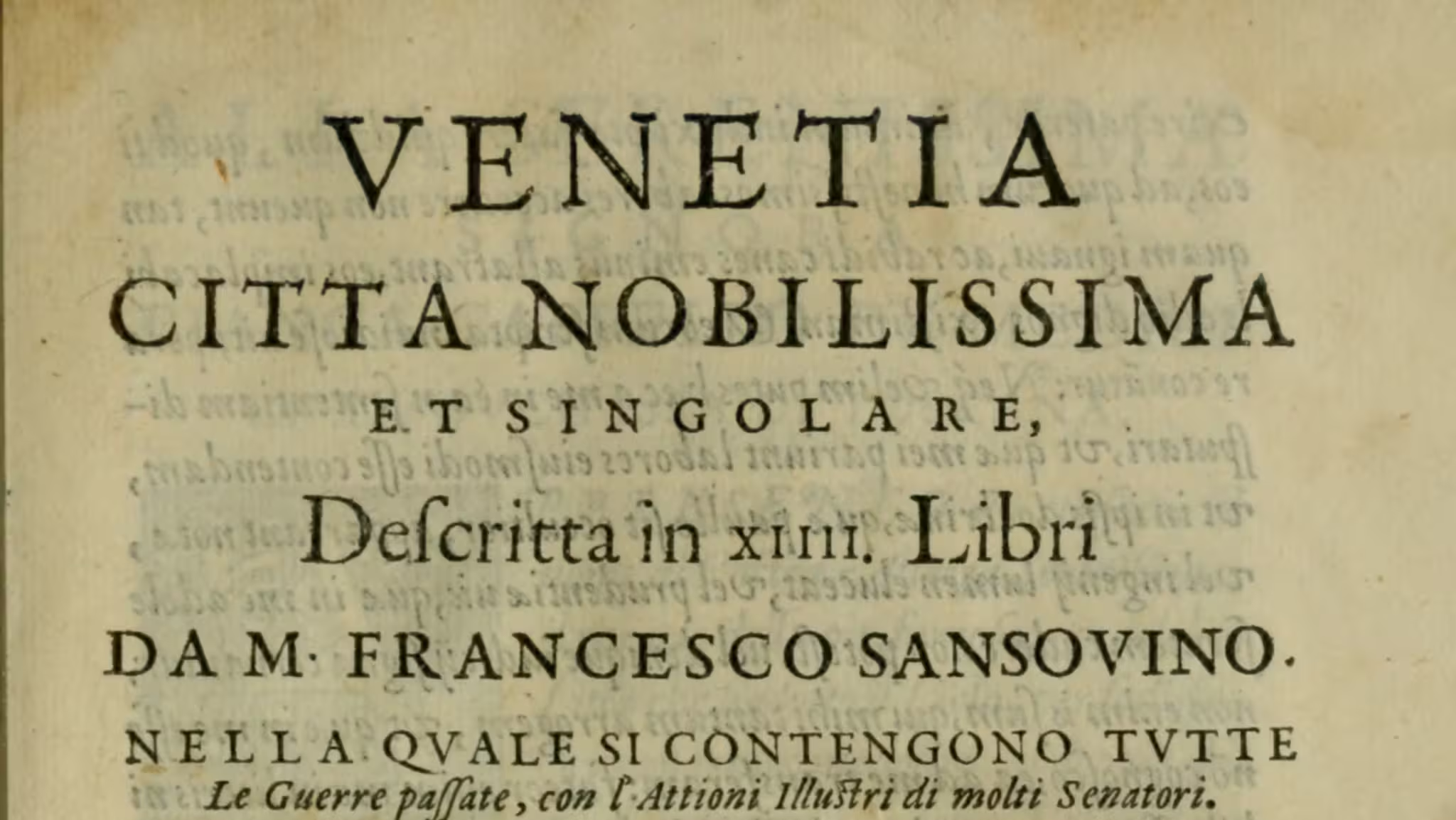
Venetia citta nobilissima et singolare (1581), by Francesco Sansovino, is one of the best known early modern descriptions of Venice, for an Italian and foreign public.
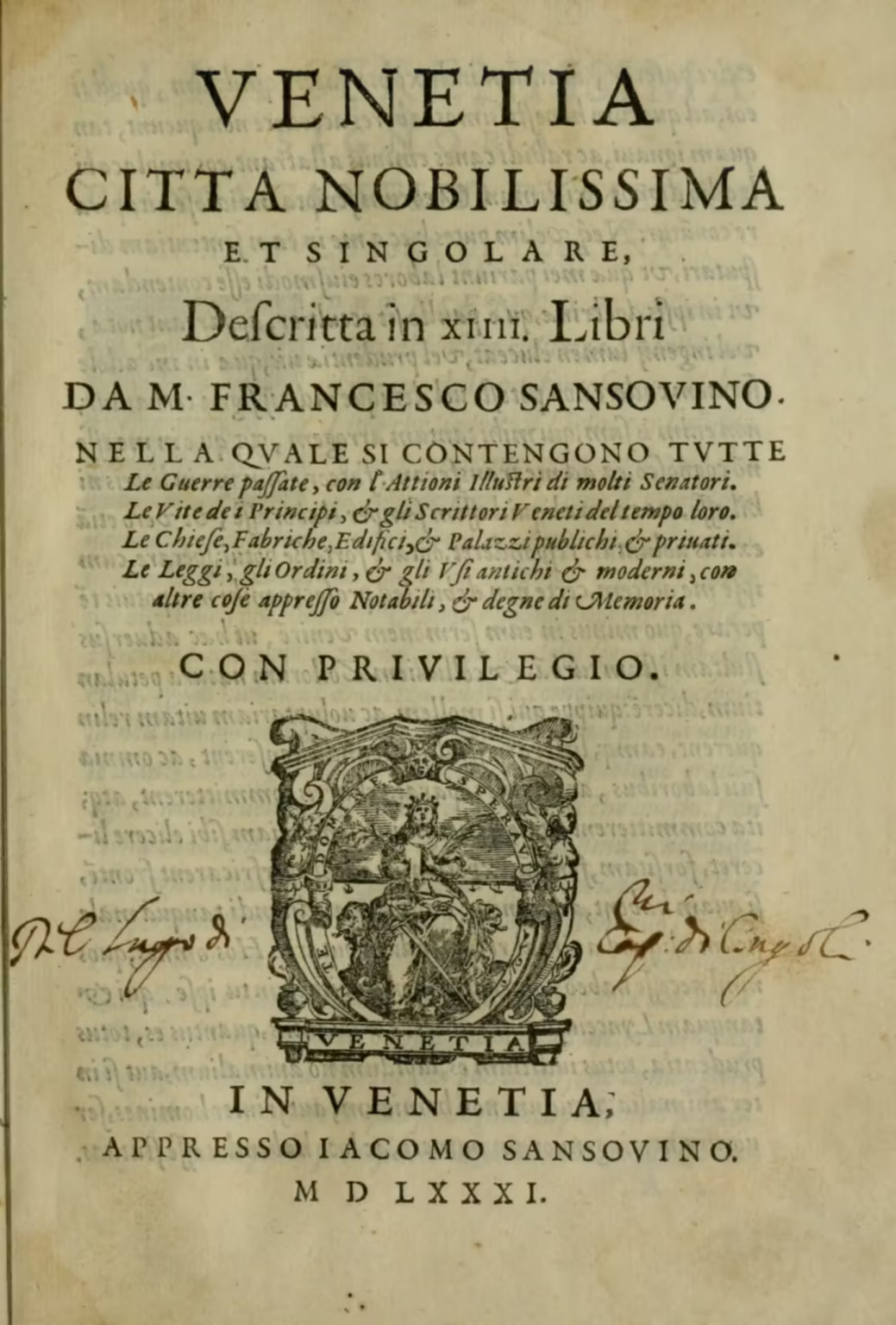
The full title is Venetia citta nobilissima et singolare, descritta in 14. libri da M. Francesco Sansouino. Nella quale si contengono tutte le guerre passate, con l’attioni illustri di molti senatori. Le vite dei principi, & gli scrittori veneti del tempo loro. Le chiese, fabriche, edifici, & palazzi publichi, & privati. Le leggi, gli ordini, & gli usi antichi & moderni, con altre cose appresso notabili, & degne di memoria.
Translated, it means: “Venice, most noble and unique city, described in 14 books, by Mr. Francesco Sansovino. In which are contained all the past wars, with the illustrious actions of many senators. The lives of princes, and the Venetian writers of their times. The churches, buildings, edifices, and public and private palaces. The laws, the orders, and ancient and modern customs, along with other things notable and worthy of being remembered.”
Francesco Sansovino
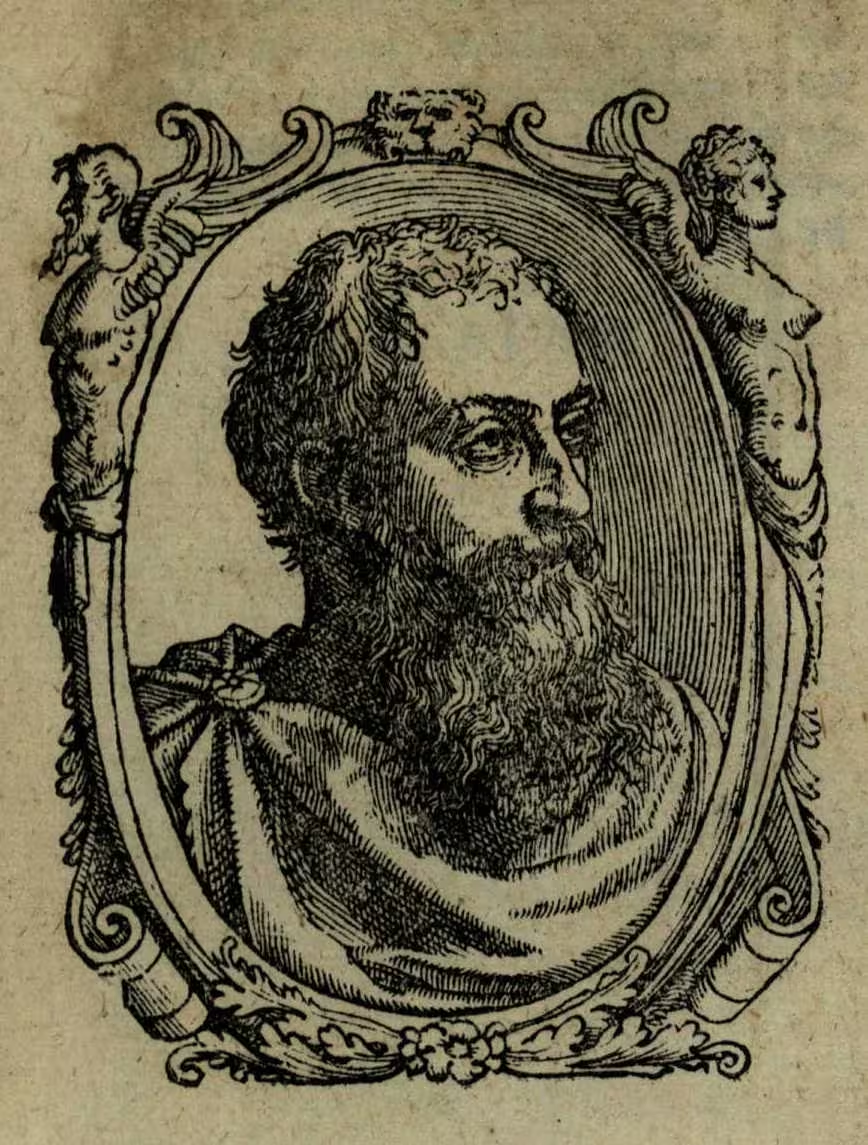
Francesco Sansovino was a natural son of Jacopo Tatti, called Sansovino, the renowned architect and artist.
He was born in 1521 in Rome, but came to Venice in 1527, as his family fled Rome after the sack of the city by Imperial troops.
He studied law in Padua and Bologna, where he was known to enjoy the life of a bachelor. After a short period in Rome at the Papal court, he returned to Venice and settled down.
He became a prolific author, of prose and poetry, and a translator of classical works. His works were wide distributed and read, even if they’re rather obscure today.
Many of his works were published by himself, under the name of his father, rather than relying on the many printing houses in Venice at the time.
For example, Venetia descritta has on the frontispiece “In Venice, with Jacopo Sansovino, 1581,” but at the end “Printed in Venice, with Domenico Farri, 1581.”
Sansovino died in Venice on September 28, 1583.
Venetia Descritta
Venetia descritta is the common shorthand for the Venetia citta nobilissima et singolare, descritta in 14. libri.
The fourteen parts are:
- Sestiere Castello: churches, monasteries, oratories, relics of saints, burials, epitaphs, statues, paintings, libraries, gardens, and other important things found there.
- Sestiere San Marco, likewise.
- Cannareggio.
- San Polo.
- Santa Croce, including most lagoon islands.
- Dorsoduro.
- Confraternities, the Great Schools and their origins, institutions, incomes and order.
- Public buildings in the Piazza, the Procuratie, the island of Rialto, the Arsenale, the Fontego dei Tedeschi, and various studies.
- Of the manner, utility, and beauty of the buildings in Venice, private palaces and the numbers, and the richness of their ornaments.
- Uses and customs of various matters, ancient and modern habit, weddings, parties, funerals, feasts, the visits of various pontiffs, emperors and kings in this city, and many other similar things.
- On the greatness and dignity of the Doge of Venice.
- On the public triumphal processions of the Doge, and their origins and reasons.
- The Lives of Doges and Venetian writers during each reign.
- A chronology of the city, with the Doges, Patriarchs of Grado, Bishops and Patriarchs of Venice, the Cardinals, Procurators, Grand Chancellors, with the wars, peace treaties, alliances and ceasefires. The acquisitions, losses, defeats and victories, with everything which has happened in the Republic, until the present.
The whole work is over 700 pages.
It is dedicated to Bianca Cappello, Grand Duchess of Tuscany, and legal daughter of the Republic of Venice:
With this, I gift the copy of “City most noble” to the Mistress most noble, its true and particular daughter.
Editions
The first edition of Venetia citta nobilissima et singolare, from 1581, was the only during the lifetime of Sansovino, as he died a few years later.
Already in 1604, another Venetian publisher, Altobello Salicato, made a version with updates by Giovanni Stringa. This version ran to over a thousand pages.
Then, in 1663, a third edition, published by the Steffano Curti in Venice, based on the 1603 edition, with updates by Giustiniano Martinioni.
Later editions are all modern reprints of the 1663 edition.
Translated sections
Libro V
Libro VII
- Scuola della Passione — School of the Passion
Related articles
- Diuersarum nationum habitus (1589) — Pietro Bertelli
- Habiti Antichi et Moderni (1590) — Cesare Vecellio
- Habiti d’huomeni et donne venetiane (1610) — Giacomo Franco
- Habiti delle Donne Venetiane (c.1610) — Giacomo Franco
- Il Gran teatro di Venezia (1717) — Domenico Lovisa
- Le Arti che vanno per via (1753) — Gaetano Zompini
- Gli abiti de veneziani (1754) — Giovanni Grevembroch
Leave a Reply