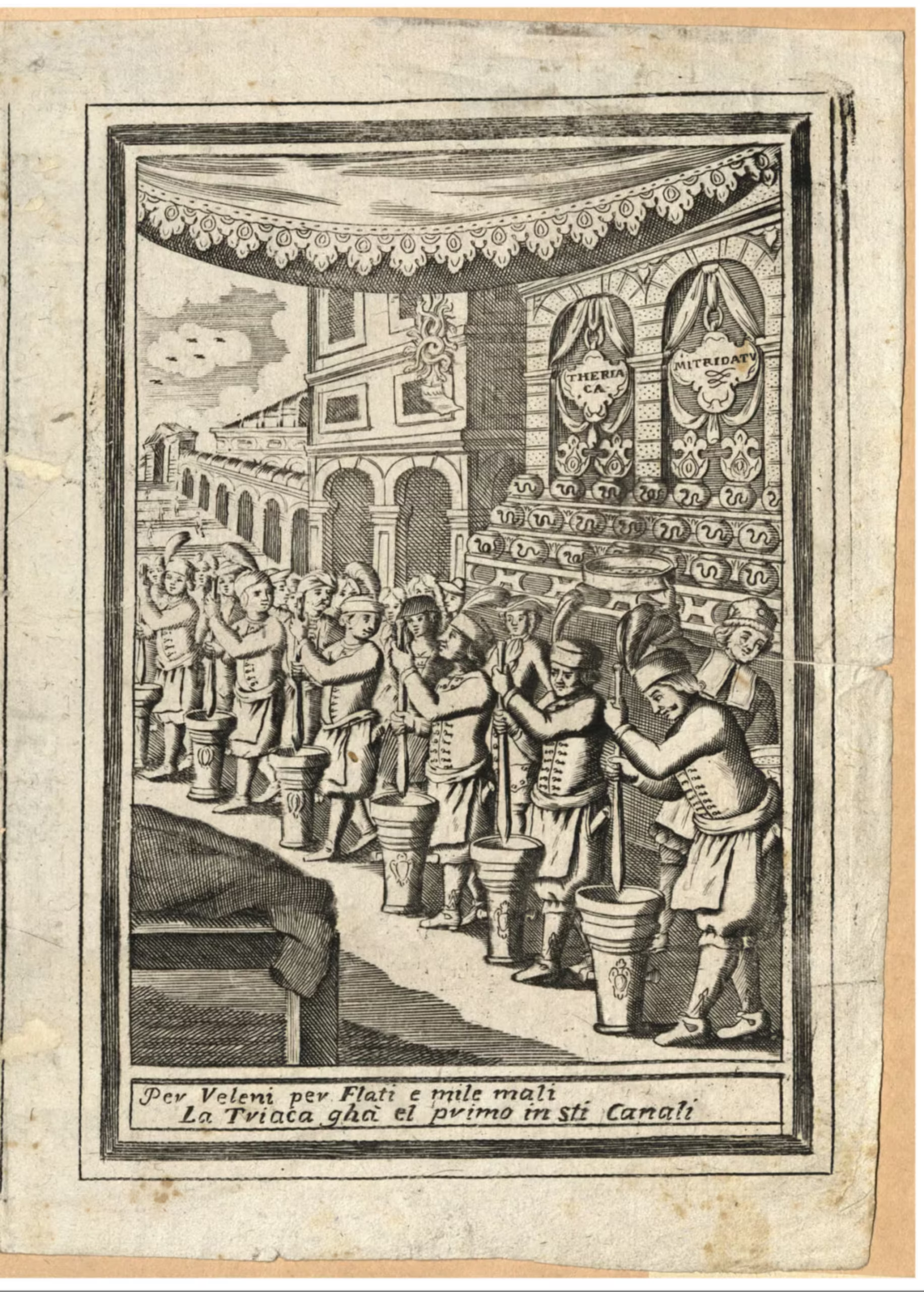
These two prints depict elements of the public preparation of theriac at the Testa d’Oro pharmacy in Venice, at the Rialto bridge, which is seen in the background.
Teriaca (also triaca; English: theriac or treacle) was a kind of wonder medicine and general antidote, of which Venice was the main producer in Europe. The authorised pharmacies were obliged by the authorities to do much of the work in public, to prove that they didn’t cheat on the ingredients or on the procedure.
While unsigned and undated, the prints are likely from the 1600s. The Testa d’Oro pharmacy made theriac from 1603, and made quite a show of it.
The prints
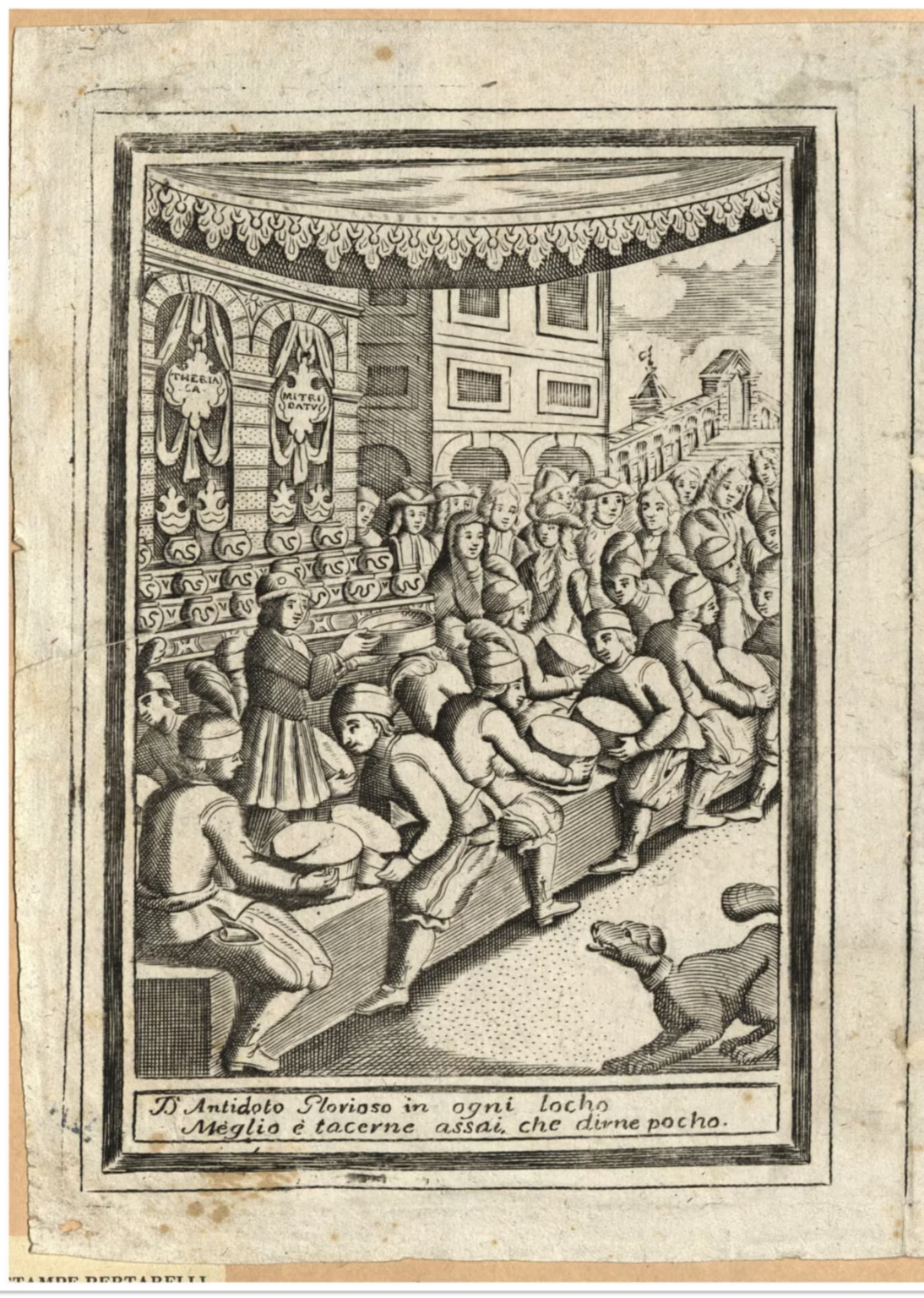
D’Antidoto Glorioso in ogni locho
Meglio è tacerne assai, che dirne pocho.
Of the Glorious Antidote in every place
Better to stay completely silent, than talk (even) a little.1
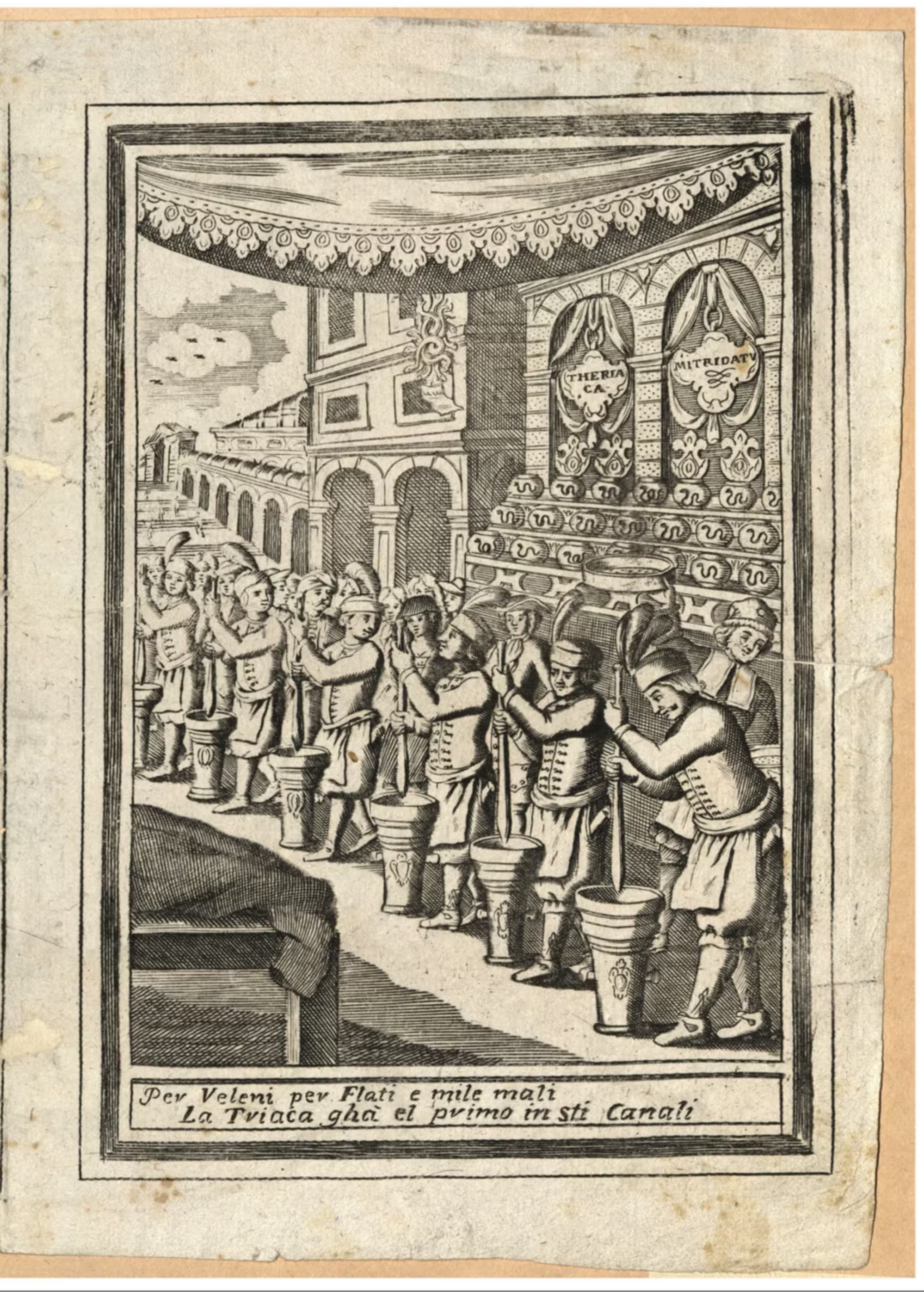
Per Veleni per Flati e mile mali
La Triaca ghà el primo in sti Canali
For Poisons, for Farts and thousand evils
Theriac has the primacy in these Canals.
Location
The location of both prints is in Salizada Pio X, at the feet of the Rialto bridge, where the pharmacy sotto l’insigna della Testa d’Oro (under the sign of the Golden Head) was.
Events
Both prints depict parts of the production of theriac, in particular the grinding and sifting of the dry ingredients, with all the ceremonial and festivities which surrounded the creation of such a miracle drug as theriac.
In the second print, facchini (day labourers) are grinding the herbs, spices and seeds in large bronze mortars, while other workers in the first print are sifting the results, to extract only the finest powder.
The workers were dressed for the occasion, in white jackets, red breeches, yellow shoes, and a blue beret, with a feather and a yellow ribbon, as shown on a watercolour by Grevembroch.
A couple of managers, wearing hats without feathers, are distributing the work and carrying the half-ground ingredients between the two groups. There’s one such figure in either print.
In the background, groups of spectators from many nations observe the display. They’re mostly men, but there are a few women in the crowds too. On the right, a Turk, wearing a turban, is watching. The Rialto Bridge is visible behind the spectators.
Behind the two lines of workers, the many ingredients of theriac are on display in large jars, organised on three shelves along either side of the road. Each jar is decorated with the image of a viper. Boiled, dried and ground viper flesh was an essential — and almost the defining — ingredient of theriac.
Behind the shelves with the jars, on either side, two elaborate signs display the words “Theriaca” and “Mitridatu”. Mithridatium was an older compound, on which theriac was developed. This served to show the ancient, and almost mythological, origins of the drug.
A baldachin hangs over the entire scene, visible in both prints. On the second print, a bundle of (probably) live vipers are hanging off the edge of the baldachin.
Each pharmacy produced theriac only once or twice a year, due to the complexity of the recipe and the need to procure rare ingredients from faraway countries. Since theriac has to ferment and season for at least six months, but was usable for years, it was made in large batches.
The Venetian health authorities demanded that the ingredients were displayed for three days in public, and that the actual production happened in plain view, in front of the shop, so both the authorities and the public could see that everything went according to the rules. The pharmacists then made it into a spectacle, to publicise their product.
These two prints are a result of that pomp and ceremonial. It became a show tourists and travellers came to see, an attraction in itself.
Notes
- The Venetian recipe for theriac was secret, until a French pharmacist published it in 1669. ↩︎
Related articles
Venetian Stories
Sources
- A Theriac recipe (1734)
- A Theriac advertisement (1688)
- Teriaca — Theriac — Lessico Veneto
- An Englishman in Venice — the diary of John Evelyn (1645)
Related images
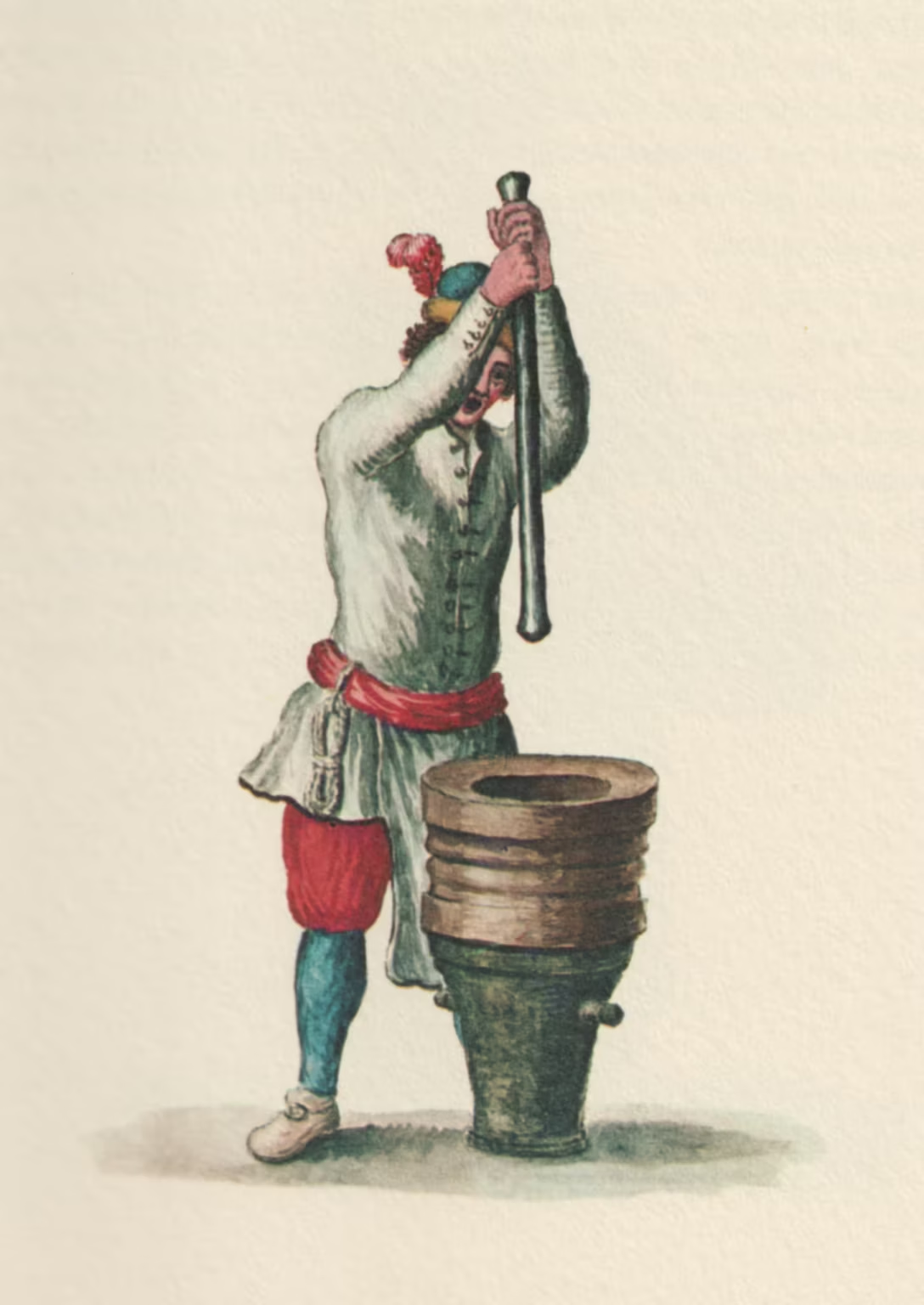
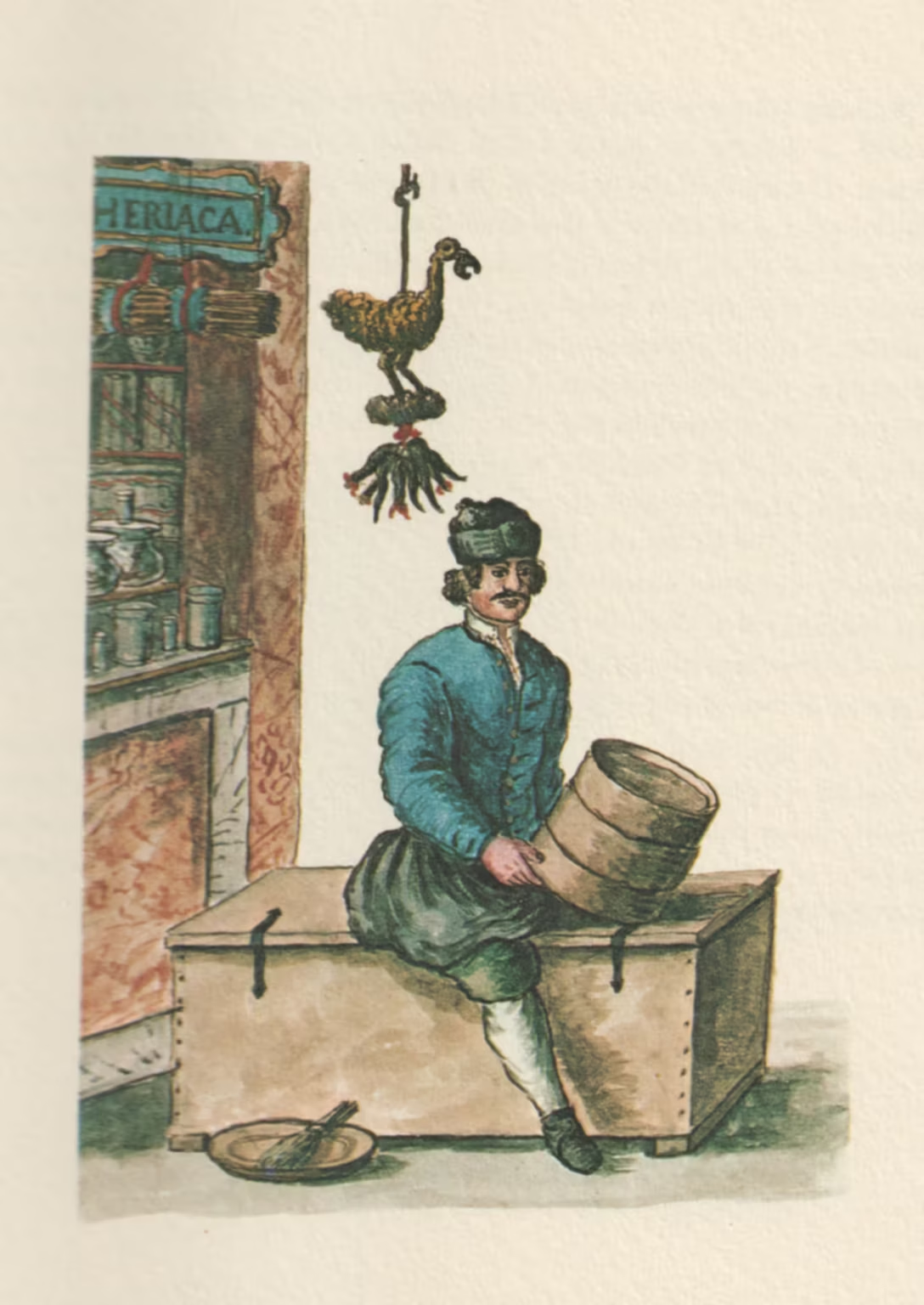
- Facchini — Labourers — Grevembroch 3-120
- Fabricatore di Teriaca — Maker of Theriac — Grevembroch 3-127
Bibliography
- Lovisa, Domenico. Il Gran teatro di Venezia ovvero descrizzione esatta di cento delle più insigni prospettive, e di altretante celebri pitture della medesima città, il tutto disegnato, e intagliato eccelentemente da periti artefici, con la narrazione della fondazione delle chiese, monasteri, spedali, isolette, e altri luoghi sì pubblici, come privati. Venezia per Domenico Lovisa sotto i portici a Rialto, 1715. [more] 🔗
Leave a Reply