
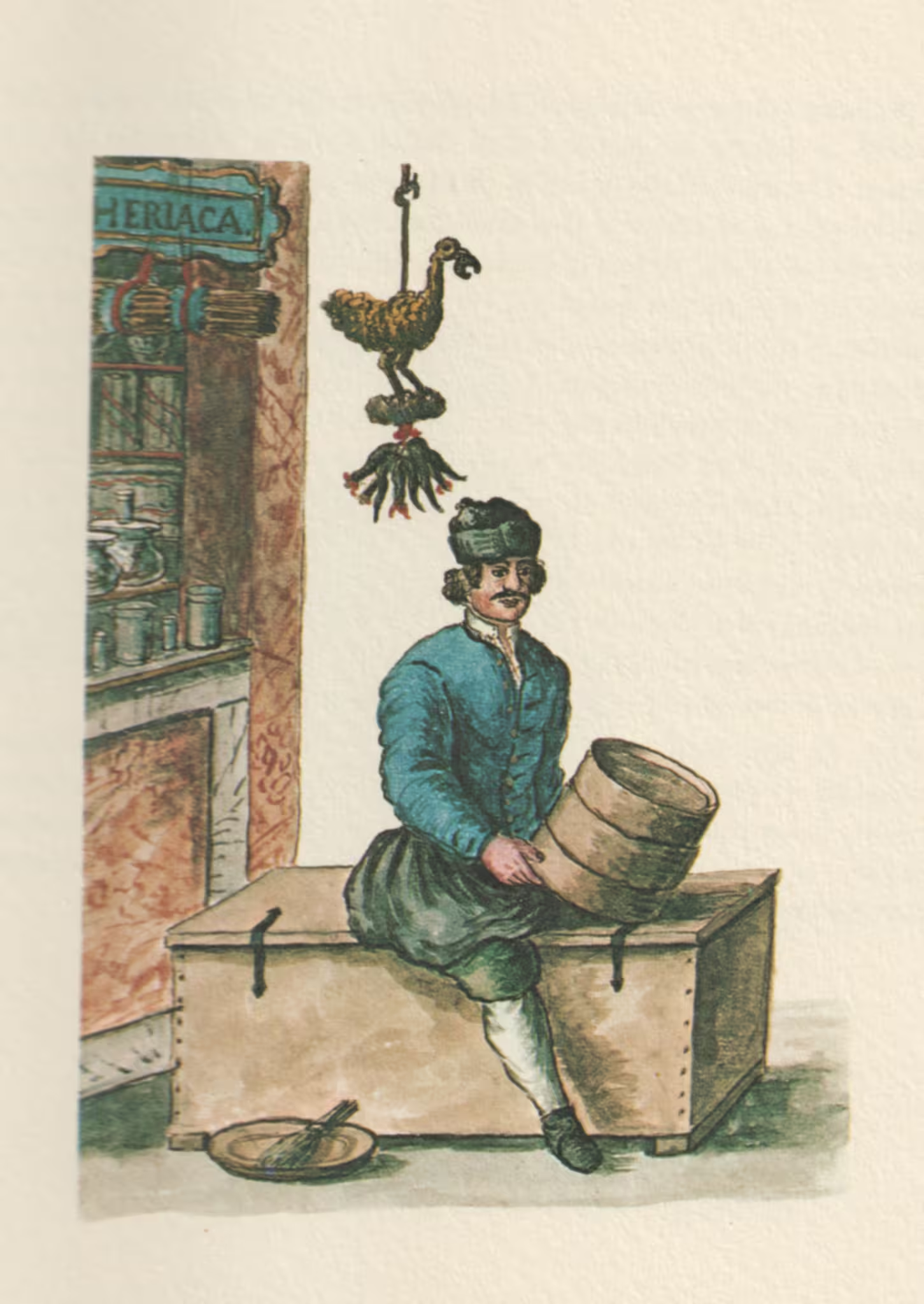
Theriac was an important product for many apothecaries in Venice, and indeed an important part of the economy of the city.
The production and trade in theriac was therefore regulated by the Magistrato alla Sanità and by the Consiglio di Dieci.
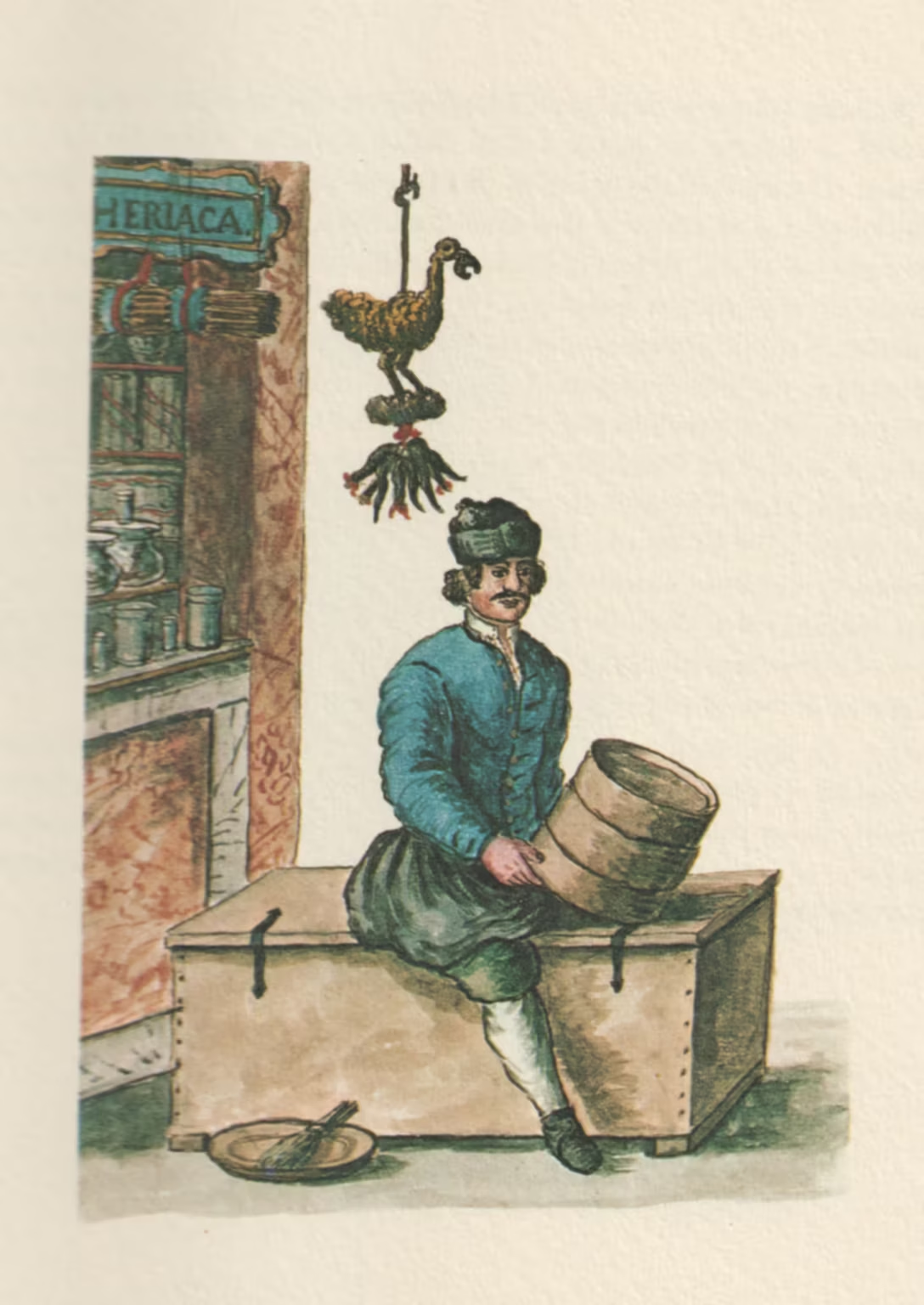
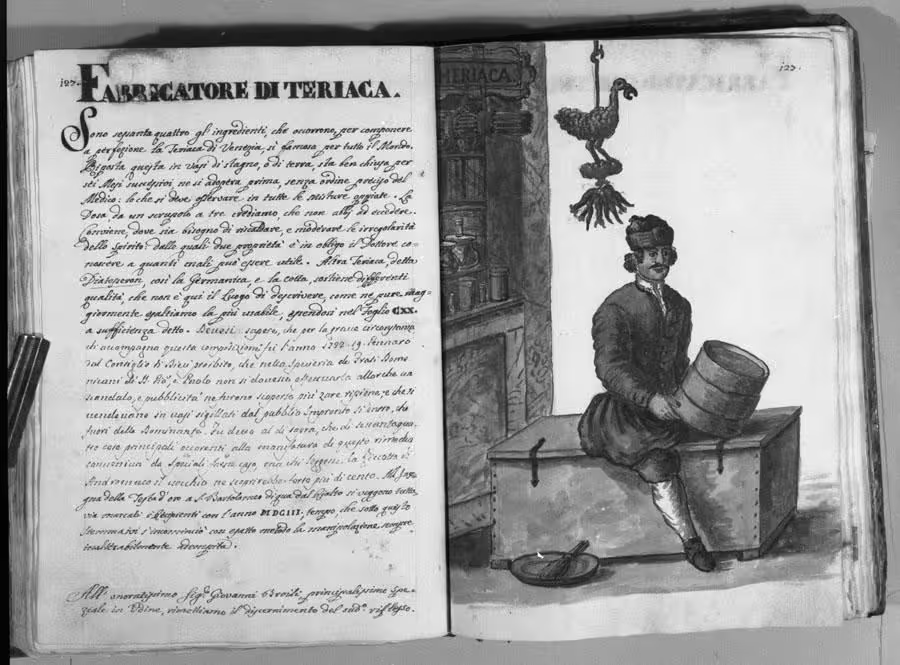
This painting shows a worker, sitting astride a large chest, with a large sieve for sifting the partially ground up ingredients of theriac. For a comparison, see The preparation of Theriac — two prints (1600s).
The bird is probably a reference to the Farmacia allo Struzzo d’Oro — the Apothecary of the Golden Ostrich at the Ponte Bereteri — which was one of the well-known triacanti.
Source: Gli abiti de veneziani di quasi ogni età con diligenza raccolti e dipinti nel secolo XVIII, by Giovanni Grevembroch (1731–1807), which in four volumes contains over six hundred watercolours of how Venetians dressed in the 1700s.
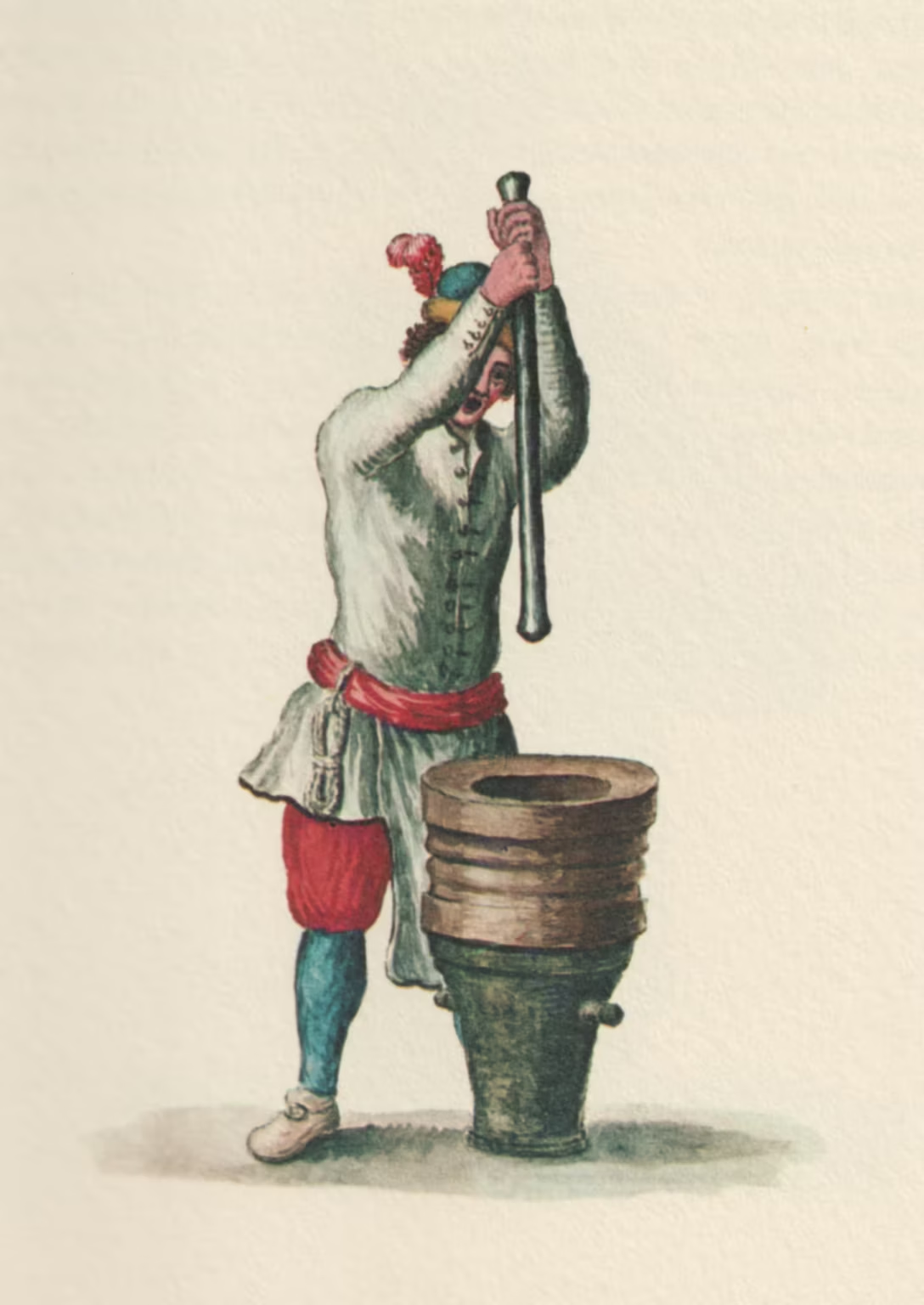
Maker of Theriac
There are sixty-four ingredients1 required to perfectly compose the Theriac of Venice, so famous throughout the world. Once this is stored in tin or earthenware jars, it is kept well sealed for six successive months, and is not to be used beforehand, without the precise order of a Physician: this must be observed for all opiate mixtures. The Dose, from one scrupolo2 to three, we believe should not be exceeded. It is suitable when there is a need to warm and moderate the irregularities of the Spirit: from these two properties, it is incumbent upon the Doctor to know for how many ailments it may be useful.
Another Theriac, called Diatesseron, also Germanica and la cotta, possesses different qualities, which is not the place here to describe, nor do we further exalt the most commonly used one, as it has been sufficiently discussed in Sheet CXX.
It should be known that, due to the serious circumstances surrounding this concoction, it was in the year 1722, on January 19, that the Council of Ten3 prohibited it from being carried out in the Apothecary of the Dominican Friars of S.S. Giovanni e Paolo, when in a scandal, and publicity, several large jars full of it were discovered, which were being sold in vases sealed with the public stamp, both inside and outside the Dominant city.
It was said above, that out of the sixty-four main things necessary for the preparation of this remedy, the Apothecaries should stock them, but whoever read the Recipe of Andromachus the Elder4 would perhaps find more than a hundred.
Under the Sign of the Golden Head at St. Bartholomew on this side of the Rialto, one still sees the containers marked with the year MDCIII; a time when, under this Mark, the production began here with an exact method, always carried out unaltered.
To the most honourable Mr. Giovanni Broili, chief Apothecary in Udine, we submit the judgment of the aforementioned case for your consideration.
Translator’s notes
- For one recipe, see A Theriac recipe (1734). ↩︎
- A scrupolo, in Apocatheries, was a measure of weight, 1/24th of an ounce. ↩︎
- The Consiglio di Dieci (Council of Ten) oversaw state security and sat a court for the prosecution of crimes against the state and in cases against patricians. ↩︎
- Andromachus the Elder was the physician of Roman emperor Nero during his reign in the first century, and supposedly the inventor of Theriac. ↩︎
Original text
Fabricatore di Teriaca
Sono sessanta quattro gl’ingredienti, che occorrono, per componere a perfezione la Teriaca di Venezia, sì famosa per tutto il Mondo. Riposta questa in vasi di stagno, o di terra, sta ben chiusa per sei Mesi successivi, ne si adopera prima, senza ordine preciso del Medico: lo che si deve osservare in tutte le Misture oppiate. La Dosa, da un scrupolo a tre crediamo, che non abbj ad eccedere. Conviene, dove sia bisogno di riscaldare, e moderare le irregolarità dello Spirito: dalle quali due proprietà è in obligo il Dottore conoscere a quanti mali può essere utile.
Altra Teriaca, detta Diatesseron, così la Germanica, e la cotta, sostiene differenti qualità, che non è qui il Luogo di descrivere, come ne pure maggiormente esaltiamo la più usabile, essendosi nel Foglio CXX a sufficienza detto.
Devesi sapere, che per la grave circostanza ch’accompagna questa composizione fù l’anno 1722. 19 Gennaro dal Consiglio di Dieci proibito, che nella Spezieria de Frati Domenicani di S.S. Gio. e Paolo non si dovesse effettuarla allorche un scandalo, e pubblicità ne furono scoperte più zare ripiene, e che si vendevano in vasi sigillati dal pubblio Impronto si entro, che fuori della Dominante.
Fu detto al di sopra, che di sessantaquatro cose principali occorrenti alla manifatura di questo rimedio conveniva da Speciali farne caso, ma chi leggesse la Riccetta di Andromaco il vecchio ne scoprirebbe forse più di cento.
All’Insegna della Testa d’oro a S. Bartolomeo di qua dal Rialto si veggono tuttavia marcati i Recipienti con l’anno MDCIII; tempo che sotto questo Stemma ivi s’incominciò con esatto metodo la manipolazione sempre inalterabilmente adempita.
All’onoratissimo Sig.e Giovanni Broili, principalissimo Speziale in Udine, rimettiamo il discernimento del sud.o riflesso.
Grevembroch (1981), vol. 3, p. 127.
Related articles
Venetian Stories
Related sources
- Teriaca — Theriac — Lessico Veneto
- A Theriac recipe (1734)
- A Theriac advertisement (1688)
- The preparation of Theriac — two prints (1600s)
Related images
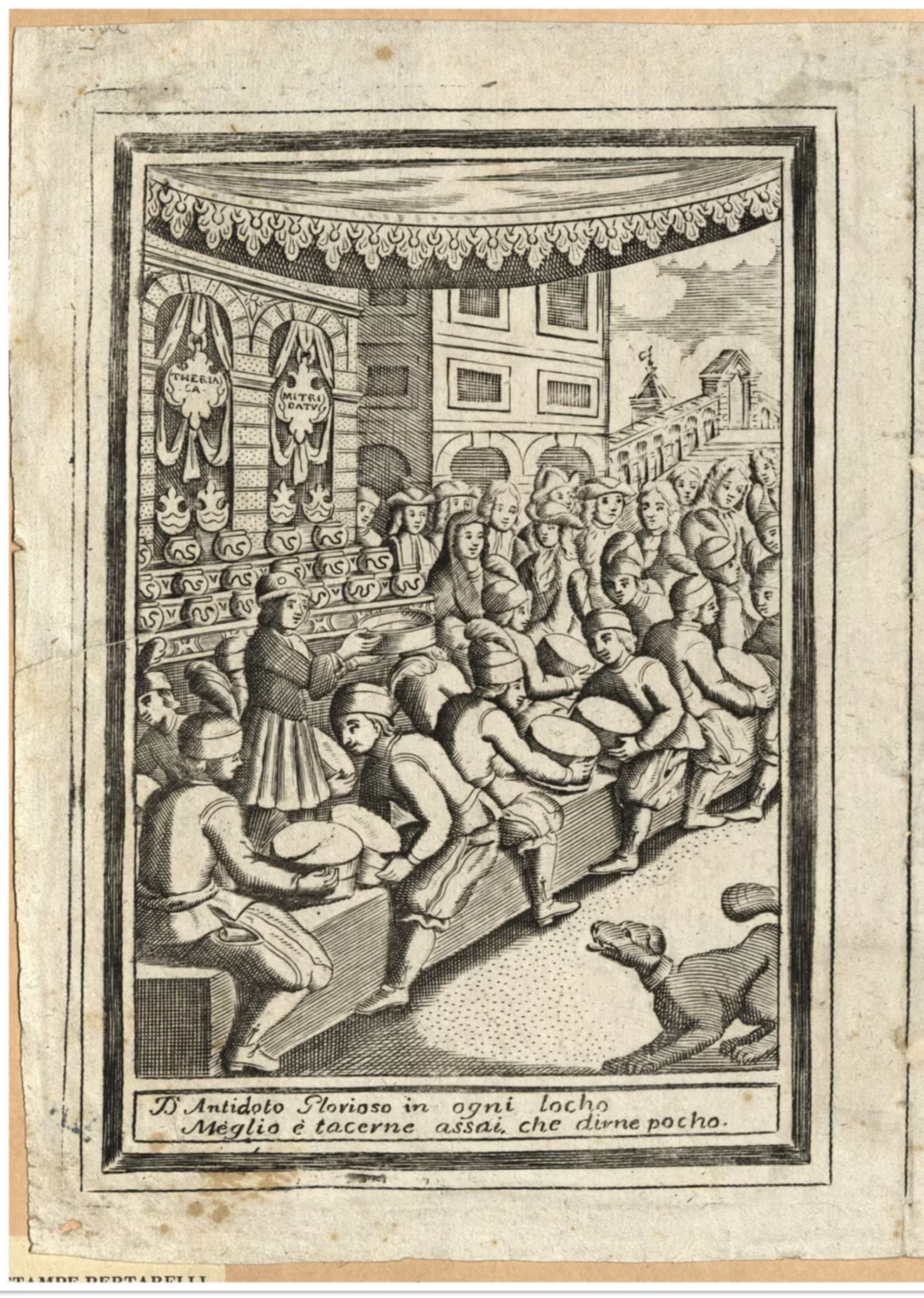
- The preparation of Theriac — two prints (1600s)
- Facchini — Labourers — Grevembroch 3-120
- Protomedico — Chief Physician — Grevembroch 2-160
Bibliography
- Grevembroch, Giovanni. Gli abiti de veneziani di quasi ogni eta con diligenza raccolti e dipinti nel secolo XVIII, orig. c. 1754. Venezia, Filippi Editore, 1981. [more]
Leave a Reply