
This painting depicts a Venetian moneyer, working in the Zecca of the Republic of Venice, in the process of hammering out a coin.
As a merchant nation, stable and sufficient coinage was an essential interest of the Republic of Venice, and the production of coins of gold, silver and copper was high regulated.
The Venetian mint was managed by magistrates, who were initially appointed by the Council of Ten, and later directly by the Venetian Senate.
Source: Gli abiti de veneziani di quasi ogni età con diligenza raccolti e dipinti nel secolo XVIII, by Giovanni Grevembroch (1731–1807), which in four volumes contains over six hundred watercolours of how Venetians dressed in the 1700s.
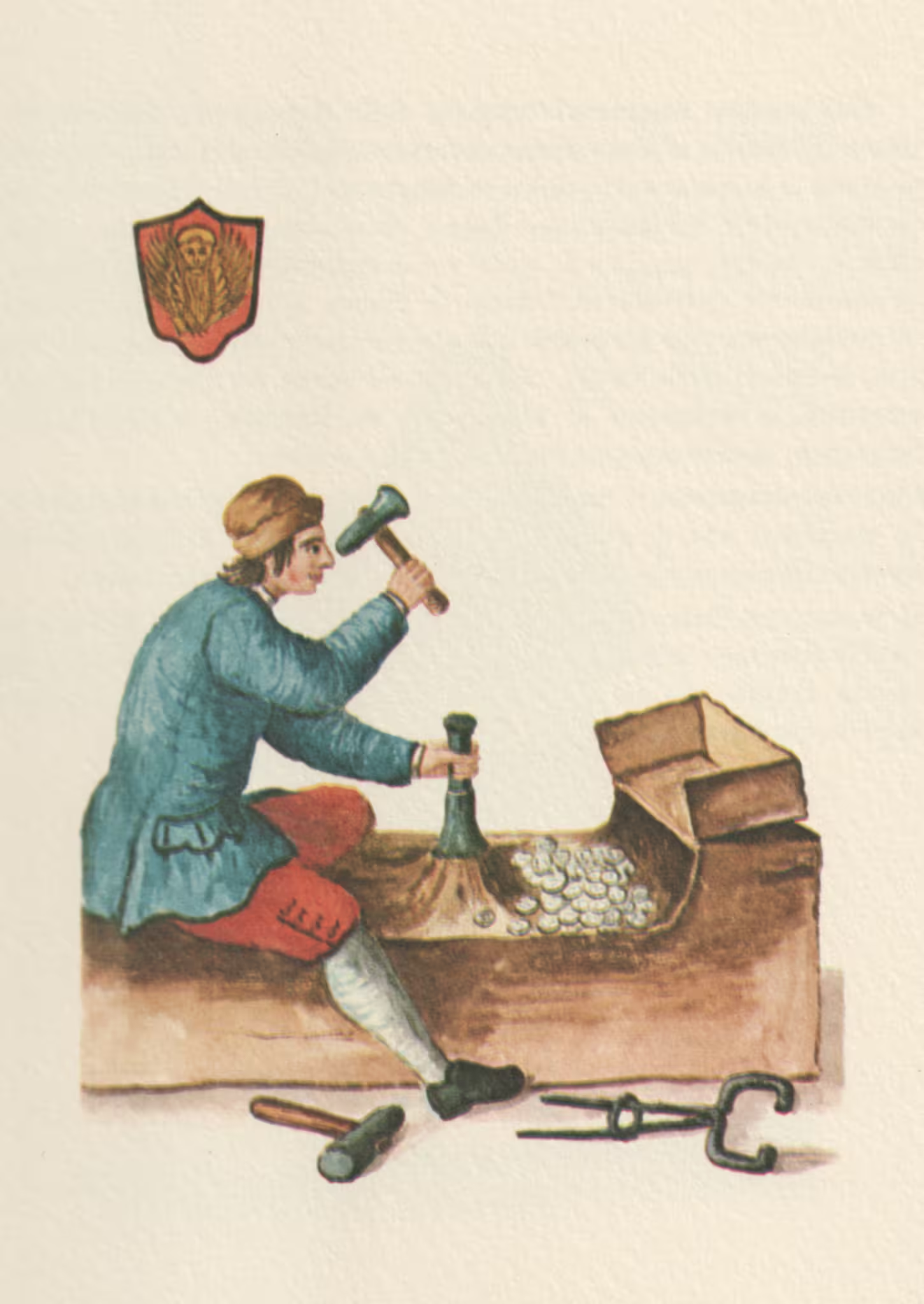
Minter of Coins
This is not the place to undertake to demonstrate the antiquity of the Venetian coin, or to examine the precise time when it was minted; much less to trace the location of the Public Mint before it was erected behind SS Giovanni e Paolo, then above the Piazza, and later rebuilt by the famous Giacomo Sansovino by order of the Supreme Council of Ten, with an idea so singular that it can scarcely be described. It is simply to show one of the eighteen most faithful silver coiners, three of whom were assigned as needed to mint gold, who lived on wages and, according to their work, at the market rate.
They depend on various ranks of Officials and Accountants, and are required to sleep locked up in the Mint every other night, for security and protection against fire or other threats. Overseeing all this is a Senate Magistracy of three respectable Superintendents,1 of which one is Inquisitor,2 and it is their duty to provide the minting paste from subcontractors. Furthermore, it should be noted that the Artisan who cuts the obverse mould in steel is not the one who composes the reverse, according to the prudent and zealous methods of the Most Serene Republic.
To the faithful Mr. Guarino qm Alvise Calegari in the Venetian Mint, robust Impressor of gold Coin, without flattery we thus find the satisfaction to appropriate the present action.
Translator’s notes
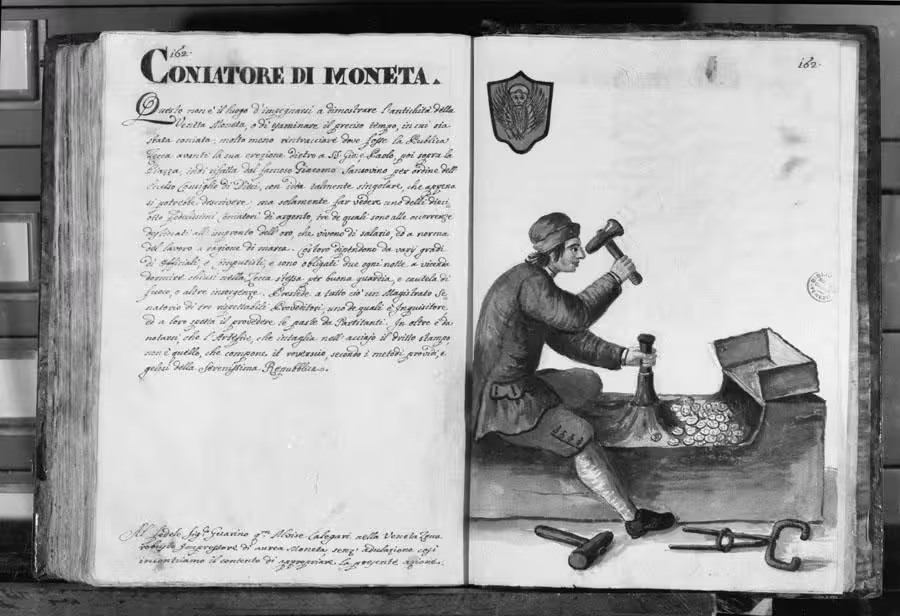
Original text
Coniatore di Moneta
Questo non è il luogo d’impegnarsi a dimostrare l’antichità della Veneta Moneta, o di esaminare il preciso tempo, in cui sia stata coniata; molto meno rintracciare dove fosse la Publica Zecca avanti la sua erezione dietro a S. S. Gio, e Paolo, poi sopra la Piazza, indi rifatta dal famoso Giacomo Sansovino per ordine dell’Eccelso Consiglio di Dieci, con idea talmente singolare, che appena si potrebbe descrivere, ma solamente far vedere uno delli dieciotto fedelissimi Coniatori di argento, tre de quali alle occorrenze destinati all’impronto dell’oro, che vivono di salario, ed a norma del lavoro a ragione di marca.
Costoro dipendono da varij gradi di Officiali, e Computisti, e sono obligati ogni due notte a vicenda dormire chiusi nella Zecca stessa per buona guardia, e cautela di fuoco, o altre insorgenze. Presiede a tutto ciò un Magistrato Senatorio di tre rispettabili Proveditori, de quali è Inquisitore ed a loro spetta il provedere le paste da Partitanti. In oltre è da notarsi, che l’Artefice, che intaglia nell’acciajo il dritto stampo, non è quello, che compone il roverscio, secondo i metodi providi, e gelosi della Serenissima Repubblica.
AI fedele Sig.e Guarino qm Alvise Calegari nella Veneta Zecca robusto Impressore di aurea Moneta, senz’adulazione così incontriamo il contento di appropriare la presente azione.
Grevembroch (1981), vol. 2, p. 162.
Related articles
- Gli abiti de veneziani — by Giovanni Grevembroch
- State institutions of the Republic of Venice
- Consiglio di Dieci
- Pregadi (also Senato and Rogati)
- Venetian coinage
Bibliography
- Grevembroch, Giovanni. Gli abiti de veneziani di quasi ogni eta con diligenza raccolti e dipinti nel secolo XVIII, orig. c. 1754. Venezia, Filippi Editore, 1981. [more]
Leave a Reply