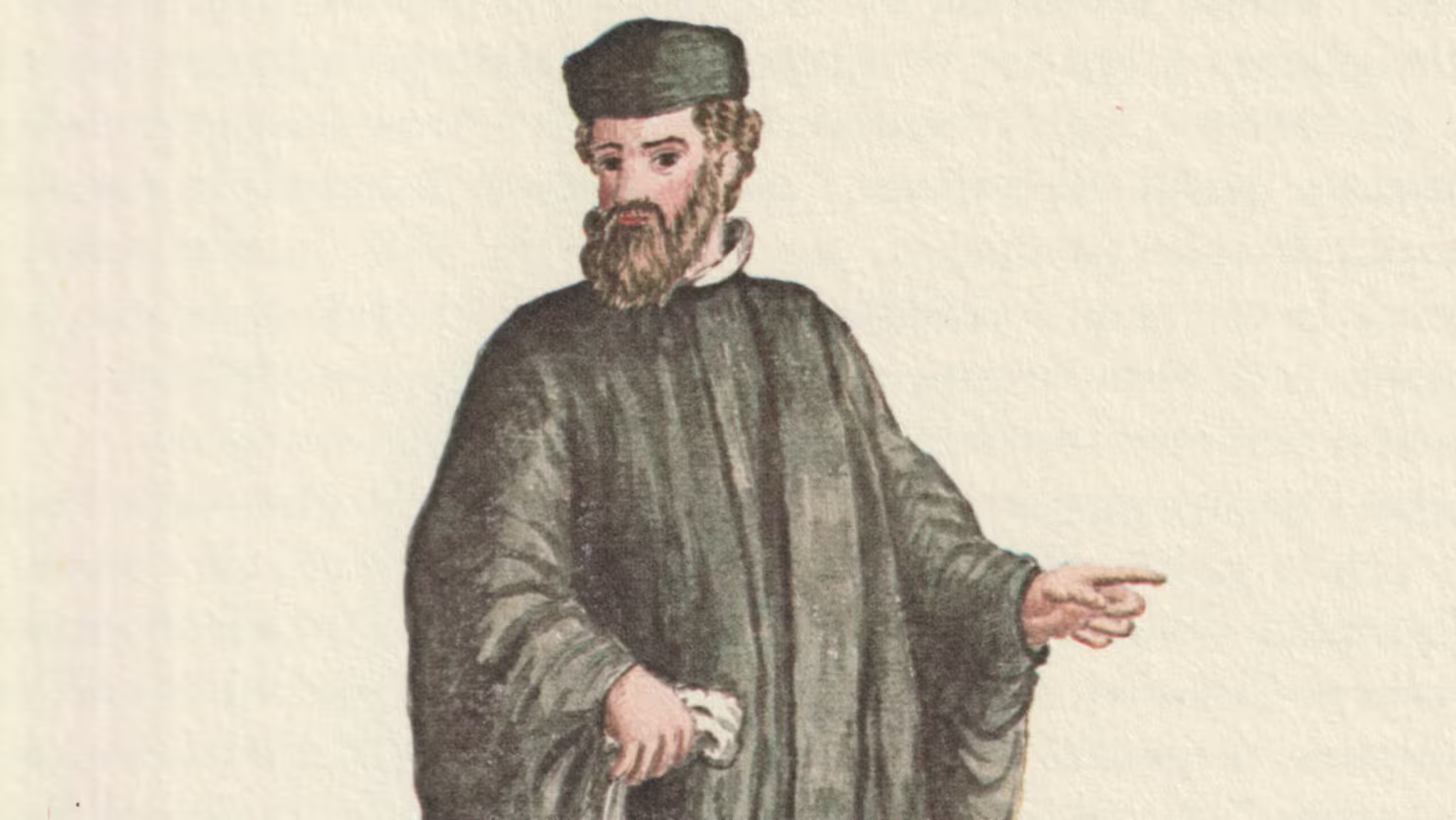
This painting depicts a Venetian nobleman — or a citizen — in the ordinary formal dress, the vesta, which originated as a Byzantine courtly dress.
The Venetians dressed in their own particular fashion until the end of the republic, a fact which was noted by many travellers from Western Europe.
This figure is partially copied from Habito ordinario, et commune à tutta la nobiltà Venetiana in Habiti Antichi e Moderni (1590) by Cesare Vecellio.
Source: Gli abiti de veneziani di quasi ogni età con diligenza raccolti e dipinti nel secolo XVIII, by Giovanni Grevembroch (1731–1807), which in four volumes contains over six hundred watercolours of how Venetians dressed in the 1700s.
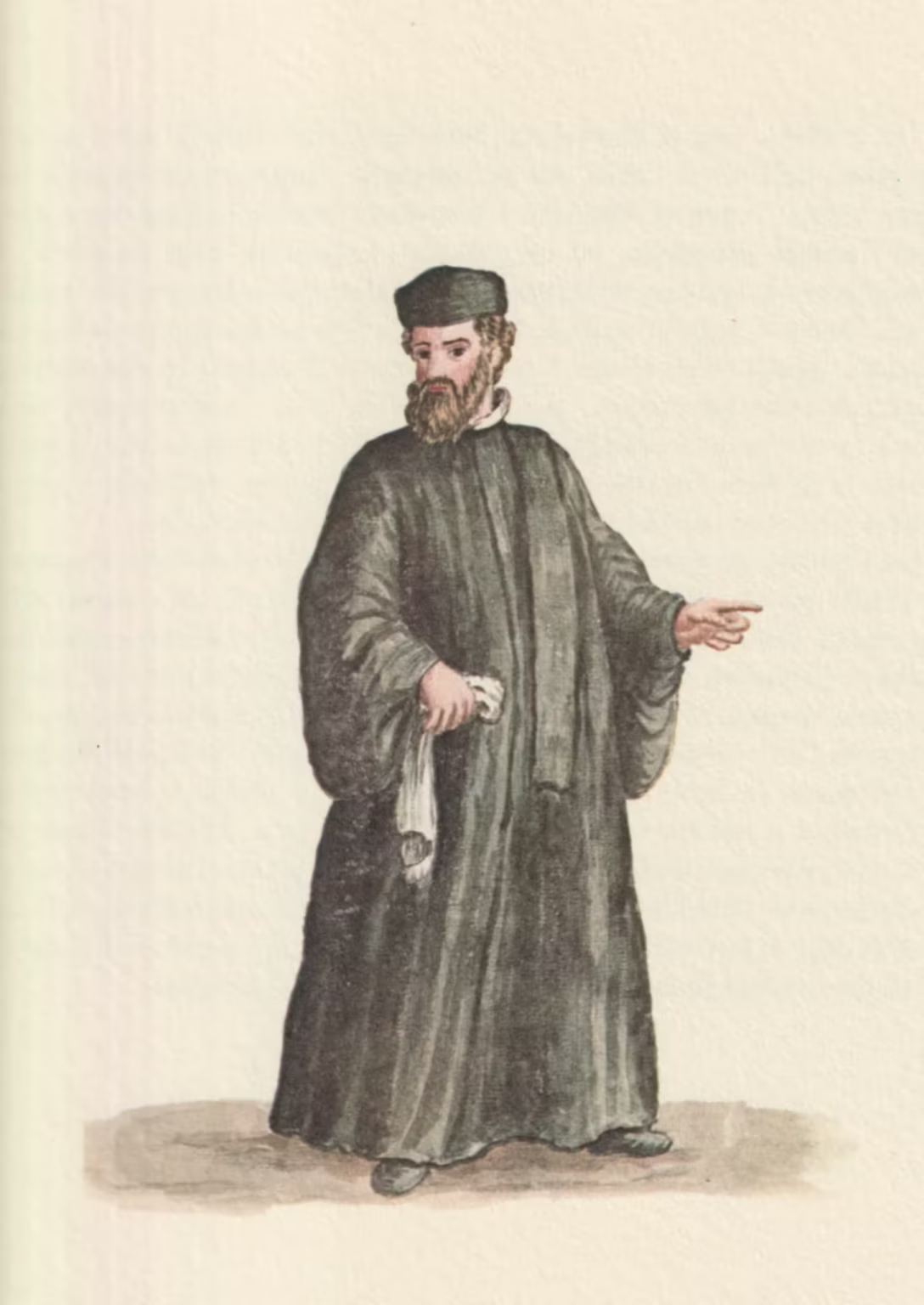
Nobleman in summer robe
The present Dress1 is the one that was worn in the Summer, long, and black in colour; but made of Cloth or of Rash2 lined with Sarcenet,3 and with the Stole.4
This was not girded, but was fastened under the Throat with some Clasps of iron, or, according to some, of silver.
Outside the Collar of the Robe protruded that of the Shirt, very tightly fitted, showing little, and at times no detail.
Under the same Robe, they wore Breeches in the Savoy style made of Sarcenet or Rash, and the same is said of the Doublet, which in very warm weather was mostly lined with thin cloth, and then between that and the aforementioned Robe they wore a small Jacket, also of Sarcenet or some other very light material, quite short.
In addition to the Nobles, it was equally useful to Citizens, Doctors, Lawyers, and Merchants,5 all of whom willingly took part, to stand out with great reputation.
To His Excellency Francesco Donà, intelligent Senator, we accompany, beyond our good will, this humble sentiment.
Translator’s notes
- The vesta was a long robe with wide sleeves, lined with fur, worn by magistrates of the Republic, with a stole across the left shoulder. ↩︎
- Rascia (also rasa, English: rash) was a sturdy woollen fabric. ↩︎
- Ormesino (English: sarcenet) is a light weight silk taffeta. ↩︎
- A stola was a band of fabric, usually the same material as the vesta, hanging over the left shoulder of a magistrato of the republic. ↩︎
- See Citizen of the Republic of Venice. ↩︎
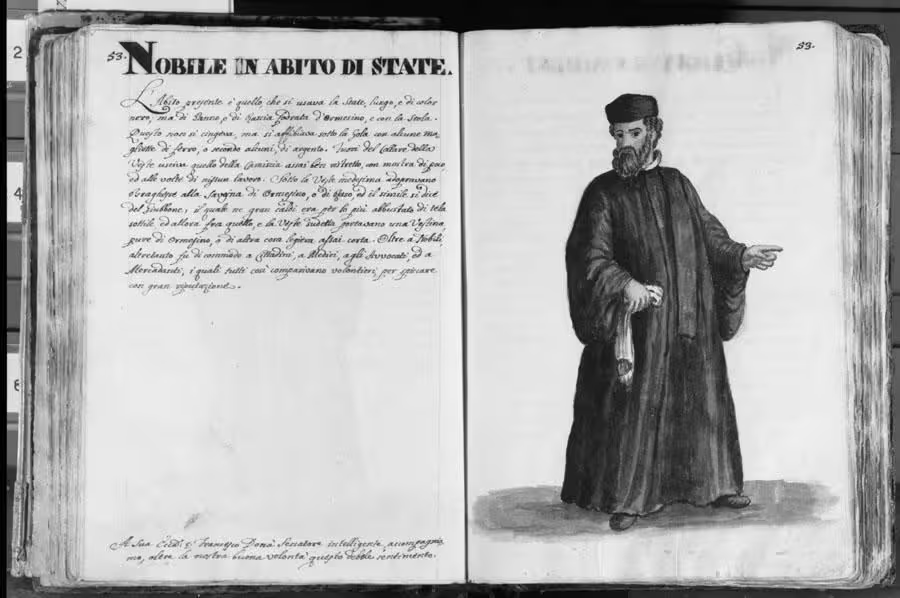
Original text
Nobile in abito di state
L’Abito presente è quello, che si usava la State, lungo, e di color nero; ma di Panno, o di Rascia fodrata d’Ormesino, e con la Stola.
Questo non si cingeva, ma si affibiava sotto la Gola con alcune Magliette di ferro, o secondo alcuni, di argento.
Fuori del Collare della Veste usciva quello della Camicia assai ben ristretto, con mostra di poco, ed alle volte di nessun lavoro.
Sotto la Veste medesima adopravano Braghesse alla Savojna di Ormesino, o di Raso, ed il simile si dice del Giubbone, il quale ne gran caldi era per lo più abbustato di tela sottile, ed allora fra quello, e la Veste sudetta portavano una Vestina, pure di Ormesino, o di altra cosa legiera assai corta.
Oltre a Nobili, altretanto fu di commodo a Cittadini, a Medici, agli Avvocati, ed a Mercadanti, i quali tutti così comparivano volentieri, per spiccare con gran riputazione.
A Sua Ecc.a Francesco Donà Senatore intelligente, accompagniamo, oltre la nostra buona volontà questo debole sentimento.
Grevembroch (1981), vol. 1, p. 53.
Related articles
Related sources
Related images
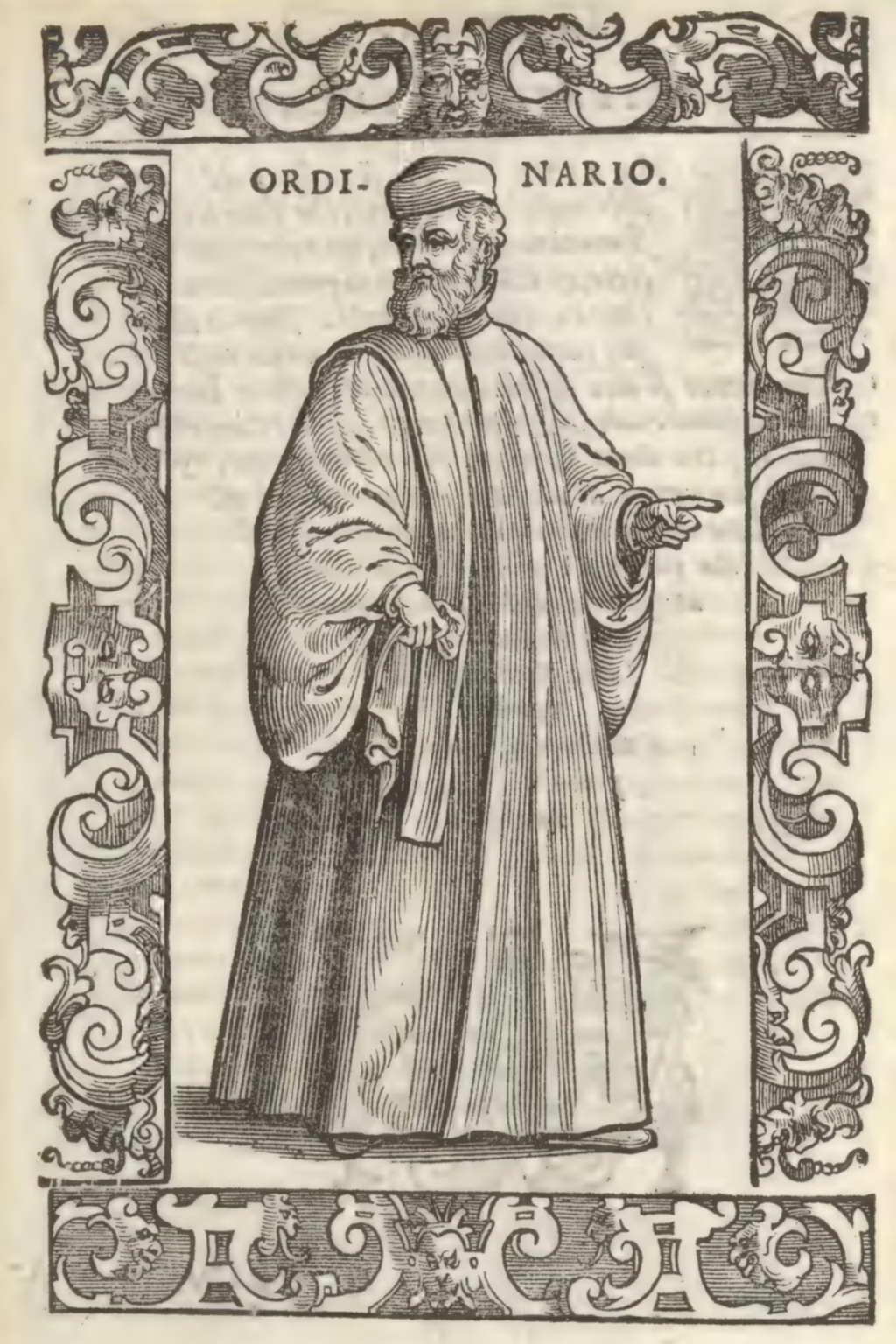
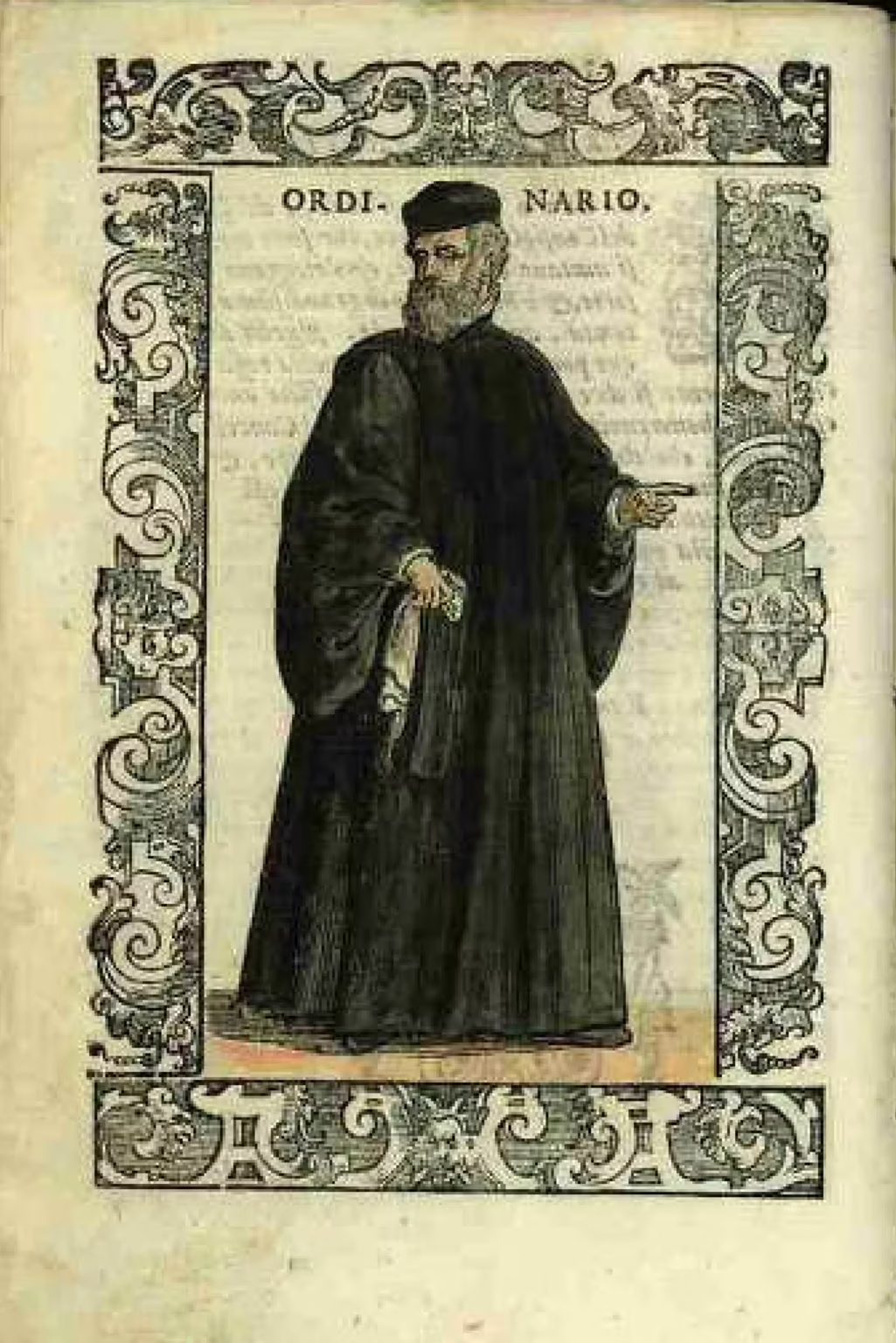

- Habito ordinario — Ordinary dress — Habiti Antichi e Moderni — 105.b
Bibliography
- Grevembroch, Giovanni. Gli abiti de veneziani di quasi ogni eta con diligenza raccolti e dipinti nel secolo XVIII, orig. c. 1754. Venezia, Filippi Editore, 1981. [more]
Leave a Reply