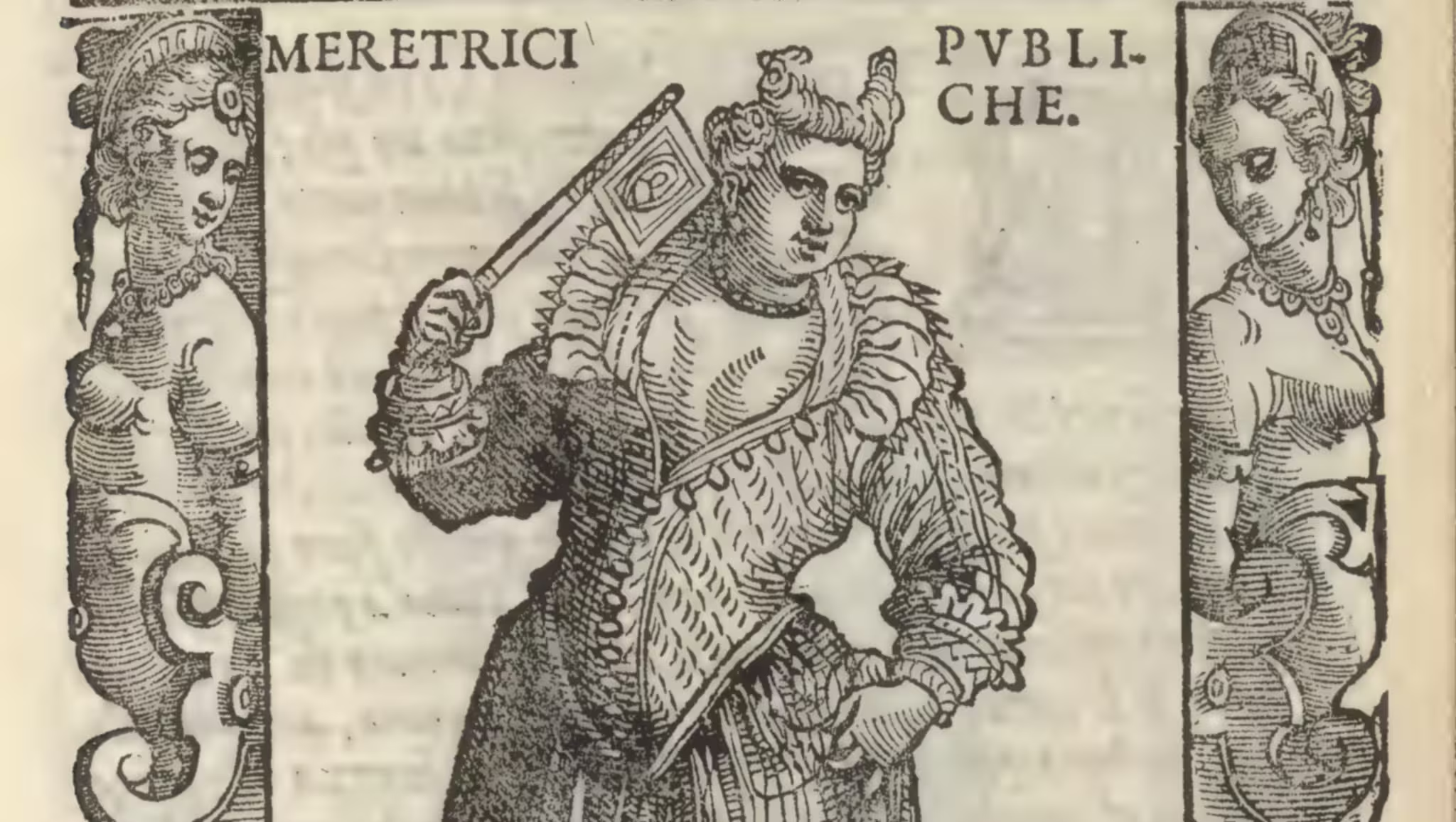
This print depicts a Venetian meretrice — a prostitute at the lower end of the social scale — soliciting on the streets.
She wears a more revealing dress than most other women of the time, and her legs and body shape are discernable through the dress.
Her hair is set in the characteristic Venetian style of a crescent moon shape. She also wears the calcagnette — tall clogs or slippers — to appear taller.
Vecellio described her attire as masculine, which it is clearly not. His choice of words might be because men’s clothing was more practical, and, as a sex-worker, she needed practical clothing too. She wouldn’t have had time to dress as fine women did, and neither did she have a maid to help her dress and undress.
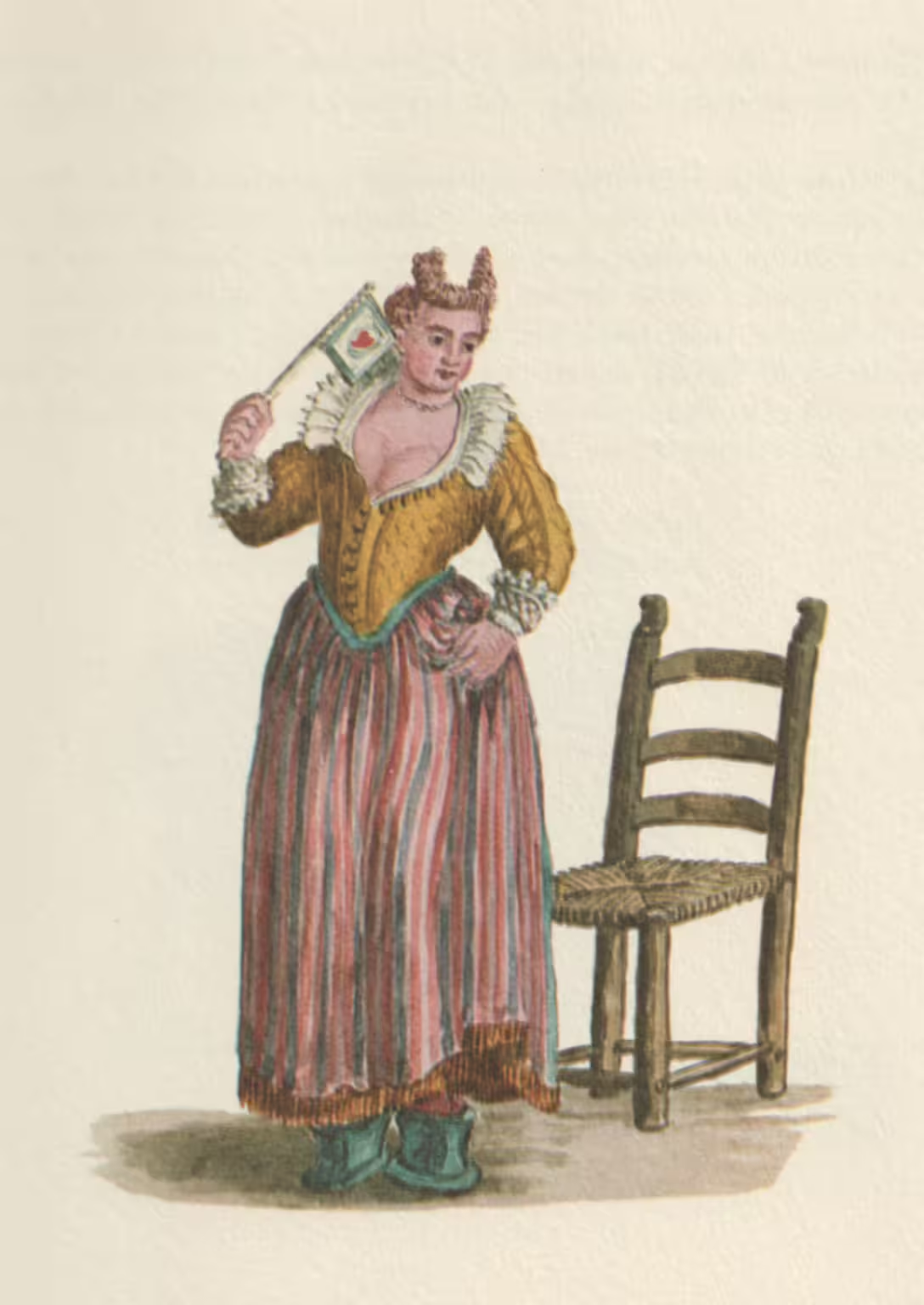
This figure was copied as Prostitute al Bordello by Giovanni Grevembroch in his Gli abiti de veneziani (1754).
Source: Degli Habiti antichi et moderni di Diverse Parti del Mondo published in 1590 and 1598 by Cesare Vecellio (1521–1601).
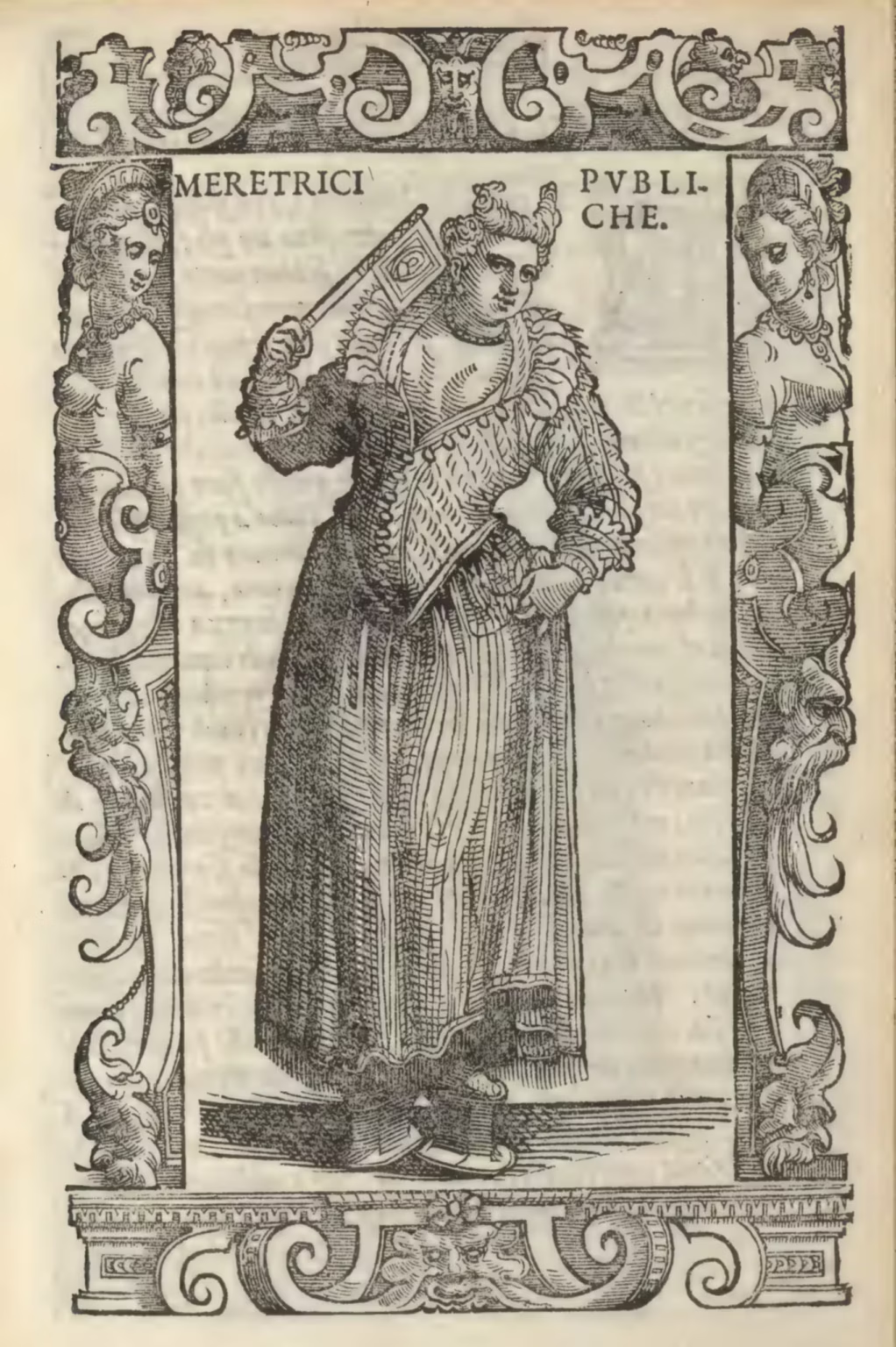
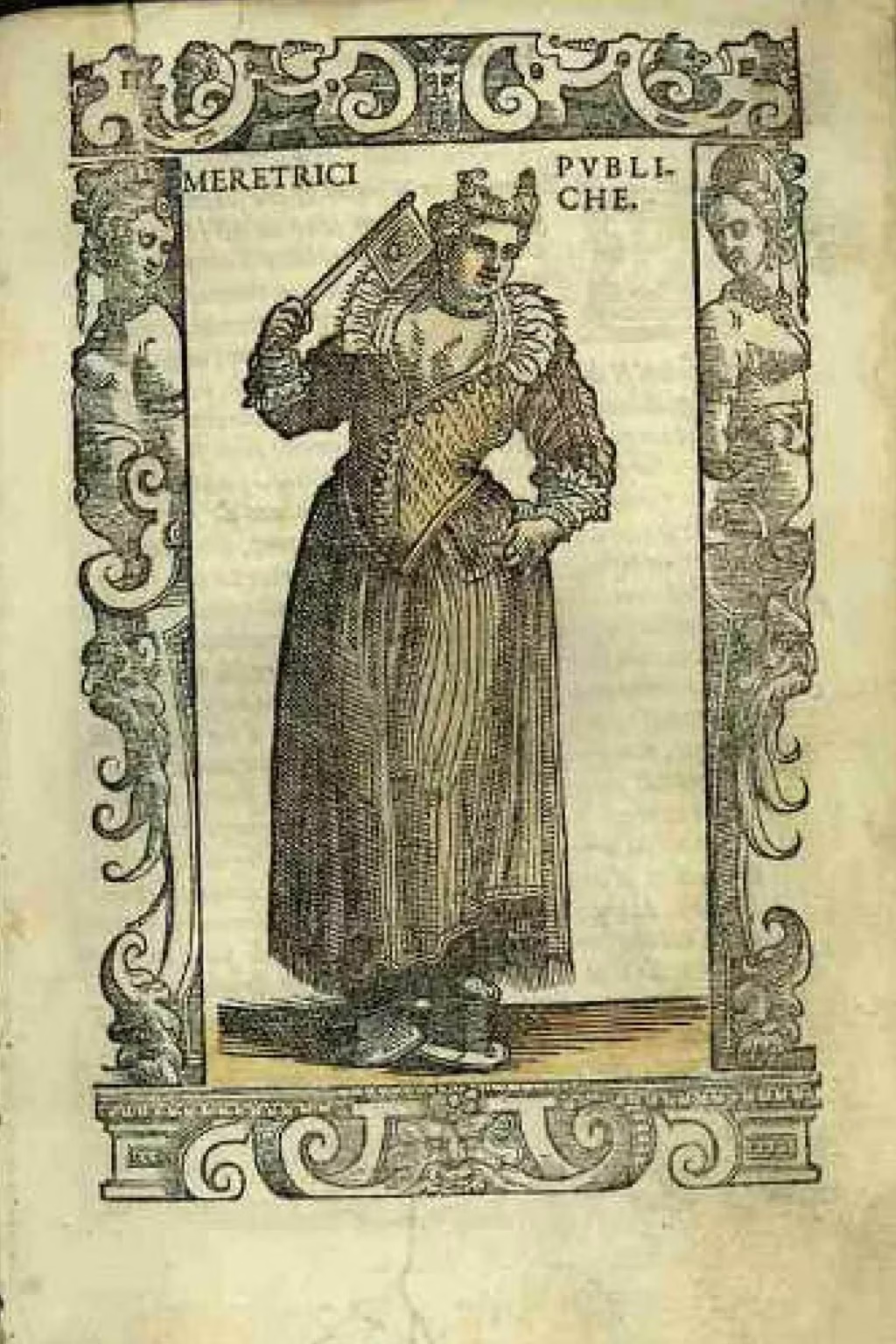
Prostitutes of public places
The public prostitutes, who reside in infamous places,1 do not have uniform attire: for although they all belong to the same profession, the inequality of fortune means that not all of them dress lavishly in the same way. Nevertheless, they do have a common type of clothing, which leans more toward the masculine style because they wear jackets made of silk, cloth, or other materials, according to how expensive each one can have them: and these are adorned with wide fringes and stuffed with cotton, just as young men wear them, and more similar to the style of the French.
But on the body they wear a man’s shirt, also tailored with delicacy and refinement to the abilities that each has to spend. Over this shirt, in warm seasons, they wrap a sash or apron made of silk or linen, reaching down to the feet; and in cold weather, a lined little coat, either of cloth or silk, as best as possible.
The clogs2 they wear are higher than a quarter of an arm’s length,3 but decorated with certain fringes, and on their legs they wear embroidered silk or cloth socks, with Roman-style shoes. Many of them wear trousers, like the young men of ormesino,4 or other: and by these signs, and others of small silver roundels, or of the necklaces, they are easily recognized.
But one cannot easily describe how they arrange their hair, nor are they seen at the windows, as they more often frequent the door and the street, to lure into their nets the large birds that pass by. There they linger singing little love songs, but they are of little charm, and in keeping with their vile condition, making themselves mostly heard with a hoarse voice.
Translator’s notes
- The Castelletto was an area near the San Matteo church (now demolished, near San Cassian), where prostitutes were obliged to reside. See also Castelletto (district for prostitutes). ↩︎
- Calcagnette (also pianelle or zoccoli) were tall platform sandals or clogs, worn by Venetian women to look taller, and not to soil their feet in the streets. ↩︎
- A braccio (meaning an arm) was a common measure of length, either a braccio da seta (silk) of c.64cm, or a braccio da lana (wool) of c.68cm. ↩︎
- Ormesino (English: sarcenet) is a light weight silk taffeta. ↩︎
Original text
Meretrici de’ luoghi publici
Le publiche Meretrici, che stanno ne’ luoghi infami, non sono ne gli Habiti loro uniformi: perche se bene tutte sono d’un essercitio medesimo: nondimeno l’inequalità della fortuna fa che non tutte vanno pompose ad un modo: hanno con tutto ciò in uso un’Habito, che pende più tosto al virile, perche portano giubboni di seta, di tela, ò d’altro secondo che ciascuna può havergli più ò meno ricchi: & questi sono forniti con frange larghe, & pieni di bombagia, come à punto gli portano i giovani, & più simili al portamento de’ Francesi.
Ma su le carni portano la camicia da huomo, accommodata anchora questa di sottigliezza, & politezza alle forze, che ciascuna ha di spendere. Sopra la quale camicia si cingono nelle stagioni calde una traversa ò grembiale di seta, o di tela, lunga fino a’ piedi: & ne’ tempi freddi una vesticciola foderata, sia di panno, ò di seta, come meglio si può.
Le pianelle, ch’elle portano, sono più alte d’un quarto di braccio, ma ornate di certe frange, & in gamba usano calzette di seta, ò di panno ricamate con le scarpe alla Romana in piedi. Portano molte di loro, le braghesse, come gli huomini di ormesino, ò altro: & à questi segni, & altri di tondini d’argento, di manili, sono facilmente conosciute.
Ma non si può già facilmente descrivere, come elle s’acconcino la testa, nè si veggono alle finestre, frequentando elle piu tosto la porta, & la strada, per tirar nella ragna gli uccellacci, che passano. Quivi si trattengono cantando canzonette amorose, ma son poca gratia, & conforme alla lor vile conditione, facendosi di più quasi tutte sentir con la voce roca.
Vecellio (1590), 146.a.
Related articles
Related images
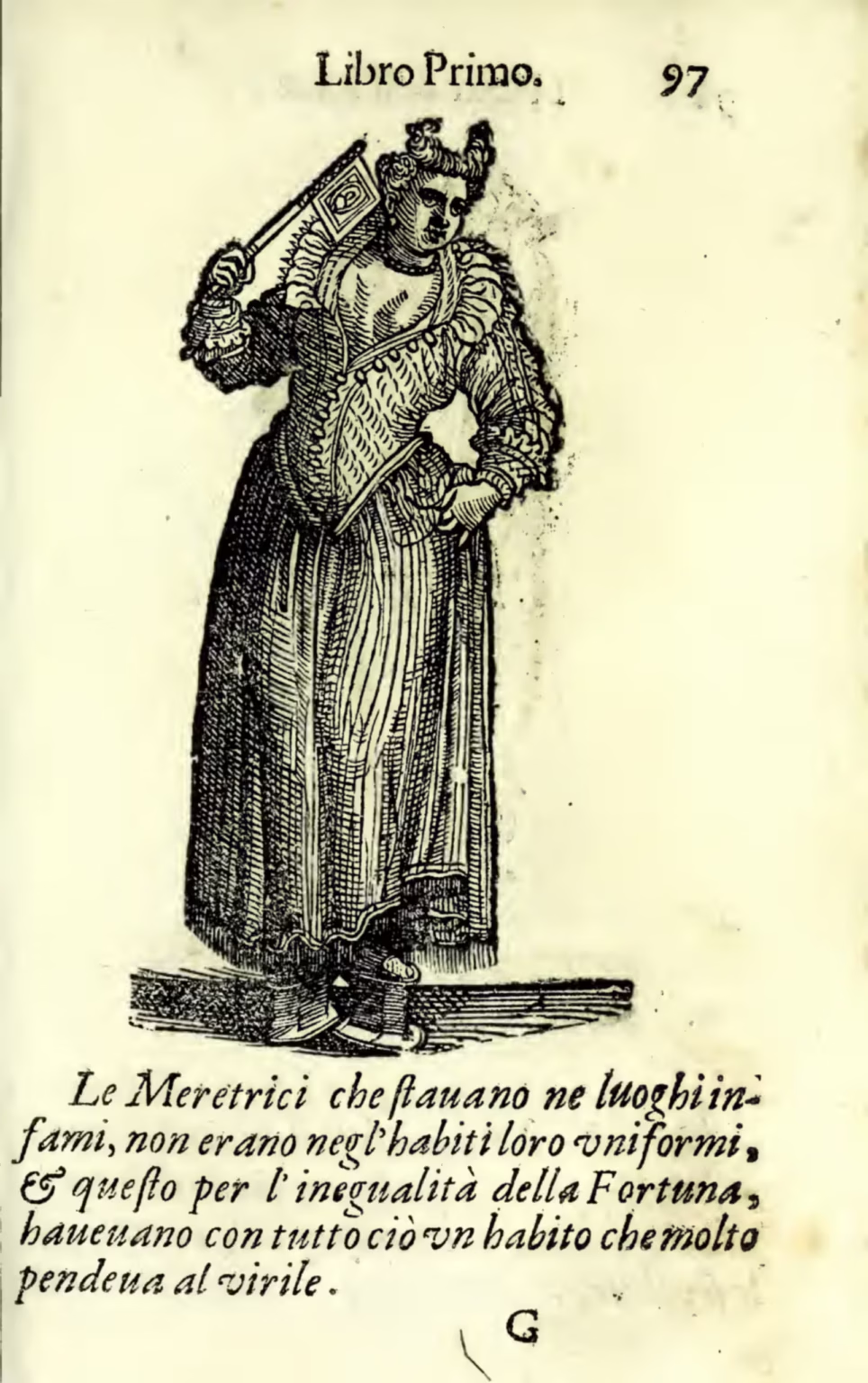
- Meretrici de’ luoghi publici from the 1664 edition of Habiti Antichi e Moderni.
- Prostitute al Bordello — Prostitutes in the Brothel — Grevembroch
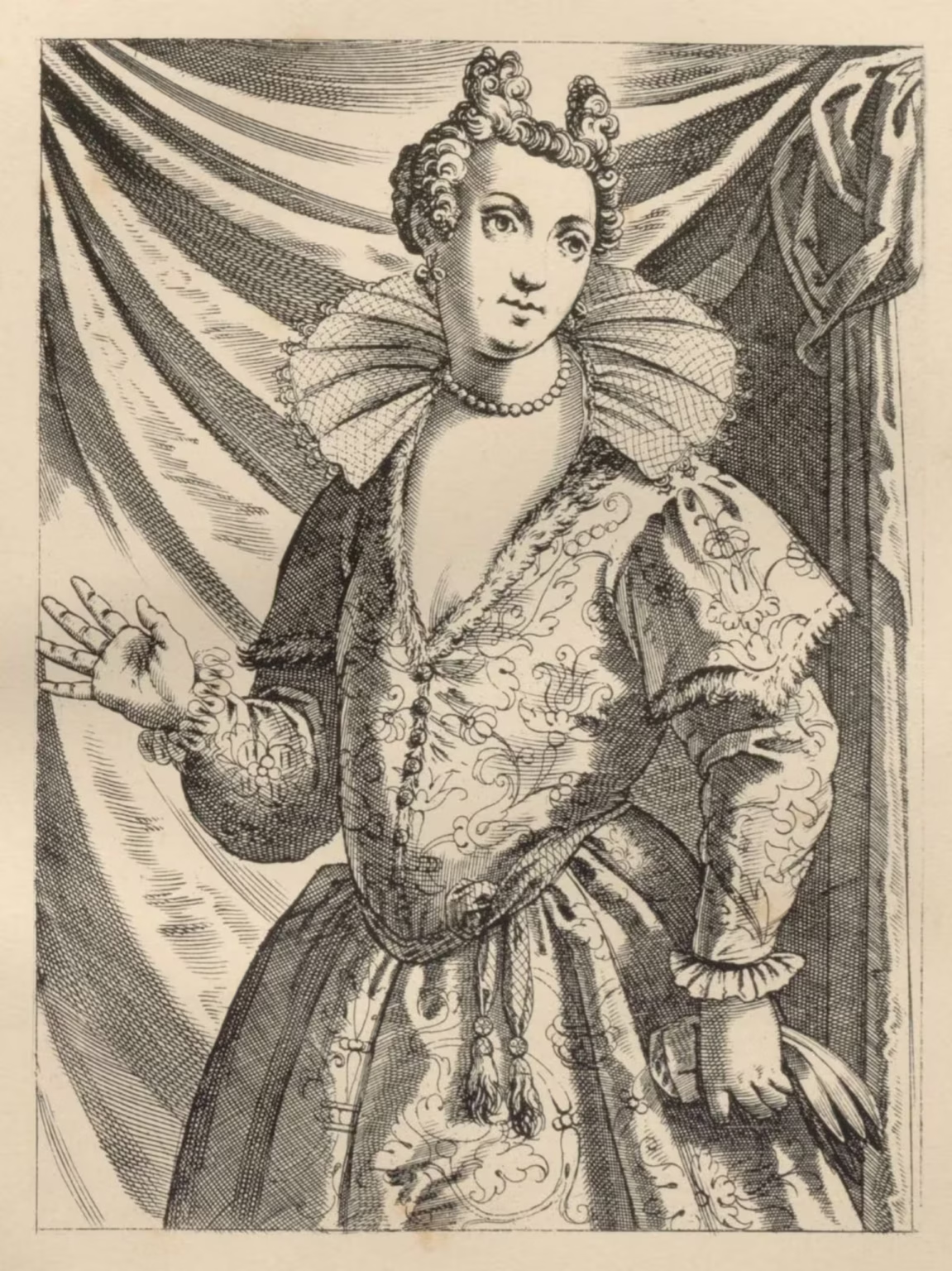
- Cortegiana vestita da inverno — Courtesan dressed for winter — Habiti delle Donne Venetiane — 11
- Cortegiana famosa — Famous courtesan — Habiti delle Donne Venetiane — 10
- Cortegiana vestita a la foresta — Courtesan dressed as a foreigner — Habiti delle Donne Venetiane — 13
- Una che si concia con due specchi — A woman dressing her hair with two mirrors — Habiti delle Donne Venetiane — 8
- Altra Donzella — Another young woman — Grevembroch 3-113
Leave a Reply