
A Hidden History group tour can start in any of six locations, in various places around Venice.
Private tours can start anywhere, but the itineraries below can still serve as inspiration.
While each sestiere and district have their monuments, churches and stories, they’re still part of the same city, and have much in common.
Parts of these itineraries are therefore shared, while each also has its own distinct character.
Castello
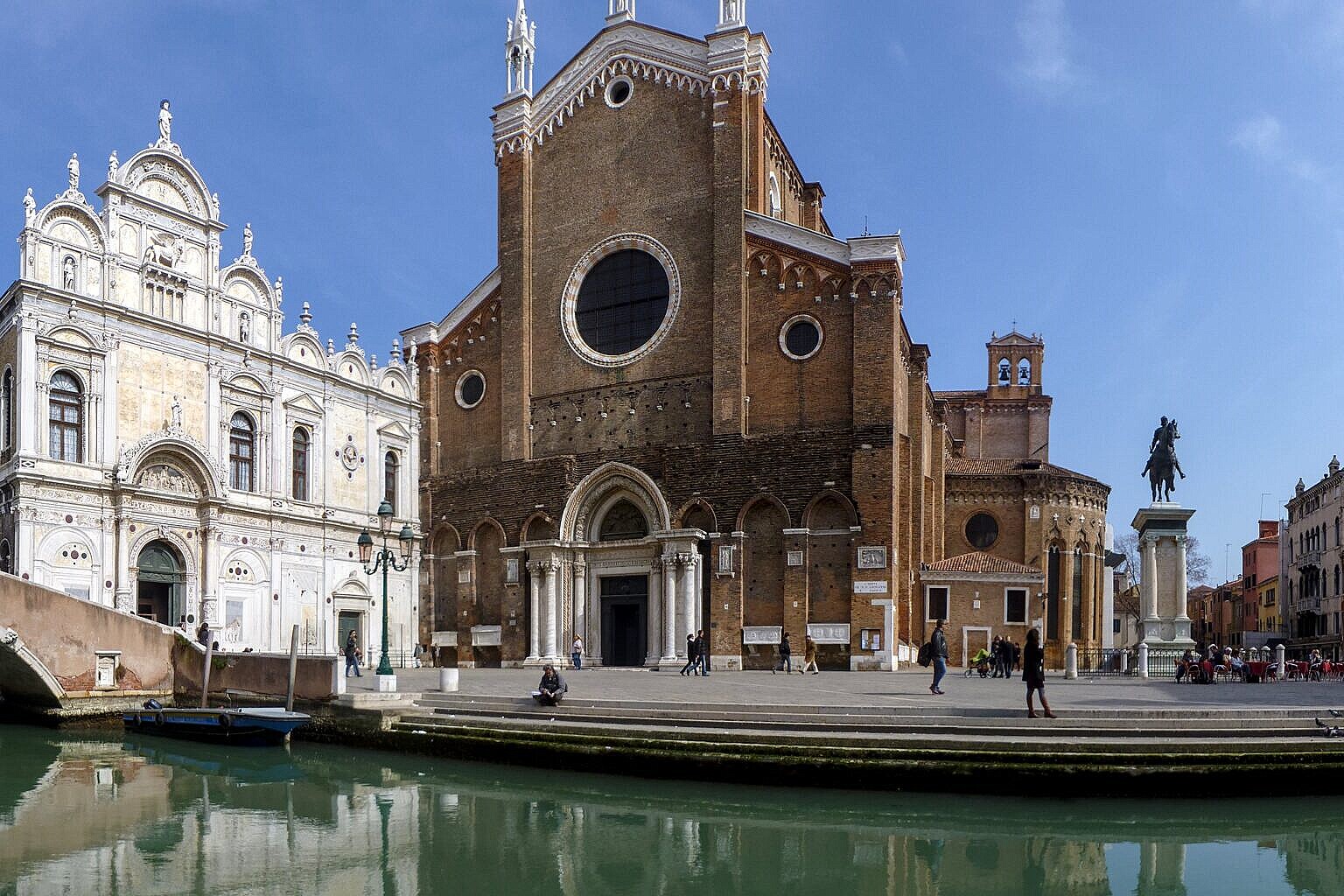
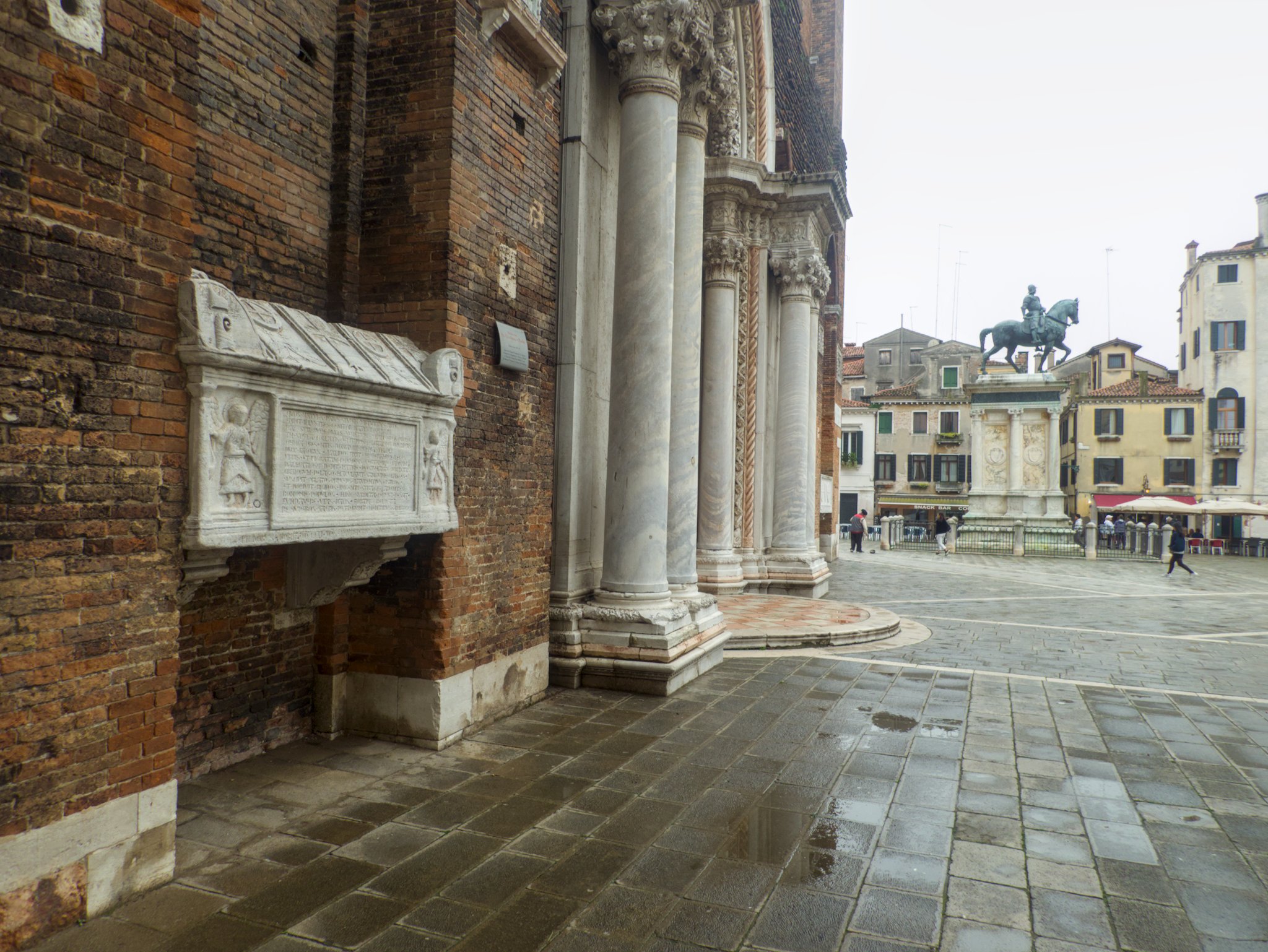
This itinerary starts in Campo SS Giovanni e Paolo and moves in the direction of the Arsenale, through a lesser crowded part of the Sestiere Castello.
It starts in one of the most monumental squares of Venice, after Piazza San Marco. The medieval church houses around twenty tombs of doges, the neighbouring building was one of the Scuole Grandi, and the equestrian statue of Bartolomeo Colleoni is from the late 1400s.
From there, the tour moves towards much more humble areas, leaving space to discuss a wide range of topics, from the organisation of the Republic of Venice, to how the communities and palaces were structured, to ancient taxi services and the lives of common people.
Around the Biennale
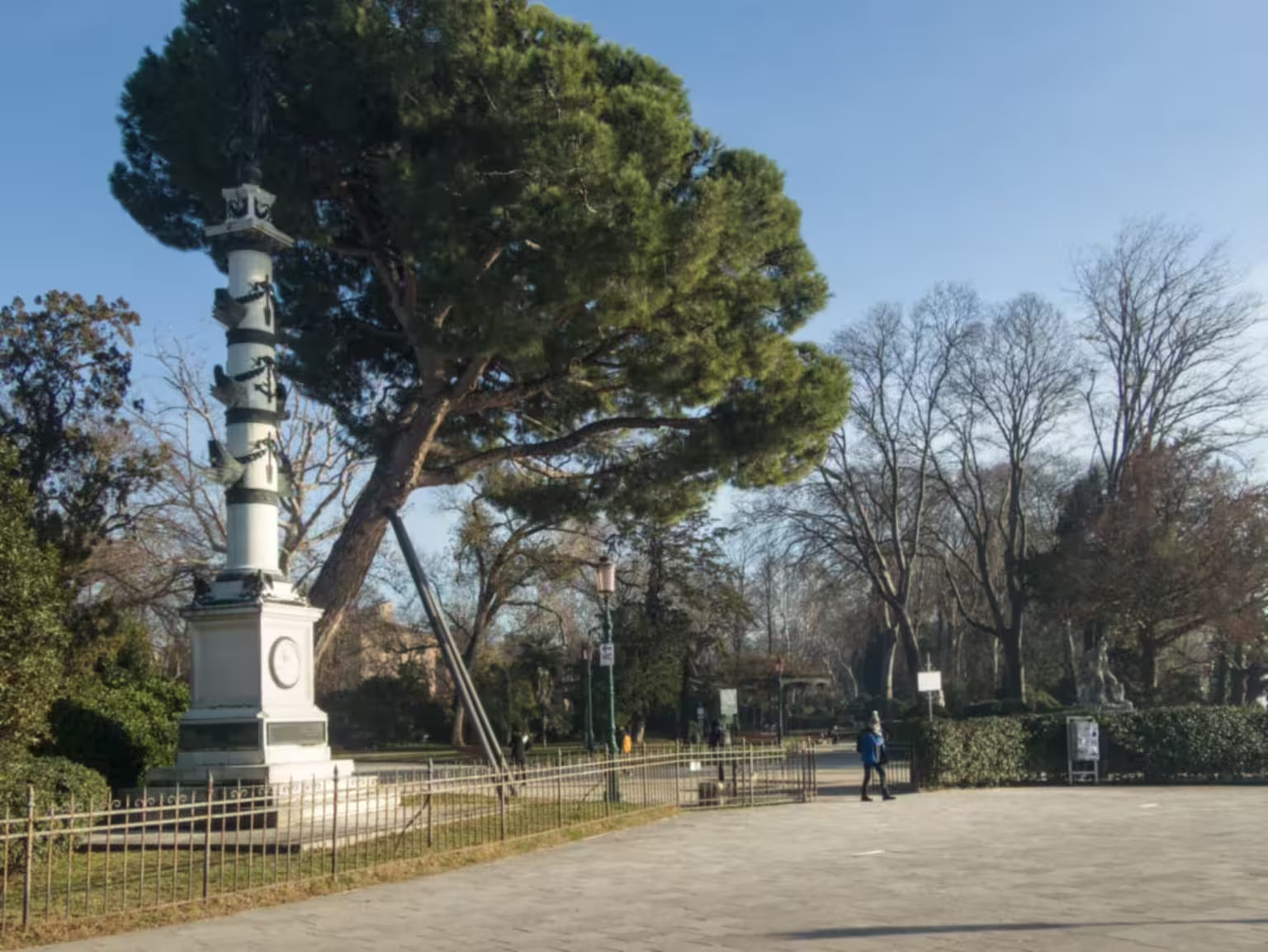
The tour around the area of the Biennale is half Venice Lost, and half Venice Alive. It starts and ends in the Via Garibaldi.
Three monasteries, three churches and a hospital were all demolished in 1807–1809, on the orders of Napoleon, to create a public garden, part of which later became the Biennale. One of the larger canals of Venice, and several smaller, were covered up or filled-in.
This is one of the parts of Venice, where the devastation brought on Venice by Napoleon, can be most clearly seen.
At the same time, both the Via Garibaldi area and the modern extension at Sant’Elena are vibrant local communities, where there are still almost as many residents as tourists.
The other San Marco
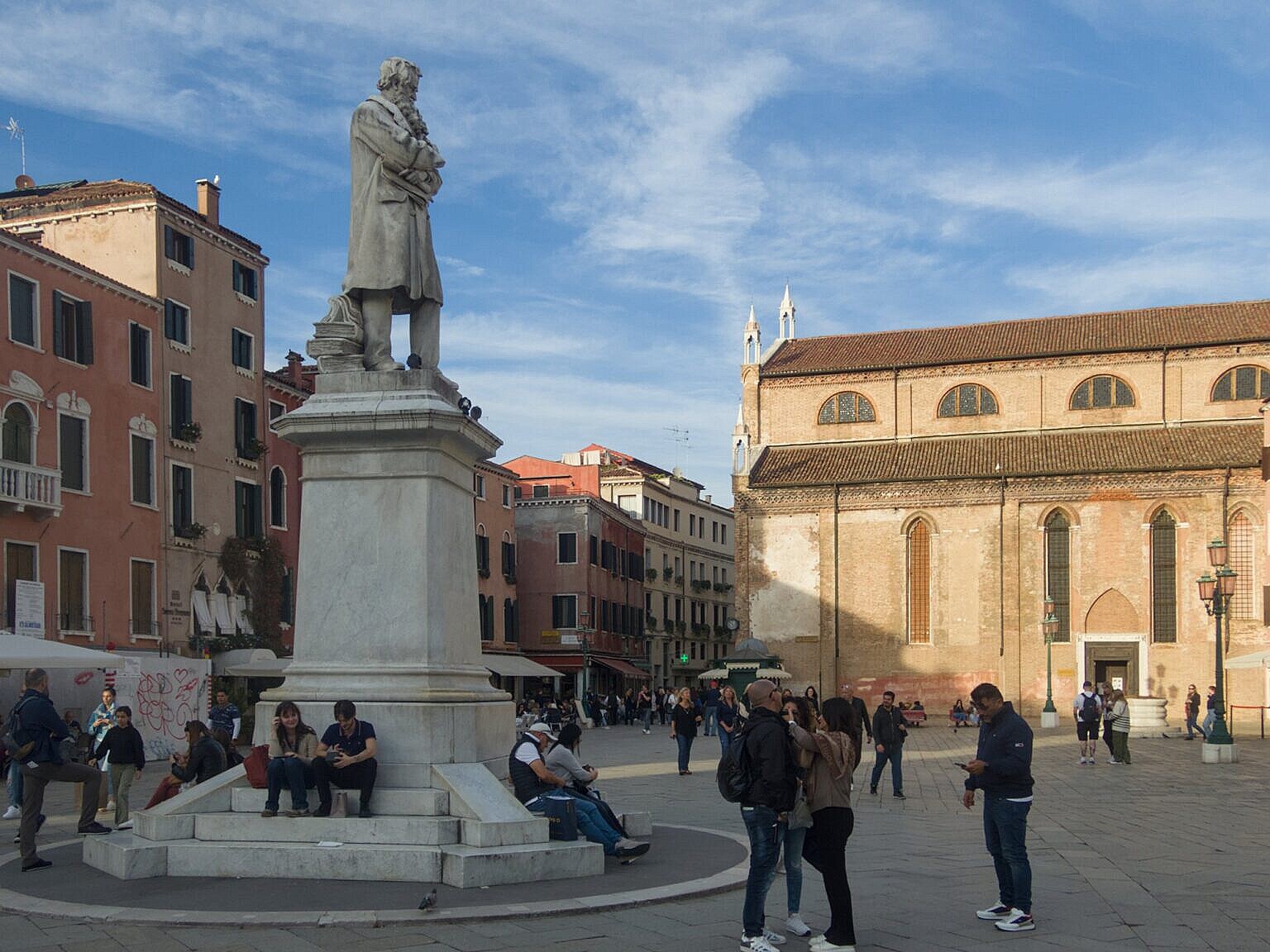
The Sestiere San Marco is much more than the piazza. This tour starts at the Accademia bridge, and moves in the direction of Campo Santo Stefano, Campo Sant’Angelo and onwards.
On this tour, we often discuss painted palaces, the pharmaceutical industry of Venice, law and order, ball games, how local communities were structured, where poor people were buried, and sometimes also a doge or two.
Depending on the route taken, we might also talk of medieval murders and law enforcement, the Venetian republic of 1848, how executed criminal were buried, and how Venice wasn’t liberated in the war 1859.
The Strada Nova
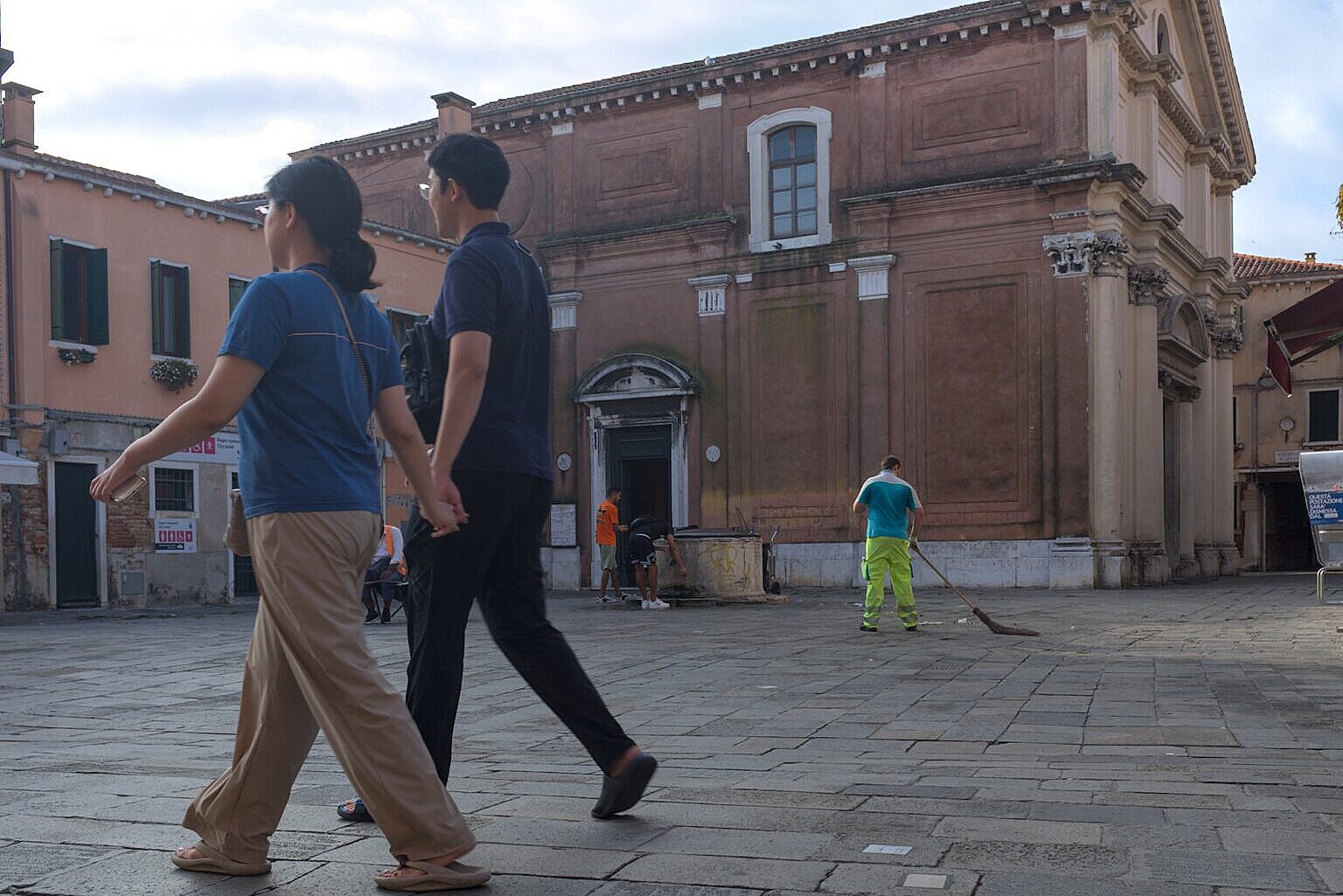
From the meeting point in front of the station, we walk through a part of Venice, which underwent enormous changes in the 1800s.
The station itself, lost churches and charities, several filled-in canals, countless homes demolished, chapels gone and forgotten, once well-known place names, which nobody knows any more. Naturally, we also have the story of the Sicilian immigrant named Lucia, a great fire, a Papal assassination attempt, ancient laxatives, and what not.
While much of Venice would still be somewhere recognisable to somebody from the 1700s, this part would not.
Sestiere San Polo
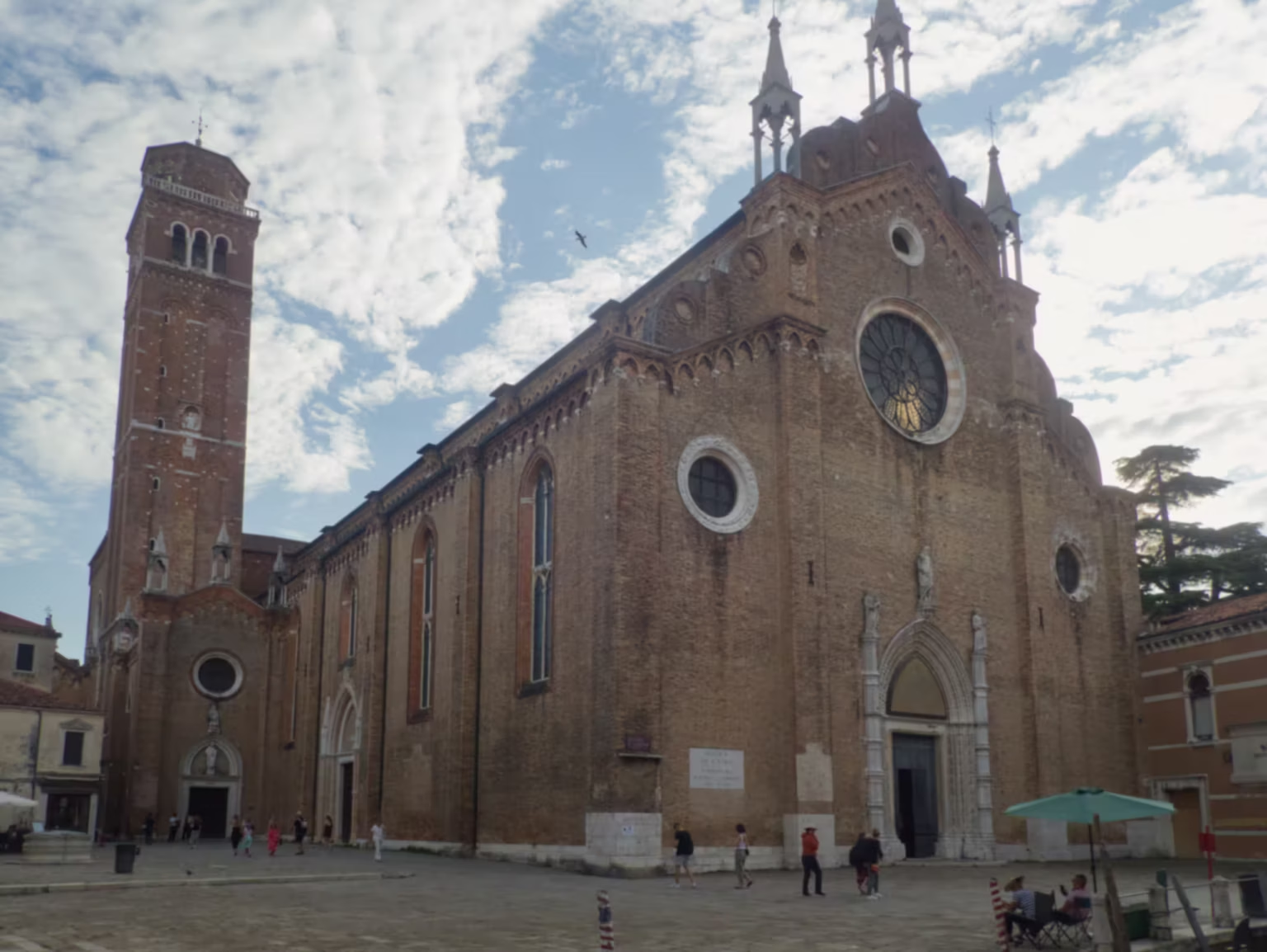
From the Campo San Tomà, where we’ll meet, there are several possible itineraries, going in different directions.
In one direction, we find ancient guilds and charities, medieval conspiracies, the early modern industry of book printing, ball games and other public disorders.
By choosing another route, we find Byzantine architecture, bull-fights, medieval prostitution and eloping noblewomen.
Or, if we prefer, bustling streets, a Byzantine emperor, murder and slavery in the Middle Ages, marketplaces, missing canals and long-gone rubbish dumps.
There’s nowhere boring in Venice.
The Giudecca island
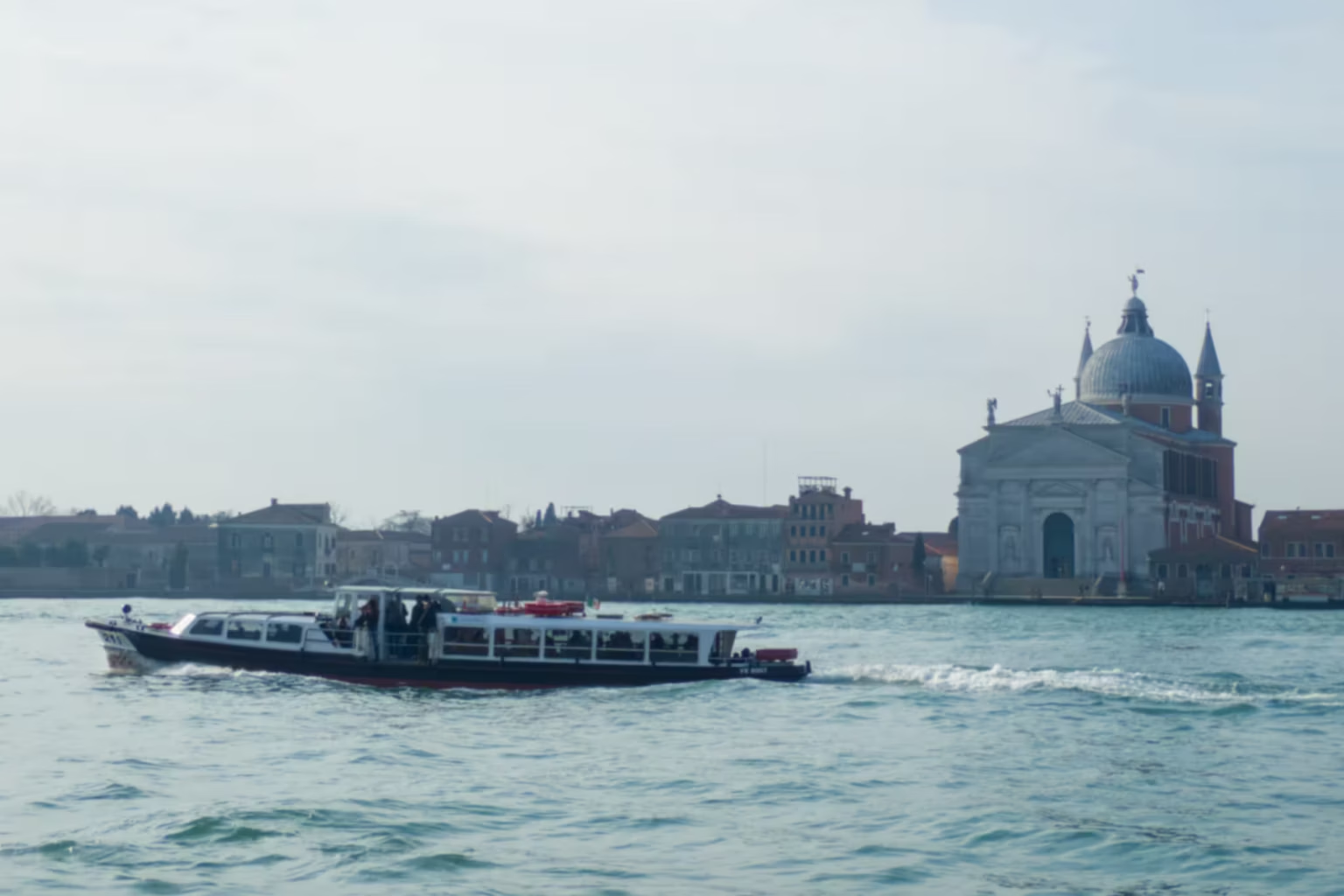
The Giudecca island is detached from the rest of Venice, but it has always been a part of the city anyway.
Once a place where noble families had villas with large gardens, it became a place of churches and monasteries, and an academy for the nobility.
In the 1800s, monasteries were converted into prisons, and churches demolished to make room for early industrial developments.
Those industrial projects mostly failed, leaving a wasteland behind, which is now being slowly recovered.
Finally, there is, of course, the plague, but then, there is always the plague.
The Giudecca island is a mix of old and new, which can only exist in Venice.
The meeting places
These are the meeting places for the itineraries described above.