
Grevembroch (1754)
Grevembroch, Giovanni. , and Mariacher, Giovanni. Gli abiti de veneziani di quasi ogni eta con diligenza raccolti e dipinti nel secolo 18. Venezia Filippi, 1981
-
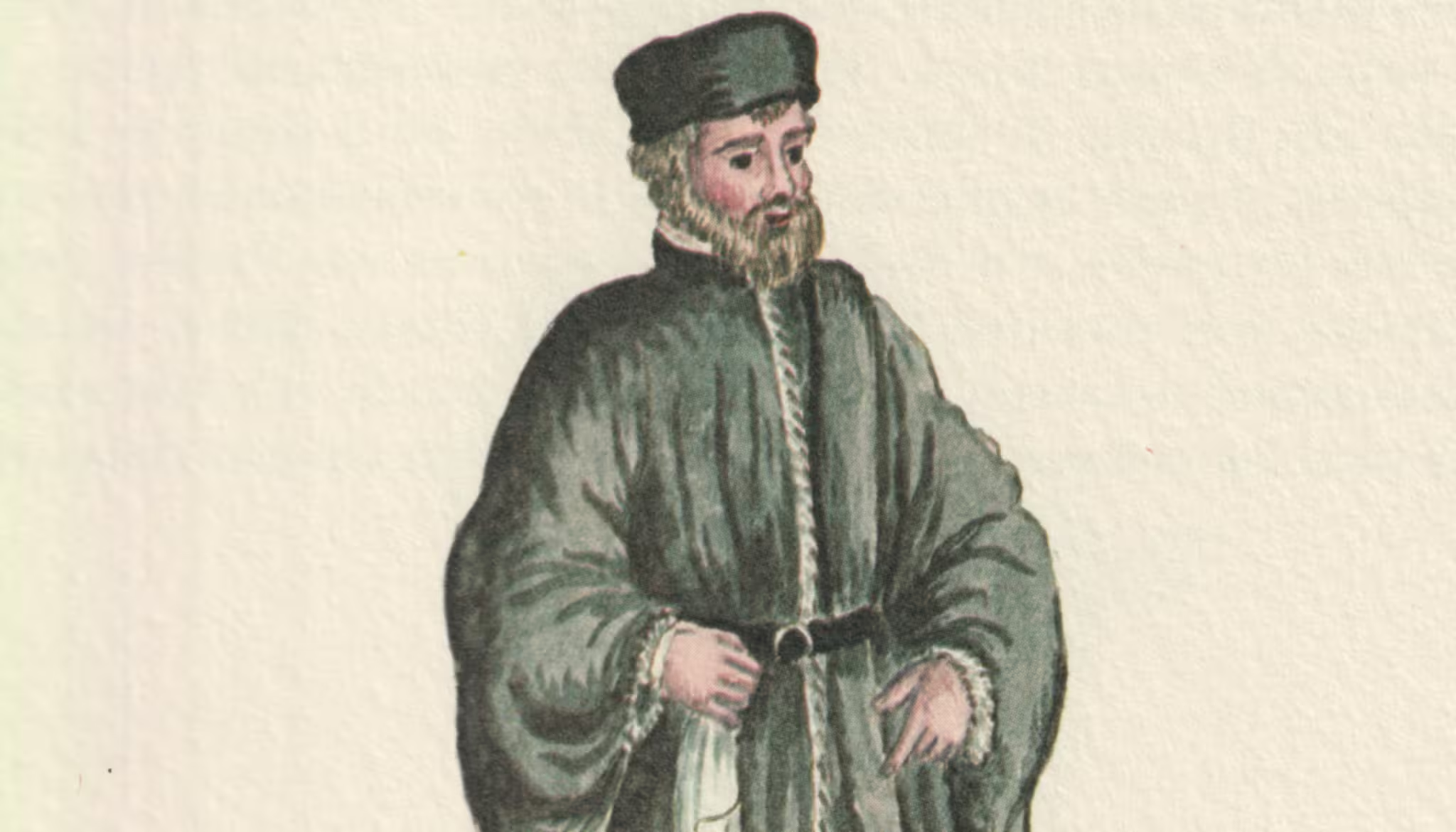
Nobile in Abito d’Inverno — Nobleman in Winter Attire — Grevembroch 1-52
“Nobile in Abito d’Inverno” (Nobleman in Winter Attire) from the Gli abiti de veneziani (1754) by Giovanni Grevembroch, translated by René Seindal.
-
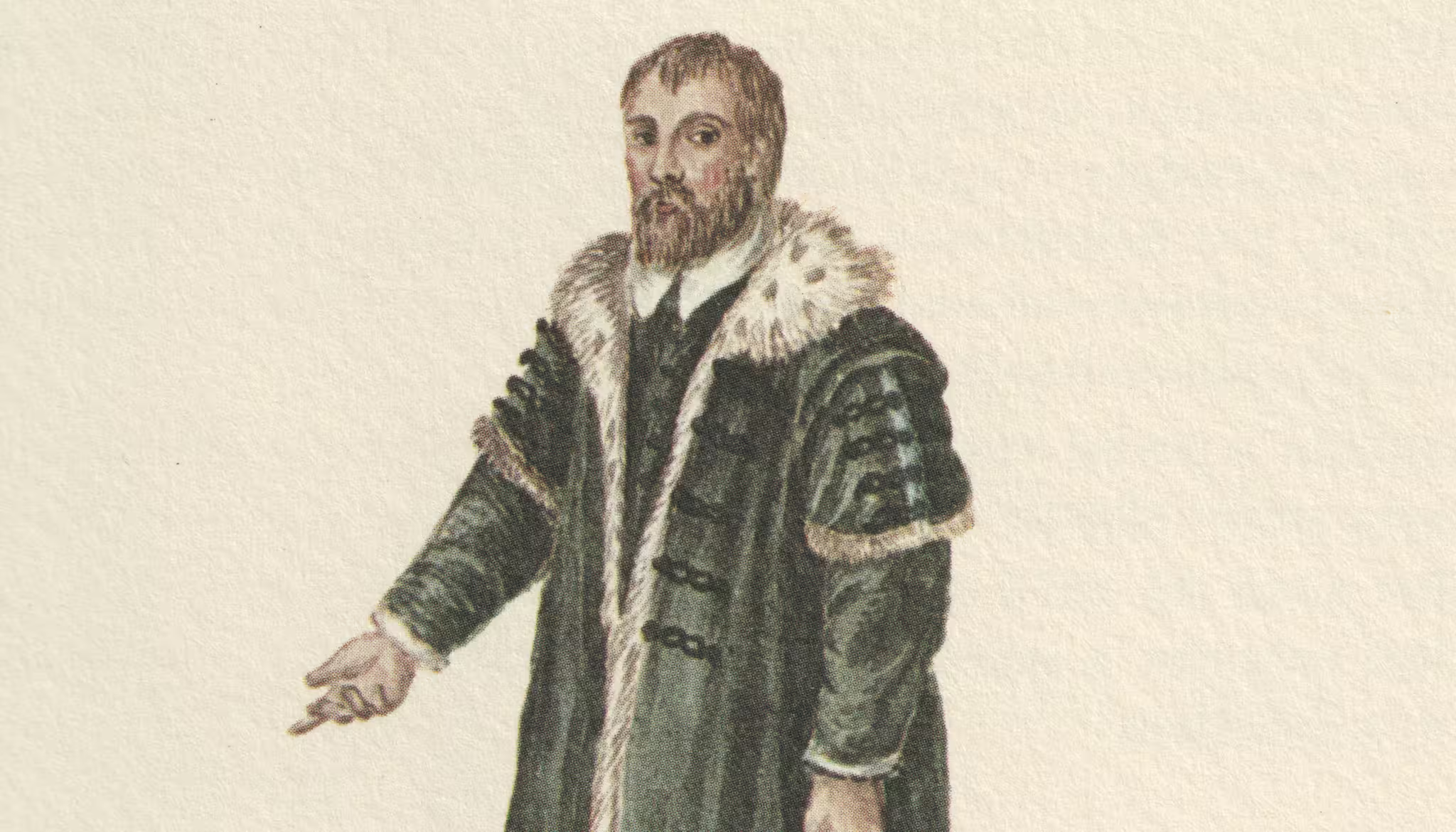
Protomedico — Chief Physician — Grevembroch 2-160
“Protomedico” (Chief Physician) from the Gli abiti de veneziani (1754) by Giovanni Grevembroch, translated by René Seindal.
-
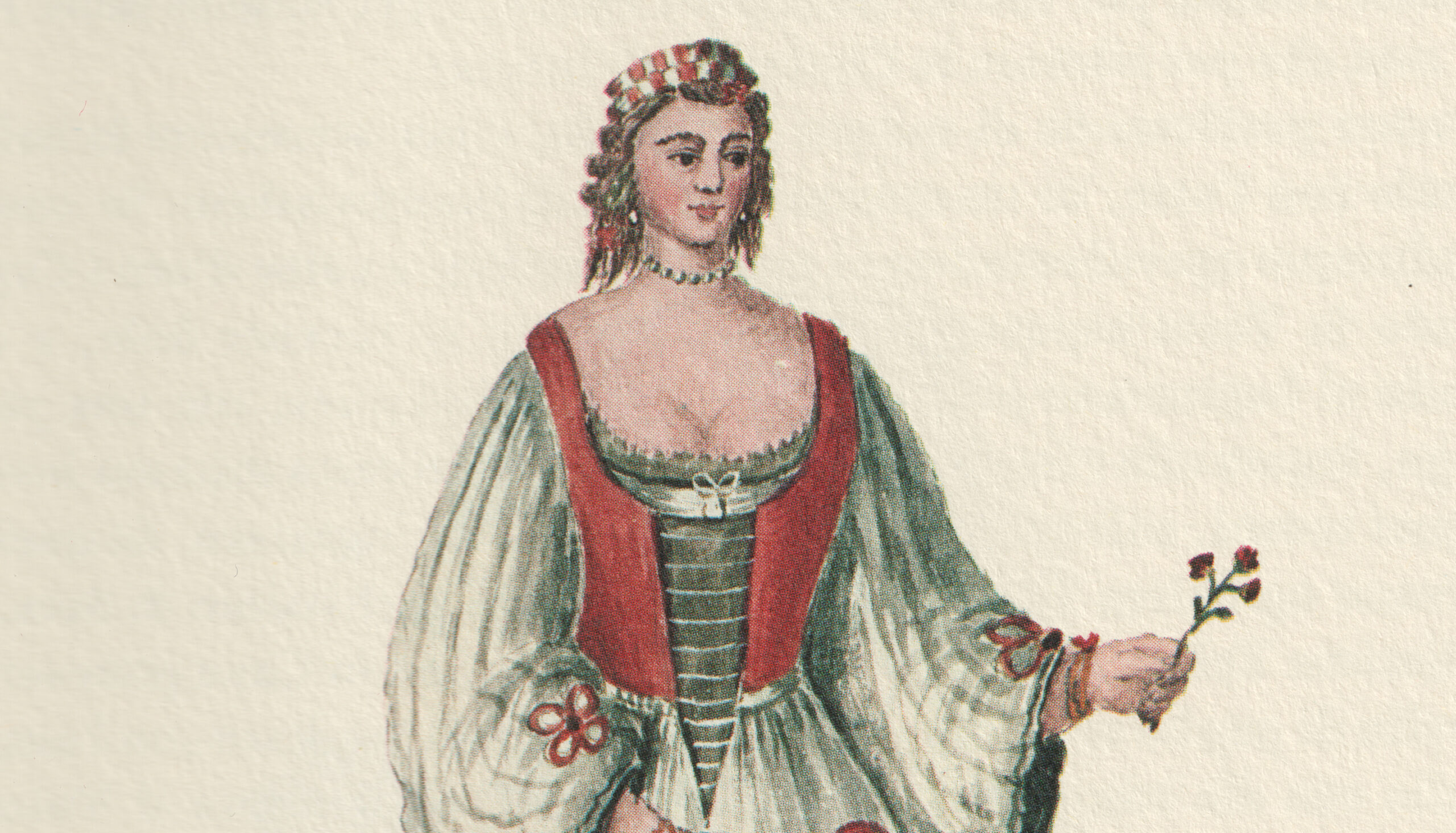
Altra Donzella — Another young woman — Grevembroch 3-113
“Altra Donzella” (Another young woman) from the Gli abiti de veneziani (1754) by Giovanni Grevembroch, translated by René Seindal.
-
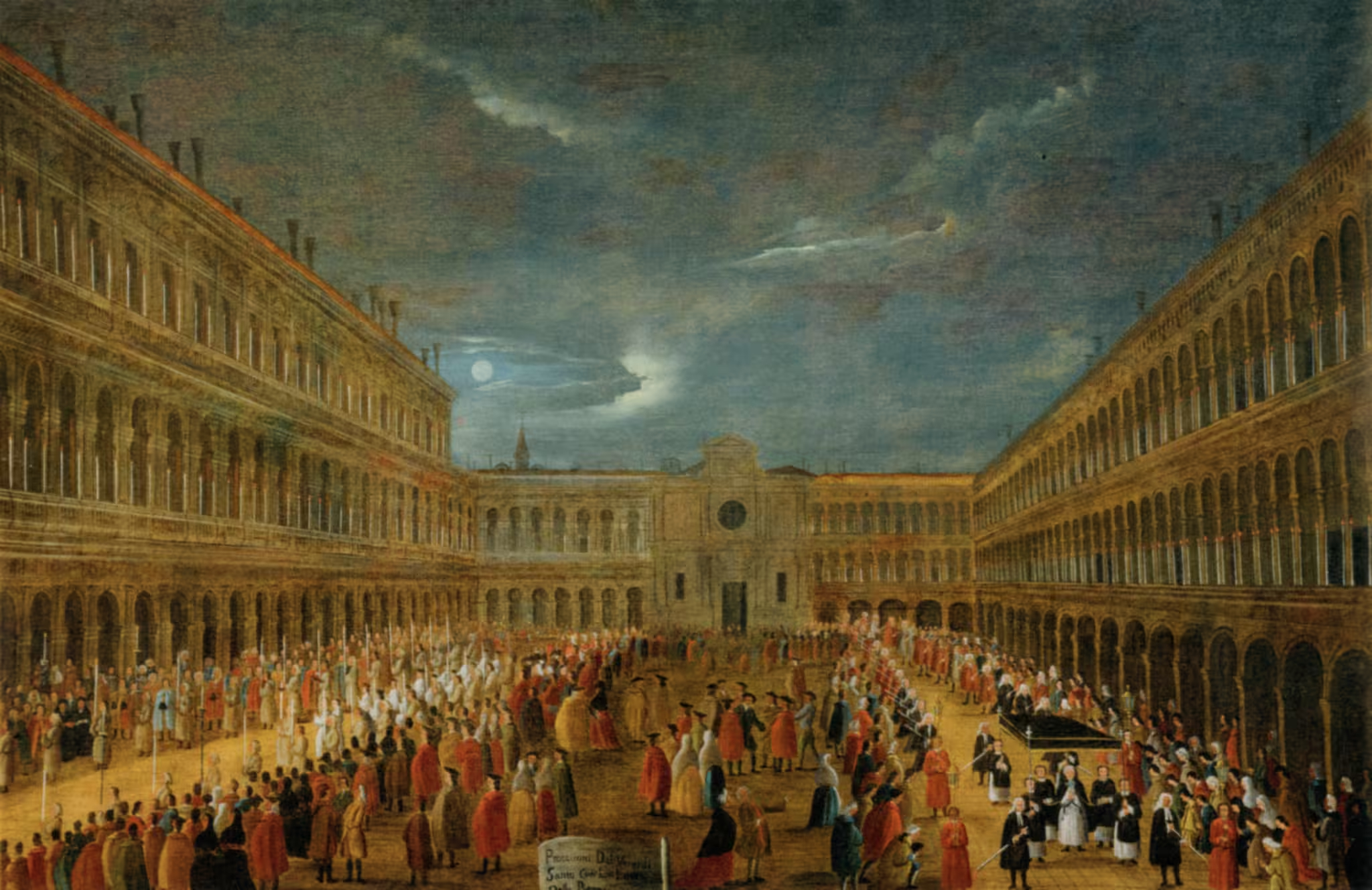
La processione del Venerdì Santo — The procession of Holy Friday — Gabriel Bella
“La processione del Venerdì Santo” (The procession of Holy Friday) by Gabriel Bella.
-
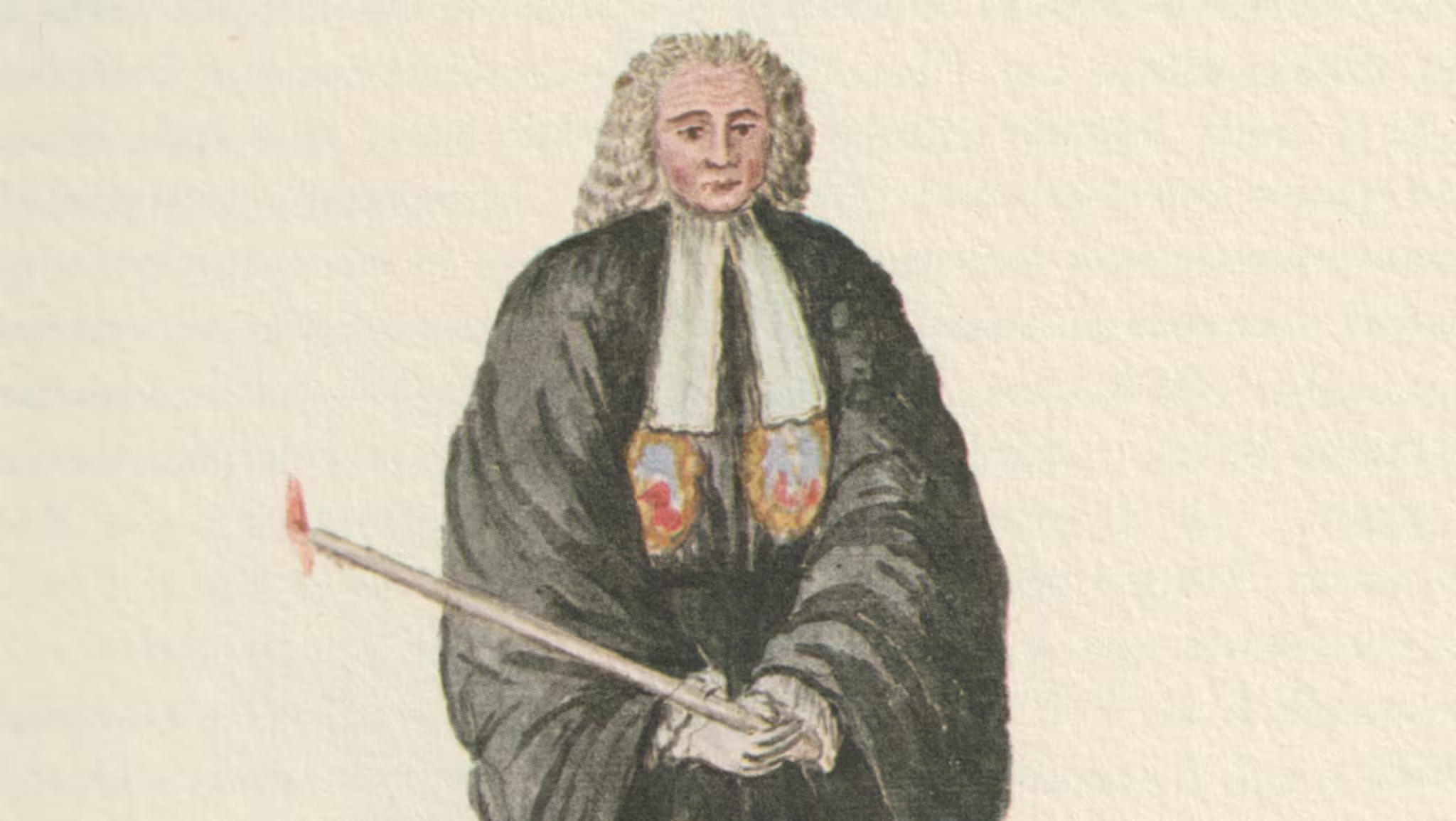
Scuola della Passione — School of the Passion — Grevembroch 2-62
“Scuola della Passione” (School of the Passion) from the Gli abiti de veneziani (1754) by Giovanni Grevembroch, translated by René Seindal.
-
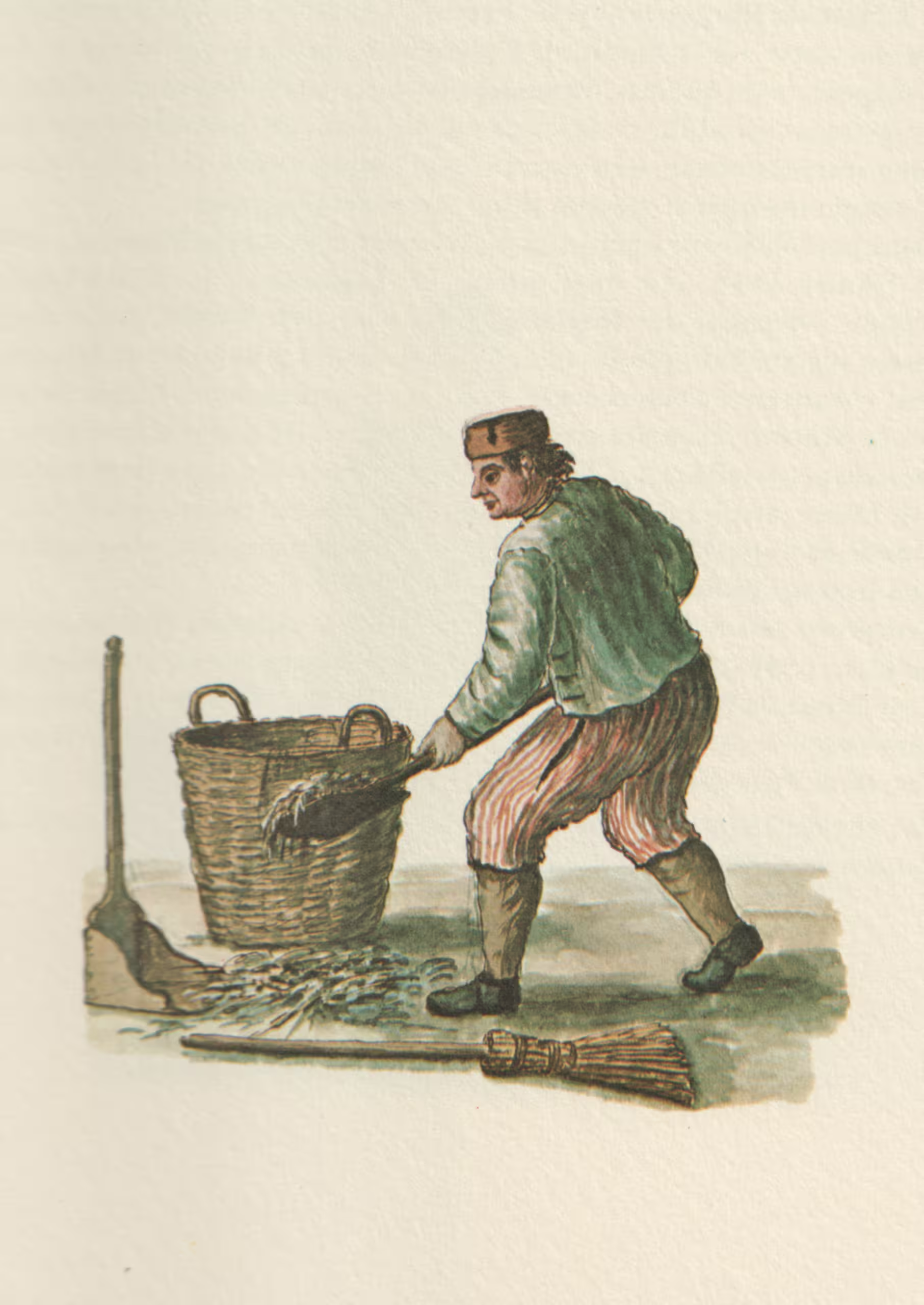
Scuazzero — Rubbish collector — Grevembroch 3-129
“Scuazzero” (Rubbish collector) from the Gli abiti de veneziani (1754) by Giovanni Grevembroch, translated by René Seindal.
-
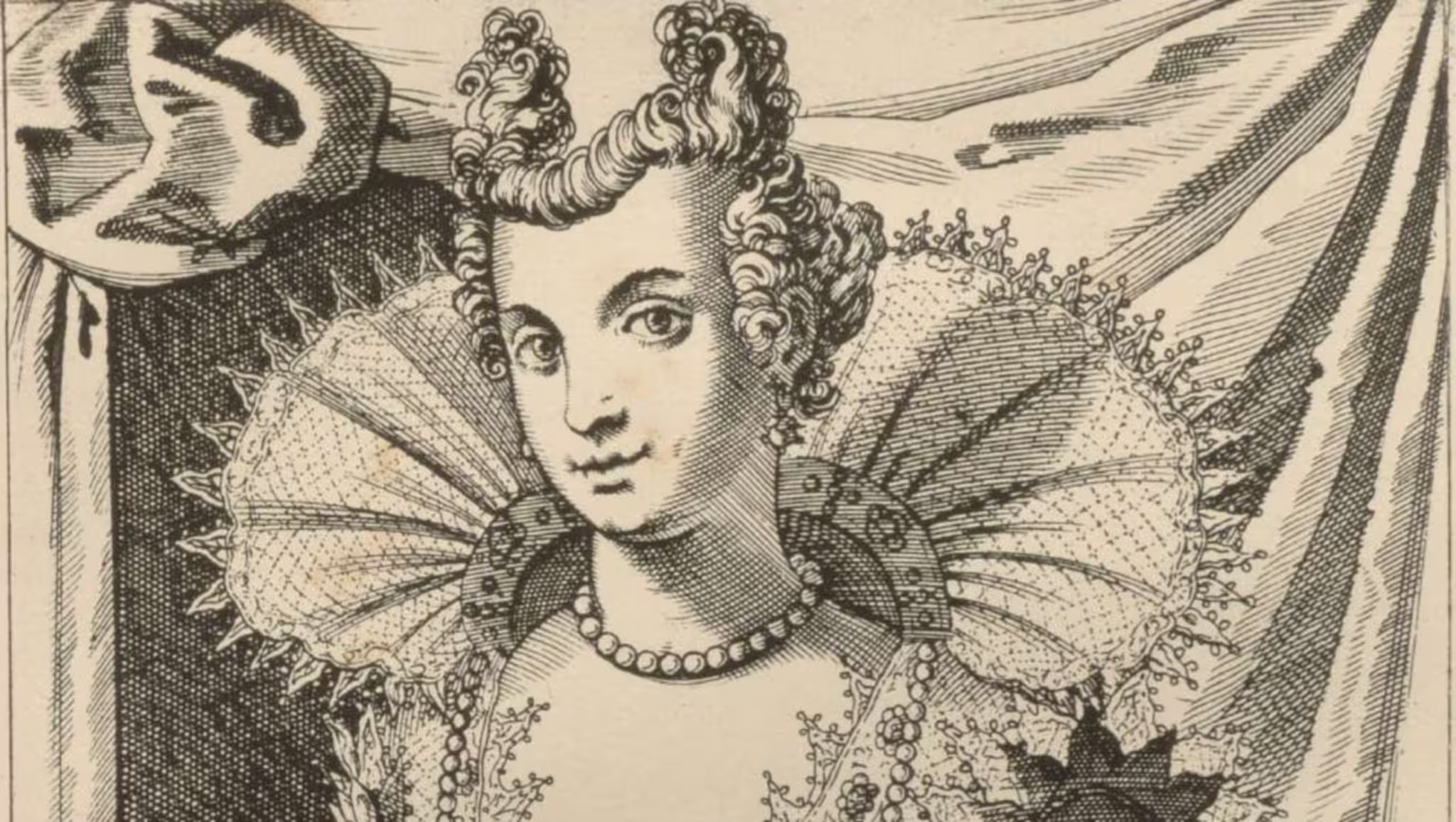
Chastity hair, with horns
A rather curious Venetian fashion, with the curls set high, as a pair of horns, and as a sign of chastity and virtue.
-
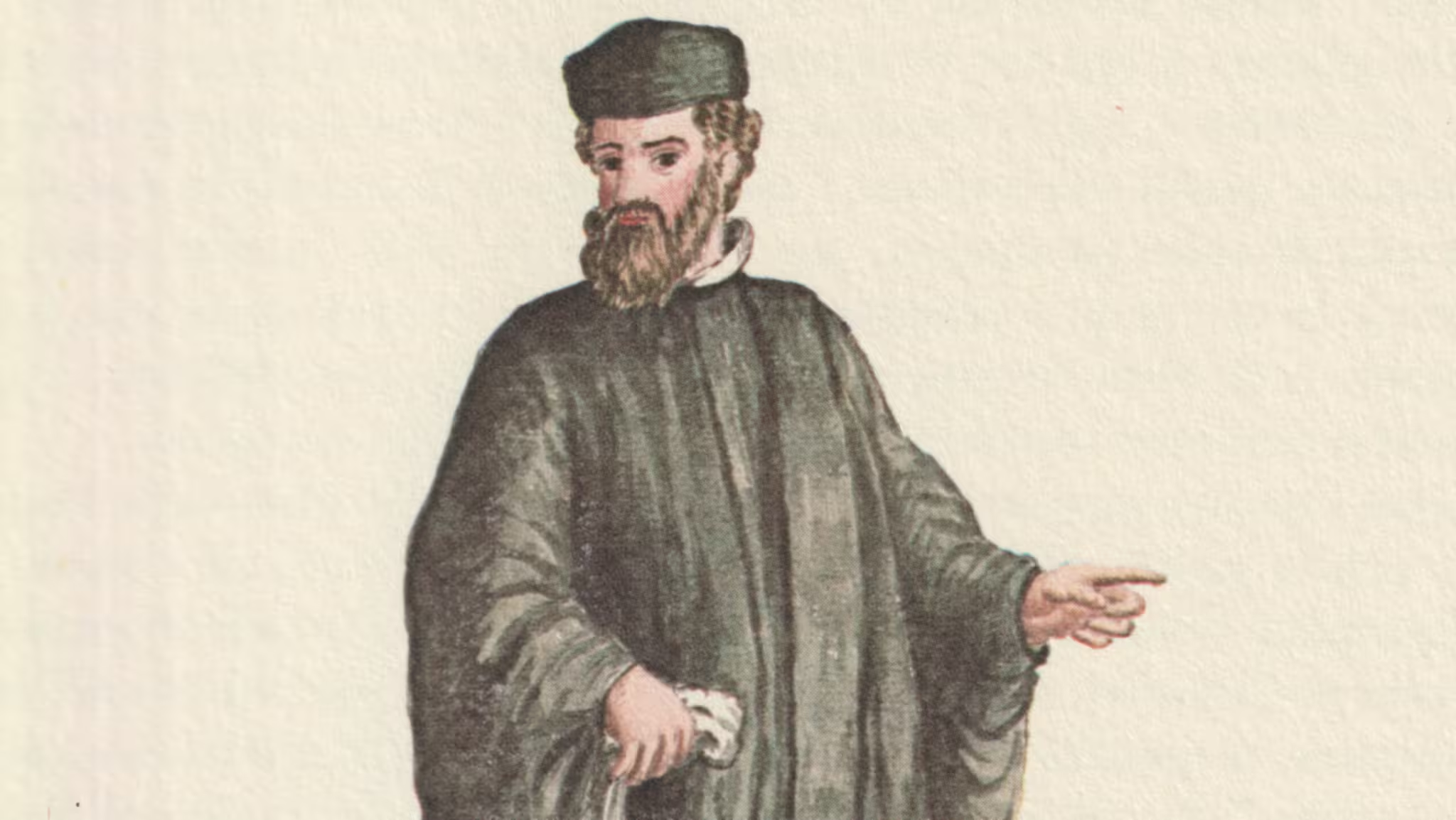
Nobile in abito di state — Nobleman in summer robe — Grevembroch 1-53
“Nobile in abito di state” (Nobleman in summer robe) from the Gli abiti de veneziani (1754) by Giovanni Grevembroch, translated by René Seindal.
-
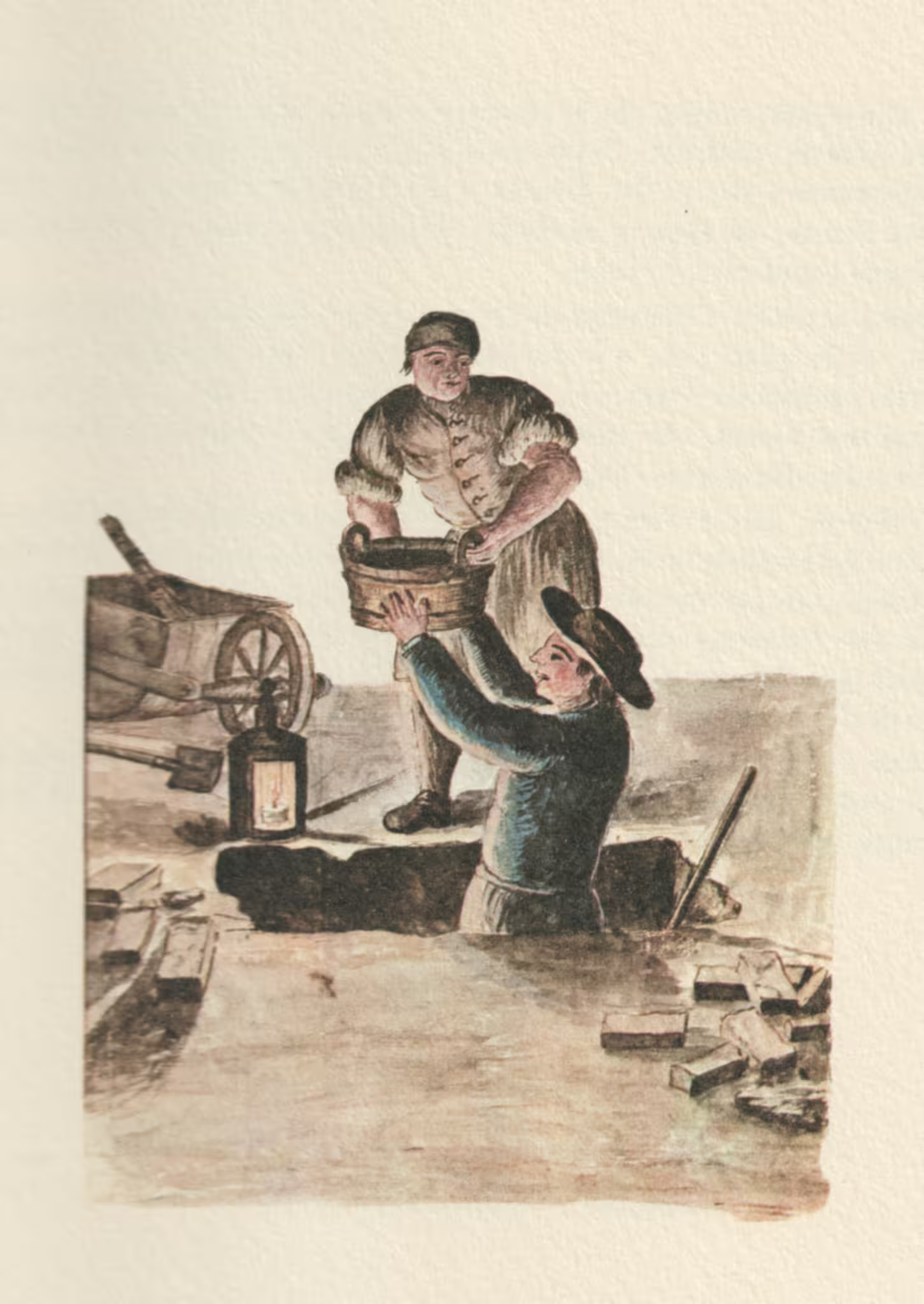
Fetore Allontanato — Odour Removed — Grevembroch 4-82
“Fetore Allontanato” (Odour Removed) from the Gli abiti de veneziani (1754) by Giovanni Grevembroch, translated by René Seindal.
-
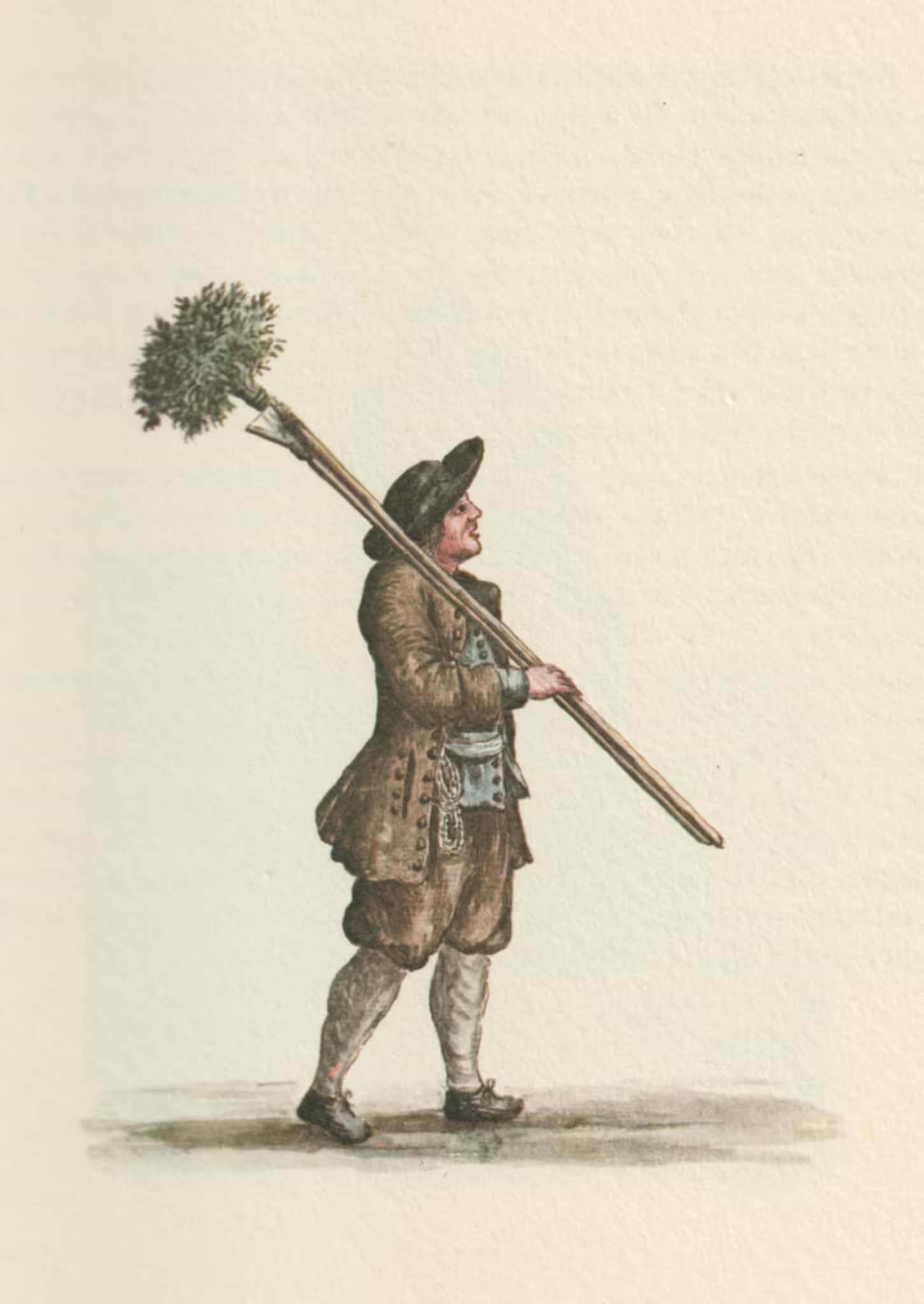
Industria Elvetica — Swiss Industry — Grevembroch 4-81
“Industria Elvetica” (Swiss Industry) from the Gli abiti de veneziani (1754) by Giovanni Grevembroch, translated by René Seindal.