Lazzaretto Vecchio was the primary plague hospital in Venice, established in 1423 on an island south of Venice, close to the Lido.
The Lazzaretto Vecchio had an essential role during the plague epidemic of 1575–77, but was also horribly overloaded, as Francesco Sansovino notes in his description of the place.
While his daughter Aurora died of the plague in 1576, he himself had not direct experience of the island, as he had with the Lazzaretto Nuovo.
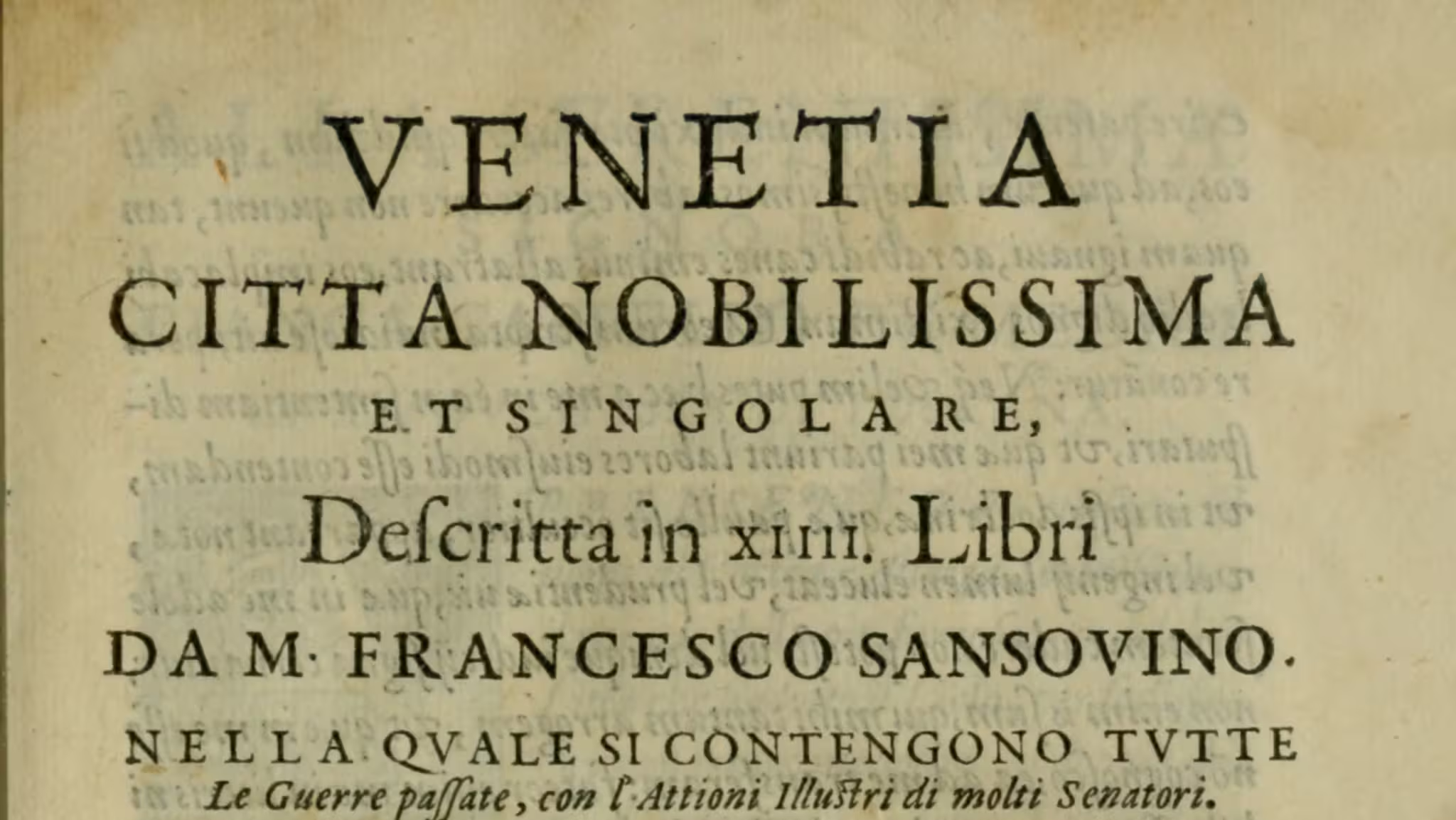
Source: Venetia citta nobilissima et singolare published in 1581 by Francesco Sansovino (1520–1583).
Lazzaretto Vecchio
And on its side1 stands the noble building called the Lazaretto Vecchio, which in the year 1423 was built by the Signoria2 for those afflicted with disease because they had taken the place from a Friar Gabriello of the Hermit order, which at that time was called St. Mary in Nazareth; hence it is incorrectly called Lazzaretto by the common people, and they gave him as a recompense either the Santo Spirito or San Clemente.
Therefore, several convenient and spacious rooms were built on this rock, not so much to care for the sick, as Sabellicus3 says, but also to help the poor, who, brought to this place, were cared for more comfortably.
And so that it would be properly managed in calamitous times of pestilence, they appointed a Prior with an honest salary, and established servants, physicians, and other people ready to serve the sick, with rules that have been observed continuously up to this year 1576.4
In writing these present things, we have witnessed, due to the horrendous plague of this year, it filled with eight thousand infected people, causing great damage and sorrow to the afflicted city.
Translator’s notes
- This is a reference to San Lazzaro, the previous entry. San Lazzaro is an island in the Venetian lagoon, near the Lido. Once a leper colony, it now houses an Armenian monastery. ↩︎
- The Serenissima Signoria were the Doge and the six Councillors of the Doge, appointed annually by the Maggior Consiglio, the closest the Republic of Venice had to an executive. ↩︎
- Marco Antonio Sabellico (c.1426–1506) was a Venetian scholar, and the first official historian of the Venetian Republic. ↩︎
- The plague epidemic of 1575–1577 in Venice killed between 50,000 and 60,000 persons, circa one third of the entire population. ↩︎
Original text
Lazaretto Vecchio
ET per fianco ha il nobile edificio chiamato Lazaretto Vecchio, il quale l’anno 1423. fu edificato dalla Signoria per gli ammorbati, percioche havendo ella tolto il luogo a un Fra Gabriello dell’ordine Heremitano, il quale allora si chiamava S. Maria in Nazareth, onde è corrottamente chiamato dal volgo Lazaretto, gli diede per ricompensa ò S. Spirito, ò San Clemente.
Si edificarono per tanto in questo scoglio diverse & commode & capaci stanze, non tanto per sovenire agli infermi, come dice il Sabellico, quanto anco per dare aiuto a poveri, i quali condotti a questo luogo erano curati piu commodamente.
Et accioche si havesse diligente governo ne tempi calamitosi di peste, vi crearono un Priore con honesto salario, & vi constituirono serventi, Medici, & altre persone pronte per i servigi degli ammalati, con ordine che si è poi sempre osservato fino a questo anno 1576.
Il quale scrivendo noi le presenti cose, habbiamo veduto per la horrenda peste di questo anno, ripieno di otto mila persone infettate, con gran danno & dolore dell’afflitta città.
Sansovino (1581), p. 84b.
Related articles
- The Venetian Lazzaretti
- Lazzaretto Vecchio
- Lazzaretto Nuovo – the first quarantine station
- Poveglia – more than ghost stories
- Quarantine – forty days of isolation
- The word Lazzaretto
- Festa del Redentore
Venetian Stories
- Episode 17 — Venice and the plague – part 1
- Episode 18 — Venice and the plague – part 2
- Episode 19 — Venice and the plague – part 3
- Episode 20 — Venice and the plague – part 4
- Episode 21 — The Plague Doctor
- 404 Doctor Not Found
- The Plague Stone of Poveglia
- Lazzaretto Vecchio – six centuries
- Remembering the plague
Related sources
- The Justinian plague — Historia Langobardorum
- The start of the plague in 1575 — Cornelio Morello (1584)
- Francesco Sansovino — Venetia Descritta (1581)
- The plague in Verona, 1630 — Francesco Pona
- Capitoli Da osservarsi nelli Lazaretti — 1674
- Provveditori e Sopraprovveditori alla Sanità — ASV Indice
- Provveditori sopra la Sanità — Lessico Veneto
- Sanità — Dizionario
E-book
- Latest news from Venice, 1576 — an eyewitness account of the plague in 1575–1577 (e-book, PDF, online).
Related images
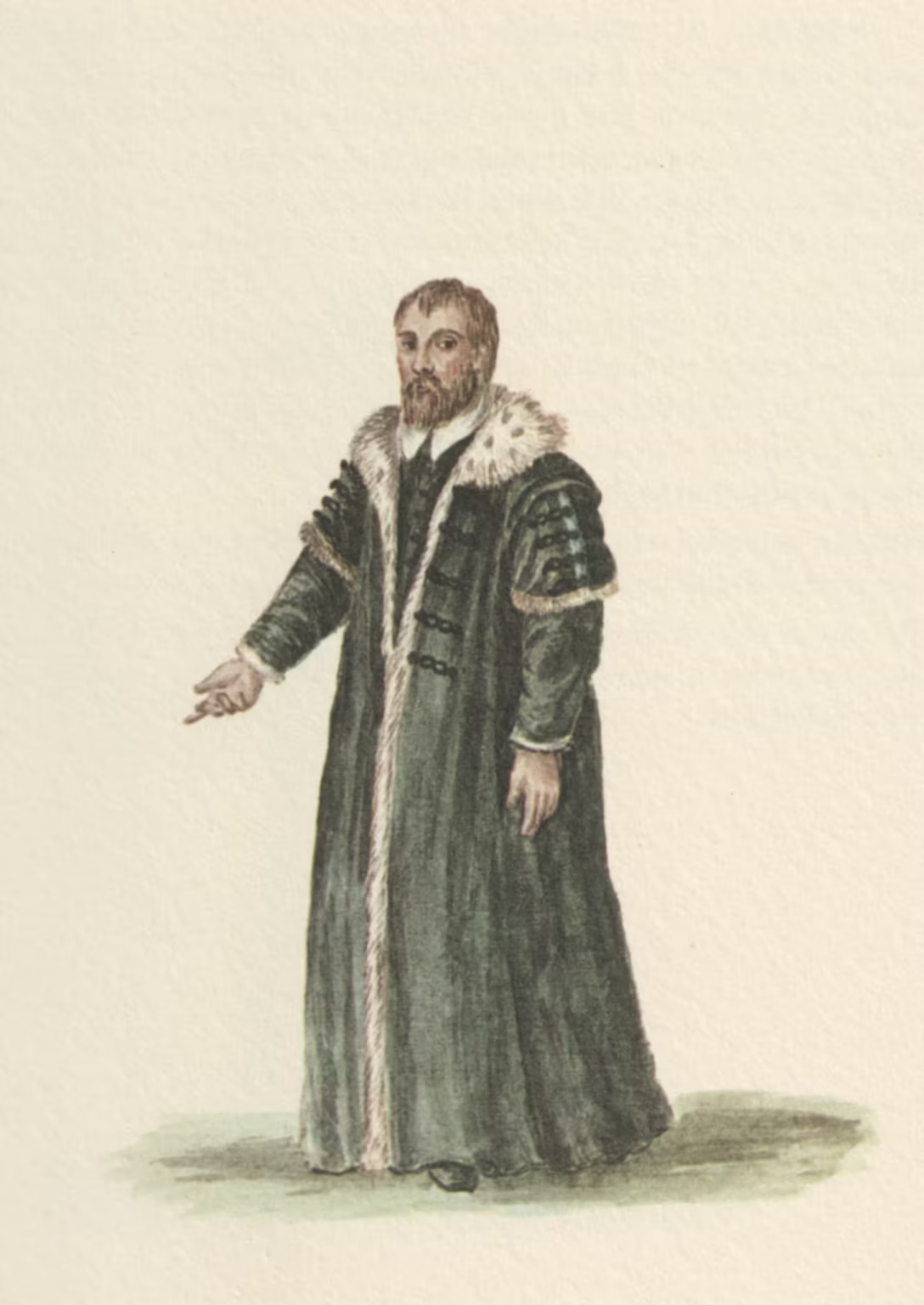

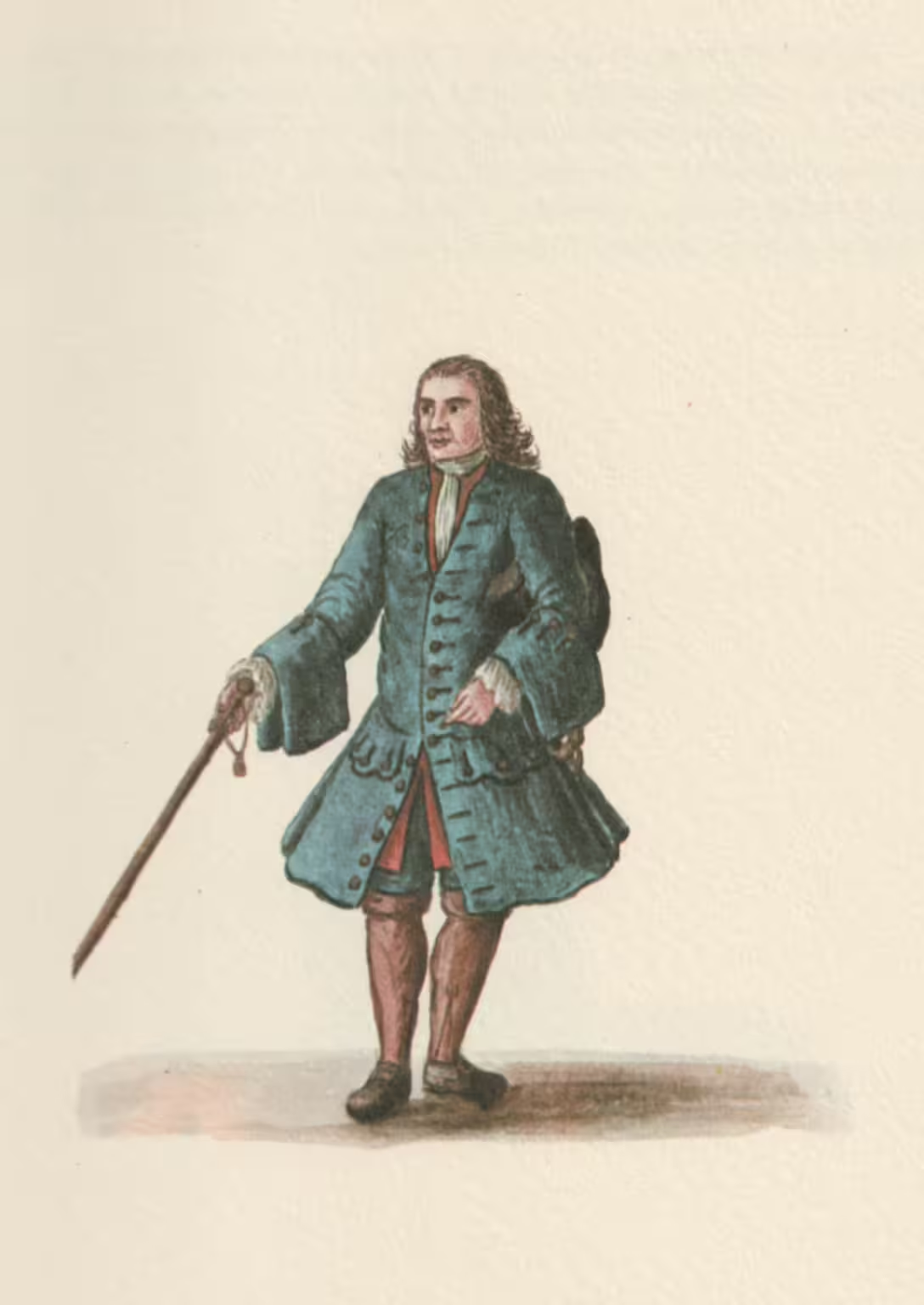
- Protomedico — Chief Physician — Grevembroch 2-160
- Medico Industrioso — Industrious Doctor — Grevembroch 2–161
- Custodia gelosa — Zealous custodian — Grevembroch 4–43

Leave a Reply