
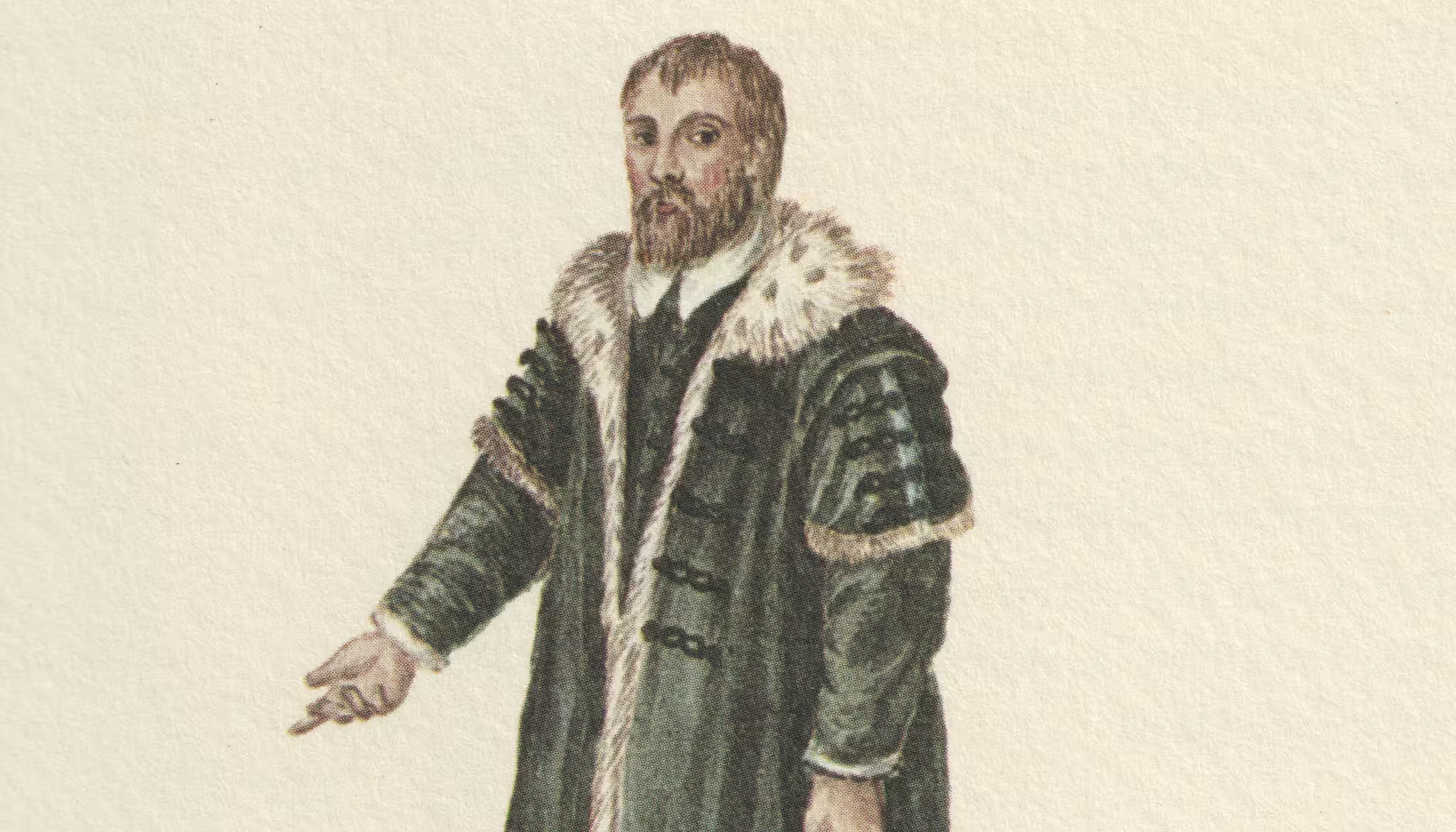
The Magistrato alla Sanità employed a protomedico — or chief physician — to oversee the medical parts of the responsibilities of the magistracy.
When official documents — like the Capitoli Da osservarsi nelli Lazaretti from 1656 and later — mention the “doctor of the magistracy”, this is the person they refer to.
Besides tasks directly related to the prevention of plague outbreaks, he also oversaw the qualifications of midwifes, the safety of foodstuffs on sale, and anything, which was perceived to have a bearing on public health.
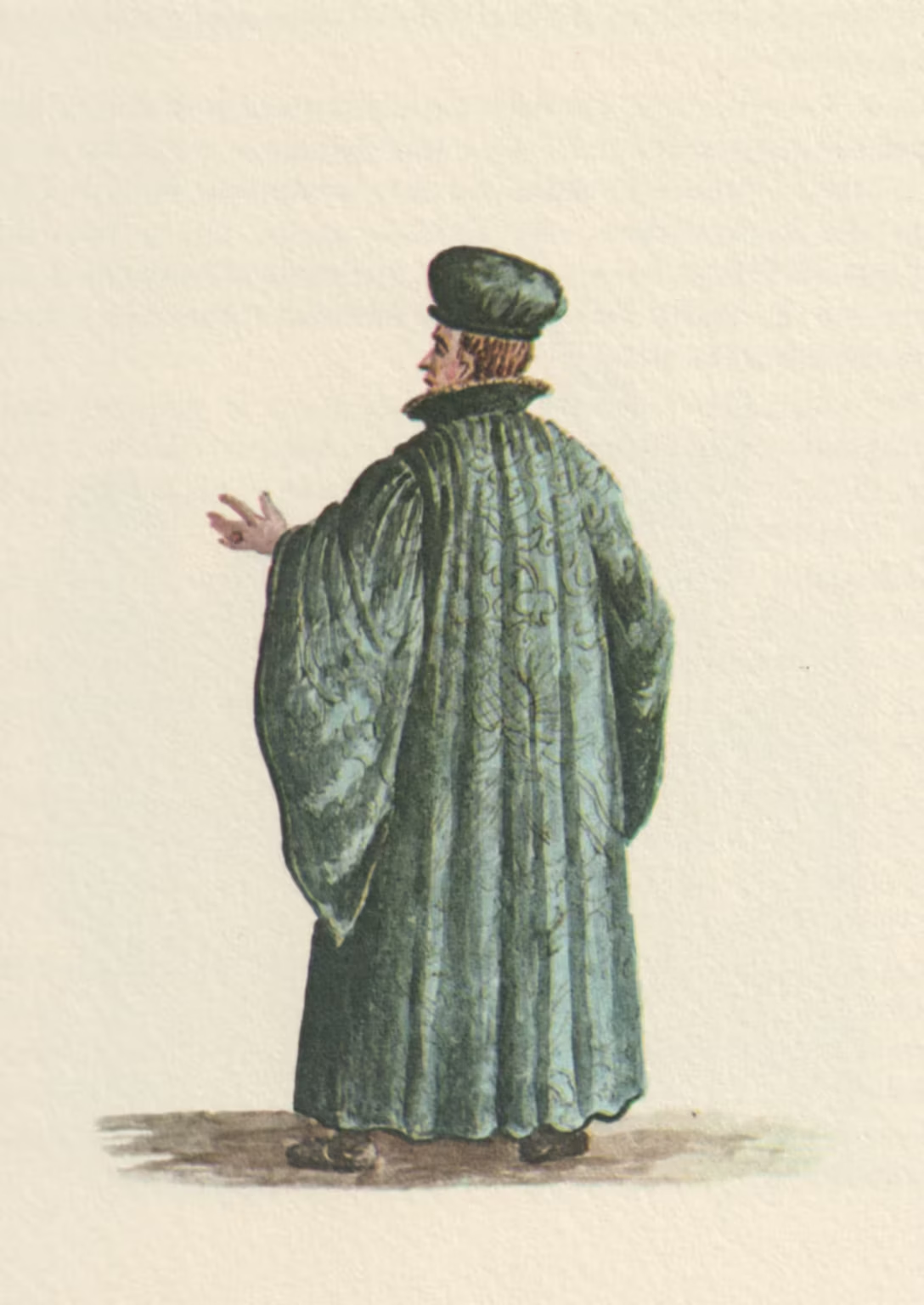
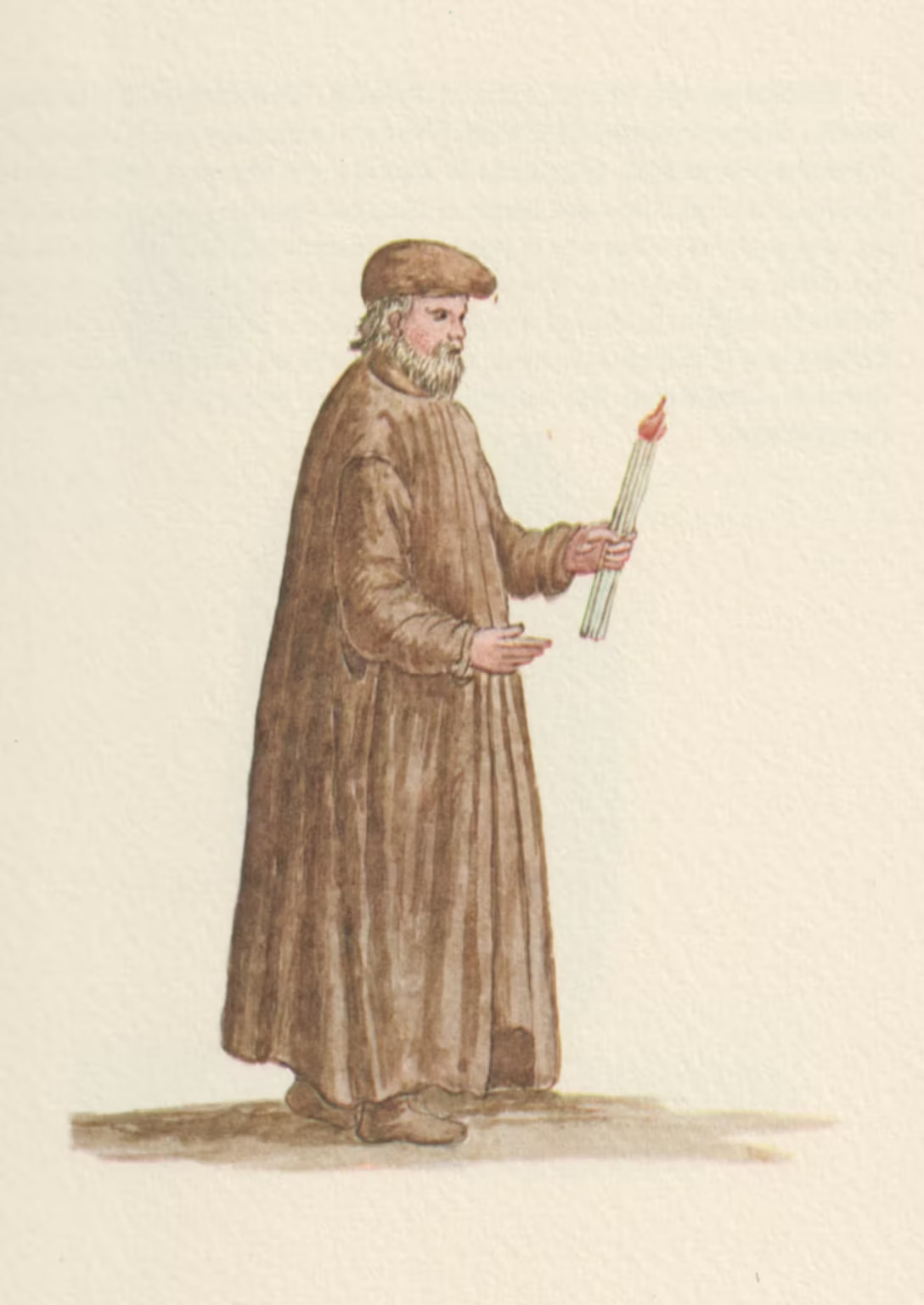
This is a much more realistic image of how a plague doctor might have looked.
Source: Gli abiti de veneziani di quasi ogni età con diligenza raccolti e dipinti nel secolo XVIII, by Giovanni Grevembroch (1731–1807), which in four volumes contains over six hundred watercolours of how Venetians dressed in the 1700s.
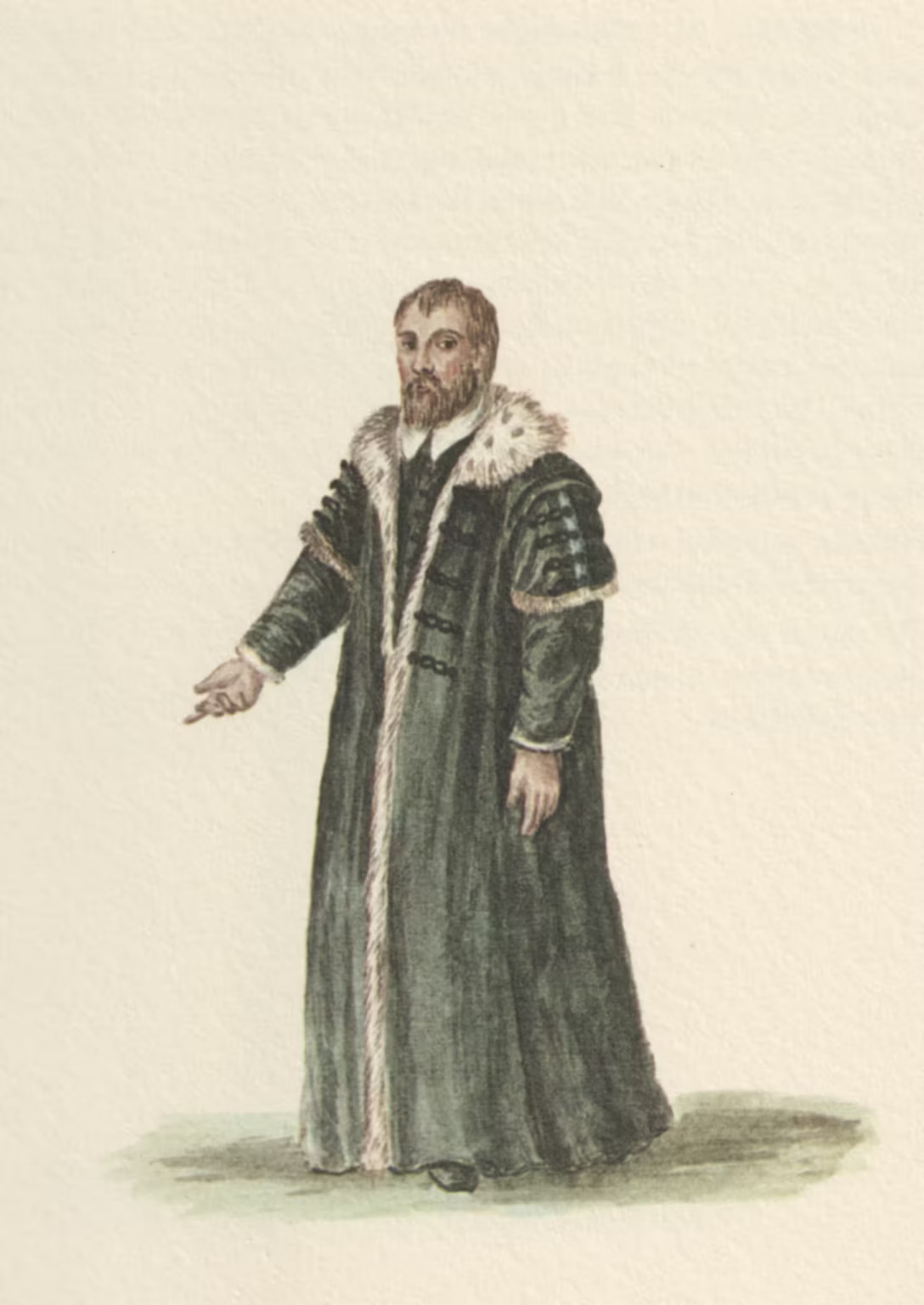
Chief Physician
In no City in the World, vigilance over everything that could harm the health of the People stand out as much as in Venice. The care of this important matter is directed by two most distinguished Senators, and three other Patricians,1 who ensure that no pestilential disease enters or occurs in the Fatherland and in the State of the Republic.2 They decree that spoiled foods are not sold, and that disorders which could cause contagion are prevented.
This supreme Magistrate, who holds authority over the Lives of Law-breakers,3 among many other Officials, appoints and pays a Chief Physician.
His duties are various, for which he must account very strictly to the aforementioned Over-superintendents and Superintendents. He inspects the Lazzaretti, where the Contagious goods are purified, examines the competence of the Midwives, and the aged medicines;4 he opens the Cadavers of Men who died unexpectedly, and summons the College of Physicians to confer with them on the most serious matters. His honourable Office, which is beneficial in itself, is nonetheless subject in such a manner that perhaps no other Public Minister carries that much responsibility. See the Resolution of June 30, 1617, with which even more responsibilities were entrusted to him.
Esse suum infirmo medicus memorare tenetur.
Mors praevisa parit saepe medelam animae.5
To the Most Excellent Mr. Paolo Monticelli, whose virtue and goodness can never be sufficiently praised, it is prescribed by our gratitude to bring forth in this gathering the memory of his renowned Name.
Translator’s notes
- The Magistrato alla Sanità (Magistracy of Health) had broad powers over everything public health related, which besides the lazzaretti, also included inns, prostitutes, pharmacies, doctors, rubbish collection, water supply etc. ↩︎
- The distinction Grevembroch tries to make here is probably between the dogado and the Stato da Terra Ferma, which were two separate administrative and judicial entities. ↩︎
- The Magistrato alla Sanità had, since 1556, the authority to use the death penalty against those who broke the laws and decrees issued by the magistracy. ↩︎
- Most likely a reference to theriac, which had to age for six months or more before use. ↩︎
- These lines in Latin might be a later addition, as they seem to be in another hand. The translation is not straightforward, but the meaning is something like: The physician is bound to remind the sick of his state (of health) // Presentiment of one’s death often serves as a remedy for the soul. ↩︎
Original text
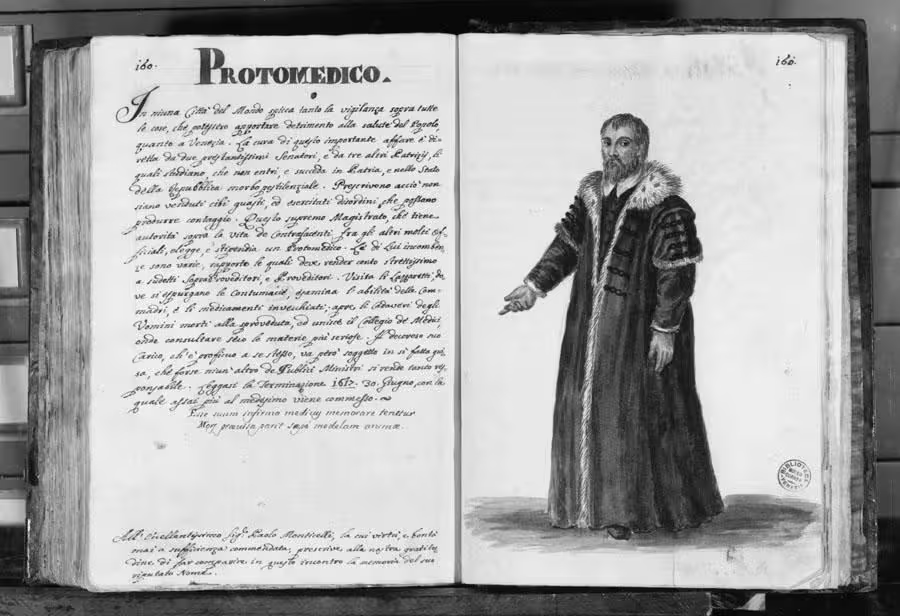
Protomedico
In niuna Città del Mondo spicca tanto la vigilanza sopra tutte le cose, che potessero apportare detrimento alla salute del Popolo, quanto a Venezia. La cura di questo importante affare è diretta da due prestantissimi Senatori, e da tre altri Patrizij, li quali studiano, che non entri, e succceda in Patria, e nello Stato della Repubblica morbo pestilenziale. Prescrivono acciò non siano venduti cibi guasti, ed esercitati disordini che possano produrre contaggio.
Questo supremo Magistrato, che tiene autorità sopra la Vita de Contrafacenti, fra gli altri molti Officiali, elegge, e stipendia un Protomedico.
Le di Lui incombenze sono varie, rapporto le quali deve render conto strettissimo a sudetti Sopra Proveditori, e Proveditori. Visita li Lazzaretti, dove si espurgano le Contumacie, esamina l’abilità delle Commadri, e li medicamenti invecchiati; apre li Cadaveri degli Uomini morti alla sproveduta, ed unisce il Collegio de Medici, onde consultare seco le materie più seriose. Il decoroso suo Carico, ch’è proficuo a se stesso, va però soggetto in sì fatta guisa, che forse niun’altro de Publici Ministri si rende tanto responsabile. Leggasi la Terminazione 1617. 30 Giugno, con la quale assai più al medesimo viene commesso.
Esse suum infirmo medicus memorare tenetur.
Mors praevisa parit saepe medelam animae.
All’Eccellentissimo Sig.e Paolo Monticelli, la cui virtù, è bontà mai a sufficienza commendata, prescrive alla nostra gratitudine di far comparire in questo incontro la memoria del suo riputato Nome.
Grevembroch (1981), vol. 2, p. 160.
Related articles
Venetian Stories
- Episode 17 — Venice and the plague – part 1
- Episode 18 — Venice and the plague – part 2
- Episode 19 — Venice and the plague – part 3
- Episode 20 — Venice and the plague – part 4
- Episode 21 — The Plague Doctor
- 404 Doctor Not Found
- The Plague Stone of Poveglia
- Lazzaretto Vecchio – six centuries
- Quarantine in the 1600s
- Remembering the plague
Related sources
- The Justinian plague — Historia Langobardorum
- The start of the plague in 1575 — Cornelio Morello (1584)
- Francesco Sansovino — Venetia Descritta (1581)
- The plague in Verona, 1630 — Francesco Pona
- Capitoli Da osservarsi nelli Lazaretti — 1674
- Provveditori sopra la Sanità — Lessico Veneto
- Sanità — Dizionario
- Provveditori e Sopraprovveditori alla Sanità — ASV Indice
E-book
- Latest news from Venice, 1576 — an eyewitness account of the plague in 1575–1577 (e-book, PDF, online).
Related images
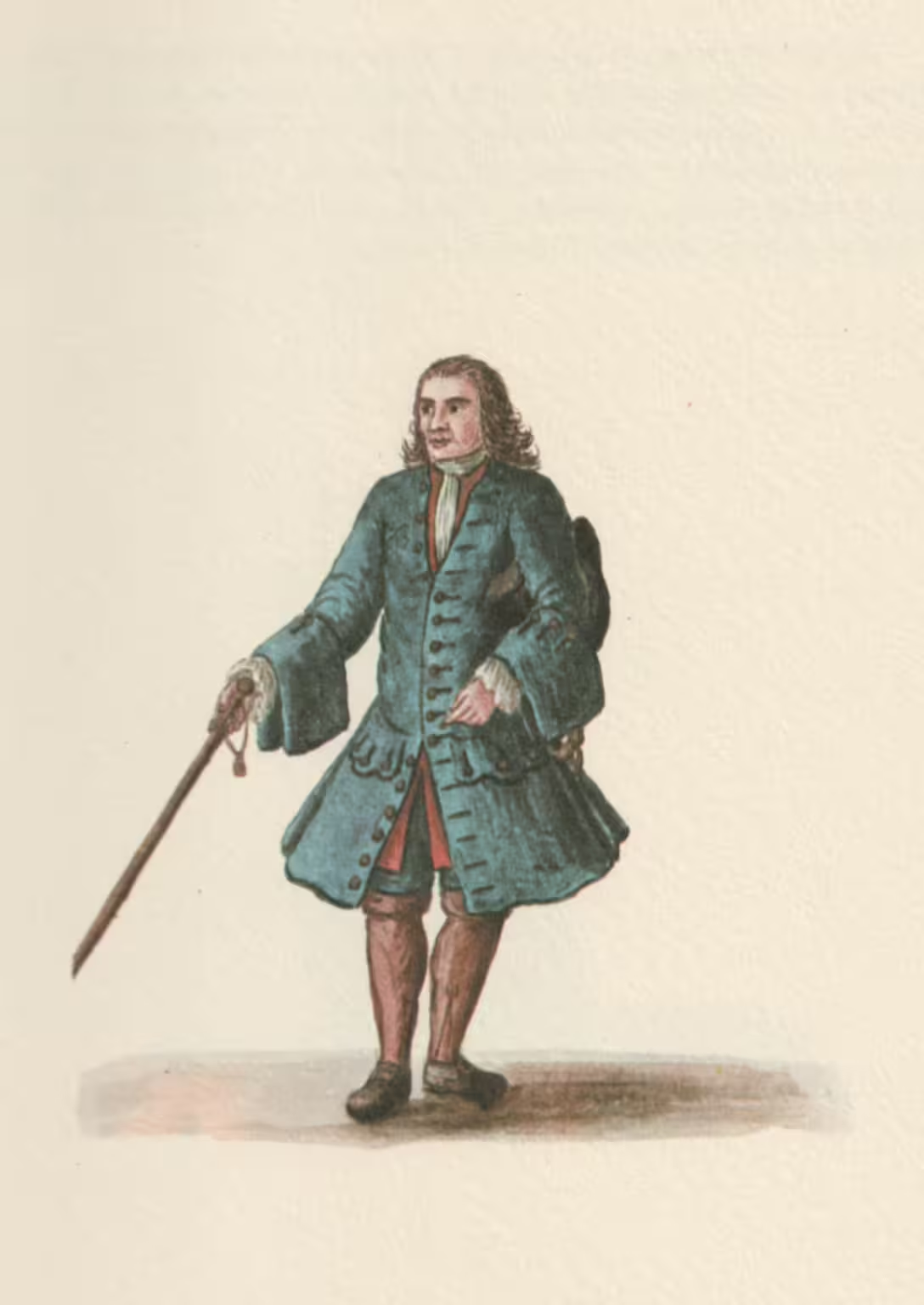
- Custodia gelosa — Zealous custodian — Grevembroch 4–43
- Dottori — Doctors — Grevembroch 2-155
- Pizzicamorti — Corpse Collectors — Grevembroch 2-51
- Medico Industrioso — Industrious Doctor — Grevembroch 2–61
- The preparation of Theriac — two prints (1600s)
Bibliography
- Grevembroch, Giovanni. Gli abiti de veneziani di quasi ogni eta con diligenza raccolti e dipinti nel secolo XVIII, orig. c. 1754. Venezia, Filippi Editore, 1981. [more]
Leave a Reply