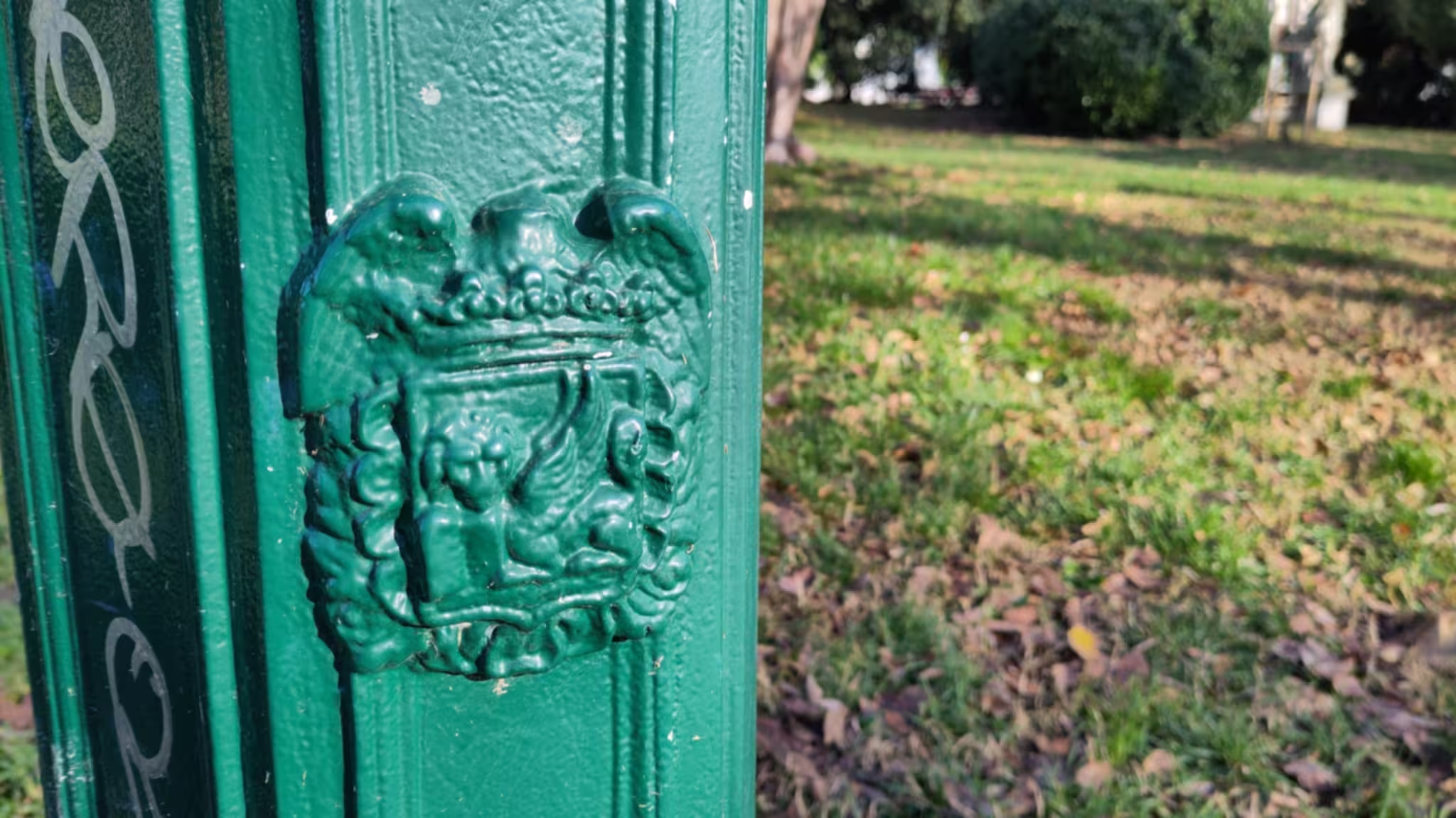
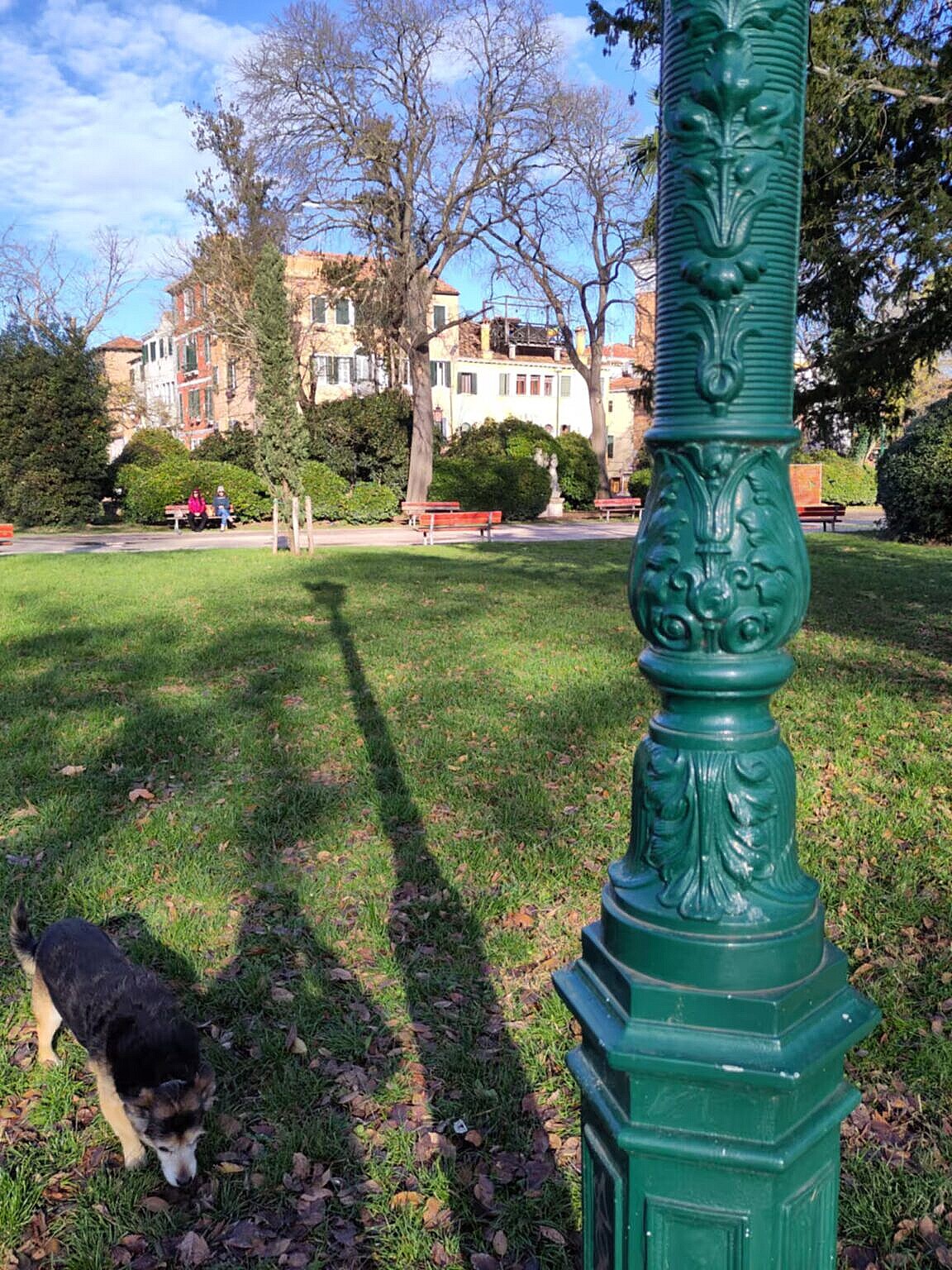
Walking my dogs in the nearby Giardini Pubblici (or Giardini Napoleonici as they’re also called), my eyes fell on one of the many lampposts.
I’ve seen them a many times. I walk there several times every day.
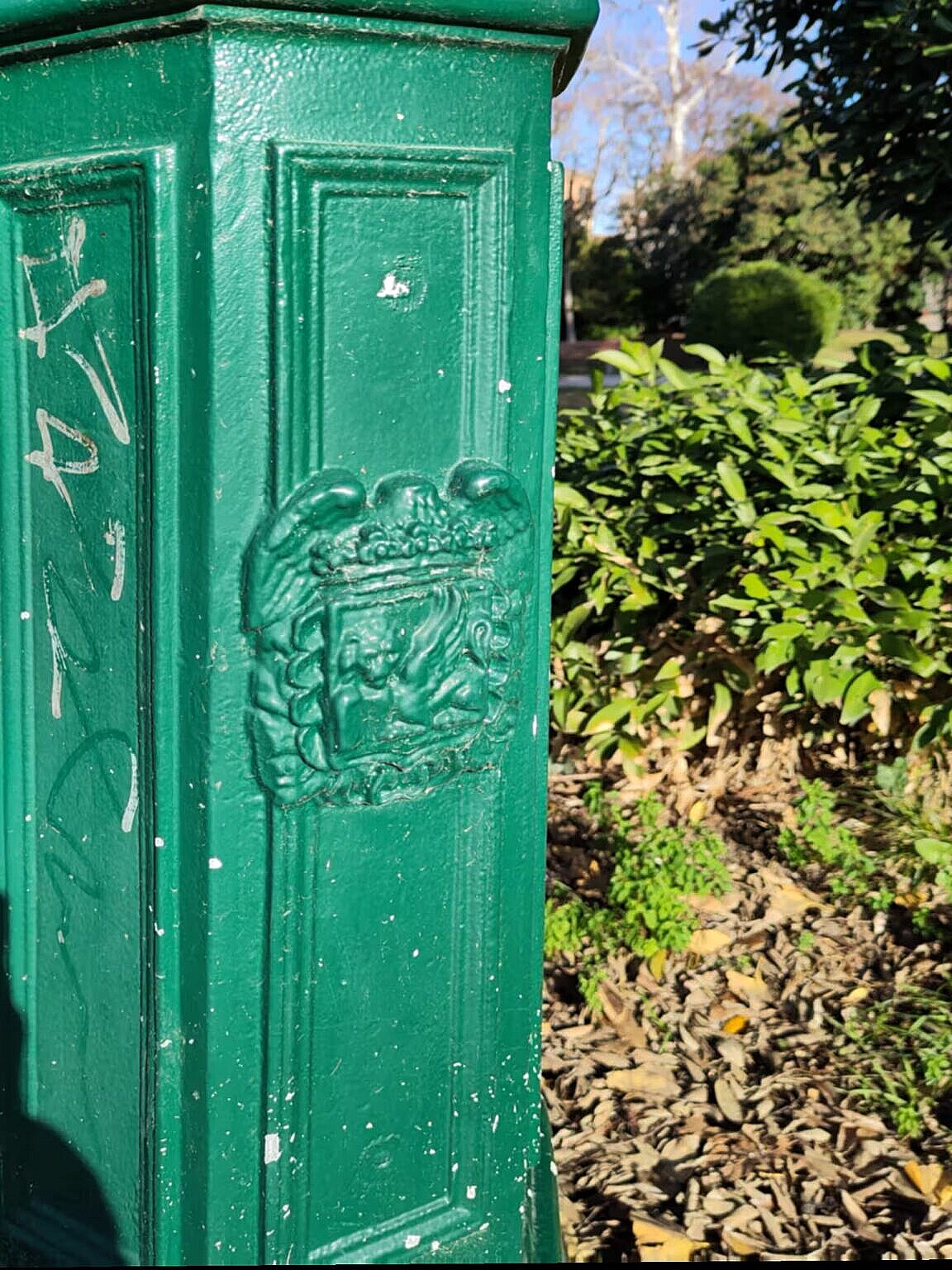
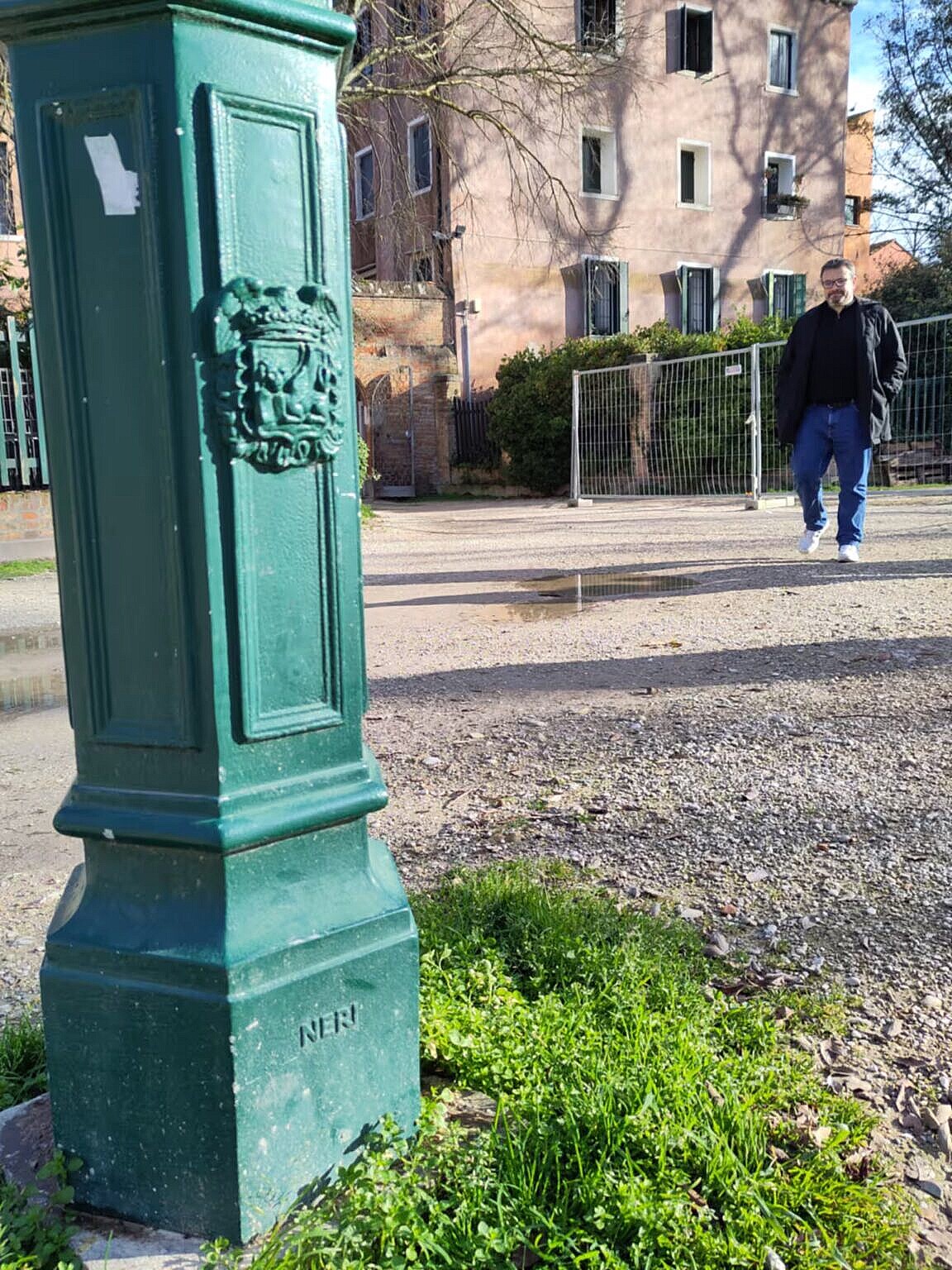
They’re of cast iron, painted bright green, with some floral designs on them, half obscured by many layers of paint. Close to the base is a coat of arms with the Lion of St Mark, which is on everything the Municipality of Venice makes.
No surprises there.
Then I looked closer at the lion because something was a bit off.
Surrounding the coat of arms with the winged lion is a floral pattern, something that could be a crown, and … a pair of extra wings.
The coat of arms itself had wings.
The dogs had wandered off at this point, doing whatever dogs do when you don’t look.
However, back to the lamppost. On second inspection, it appears that the wings belonged to an eagle whose head had been cut off.
So, a lamppost with a headless eagle.
Having lost the dogs, I continued to the next lamppost. Identical headless eagle. And the next, and so on.
The Napoleonic gardens
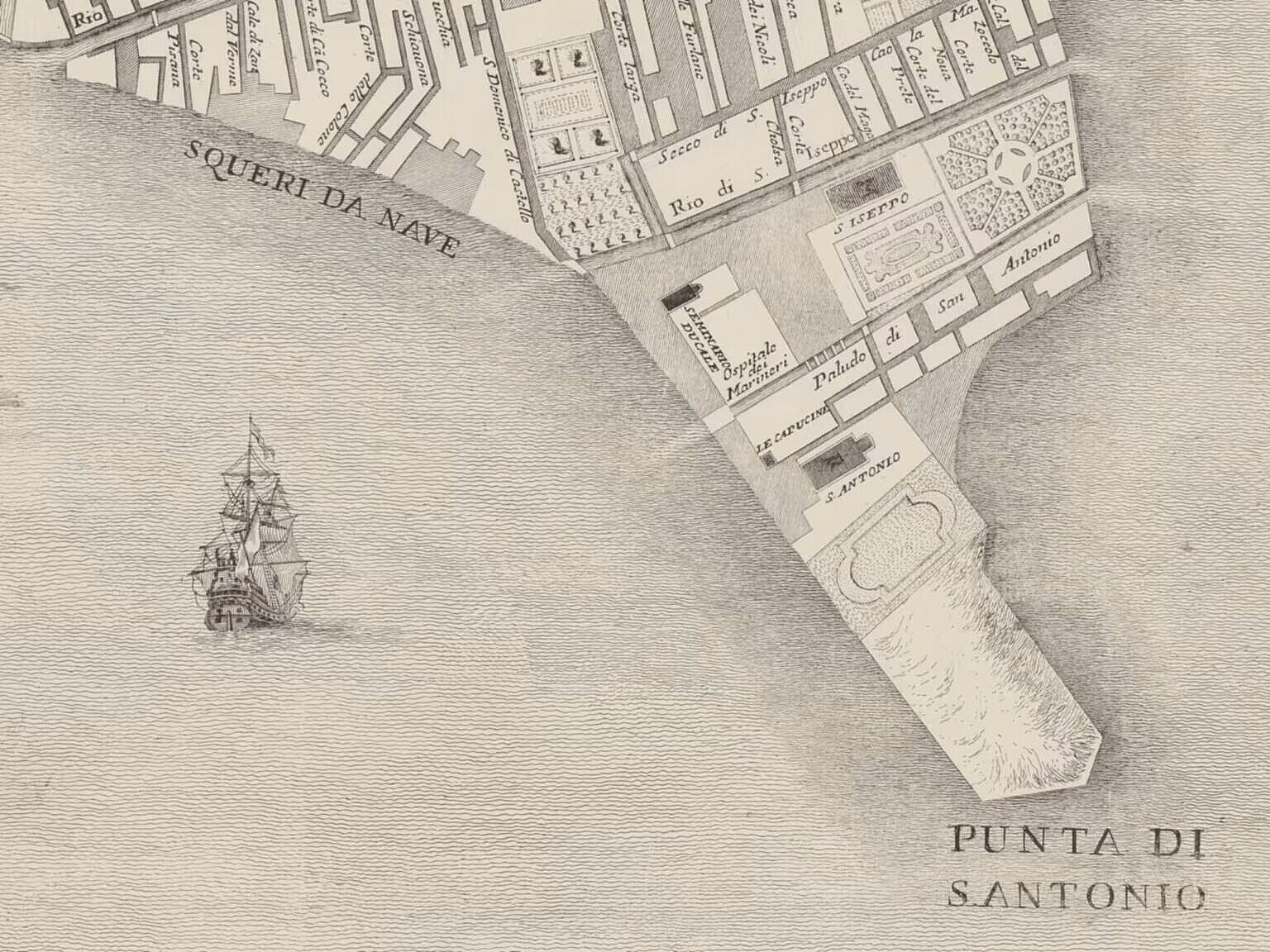
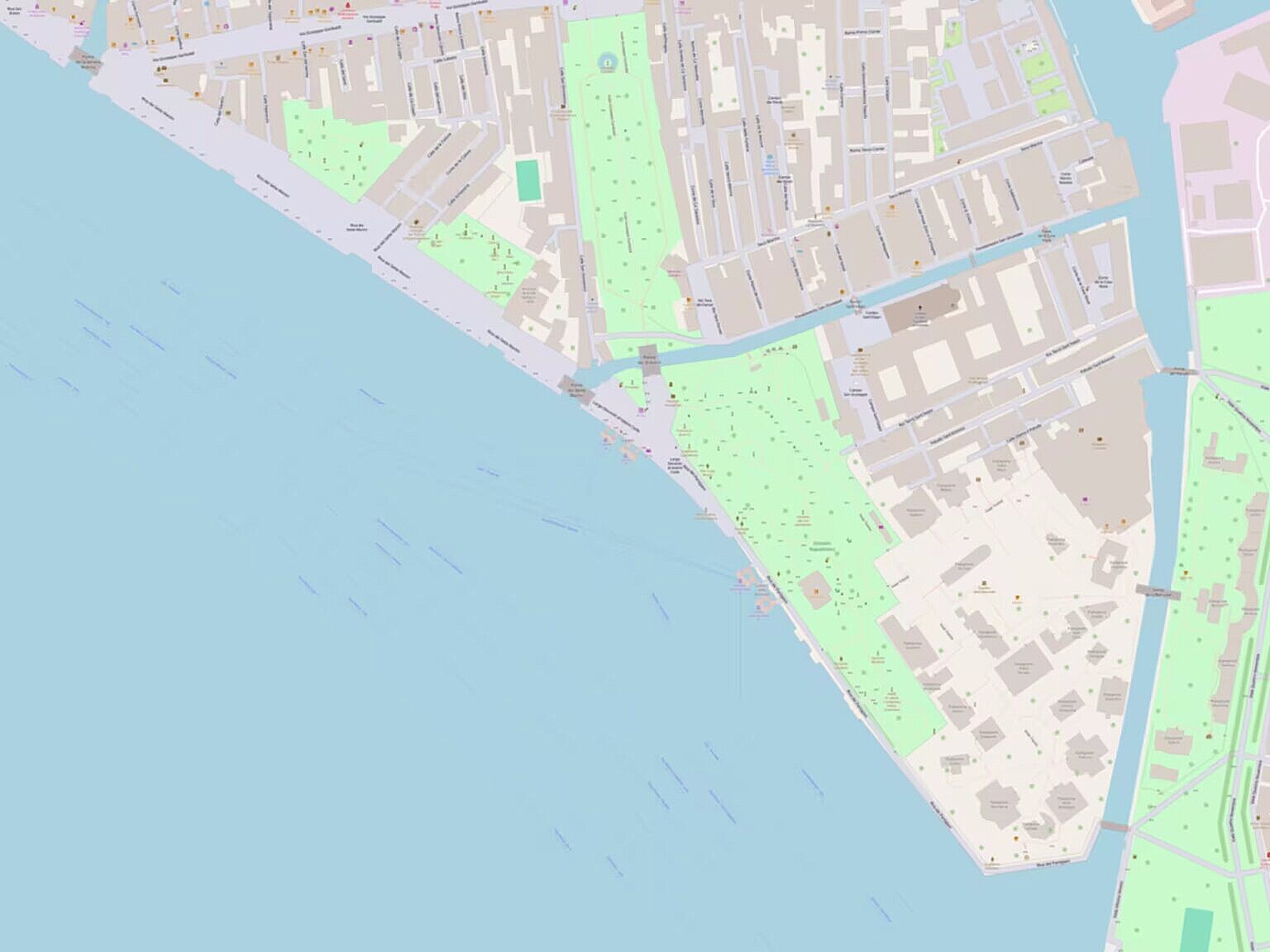
The park is called ‘Napoleonic’ because he decided to make it. The decree was issued on December 7th, 1807, and indicated that the passeggiata should be ready in 1809.
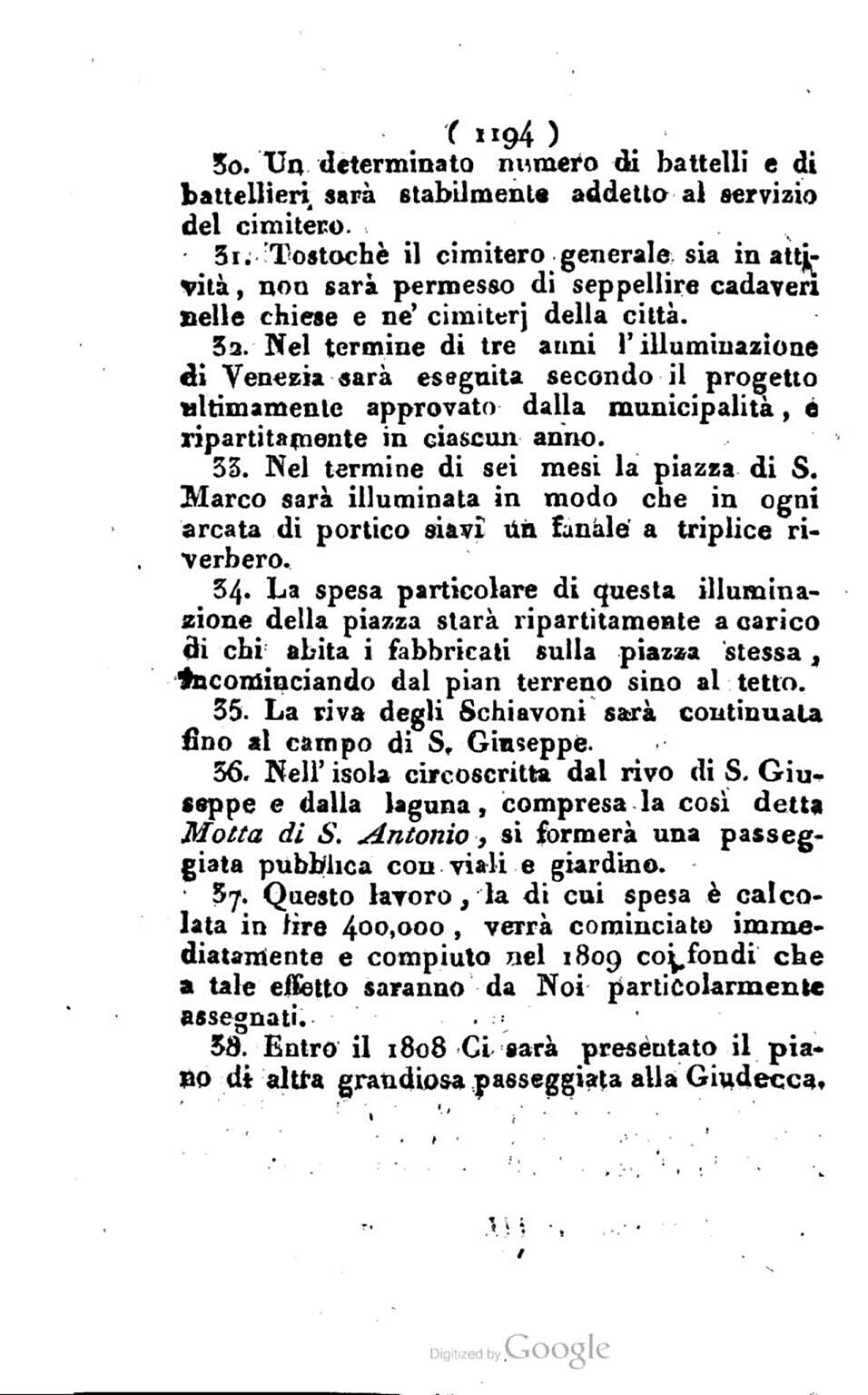
The relevant parts of the decree are these paragraphs:
- On the island circumscribed by the Rio di San Giuseppe and the lagoon, including the so-called Motta di S. Antonio, a public walk will be formed with paths and garden.
- This work, whose cost is calculated at 400,000 lire, will start immediately, and be finished in 1809 with funds which We will assign especially to that effect.
It is not specified in the decree, but they demolished at least three churches, a couple of monasteries and a hospital to make room for the garden.
The Kingdom of Lombardy-Venetia
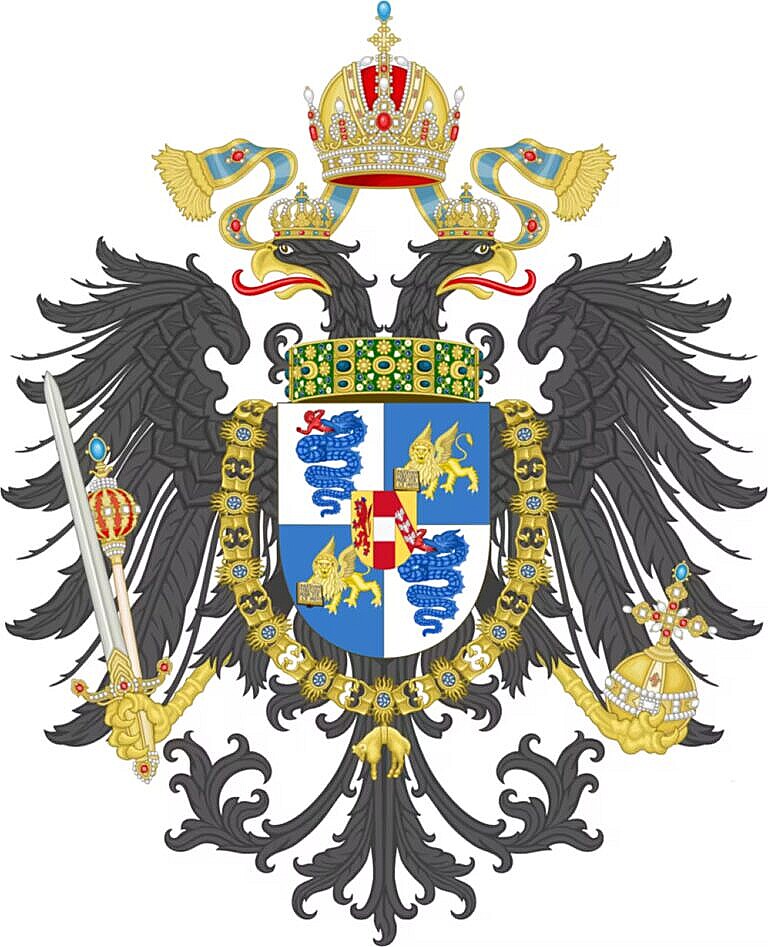
After the Congress of Vienna in 1815, Venice fell to Austria-Hungary again. This time it was joined with Lombardy into a newly created Kingdom of Lombardy-Venetia in a personal union with the Empire of Austria-Hungary.
Venice remained as a part of this Austrian controlled kingdom until 1866, in what is often called the Second Austrian Domination.
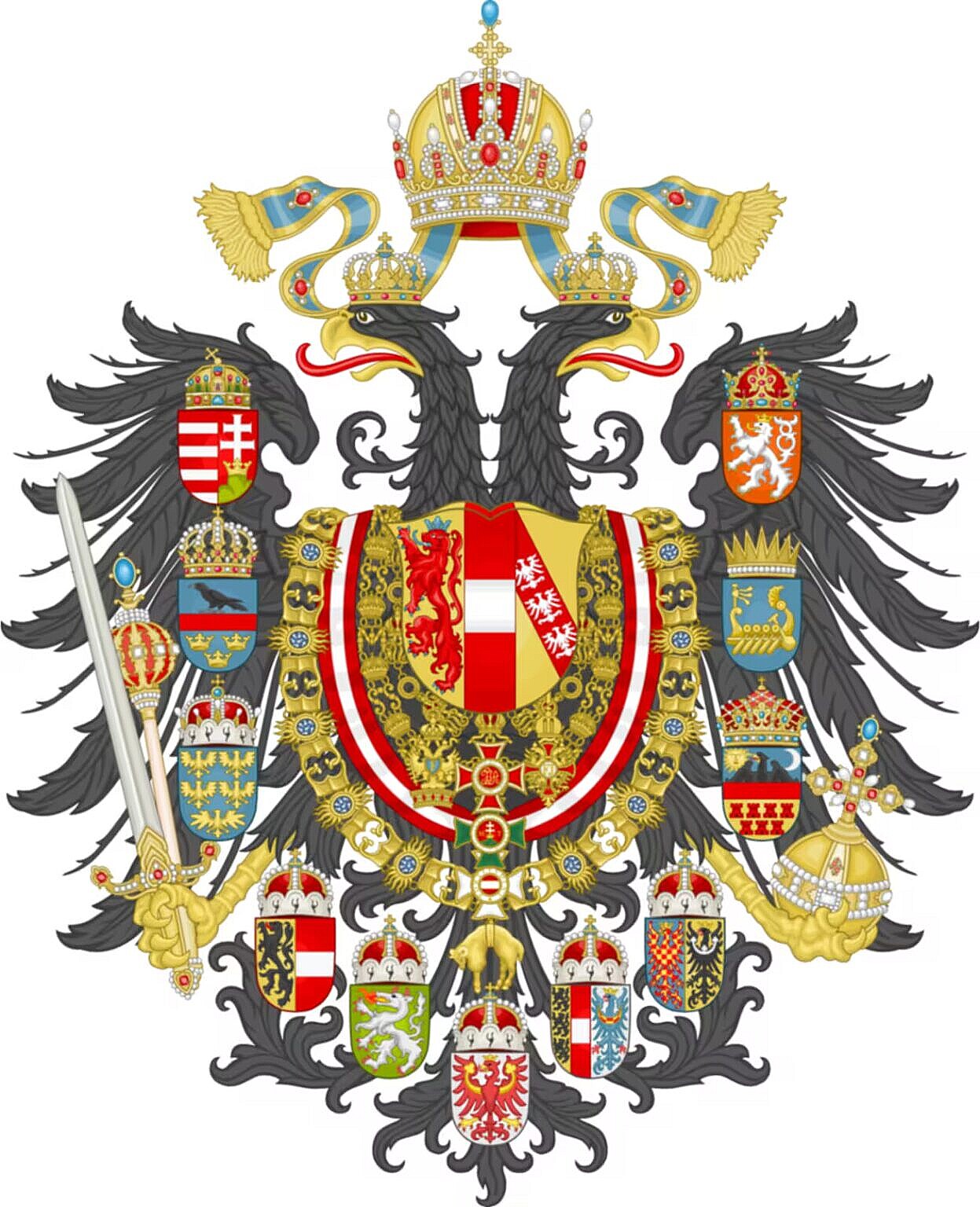
Both the coat of arms of the Kingdom of Lombardy-Venetia and the coat of arms of the Austrian-Hungarian Empire feature the two-headed imperial eagle.
The eagle twice beheaded
Returning to the lampposts again, they must be from the Austrian period, that is, between 1815 and 1866.
When Venice was annexed to the Kingdom of Italy, the two heads of the eagles were cut off, but the wings remained.
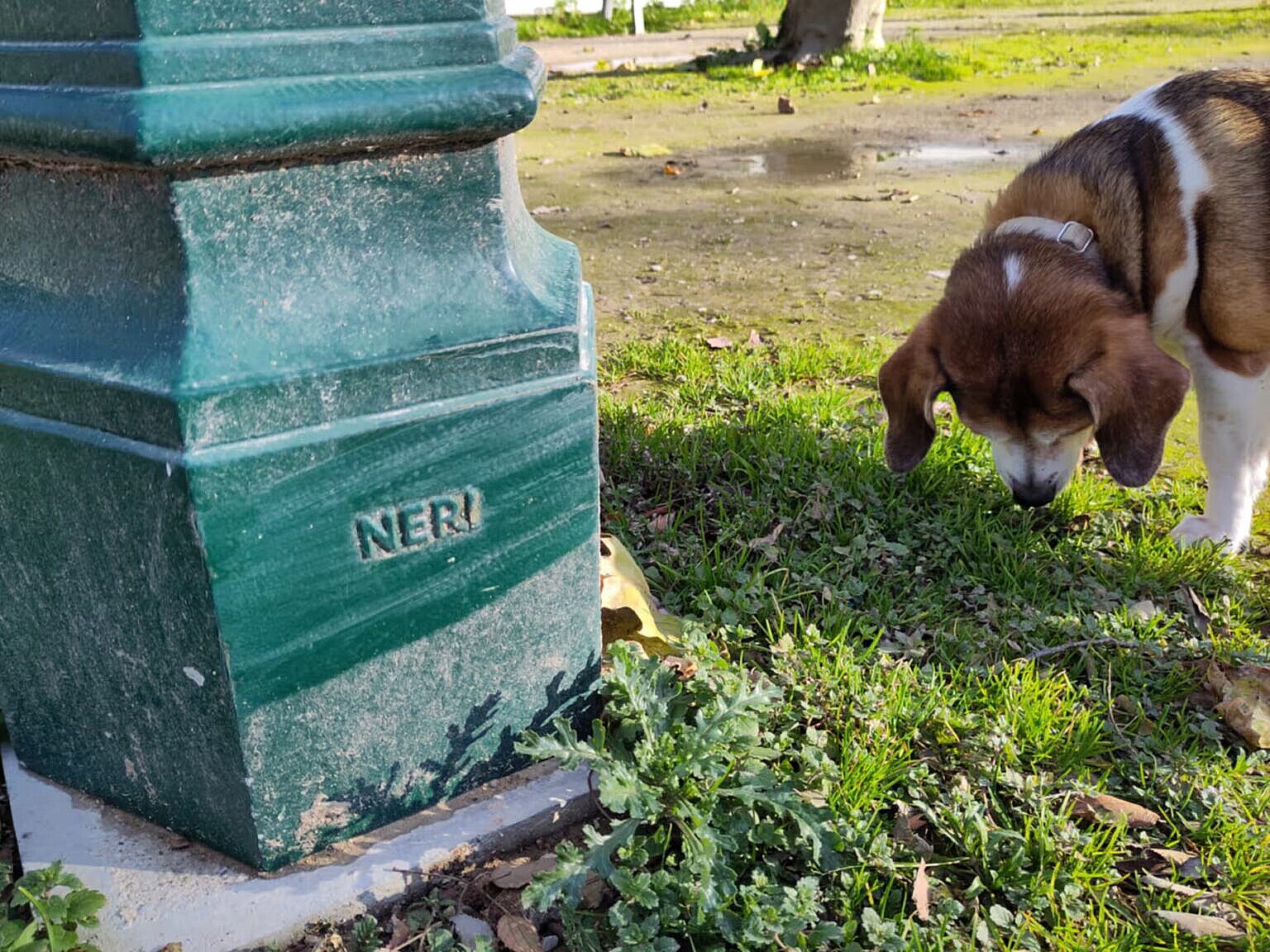
A confirmation (of sorts) was found on the website (now defunct) of the foundry maintaining the lampposts today. Their name appears on the base of the lampposts.
In an article on their cooperation with the Municipality of Venice, they wrote:
The Venetian lampposts, on the other hand, have engraved on their base the name of either the Fonderie Hasselquist & Compagni or the Fonderia Neville & C. In reality, we can assert that they all came from the same workshop, since this activity, opened in 1851 by the Swede Theodor Hasselquist, was taken over a few years later by the British engineer Neville.
These considerations might lead us to suppose that, around the middle of the 19th century, the two foreign entrepreneurs appointed to produce lampposts with specific features (limited height, sobriety of form and a single light source) could have taken inspiration from the models in the catalogue of Simon Perret Frères of Lyon.
It should not have been too difficult to observe this company’s models given that the Gas Company serving Venice had its origins, as mentioned above, in that same city.
This lamppost had a hexagonal base, from which rose a column characterized by vegetable decorations in the lower part (especially acanthus leaves and those of aquatic plants) and a grooved element in the upper section.
The top is dominated by a floral capital supporting the lantern, and it is one of the most significant elements of the artefact as a whole.
Of historical importance, too, is the presence of the Hapsburg coat-of-arms on the body of the base. This reveals a curious detail: the lion of St. Mark, inserted in a shield, is surmounted by the Austrian double-headed eagle, from which the heads have been cut off. This was probably done deliberately, after Venice had achieved independence from the Austrian Empire. In 1866, Austria had emerged victorious from the conflict with Italy but, having been defeated by Prussia, was compelled to give up Veneto. Venice was annexed to Italy in that same year.
Arredo&Città – Anno 33 – N. 2, 2022, p. 60–61.
The Napoleonic decree
The entire document is available on Google Books.
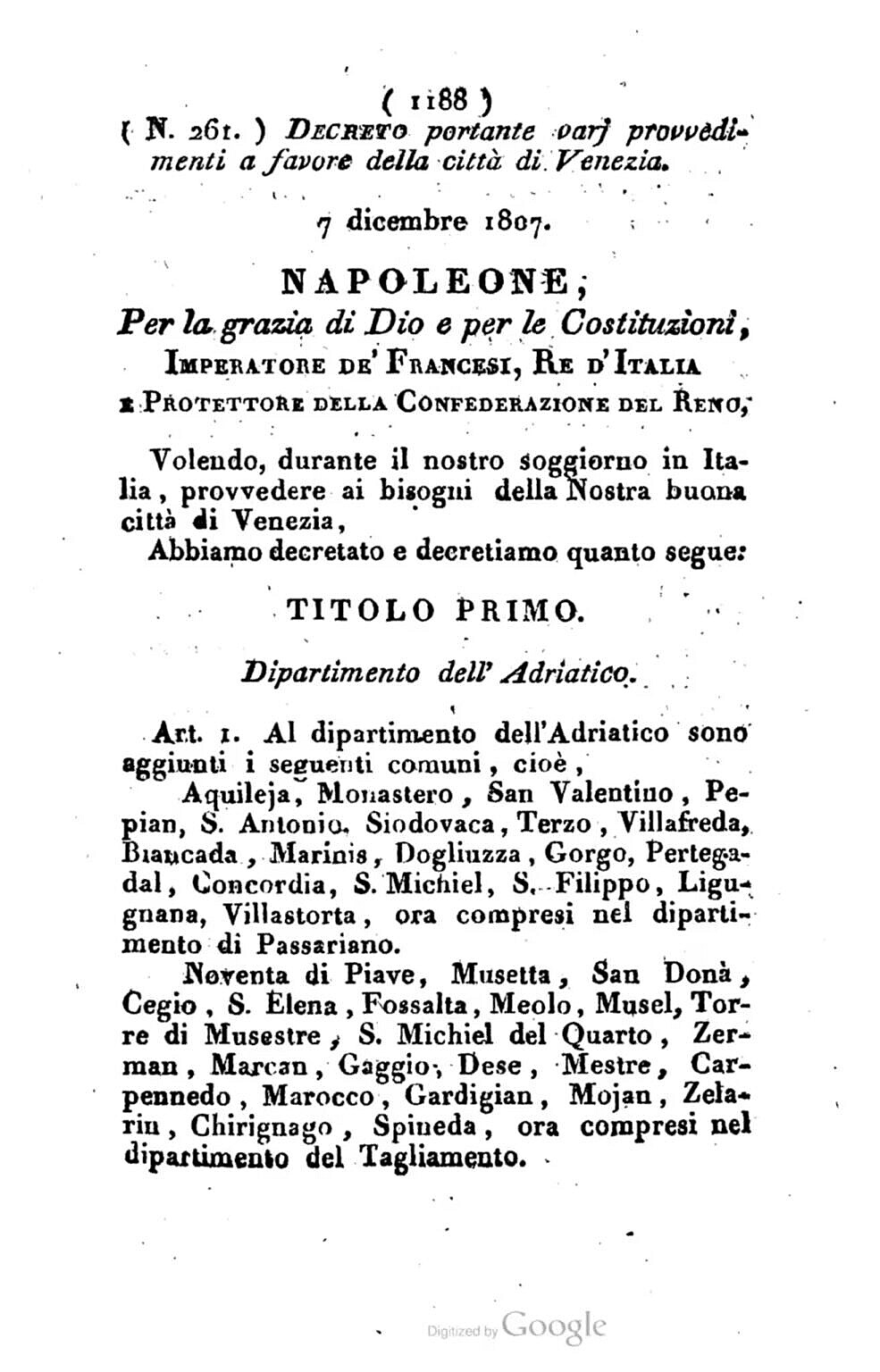
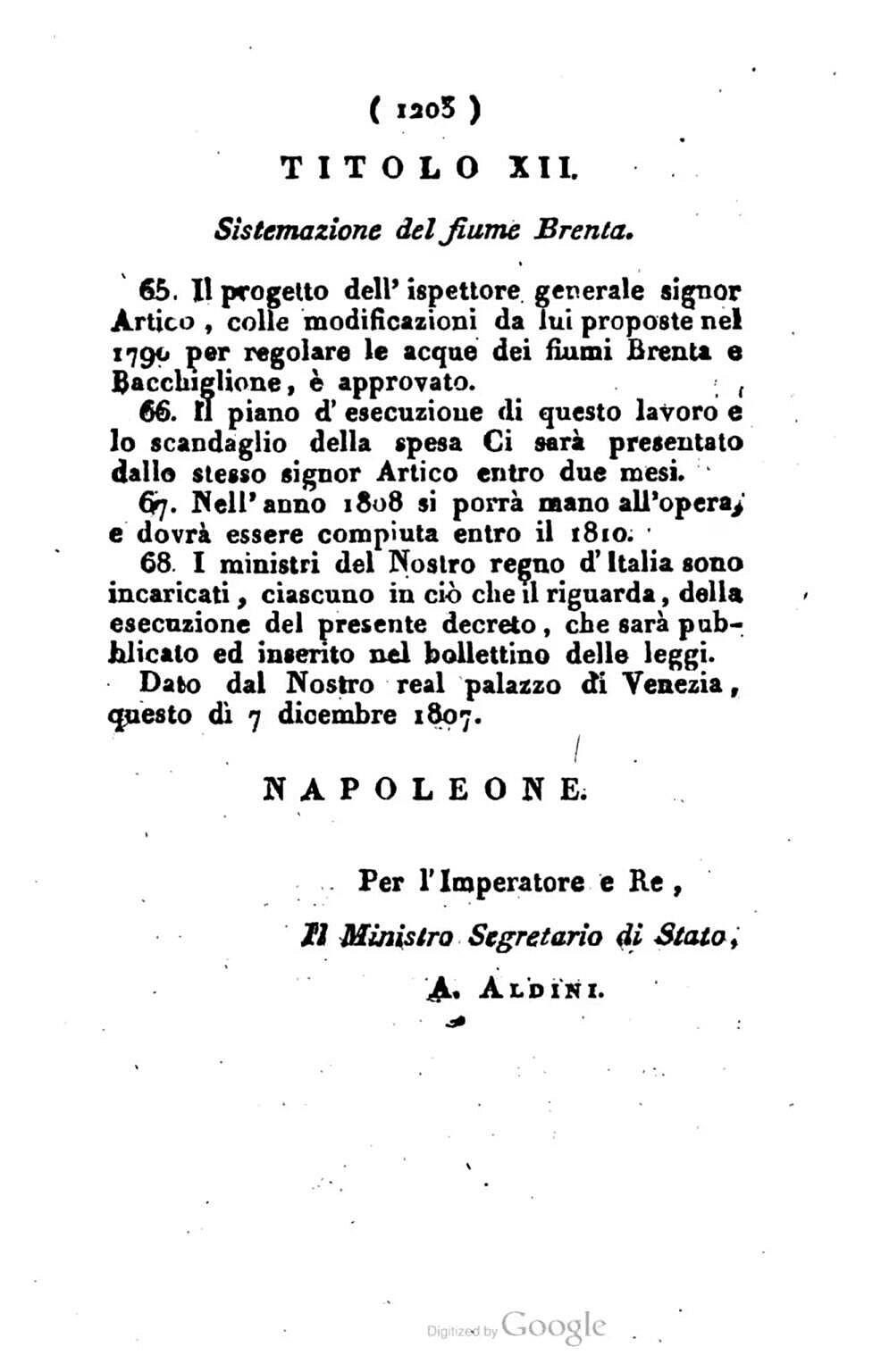
(N.261.) DECRETO portante varj provvedimenti a favore della città di Venezia.
7 dicembre 1807.
NAPOLEONE,
Per la grazia di Dio e per le Costituzioni,
IMPERATORE DE’ FRANCESI, RE D’ITALIA
E PROTETTORE DELLA CONFEDERAZIONE DEL RENO,Volendo, durante il nostro soggiorno in Italia, provvedere ai bisogni della Nostra buona città di Venezia.
Abbiamo decretato e decretiamo quanto segue:
…
TITOLO V.
Ornato e polizia.
…
- Nell’isola circoscritta dal rivo di S. Giuseppe e dalla laguna, compresa la cosìdetta Motta di S. Antonio, si formerà una passeggiata pubblica con viali e giardino.
- Questo lavoro, la di cui spesa è calcolata in lire 400,000, verrà cominciato immediatamente e compiuto nel 1809 co i fondi che a tale effetto saranno da Noi particolarmente assegnati.
…
Dato dal Nostro real palazzo di Venezia
questo dì 7 dicembre 1807NAPOLEONE
per l’Imperatore e Re,
il Ministro Segretario di Stato,
A. Aldini.
Leave a Reply